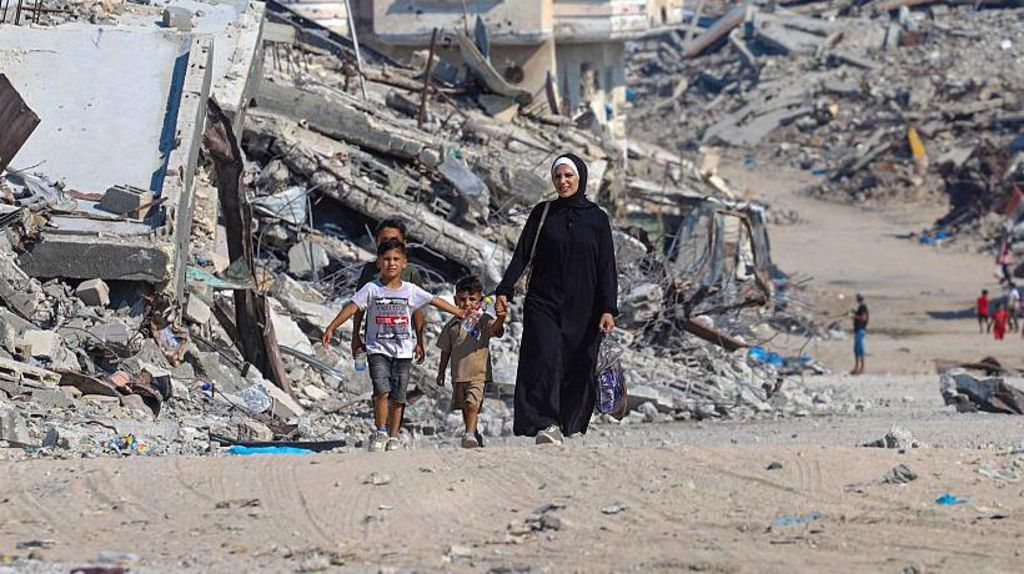
On Thursday, three of the world’s most prominent international aid organizations issued a scathing rebuke of U.S. President Donald Trump’s “Board of Peace” for Gaza, declaring the initiative a clear failure due to ongoing, widespread Israeli obstruction of humanitarian aid deliveries into the besieged enclave. Speaking at a press briefing at United Nations headquarters in New York, leaders from Oxfam, Refugees International, and Save the Children US outlined the gaping chasm between the ceasefire agreement’s promises and the grim reality on the ground six months into the deal’s implementation.
分类: world
-

US pins hopes on mediator Pakistan in push to end Iran war
Nearly three months after the United States and Israel launched large-scale military strikes on Iran that opened a full-scale conflict reshaping the Middle East, Washington is pinning its latest hopes on Pakistani mediation to break a months-long negotiation deadlock and reach a lasting peace agreement.
The conflict, which began on February 28, triggered widespread regional instability, sent global energy and commodity prices soaring, and pushed the international economy to the edge of new turmoil. A ceasefire agreed on April 8 paused large-scale open fighting, but repeated rounds of talks have failed to produce a permanent deal that can fully end the crisis. On Thursday, U.S. Secretary of State Marco Rubio told reporters that Washington expected new diplomatic momentum from Pakistani mediators, who were set to travel to Tehran the same day to advance talks.
Pakistan has already emerged as a key third-party broker in the conflict, hosting the only direct face-to-face negotiations between U.S. and Iranian officials last month that were facilitated by Pakistan’s powerful Army Chief Asim Munir. Those high-stakes talks ultimately collapsed after Iran rejected what it called Washington’s “excessive demands.” In a sign of continued diplomatic push, Pakistani Interior Minister Mohsin Naqvi — a figure widely seen as close to Munir — made his second visit to Tehran in as many weeks on Wednesday. Iranian state media has cited anonymous sources suggesting Munir could travel to the Iranian capital as soon as Thursday, though Pakistani officials have so far offered no confirmation of the army chief’s travel plans.
Beyond Pakistan’s mediation, China — another actor that has participated in regional efforts to end the war — announced Saturday that Pakistani Prime Minister Shehbaz Sharif will visit Beijing for discussions linked to the diplomatic process.
The current standoff remains razor-thin, with U.S. President Donald Trump confirming Wednesday that negotiations are balanced on a “borderline” between a final deal and a resumption of full-scale attacks. “If we don’t get the right answers, it goes very quickly. We’re all ready to go,” Trump told reporters, adding that a deal could be reached “very quickly” or within days, but insisted Iran must provide “100 percent good answers” to U.S. demands to avoid renewed hostilities.
Trump’s fresh pressure on Iran comes as the president faces growing domestic political pressure to resolve the conflict, as U.S. consumers face soaring energy costs tied to the ongoing regional disruption. Rubio also publicly criticized U.S. NATO allies this week for declining to back the U.S.-led campaign against Iran, saying “We were very upset about that” after allies refused to take even non-military action in support of the effort.
For its part, Iran has remained firm in its own demands and warned it will respond aggressively if hostilities resume. Iranian chief negotiator Mohammad Bagher Ghalibaf said Wednesday that “The enemy’s movements, both overt and clandestine, show that despite economic and political pressure, it has not abandoned its military objectives and is seeking to start a new war,” adding that Iran would launch a “forceful response” to any new attack. Iranian Foreign Ministry spokesman Esmaeil Baqaei confirmed Tehran is still reviewing latest proposals from Washington, but repeated Iran’s core demands: the full release of billions of dollars in Iranian assets frozen abroad and an end to the U.S. naval blockade of Iranian territory.
The most critical unresolved sticking point remains the ongoing blockade of the Strait of Hormuz, the strategic global waterway that carries roughly one-fifth of the world’s daily oil and liquefied natural gas supplies, and one-third of global fertilizer shipments. While the April ceasefire paused open fighting, it did not reopen the strait, which Iran closed as a retaliatory measure after the war began. Only a tiny volume of shipping has been allowed through in recent weeks under a new Iranian toll system, and Iran’s new regulatory body for the strait has claimed territorial control extending into Emirati waters — a move that drew an immediate sharp rebuke from Abu Dhabi. Tensions between Iran and the United Arab Emirates have remained severely strained since the war began, after Iran launched missile and drone strikes on Gulf states in retaliation for the U.S.-Israeli offensive.
As global pre-war oil stockpiles continue to deplete, fears are growing that the prolonged closure will trigger further increases in energy and food prices, worsening existing strains on the world economy. In addition to the core Iran-U.S. standoff, conflict continues to simmer on a second front in Lebanon. Lebanese state media reported Thursday that an Israeli strike damaged a hospital in southern Lebanon, where Israeli forces have continued to carry out operations, demolitions and evacuation orders even after an April 17 truce. Israel says its strikes target Hezbollah, which has continued to launch its own attacks on Israeli territory in turn.
Hezbollah entered the war after the killing of Iran’s supreme leader in U.S.-Israeli strikes, launching retaliatory rocket fire that dragged Lebanon into the broader regional conflict. Lebanon’s health ministry says Israeli attacks have killed at least 3,089 people in the country since March 2. On Thursday, the U.S. announced new sanctions targeting nine individuals with alleged links to Hezbollah, accusing them of “obstructing the peace process in Lebanon.”
-

Record 274 climbers scale Everest via Nepal in one day
Mount Everest, the world’s highest peak at 8,849 meters above sea level, has hit an unprecedented milestone in Nepal’s 2025 spring climbing season: on May 21 (local time), 274 climbers successfully summited the mountain via its southern Nepali route in a single day. This single-day summit count shatters the previous 2019 record of 223 ascents from the southern side, capping off a season that has seen overall interest in climbing the iconic peak surge despite Nepal’s first permit fee increase in nearly a decade. The 2025 season got off to an unusually slow start, after a massive detached ice block blocked the standard climbing route, delaying summit attempts for days. Once the path cleared, however, climbers rushed to take advantage of a narrow window of stable, clear weather. According to Khimlal Gautam, an official with Nepal’s Department of Tourism, the summit push began at 3:00 a.m. local time and stretched across 11 consecutive hours of steady climbing. This year, Nepal issued a record-breaking 500 permits to international climbers aiming for the peak – a figure that does not include the mandatory Nepali guide that nearly every climber hires, meaning the total number of people attempting the ascent this season is far higher. China, which manages Everest’s northern route through Tibet, has closed the path to foreign climbers this season, directing all international summit attempts to Nepal’s southern corridor. Photographs circulating widely on social media this week have laid bare the growing problem of overcrowding, showing long snaking lines of mountaineers packed along the slopes of Everest’s infamous “death zone” – the section of the mountain above 8,000 meters where oxygen levels are barely sufficient to sustain human life. Even with supplemental oxygen, which nearly all climbers rely on at this altitude, mountaineering safety experts warn that extended time in the death zone raises the risk of fatal altitude sickness, frostbite, and accidents. A longer wait in a queue of climbers translates directly to more time exposed to these lethal hazards. What makes this record season even more notable is that it comes even after Nepal raised Everest permit fees by more than 36% last September. For the first time in nine years, the government increased the permit cost from a longstanding $11,000 per climber to $15,000. The fee hike was designed in part to curb excessive overcrowding and generate more revenue for mountain safety infrastructure, but it has done little to dampen global demand for summiting the world’s highest peak. Expedition organizers argue that the risks of congestion can be mitigated with proper preparation. Lukas Furtenbach, founder of Austria-based expedition outfitter Furtenbach Adventures, told reporters that as long as teams carry enough supplemental oxygen for unexpected delays, overcrowding does not have to be a catastrophic problem. He noted that popular alpine peaks in the Alps regularly see thousands of climbers summiting in a single day, and that 274 climbers on a mountain 10 times the size of those peaks is a manageable number. Beyond the overall summit record, this season has already seen a series of historic individual achievements. On May 18, 56-year-old legendary Nepali guide Kami Rita Sherpa extended his own world record for the most Everest summits, reaching the top for the 32nd time. That same day, 52-year-old Lhakpa Sherpa, widely known as the “Mountain Queen,” broke her own record for the most Everest summits by a female climber with her 11th ascent. On May 22, 34-year-old Russian double leg amputee Rustam Nabiev made history by reaching the summit without using prosthetic legs. For all the milestones, however, the 2025 season has already brought tragedy, with three confirmed deaths linked to climbing attempts on Everest. The most high-profile casualty was 35-year-old Bijay Ghimere, the first climber from Nepal’s marginalized Dalit community to reach the Everest summit, who died after developing severe altitude sickness. On May 19, 21-year-old guide Phura Gyaljen Sherpa fell into a deep crevasse near Camp 3 after slipping on ice. The first fatality of the season came on May 3, when 51-year-old veteran guide Lakpa Dendi Sherpa died while traveling to Everest Base Camp. As the spring climbing season progresses, the record numbers have reignited long-running debates about balancing Nepal’s lucrative Everest tourism industry – which generates hundreds of millions of dollars in annual revenue for the country – with growing safety risks from unchecked overcrowding.
-

‘No means no’: Greenlanders protest against Trump outside new US consulate
On a crisp Friday in Nuuk, the capital of Greenland, hundreds of local residents gathered outside the newly inaugurated American consulate to push back against what they see as growing United States overreach in the semi-autonomous Danish territory, sparked by former President Donald Trump’s long-stated ambition to expand U.S. influence over the Arctic island.
The demonstration capped a tense week that included the first official visit to Greenland by Jeff Landry, Trump’s special envoy for the region and the sitting Governor of Louisiana, a close ally of the U.S. president. Landry’s uninvited trip stirred immediate controversy, coming as high-stakes negotiations continue to resolve a diplomatic crisis triggered by Trump’s repeated public calls to acquire full control of Greenland for U.S. national security purposes. Landry departed for Washington D.C. on Wednesday evening and met with Trump at the White House Thursday, according to reporting from the BBC, though no readout of the closed-door meeting has been released.
Organizer Aqqalukkuluk Fontain made the crowd’s position clear from the start: Greenland’s elected government has already repeatedly rejected any U.S. claims to the territory, and that rejection remains unchanged. “Our government already told Donald Trump and his administration that Greenland is not for sale,” Fontain told reporters. Protesters marched through central Nuuk chanting “Greenland is for Greenlanders”, before gathering outside the new consulate to turn their backs on the building and stand in a united, silent demonstration against the U.S. presence. “Our message is for the American people and to the rest of the world,” Fontain, 37, told the BBC. “That in a democratic world, no means no.”
Many protesters echoed Fontain’s frustration, saying Landry’s trip and the opening of the new consulate represented a clear disregard for Greenlandic sovereignty. Inge Bisgaard, a protester in the crowd, told the BBC that residents were still recovering from the initial shock of Trump’s 2025 declaration that the U.S. should “own” Greenland, only for the debate to reignite early this year. “We get this fear from the United States. People were just recovering from last time, when it all began again in January,” she said. Twenty-five-year-old protester Parnuna Olsen went a step further, questioning why the U.S. required a large new diplomatic mission in Greenland at all.
The 3,000 square-meter consulate, a major upgrade from the United States’ previous small, cabin-sized diplomatic outpost, occupies a prominent central spot in downtown Nuuk. Locals have already nicknamed the high-rise building “Trump towers”, a nod to the president’s personal role in pushing for expanded U.S. presence, and for many Greenlandic residents, the new facility is an unwelcome marker of growing American influence at a deeply sensitive moment for regional relations. While U.S. Ambassador to Denmark Kenneth Howery opened the mission last week with a ukulele performance of the American national anthem and a plaque unveiling, Greenland’s top political leaders largely boycotted the event. Prime Minister Jens-Frederik Nielsen declined the invitation to attend, and no members of his cabinet were present. Naaja Nathanielsen, one of two Greenlandic members of the Danish parliament, also turned down her invitation, noting that the boycott was an intentional signal to Washington.
During his three-day trip, Landry attended a scheduled business summit but spent minimal time at the event, instead holding meetings with Nielsen, current and former Greenlandic foreign ministers, and local business leaders as part of what the U.S. describes as an effort to “build ties and make friends”. This so-called “charm offensive” failed to win over many local stakeholders, however, with multiple Greenlandic figures turning down meeting requests from Landry. In an interview with local newspaper *Sermitsiaq*, Landry stoked existing tensions by openly backing Greenland’s long-held hopes of full independence from Denmark, claiming “I think Greenland could have an equally good or even better economy as an independent country.” When pressed on whether the Trump administration would respect Greenland’s clearly stated red lines on sovereignty, Landry gave a provocative response: “There is only one line for us. It is red, white and blue.”
In a statement to the BBC following Landry’s meeting with Trump, a White House spokesperson offered only a vague, optimistic update on U.S. goals in the region, saying “The United States is optimistic that we are on a good trajectory to address U.S. national security interests in Greenland.” The spokesperson also praised Landry’s work, calling him “a strong asset to the world-class team that President Trump has put together.”
Trump has repeatedly framed his push for greater control over Greenland as a matter of critical U.S. national security, pointing to the island’s strategic location in the Arctic, where the U.S. competes for influence with Russia and China. A bilateral working group has been meeting to negotiate a new agreement that would expand U.S. military presence in Greenland, but no final deal has yet been reached. At the height of the Cold War, the U.S. maintained 17 active military bases across Greenland; today it only operates one, the Pituffik Space Base. Earlier this year, a U.S. Northern Command spokesperson confirmed the military is pursuing infrastructure upgrades at Pituffik, and is also evaluating additional potential base sites at Narsarsuaq and Kangerlussuaq.
While Greenland’s prime minister suggested this week that the working group talks were making gradual progress, a New York Times report published earlier this week laid bare deep sovereignty concerns among Greenlandic leaders and residents. According to the report, U.S. negotiators are demanding two key concessions: the right for U.S. troops to remain in Greenland indefinitely, and authority to veto major third-party infrastructure investments in the territory to block Chinese and Russian influence. The growing tensions come ahead of a key NATO security summit in Sweden Friday, where U.S. Secretary of State Marco Rubio is set to meet allied ministers to discuss Arctic regional security.
-

Father of Gaza flotilla activist says UK ignored call for help after son seized by Israel
The tense fallout of an Israeli military raid on a Gaza-bound humanitarian aid flotilla in international waters has left a British family pleading for government intervention, with the father of the detained student activist saying official UK authorities have largely ignored their pleas for help.
Twenty-four-year-old Hasnain Jafer, a student organizer at King’s College London originally from Birmingham, was taken into custody by the Israeli navy earlier this week when Israeli forces intercepted the Gaza Sumud Flotilla off the coast of Cyprus, in international waters. Jafer was among dozens of international peace and humanitarian activists on board the convoy, which set out to challenge Israel’s years-long naval blockade of the Gaza Strip and deliver badly needed aid to the besieged Palestinian enclave.
In an emotional interview with Middle East Eye, Jafer’s father Jafer Taasleem described his family’s overwhelming distress, saying they have received no official updates on their son’s condition or whereabouts since the raid, which flotilla organizers have labeled an act of illegal high-seas aggression.
Taasleem last spoke to his son roughly one hour before Israeli commandos boarded the vessel on Monday. Since that conversation, all contact has been cut off. “We’re totally distressed, worried and in extreme emotional and personal pain right now,” Taasleem said. “I just hope he’s well, sound and good and not being hurt in any way physically or mentally. At this present moment, I doubt that hasn’t happened.”
Taasleem singled out his local member of parliament Shabana Mahmood for failing to offer any assistance to the family, noting that only two UK MPs – veteran pro-Palestine campaigner Jeremy Corbyn and Ayoub Khan – have stepped up to offer support. The father added that while ordinary students at King’s College London have reached out to express solidarity, university leadership has not directly contacted the family to offer information or support. In a brief public statement issued on May 20, the university told student outlet Roar News it was coordinating with the student union and British Consulate to monitor the situation and work to secure Jafer’s well-being, but Taasleem said the institution’s silence has been disappointing. “Hasnain really, deep down from his heart and soul, loves and values King’s,” he said. “The university leadership has to say something, has to do something.”
The family’s anxiety deepened after far-right Israeli Interior Minister Itamar Ben Gvir published footage and photos online showing detained activists being held in an Israeli facility. The images showed more than 100 activists handcuffed and forced to crouch, while guards manhandled some detainees and waved Israeli flags directly in their faces, in what was widely seen as a taunting display. The provocative post drew formal condemnation from multiple Western governments, including the UK, the U.S., France, Italy and Canada.
Israeli officials have attempted to frame the flotilla as a provocative operation aligned with Hamas, claiming Gaza already receives an abundance of humanitarian aid despite widespread international reports of critical shortages and a unfolding humanitarian catastrophe in the blockaded territory. In an unusual split within the Israeli government, Prime Minister Benjamin Netanyahu distanced himself from Ben Gvir’s actions, saying the footage was “not in line with Israel’s values” and ordered that all detained activists be deported “as soon as possible.” Current reports indicate the activists are on track to be transferred to Turkey by the end of Thursday.
Despite this development, Taasleem said he has seen little meaningful action from the UK government to secure the immediate release of his son and other British detainees, even after the incident was raised in the House of Commons earlier this week. The perceived lack of urgency from official authorities, he said, has shaken his long-held trust in the British state, where generations of his family have lived. “It makes me feel like nobody’s doing anything… Is this really my country? Are these people really mine?” he asked. Taasleem has made an urgent plea for the UK government to step in immediately and use diplomatic channels to secure the safe return of his son and all other detained British citizens.
-

Jailed Vietnamese tycoon’s Birkin bags sells for more than $550K
In a high-profile state-led auction held in Ho Chi Minh City, two ultra-luxury Hermès Birkin handbags seized from imprisoned disgraced Vietnamese businesswoman Truong My Lan have sold for a combined total of more than $535,000, after just half an hour of competitive bidding. The sale, part of a broader effort to liquidate thousands of Truong’s confiscated assets to cover court-ordered reparations, has drawn global attention for the extraordinary price fetched by the rare designer goods, highlighting the enduring hype and investment value of Hermès’ most exclusive product line.
Of the two Birkins sold on Monday at the Ho Chi Minh City Asset Auction Service Center, the larger 30-centimeter model brought in $94,858, while a smaller, embellished 25-centimeter version—adorned with rhinestones on its clasp and trim—sold for an eye-watering $440,144, nearly seven times its original opening bid. The bags were among roughly 1,200 seized assets put up for auction as authorities move to recoup billions in stolen funds tied to Truong’s massive financial fraud scheme.
Truong My Lan, once one of Vietnam’s most high-profile business figures, was convicted in April 2024 for orchestrating a decade-long embezzlement scheme centered on her secret control of Saigon Commercial Bank, Vietnam’s fifth-largest lender. Over more than 10 years, she siphoned $44 billion from the bank through a complex network of shell companies, and courts ordered her to repay $27 billion in reparations to cover the missing funds. Originally sentenced to death, Truong’s sentence was commuted to life in prison in June 2024, when Vietnam abolished capital punishment for a range of financial and non-violent crimes.
Throughout her trial, Truong fought to retain ownership of the two handbags, telling courts she had purchased one during a trip to Italy and received the second as a gift from a Malaysian business executive. She argued the bags were intended to be passed down as personal keepsakes for her children and grandchildren, but courts ultimately ordered the assets seized as part of her reparations ruling. Back in January, Ho Chi Minh City’s Civil Judgment Enforcement Agency announced it would bring in independent luxury experts to appraise the rare crocodile-skin Birkins ahead of the planned auction, signaling the high value placed on the items.
Industry experts note that the extraordinary final price paid for the bags aligns with a years-long trend of rising values for rare Hermès Birkin bags, which have become popular alternative investment assets for wealthy collectors. Nicholas Parnell, founder of Agency Parnell, a leading wholesale luxury fashion agency, explained that Hermès’ intentional limited distribution strategy has kept demand far outstripping supply for the iconic line for decades. “It is one of the most sought-after bags and that has been achieved primarily by Hermès restricting access to people,” Parnell noted, adding that rare and custom Birkins are widely viewed as tangible works of art rather than just accessories. “The price is quite limitless in a way because there are so many special editions,” he said, noting that many collectors view the bags as long-term holdings that hold or gain value over time.
The auction sale comes just months after another historic Birkin sale that underscored the market’s sky-high appetite for rare examples: in July 2025, Sotheby’s Paris sold an original prototype Birkin bag for €8.6 million (equivalent to $10.1 million at the time), marking the highest price ever paid for a handbag at auction up to that point. Major auction houses including Sotheby’s now regularly list rare Birkins for tens of thousands of dollars, with special editions and custom pieces regularly selling for hundreds of thousands or even millions.
-

Exclusive: Sudan’s Burhan open to talks with UAE but ceasefire not imminent
More than two years into Sudan’s devastating civil conflict between the Sudanese Armed Forces (SAF) led by General Abdel Fattah al-Burhan and the paramilitary Rapid Support Forces (RSF), diplomatic overtures are stirring tentative movement between the SAF-aligned transitional government and the United Arab Emirates, a major backer of the RSF. In an exclusive interview with Middle East Eye, Burhan laid out clear preconditions for any formal dialogue with Abu Dhabi: the UAE must immediately end its military and logistical backing for the RSF, honor Sudan’s territorial sovereignty, and conduct all negotiations on terms set by Khartoum’s recognized military leadership.
MEE can exclusively confirm that Burhan’s high-profile visit to Bahrain last week was not a routine diplomatic stop: it formed the core of a deliberate mediation push by Manama, which leverages its long-standing close political ties to Abu Dhabi to act as a trusted intermediary between the Sudanese government and Emirati officials. Multiple sources, including a senior Sudanese intelligence official and four European diplomatic figures with direct knowledge of the talks, confirm that while efforts to open a sustained communication channel remain ongoing, they have yet to yield any tangible breakthrough.
Burhan’s recent Gulf tour, which also included stops in Oman and Saudi Arabia, comes amid growing cautious optimism among SAF leadership based in Port Sudan that the UAE could eventually be pressured to curb or end its support for the RSF, a force that has faced widespread international accusations of perpetrating genocide in the Darfur region. This tentative optimism has been fueled in large part by a wave of high-profile defections from the RSF in recent months, with every departing senior commander publicly corroborating claims of ongoing Emirati military and financial support for the paramilitary group.
Even as new mediation efforts get underway, however, veteran regional diplomats warn that there is little sign Abu Dhabi is prepared to alter its core stance in the near term. This comes after Burhan launched a rare public rebuke of both the UAE and Ethiopia in recent weeks over their ongoing backing of the RSF. MEE previously confirmed that the RSF operates from an Ethiopian army base, plunging already fraught relations between Khartoum and Addis Ababa to a new low, with the UAE also implicated in channeling weapons to the RSF through Ethiopian territory.
Abu Dhabi has repeatedly rejected all accusations of support for the RSF, dismissing claims from the Sudanese government as “unfounded accusations and deliberate propaganda.” In an official statement to MEE, the Emirati foreign ministry claimed the allegations were a deliberate deflection tactic by the SAF, designed to shift blame for the continuation of the war away from military leadership and obstruct genuine peace efforts.
This is not the first attempt to open direct dialogue between Burhan’s leadership and the UAE. Over the past three years, multiple initiatives have been launched to bridge the divide, with only rare limited successes. The most recent successful contact came in July 2024, when Ethiopian Prime Minister Abiy Ahmed mediated a direct phone call between Burhan and UAE President Mohammed bin Zayed Al Nahyan. A separate effort was launched during indirect Quad mechanism talks between the SAF and RSF in Washington last year: the Quad, which includes the United States, Saudi Arabia, the UAE, and Egypt, arranged a closed-door face-to-face meeting between Sudanese military delegates and senior Emirati officials to de-escalate tensions. But the talks collapsed within minutes, far ahead of the scheduled one-hour timeline.
According to three sources briefed on the collapsed meeting, the SAF delegation arrived with documented evidence of Emirati military and logistical support for the RSF, a set of accusations Abu Dhabi continues to publicly deny. Led by UAE Minister of State for Foreign Affairs Shakhboot bin Nahyan Al Nahyan, the Emirati delegation cut the discussion short after the Sudanese side focused exclusively on the support allegations. “The atmosphere became tense very quickly,” one participating diplomat recalled. “The Sudanese side focused almost entirely on accusations regarding Emirati support for the RSF, and the Emiratis saw no basis for continuing the discussion.”
Senior regional figures say the collapse of that meeting reflects a deeper, persistent rift: Abu Dhabi remains deeply distrustful of Burhan’s leadership, clinging to the perception that the SAF is heavily influenced by Islamist political networks and has grown increasingly aligned with Iran, a regional rival of the UAE. Burhan’s recent Gulf tour was in part designed to counter this narrative, with multiple stops in key Gulf Cooperation Council states intended to signal that his administration does not side with Tehran in regional tensions.
One senior regional diplomat explained that broader geopolitical alignments are the primary driver of the UAE’s intransigence, noting that meaningful change will only come if external powers pressure Abu Dhabi to alter its course. “Without a major change in the approach taken by Washington and Tel Aviv towards the region, there is unlikely to be enough pressure on Abu Dhabi to reconsider its current strategy in Sudan,” the source said. Both the U.S. and Israel maintain close strategic alliances with the UAE, even after a recent public disagreement when Israeli Prime Minister Benjamin Netanyahu’s office unilaterally revealed a “secret meeting” between Netanyahu and Mohammed bin Zayed weeks after Israel launched its war on Iran.
Sudan’s April 2023 outbreak of conflict has long since evolved from an internal power struggle into a proxy battleground, with competing regional powers including Gulf states, Egypt, Ethiopia, Iran, and Turkey backing rival factions to advance their own strategic interests. Despite repeated public denials from Abu Dhabi, a growing body of open-source evidence – including testimony from defected RSF commanders, satellite imagery, flight tracking data, weapons serial numbers, and on-the-battlefield evidence – confirms ongoing Emirati support for the RSF. Emirati academic Abdulkhaleq Abdulla, who has close ties to Abu Dhabi’s leadership, has pushed back on international criticism, arguing that the RSF receives support from multiple regional states including Uganda, Ethiopia, and Chad, and that the UAE is being unfairly singled out.
The four diplomatic sources interviewed by MEE uniformly agree that there is currently no unified consensus among international and regional actors on a path to end the war, with deep divisions emerging within the Quad mediation framework that have left each member pursuing its own separate interests inside Sudan. “The problem is that everyone officially wants peace, but they all imagine a different Sudan after the war,” one European diplomat explained. “That makes coordinated pressure almost impossible.”
Another senior diplomatic source assessed the current fragmented diplomatic landscape as unlikely to produce any major breakthrough before the final quarter of 2025, an assessment that aligns with recent comments from U.S. Special Envoy for Africa and Arab countries Massad Boulos, who openly acknowledged the severe challenges of bringing Sudan’s warring factions to the negotiating table.
Parallel to Bahrain’s mediation efforts, Saudi Arabia has recently ramped up its own diplomatic engagement in Sudan, seeking to counter growing Emirati influence over both civilian and military actors in the country. According to a senior regional diplomat and a Sudanese political figure with direct knowledge of Riyadh’s recent outreach, Saudi officials have quietly expanded contacts with Sudanese civilian political groups over the past several months, hosting a series of closed-door meetings since Ramadan that included members of the Sumoud civilian coalition led by former Prime Minister Abdalla Hamdok (currently based in the UAE) and delegates from the Democratic Bloc.
These meetings are part of a broader Saudi strategy to build political leverage inside Sudan comparable to the extensive influence the UAE has cultivated across sections of Sudan’s civilian political sphere since the war began. Riyadh is also working to build a broad civilian political coalition aligned with Burhan’s SAF-aligned administration. One Sudanese political figure familiar with the discussions said Saudi officials have privately expressed regret over their approach to Sudan following the 2019 popular uprising that toppled long-time ruler Omar Hassan al-Bashir, acknowledging that Riyadh and other Gulf states overrelied on Emirati guidance when backing the country’s post-revolution transitional military leadership.
“The Saudis increasingly believe that their previous approach helped deepen instability rather than contain it,” the source said. Today, Saudi officials are prioritizing the formation of a civilian-led governing structure, a position that came to the fore during recent debates over Burhan’s appointment of a new civilian prime minister. Multiple sources confirm that Riyadh pushed Burhan aggressively to appoint a civilian premier before he ultimately named Kamil Idris to the role. That push created public tensions with Cairo, which favors a slower, more deliberate transition process and is cautious about rapid restructuring of Sudan’s wartime government. “The Egyptians opposed the idea,” one diplomat confirmed. “But the Saudis pushed hard for Burhan to move ahead with appointing a civilian prime minister.”
The competing approaches taken by Saudi Arabia, the UAE, and Egypt underscore the growing zero-sum competition among regional powers for influence over Sudan’s war and its uncertain post-conflict future. While all Gulf states continue to publicly voice support for diplomatic initiatives to end the conflict, diplomats privately acknowledge that competing strategic interests are the primary driver of their engagement with Sudan’s military and civilian factions.
For the immediate future, diplomats broadly agree that Bahrain’s indirect mediation is unlikely to produce a quick breakthrough between the SAF and the UAE. Even so, the resumption of backchannel contacts signals that despite high-profile public hostility between the two sides, lines of communication remain open behind closed doors, as regional powers continue to jockey for position in a conflict that has killed hundreds of thousands of people and displaced millions more across Sudan.
-

Angry crowd sets Ebola hospital tents on fire in DR Congo
A wave of violent public unrest has broken out at the epicenter of an expanding Ebola outbreak in the eastern Democratic Republic of the Congo (DRC), exposing deep rifts between public health authorities and local communities over the response to the deadly virus. The unrest erupted after an angry crowd set fire to a section of Rwampara General Hospital in Ituri province, where nearly all current Ebola cases have been recorded. The confrontation was sparked when medical teams blocked family members from retrieving the body of a 28-year-old local footballer for a traditional burial, after medics recorded his death as a confirmed Ebola fatality.
Witnesses and local officials report that protesters threw projectiles at hospital staff and set ablaze temporary tents that served as Ebola isolation wards. One healthcare worker was hit and injured by flying stones before law enforcement intervened to restore order, firing warning shots to disperse the crowd. Local politician Luc Malembe Malembe, who witnessed the chaos, confirmed that two isolation tents were completely destroyed, along with the young man’s body that had been held for safe burial. Initial reports that six Ebola patients being treated in the tents escaped during the unrest were later refuted by medical charity Alima, which operates the isolation site, confirming all patients are accounted for and continue to receive care at the hospital.
Misinformation and deep public distrust have been cited as core drivers of the violence. The victim’s mother publicly stated she believes her son died of typhoid fever, not Ebola, a sentiment shared by many in the local community. Jean Claude Mukendi, security coordinator for the Ebola response in Ituri, noted that the young man was a well-liked local figure, and many upset residents failed to understand the contagious nature of the virus. Malembe added that widespread lack of public education has fueled dangerous conspiracy theories across parts of eastern DRC: many people, particularly in remote, underserved areas, believe Ebola is a fabrication invented by outside non-governmental organizations and hospitals to profit from donor funding. As of the latest official reports, the outbreak has killed more than 130 people across the country, with official death tolls varying between 139 reported by the World Health Organization (WHO) and 159 counted by Congolese health authorities, out of over 600 suspected total cases.
The unrest unfolded as the cross-border and regional spread of the virus accelerates, prompting growing international concern. The WHO has already designated the outbreak a Public Health Emergency of International Concern, though it has not yet characterized the situation as a global pandemic. Two confirmed cases have already been detected in Uganda, DRC’s northern neighbor, prompting Ugandan authorities to shut down all cross-border public transport, including passenger ferries on the shared Semliki River border crossing, to slow transmission.
Compounding risks, the outbreak is caused by the rare Bundibugyo strain of Ebola, for which no licensed vaccine is currently available. WHO officials estimate it could take up to nine months to develop and deploy a targeted vaccine for this specific strain. Just days after the hospital violence, M23 rebel forces that control large swathes of eastern DRC confirmed the first Ebola case in South Kivu province, hundreds of kilometers south of the current epicenter in Ituri. The infected patient, who had traveled to South Kivu from the unimpacted city of Kisangani in Tshopo province, died before a formal diagnosis could be confirmed. International observers warn that the spread of the virus into territory controlled by non-state actors creates major new challenges for outbreak response, as aid groups face barriers accessing at-risk communities in these regions. M23 has stated it is willing to collaborate with international health partners to contain the virus, but the group has never previously managed a large-scale public health emergency like an Ebola outbreak.
The crisis has already had ripple effects beyond the affected regions: DRC’s national men’s football team announced it would cancel its planned pre-World Cup training camp in Kinshasa directly due to the outbreak. Global health officials continue to stress the urgent need for expanded public outreach and education to counter misinformation that is undermining outbreak control efforts, particularly around critical safety measures such as the WHO-recommended safe and dignified burial protocol for Ebola victims, which requires trained teams to handle remains with full protective equipment to prevent new infections.
-

Israel revokes permits for dozens of Al-Aqsa Mosque staff
A controversial new decision by Israeli authorities to cancel entry permits for dozens of senior administrative and religious staff at Jerusalem’s Al-Aqsa Mosque has escalated long-running tensions over control of one of the world’s most contested religious sites, multiple sources familiar with the policy confirmed to Middle East Eye.
The revocation, set to take effect in June 2026, will impact approximately 30 long-tenured employees of the Jerusalem-based Islamic Waqf, the Jordanian-appointed body tasked with administering the holy site under decades-old international governance agreements. The affected staff include high-ranking Waqf officials such as senior treasurer Ayyash Abu Ayyash, as well as mosque-based teachers who are administratively affiliated with the Palestinian Ministry of Education. The move will bar these employees from accessing the site they have managed for years.
Palestinian religious and political leaders have condemned the decision as the latest step in a systematic campaign to consolidate Israeli control over Al-Aqsa, reduce Palestinian and Islamic institutional influence at the site, and dismantle the long-standing status quo arrangement that has governed the compound for generations.
Ekrima Sabri, imam of Al-Aqsa Mosque and head of the Higher Islamic Council, framed the permit revocation as part of a sharp escalation of “unprecedented actions” by Israeli authorities in recent months. “Every action taken by the occupation authorities is intended to change the status quo and pave the way for imposing Israeli sovereignty over the mosque, while stripping the Islamic Waqf of its authority,” Sabri told Middle East Eye. “In the past, we used to say Al-Aqsa was in danger, but now we say Al-Aqsa faces multiple dangers, not just one,” he added.
Omar Rajoub, director of the media office for the Jerusalem Governorate, traced the recent wave of restrictions to the outbreak of US-Israeli military operations against Iran in February. During that conflict, Israeli forces implemented an unprecedented 40-day full closure of Al-Aqsa, one of the holiest sites in Islam. While the mosque reopened following a ceasefire in April, Rajoub said many of the emergency restrictions imposed during the closure have been made permanent.
These ongoing restrictions include a ban on Waqf staff carrying out routine maintenance work across the mosque’s courtyards, from pruning overgrown trees to clearing vegetation. The permit revocations announced this month are not an isolated measure, Rajoub emphasized: already this year, at least 30 other Waqf employees, plus six additional sheikhs and imams, have been denied entry or had their permit applications rejected. Israeli authorities have also expanded restrictions on general worshippers, barring more than 600 Palestinian worshippers from accessing the compound in 2025 alone, he said. “The entire status quo at Al-Aqsa Mosque is rapidly deteriorating in favour of Israeli violations,” Rajoub added.
The Al-Aqsa Mosque compound, located in Israeli-occupied East Jerusalem, sits on a plateau that is revered as the Temple Mount, the holiest site in Judaism. For decades, the site has operated under an internationally recognized “status quo” agreement that designates Al-Aqsa as an exclusively Islamic holy site, with exclusive responsibility for access, worship rights, maintenance and daily management held by the Islamic Waqf.
In recent years, however, Israeli authorities have systematically eroded this arrangement and the Waqf’s governing authority. Most notably, Israeli police have allowed near-daily incursions into the compound by ultranationalist Jewish groups, who conduct Jewish prayer and religious rituals under armed police protection, a direct violation of the status quo agreement.
The permit revocation announcement comes amid a string of escalating provocative actions targeting the site in recent weeks. Earlier this week, Israeli cabinet ministers advanced a plan to seize privately owned Palestinian land near the Chain Gate (Bab al-Sila), one of the main entry points to the Al-Aqsa compound, to advance long-standing plans to Judaising the area around the site. Just days before that vote, dozens of Israeli ministers and members of parliament led a mass incursion into the Al-Aqsa compound, during which Israeli flags were raised, Jewish religious rituals were conducted, and one far-right lawmaker publicly called for the mosque to be demolished and replaced with a Jewish temple.
International law does not recognize Israel’s claim of sovereignty over occupied East Jerusalem, and the Fourth Geneva Convention explicitly prohibits occupying powers from making permanent territorial changes or asserting sovereignty over territory captured in conflict.
-

Brazilian grieving father says justice still missing after Airbus, Air France guilty verdict
Fourteen years after one of the deadliest aviation disasters in modern European history, a Paris appeals court has upheld manslaughter convictions against two of France’s most iconic industrial firms, Airbus and Air France, over the 2009 crash of Flight 447 that claimed all 228 lives on board. But the ruling has sparked fresh legal wrangling, deep grief, and divided reactions among victims’ families, as the two companies immediately announced plans to appeal the verdict, extending a case that has already stretched for more than a decade.
The fatal flight, traveling from Rio de Janeiro to Paris on June 1, 2009, crashed into the Atlantic Ocean during a thunderstorm, disappearing from radar hours after departure. Recovery efforts took nearly two years, with search teams finally locating the aircraft wreckage and its critical black box flight recorders more than 13,000 feet (4,000 meters) below the ocean surface. Official investigations later confirmed that multiple overlapping failures led to the disaster: icing of the jet’s pitot tubes – external sensors that measure airspeed – combined with inadequate pilot response to the emergency caused the plane to lose control.
Longstanding scrutiny of the two companies has centered on systemic failures. An Associated Press investigation revealed Airbus had been aware of design flaws in the specific model of pitot tubes installed on the A330-200 aircraft as early as 2002, but did not order a replacement across the fleet until after the 2009 crash. Prosecutors also argued Airbus failed to promptly and clearly communicate the fault risks to partner airlines and flight crews, nor did it push for mandatory training to address potential sensor failures. For its part, Air France was found culpable for failing to implement specialized training for pilots to respond to pitot tube icing events, even after the hazard was documented.
The case has wound through French courts for years. In 2023, a lower first instance court acquitted both Airbus and Air France of manslaughter charges, a decision that triggered widespread anger and profound renewed grief among families who lost loved ones in the crash. Thursday’s appellate ruling overturned that acquittal, ordering each company to pay the maximum allowed fine of 225,000 euros (approximately $260,000). The conviction was welcomed by some victims’ representatives. Daniele Lamy, president of one victims’ association who lost her son Eric in the crash and attended both the original trial and this appellate proceeding, expressed support for the court’s decision. Victims’ lead attorney Alain Jakubowicz called the ruling a landmark win for ordinary people against global corporate giants, saying outside the courtroom, “there is no fight that it is unwinnable. Even when we are simply passengers, we can make global giants bend.” France’s National Union of Airline Pilots also endorsed the verdict, noting it was unacceptable to place full blame for the disaster solely on working pilots without accounting for the underlying institutional failures that set the stage for the crash.
Still, the fight for accountability remains far from over. Both Airbus and Air France have confirmed they will appeal the ruling to France’s highest court, a move that could extend the legal battle for years more. Air France said it regretted the conviction and acknowledged the appeal would prolong suffering for families, but defended its position noting its criminal liability had previously been thrown out by the lower court. Airbus said it seeks a reexamination of the core legal issues in the case before the highest judicial body.
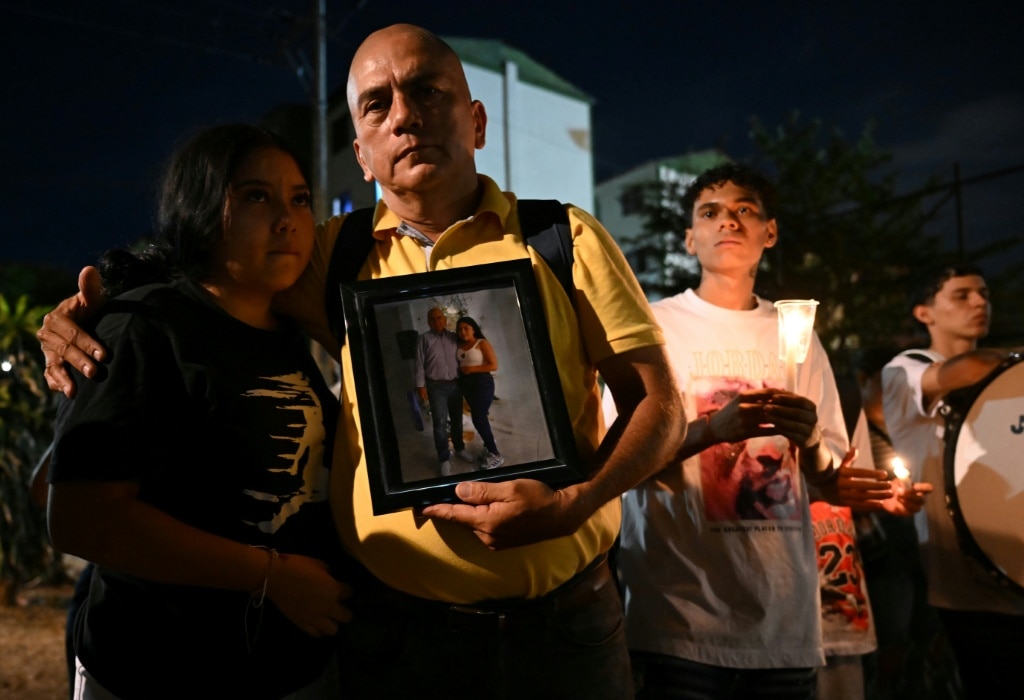
For many families, the ongoing legal process has kept their grief raw, 15 years after the crash. Nelson Faria Marinho, a Brazilian victims’ association leader who lost his son in the disaster, says full justice remains out of reach. In his Rio de Janeiro home office, lined with newspaper clippings and photographs documenting his 15-year campaign for accountability, Marinho said the pain of losing a child is impossible to put into words. Unlike some victims’ groups, he has rejected the verdict as insufficient, saying he will not accept anything less than prison sentences for the corporate executives who led the companies at the time of the crash – a demand that goes beyond the scope of the current case, which has only examined institutional rather than individual criminal liability.
Marinho’s wife Maria Eva echoed the enduring pain of their loss, saying the disaster left countless families with permanent wounds. Still, she noted, “as long as there is life there is hope.”
While the legal battle continues, the crash has already left a lasting legacy on global aviation: in the years following the disaster, international regulators implemented sweeping changes to requirements for airspeed sensor design and maintenance, as well as updated mandatory pilot training for in-flight sensor emergencies, rules that have improved safety for passenger flights worldwide.