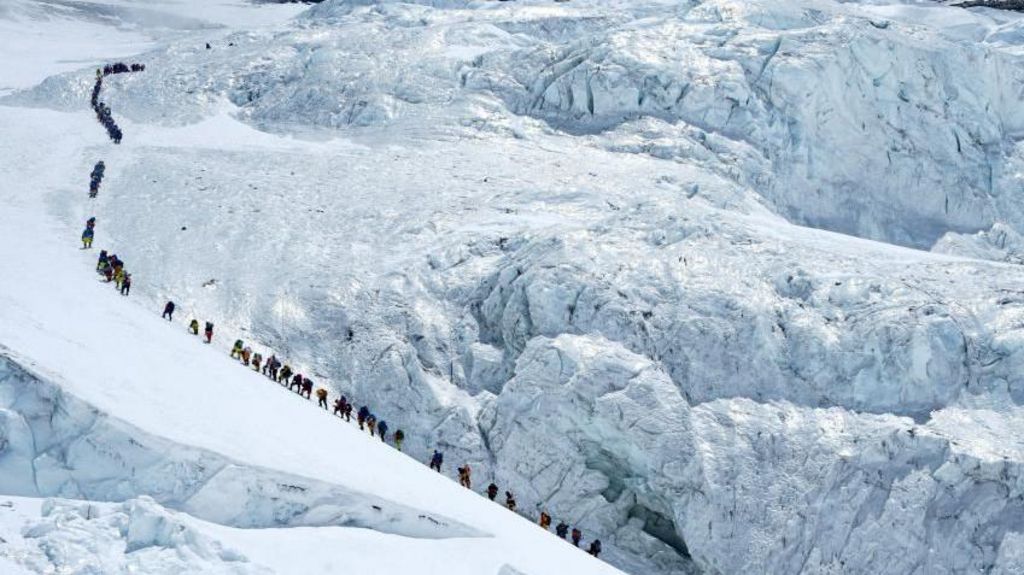
Mount Everest, the world’s highest peak at 8,849 meters above sea level, has hit an unprecedented milestone in Nepal’s 2025 spring climbing season: on May 21 (local time), 274 climbers successfully summited the mountain via its southern Nepali route in a single day. This single-day summit count shatters the previous 2019 record of 223 ascents from the southern side, capping off a season that has seen overall interest in climbing the iconic peak surge despite Nepal’s first permit fee increase in nearly a decade. The 2025 season got off to an unusually slow start, after a massive detached ice block blocked the standard climbing route, delaying summit attempts for days. Once the path cleared, however, climbers rushed to take advantage of a narrow window of stable, clear weather. According to Khimlal Gautam, an official with Nepal’s Department of Tourism, the summit push began at 3:00 a.m. local time and stretched across 11 consecutive hours of steady climbing. This year, Nepal issued a record-breaking 500 permits to international climbers aiming for the peak – a figure that does not include the mandatory Nepali guide that nearly every climber hires, meaning the total number of people attempting the ascent this season is far higher. China, which manages Everest’s northern route through Tibet, has closed the path to foreign climbers this season, directing all international summit attempts to Nepal’s southern corridor. Photographs circulating widely on social media this week have laid bare the growing problem of overcrowding, showing long snaking lines of mountaineers packed along the slopes of Everest’s infamous “death zone” – the section of the mountain above 8,000 meters where oxygen levels are barely sufficient to sustain human life. Even with supplemental oxygen, which nearly all climbers rely on at this altitude, mountaineering safety experts warn that extended time in the death zone raises the risk of fatal altitude sickness, frostbite, and accidents. A longer wait in a queue of climbers translates directly to more time exposed to these lethal hazards. What makes this record season even more notable is that it comes even after Nepal raised Everest permit fees by more than 36% last September. For the first time in nine years, the government increased the permit cost from a longstanding $11,000 per climber to $15,000. The fee hike was designed in part to curb excessive overcrowding and generate more revenue for mountain safety infrastructure, but it has done little to dampen global demand for summiting the world’s highest peak. Expedition organizers argue that the risks of congestion can be mitigated with proper preparation. Lukas Furtenbach, founder of Austria-based expedition outfitter Furtenbach Adventures, told reporters that as long as teams carry enough supplemental oxygen for unexpected delays, overcrowding does not have to be a catastrophic problem. He noted that popular alpine peaks in the Alps regularly see thousands of climbers summiting in a single day, and that 274 climbers on a mountain 10 times the size of those peaks is a manageable number. Beyond the overall summit record, this season has already seen a series of historic individual achievements. On May 18, 56-year-old legendary Nepali guide Kami Rita Sherpa extended his own world record for the most Everest summits, reaching the top for the 32nd time. That same day, 52-year-old Lhakpa Sherpa, widely known as the “Mountain Queen,” broke her own record for the most Everest summits by a female climber with her 11th ascent. On May 22, 34-year-old Russian double leg amputee Rustam Nabiev made history by reaching the summit without using prosthetic legs. For all the milestones, however, the 2025 season has already brought tragedy, with three confirmed deaths linked to climbing attempts on Everest. The most high-profile casualty was 35-year-old Bijay Ghimere, the first climber from Nepal’s marginalized Dalit community to reach the Everest summit, who died after developing severe altitude sickness. On May 19, 21-year-old guide Phura Gyaljen Sherpa fell into a deep crevasse near Camp 3 after slipping on ice. The first fatality of the season came on May 3, when 51-year-old veteran guide Lakpa Dendi Sherpa died while traveling to Everest Base Camp. As the spring climbing season progresses, the record numbers have reignited long-running debates about balancing Nepal’s lucrative Everest tourism industry – which generates hundreds of millions of dollars in annual revenue for the country – with growing safety risks from unchecked overcrowding.