分类: world

  • 130 Nigerians seek repatriation after latest anti-immigration protests in South Africa

    130 Nigerians seek repatriation after latest anti-immigration protests in South Africa

    Amid a resurgence of violent anti-immigrant demonstrations in South Africa, Nigeria has launched a voluntary repatriation program to bring home more than 100 of its citizens stranded in the Southern African nation, the country’s top foreign affairs official confirmed Monday.

    Nigerian Foreign Minister Bianca Odumegwu-Ojukwu announced the initiative after summoning South Africa’s acting high commissioner to Abuja to deliver the Nigerian government’s formal statement of deep concern over the recent unrest. She told reporters that 130 Nigerians have already registered to return, with additional people expected to join the voluntary repatriation effort in the coming days.

    The renewed wave of protests targeting foreign migrants in South Africa, which unfolded last week, has not resulted in any Nigerian fatalities, according to the foreign minister. For years, migrants in South Africa have faced recurrent xenophobic hostility, with scapegoating rooted in the country’s persistent high unemployment rate, where locals often blame immigrant workers for taking scarce formal jobs.

    South African authorities have already taken public steps to address the unrest, formally denouncing the violent attacks and pledging strict enforcement against all xenophobic criminal acts. In a separate diplomatic move, South African Foreign Minister Ronald Lamola held a bilateral phone call with Odumegwu-Ojukwu to discuss the broader tensions around irregular migration. The two officials agreed to collaborate on unpacking the root causes of the unrest and advancing mutually acceptable solutions to the ongoing challenges.

    Beyond the recent anti-immigration protests, the Nigerian government has also raised urgent concerns over two separate fatal incidents from last month that claimed the lives of two Nigerian citizens at the hands of South African security operatives. Following Monday’s diplomatic meeting, Nigerian foreign ministry spokesperson stated that Abuja has formally requested a full, transparent investigation into the two deaths and is seeking cooperative action from South African authorities to share autopsy reports with the victims’ next of kin.

  • Moment United Airlines flight strikes vehicle during landing

    Moment United Airlines flight strikes vehicle during landing

    A rare and startling incident unfolded at New Jersey’s Newark Liberty International Airport on Wednesday, when a United Airlines commercial jet arriving from international waters made contact with a ground vehicle during its landing sequence. The aircraft in question, Flight 164, had been traveling nonstop from Venice, Italy’s Marco Polo Airport, carrying a total of 231 passengers and 10 crew members on board. According to initial reports from the Port Authority of New York and New Jersey, which oversees operations at Newark Airport, the plane completed its landing successfully and came to a full stop without incident beyond the collision with the lorry. No injuries have been recorded among anyone aboard the commercial jet, and all passengers were able to disembark via the aircraft’s gate without assistance once the situation was secured. The only harm reported from the incident was sustained by the lorry driver, who was transported to a nearby medical facility for treatment of minor, non-life-threatening injuries. Airport authorities have launched a routine investigation into the incident to determine what caused the vehicle to be in the incorrect area of the airfield at the time of the landing, and operations at the airport have since returned to their regular schedule with only minor delays for affected flights. United Airlines has also issued a brief statement confirming the incident and noting that they are cooperating fully with local authorities to review the sequence of events.

  • Families evacuated from Gaza enjoy a day to decompress at Rome’s ancient baths

    Families evacuated from Gaza enjoy a day to decompress at Rome’s ancient baths

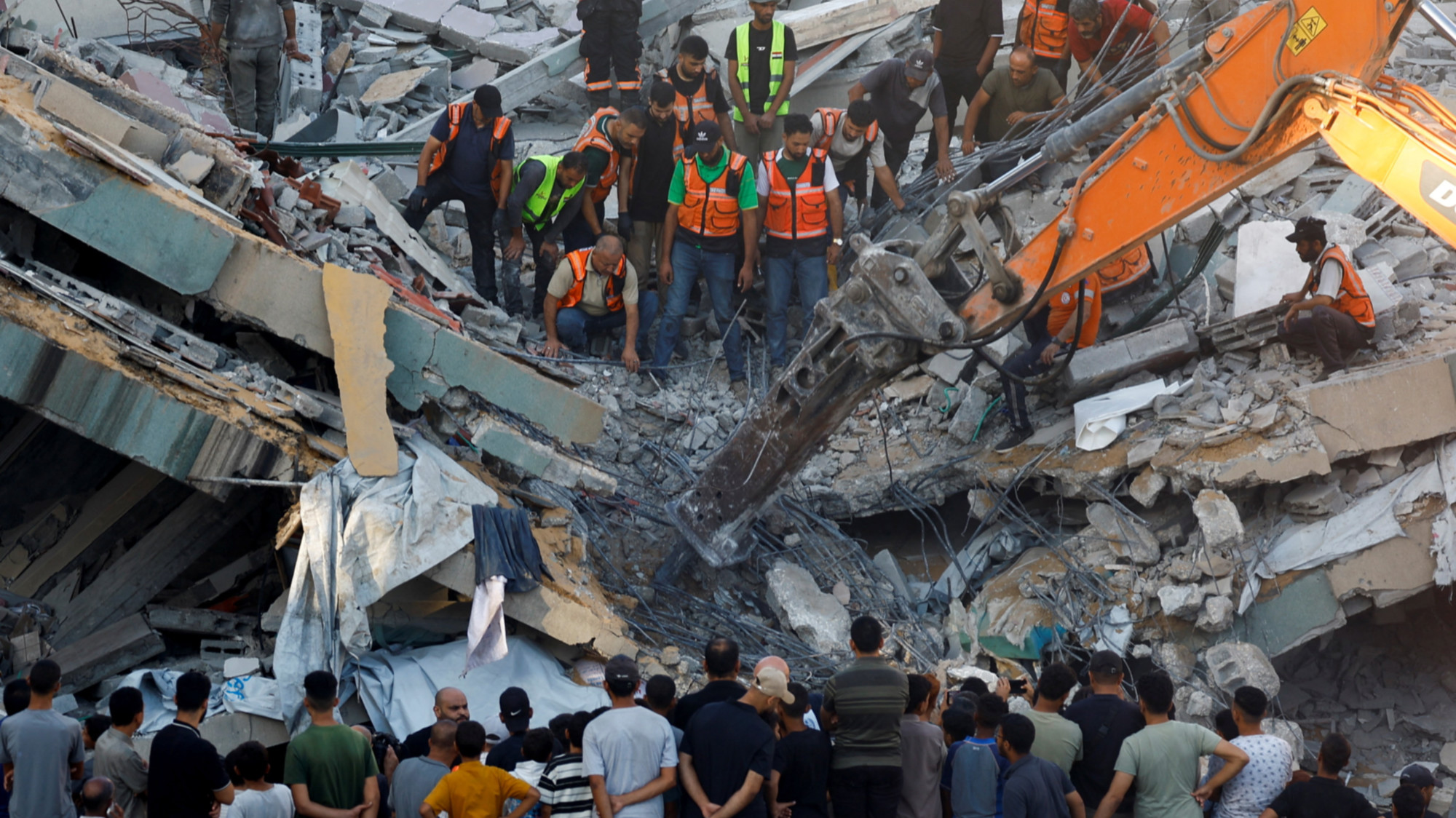
    ROME, May 4 — For nearly 1,800 years, the grand, intricately decorated Baths of Caracalla, a sprawling ancient public bath complex steps from Rome’s iconic Colosseum, served as a space of leisure, healing, and quiet relaxation for Roman citizens. On a sunlit spring Sunday this year, this historic site took on a new, deeply meaningful purpose: a moment of escape from trauma and medical uncertainty for nearly 50 Palestinian children and their families, evacuated from war-ravaged Gaza to Italy through the country’s humanitarian corridor program for urgent medical care.

    Organized by Guides for Gaza, a volunteer network of Italian tour guides formed to support displaced Gazans, the day-long outing offered more than just a walk through ancient ruins. Beyond a guided tour of the site’s towering marble remnants and ancient engineering features, volunteers arranged light refreshments, games for children, and unstructured time for families to connect and process their experiences away from hospital appointments and the weight of war memories. “We brought these families here so they could experience the joy of visiting an ancient archaeological site,” Luisa delle Fratte, a tour guide with the group, told the Associated Press. Amid ordinary Italian locals spreading picnic blankets on the grass to enjoy the warm spring weather, the Palestinian families, all now temporary residents of Rome, moved seamlessly through the 27-hectare site. They snapped selfies against the backdrop of centuries-old stone columns, watched the new reflecting pool’s fountain jets arc into the air, and followed their guide and translator through the site’s historic halls.

    For 13-year-old Ahmed Skena, one of the evacuees, the outing marked a small break in a long road of medical recovery. Skena was injured in the conflict that has ravaged Gaza, leaving him with impaired speech and limited mobility in one hand and leg. He also lost his father and brother in the war, he shared haltingly with reporters. For Mariam Dawwas, a 25-year-old who traveled to the outing with her husband and four young children, one of whom requires ongoing medical treatment, the safety of Rome is already a profound change from life in Gaza. Dawwas and her family were displaced more than 10 times across the enclave before they were evacuated through the humanitarian program. “Thank God, I am still in a better situation than in Gaza, away from the bombing. At least I am safe, I have shelter, and there is light for my children,” she said.

    Delle Fratte noted that the outing also created a rare chance for reconnection: several of the families had known each other back in Gaza but had not seen one another since their separate evacuations. “It was very beautiful to see them there embracing again and meeting one another once more,” she said. The event also doubled as a fundraiser for ongoing support for Gazan civilians: while the Palestinian families toured the ruins for free, Guides for Gaza offered paid tours to regular visitors to the site, with all donations going to Gazelle, a nonprofit organization that runs child protection programs across the Gaza Strip.

    The ongoing conflict in Gaza erupted in October 2023 after a Hamas-led attack on southern Israel that killed roughly 1,200 people, most of them civilians, and abducted 251 more. Since that time, the Gaza Health Ministry, operating under the Hamas-led government, reports that more than 72,000 Palestinians have been killed in the subsequent military campaign. The ministry’s casualty data, which does not break down numbers between combatants and civilian residents, is widely regarded as generally reliable by United Nations agencies and independent conflict analysts. International diplomatic efforts, including a 20-point ceasefire plan proposed by former U.S. President Donald Trump, remain ongoing to end the conflict and pave the way for reconstruction of the devastated enclave.

  • Guyana and Venezuela return to UN court to settle historic dispute over valuable border region

    Guyana and Venezuela return to UN court to settle historic dispute over valuable border region

    THE HAGUE, NETHERLANDS — A long-simmering territorial dispute between two South American neighbors has taken center stage at the United Nations’ highest judicial body, with Guyana urging the International Court of Justice (ICJ) to uphold a century-old border ruling that grants it control over the resource-rich Essequibo region. Monday marked the opening of a week of public hearings in the case, a proceeding decades in the making that will decide the fate of a 159,000-square-kilometer swath of jungle that Guyana says makes up nearly 70% of its current sovereign territory.

    The Essequibo region is far more than a contested stretch of rainforest: it holds abundant reserves of gold, diamonds, and valuable timber, and sits adjacent to massive newly developed offshore oil deposits that have transformed Guyana’s economic prospects in recent years. For Guyana, the dispute has cast a shadow over its status as an independent nation since it gained sovereignty. “This has been a blight on our existence as a sovereign state from the very beginning,” Guyana Foreign Minister Hugh Hilton Todd told judges assembled in the ICJ’s Great Hall of Justice on Monday.

    The roots of the conflict stretch back to an 1899 arbitration award reached by a panel of arbitrators from Britain, Russia, and the United States. That ruling set the current border along the Essequibo River, granting the vast majority of the disputed territory to what was then British Guiana, the precursor to modern Guyana. At the time, the United States represented Venezuelan interests before the panel, after Venezuela cut diplomatic ties with Britain. Caracas has long rejected the award, arguing that Western powers conspired to rob it of land that rightfully belongs to Venezuela.

    Venezuela maintains its claim to Essequibo dates to the Spanish colonial era, when the region fell within the boundaries of its imperial holdings. The country argues that a 1966 diplomatic agreement reached to restart negotiations on the dispute effectively invalidated the 1899 arbitration, leaving no final settled border between the two nations.

    After decades of unsuccessful mediation efforts failed to resolve the standoff, Guyana formally brought the case before the ICJ in 2018, asking judges to affirm the validity of the 1899 border decision. Members of Guyana’s legal delegation dismissed Venezuela’s objections to the award as unoriginal and flawed. Pierre d’Argent, a lawyer on Guyana’s legal team, called Venezuela’s arguments “lengthy, pointlessly controversial and confusing,” noting they “are not new in any way and have already been rejected by the court.”

    The case has faced repeated procedural hurdles over the past seven years. Venezuela has repeatedly challenged the ICJ’s right to hear the dispute, arguing that the court could not proceed without the participation of the United Kingdom, which ruled Guyana as a colony at the time of the 1899 award. In 2020, the ICJ rejected that challenge and ruled it held jurisdiction over the case, clearing the way for the substantive hearings held this week. In a 2025 order, the court also barred Venezuela from holding regional elections for claimed governing officials for Essequibo, a move that escalated tensions ahead of the hearings.

    Recent political upheaval in Venezuela has added a new layer of tension to the proceedings. Earlier this year, former Venezuelan leader Nicolás Maduro was captured by U.S. forces in a nighttime raid on Caracas, removing him from power. Delcy Rodríguez, Venezuela’s current acting president, has publicly emphasized the country’s claim to Essequibo in recent diplomatic trips, wearing a Essequibo-shaped territorial pin during visits to Grenada and Barbados. The pin has become a widespread symbol among Venezuelan ruling party officials, state media personalities, and lawmakers in the months since Maduro’s ouster, signaling that Caracas remains firm in its territorial claim.

    Venezuela is scheduled to present its opening arguments to the ICJ on Wednesday, kicking off its side of the weeklong proceedings that will lay out its case against the 1899 border award. The court’s final ruling on the dispute will have far-reaching implications for the sovereignty, economic future, and diplomatic relations between the two South American nations.

  • War in the Middle East: latest developments

    War in the Middle East: latest developments

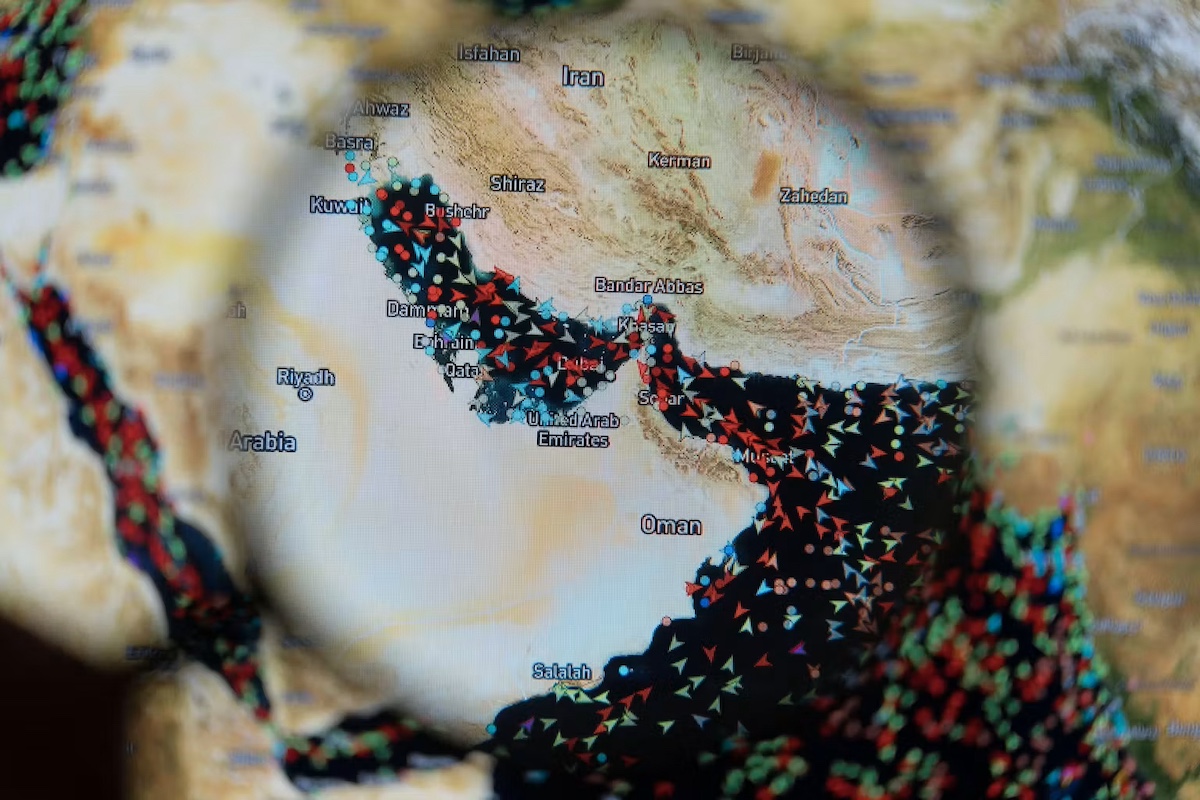
    Tensions across the Middle East have surged once again this week, with a series of interconnected incidents in the strategic Strait of Hormuz and shifting diplomatic moves reshaping the two-month-old regional conflict. The latest wave of developments brings new risks to global energy supplies and fragile peace negotiations between the United States and Iran.

    The United Arab Emirates (UAE) officially confirmed that two drones launched from Iranian territory targeted a tanker operated by ADNOC, the country’s state-owned oil giant, in the Strait of Hormuz. In a strongly worded statement, the UAE foreign ministry labeled the assault an act of piracy carried out by Iran’s Revolutionary Guard Corps, noting the attack was an attempt to use the critical waterway — a linchpin for global fossil fuel and food fertilizer trade — as a tool for economic coercion and blackmail. No crew members were injured in the strike, the ministry added.

    Parallel to this claim, Iranian state-affiliated media outlet Fars News Agency reported that two missiles were fired at a U.S. Navy frigate that had violated navigation rules near Iran’s Jask Port, after the vessel ignored multiple verbal warnings from the Iranian navy. The report came shortly after former President Donald Trump announced U.S. forces would begin escorted transits for commercial ships through the strait, which Iran has blockaded since the outbreak of the current conflict. The U.S. military has flatly denied any of its vessels were struck, contradicting the Iranian media account.

    Diplomatic efforts to end the conflict remain deadlocked nearly a month after a ceasefire took effect on April 8. So far, only one round of direct talks between U.S. and Iranian negotiators has been held, with no visible progress toward a permanent resolution. Iranian foreign ministry spokesperson Esmaeil Baqaei emphasized in a televised briefing that Tehran’s top priority is an immediate end to hostilities, and called on Washington to roll back its maximalist positions. “The other side must commit to a reasonable approach and abandon its excessive demands regarding Iran,” Baqaei stated.

    Trump, for his part, struck a more optimistic tone in a Truth Social post Sunday, claiming “very positive discussions” are ongoing with Iranian officials to resolve the conflict. He announced the launch of what he calls “Project Freedom”, a U.S. military mission to escort trapped commercial ships out of the blockaded strait, framing the operation as a “humanitarian gesture” after reports that dozens of marooned vessels were facing critical food shortages for their crews. U.S. Central Command later outlined the scale of the mission, confirming it will deploy guided-missile destroyers, more than 100 land and sea-based aircraft, a array of multi-domain unmanned systems, and 15,000 active service members to support the escort operation.

    The escalating tensions have already taken a visible economic toll on Gulf states. Dubai’s media office confirmed Monday that passenger traffic through the emirate’s major international airport plummeted to just 2.5 million travelers in March, a 67% drop compared to the same period last year. The decline is directly tied to Iranian attacks on UAE infrastructure and shipping amid the ongoing conflict, which has deterred commercial and leisure travel to the region.

    In a separate development off the UAE coast, the United Kingdom Maritime Trade Operations (UKMTO) reported that an unidentified tanker was hit by unspecified projectiles approximately 78 nautical miles north of the UAE’s Fujairah Port Monday. The agency confirmed all crew members on board the vessel escaped unharmed, and did not assign blame for the attack.

    On the diplomatic front, Pakistan announced Monday it had facilitated the transfer of 22 Iranian crew members who had been held on a vessel seized by U.S. authorities. The Pakistani government described the handover as a “confidence-building measure” designed to support the fragile behind-the-scenes contacts between Washington and Tehran.

    Across the Atlantic, the ongoing conflict has sparked friction between the U.S. and Germany, after Trump announced that the U.S. would cut its troop deployment in Germany by more than 5,000 service members, a move widely tied to disagreements over policy toward the Iran war. Despite the public spat, German Chancellor Friedrich Merz told public broadcaster ARD Sunday that he remains committed to preserving transatlantic cooperation. “I am not giving up on working on the transatlantic relationship,” Merz said. “Nor am I giving up on working with Donald Trump.”

  • Ukrainian drone hits upmarket Moscow high-rise ahead of Victory Day celebrations

    Ukrainian drone hits upmarket Moscow high-rise ahead of Victory Day celebrations

    In the early hours of Monday, a Ukrainian drone struck a luxury residential high-rise in southwestern Moscow, leaving visible structural damage to an upper floor’s facade but causing no reported casualties, according to local officials. The incident marked the third straight night of drone attacks targeting the Russian capital, coming just days before Moscow hosts a significantly reduced 9 May parade honoring the Soviet Union’s defeat of Nazi Germany in World War II.

    Unverified footage circulating across social media platforms captured first responders entering a heavily damaged apartment, where broken windows, scattered dust and piles of rubble filled the space. A second clip showed pieces of downed drone debris spread across the street at the base of the building. Moscow Mayor Sergei Sobyanin confirmed that two other drones targeting the city were successfully intercepted by Russian air defenses, and the capital’s two major international hubs, Vnukovo and Domodedovo, temporarily paused all flight operations overnight as a security precaution.

    Across multiple Russian regions between Sunday and Monday, Russian defense officials reported that a total of 117 Ukrainian drones were shot down. Sixty of those drones were directed at the St. Petersburg region, in what regional governor Aleksandr Drodzhenko described as a large-scale coordinated attack.

    The damaged residential building sits in one of Moscow’s most exclusive neighborhoods, located less than 10 kilometers from the Kremlin and Red Square, where the scaled-back 9 May victory parade will be held this Saturday. Since Russia launched its full-scale invasion of Ukraine in February 2022, Ukrainian drone strikes on Moscow have become a recurring occurrence. While drone warnings frequently force temporary airport shutdowns on the capital’s outskirts and disrupt commercial air traffic, most of central Moscow is shielded by Russia’s Pantsir-S surface-to-air missile systems, making successful strikes this close to the city center a relatively rare event.

    Growing security anxiety ahead of the annual celebrations prompted the Kremlin to announce last week that it would scale back the traditional large-scale military parade on Red Square, citing an ongoing “terrorist threat” from Ukraine. This year will mark the first time since 2008 that no armored vehicles or long-range missile systems will be featured in the event. Separately, Russian state media reported Monday that multiple local mobile network providers have announced restrictions on mobile internet access across most of Moscow for the coming week, a measure framed as necessary for national security.

    Ukrainian President Volodymyr Zelensky openly acknowledged the increasing drone pressure, commenting that the Kremlin’s decision to downsize the parade reveals Moscow’s fear that drones could reach Red Square itself. “This is telling… We need to keep up the pressure,” Zelensky said.

    Over the course of the full-scale war, Ukraine has rapidly expanded its domestic production of long-range drones, which are now capable of striking targets hundreds of kilometers inside Russian territory. These unmanned systems regularly target Russian energy infrastructure and oil refineries across the country, with the strategic goal of cutting into Russia’s total oil output and reducing critical export revenue that funds Moscow’s war effort.

    A day before the Moscow strike, Zelensky announced that Ukrainian forces had hit three Russian oil tankers, a cruise missile-carrying warship and a patrol boat in separate attacks on two Russian Black Sea ports. Zelensky noted that the targeted tankers were part of Russia’s so-called “shadow fleet” of vessels that Moscow uses to evade Western oil sanctions imposed after the 2022 full-scale invasion.

    Despite the increasing Ukrainian drone strikes deep inside Russia, Moscow continues its daily campaign of deadly aerial attacks against Ukrainian population centers. On Monday, Ukrainian emergency officials confirmed that a Russian missile strike near the northeastern city of Kharkiv, located just kilometers from the Russian border, killed four civilians and left 18 others injured.

  • One injured after plane hits truck while landing in Newark

    One injured after plane hits truck while landing in Newark

    A low-altitude collision between an incoming commercial airliner and a ground vehicle left one person with minor injuries at one of the busiest airports on the U.S. East Coast over the weekend, but all passengers and crew escaped without harm. On Sunday, a Boeing 767 operated by United Airlines, which was completing an international journey from Venice, Italy to Newark Liberty International Airport in New Jersey, collided with a streetlight pole and a nearby pickup truck as it approached for landing. While the aircraft sustained visible damage from the collision, its flight crew successfully guided the plane to a safe landing, bringing all 231 passengers and crew members on board to the gate without a single injury report. The truck’s driver, however, did not leave the incident unhurt. According to the driver’s employer, speaking to CBS News – U.S. news partner of the BBC – one of the plane’s tires crashed through the truck’s side window and front windscreen in the collision. Dash camera footage captured from inside the truck records the moment of impact: the audio picks up the roar of the low-flying jet seconds before impact, and footage shows shattered glass spraying through the vehicle’s cabin after the collision. The driver received medical treatment for minor lacerations to the arm and hand caused by flying broken glass. In an official statement released after the incident, United Airlines confirmed the details of the collision and outlined next steps. The carrier said it will launch a comprehensive, rigorous investigation into the flight safety incident, and as a standard procedural step for ongoing investigations, the flight crew operating the trip has been temporarily removed from active service. The airline also added that its in-house maintenance engineering team is currently conducting a full assessment of the damage sustained by the aircraft during the collision. New Jersey Governor Mikie Sherrill released a statement reacting to the incident, saying she was deeply grateful that the aircraft was able to land without catastrophic incident, and that all people on board the plane emerged unharmed. U.S. federal aviation investigators have already launched a formal probe into the event. The National Transportation Safety Board, the U.S. government agency responsible for investigating civil aviation accidents, confirmed that it has dispatched a lead investigator to the scene to examine evidence and interview relevant parties. The agency has also formally ordered United Airlines to turn over the plane’s cockpit voice recorder and flight data recorder, two critical pieces of evidence that will help investigators piece together what caused the aircraft to strike the truck and pole during approach. As of the latest updates, no further details on the timeline of the investigation or potential contributing factors have been released to the public.

  • Australian inquiry opens public hearings into Bondi Beach shooting

    Australian inquiry opens public hearings into Bondi Beach shooting

    Australia’s highest-level government inquiry has opened public hearings into the December 2025 antisemitic mass shooting at a Hanukkah gathering near Sydney’s iconic Bondi Beach, an attack that left 15 people dead and stands as the country’s deadliest mass shooting in three decades. The federal royal commission, led by former judge Virginia Bell, was convened to unpack the systemic and contextual factors that paved the way for the attack carried out by two gunmen: Sajid Akram, who was killed by police during the assault, and his 24-year-old Australian-born son Naveed Akram, who remains in prison awaiting trial on 15 murder charges and terrorism offenses.

    In her opening address to the inquiry, Bell emphasized that the sharp rise in antisemitic hostility recorded across Australia in recent years has mirrored trends across other Western nations, with the surge directly tied to escalating conflict in the Middle East. “It’s important that people understand how quickly those events can prompt ugly displays of hostility towards Jewish Australians simply because they are Jews,” Bell stated, noting the inquiry would center the long-building escalation of what has been called “one of society’s oldest hatreds.”

    Counsel assisting the inquiry Zelie Hegen confirmed the commission has already received thousands of public submissions detailing the widespread harm of rising antisemitism across the country. Witness testimony over the opening days centered on the gradual shift in open antisemitism that began shortly after the October 2023 Hamas attack on Israel and the outbreak of the Gaza war, a shift community members say allowed long-suppressed bigotry to move into the public sphere.

    Sheina Gutnick, whose father Reuven Morrison was among those killed in the Bondi attack, told the commission her refugee parents had met and built a life at Bondi Beach, a place that once held generations of happy family memories. “Now Bondi holds a really, really heavy weight in our community’s heart,” she said.

    Witnesses detailed a steady escalation of antisemitic incidents across Australia’s major cities in the two years leading up to the Bondi shooting. In the 12 months following the October 2023 Opera House protest against the Gaza war, where antisemitic chants were broadcast nationwide, Australian Jewish community groups recorded 2,062 antisemitic incidents — a surge that left parents afraid to send their children to Jewish schools. That summer saw a string of arson and graffiti attacks targeting synagogues and Jewish-owned businesses in Sydney and Melbourne.

    One witness, a woman working with a Jewish security organization, described escorting congregants to safety from a Melbourne synagogue on the 2023 anniversary of the Nazi Kristallnacht pogrom, after a masked mob of roughly 30 black-clad protesters arrived at the site. A Jewish woman whose grandparents survived the Holocaust told the inquiry she was stunned to witness flag burning at the 2023 Opera House protest, calling the open display of bigotry “such an un-Australian thing.” She added she was “incredibly disappointed that police hadn’t stepped in before things got as bad as they did,” urging broader Australian society to take Jewish community concerns seriously when members warn “history is repeating itself.”

    Alex Ryvchin, chief executive of the Executive Council of Australian Jewry, who migrated to Australia from Ukraine as a child, told the inquiry many of the Bondi victims were part of a tight-knit community of Soviet refugees who built new lives in Australia. “They were patriots who loved this country,” he said of the friends he lost in the attack. Ryvchin detailed a January 2025 firebomb attack on his former family home, an incident that marked a dangerous escalation of antisemitic violence by targeting a private residence. “We were on a path to catastrophe,” he said, noting he continues to receive regular death threats and was forced to send his children out of the city for safety ahead of the December attack. “That was January; by December on that same road, three kilometres down, there was a horrific massacre that has transformed us permanently.”

    Several witnesses appearing before the inquiry were granted pseudonyms over well-founded fears of violent reprisal, underscoring the persistent climate of fear facing Australian Jewish communities months after the deadly attack.

  • UAE says Iran has resumed attacks as the US moves to reopen the Strait of Hormuz

    UAE says Iran has resumed attacks as the US moves to reopen the Strait of Hormuz

    On a tense Monday in the Persian Gulf region, the United Arab Emirates confirmed it had faced direct Iranian attacks — the first such escalation since a fragile ceasefire took effect in early April. The confrontation unfolded hours after the U.S. launched a new push, dubbed “Project Freedom,” to reopen the Strait of Hormuz, the world’s most critical chokepoint for global energy supplies that Iran has controlled effectively since the U.S. and Israel launched their military campaign in late February.

    According to the UAE Defense Ministry, Iran fired four cruise missiles toward the emirate; three were successfully intercepted by air defenses, while the fourth fell harmlessly into the Gulf waters off the country’s coast. Separately, authorities in the eastern emirate of Fujairah — a key oil infrastructure hub that serves as the UAE’s main maritime access point outside the Strait of Hormuz and the terminus of an oil pipeline built to bypass the strait — confirmed an Iranian drone sparked a fire at a major oil facility. The UK Maritime Trade Operations center, which monitors regional shipping security, later reported two cargo vessels were ablaze in waters off the UAE coast. A South Korean government statement confirmed an explosion and fire broke out on a South Korean-operated vessel anchored in the strait near the UAE, though no injuries were reported; it remained unclear Monday if this was one of the vessels noted by British officials.

    The new U.S. initiative kicked off Monday, when U.S. Central Command confirmed two American-flagged merchant ships completed a successful transit of the strait, with guided-missile destroyers from the U.S. Navy providing escort. “Both transiting vessels are safely headed on their journey,” the command said in a post on X, adding that U.S. Navy destroyers also transited the waterway as part of the effort to restore commercial traffic. The U.S.-led Joint Maritime Information Center has advised commercial ships to route through Omani territorial waters, establishing what it calls an “enhanced security area” for transits, and warned that traveling near traditional shipping lanes remains “extremely hazardous” due to uncleared mines scattered across the waterway.

    The confrontation threatens to upend the three-week-old ceasefire and reignite large-scale fighting across the region. Iran has repeatedly condemned the U.S. initiative as a direct violation of the ceasefire agreement, and has vowed to continue targeting vessels that ignore its requirement that all transiting ships coordinate with Iranian authorities. “We warn that any foreign military force — especially the aggressive U.S. military — that intends to approach or enter the Strait of Hormuz will be targeted,” Major General Ali Abdollahi, a senior Iranian military commander, told state broadcaster IRIB Monday. Iran’s state-run IRNA news agency dismissed Project Freedom as an outgrowth of U.S. President Donald Trump’s “delirium”, after Trump warned Iran Sunday that any attempt to interfere with the U.S.-led transit effort would be met with a “forceful” response.

    Trump framed the initiative as a humanitarian measure, designed to assist hundreds of stranded seafarers trapped on vessels stuck in the Persian Gulf since the war began. Crew members of stranded ships have previously told the Associated Press they have faced dwindling supplies of drinking water, food, and other essentials, while watching drones and missiles explode overhead amid earlier hostilities.

    Iranian state media stirred further tension Monday when multiple outlets reported Iranian forces had struck a U.S. military vessel near an Iranian port southeast of the strait, claiming the ship was forced to turn back after violating maritime security rules. U.S. Central Command quickly debunked the claim, saying in a statement on X that “no U.S. Navy ships have been struck” in the region.

    The closure of the strait has already sent global fuel prices soaring and sent shockwaves through the already fragile global economy, squeezing energy-dependent nations in Europe, Asia, and beyond. The U.S. has also levied sanctions that penalize shipping companies that pay Iran transit fees for passage through the waterway, and enforced a naval blockade of Iranian ports since April 13 that has turned away at least 49 commercial vessels, depriving Tehran of critical oil revenue needed to prop up its ailing domestic economy. U.S. officials have said they hope the pressure will force Iran to make concessions in ongoing ceasefire and peace negotiations, which have so far shown little sign of progress.

    As of Monday, questions remain about whether the U.S. initiative can actually restore consistent commercial traffic, as shipping companies and their insurers weigh the growing risk of attacks. “No formal guidance or details about the U.S. effort had been issued to the industry,” said Jakob Larsen, head of security for the Baltic and International Maritime Council, a leading global shipping trade group. Larsen added that the initiative carries clear long-term risks, saying “it carries a risk of hostilities breaking out again” and questioned whether the effort could be sustained over time.

    Talks to end the broader conflict remain stalled as both sides dig in on competing demands. Iran’s latest peace proposal calls for the U.S. to lift all sanctions, end its naval blockade, withdraw all military forces from the region, and force Israel to end its military operations in Lebanon, according to Iranian news outlets with close ties to the country’s security apparatus. Iranian officials said they are still reviewing the U.S. response to the proposal, but Foreign Ministry spokesperson Esmail Baghaei noted Monday that shifting U.S. negotiating demands have made meaningful diplomacy difficult. Iran has also claimed its proposal excludes discussion of its nuclear program and enriched uranium stockpiles — a core point of tension between Iran, the U.S., and Israel for over a decade — and wants all outstanding issues resolved within 30 days to end the war permanently, rather than extend the current temporary ceasefire. Trump cast doubt on the prospects of a breakthrough over the weekend, saying he did not expect Iran’s proposal to lead to a lasting negotiated deal.

  • More than 300 families evacuate in Philippines due to ashfall from volcano

    More than 300 families evacuate in Philippines due to ashfall from volcano

    Manila, Philippines – A sudden pyroclastic flow at one of Southeast Asia’s most iconic active volcanoes forced more than 300 local families to flee their homes this weekend after massive ash clouds blanketed nearby communities, Philippine disaster management officials confirmed Monday.

    Teresito Bacolcol, director of the Philippine Institute of Volcanology and Seismology (PHIVOLCS), clarified that no full explosive eruption occurred at Mayon Volcano, the 2,462-meter peak that has seen intermittent mild eruptive activity since early this year. Saturday’s incident was triggered by the sudden collapse of accumulated lava deposits along the volcano’s southwestern slope, which sent a fast-moving avalanche of superheated gas, ash, and molten rock cascading downhill just before sunset.

    While authorities have not reported any casualties or fatalities linked to the event, the thick ash cloud that erupted from the flow drifted across 87 villages across three Albay province towns, catching residents off guard and creating dangerous travel conditions. Visibility dropped to nearly zero even on major regional highways, slowing vehicle traffic to a standstill in many high-impact areas.

    Caloy Baldo, mayor of Camalig – a town of 8,000 people sitting just below the volcano’s foothills – told the Associated Press that while some residents initially panicked, local emergency teams quickly moved to reassure communities and coordinate evacuations. The ashfall caused widespread damage to local vegetable farms, and resulted in the deaths of four water buffalo and one cow in Camalig, Baldo added. Cleanup operations are already underway across affected parts of the town to clear ash from roads, public infrastructure and residential properties.

    Mayon Volcano, famous for its near-perfect symmetrical cone shape, is one of the Philippines’ most popular tourist attractions. It is also the most active of the country’s 24 active volcanoes. PHIVOLCS raised the volcano’s 5-tier alert system to Level 3 back in January after a string of mild eruptions produced frequent rockfalls – some carrying boulders as large as passenger cars – and intermittent small pyroclastic flows. Under Level 3, the volcano is considered at heightened risk of more hazardous explosive activity.

    As of Monday, surface activity at the volcano has calmed, but the threat of further dangerous events remains, Bacolcol said. The highest alert level, Level 5, indicates an ongoing large-scale explosive eruption that produces life-threatening lava flows, pyroclastic surges, and heavy widespread ashfall.