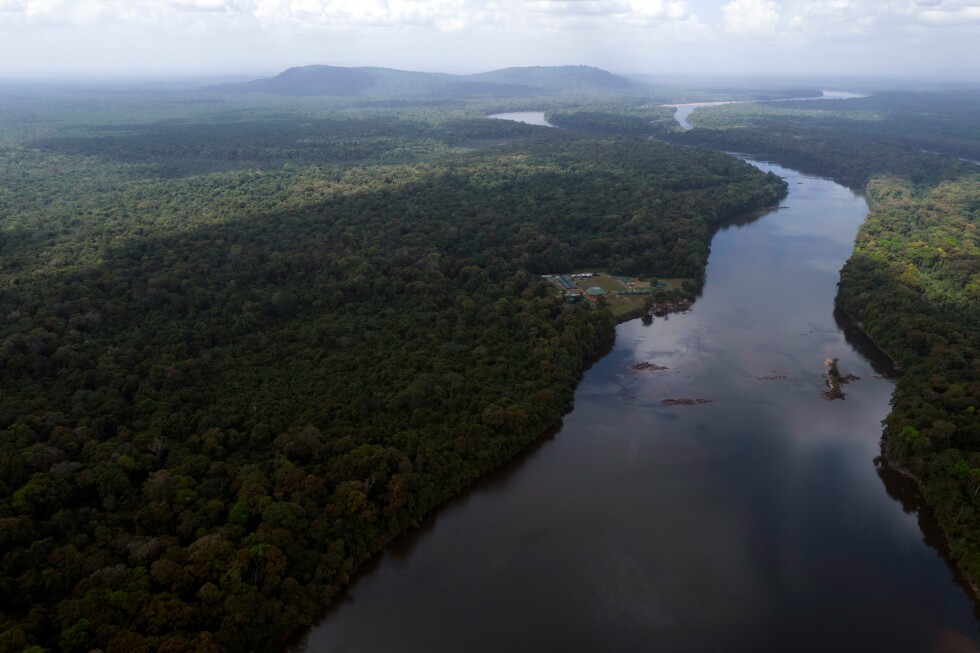
THE HAGUE, NETHERLANDS — A long-simmering territorial dispute between two South American neighbors has taken center stage at the United Nations’ highest judicial body, with Guyana urging the International Court of Justice (ICJ) to uphold a century-old border ruling that grants it control over the resource-rich Essequibo region. Monday marked the opening of a week of public hearings in the case, a proceeding decades in the making that will decide the fate of a 159,000-square-kilometer swath of jungle that Guyana says makes up nearly 70% of its current sovereign territory.
The Essequibo region is far more than a contested stretch of rainforest: it holds abundant reserves of gold, diamonds, and valuable timber, and sits adjacent to massive newly developed offshore oil deposits that have transformed Guyana’s economic prospects in recent years. For Guyana, the dispute has cast a shadow over its status as an independent nation since it gained sovereignty. “This has been a blight on our existence as a sovereign state from the very beginning,” Guyana Foreign Minister Hugh Hilton Todd told judges assembled in the ICJ’s Great Hall of Justice on Monday.
The roots of the conflict stretch back to an 1899 arbitration award reached by a panel of arbitrators from Britain, Russia, and the United States. That ruling set the current border along the Essequibo River, granting the vast majority of the disputed territory to what was then British Guiana, the precursor to modern Guyana. At the time, the United States represented Venezuelan interests before the panel, after Venezuela cut diplomatic ties with Britain. Caracas has long rejected the award, arguing that Western powers conspired to rob it of land that rightfully belongs to Venezuela.
Venezuela maintains its claim to Essequibo dates to the Spanish colonial era, when the region fell within the boundaries of its imperial holdings. The country argues that a 1966 diplomatic agreement reached to restart negotiations on the dispute effectively invalidated the 1899 arbitration, leaving no final settled border between the two nations.
After decades of unsuccessful mediation efforts failed to resolve the standoff, Guyana formally brought the case before the ICJ in 2018, asking judges to affirm the validity of the 1899 border decision. Members of Guyana’s legal delegation dismissed Venezuela’s objections to the award as unoriginal and flawed. Pierre d’Argent, a lawyer on Guyana’s legal team, called Venezuela’s arguments “lengthy, pointlessly controversial and confusing,” noting they “are not new in any way and have already been rejected by the court.”
The case has faced repeated procedural hurdles over the past seven years. Venezuela has repeatedly challenged the ICJ’s right to hear the dispute, arguing that the court could not proceed without the participation of the United Kingdom, which ruled Guyana as a colony at the time of the 1899 award. In 2020, the ICJ rejected that challenge and ruled it held jurisdiction over the case, clearing the way for the substantive hearings held this week. In a 2025 order, the court also barred Venezuela from holding regional elections for claimed governing officials for Essequibo, a move that escalated tensions ahead of the hearings.
Recent political upheaval in Venezuela has added a new layer of tension to the proceedings. Earlier this year, former Venezuelan leader Nicolás Maduro was captured by U.S. forces in a nighttime raid on Caracas, removing him from power. Delcy Rodríguez, Venezuela’s current acting president, has publicly emphasized the country’s claim to Essequibo in recent diplomatic trips, wearing a Essequibo-shaped territorial pin during visits to Grenada and Barbados. The pin has become a widespread symbol among Venezuelan ruling party officials, state media personalities, and lawmakers in the months since Maduro’s ouster, signaling that Caracas remains firm in its territorial claim.
Venezuela is scheduled to present its opening arguments to the ICJ on Wednesday, kicking off its side of the weeklong proceedings that will lay out its case against the 1899 border award. The court’s final ruling on the dispute will have far-reaching implications for the sovereignty, economic future, and diplomatic relations between the two South American nations.