分类: world

  • For foreign workers in the Mideast, risk from the Iran war collides with economic strain at home

    For foreign workers in the Mideast, risk from the Iran war collides with economic strain at home

    Across the Gulf Arab states and broader Middle East, millions of low-wage migrant workers from impoverished South Asian, Southeast Asian and African nations are facing an impossible choice rooted in the ongoing conflict between the U.S.-Israel alliance and Iran. For many, the decision is not even their own to make, as the violence has already claimed their lives.

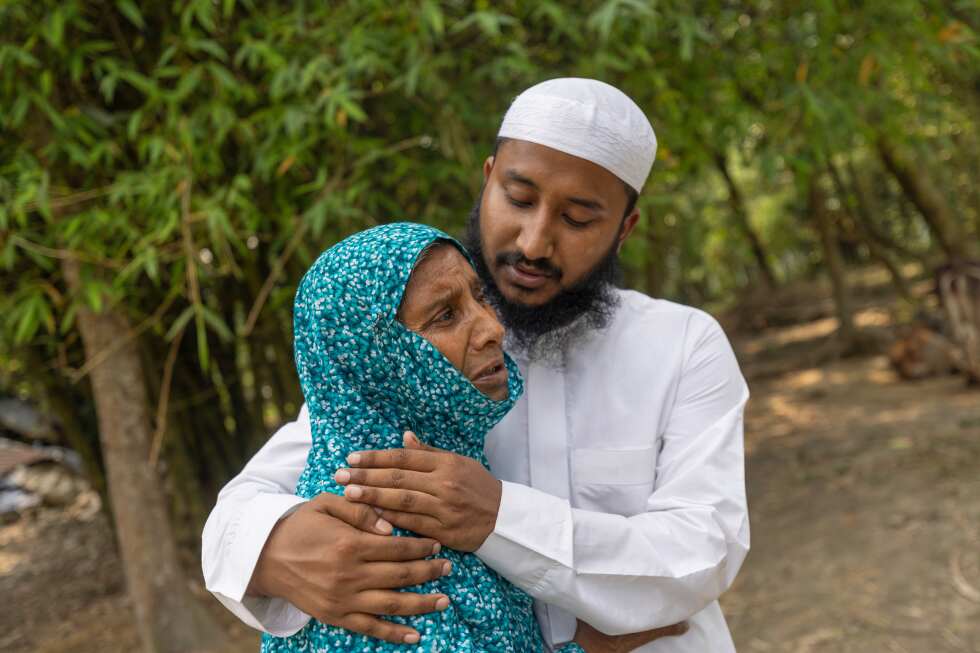
    For 35-year-old Mohammad Abdullah Al Mamun, a Bangladeshi migrant worker who spent 15 years laboring in Saudi Arabia to support his family, the dream of coming home for good ended on March 8. Mamun had only met his 6-year-old son once, just a few short days in a lifetime of separation. This year, he had drawn up careful plans: return to Bangladesh’s Cox’s Bazar, one of the country’s poorest regions, use his years of savings to build a larger family home, and finally build a relationship with the child he barely knew. That dream died when a missile struck the workers’ camp where he was staying. He suffered catastrophic burns and did not survive, becoming one of more than two dozen foreign migrant workers killed in cross-regional attacks since the conflict erupted in February. Earlier this month, Mamun’s body arrived home in a coffin, leaving his widow, mother and siblings to grapple with an uncertain future. “We don’t know what we will do next,” said his widow Sadia Islam Sarmin. His mother Shahida Khatun added, “The pain of losing a child. There are no words to describe the agony.”

    Migrant workers have long been the unseen backbone of the Gulf’s modern oil-fueled economies, making up a majority of the population in many Gulf states. While Western, Arab and Indian professionals hold upper-tier roles in business and finance, low-income laborers from poor Asian and African nations work grueling long hours in extreme desert heat at oil facilities, construction sites and factories, often with minimal legal or safety protections. That lack of protection has been thrown into sharp relief by the recent conflict.

    The Coalition for Labour Justice for Migrants in the Gulf, an advocacy group tracking the crisis, reports that few migrant workers had access to emergency bomb shelters when attacks began, and many were left stranded as conflict disrupted travel and evacuation routes. Waves of missile and drone strikes launched by Iran and its allied armed groups have killed at least 24 foreign workers across the Gulf and another four in Israel, including eight mariners killed at sea. “It’s a very precarious situation for migrant workers,” explained Udaya Wagle, a migration and labor researcher at Northern Arizona University.

    A fragile ceasefire was announced in early April, but efforts to negotiate a permanent end to hostilities have repeatedly stalled. Iran has blockaded the Strait of Hormuz, the world’s most critical chokepoint for global oil and gas exports, stating it will only reopen the waterway if the war ends and the U.S. lifts its economic blockade of Iran. The disruption to global energy supplies has sent prices of gas, fertilizer and essential commodities soaring, hitting already vulnerable importing nations across South and Southeast Asia particularly hard.

    For the low-wage migrant workers caught in the middle, this creates a devastating dilemma. If they stay in the Middle East, they face the constant risk of renewed fighting, but they can earn far higher wages than they could ever access at home—remittances that are often the only lifeline keeping their families out of poverty. If they return home, they leave behind that critical income to return to nations already reeling from skyrocketing prices and economic instability brought on by the conflict.

    Low-wage laborers like Mamun are the most exposed to harm, experts say. They fill what development advocates call the “3D jobs”—dirty, dangerous and difficult—with little access to emergency support. In Qatar, a 27-year-old Bangladeshi factory worker who earns less than $400 a month, sending two-thirds of that salary home to his family, has already seen shrapnel from a strike land near his living quarters. Even as missiles fly overhead, he continues working 12-hour shifts, with no other option to support his family. He spoke on condition of anonymity, fearing retaliation from local authorities. “We have no choice but to keep working,” he said.

    While Qatar introduced limited labor reforms ahead of the 2022 FIFA World Cup, including partial rollback of the controversial kafala system that tied workers’ visas to a single employer, activists say widespread labor abuses persist, and workers have almost no avenues to seek justice for exploitation or danger. That vulnerability is compounded for workers in informal roles, who rarely have fixed contracts or access to emergency benefits.

    Ahmed al-Aliyli, an Egyptian taxi driver based in Qatar, has not been able to send any money home to his family in Egypt for two months. Before the conflict, he earned up to $3,000 a month; now his income has plummeted to just a third of that pre-war level as conflict has disrupted travel and tourism. “We are the collateral damage of this war,” he told reporters.

    Shariful Islam Hasan, a researcher with BRAC, Bangladesh’s largest development organization, warns that an impending slowdown in key Gulf sectors like construction and real estate will hit migrant workers directly. Workers from Bangladesh and Pakistan are disproportionately at risk, he says, because most hold informal, contract-free positions. The labor advocacy coalition adds that even where reforms have been made, many workers’ work permits remain tied to individual employers, leaving them effectively trapped in place even if they want to leave. There are also growing fears that some employers are using the chaos of the conflict to withhold wages, deny emergency leave and carry out arbitrary dismissals with no consequences.

    For most migrant workers, returning home permanently is simply not a viable economic option. Remittances from Gulf workers make up roughly 1% of India’s total GDP, 3% to 5% of GDP for Bangladesh, Pakistan and Sri Lanka, and nearly 10% of Nepal’s entire national output. These remittances are more critical than ever now, as household incomes stagnate across South Asia, and governments struggle to secure enough foreign currency to import energy and essential goods. With their home nations already reeling from economic crisis, giving up Gulf wages would leave many families unable to afford food, energy or education.

    Marlene Flores, a Filipino migrant worker in Qatar, says she feels the shockwaves every time a missile is intercepted over the country. But even with the safety risk, she says the tax-free salary and health benefits she gets in Qatar are more stable than what she could access back home, where the Philippines has declared a national energy emergency. “It’s not easy for me to say,” she admitted, “But I would really stay here.”

    Even in Israel, which hosts a large population of foreign migrant care workers, many face the same impossible calculation. Jeremiah Supan, a Filipino caregiver, continues to care for his two elderly clients even as daily missile alerts force him to dash for cover, sometimes running through active danger to fetch food or medicine for the people he cares for. He knows he could die at any moment, but he cannot see how his family would survive if he gave up his job and returned to the Philippines. “I know that in the blink of an eye, one can die,” he said. “But what life shall we return to?”

    This report is sourced from on-the-ground contributions from journalists across Manila, Dhaka, Cairo and Kuala Lumpur, with reporting coordinated by the Associated Press.
  • ‘No pilgrims’: regional war hushes Iraq’s holy cities

    ‘No pilgrims’: regional war hushes Iraq’s holy cities

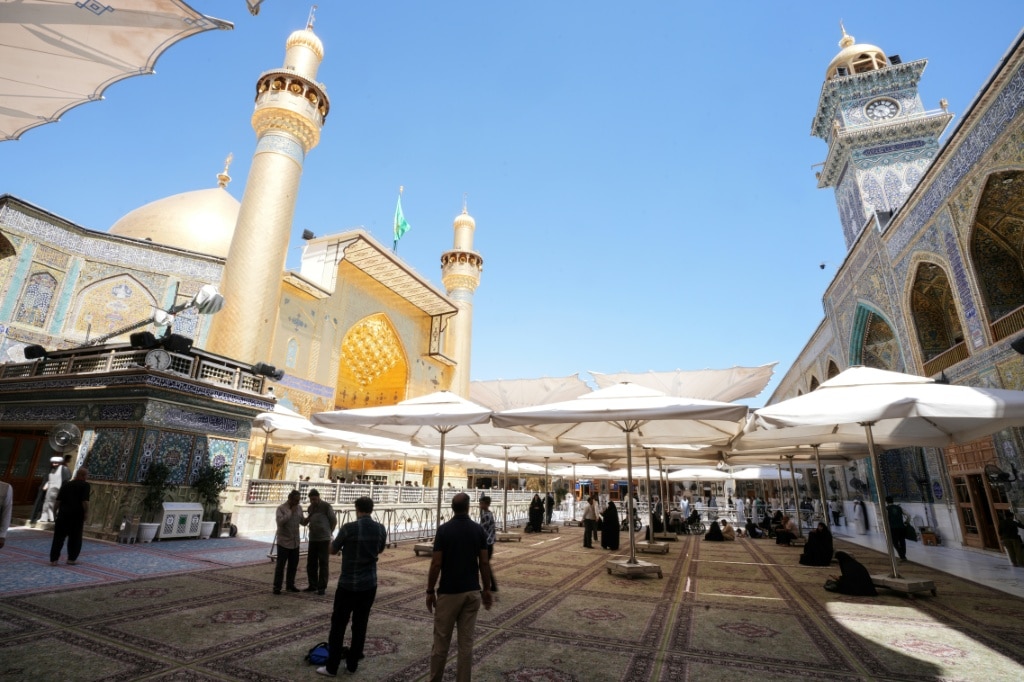
    The echoes of multilingual pilgrim chatter that once filled the vast courtyards of Imam Ali’s iconic golden-domed shrine in Iraq’s Najaf have fallen silent. Months of escalating regional conflict sparked by U.S.-Israeli strikes on Iran in late February have effectively halted the annual flood of Shia worshippers that sustains the local economy, leaving business owners, workers and hoteliers reeling from an unprecedented collapse in tourism revenue.

    For decades, millions of Shia Muslims from across the globe – Iran, Lebanon, Gulf Cooperation Council states, India, Afghanistan and beyond – make the spiritual journey to Iraq’s two holiest sites: Najaf, home to the burial place of Imam Ali, the Prophet Mohammed’s son-in-law and first Shia Imam, and Karbala, 80 kilometers north, where the Prophet’s grandsons Imam Hussein and Abbas are interred. For local communities, religious tourism is not just an industry – it is the backbone of daily livelihood.

    Seventy-one-year-old Abdel Rahim Harmoush, a jeweler who has operated a stall in Najaf’s old market near the shrine for 38 years, recalled the days when the market was so packed with foreign visitors that navigating the aisles was nearly impossible. “Iranians used to keep everyone busy: the jeweller, the fabric merchant, the taxi driver. Now there are none,” he said. Without a swift return of pilgrim crowds, Harmoush warned, the sector faces total economic ruin: small business owners will be unable to cover rent and taxes, day laborers will go without work, and transportation workers will be left stranded without passengers.

    The crisis has hit the hospitality sector particularly hard. Of Najaf’s 250 hotels, 80 percent have already shut their doors, according to Saeb Abu Ghneim, head of the city’s hotel association. More than 2,000 hotel employees have been laid off or placed on unpaid leave. Fifty-two-year-old hotel owner Abu Ali told reporters he was forced to let go five of his six staff members, leaving just one employee to manage nearly 70 empty rooms. “How can I pay salaries if there is no work?” he asked.

    Even currency exchangers, who once navigated nonstop lines of foreign visitors converting dinars, now sit idle. Twenty-eight-year-old Moustafa al-Haboubi said he now gets just one or two customers a day, spending most of his work hours scrolling through his phone or chatting with nearby neighbors. “There are no pilgrims now, Iranian or otherwise,” he said.

    The collapse of the sector comes even after a fragile ceasefire took effect on April 8 and Iraq reopened its airspace to commercial traffic. Only a tiny trickle of domestic pilgrims visit on weekends, with almost no international worshippers returning to the sacred sites. The situation is identical in Karbala, where Israa al-Nasrawi, head of the city’s tourism committee, described the ongoing crisis as a “catastrophe.”

    Tourist numbers in Karbala have dropped by roughly 95 percent, forcing hundreds of hotels to close and leaving dozens of tour operators completely out of work. Akram Radi, a tour manager with 16 years of experience in the sector, said his company once served up to 1,000 visitors a month, and now operates at just 10 percent capacity. “I might have to close and look for another job,” he said.

    For Iraq, the collapse of religious tourism deals a major blow to the non-oil sector, which has long sought to diversify the country’s oil-dependent economy. The industry had only just recovered from widespread shutdowns during the COVID-19 pandemic, when mosques and shrines were closed to visitors for months. After decades of persistent conflict that have gutted other parts of Iraq’s tourism industry, religious tourism remained one of the few reliable sources of income and employment for millions of people in the country’s southern holy cities – and today, that future hangs in the balance.

  • Israel court extends detention of two Gaza flotilla activists

    Israel court extends detention of two Gaza flotilla activists

    In a development that has reignited international debate over Israel’s blockade of Gaza and the treatment of humanitarian aid activists, an Israeli court ruled Sunday to extend by two days the pre-questioning detention of two foreign activists intercepted while sailing toward the blockaded Palestinian enclave. The two men — Spanish national Saif Abu Keshek and Brazilian activist Thiago Avila — are part of a larger humanitarian flotilla organized to break Israel’s 17-year blockade of Gaza and deliver urgently needed supplies to the war-ravaged territory, which has faced catastrophic shortages of food, medicine, and other critical goods during the ongoing Gaza conflict.

    The flotilla, comprising more than 50 vessels that departed from ports in France, Spain, and Italy, was intercepted by Israeli military forces in international waters off the coast of Greece in the early hours of Thursday. Following the interception, Israel removed roughly 175 activists from the flotilla, detaining only Abu Keshek and Avila for further questioning and transferring them to Israeli territory.

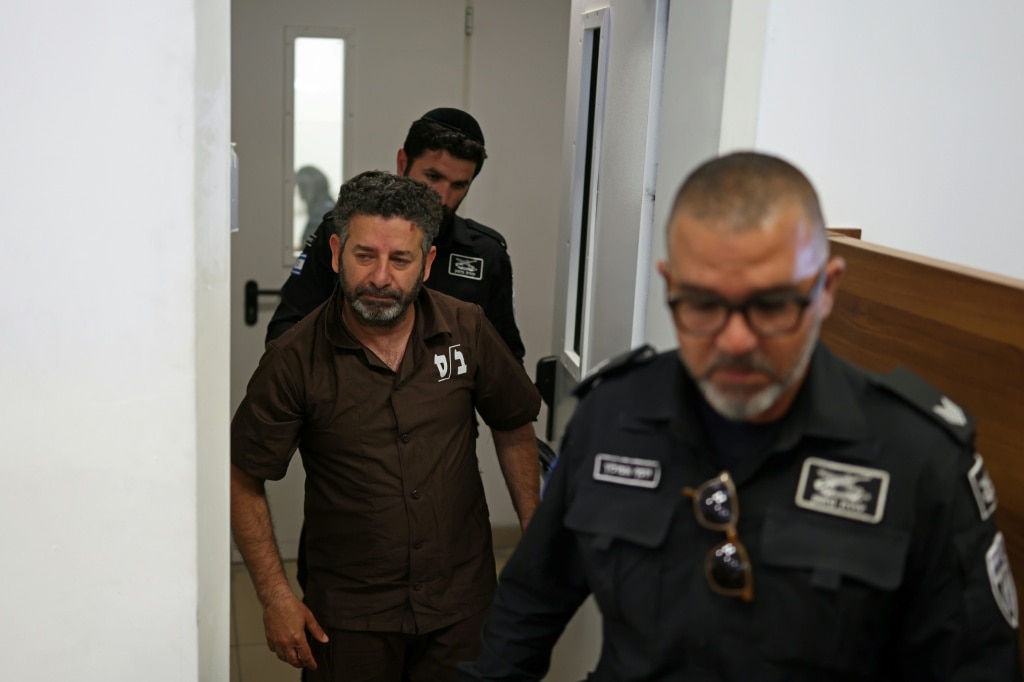
    Footage captured by Agence France-Presse (AFP) showed the pair being escorted into the courtroom in the southern Israeli city of Ashkelon: Avila was led into the building with his hands secured behind his back, while Abu Keshek’s ankles were bound in shackles. Miriam Azem, international advocacy coordinator for Adalah — the Israeli rights group representing the two activists — confirmed to AFP that the court granted the state’s request for a 48-hour detention extension.

    Israeli prosecutors presented a list of serious allegations against the two men, including charges of “assisting the enemy during wartime” and “membership in and providing services to a terrorist organization.” Israel’s foreign ministry further claims the activists are affiliated with the Popular Conference for Palestinians Abroad (PCPA), a group the United States has accused of operating clandestinely on behalf of Hamas, the Palestinian militant group governing Gaza. The ministry identified Abu Keshek as a leading PCPA member and Avila as a linked individual suspected of unspecified illegal activity.

    Adalah’s legal team has pushed back forcefully against the proceedings, first challenging the Israeli court’s jurisdiction over the pair. The lawyers argue the detention amounts to an “unlawful abduction” that took place outside Israeli territorial waters, making any legal process against the men illegitimate. Beyond the jurisdiction dispute, the defense has detailed grave allegations of abuse inflicted on the two activists following their capture. In testimony presented to the court, Avila and Abu Keshek described being subjected to what they called “severe physical abuse amounting to torture” during their transit to Israel. Adalah lawyers said Avila specifically recounted being dragged face-down across the deck of a vessel after interception, beaten so severely that he lost consciousness twice. Abu Keshek, the group added, was kept hand-tied and blindfolded, forced to lie face-down on the floor continuously from the moment of his capture until he arrived in Israel.

    Israeli officials have categorically denied all allegations of abuse. “Contrary to the false and baseless claims prepared in advance, at no point were Saif Abu Keshek and Thiago Ávila subjected to torture,” foreign ministry spokesman Oren Marmorstein told AFP. Marmorstein acknowledged that Israeli personnel used force against the pair, but framed the action as a response to resistance: “Following violent physical obstruction by Saif Abu Keshek and Thiago Ávila against Israeli staff members, staff were compelled to act in order to stop these actions. All measures taken were in accordance with the law.” As of Sunday, no formal charges have been filed against either activist, who are currently being held at Ashkelon’s Shikma Prison.

    Defense lawyers reiterated after Sunday’s hearing that the two men were part of a purely humanitarian mission, with no ties to any militant group. “We argued that … they were part of a humanitarian mission that aimed to provide humanitarian aid to the civilians in Gaza, and not to any other organisation, whether terrorist or not,” Hadeel Abu Salih, one of the Adalah lawyers representing the pair, told reporters. “We deny all the accusations that were presented… and demand these two men be released immediately.”

    The Spanish government has already joined the call for Abu Keshek’s release, issuing a formal statement to AFP demanding his “immediate release” and confirming that a Spanish consul attended Sunday’s court hearing to accompany the activist. This is not the first high-profile interception of the Global Sumud Flotilla, the organization behind the initiative: the group’s first voyage to Gaza last year also drew international headlines after it was intercepted by Israeli forces, with dozens of activists — including prominent climate campaigner Greta Thunberg — arrested and expelled. Avila was one of the lead organizers of that 2023 voyage.

    Israel has maintained strict land, air, and sea control over all entry points to Gaza since imposing its blockade on the territory in 2007. During the 11-month Gaza war, the enclave’s 2.2 million residents have faced extreme shortages of life-saving aid, with Israel repeatedly halting aid convoys entirely amid military operations, drawing widespread condemnation from international humanitarian groups.

  • Massive search continues for two missing US soldiers in Morocco

    Massive search continues for two missing US soldiers in Morocco

    A large-scale coordinated search operation involving American, Moroccan and allied military forces is entering its second day for two U.S. Army soldiers who went missing during a routine training deployment in southern Morocco, U.S. defense officials confirmed to Agence France-Presse on Sunday.

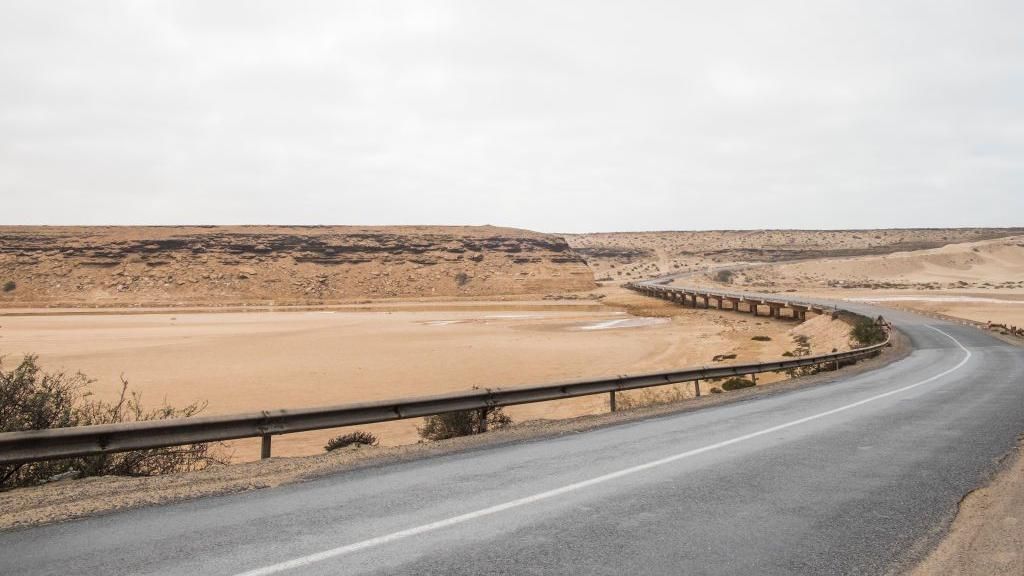
    The service members disappeared from the Cap Draa Training Area late Saturday, and were last located near rugged seaside cliffs. Initial investigations have ruled out any connection to terrorist activity, pointing instead to a tragic accidental incident. According to early assessments, the pair likely fell into the Atlantic Ocean after going off-trail in the coastal area.

    Multiple unofficial reports have added context to the disappearance: The Wall Street Journal cites U.S. officials stating the soldiers had embarked on an unsanctioned hike following the conclusion of scheduled training activities, though AFP has not been able to independently verify this detail. A CBS News reporter embedded with the exercise noted that military helicopters conducted searches continuously through the night and into Sunday morning, after a base-wide headcount shortly after training finished revealed the two soldiers were unaccounted for.

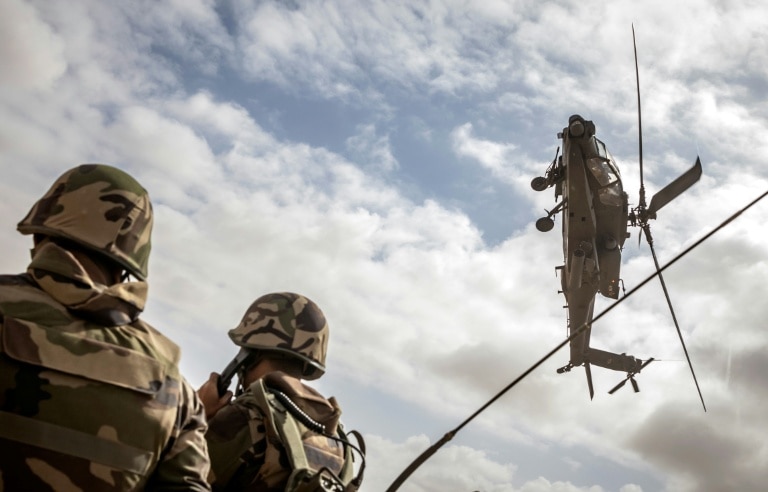
    Morocco’s armed forces publicly confirmed their participation in the search via an official Facebook post, and U.S. defense officials detailed the extensive resources deployed to locate the missing pair. The search effort combines land, air and sea assets, including multiple military helicopters, surface vessels, uncrewed reconnaissance drones, specialized mountain rescue teams, and diving units to comb the coastal waters below the cliffs. As of 8 p.m. GMT Sunday, search operations remained actively ongoing.

    The soldiers were in Morocco to participate in African Lion, the largest annual joint military exercise organized by U.S. Africa Command. Hosted annually across Morocco, Ghana, Senegal and Tunisia, the exercise brings together more than 10,000 military personnel from over 20 nations, including NATO allies and partner forces across North and West Africa, for coordinated training drills focused on regional security and interoperability.

    The Cap Draa Training Area has been the site of past training fatalities involving U.S. personnel during African Lion. In 2012, two U.S. Marines died and two others were injured when their aircraft crashed in the same region during that year’s iteration of the exercise.

  • European leaders converge on Armenia as Russia looks on

    European leaders converge on Armenia as Russia looks on

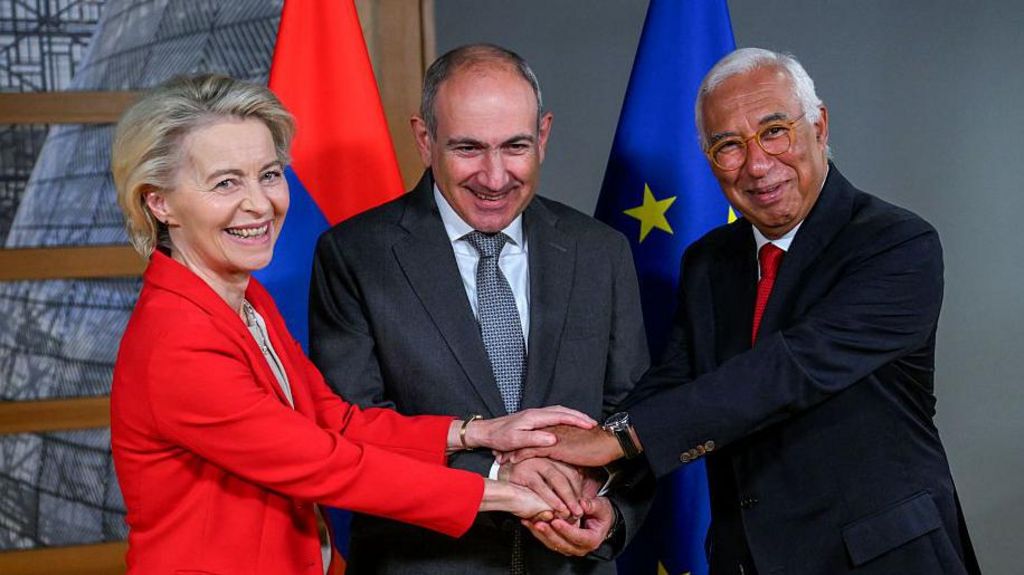
    In a seismic shift for the geopolitics of the South Caucasus, dozens of European leaders are set to gather in Yerevan this week for two back-to-back summits that mark a historic turning point for Armenia – a small nation of under 3 million that has long stood as Russia’s closest ally in the region. The unprecedented gathering, which will open Monday with the European Political Community (EPC) summit bringing together more than 30 European leaders plus Canada’s prime minister, will be followed Tuesday by the first-ever bilateral summit between the European Union and Armenia, attended by European Commission President Ursula von der Leyen and European Council President António Costa. This high-profile European presence in Yerevan carries profound symbolic weight: Armenia remains a member of Russian President Vladimir Putin’s Eurasian Economic Union, and Russia still maintains a permanent military base on Armenian territory. The country also remains heavily reliant on Russian energy, buying natural gas at a heavily discounted rate that Putin explicitly highlighted during Armenian Prime Minister Nikol Pashinyan’s April 2025 visit to the Kremlin. At that meeting, Putin noted Russia charges Armenia just $177.50 per 1,000 cubic meters of gas, compared to the $600 price tag for European buyers, calling the gap substantial and meaningful. What brought a country long anchored in Russia’s geopolitical orbit to the point of hosting the entire continent’s top leaders? The turning point came in 2023, when a devastating war with neighboring Azerbaijan upended all long-standing security assumptions for Yerevan. When Azerbaijan launched a rapid military operation to take full control of the disputed Nagorno-Karabakh region, displacing more than 100,000 ethnic Armenian refugees, Russian peacekeepers stationed on the ground took no action to stop the offensive. Earlier incursions by Azerbaijan into internationally recognized Armenian territory also drew no response from the Russia-led Collective Security Treaty Organization, the regional security bloc designed to protect its member states. “We realised that the security architecture that we are in was not working,” explained Sargis Khandanyan, chairman of the Armenian National Assembly’s foreign relations committee, in comments to the BBC. Long before the 2023 war, the EU had already begun building ties with Yerevan: in 2022, Brussels brokered a preliminary border recognition deal between Armenia and Azerbaijan, and deployed a civilian monitoring mission to the border to oversee compliance. Khandanyan said the on-the-ground presence of European officials fundamentally shifted how Armenian citizens viewed closer ties with the bloc, creating clear public demand for deeper integration. By March 2025, that public and political momentum translated into action: Armenia’s parliament passed a formal law launching the official accession process for EU membership. Parallel to its shifting alignment with Europe, Armenia’s peace process with Azerbaijan has also accelerated dramatically. In August 2025, the two countries’ leaders signed a landmark peace accord at the White House aimed at ending decades of open conflict. As part of the deal, they unveiled the Trump Route for International Peace and Prosperity, a major cross-regional connectivity corridor that will run along Armenia’s border with Iran, linking the South Caucasus directly to European consumer and business markets. Yet for all this progress, significant risks and headwinds remain. The Armenian-Azerbaijani peace process remains fragile, and Europe’s growing embrace of Yerevan has already carried tangible diplomatic costs. Just last week, Azerbaijan’s parliament voted to suspend all formal ties with the European Parliament in response to a resolution calling for the right of return for displaced Nagorno-Karabakh Armenians and the release of Armenian detainees held in Baku. For its part, Moscow has made its irritation with Armenia’s pro-European shift impossible to miss. During Pashinyan’s April visit to the Kremlin, the Russian leader openly pushed back on Yerevan’s EU accession ambitions, noting that membership in the Eurasian Economic Union – a Russian-led customs union – and the EU are mutually exclusive. “It is not possible to be simultaneously in a customs union with both the European Union and the Eurasian Economic Union,” Putin stated. “It is simply impossible by definition.” In the lead-up to this week’s summits, Moscow has already taken tangible punitive measures: just days before the EPC gathering, Russia banned imports of Armenian mineral water. Armenian analysts say such moves fit a consistent pattern of hybrid pressure from Moscow: pro-EU policy moves or official visits to Brussels are often followed by delays for Armenian cargo trucks at the Georgian-Russian border, large-scale cyberattacks targeting government infrastructure, and coordinated disinformation campaigns. Just weeks ago, the EU approved an expanded two-year civilian mission to Armenia designed to counter these Russian threats: the mission will focus on countering disinformation, cyberattacks, and illicit financial flows, particularly ahead of Armenia’s June 2026 parliamentary elections. The mission is modeled on a similar deployment to Moldova ahead of its 2025 elections, where pro-EU incumbent forces retained power. Artur Papyan, founder of CyberHUB-AM, an Armenian organization that monitors the country’s information and cyber space, says the pattern of Russian interference is clear and consistent with tactics seen in other pro-European post-Soviet states including Moldova, Romania, and Ukraine. In January 2026 alone, his organization documented a large-scale cyberattack on WhatsApp that compromised hundreds of thousands of Armenian accounts – a platform widely used by senior government officials. In a separate incident, hackers created a fake Signal account impersonating EU Ambassador to Armenia Vassilis Maragos, sending invitations to a fake Armenia-EU relations conference that fooled even experienced civil society workers. Investigations traced the attack to IP addresses based in Zelenograd, a city northwest of Moscow that is a major hub for Russian digital intelligence operations. In the 48 hours leading up to the Yerevan summits, Papyan said his team recorded multiple spikes in coordinated Telegram posts pushing a single narrative: that hosting the summits pushes Armenia past a point of no return with Russia, and that harsh retaliation from Moscow is inevitable. Alain Berset, secretary general of the Council of Europe, who will attend this week’s summits, warned that while Armenia’s democratic institutions have made significant progress, they remain under sustained pressure from foreign interference. Berset identified foreign meddling, coordinated disinformation, and online political polarization as the top threats ahead of June’s parliamentary elections, noting that while Yerevan has some legal frameworks to counter these threats, they are not yet scaled to match the sophistication of the attacks. While European leaders are arriving in Yerevan with promises of expanded civilian support and a roadmap for visa liberalization for Armenian citizens within two years, Brussels has offered no firm timeline for membership, no binding defense commitments, and no plan to replace the discounted Russian gas that still powers Armenia’s economy. Without these concrete guarantees, Armenia’s delicate balancing act between its historic alliance with Russia and its new pro-European course remains far from settled.

  • Amsterdam bans public adverts for meat and fossil fuels

    Amsterdam bans public adverts for meat and fossil fuels

    Amsterdam has cemented its place in climate policy history by becoming the world’s first capital city to implement a full public advertising ban on both meat and fossil fuel products. Since May 1, all promotions for beef burgers, petrol-powered cars, airline travel and other high-carbon goods have been removed from municipal billboards, tram shelters, and metro stations across the city.

    At one of Amsterdam’s busiest downtown tram stops, positioned next to a lush roundabout blooming with bright yellow daffodils and iconic orange Dutch tulips, the transformation of the city’s outdoor advertising landscape is impossible to miss. Where ads for chicken nuggets, gas-powered SUVs and low-cost international flights dominated public display space just last week, posters now promote Amsterdam’s world-famous Rijksmuseum and upcoming local piano concerts.

    City policymakers explain the new rule is designed to align the capital’s public spaces with the municipal government’s ambitious environmental goals, which target full carbon neutrality by 2050 and a 50% reduction in local meat consumption over the same timeline. “The climate crisis is incredibly urgent,” noted Anneke Veenhoff of Amsterdam’s GreenLeft Party. “If we claim to be leaders in climate action, but then rent out our public advertising space to products that directly undermine those targets, what message does that send? Most residents cannot understand why the city would profit from promoting products our own policies actively work against.”

    Anke Bakker, group leader of the animal rights-focused Party for the Animals in Amsterdam and the politician who spearheaded the new restrictions, has pushed back against criticism that the ban represents overreaching “nanny state” governance. “Every person is still free to make their own purchasing choices,” Bakker explained. “What we are doing is stopping large corporations from constantly pushing these products on the public. In fact, this gives people more freedom to make uncoerced choices for themselves.” Removing constant visual prompts for high-carbon products, she added, both cuts down on impulsive buying and redefines cheap meat and fossil-fuel heavy travel as no longer desirable, aspirational lifestyle options.

    In market terms, meat advertising makes up only a tiny fraction of Amsterdam’s outdoor ad industry, accounting for roughly 0.1% of total outdoor ad spend, while fossil fuel-related promotions make up around 4%. Clothing brands, film promotions and mobile phone ads currently dominate the city’s public display space. But the policy carries major symbolic and political weight: grouping meat with air travel, cruises and fossil-fuel cars reframes meat consumption from a purely private dietary decision to a pressing public climate issue.

    Unsurprisingly, industry groups have pushed back against the new rule. The Dutch Meat Association, which represents the country’s meat producers, has called the ban “an undesirable way to influence consumer behaviour,” arguing that meat “delivers essential nutrients and should remain visible and accessible to consumers.” The Dutch Association of Travel Agents and Tour Operators has also criticized the ban on air travel advertising as a disproportionate restriction on businesses’ commercial freedom.

    For climate and animal welfare activists, however, the ban represents a landmark shift that aims to create what they call a “tobacco moment” for high-carbon food. Environmental lawyer Hannah Prins, whose organization Advocates for the Future collaborated with campaign group Fossil-Free Advertising on the push for the ban, draws a parallel to the widespread shift in public attitudes toward tobacco advertising over the past decades. “Looking back at old photos, you see legendary Dutch footballer Johan Cruyff in tobacco ads – that used to be completely normal,” Prins pointed out. “Cruyff died of lung cancer, and today the idea of allowing cigarette ads in public spaces feels absurd. What we accept as normal in our public spaces shapes what we accept as normal in our society. I don’t think it’s normal to have advertisements for slaughtered animals on public billboards, and it’s good that this is changing.”

    Amsterdam’s move is not without precedent. In 2022, the nearby Dutch city of Haarlem, just 18 kilometers west of the capital, became the first city in the world to announce a broad ban on most meat advertising in public spaces, which took full effect in 2024 alongside its own ban on fossil fuel ads. Utrecht and Nijmegen have since introduced similar restrictions on municipal meat advertising – with Nijmegen extending its ban to include dairy as well, on top of existing fossil fuel, petrol car and air travel ad prohibitions.

    Globally, dozens of cities have already implemented or are moving toward bans on fossil fuel advertising, including Edinburgh, Sheffield, Stockholm and Florence. France has even put a nationwide fossil fuel ad ban in place. Campaigners now hope Amsterdam’s approach of linking meat and fossil fuel promotion as interconnected climate issues will serve as a legal and political blueprint for other cities around the world to follow.

    Still, the new rule leaves a major gap: while meat and fossil fuel ads have disappeared from Amsterdam’s tram stops and billboards, the same promotional offers still appear regularly on consumers’ social media feeds, and most pedestrians spend much of their time waiting for transit staring at their phone screens anyway. This has led to questions: if municipal bans only cover public outdoor spaces and leave digital advertising untouched, how much real impact can they have on consumer habits, or are they just symbolic virtue-signaling?

    To date, there is no direct empirical evidence that removing meat advertising from public spaces shifts whole societies toward more plant-based eating patterns. But some public health researchers are cautiously optimistic about the policy’s potential long-term impact. Joreintje Mackenbach, an epidemiology professor at Amsterdam University Medical Center’s Department of Epidemiology and Data Science, calls Amsterdam’s new ban “a fantastic natural experiment” to study the impact of advertising on social norms and consumption. “When we see fast food ads everywhere, it normalizes the behavior of frequent fast consumption,” Mackenbach explained. “If we remove those environmental cues from our shared public spaces, that will inevitably change how people perceive these products and shift social norms.” She pointed to prior research showing London Underground’s 2009 ban on junk food advertising led to a measurable drop in junk food purchases across the U.K. capital.

    Prins, for her part, argues the ban will open up opportunities for Amsterdam’s small local businesses. “All the things we love most about this city – neighborhood festivals, local artisanal cheese, the corner flower shop – those don’t need big national advertising campaigns,” she said, standing along the banks of a central Amsterdam canal. “They grow through word of mouth and people walking past them every day. I think local businesses will actually thrive with more public advertising space available. And I hope this makes big polluting companies stop and think, and rethink the products they sell. That’s how change starts.”

  • Israel extends detention of ‘tortured’ Gaza flotilla activists

    Israel extends detention of ‘tortured’ Gaza flotilla activists

    In a development that has drawn sharp international condemnation, an Israeli court has granted a two-day extension to the detention of two pro-Palestinian activists seized by Israeli forces from a Gaza-bound humanitarian flotilla in international waters, their legal representative confirmed Sunday.

    The two detainees — Saif Abu Keshek, a Spanish-Swedish citizen of Palestinian descent, and Thiago Avila, a Brazilian national — were taken into Israeli custody by Israeli authorities late Wednesday after the interception of the Global Sumud Flotilla. More than 100 other fellow activists on board the aid vessel were instead diverted and transferred to the Greek island of Crete following the raid.

    Allegations of abusive treatment have quickly emerged from the detention process. According to Brazil’s embassy in Israel, which conducted an official monitored visit with Avila, the activist reported being tortured, beaten and subjected to ongoing mistreatment while held by Israeli officials. During the visit, which separated Avila from embassy representatives by a glass barrier and prevented open, unmonitored communication, diplomatic staff observed clear visible bruising on his face. Avila also told officials he experiences severe persistent pain, most acutely in his shoulder.

    The Global Sumud Flotilla organization, which coordinated the aid mission, has also backed abuse claims against Abu Keshek, citing direct eyewitness accounts that confirm he was tortured and subjected to severe ill-treatment while held aboard an Israeli military vessel before being transferred to Israeli territory.

    An official spokesperson for the Israeli judiciary confirmed the two-day extension of the activists’ remand, pushing their next custody review to May 5. Israeli authorities had originally petitioned the court for a four-day extension of detention, basing their request on a series of contested criminal allegations against the pair.

    Adalah, the Israeli legal rights group representing the two activists, has publicly outlined the charges: assisting an enemy during wartime, unauthorized contact with a foreign agent, membership in a terrorist organization, providing services to a designated terrorist group, and transferring property to terrorist actors. Both Abu Keshek and Avila have formally rejected all allegations against them.

    Hadeel Abu Salih and Lubna Tuma, the Adalah solicitors arguing the case before the Israeli court, emphasized that the entire legal proceedings against the foreign activists are fundamentally “flawed and illegal.” The legal team noted there is no valid legal basis for applying Israeli criminal law extraterritorially to actions carried out by foreign nationals in international waters, where the flotilla was intercepted. Abu Salih further added that both men were subjected to physical violence during their transfer to Israel, and were held continuously handcuffed and blindfolded from their arrest through Thursday morning.

    As of Sunday, the Israeli military had not issued an immediate response to a request for comment from Reuters on the abuse allegations. Israel’s Foreign Ministry has previously labeled organizers of the Global Sumud Flotilla as “professional provocateurs.”

    The mission that ended in interception is the second Global Sumud Flotilla, which set off from the Spanish port of Barcelona on April 12 with the explicit goal of breaking Israel’s long-running aerial, land and sea blockade of the Gaza Strip by delivering desperately needed humanitarian aid to the besieged enclave. In response to the arrests, the governments of Spain and Brazil released a joint official statement Friday branding the detention of the two activists as illegal under international law.

  • Kenya’s rainy season turns deadly again, with 18 killed and 54,000 households hit over a week

    Kenya’s rainy season turns deadly again, with 18 killed and 54,000 households hit over a week

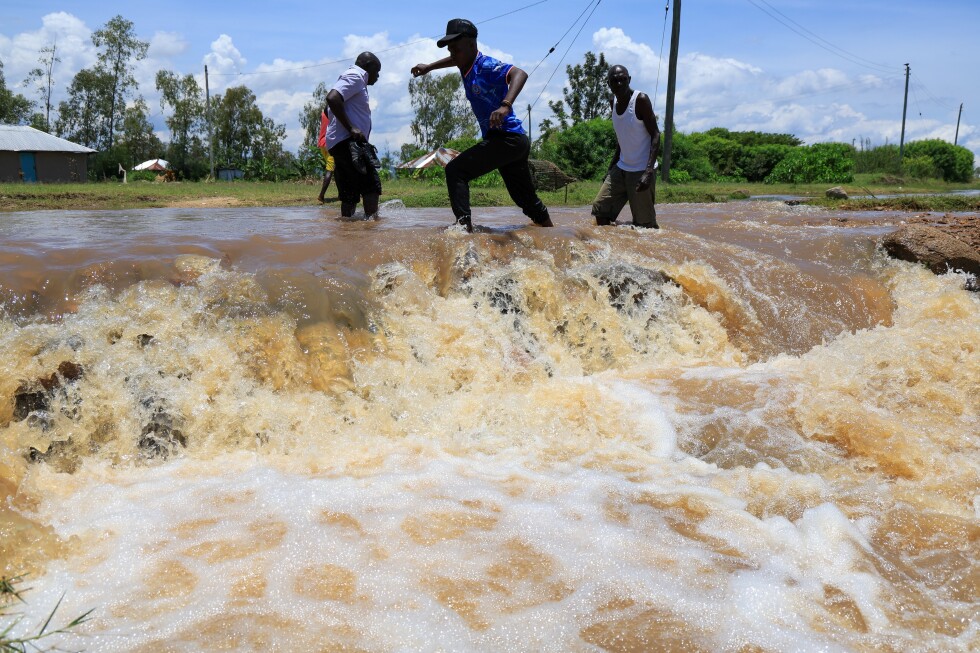
    NAIROBI, KENYA — A new week of relentless heavy rainfall has brought catastrophic devastation across Kenya, leaving 18 people dead in just seven days, national police confirmed in an update released Sunday. Authorities say most of the recent fatalities were caused by drowning, as swollen waterways and saturated terrain have turned everyday landscapes into life-threatening hazards.

    According to data from Kenya’s Interior Ministry, the crisis has disrupted the lives of more than 54,000 households spread across every region of the East African nation. The capital city of Nairobi has not been spared, with 6,000 local households already impacted by rising floodwaters that have submerged neighborhoods and blocked access to basic services.

    Across the country, critical public infrastructure has suffered extensive damage. Dozens of primary and secondary schools have been flooded, forcing widespread school closures that have put thousands of students out of classrooms. Multiple healthcare facilities have also been inundated, disrupting access to medical care for vulnerable communities. Seventeen major roads connecting regions across Kenya are now impassable, cutting off supply routes and emergency access to hard-hit areas.

    Beyond flooding, the saturated soil has triggered destructive mudslides in the western Rift Valley region, forcing thousands of residents to flee their homes for safer ground. Authorities have also issued evacuation orders for communities living downstream along the Tana and Athi rivers, where water levels behind the nation’s hydroelectric dams have climbed to dangerous heights, raising the risk of downstream flooding.

    Kenya’s national Meteorological Department is warning that the crisis is far from over, forecasting that intensified rainfall will persist through the first half of May. This ongoing downpour is part of an unusually severe rainy season that began in March, which has already left a wide path of destruction across the country. By the end of March, the early weeks of the rainy season had already claimed the lives of more than 100 Kenyans, making this one of the deadliest rainy season events in recent years for the nation.

  • Kyiv hits Russian oil sites as eight killed in both countries

    Kyiv hits Russian oil sites as eight killed in both countries

    Four years into Russia’s full-scale invasion of Ukraine, cross-border drone attacks have escalated sharply over the weekend, leaving at least eight people dead across both countries and marking one of the largest daily exchanges of unmanned strikes in the conflict. On Sunday, Ukrainian President Volodymyr Zelensky confirmed that Ukrainian forces had targeted key Russian maritime assets, including a Russian cruise missile carrier and three vessels belonging to Moscow’s shadow fleet of sanctioned oil tankers.

    Zelensky stated the missile-carrying vessel was hit at the Port of Primorsk, located in Russia’s northwestern Leningrad Region—an area that hosts critical Russian oil export terminals that have come under repeated Ukrainian attack in recent weeks. Past strikes on these facilities have sparked large-scale blazes that sent toxic black smoke plumes into the atmosphere, with Kyiv estimating the attacks have already cut off billions of dollars in Russia’s key oil export revenue. Of the three shadow tankers targeted, one was hit at Primorsk, while the other two were struck off Russia’s southern Black Sea port of Novorossiysk. Zelensky also released night-vision footage showing a Ukrainian naval drone approaching one of the tankers anchored off Novorossiysk to confirm the strike. Local Russian authorities in Leningrad Region confirmed a port fire following the Ukrainian attack, but have not released any details on the extent of damage to infrastructure or vessels.

    Shadow fleet tankers are aging, unregistered or under-documented vessels that Russia relies on to ship its crude oil to global markets after Western nations imposed sweeping price caps and trade sanctions on Russian energy exports following the 2022 invasion. Sunday’s strike marks a major escalation in Ukraine’s campaign to disrupt Russia’s energy revenue stream that funds its war effort.

    In a public statement on social media Sunday, Zelensky warned Moscow that Kyiv would expand retaliatory strikes on Russian energy infrastructure if Russia does not end its invasion. “Russia can end its war at any moment. Prolonging the war will only expand the scale of our defensive operations,” he said. Ukraine frames its strikes on Russian territory and energy assets as legitimate retaliation for ongoing Russian attacks on Ukrainian civilian infrastructure.

    The weekend exchange of drone fire was one of the largest single-day exchanges of unmanned attacks since the war began. Kyiv’s air force reported that Russia launched 268 drones and one ballistic missile at Ukrainian targets in the overnight barrage, while Russia’s Ministry of Defense claimed Ukraine launched 334 drones targeting Russian territory over the same period.

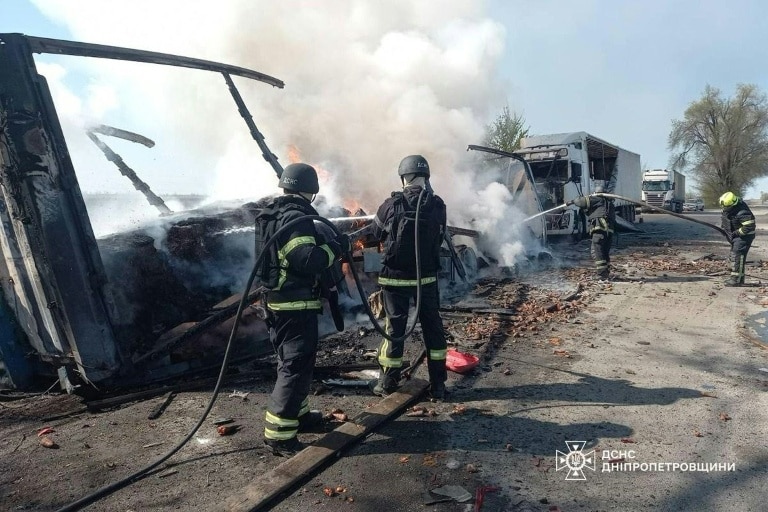
    Civilian casualties were reported on both sides. On Russian-controlled territory, two people were killed in the border region of Belgorod, one person was killed near Moscow, and a teenage civilian was killed in Russian-occupied southern Ukraine. On the Ukrainian side, two civilians died in attacks on the southern coastal Odesa Region, one was killed in the frontline Kherson Region, and another death was recorded in a strike on the major industrial city of Dnipro. Images released from Dnipro show the full roof of a five-story residential apartment building collapsed, with exposed wooden support beams and rubble scattered across the damaged top-floor units.

    Both sides have repeatedly denied intentionally targeting civilian populations. Since Russia launched its full-scale invasion in February 2022, tens of thousands of people have been killed, the vast majority of them Ukrainian civilians and soldiers. Data compiled by AFP from Ukrainian air force records shows that in April, Russia ramped up its long-range drone campaign to a record high, launching an average of more than 200 attack drones per day against Ukrainian targets. Diplomatic efforts to negotiate a ceasefire or end to the conflict have remained stalled for months, with neither side showing willingness to agree to major concessions to de-escalate the fighting.

  • Two US service members reported missing in Morocco, officials say

    Two US service members reported missing in Morocco, officials say

    In a developing incident reported over the weekend, two American service members have been declared missing while taking part in a large-scale multinational military exercise in southern Morocco, U.S. Africa Command (Africom) confirmed in a statement released Sunday.

    The missing service members were participating in African Lion 2026, the yearly joint military drill that brings together U.S. military personnel, NATO alliance partners, and multiple African partner nations. The exercise’s core mission is to enhance interoperability, strengthen tactical coordination, and deepen security cooperation across transatlantic and African defense forces.

    According to Africom’s official update, the two troops were reported missing Saturday in the area adjacent to the Cap Draa Training Area, located just outside the southwestern Moroccan city of Tan Tan. This coastal desert region near the Atlantic coast forms the primary training ground for large-scale maneuver drills during African Lion.

    A comprehensive search and rescue operation has been activated to locate the missing service members, with assets contributed by multiple nations. The mission draws on ground search teams, air reconnaissance sorties, and maritime patrol resources from the United States, Moroccan defense forces, and other participating partners. As of the latest update, the search remains ongoing with no further details released on the circumstances of the disappearance or the identities of the missing troops.