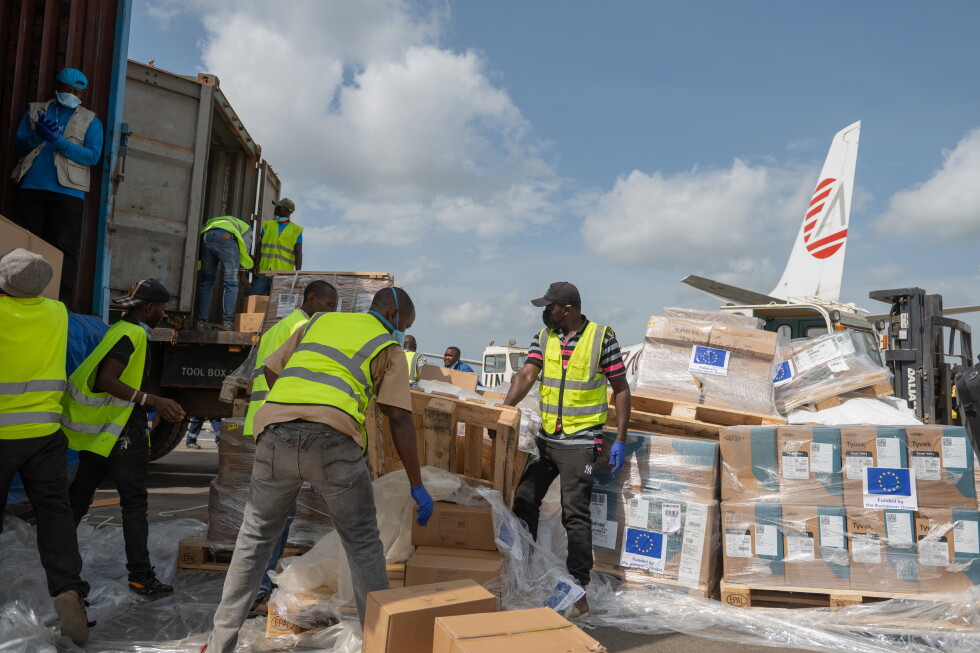
A new shipment of life-saving medical supplies donated by the European Union has arrived in Bunia, the northeastern Congolese town at the center of an unprecedented outbreak of the rare Bundibugyo strain of Ebola, arriving as frontline medical teams battle acute equipment shortages, community distrust, and persistent violence from armed groups across the volatile region.
A white cargo plane touched down at Bunia’s airport early Thursday, unloading pallets of masks, medical gloves, protective boots, and antiviral medications—all supplies that local health facilities have reported running critically low on for weeks. United Nations-marked forklifts moved the sealed aid crates onto waiting trucks, bound for treatment centers across Ituri province, the global epicenter of the outbreak that has already spread beyond Congo’s borders.
On-the-ground reporting from the Associated Press reveals the stark gaps in the current response: emergency treatment centers in Bunia sit largely understaffed and under-resourced, while clinicians in the nearby town of Bambu have been forced to use expired surgical masks when caring for patients showing classic Ebola symptoms.
At least three targeted attacks on Ebola treatment facilities have been recorded in Ituri in recent weeks, sparked by local resident protests over public health measures that conflict with traditional community burial practices. These attacks have amplified the already extreme risk facing local and international health workers deployed to contain the spread.
Jérôme Kouachi, the lead of emergency operations for UNICEF in the Democratic Republic of Congo, confirmed to AP that this initial aid delivery is the first of multiple scheduled shipments that will roll out over the next eight days, part of a scaled-up international response to the crisis.
World Health Organization Director-General Tedros Adhanom Ghebreyesus announced Thursday he is traveling directly to Congo to assess containment efforts on the ground. The Bundibugyo strain at the center of the outbreak has no officially approved vaccine or targeted treatment, and the WHO previously declared the event a Public Health Emergency of International Concern, the body’s highest alert level, to accelerate global aid mobilization.
Since Congolese authorities first declared the outbreak on May 15, officials have confirmed more than 1,000 suspected cases and at least 220 deaths. But public health experts warn the virus circulated undetected for weeks before the official declaration, meaning the actual caseload is far higher than official counts. The outbreak has already spilled across Congo’s northern border into Uganda, where health officials have confirmed seven cases and one fatality. On a small positive note, Congolese authorities announced Wednesday that the first confirmed survivor of the strain has been discharged from a treatment facility after recovering.
Congo’s Foreign Minister Thérèse Kayikwamba Wagner framed the response effort earlier this week as a high-stakes race against time: “We are trying to catch up,” she said.
A new report from international humanitarian organizations released Thursday outlines the wide range of systemic barriers slowing the response, from customs bureaucracy that delays aid shipments, to inadequate cold storage for medical supplies, to poorly maintained rural roads and spotty telecommunications networks that leave remote communities cut off from care.
Tedros issued an urgent appeal this week for an immediate ceasefire across all conflict zones in eastern Congo, a region that has been plagued by interlinked insurgencies and ethnic violence for decades. “We cannot build community trust or isolate the sick while bombs are falling,” he said.
Ituri province, located in northeastern Congo just kilometers from the Ugandan border, has been overwhelmed by repeated attacks from the Allied Democratic Forces, a rebel faction affiliated with the Islamic State, as well as a coalition of ethnic militias. Just two months ago, ADF fighters killed at least 40 local residents and burned dozens of homes in a series of raids across the province.
The outbreak has now spread south from Ituri to two additional Congolese provinces, North Kivu and South Kivu, where the Rwanda-backed M23 rebel group controls major population centers including Goma and Bukavu. Rebel officials have already confirmed two Ebola cases within areas under their control. Goma’s main international airport, a critical logistics hub for all humanitarian aid entering eastern Congo, has remained closed since January 2025, when M23 forces seized control of the city.
Decades of persistent conflict in eastern Congo have created one of the world’s worst humanitarian crises, with more than 7 million people internally displaced across the region, leaving millions more vulnerable to the spread of the virus with limited access to healthcare.
This report was contributed by Ope Adetayo from Lagos, Nigeria.