分类: world

  • An explosive device kills 13 and injures 38 on a bus in southwestern Colombia as violence persists

    An explosive device kills 13 and injures 38 on a bus in southwestern Colombia as violence persists

    On a routine Saturday commute along southwestern Colombia’s critical Pan-American Highway, a hidden explosive device detonated aboard a civilian passenger bus, leaving 13 people dead and at least 38 others injured, including five children. The attack, labeled a deliberate act of terrorism by the country’s top military commander, comes as violent clashes between drug trafficking-linked illegal armed groups intensify across the contested Cauca and Valle del Cauca regions.

    Regional Cauca Governor Octavio Guzmán first confirmed details of the attack in a post on the social platform X, noting the blast occurred in the municipality of Cajibio as the bus traveled through the area. Carolina Camargo, the region’s health secretary, shared with local broadcaster Noticias Caracol that five minors had been hurt in the explosion, a detail that has amplified public outrage over the attack.

    General Hugo López, head of Colombia’s Armed Forces, told reporters during an urgent press briefing that the attack can be traced to the network of Iván Mordisco—one of the nation’s most wanted fugitives—and the Jaime Martínez faction. Both groups are made up of dissident fighters who split from the now-disbanded Revolutionary Armed Forces of Colombia (FARC) and have refused to honor the 2016 peace agreement signed between the original FARC organization and the Colombian government.

    Colombian President Gustavo Petro publicly condemned the deadly strike in his own X post, emphasizing that the majority of victims—many of whom were Indigenous civilians—were innocent bystanders caught in the crossfire of criminal power struggles. “Those who carried out the attack and killed seven civilians — and wounded 17 others — in Cajibío — many of them Indigenous people — are terrorists, fascists, and drug traffickers,” he wrote.

    This bus bombing is not an isolated incident. López confirmed that the attack is the deadliest in a rapid series of at least 26 violent targeting attempts across southwestern Colombia over just 48 hours, all of which have exclusively impacted civilian communities and public infrastructure.

    Other incidents in the two-day wave of violence include an armed shooting attack on a rural police outpost in Jamundi, and an assault on a Civil Aviation radar installation in El Tambo. Early Saturday, security forces successfully disabled three explosive-laden drones targeting the radar facility before they could detonate, resulting in no injuries. On Friday, two car bombs were set off near military bases in the cities of Cali and Palmira, causing extensive material damage but no reported fatalities.

    The sharp escalation of violence across the region forced an emergency gathering of top national and local security officials in Palmira on Saturday, led by Colombian Defense Minister Pedro Sánchez. The deadly bus blast occurred while the delegation, which included regional governors and local law enforcement leaders, was already in session to address the growing security crisis.

    “These criminals seek to instill fear, but we will respond with firmness,” Sánchez wrote on X following the attack. Francisca Toro, governor of Valle del Cauca, has issued an urgent appeal to the national government for immediate support, calling for reinforced security deployments, expanded intelligence operations, and decisive action against criminal groups amid what she describes as a “terrorist-level escalation” of violence.

    Security analysts and government officials confirm that Cauca and Valle del Cauca are strategic hotly contested territories for illegal armed groups fighting to control smuggling routes that lead to the Pacific port of Buenaventura, one of the most important transit points for cocaine shipments bound for consumer markets in Central America and Europe.

    In response to the wave of attacks, authorities have issued substantial rewards for information leading to the capture of key criminal leaders. The national government is offering more than $1 million for tips that lead to the arrest of Marlon, the identified head of the local dissident faction. Local authorities in Cali have separately offered a $14,000 reward for information that helps identify and locate those responsible for Friday’s car bomb attacks in Cali and Palmira.

  • China’s top diplomat meets leader of Myanmar’s military-backed government on regional tour

    China’s top diplomat meets leader of Myanmar’s military-backed government on regional tour

    During a regional tour focused on deepening Beijing’s political, security, and strategic partnerships across Southeast Asia, China’s top foreign policy official arrived in Myanmar’s capital Naypyitaw on Saturday to hold talks with the leader of the country’s military-aligned administration.

    The meeting brought together Chinese Foreign Minister Wang Yi and Myanmar President Min Aung Hlaing, who was sworn into office on April 10 following a general election widely dismissed by international critics as neither free nor fair. The poll was structured to cement the military’s hold on national power, five years after the armed forces seized control from Aung San Suu Kyi’s democratically elected civilian government. State-run Myanmar Radio and Television (MRTV), the junta’s official broadcaster, reported that the two leaders discussed strengthening Myanmar’s diplomatic engagement globally and advancing cooperative initiatives within the Association of Southeast Asian Nations (ASEAN). Per MRTV’s account, Min Aung Hlaing expressed gratitude for the rapid congratulations extended by Chinese President Xi Jinping, who sent a formal message within hours of Min Aung Hlaing’s election result being confirmed.

    China holds extensive geopolitical and economic stakes in Myanmar, holding the status of the country’s largest trading partner and a long-standing strategic ally. Beijing has poured billions of dollars into critical Myanmar infrastructure, including cross-border mines, oil and gas pipelines, and large-scale energy and transport projects. It also ranks alongside Russia as one of Myanmar’s top suppliers of military hardware. Notably, China is among the small handful of nations that have openly endorsed Myanmar’s 2025 election and extended formal congratulations to Min Aung Hlaing following his inauguration.

    The 11-nation ASEAN bloc has declined to recognize the outcome of the election, after most major opposition groups were barred from participating, public dissent was heavily restricted, and voting was cancelled entirely in large swathes of the country gripped by ongoing civil conflict. Myanmar’s military leadership has been locked out of top-level ASEAN summits since 2021, after failing to implement a bloc-brokered peace roadmap that required an immediate end to hostilities, inclusive dialogue between all stakeholders, and unimpeded delivery of humanitarian aid. The previous military junta led by Min Aung Hlaing only allowed limited aid entry under strict conditions and failed to comply with any other core terms of the agreement. In his inauguration address earlier this month, Min Aung Hlaing named the restoration of full normal relations with ASEAN as one of his administration’s top policy priorities.

    Saturday’s meeting also covered a broad range of other shared priorities, including cross-border stability, expansion of bilateral trade, joint efforts to dismantle transnational cybercriminal networks, and Myanmar’s domestic peace-building initiatives. Beyond its formal ties with Naypyitaw’s central government, China also maintains long-standing working relationships with several major ethnic armed groups operating along the Sino-Myanmar border. One of the most powerful of these is the Three Brotherhood Alliance, which has waged a decades-long campaign for greater autonomy from Myanmar’s central government. Between late 2023 and 2024, the alliance seized control of large areas of territory along the Chinese border and in western Myanmar, a advance that emboldened national resistance forces opposed to military rule to expand their operations across the country. However, a series of ceasefire agreements brokered by China last year halted the alliance’s military progress, allowing Myanmar’s military to recapture key territory and reassert its strategic advantage from mid-2025 onward.

  • Hope in Gaza as 300 couples get married at one time

    Hope in Gaza as 300 couples get married at one time

    Against a backdrop of ongoing hardship and uncertainty in the Gaza Strip, a rare moment of collective joy has emerged as 300 couples exchanged wedding vows in a single, mass celebration. The event, which organizers say was designed to bring a measure of hope and normalcy to communities strained by conflict and economic struggle, drew hundreds of attendees eager to celebrate the newlyweds.

    The 300 pairs participating in the joint ceremony were not hand-picked through any selective screening process. Instead, they were chosen via a public random draw that drew nearly 2,000 interested couples from across Gaza, all vying for the chance to take part in the subsidized celebration. For many of these couples, the mass wedding offered an opportunity to marry that would have otherwise been out of reach amid the region’s widespread economic challenges and infrastructure disruptions, which have driven up the cost of individual wedding celebrations beyond the means of most young people.

    Wedding guests and participants described the event as a rare break from the constant stress and uncertainty that defines daily life in Gaza, with many emphasizing that acts of celebration and connection like this are critical to preserving community morale. Even as broader political and humanitarian challenges continue to shape life across the territory, the mass wedding stands as a reminder of the enduring desire for love, family, and joy even in the most difficult of circumstances.

  • War in the Middle East: latest developments

    War in the Middle East: latest developments

    Tensions and shifting developments continue to roil the ongoing Middle East conflict this week, bringing a cascade of new changes that have thrown future diplomatic efforts and regional stability into question.

    One of the most significant developments came from United States President Donald Trump, who announced Saturday in an interview with Fox News that he had called off a planned diplomatic trip by US envoys to Pakistan, where the delegation was set to hold negotiations with Iranian officials aimed at de-escalating the ongoing war. “They were getting ready to leave, and I said, ‘Nope, you’re not making an 18 hour flight to go there. We have all the cards. They can call us anytime they want, but you’re not going to be making any more 18 hour flights to sit around talking about nothing,’” Trump told Fox News during a phone interview. The president emphasized that the decision to scrap the diplomatic trip does not signal an imminent resumption of full-scale hostilities, leaving the door open for Tehran to initiate new communication at any time.

    Across southern Lebanon, violence persists despite a recently extended ceasefire between Israeli forces and the Iran-aligned militant group Hezbollah. Lebanon’s national health ministry confirmed that four civilians and combatants have been killed in fresh Israeli airstrikes across the southern region of the country. Photographic evidence captured from northern Israel on April 25 shows Israeli tanks and military armored vehicles moving along roads flanked by destroyed residential structures in southern Lebanon, underscoring the widespread destruction that has accompanied the ongoing clashes.

    Looking toward post-conflict security efforts, Germany has announced plans to deploy a minesweeper to the Mediterranean Sea in preparation for a potential security mission in the Strait of Hormuz once active hostilities between the US and Iran conclude. A spokesperson for the German defense ministry confirmed the deployment plans in a statement to Agence France-Presse.

    Iranian officials have pushed back against US actions, framing Washington’s position as a desperate bid to exit a conflict it cannot win. “The United States is looking for a face-saving way to escape the war quagmire it has become trapped in,” a spokesman for Iran’s defense ministry said. The Iranian military further issued a stark warning that it will launch a full military response if the US continues its blockade of Iranian ports, a policy Tehran has labeled “state-sponsored banditry.”

    Domestically, Iran has extended its wave of wartime executions, putting to death a man the country’s judiciary claims carried out covert operations on behalf of Israel’s national intelligence agency during large-scale anti-government protests that swept the country in January.

    In a separate development welcomed by Washington, an American-Kuwaiti journalist who contributed to prominent international outlets including The New York Times, PBS, and Al Jazeera English has been released from custody in Kuwait. Ahmed Shihab-Eldin was arrested on March 3 amid a government crackdown on individuals sharing footage of the US-Iran war, facing charges including spreading false information, endangering national security, and misuse of a mobile communications device. A US State Department official confirmed his release after weeks of detention.

    As part of Washington’s ongoing pressure campaign against Tehran, US Treasury Secretary Scott Bessent announced that American authorities have seized and frozen $344 million worth of cryptocurrency assets linked to Iranian entities. The move comes as the US seeks to ramp up economic pressure on Iran amid widespread war-related disruptions to global energy supplies.

  • Turkey casts itself as ‘adult in the room’ amid global reordering, FM tells Oxford audience

    Turkey casts itself as ‘adult in the room’ amid global reordering, FM tells Oxford audience

    In a high-profile address at the University of Oxford on Friday, Turkish Foreign Minister Hakan Fidan laid out Turkey’s evolving role in the shifting global order, framing Ankara as an influential “middle power” uniquely equipped to broker diplomacy across the world’s most intractable conflicts.

    Speaking at an event organized by the Global Orders Programme of the Oxford Centre for Global History, Fidan argued that the rising influence of middle powers marks a fundamental structural shift in modern international politics. In an era of unprecedented global uncertainty, he noted, nations with deep-rooted strategic histories are better positioned to navigate instability and bridge divides between competing actors.

    Fidan emphasized that global politics today desperately requires actors committed to sustained diplomacy, de-escalation of tensions, and keeping open channels of dialogue — and he made clear Turkey views itself as a leading state ready to fill that role. “It is no coincidence that in many international circles today, Turkey is increasingly referred to as the adult in the room,” he stated.

    The remarks came against a tense backdrop: a fragile temporary ceasefire is holding between the U.S. and Iran, with indirect diplomatic talks set to get underway in Islamabad this weekend amid persistent uncertainty over the future of the broader conflict. The nine-week conflict has already claimed thousands of lives and sent shockwaves through global energy markets, after Iran partially closed the Strait of Hormuz — a chokepoint through which roughly one-fifth of the world’s oil supplies pass. The closure has driven energy prices sharply upward and reduced shipping traffic to a small fraction of pre-war levels.

    Addressing ongoing behind-the-scenes diplomatic efforts between Washington and Tehran, Fidan confirmed Turkey has been actively facilitating communication between the two sides. “I think I’ve been in constant communications with both sides… we are trying to help as much as we could whenever it is necessary,” he told reporters, adding that Ankara leverages its long-standing ties with both nations to deliver messages between parties and build momentum for negotiation. He added that Turkey’s long-standing mediation framework avoids imposing outcomes on conflicting sides, instead focusing on creating conditions for parties to reach their own negotiated settlements.

    On the topic of recent U.S. threats of punitive measures against NATO allies that refused to back its hardline stance on Iran — including reported discussion of potential expulsion of Spain from the alliance — Fidan noted Turkey itself has not faced similar pressure from Washington. “I think we are in good coordination with the leadership of the US,” he told Middle East Eye, adding that just two weeks prior, Turkish President Recep Tayyip Erdogan spoke with U.S. President Donald Trump to congratulate him on agreeing to the ceasefire and joining diplomatic talks.

    Fidan reiterated Turkey’s long-held position that any military action against Iran was premature, noting that diplomatic talks had the potential to produce tangible progress. He also expressed solidarity with Spain, saying, “I respect the position of the European countries… Spain is following a steady and stable line… asking for peace in Gaza, in Iran, in Russia. I think this is a position we also adopt.”

    Beyond the US-Iran conflict, Fidan highlighted Turkey’s ongoing mediation efforts in other global hotspots, including the war in Ukraine. Ankara has previously hosted direct talks between Russian and Ukrainian officials, and remains engaged in diplomatic efforts. However, he noted that global attention has shifted toward the Middle East due to the far faster, broader global spillover from the US-Israel-Iran conflict. “The human tragedy… is huge, unbearable,” he said of the war in Ukraine, but added that the current Middle East conflict has had even wider global ripple effects in a shorter time frame.

    Looking ahead to the upcoming talks in Pakistan, where U.S. negotiators including special envoy Steve Witkoff and Jared Kushner are set to arrive Saturday, Fidan offered cautious optimism. Iranian officials have signaled they will not hold direct talks with U.S. delegates, instead conveying their positions through third-party mediators. Fidan noted that both sides are feeling mounting pressure from the ongoing conflict, which could push them toward a negotiated resolution.

    He also laid out potential outcomes for the Strait of Hormuz, the critical energy chokepoint at the center of the conflict. The first, preferred outcome is a negotiated return to the pre-conflict status quo, with unimpeded free maritime passage and no additional restrictions or costs for shipping. If talks collapse and conflict resumes, however, Fidan noted Turkey will evaluate its position aligned with its core foreign policy priorities, with President Erdogan already clear on the country’s approach.

    Fidan also signaled that Turkey would be open in principle to joining multinational demining operations in the Strait of Hormuz if a final peace agreement is reached between Iran and the U.S., framing such work as a humanitarian duty. “If Iran and the Americans reach an agreement and peace is achieved, a coalition could carry out technical work there, including mine clearance,” he said. He stressed, however, that any Turkish participation would be contingent on the broader political context, and Ankara would re-evaluate its involvement if the coalition were dragged into renewed hostilities.

    Fidan’s visit to the U.K. marked a two-day diplomatic trip that culminated in the signing of a new strategic partnership agreement between Turkey and the United Kingdom. Turkey is also set to host the upcoming NATO summit in Ankara this coming July.

  • Iranian FM to meet Pakistani PM on regional situation: local reports

    Iranian FM to meet Pakistani PM on regional situation: local reports

    ISLAMABAD, April 25 — A high-level diplomatic visit from Iran to Pakistan kicked off late Thursday night local time, with top diplomats set to hold key discussions on escalating regional tensions that have drawn international attention in recent months.

    Local Pakistani media outlets confirmed Friday that Iranian Foreign Minister Seyed Abbas Araghchi touched down in Islamabad on the evening of April 24 at the head of a nine-member official delegation. Immediately following his arrival, the Iranian foreign minister held an early morning closed-door meeting with Pakistan’s Chief of Army Staff Asim Munir, according to initial reports from the region.

    Araghchi’s schedule for Saturday includes a formal summit with Pakistani Prime Minister Shehbaz Sharif, where the two sides will center talks on the evolving regional security situation, multiple local media sources have confirmed. Senior officials from Pakistan’s federal government and military command are also expected to participate in the talks, the reports added.

    During the scheduled meeting with the Pakistani prime minister, the Iranian delegation will deliver an official message from Iranian President Masoud Pezeshkian to the Pakistani leadership, according to people familiar with the diplomatic agenda. The exact content of the message has not been released to the public as of Friday afternoon, but diplomatic sources note the visit comes amid growing cross-border security concerns and shifting geopolitical dynamics across South Asia and the broader Middle East.

    The visit marks the highest-level in-person diplomatic exchange between the two neighboring nations in 2026 so far, and comes as both countries work to strengthen bilateral coordination on shared security and regional challenges. Analysts point that close alignment between Islamabad and Tehran has grown increasingly critical as instability in neighboring regions spills across borders, making this round of talks a key moment for bilateral and regional diplomacy.

  • I was at the top of Mexico pyramid when a gunman opened fire

    I was at the top of Mexico pyramid when a gunman opened fire

    On a sightseeing excursion that was supposed to be the highlight of her academic conference trip to Mexico City, a Glasgow-based architecture historian survived a deadly mass shooting at one of the country’s most iconic cultural landmarks, and has now shared the harrowing details of her escape.

    Dr. Giovanna Guidicini, 46, an Italy-born scholar who has lived and worked in Scotland for 20 years at the Glasgow School of Art, travelled to the UNESCO World Heritage Site of Teotihuacán with her colleague Dimitrij Zadorin on the final day of her trip. Just minutes after the pair reached the summit of the Pyramid of the Moon and snapped a celebratory selfie amid a crowd of other tourists, chaos erupted across the ancient terrace.

    Guidicini told BBC News that the first loud popping sounds initially struck her as a planned performance or entertainment for visitors at the archaeological park. But a second round of noise, followed immediately by panicked screams, made clear the danger the group was in. “That is when I realised it was real,” she recalled. “The gunman was 20ft away from us and shooting towards the queue of people waiting to exit down the stairs. The screams brought the situation to life more than the gunshots.”

    With the only formal exit stairway blocked by the gunman — identified by Mexican authorities as 27-year-old Julio César Jasso Ramírez — Guidicini and her colleague were trapped 70 feet above the ground, with no cover and no clear path to safety. “Quickly we lay flat on the ground. It was a really scary feeling – just total helplessness,” she said. “We could still hear the screams and shootings but we had stopped looking.”

    It was not long before the trapped group spotted a risky alternative escape route: climbing straight down the steep, stepped stone faces of the pyramid, with each tier dropping roughly 15 feet from the ledge above. Joined by 6 to 8 other tourists, the pair scrambled down the uneven stone layers, with fellow visitors helping each other navigate the precarious descent to get out of the gunman’s line of fire. For Guidicini, the discovery of even this dangerous escape route brought a wave of relief.

    Once the group reached the base of the pyramid, they made their way to the perimeter of the site, where a barbed wire fence blocked their path to the outside. Local residents spotted the fleeing group, drove a pickup truck to the fence to help them climb over, and caught visitors on the other side. The group then took shelter at a nearby restaurant, where staff provided them with food and water as first responders arrived on scene. By the time Guidicini and Zadorin reached the street, they could see heavily armed police and military units converging on the archaeological complex to secure the area.

    The attack, which unfolded on Monday, left one 32-year-old Canadian tourist dead and 13 other visitors from countries including Russia, Colombia and Brazil injured. The gunman ultimately died from a self-inflicted gunshot wound after the shooting. Guidicini, who was scheduled to fly back to Glasgow that same evening, alerted her family and friends back home that she had survived unharmed as news of the attack spread internationally. She has since said that in the wake of the incident, she has seen footage and images online of other visitors who were trapped on the terrace as hostages, including a clip of the gunman making violent threats in Spanish, referencing human sacrifice and threatening that trapped visitors would never return to Europe.

    Mexican officials have moved quickly to distinguish this attack from the country’s ongoing cartel-linked violence. The shooting comes less than two months after widespread unrest broke out across Mexico following the reported killing of Jalisco New Generation Cartel leader “El Mencho” by security forces, but authorities confirm that the Teotihuacán gunman acted alone and had no known connections to organised criminal groups. The attack has still created significant political and security challenges for the Mexican government, coming just weeks before the country is set to co-host the 2026 FIFA World Cup, which will draw millions of international tourists to Mexican sites.

    Now back home in Glasgow, Guidicini said that as the initial shock of the experience fades, the lasting trauma of the shooting has begun to set in. She recalled a recent incident where sudden exposure to the sound of gunfire in a background television scene triggered a severe stress response. “When I heard gunshots I jumped, I felt really cold and uncomfortable,” she said. “I hope that this doesn’t last forever.”

  • Armed groups launch coordinated attacks across Mali

    Armed groups launch coordinated attacks across Mali

    On a fateful Saturday, coordinated violent attacks unfolded across multiple regions of Mali, sending shockwaves through the West African nation already grappling with a decade-long security crisis. Explosions and continuous gunfire were first reported in Bamako, the country’s capital, with heavy clashes concentrated around the Kati military base, a key defense installation on the outskirts of the city. Military forces quickly moved to secure the area, blocking major access roads as counteroffensive operations got underway.

    Mali’s ruling military junta confirmed in an official statement that fighting remained active as of Saturday morning, noting that defense and security personnel were fully engaged in repelling the invading attackers. Parallel attacks were also reported in three other key cities spanning the country: Gao in the volatile eastern region, Kidal in the restive north, and Sevare in central Mali. Regional security analysts characterize the synchronized assault as the largest-scale jihadist offensive targeting the country in several years.

    All commercial flights into Bamako were suspended early Saturday, according to a traveler who spoke to the BBC, though it remains unconfirmed whether the Modibo Keita International Airport itself sustained damage or was directly targeted. The U.S. Embassy in Mali issued an urgent security advisory shortly after the attacks began, urging all U.S. citizens to shelter in place, avoid all non-essential travel, and stay clear of areas near the airport and the Kati military base amid ongoing active combat.

    Ulf Laessing, director of the Sahel Programme at the Konrad Adenauer Foundation based in Mali, told the BBC that the coordinated nature of the attacks marks them as the most expansive and organized jihadist operation Mali has faced in years. While the military has confirmed it is battling unidentified terrorist groups, full details on the scope of casualties, captured territory, and attacker affiliations remain unclear as operations continue. Social media videos have circulated claiming responsibility from two groups: Jama’at Nusrat al-Islam wal-Muslimin (JNIM), a major al-Qaeda-linked jihadist faction, and the Tuareg Azawad Liberation Front (FLA), a separatist rebel group.

    FLA spokesperson Mohamed Elmaouloud Ramadane claimed in a social media post that the group’s fighters had seized control of multiple strategic positions in both Gao and Kidal, and called on neighboring military-led states Burkina Faso and Niger to refrain from intervening in the conflict. The BBC has not independently verified these claims amid ongoing restricted access to conflict zones.

    The current assault comes against a long-running backdrop of instability in Mali, which has been ruled by a military junta led by General Assimi Goïta since he seized power in a 2020 coup. The junta initially rode a wave of popular support after promising to resolve the country’s decade-long security crisis, which began with a 2012 ethnic Tuareg separatist rebellion that was later co-opted by transnational Islamist militant groups.

    In 2013, a United Nations peacekeeping mission and French counterinsurgency forces deployed to Mali to roll back advancing jihadist control. Both forces have fully withdrawn from the country since the junta took power, and the military government replaced them with Russian mercenary fighters to lead counterinsurgency operations. Despite this shift, the jihadist insurgency has only expanded, with large swathes of northern and eastern Mali remaining outside of central government control to this day.

    Most recently, Mali joined with neighboring military-led states Niger and Burkina Faso to exit the Economic Community of West African States (Ecowas), the region’s long-standing political and economic bloc. The three countries have formed a new bloc called the Alliance of Sahel States, which aims to coordinate shared security resources, develop cross-border infrastructure, establish a common market and currency, and enable free movement of people, with a long-term goal of deeper regional political and economic integration.

  • Gunfire in Mali as army battles ‘terrorist groups’

    Gunfire in Mali as army battles ‘terrorist groups’

    On a violent Saturday across junta-governed Mali, Malian army troops engaged in fierce combat with armed groups the military labels as terrorist organizations, marking a fresh eruption of violence in a West African nation that has been mired in over 10 years of brutal jihadist insurgency. Eyewitness accounts confirmed active fighting broke out not only in Mali’s capital Bamako, but also in several other major population centers across the landlocked country, which has been under military rule following back-to-back coups in 2020 and 2021. An official statement from the Malian military confirmed that unidentified armed groups launched coordinated assaults on multiple strategic sites and military barracks across the capital and interior regions of the country early Saturday morning. To date, no organization has stepped forward to claim responsibility for the coordinated attacks, but the assault aligns with previous efforts by jihadist factions to destabilize the central government: last year, insurgents attempted to shut down the capital by severing its fuel supply lines. Confirmed locations of fighting include the capital Bamako, the northern cities of Gao and Kidal, and the central Malian city of Sevare. Witnesses additionally reported sustained heavy gunfire in Kati, a suburban town on the outskirts of Bamako that serves as the official residence of Mali’s military leader, General Assimi Goita. Local residents of Kati shared imagery on social media platforms showing extensive damage to civilian residential properties, with one resident telling Agence France-Presse (AFP) that locals remain trapped inside their homes amid ongoing clashes. Military helicopters were observed circling low over Bamako, with operations concentrated near the capital’s international airport. An on-the-ground AFP correspondent in the capital reported that city streets were almost entirely deserted, with only sporadic gunfire echoing across empty neighborhoods. Mali sits on vast reserves of gold and other valuable mineral deposits, but it has been locked in a crippling security crisis since 2012, when insurgent violence first erupted. Today, the country faces simultaneous threats from jihadist factions aligned with al-Qaeda and the Islamic State, local organized criminal networks, and separatist movements. Like the military administrations that hold power in neighboring Niger and Burkina Faso, Mali’s junta has cut diplomatic and military ties with its former colonial ruler France and multiple other Western nations, reorienting its foreign and defense policy to build closer ties with Russia. The Goita-led government has also drawn widespread international criticism for its crackdown on press freedom and systematic silencing of opposition political voices, including a full ban on all political party activity. The junta initially made a public pledge to transition power back to civilian rule by March 2024, but in July 2025, it approved legislation extending General Goita’s presidential term by five years, with the provision that the term can be renewed “as many times as necessary” without holding a democratic election. Despite this authoritarian shift, the second administration of U.S. President Donald Trump has moved to open diplomatic channels with the three Sahel juntas, while Togo has positioned itself as a neutral intermediary between Western governments and the three states, which have formally organized themselves as the Alliance of Sahel States. Over the course of the 13-year insurgency, thousands of Malian civilians and security personnel have been killed in attacks, and tens of thousands of residents have been displaced, seeking refuge in neighboring countries such as Mauritania. Russia’s Wagner Group, a private military contractor that had deployed fighters alongside Malian army forces to combat jihadist insurgents starting in 2021, announced it would wrap up its original mission in Mali in June 2025. The group was subsequently reorganized into Africa Corps, a new organization placed under the direct command of the Russian Ministry of Defense. Since September 2025, the Group for the Support of Islam and Muslims (known by its Arabic acronym JNIM), an al-Qaeda-affiliated jihadist faction, has carried out repeated targeted attacks on fuel tanker convoys traveling to Bamako. At the peak of that campaign in October, the capital was brought to a near-complete standstill. After several months of relative quiet, Bamako faced a renewed diesel shortage in March 2026, with all available fuel supplies redirected to meet critical energy sector needs.

  • Seven dead in major Russian attack on Ukraine

    Seven dead in major Russian attack on Ukraine

    A wave of massive overnight Russian strikes targeting multiple Ukrainian cities left at least seven civilians dead and widespread destruction across the country, sparking cross-border security alerts and triggering long-range retaliatory drone attacks by Ukrainian forces deep into Russian territory.

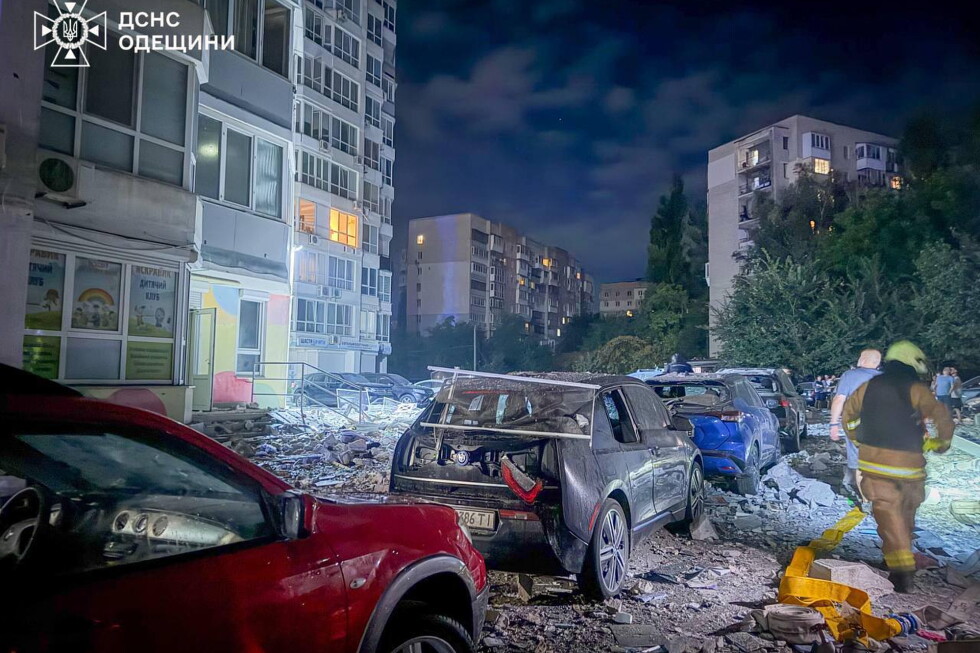
    The deadliest single incident from the assault unfolded in the central Ukrainian city of Dnipro, where a Russian projectile slammed into a multi-story residential apartment building. Images released by Ukraine’s State Emergency Service show the structure heavily scarred by the blast, with large sections of the facade collapsed and rubble spilling into the surrounding street. As of Saturday morning, rescue teams were still digging through the debris in search of trapped survivors, while local authorities confirmed five fatalities from the strike alone.

    Ukrainian President Volodymyr Zelenskyy confirmed that the bombardment stretched across nearly the entire night, noting that Russian forces have not altered their long-standing targeting tactics. “The Russians’ tactics have not changed: strike drones, cruise missiles, and a significant amount of ballistics,” Zelenskyy wrote on his official social media channels. “Most of the targets are ordinary infrastructure in cities. Residential buildings, energy, and enterprises have been damaged.” In total, Ukrainian defense officials reported that Russia launched more than 600 drones in the assault — the largest single Russian attack in several days — and added that Ukrainian air defenses successfully intercepted the vast majority of the incoming projectiles.

    Beyond Dnipro, the strikes reached multiple other population centers across Ukraine: two civilians were killed in the northern city of Chernihiv, while additional strikes targeted the southern port city of Odesa and the northeastern city of Kharkiv.

    The intensive drone and missile attack triggered security responses far beyond Ukraine’s borders. When multiple Russian drones were detected near the Romania-Ukraine border, Royal Air Force jets deployed to Romania as part of NATO’s collective defense mission were scrambled to intercept the objects. Early unconfirmed reports claimed the British jets had shot down several drones, but both the UK Ministry of Defense and Romanian defense officials quickly debunked the claim. Romania’s defense ministry clarified that the British aircraft never entered Ukrainian airspace, and no drones crossed into Romanian territory, meaning no shootdown was required. The department did confirm it is investigating the crash of an unidentified object on Romanian soil near the border that fell during the Russian assault.

    In response to the Russian strikes, Ukraine launched one of its longest-range drone operations in recent weeks, striking targets hundreds of kilometers inside Russian territory. In Yekaterinburg, a Ural Mountains city located roughly 1,600 kilometers from the nearest Ukrainian border, a building was hit by a drone that left six people injured, according to the region’s governor. Near the city of Chelyabinsk, local officials reported that air defense forces intercepted multiple drones that were targeting a local industrial facility.

    Russian defense officials reported on Saturday that their own air defense networks shot down 127 Ukrainian drones across more than a dozen of the country’s regions. The ministry also issued a claim that Russian forces had seized full control of Bochkove, a small village in Ukraine’s northeastern Kharkiv region located close to the international border with Russia. Russian forces have made repeated attempts to push south from the border toward the major city of Kharkiv in recent weeks. As of Saturday afternoon, Ukrainian officials had not issued any public comment on the territorial claim, and the BBC has not been able to independently verify the assertion.

    The exchanges of fire come as peace negotiations between Russia and Ukraine remain fully deadlocked, and Kyiv continues to court international military and political support for its defense efforts. On Friday, one day before the massive Russian strike, Zelenskyy held a second meeting with Saudi Arabia’s Crown Prince Mohammed bin Salman in recent months, as Ukraine works to build closer diplomatic and security ties with Gulf Arab nations. Official readouts of the meeting confirmed the two leaders discussed strengthening cooperation on air defense systems and expanding joint military production. Gulf nations have grown increasingly interested in Ukraine’s drone warfare expertise in the wake of recent cross-border attacks attributed to Iran, making this a key priority for both sides in the new partnership.