分类: world

  • Hawaii storms have caused $1bn in damage, governor says

    Hawaii storms have caused $1bn in damage, governor says

    Hawaii is confronting a monumental recovery effort in the wake of two devastating back-to-back storms that deluged the state with unprecedented rainfall, triggering the worst flooding witnessed since 2004. Preliminary official estimates place the damage toll at a staggering $1 billion, with the full scope of destruction yet to be fully assessed.

    The atmospheric rivers unleashed as much as 50 inches (127 cm) of rain on certain regions, transforming streets into raging rivers and submerging entire neighborhoods on Oahu. Murky, brown floodwaters inundated homes, with harrowing accounts emerging from residents like Mikey from Wahiawa, who described being awakened by water rushing into his bedroom. ‘The water broke down the fence and broke down the door… We were up to here in water,’ he recounted, gesturing to his chest. ‘We’ve lost everything.’

    Emergency response teams have been operating at full capacity, successfully rescuing more than 230 individuals stranded by the rapidly rising waters. Governor Josh Green confirmed that while there have been no reported fatalities to date, numerous people required extraction from flooded campsites and were even plucked from ocean debris by Coast Guard crews.

    Critical infrastructure suffered significant impacts. The Hawaii Department of Transportation reported temporary closures of the Kuihelani Highway on Maui due to fast-moving water and multiple rockfalls on other island roadways. Although some evacuation orders and flash flood warnings for Oahu were gradually lifted by Sunday, other parts of the state remained under threat. Authorities continue to urge extreme caution, warning residents against driving through deep water and boating between islands.

    The situation drew attention from the highest levels of government, with Governor Green noting that the White House has been in close contact and described federal officials as ‘very supportive.’ Meanwhile, the Hawaii National Guard maintained a vigilant watch at the 120-year-old Wahiawa Dam, where fears of potential spillover prompted preemptive evacuations before water levels eventually stabilized over the weekend.

    The disaster also touched local celebrity Jason Momoa, who reported evacuating his North Shore Oahu home. The actor used social media to convey that his family was safe while sending support to others less fortunate, describing conditions as ‘gnarly.’ As Maui County braces for an additional 8-10 inches of rain in the coming days, the long and arduous process of rebuilding lies ahead for the island chain.

  • Kenyans fighting illegally for Russia in Ukraine to be granted amnesty

    Kenyans fighting illegally for Russia in Ukraine to be granted amnesty

    In a significant diplomatic breakthrough, Kenya has successfully negotiated the safe return and amnesty for hundreds of its citizens who were illegally recruited to fight for Russia in the Ukraine conflict. Foreign Minister Musalia Mudavadi announced the agreement following high-level talks in Moscow, marking a pivotal resolution to a six-month crisis that has affected numerous African nations.

    The Kenyan government estimates that approximately 252 citizens were unlawfully conscripted through deceptive recruitment schemes that promised lucrative civilian employment in Russia. Instead, these individuals found themselves coerced into military service, often signing contracts in Russian without comprehension of the terms. Many reported being forcibly deployed to front-line combat operations in Ukraine.

    Minister Mudavadi’s negotiations yielded multiple critical concessions from Moscow: immediate cessation of further Kenyan recruitment through Russia’s ‘stop list’ mechanism, disengagement and repatriation for those unwilling to continue fighting, and medical care for wounded personnel. Current statistics indicate 44 Kenyans have already returned home, while 11 remain missing or confirmed killed in action. Another 38 are hospitalized under restricted access in Russian medical facilities, with approximately 160 still actively deployed.

    The resolution carries particular significance given Kenya’s legal framework that prohibits citizens from serving in foreign armies without presidential authorization or dual citizenship status. Violations of Section 68 of the Kenyan penal code carry potential ten-year prison sentences, making the amnesty provision essential for returning fighters.

    This development follows intensified pressure from affected families and reveals a broader pattern of recruitment across Africa. Ukrainian intelligence assessments suggest over 1,700 individuals from 36 African countries have been recruited by Russian forces. Recent parallel incidents include South Africa’s repatriation of 17 citizens from Ukraine’s Donbas region under similar circumstances.

    Both nations have committed to enhanced cooperation against human trafficking and illegal recruitment networks, with Kenyan authorities having already shuttered more than 600 suspicious recruitment agencies. The agreement represents a notable diplomatic achievement in protecting vulnerable workers from exploitation in global conflict zones.

  • Protest against wars in Middle Eastern countries in London

    Protest against wars in Middle Eastern countries in London

    Thousands of demonstrators flooded the streets of London on Saturday, voicing fierce opposition to Western military interventions in the Middle East. The protest specifically targeted United States and Israeli foreign policy, with participants demanding both nations cease operations in Lebanon, Palestine, and Iran.

    Protesters carried signs and chanted slogans accusing the US of violating international law through unilateral military actions. The central criticism focused on what organizers characterized as imperialist powers systematically destroying weaker nations and dismantling entire societies. “The US attacks sovereign countries at will, with no regard for global norms or human consequences,” one speaker told the crowd.

    The demonstration highlighted growing public concern over escalating tensions in the region, particularly following recent developments in the ongoing Middle East conflict. While the protest remained peaceful, the rhetoric reflected deepening anger over perceived Western aggression and its impact on civilian populations across multiple conflict zones.

    The timing of the London protest coincides with increasing diplomatic tensions worldwide, as evidenced by other international developments including Chinese diplomatic tours and WTO warnings about trade disruptions stemming from Middle Eastern instability.

  • Israeli settlers rampage across West Bank torching homes and cars

    Israeli settlers rampage across West Bank torching homes and cars

    A wave of violent attacks by Israeli settlers swept through multiple Palestinian villages in the occupied West Bank on Saturday night, resulting in extensive property damage and numerous injuries. The villages of Jalud, Fandaqumiya, Silat ad-Dhahr and Qaryut witnessed coordinated assaults as settlers set fire to buildings and vehicles while residents desperately attempted to evacuate trapped individuals.

    The Israeli military confirmed the arson attacks on Sunday, acknowledging that settlers had targeted Palestinian structures and property across several locations. According to the Palestinian Red Crescent, at least nine Palestinians sustained injuries from physical assaults by settlers, with three victims in Jalud village and six others in communities near Jenin. The official Palestinian news agency Wafa reported additional injuries but noted no arrests had been made by Israeli authorities.

    This escalation of violence followed a fatal road incident on Saturday where an Israeli civilian died after reports indicated a Palestinian vehicle had collided with an Israeli vehicle. In response, the Israeli Defense Forces and border police deployed to multiple Palestinian villages following reports of settler-led arson and disturbances.

    The current violence occurs within a broader context of dramatically increased settler attacks against Palestinians since the outbreak of the Gaza war in October 2023. Palestinian Authority records indicate six Palestinians have been killed in settler attacks since March 1st. According to data compiled by AFP using Palestinian health ministry figures, at least 1,050 Palestinians have been killed by Israeli troops or settlers in the West Bank during the Gaza conflict period. Israeli authorities report 45 Israelis, including soldiers and settlers, have been killed in Palestinian attacks or during military operations in the West Bank during the same timeframe.

  • War in the Middle East: latest developments

    War in the Middle East: latest developments

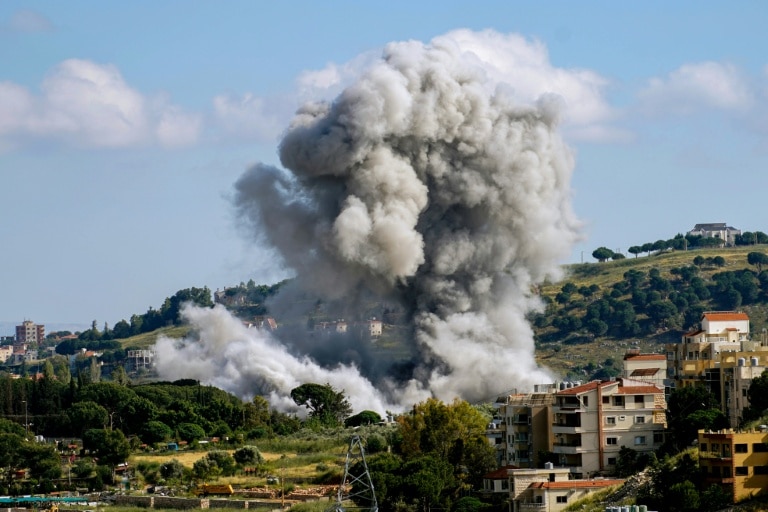
    The Middle East conflict has entered a dangerous new phase with multiple fronts witnessing significant escalation over the past 24 hours. Israeli forces conducted a strategic airstrike destroying a critical bridge in southern Lebanon, which Defense officials confirmed was targeted due to its alleged use by Iran-backed Hezbollah forces. Lebanese President Joseph Aoun condemned the infrastructure attacks as potential precursors to a ground invasion.

    Meanwhile, Iran’s military command issued a stark warning through state television, threatening to completely seal the Strait of Hormuz—a vital global oil transit route—should the United States follow through on President Trump’s threats to target Iranian power facilities. “The Strait of Hormuz will remain closed until our destroyed power plants are completely rebuilt,” stated the Khatam Al-Anbiya operational command.

    Israeli Prime Minister Benjamin Netanyahu, during an inspection of damage in the southern town of Arad, vowed personal pursuit of senior Iranian Revolutionary Guards commanders, labeling the IRGC as a “criminal gang” that would be held accountable. This declaration came as Israel’s military reported intercepting approximately 92% of over 400 ballistic missiles launched by Iran since the conflict’s inception.

    The World Health Organization expressed grave concern regarding the proximity of military strikes to nuclear facilities in the region. WHO Director-General Tedros Adhanom Ghebreyesus urgently appealed for “maximum military restraint” to prevent potential nuclear incidents, describing the situation as having reached a “perilous stage.”

    Iranian Parliament Speaker Mohammad Bagher Ghalibaf escalated rhetoric further by threatening irreversible destruction of regional energy infrastructure if Tehran’s facilities were attacked, warning of sustained oil price increases as a consequence. This threat emerged alongside reports from Iran’s Energy Minister confirming extensive damage to water and energy infrastructure from US-Israeli strikes.

    Additional developments included helicopter crash fatalities in Qatari waters, multiple attacks on US facilities at Baghdad International Airport, and the first Israeli fatality from Lebanese rocket fire since the conflict began. Saudi Arabia and the United Arab Emirates also reported intercepting ballistic missiles and drones amid the expanding regional turmoil.

  • Qatari and Turkish citizens die in military helicopter crash

    Qatari and Turkish citizens die in military helicopter crash

    A tragic aviation incident has resulted in the complete loss of a military helicopter during training operations in Qatari territorial waters. According to official statements from Qatari authorities, all seven personnel aboard perished when the aircraft crashed due to an apparent technical malfunction on Sunday.

    The fatal crash involved four Qatari military personnel, one Turkish serviceman, and two technical specialists from Aselsan, a prominent Turkish defense corporation. Search and recovery operations successfully located all victims’ remains following the accident.

    This training mission was conducted under the framework of the Qatar-Turkey Joint Forces Command, reflecting the ongoing defense cooperation between the two nations. The partnership was formally established through a 2014 defense agreement that permits Turkey to maintain a military presence in Qatar.

    Both nations’ defense ministries have launched comprehensive investigations to determine the precise cause of the technical failure. Qatari authorities will lead the crash investigation while Turkish defense officials have pledged full cooperation.

    The Qatari Interior Ministry issued an official statement expressing profound sorrow and extending deepest condolences to the families of all victims. This tragedy occurs against a backdrop of heightened regional tensions, with recent military exchanges between the US, Israel, and Iran affecting security dynamics throughout the Gulf region.

  • Sudan army denies deadly Eid strike on key hospital in Darfur

    Sudan army denies deadly Eid strike on key hospital in Darfur

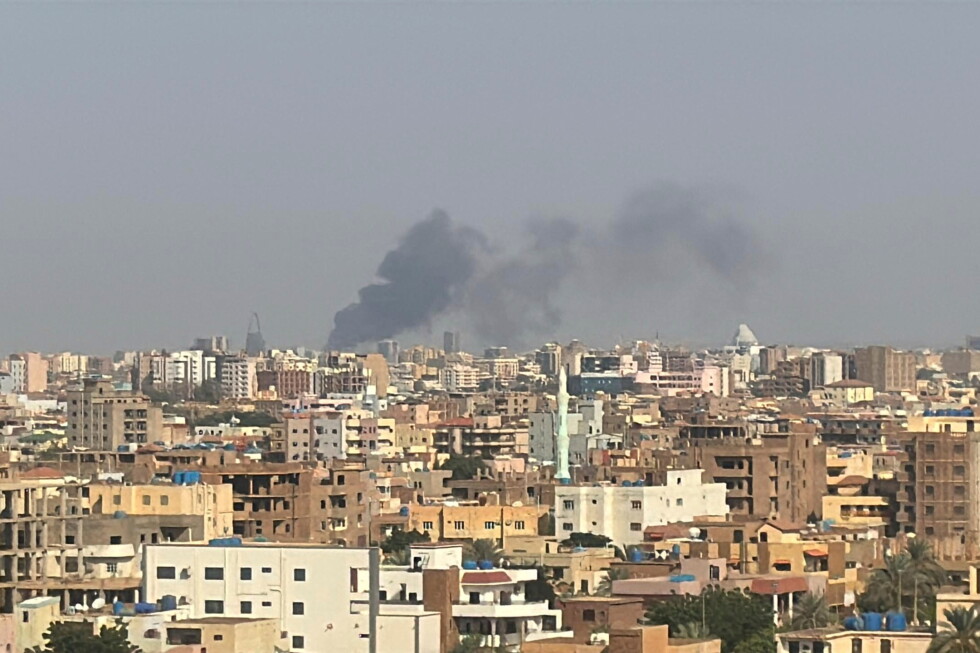
    A devastating aerial strike on el-Daein Teaching Hospital in East Darfur state has killed 64 people and injured 89 others, including 13 children and medical staff, according to World Health Organization director-general Tedros Adhanom Ghebreyesus. The attack occurred on Friday night during Eid al-Fitr celebrations, marking one of the deadliest assaults on healthcare facilities in Sudan’s nearly three-year civil war.

    The paramilitary Rapid Support Forces (RSF), which controls the western Darfur region, accused the Sudanese military of conducting a drone strike that destroyed the hospital’s top floor and critical emergency departments. The army issued an official denial, expressing surprise at the allegations and claiming adherence to international humanitarian laws.

    WHO verification confirms this attack brings the total documented healthcare facility assaults to 213 since conflict erupted in April 2023, resulting in 2,036 fatalities. Dr. Tedros declared the hospital completely non-functional, depriving thousands of civilians in East Darfur and surrounding villages of essential medical services. He implored combatants to cease targeting medical infrastructure, stating: ‘Enough blood has been spilled. Health care should never be a target. Peace is the best medicine.’

    The conflict originated from a power struggle between former allies—the national military and RSF paramilitaries—who jointly seized power in a 2021 coup. Current UN statistics indicate over 150,000 fatalities and approximately 12 million displaced persons, representing nearly one-third of Sudan’s population. The United Nations has classified the situation as the world’s largest humanitarian crisis.

    East Darfur’s strategic significance has intensified as it serves as a crucial corridor connecting RSF-controlled western territories to the capital Khartoum, which the army recaptured last year. The bordering Kordofan region has emerged as a new frontline with near-daily drone strikes.

    The Emergency Lawyers rights group has demanded an independent investigation and accountability for perpetrators. Eid celebrations across Sudan were notably subdued this year amid ongoing violence, despite US-led peace initiatives showing minimal progress in resolving what has become one of Africa’s deadliest conflicts for civilians.

  • Iran launches retaliatory strikes on Israeli nuclear facility

    Iran launches retaliatory strikes on Israeli nuclear facility

    In a significant escalation of Middle Eastern hostilities, Iran has launched a targeted missile strike against the Dimona nuclear facility in southern Israel. The retaliatory operation, confirmed by Iranian international affairs expert Morteza Simiari in a state television broadcast, comes in direct response to an Israeli attack on Iran’s Natanz atomic facility less than 24 hours earlier.

    Simiari articulated Iran’s newly adopted ‘eye for an eye’ military doctrine, emphasizing that Tehran will deliver reciprocal responses with heightened intensity to any Israeli military actions. According to initial reports from Israeli medical authorities, the assault resulted in more than 30 casualties, though the precise nature of injuries remains unclear.

    The International Atomic Energy Agency (IAEA) has subsequently reported no detectable damage to Israel’s Negev nuclear research center following the attack. In an official statement released via social media platforms, the nuclear watchdog agency confirmed that regional monitoring stations had detected no abnormal radiation levels following the incident.

    IAEA Director General Rafael Grossi has issued urgent appeals for maximum military restraint, particularly in the vicinity of nuclear installations across the region. This exchange of attacks represents the latest chapter in an escalating conflict that began on February 28, when joint Israeli-American operations struck multiple Iranian cities, resulting in the death of Supreme Leader Ali Khamenei alongside military personnel and civilians. Iran responded with coordinated missile and drone strikes targeting Israeli positions and American assets throughout the Middle East, setting the stage for the current dangerous escalation.

  • BBC in Cuba as island plunged into darkness

    BBC in Cuba as island plunged into darkness

    Cuba is confronting a severe nationwide energy crisis following the complete collapse of its national electrical grid. The catastrophic failure has left more than 10 million residents across the island nation grappling with extensive power outages, creating one of the most significant blackouts in recent history.

    The grid’s breakdown has plunged major cities and rural communities into darkness, severely disrupting daily life, business operations, and essential services. This incident represents the latest and most severe manifestation of Cuba’s ongoing struggle with its aging energy infrastructure, which has suffered from chronic underinvestment and maintenance challenges exacerbated by economic constraints.

    International observers, including BBC News correspondents on the ground, are documenting the widespread impact of the power failure as authorities work to implement emergency response measures. The blackout highlights the vulnerability of Cuba’s energy systems at a time when the nation is already facing considerable economic pressures and resource limitations.

    The recurrence of such massive power failures signals systemic issues within Cuba’s energy sector that extend beyond temporary technical malfunctions. The current crisis underscores the urgent need for substantial infrastructure modernization to prevent similar collapses in the future, as citizens continue to endure the practical challenges and safety concerns associated with prolonged electricity shortages.

  • Iran attacks Israel’s Dimona nuclear site in retaliation, dozens wounded

    Iran attacks Israel’s Dimona nuclear site in retaliation, dozens wounded

    A significant escalation in Middle Eastern tensions has occurred following reciprocal missile strikes targeting nuclear facilities in Iran and Israel. Iranian state television has officially claimed responsibility for a missile attack on Dimona in southern Israel, describing it as a direct retaliation for an earlier assault on its Natanz nuclear enrichment complex.

    According to Iran’s atomic energy organization, the Natanz facility was targeted earlier in the day, though they reported no leakage of radioactive materials from the site. The Israeli military confirmed through AFP reports that an Iranian missile directly impacted a building in Dimona that houses nuclear research facilities. Initial media reports indicate at least 39 casualties, though official breakdowns remain pending.

    The Dimona location holds particular significance due to its proximity to the Shimon Peres Negev Nuclear Research Center, long associated with Israel’s undeclared nuclear weapons program. Israel maintains a policy of nuclear ambiguity, neither confirming nor denying its arsenal while operating one of the region’s most heavily fortified sites in the Naqab desert.

    The exchange represents a dangerous escalation in the shadow conflict between the two nations. Iran condemned the initial strike on Natanz as criminal attacks that violate international law and nuclear agreements, including the Non-Proliferation Treaty. The International Atomic Energy Agency has confirmed the Natanz attack while reporting no elevated radiation levels, launching an investigation and calling for restraint.

    This development follows previous Iranian warnings that Dimona could become a target if Israel continued striking nuclear sites. A military source speaking to Tasnim News Agency revealed that Iran has shifted its strategic approach, moving beyond proportional retaliation to impose greater costs for future attacks. The source indicated Tehran’s new policy would involve responding to single infrastructure attacks with strikes on multiple facilities, significantly raising the stakes for military aggression in the region.