分类: world

  • Israel kills four in Gaza attack on police car during Eid holidays

    Israel kills four in Gaza attack on police car during Eid holidays

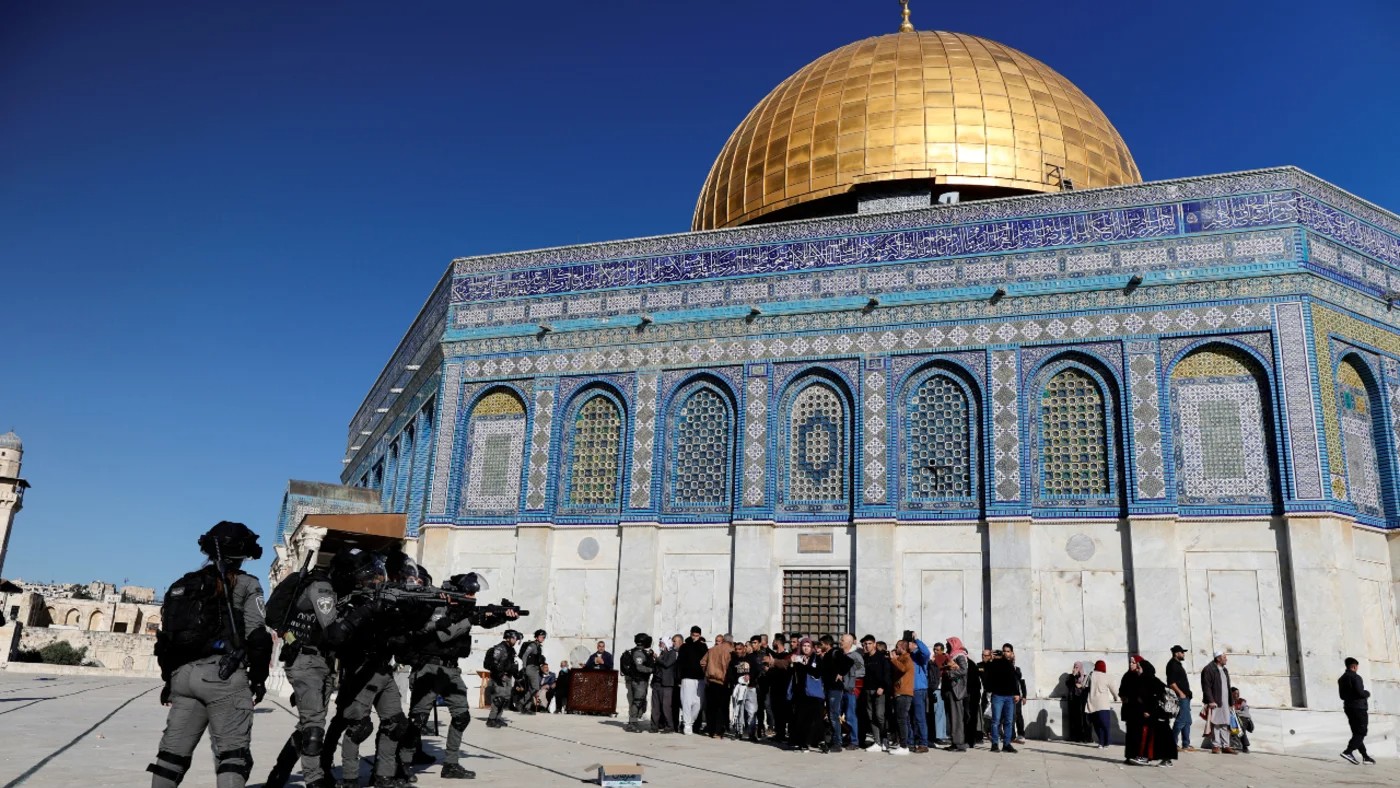
    Israeli military operations in Gaza escalated during the Eid al-Fitr holiday, resulting in multiple casualties and exacerbating the territory’s humanitarian crisis. On Sunday, an Israeli airstrike targeted a police vehicle in the Nuseirat refugee camp in central Gaza, killing at least four officers and injuring several others while they were performing their duties, according to a statement from Gaza’s Ministry of Interior.

    Simultaneously, another Israeli strike north of Gaza City claimed the life of a Palestinian civilian and wounded multiple others during the third day of Eid celebrations marking the end of Ramadan. The Palestinian health ministry reported that Israeli attacks since the beginning of the holiday have resulted in nine fatalities and 30 injuries.

    These recent incidents continue a pattern of near-daily violations occurring since a ceasefire agreement took effect in October. During this period, Israeli forces have killed 687 people and wounded 1,845, with the overall death toll surpassing 72,000 Palestinians since the conflict began. The offensive has also destroyed approximately 80% of Gaza’s infrastructure.

    The humanitarian situation has deteriorated further due to intensified restrictions on aid and medical evacuations. The Rafah crossing, a critical gateway for civilians and assistance, has remained largely closed since Israeli forces seized control in May 2024. Although it temporarily reopened on Thursday after being closed since February 28th, movement remains severely limited.

    Since March 19th, only 24 patients and their companions have been evacuated through the crossing. The closure of key entry points has had severe consequences, restricting humanitarian relief, preventing Palestinian returns, and blocking thousands of urgent medical evacuations. In a concerning development, Israeli forces arrested a Palestinian attempting to return to Gaza via Rafah crossing on Monday, an action reported as violating the terms governing its reopening.

  • Could Iranian missiles reach London and Paris?

    Could Iranian missiles reach London and Paris?

    A recent Iranian missile launch targeting the joint US-UK military base at Diego Garcia has revealed significant advancements in Tehran’s weapons capabilities while simultaneously exposing critical gaps in its long-range strike capacity. According to UK Defence Secretary John Healey, two missiles were launched last Friday toward the Indian Ocean base located approximately 4,000km from Iran—one failed in flight while the other was successfully intercepted.

    The attempted strike has triggered alarm across Western defense establishments regarding Iran’s missile range expansion. Previously, Tehran had claimed it unilaterally limited its missile range to 2,000km, but this incident suggests capabilities reaching up to 4,000km—potentially placing much of mainland Europe, including London, within theoretical striking distance.

    Defense analysts note that while Iran has demonstrated substantial short-range ballistic missile capabilities (with estimated ranges up to 3,000km), its intermediate-range program (3,000-5,500km) remains less developed. Sidharth Kaushal of the Royal United Services Institute suggests the launched missiles might represent modified versions of Iran’s Khorramshahr system, possibly derived from North Korean technology, or adapted rockets from Tehran’s space program which has successfully deployed satellites into orbit.

    The limited nature of the attack—only two missiles launched—suggests Iran’s long-range arsenal remains constrained. Western defense systems, including the US Space Force’s global monitoring capabilities from Buckley Space Force Base and NATO’s Aegis Ashore installations in Poland and Romania, provide substantial detection and interception capabilities against such threats.

    Multiple analysts emphasize that while Iran might theoretically reach European targets with lighter warheads, practical limitations including guidance inaccuracies, warhead design challenges, and sophisticated defense networks significantly reduce the immediate threat level. As research analyst Decker Eveleth noted, ‘It’s true that a missile can reach London, but it is not going to be particularly aim-able.’

    The broader strategic implication, according to intelligence expert Justin Crump, is that despite three weeks of sustained bombing campaigns against its military infrastructure, Iran retains the capacity to surprise Western powers with demonstrated resilience and continuing offensive capabilities.

  • Military plane crashes in southwestern Colombia, defense minister says

    Military plane crashes in southwestern Colombia, defense minister says

    A Colombian Air Force Hercules C-130 transport aircraft crashed moments after departure from Puerto Leguizamo in the southwestern Putumayo province on Monday, resulting in an unspecified number of casualties according to defense officials. The remote Amazonian region, which borders both Peru and Ecuador, became the site of what Defense Minister Pedro Sánchez described as a “profoundly painful tragic accident” for the nation.

    Visual evidence from local media outlets depicted a dense plume of black smoke ascending from the crash site in an open field, with military personnel rapidly mobilizing toward the scene in trucks. Minister Sánchez, communicating via social media platform X, confirmed the deployment of emergency response teams to the location while noting that the precise cause of the mishap remains under investigation.

    The defense official declined to specify the exact number of personnel aboard the military transport aircraft at the time of the incident. The Hercules C-130 model involved in the crash typically accommodates configurations carrying up to 120 individuals, though operational loads vary significantly based on mission parameters.

    Colombian President Gustavo Petro responded to the tragedy by expressing hope that there would be no fatal casualties in what he characterized as an accident that “should have not occurred.” The president subsequently leveraged the incident to amplify his ongoing campaign to modernize Colombia’s military equipment, citing persistent “bureaucratic difficulties” that have hampered modernization efforts. Petro further suggested potential accountability measures, stating that civilian or military administrative officials failing to meet operational challenges should be removed from their positions.

    The crash represents one of the most significant military aviation incidents in recent Colombian history, occurring in a strategically important border region known for its challenging operational environment and limited infrastructure.

  • US sends drones to Nigeria to join troops sent for intelligence and training

    US sends drones to Nigeria to join troops sent for intelligence and training

    In a significant strategic move, the United States has deployed sophisticated MQ-9 Reaper drones to Nigeria to bolster the West African nation’s counterinsurgency capabilities. This development follows the arrival of approximately 200 American military personnel last month, who are providing specialized training and intelligence support to Nigerian forces.

    The drone deployment comes as Nigeria grapples with an increasingly complex security landscape, particularly in its northern regions. Islamic militant organizations including Boko Haram, its Islamic State-affiliated splinter faction ISWAP (Islamic State West Africa Province), and other extremist groups have created a multi-faceted threat environment. These organizations engage in everything from ideological insurgency to criminal activities such as kidnapping for ransom and illegal resource extraction.

    According to U.S. Africa Command (AFRICOM) officials, the high-altitude drones—capable of operating at over 40,000 feet with endurance exceeding 30 hours—will be stationed at Bauchi Airfield in northeastern Nigeria. While the exact number of deployed systems remains classified, officials emphasized these aircraft will be exclusively used for intelligence, surveillance, reconnaissance, and training purposes, not offensive operations.

    This security cooperation initiative follows diplomatic discussions prompted by concerns about religious targeting in Nigeria’s ongoing conflict. The partnership represents a strategic recalibration for the U.S. after the closure of its drone operations in neighboring Niger, where American forces were expelled by the current military government.

    The security situation in Nigeria remains dire, with recent suicide bombings in Maiduguri claiming at least 23 lives and injuring over 100 civilians. Although no group claimed responsibility, Boko Haram remains the primary suspect. The conflict, which began in 2009, has resulted in approximately 40,000 fatalities according to UN estimates, with analysts criticizing the Nigerian government’s inadequate protection of civilians amid expanding militant influence from the Sahel region.

  • Blast that injured two was ‘terrorist attack’, Ukrainian authorities say

    Blast that injured two was ‘terrorist attack’, Ukrainian authorities say

    Ukrainian authorities have confirmed a dual-phase explosive attack targeting police personnel in Bucha, approximately 30 kilometers from Kyiv, early Monday morning. The incident, labeled a terrorist act by officials, unfolded when responders investigating an initial residential area explosion were struck by a secondary detonation.

    Two law enforcement officers sustained non-life-threatening limb injuries during the coordinated attack. Security forces subsequently apprehended a 21-year-old local resident allegedly recruited through unconventional channels. While official sources withheld specific platform details, a security insider revealed the recruitment occurred via the online multiplayer game World of Tanks.

    According to Kyiv Region Criminal Investigations Directorate head Andriy Kravchuk, the suspect confessed to monetary motivations, having been promised 25,000 hryvnyas (approximately $570) per detonation. However, during interrogation footage released by police, the individual claimed coercion through threats against his mother’s safety, including alleged drone surveillance intimidation.

    The Ukrainian Security Service (SBU) identified the detainee as a Russian operative, though police investigators maintain they are still establishing the precise recruitment chain without confirming direct Russian involvement.

    Eyewitness accounts describe traumatic awakening to powerful blasts initially mistaken for domestic gas explosions. Local authorities confirmed prompt emergency response with palpable shock waves affecting the vicinity.

    This event mirrors escalating hybrid warfare tactics observed across Ukraine, including:
    – February 22 Lviv bombing: 1 officer killed, 20+ injured via Ukrainian woman allegedly recruited by Russian intelligence
    – February 23 Mykolayiv station attack: 7 officers wounded
    – Simultaneous Dnipro police station explosion same day

  • Bodies of Africans were once dug up and sent to Europe for research. Now they are coming home

    Bodies of Africans were once dug up and sent to Europe for research. Now they are coming home

    JOHANNESBURG (AP) — In a solemn ceremony marking a significant step toward historical reconciliation, South Africa conducted the reburial of at least 63 ancestral remains belonging to the Khoi and San communities on Monday. The remains, which had been exhumed between 1868 and 1924 and transported to Europe for pseudoscientific research, were recently repatriated from The Hunterian Museum at the University of Glasgow following extensive negotiations initiated in 2022.

    South African President Cyril Ramaphosa presided over the ceremony alongside traditional leaders and museum representatives, delivering a powerful condemnation of the colonial-era practices that led to the removal of indigenous remains. He characterized these historical actions as “rooted in racism and used to advance theories of European racial superiority,” noting that human remains had been “dug up and turned into commodities and specimens, displayed under the cold gaze of pseudoscience.”

    The repatriation forms part of a broader continental movement across Africa seeking the return of stolen cultural artifacts and human remains. The Khoi and San peoples, widely recognized as southern Africa’s earliest inhabitants, mounted significant resistance against colonial forces, resulting in many deaths at the hands of European settlers.

    President Ramaphosa used the occasion to call for greater accountability from former colonial powers, urging European nations to acknowledge the historical injustices inflicted upon African peoples and consider reparations to former colonies. The ceremony represented not only the physical return of ancestral remains but also the restoration of dignity to communities whose heritage had been systematically violated during the colonial era.

  • What we know about the LaGuardia Airport crash

    What we know about the LaGuardia Airport crash

    A catastrophic ground collision between an Air Canada regional jet and an emergency response vehicle has resulted in a fatal aviation incident at New York’s LaGuardia Airport, claiming the lives of two pilots and causing significant operational disruption.

    According to official reports from Port Authority executive director Kathryn Garcia, the devastating accident occurred at approximately 23:40 local time on Sunday. Air Canada flight AC8646, which had recently arrived from Montreal with 72 passengers and four crew members aboard, collided with a firefighting vehicle while on the tarmac. The CRJ 900 aircraft sustained severe damage, with photographic evidence showing the cockpit area nearly severed and the plane tilted backward amid scattered debris and twisted metal.

    The emergency vehicle involved had been dispatched minutes earlier to address a separate incident concerning an odor report aboard another aircraft. Following the impact, authorities immediately activated emergency protocols, transporting 41 individuals to medical facilities. While 31 have been discharged, several remain hospitalized with serious injuries. The two firefighters in the truck were reported in stable condition with non-life-threatening injuries.

    New York Governor Kathy Hochul characterized the event as “heartbreaking,” while Mayor Zohran Mamdani acknowledged the “tragic collision” and expressed gratitude for first responders whose swift actions prevented further casualties.

    The National Transportation Safety Board (NTSB) has initiated a comprehensive investigation examining multiple factors including aircraft speed, air traffic control staffing patterns, and whether any occupants were ejected during the impact. The probe will seek to determine the precise sequence of events that led to this rare ground collision.

    LaGuardia, ranking among America’s busiest airports with over 32 million annual passengers, remains closed indefinitely. Airport authorities indicate the earliest potential reopening would be 14:00 ET Monday, though hundreds of flights have already been canceled affecting major carriers including American Airlines, Delta Air Lines, Southwest Airlines, United Airlines, and Air Canada.

    Travel advisories from the New York City Police Department and Fire Department warn of extensive cancellations, road closures, and traffic delays, urging travelers to avoid the area and utilize alternate routes. The incident represents one of the most significant ground accidents at a U.S. airport in recent years, raising immediate questions about tarmac safety protocols and emergency vehicle coordination.

  • Hormuz blockade may herald end of American globalization

    Hormuz blockade may herald end of American globalization

    The strategic vision of naval historian Captain Alfred Thayer Mahan—that control of sea lanes translates to global dominance—faces its most significant test in the Strait of Hormuz. Iran’s recent blockade of this critical maritime chokepoint has exposed the inherent vulnerabilities of a global trading system built upon American-enforced maritime security.

    Mahan’s 19th-century doctrine, inspired by British naval supremacy, posited that national power derived from command of maritime routes. The United States operationalized this philosophy after World War II, establishing a global network of naval bases to guarantee open navigation—not as altruism but as strategic advantage. This system enabled what became known as American globalization, with predictable movement of oil, goods, and capital through vital chokepoints like the Strait of Malacca, Suez Canal, and Hormuz.

    The current crisis reveals the paradox of this dependence. Iran’s geographic leverage—closing a waterway transmitting 20% of global oil supplies and 25% of natural gas—has triggered economic shocks worldwide. Crude prices have nearly doubled to $116 per barrel since the blockade began, while urea fertilizer prices have surged 26%. The strait has become Iran’s strategic bargaining chip, potentially enabling demands for war reparations following U.S.-Israeli airstrikes.

    Meanwhile, China is pursuing an alternative vision through its Belt and Road Initiative—a trillion-dollar geopolitical redesign of Eurasian connectivity. By constructing rail links that halve transit times between China and Europe, and building ports from Pakistan to Greece, China challenges Western-controlled maritime chokepoints. This shift aligns with Halford Mackinder’s ‘Heartland Theory,’ which predicted future power struggles would center on control of Eurasian land routes rather than sea lanes.

    Iran emerges as the critical hinge in this geopolitical reconfiguration—a bridge between Central Asia and the Indian Ocean possessing the region’s largest combined energy reserves. Reports of Iran considering yuan-based oil payments for Hormuz transit could accelerate de-dollarization, potentially reshaping globalization itself. In this fractured landscape, nations and corporations increasingly prioritize security over cost efficiency—a calculus that may ultimately redefine global trade architecture.

  • Two pilots dead after plane and ground vehicle collide at New York’s LaGuardia Airport

    Two pilots dead after plane and ground vehicle collide at New York’s LaGuardia Airport

    A catastrophic collision between an Air Canada regional jet and a firefighting vehicle has resulted in a multi-fatality incident and massive disruptions at New York’s LaGuardia Airport. The tragic accident, which occurred on Monday, claimed the lives of two pilots and sent dozens to hospital, prompting a full-scale investigation by federal authorities.

    According to Port Authority Executive Director Kathryn Garcia, the aircraft—a CRJ 900 operated by Jazz Aviation—had just landed from Montreal with 72 passengers and four crew members onboard when it struck the Port Authority fire truck. The emergency vehicle was responding to a separate incident involving a United Airlines flight that had reported an odor-related issue.

    Tragically, both pilots aboard the Air Canada flight perished in the collision. Forty-one individuals were transported to area hospitals, with thirty-two subsequently discharged. Several passengers sustained serious injuries, while the Port Authority sergeant and police officer inside the fire apparatus were hospitalized in stable condition with non-life-threatening injuries.

    Visual evidence circulating on social media platforms depicted the severely damaged aircraft with its nose section visibly upturned, coming to rest on the airport surface. The impact caused significant damage to the regional jet, though all occupants have been accounted for.

    In response to the emergency, LaGuardia Airport authorities immediately activated emergency protocols and closed the facility indefinitely. All arrivals and departures were canceled or delayed, affecting hundreds of flights across multiple carriers including American Airlines, Delta Air Lines, Southwest Airlines, and United Airlines.

    Transportation officials announced the airport would remain shuttered until at least 2:00 PM local time (18:00 GMT) Monday, while ground access routes were similarly restricted. The National Transportation Safety Board has launched a comprehensive investigation into the circumstances surrounding the collision.

    New York City Mayor Zohran Mamdani characterized the event as a ‘tragic collision’ and praised the swift response of emergency personnel whose actions undoubtedly saved lives. Confused passengers were seen throughout Terminal B—where Air Canada operates—huddled on benches or sleeping on floors as they attempted to rearrange travel plans amid the widespread cancellations.

  • Iran says Strait of Hormuz not blocked

    Iran says Strait of Hormuz not blocked

    TEHRAN – Iran’s Foreign Ministry issued a definitive statement on Sunday clarifying that maritime traffic continues unimpeded through the strategic Strait of Hormuz, despite ongoing regional hostilities. The ministry emphasized that while navigation persists normally, certain security protocols have been implemented in response to current conflict conditions.

    The declaration came as part of Iran’s comprehensive position statement addressing recent military engagements with the United States and Israel. Iranian officials maintained that Tehran has consistently upheld principles of maritime security and freedom of navigation throughout the volatile period.

    According to the ministry, recent American and Israeli military operations against Iranian territory have created a precarious security environment throughout the Persian Gulf and the critical waterway. These developments have directly compromised shipping safety and regional stability, the statement noted.

    Asserting its right to self-defense under international law, Iran confirmed it has targeted US military installations in the region while implementing measures to prevent ‘aggressor’ nations from utilizing the strait for hostile purposes. The ministry specified that vessels affiliated with or belonging to nations participating in attacks against Iran are being denied passage through the strategic channel.

    However, the statement clarified that non-hostile vessels from other countries can obtain safe transit through coordination with Iranian authorities, provided they adhere to established security regulations and haven’t supported aggressive actions against Iran.

    The ministry concluded that sustainable security in the vital waterway can only be achieved through cessation of military aggression against Iran, an end to destabilizing actions by the US and Israel, and full recognition of Iran’s legitimate regional interests.

    The tensions referenced in the statement stem from February 28 joint US-Israeli attacks that targeted Tehran and other Iranian cities, resulting in significant casualties including the death of then-Supreme Leader Ali Khamenei and senior military officials. Iran responded with comprehensive missile and drone strikes against Israeli territory and US bases throughout the Middle East.