分类: world

  • Land mine explosion that wounded Chinese man on Cambodia-Thailand border provokes concerns

    Land mine explosion that wounded Chinese man on Cambodia-Thailand border provokes concerns

    A Chinese national sustained injuries from a landmine explosion while allegedly attempting to cross illegally from Cambodia into Thailand’s contested border region on Saturday, according to an official announcement from the Thai army. The incident has reignited diplomatic tensions between the Southeast Asian neighbors, with Thailand reiterating allegations that Cambodian forces have been planting anti-personnel devices in the disputed territory.

    Army Spokesperson Major General Winthai Suvaree identified the injured individual as 26-year-old Shi Jingui from China’s Yunnan Province, stating the explosion occurred in an area Thailand claims as part of its eastern Sa Kaeo province. The region, described by Thai authorities as ‘contaminated with land mines,’ is currently undergoing scheduled clearance operations. While official statements provided no specific details regarding the nature of Shi’s injuries, the Chinese Embassy in Bangkok confirmed the individual was in stable condition.

    This latest incident exacerbates existing tensions between the two nations, following similar explosions earlier this year that wounded Thai soldiers and triggered five days of intensive cross-border fighting in late July. The longstanding territorial disputes over border demarcation have strained bilateral relations for decades.

    Recent mine incidents threatening the ceasefire agreement that ended the brief conflict prompted Thailand earlier this month to indefinitely pause implementation of the U.S.-brokered ceasefire terms until Cambodia apologizes for an explosion that injured four Thai soldiers, including one who required amputation of his right foot.

    The Thai army stated it became aware of Saturday’s incident when Border Patrol Police heard an explosion shortly before dawn. Authorities deployed a drone to assess the situation, located the injured man, and dispatched demining and security personnel to retrieve him for medical treatment.

    Thailand maintains that collected evidence proves the mines are newly laid, accusing Cambodia of violating international agreements banning anti-personnel mines. Cambodia has consistently denied these allegations, asserting that the devices could be remnants from decades of internal armed conflicts that concluded with the official surrender of Khmer Rouge guerrillas in 1999.

    Despite the accusations, Cambodia’s Defense Ministry spokesperson Maly Socheata recently affirmed her country’s commitment to ‘working closely with Thailand to promote peace and stability between the two countries, especially ensuring the security and safety of civilians.’ However, Thai army spokesperson Winthai countered that Cambodia ‘has not cooperated with Thailand in clearing mines along the shared border, despite Thailand’s repeated proposals in bilateral meetings.’
  • Nigeria blames jihadist groups for wave of kidnappings but others accuse criminal gangs

    Nigeria blames jihadist groups for wave of kidnappings but others accuse criminal gangs

    Nigeria confronts a severe security emergency as conflicting narratives emerge regarding perpetrators behind a recent wave of mass abductions. While the government attributes these kidnappings to jihadist organizations Boko Haram and Islamic State West Africa Province (ISWAP), independent analysts present contradictory evidence pointing to local criminal networks.

    The crisis intensified through three major incidents within one week: On November 17, 25 students and a teacher were abducted from Government Girls Comprehensive Secondary School in Kebbi state; November 18 witnessed 38 worshippers kidnapped from Christ Apostolic Church in Kwara state; and November 21 saw the most devastating attack with approximately 250 children and 12 staff members taken from St. Mary’s Catholic School in Niger state. While most victims from the first two incidents have been released, the majority from the Niger state kidnapping remain captive.

    Presidential spokesman Sunday Dare asserted to BBC that ‘abundant data nationally and internationally reveals clearly that ISWAP are all over the place,’ maintaining that both ISWAP and remnants of Boko Haram are responsible. However, the government has not produced concrete evidence supporting these claims.

    Contrary to official statements, security analysts and the Armed Conflict Location & Event Data Project (ACLED) identify Fulani militia groups—locally termed ‘bandits’—as the actual perpetrators. These decentralized criminal networks operate primarily in northwestern Nigeria, distinct from the jihadist groups concentrated in the northeast. According to ACLED’s analysis, the school abduction in Niger state appears partially motivated by political objectives against the government, while the church attack in Kwara state aligns with Fulani expansionist agendas and displacement campaigns for illegal mining operations.

    The kidnapping epidemic represents a lucrative criminal enterprise in Nigeria, where ransom payments remain illegal but widely suspected to occur. Presidential spokesman Dare ambiguously referenced ‘kinetic, non-kinetic, negotiations, etc.’ as successful processes for securing releases, avoiding direct confirmation of ransom payments.

    This security crisis has attracted international attention, particularly after former US President Donald Trump threatened military intervention if Christian targeting continues. However, Nigerian officials and experts emphasize that victims span all religious affiliations, contradicting narratives of sectarian targeting.

    The situation echoes Nigeria’s tragic history with mass abductions, notably the infamous Chibok schoolgirls incident where many children remained captive for years or died in captivity. Current President Bola Tinubu has promised to rescue remaining abductees but provided no timeline for resolution.

  • Whitetip sharks obtain protection: UN

    Whitetip sharks obtain protection: UN

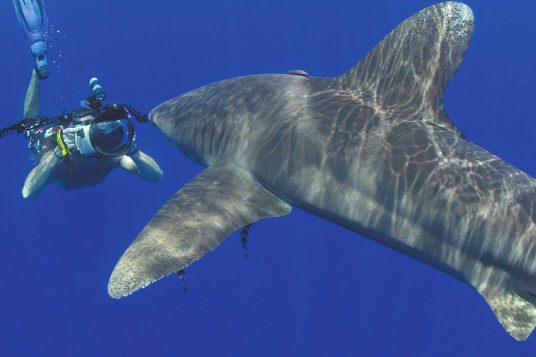
    In a landmark conservation decision, the oceanic whitetip shark has received the highest level of international protection at the ongoing UN wildlife conference in Samarkand, Uzbekistan. The species becomes the first among more than 70 proposed shark and ray species to be uplisted to Appendix I of the Convention on International Trade in Endangered Species (CITES), effectively banning all commercial international trade of these sharks and their products.

    The decision, adopted during the 20th Meeting of the CITES Conference of Parties (November 24-December 5), has been hailed by conservationists as a historic breakthrough for marine protection. The oceanic whitetip has experienced catastrophic population declines of 80-90% within just three generations due to relentless hunting for its fins and meat.

    Barbara Slee, senior program manager at the International Fund for Animal Welfare, described the move as “our last hope for the oceanic whitetips,” emphasizing that these ancient predators have roamed oceans for millions of years but faced systematic slaughter. Luke Warwick, director of shark and ray conservation at the Wildlife Conservation Society, called the decision “a watershed moment for all sharks and rays,” noting it represents the first time CITES has granted full protection with a complete international trade ban to any shark species.

    The protection comes amid alarming scientific evidence about global shark declines. A recent study in Science Advances revealed that over 37% of shark species now face extinction threats due to overexploitation. Another study in PLOS One documented severe ecological stress in coastal marine protected areas, with researchers observing a disturbing trend of “fishing down the food web” where removal of large species forces targeting of increasingly smaller species, pushing ecosystems toward collapse.

    Lester Gittens, lead delegate from the Bahamas, stressed both economic and ecological imperatives for protection: “Sharks support jobs across our islands and further declines benefit no one. We cannot allow ourselves to become numb to the term critically endangered—the next category is extinct in the wild.”

    The Appendix I listing is expected to eliminate incentives for illegal fishing and provide the species with critical recovery opportunities. With over 3,000 delegates attending the conference, further discussions will address additional proposals for shark and ray species protections.

  • G20 summit lauded for amplifying African voice

    G20 summit lauded for amplifying African voice

    The recently concluded G20 Leaders’ Summit in Johannesburg has received widespread acclaim from South African officials and policy experts for its unprecedented focus on African priorities and reinforcement of multilateral cooperation. Supra Mahumapelo, Chairperson of the South African Parliament’s Portfolio Committee on International Relations, emphasized that the presidency successfully positioned African concerns at the forefront of the global agenda, creating what he described as “a strategic diplomatic focus on Africa that will never disappear in future global history.

    The summit, which concluded with South Africa formally passing the presidency to the United States, produced a landmark declaration that extensively addresses continental issues. The comprehensive document includes commitments on Africa’s debt sustainability, support for the African Union, development of the African Continental Free Trade Area, and policies on artificial intelligence and strategic mineral beneficiation.

    According to Sizo Nkala, Senior Researcher at the University of Johannesburg’s Centre for Africa-China Studies, the declaration represents “the most Africa-focused G20 Declaration we have seen since its inception in 1990.” He noted that Africa was referenced 52 times throughout the document, reflecting South Africa’s Pan-Africanist approach and the continent’s growing influence in global forums following the African Union’s permanent membership.

    The declaration captures critical issues affecting both Africa and the Global South, including climate finance, food security, and reform of international financial institutions. Despite Africa’s abundance of critical minerals, Nkala highlighted that these resources have not been sufficiently leveraged to benefit African citizens, while many nations continue to face acute food insecurity and substantial debt-servicing burdens.

    The diplomatic process itself drew praise for building consensus among diverse global actors, with the declaration receiving overwhelming approval on the first day of proceedings. Aleta Miller, UN Women South Africa Country Representative, noted that while disagreements emerged during negotiations, member states successfully found common ground, demonstrating the continued strength of multilateral cooperation in addressing global challenges.

  • South Asia gains lifeline from COP30

    South Asia gains lifeline from COP30

    The landmark agreement reached at COP30 in Belem, Brazil, represents a critical turning point for climate-vulnerable nations across South Asia. After extended negotiations concluding on November 22, 2025, global leaders committed to tripling financial support for developing countries grappling with escalating climate impacts. This enhanced funding mechanism promises to deliver essential resources for disaster-resilient infrastructure, agricultural adaptation programs, and comprehensive social assistance initiatives throughout the region.

    Climate experts emphasize the agreement’s profound significance for South Asian nations confronting existential threats. Anjal Prakash, Research Director at the Indian School of Business’s Bharti Institute of Public Policy, noted that “regions severely affected by heat waves, flooding, and sea-level rise” including India, Bangladesh, and Pakistan will receive crucial support. The pact not only addresses immediate adaptation needs but also strengthens the region’s negotiating position for advocating climate justice and equitable carbon space through newly established global mechanisms.

    William Yu, CEO of the World Green Organisation, welcomed the agreement as a necessary step toward building resilience against climate disasters that potentially cost billions annually. The commitment comes as World Bank research identifies South Asia as exceptionally vulnerable due to population density, geographical exposure, and rising temperatures. Their recent report projects that by 2030, approximately 1.8 billion people (89% of the region’s population) will face extreme heat exposure, while 462 million remain at risk of severe flooding.

    Despite this progress, significant challenges persist. Pakistan’s Climate Change Secretary Aisha Humera Moriani highlighted the “disproportionate climate burden” borne by nations with minimal historical emissions. Experts caution that economic crises, political transitions, deforestation, and insufficient renewable energy funding continue to constrain the region’s adaptive capacity, underscoring the urgent need for effective implementation of COP30 commitments.

  • Russian attacks kill 2 in Kyiv as diplomatic efforts to end the war in Ukraine gain momentum

    Russian attacks kill 2 in Kyiv as diplomatic efforts to end the war in Ukraine gain momentum

    KYIV, Ukraine — A deadly barrage of Russian missiles and drones struck Ukraine’s capital in the early hours of Saturday, resulting in multiple casualties and infrastructure damage just as diplomatic efforts to end the conflict intensified. According to Kyiv’s military administration, the assault killed at least two civilians and wounded 29 others, with falling debris from intercepted drones causing significant damage to residential structures in the western districts.

    The attack coincided with preparations for high-stakes peace negotiations between Ukrainian and American officials scheduled for the weekend. An anonymous official from Ukraine’s presidential administration confirmed that diplomatic teams were set to meet in the United States, followed by anticipated talks between U.S. representatives and Russian President Vladimir Putin in Moscow later next week.

    This diplomatic push follows former President Donald Trump’s recently unveiled 28-point peace proposal, which has drawn criticism for its perceived favorability toward Russian interests. The proposal prompted urgent consultations from European leaders concerned about the implications of potential concessions to Moscow.

    In a related development, Ukrainian President Volodymyr Zelenskyy announced the resignation of his chief of staff Andrii Yermak, who also served as lead negotiator with U.S. counterparts. The departure followed an unprecedented anti-corruption search of Yermak’s residence, creating potential complications for Ukraine’s negotiating position during a period of intense diplomatic pressure.

    Trump confirmed the deployment of special envoys Steve Witkoff and Army Secretary Dan Driscoll to facilitate discussions with Russian and Ukrainian officials respectively, while suggesting the possibility of direct leader-level talks pending progress in preliminary negotiations.

  • Death toll from floods and mudslides in Sri Lanka rises to 123, with 130 people still missing

    Death toll from floods and mudslides in Sri Lanka rises to 123, with 130 people still missing

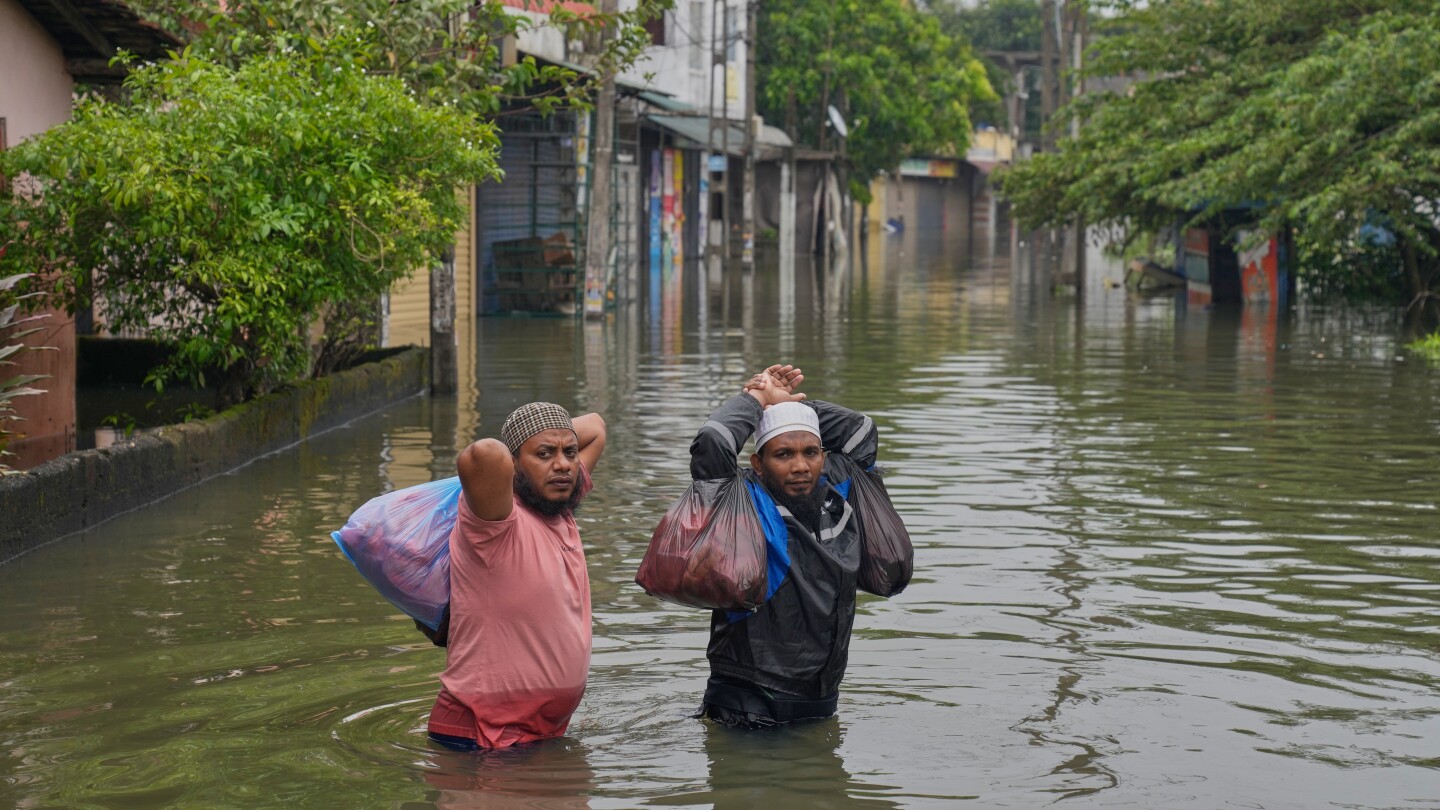
    COLOMBO, Sri Lanka — Catastrophic flooding and devastating mudslides triggered by Cyclone Ditwah have claimed 123 lives in Sri Lanka, with approximately 130 individuals still unaccounted for, according to official reports released Saturday. The nation’s disaster management center confirmed that the severe weather event has forced nearly 44,000 residents from their homes, now seeking refuge in emergency shelters.

    The tropical cyclone, which intensified in the eastern seas bordering Sri Lanka, has unleashed relentless downpours since last week, with conditions dramatically deteriorating on Thursday. The torrential rains have submerged residential areas, agricultural fields, and critical transportation infrastructure while triggering catastrophic landslides predominantly in the central highlands renowned for tea cultivation.

    Authorities anticipate the death toll will continue to rise as emergency teams struggle to access multiple regions cut off by overnight mudslides, as evidenced by social media documentation of the widespread destruction. In response to the escalating crisis, the Sri Lankan government has implemented widespread closures of educational institutions and public offices while postponing scheduled examinations.

    Critical infrastructure has suffered extensive damage with most reservoirs and river systems overflowing their banks. Numerous roadways have been rendered impassable due to debris accumulation including rocks, mudslides, and fallen trees, prompting authorities to suspend passenger rail services and implement widespread road closures across affected regions.

    By Friday, floodwaters moving downstream from the hardest-hit central regions began inundating areas surrounding the capital city of Colombo, which had experienced relatively less rainfall. Meteorological officials indicate Cyclone Ditwah is projected to track toward India’s southern coastline by Sunday, with Sri Lanka expected to experience continued rainfall as the storm system passes over the country’s northern territories.

  • Pope visits Istanbul’s Blue Mosque at start of day of meetings with Turkey’s religious leaders

    Pope visits Istanbul’s Blue Mosque at start of day of meetings with Turkey’s religious leaders

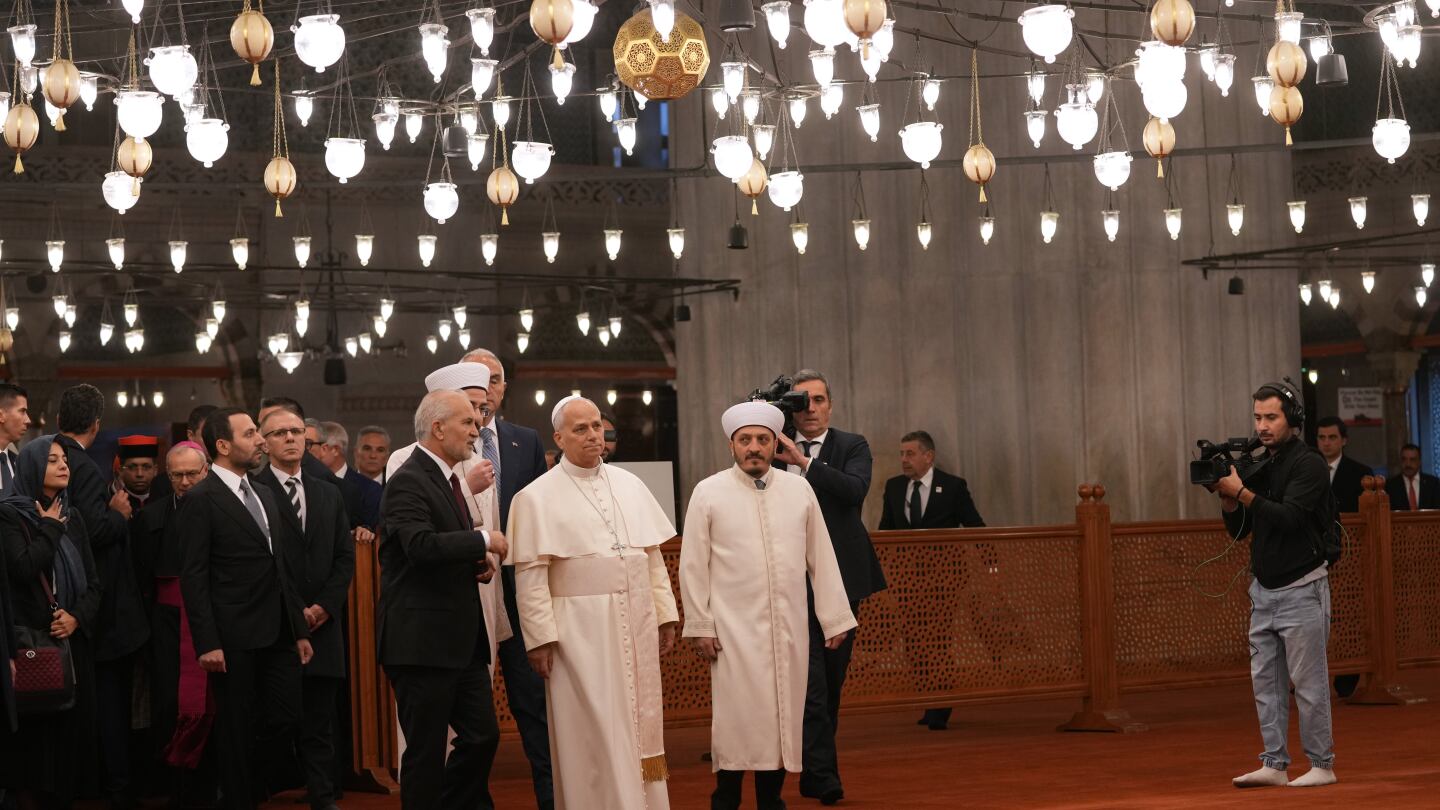
    ISTANBUL, Turkey — Pope Leo XIV commenced an intensive day of diplomatic and spiritual engagements in Istanbul on Saturday with a symbolically significant visit to the iconic Blue Mosque. The pontiff, following traditions established by his predecessors, toured the magnificent Ottoman-era mosque accompanied by Turkey’s head of religious affairs, who explained the architectural details including its soaring tiled dome and intricate Arabic inscriptions.

    The visit generated particular attention regarding interfaith prayer protocols. Imam Asgin Tunca of the Blue Mosque revealed he had extended an invitation for the Pope to worship within the sacred space, describing it as ‘Allah’s house.’ While the Pope respectfully declined to pray, he expressed appreciation for the atmosphere and spiritual significance of the mosque, walking through the carpeted interior in white socks after removing his shoes.

    Notably absent from the papal itinerary was the Hagia Sophia, the UNESCO World Heritage site whose controversial conversion from museum to mosque in 2020 drew international criticism, including from the Vatican. This omission highlighted the delicate diplomatic balance of the visit.

    The day’s agenda progressed with a private meeting with Turkey’s Christian leaders at the Syriac Orthodox Church of Mor Ephrem, followed by ecumenical prayers with Patriarch Bartholomew, spiritual leader of the world’s Orthodox Christians, at the patriarchal Church of Saint George.

    The visit built upon Friday’s historic gathering in Iznik, where Pope Leo joined Christian leaders at the site of the A.D. 325 Council of Nicaea to mark its 1,700th anniversary. Standing among the ancient ruins, the religious leaders recited the Nicaean Creed—the foundational statement of Christian faith produced by the original council that remains universally accepted across most Christian denominations.

    The Pope emphasized the urgent need to ‘overcome the scandal of divisions’ and nurture unity, particularly during times ‘marked by many tragic signs’ threatening human dignity. This gathering represented a significant moment in the centuries-long effort to reunite Christianity, bringing together Catholic, Orthodox, and other Christian representatives at the very location where their shared creed originated when Eastern and Western churches were still united.

    The visit concluded with a Catholic Mass at Istanbul’s Volkswagen Arena for Turkey’s small Catholic community, numbering approximately 33,000 in a predominantly Sunni Muslim nation of 85 million people.

  • China-funded infrastructure projects completed in West Bank

    China-funded infrastructure projects completed in West Bank

    In a significant demonstration of international cooperation, Chinese and Palestinian officials convened in Ramallah on November 26, 2025, to inaugurate two major infrastructure initiatives funded by China. The completion ceremony for the China-Palestine Friendship Square and the extended Beijing Road marked a new chapter in bilateral relations between the two nations.

    The ceremonial unveiling was conducted jointly by Zeng Jixin, head of the Chinese Office in Palestine, and Palestinian Prime Minister Mohammad Mustafa. The projects represent substantial Chinese investment in Palestinian infrastructure development, with the expanded Beijing Road now stretching over 11 kilometers through the West Bank city.

    Zeng emphasized during his address that these developments implement the strategic consensus reached by both countries’ leadership. “Beijing Road has transformed into a vital artery serving local communities—a roadway of convenience for daily life, a bridge connecting hearts through friendship, and a pathway toward future progress,” he stated. The Chinese diplomat highlighted how these projects exemplify China’s approach to supporting development initiatives through its modernization expertise.

    Prime Minister Mustafa expressed profound appreciation for China’s ongoing support, noting the decades-long relationship between the two nations. “China has consistently stood with the Palestinian people throughout our struggle for independence and development across multiple sectors,” he remarked to Xinhua after the ceremony. He specifically acknowledged China’s timely assistance in enhancing Palestinian living standards.

    Local residents already experience tangible benefits from the infrastructure upgrades. Bilal Mansour, a driver utilizing the new roadway, described the dramatic transformation: “This area was previously a barren hillside surrounded by rubble and dust. China’s assistance has fundamentally changed our daily reality—travel time between Birzeit and Ramallah’s city center has been reduced from thirty minutes to just over ten minutes.”

    The Beijing Road project commenced with its initial section opening in September 2020, while extension construction began in September 2024. The newly expanded route now integrates a network of 14 roads, significantly improving connectivity between central Ramallah and the Al-Jadwal area.

  • Ukraine’s naval drones strike Russian oil tankers in the Black Sea off the Turkish coast

    Ukraine’s naval drones strike Russian oil tankers in the Black Sea off the Turkish coast

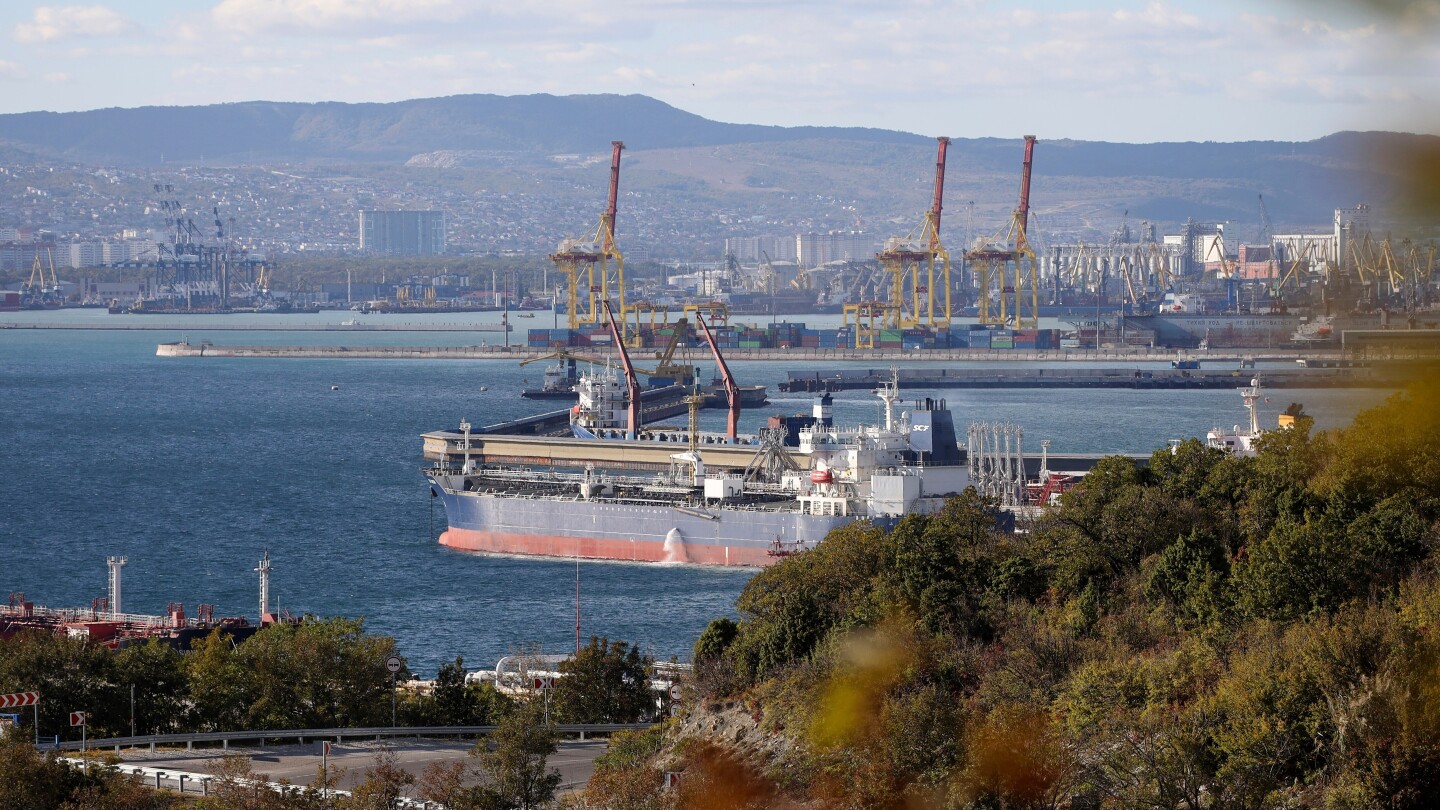
    Ukrainian security forces have executed a precision naval operation against Russian oil transport capabilities in the Black Sea. According to an anonymous SBU official speaking to The Associated Press, domestically manufactured Sea Baby naval drones targeted two sanctioned Russian oil tankers—Kairos and Virat—in rapid succession on Friday afternoon. The operation occurred within Turkey’s exclusive economic zone near the Kocaeli province coastline.

    The Gambian-flagged Kairos sustained significant fire damage in its enclosed areas, prompting the safe evacuation of all 25 crew members by Turkish rescue teams. The Virat, while reportedly struck in its engine room, did not require evacuation. Turkish Transport Minister Abdulkadir Uraloglu confirmed authorities received a distress call describing the incident as a ‘drone attack,’ though initial assessments considered multiple potential causes including mines or missiles.

    Both vessels form part of Russia’s elaborate ‘shadow fleet’—a network of ships specifically designed to circumvent international sanctions imposed after the 2022 invasion of Ukraine. OpenSanctions database records indicate the Virat received sanctions from the United States in January 2023, followed by the EU, Switzerland, UK, and Canada. The Kairos was similarly sanctioned by the EU in July 2023, with subsequent restrictions from the UK and Switzerland.

    Ukrainian intelligence officials emphasized this operation represents continued efforts to disrupt Russia’s financial capacity to wage war. The Sea Baby drones, which Ukraine recently unveiled as upgraded capabilities with extended Black Sea reach, reportedly disabled vessels capable of transporting approximately $70 million worth of oil. This strategic strike demonstrates Ukraine’s growing naval drone warfare sophistication while highlighting ongoing challenges in enforcing international sanctions against Russian energy exports.