分类: world

  • Philippine aircraft turned back from Chinese airspace

    Philippine aircraft turned back from Chinese airspace

    The People’s Liberation Army Southern Theater Command has confirmed the interception and warning of a Philippine military aircraft that entered what China claims as its sovereign airspace near the Nansha Islands. The incident occurred on Friday near Meiji Reef, a strategically significant feature in the contested South China Sea.

    According to military spokesperson Zhai Shichen, a Philippine C-208 aircraft entered the area without obtaining prior authorization from Chinese authorities. In response to what it deemed an unauthorized incursion, the PLA Southern Theater Command mobilized both aerial and naval assets to track, monitor, and ultimately redirect the foreign aircraft in accordance with established protocols.

    Zhai characterized the Philippine flight as a violation of China’s territorial sovereignty and called for immediate cessation of such activities. ‘We urge the Philippine side to immediately stop its infringements and provocations,’ the spokesperson stated, emphasizing the importance of maintaining regional peace and stability through mutual respect for sovereignty claims.

    The incident represents the latest in a series of maritime and aerial encounters between Chinese and Philippine forces in the South China Sea, where multiple nations maintain overlapping territorial claims. China asserts historical rights to vast portions of the waterway, including the Nansha Islands (known internationally as the Spratly Islands), while the Philippines and other Southeast Asian nations dispute these claims based on international maritime law.

    The Southern Theater Command, responsible for China’s military operations in the South China Sea region, maintains regular patrols and surveillance activities in the area. This latest interception demonstrates China’s continued commitment to actively enforcing its perceived territorial boundaries through military presence and response capabilities.

  • Iranian and Romanian charged after trying to enter UK’s nuclear submarine base

    Iranian and Romanian charged after trying to enter UK’s nuclear submarine base

    Scottish authorities have formally charged two individuals following a significant security incident at a critical military installation. A 34-year-old Iranian national and a 31-year-old Romanian national were apprehended last Thursday after attempting unauthorized entry into HM Naval Base Clyde, the strategic homeport for Britain’s nuclear-armed submarine fleet.

    The incident occurred at the Faslane base, located approximately 40 miles northwest of Glasgow, which serves as the operational headquarters for the United Kingdom’s Trident nuclear deterrent system. Police Scotland confirmed the detainments and subsequent charges, though specific allegations remain undisclosed under Scottish judicial protocols that withhold suspect names and precise charges prior to court appearances.

    Both defendants are scheduled for initial proceedings at Dumbarton Sheriff Court this coming Monday. The attempted breach marks a serious incident at one of Britain’s most secure military facilities, which maintains continuous at-sea nuclear deterrence through four Vanguard-class submarines armed with Trident II ballistic missiles.

    Britain’s nuclear weapons program, operational since the 1950s, represents a cornerstone of national defense strategy. The Faslane base employs extensive security measures to protect the submarines that carry the country’s strategic nuclear weapons. This incident raises questions about base security protocols and potential vulnerability to infiltration attempts by foreign nationals.

  • Russian drone attack kills two in Ukraine ahead of talks in US, officials say

    Russian drone attack kills two in Ukraine ahead of talks in US, officials say

    A Russian drone assault on the southeastern Ukrainian city of Zaporizhzhia has resulted in two fatalities and left two children, aged 11 and 15, injured. The attack occurred on Saturday, casting a shadow over forthcoming diplomatic discussions between Ukrainian and American officials scheduled to take place in the United States.

    Local authorities confirmed the strike targeted a residential area, underscoring the continued vulnerability of civilian zones in the ongoing conflict. Zaporizhzhia, one of four southeastern regions annexed by Russia in 2022 despite lacking full territorial control, has endured frequent military assaults since the initiation of full-scale hostilities.

    The upcoming US-mediated negotiations face significant challenges, having previously failed to halt combat operations or modify Moscow’s fundamental demands. Primary agenda items include organizing a new trilateral dialogue involving Russia and addressing tensions between Ukrainian President Volodymyr Zelensky and US President Donald Trump. The American leader has previously characterized Zelensky as the principal impediment to peaceful resolution.

    Complicating diplomatic efforts, the Trump administration recently implemented a one-month waiver easing sanctions on nations purchasing Russian oil—a move welcomed by the Kremlin but criticized by Ukrainian advocates as eroding Western consensus on economic pressure against Moscow.

    President Zelensky contends that resource diversion due to Middle East conflicts has created critical missile shortages for Ukrainian forces. He further alleges that Russian President Vladimir Putin seeks prolonged confrontation between the US, Israel and Iran to weaken international support for Kyiv.

    In a strategic exchange, Ukraine has offered its advanced drone technology to the United States, potentially enhancing capabilities against Iranian threats while strengthening bilateral cooperation amid evolving geopolitical dynamics.

  • Russian strike on Zaporizhzhia kills 2 as Ukraine seeks to move forward peace talks

    Russian strike on Zaporizhzhia kills 2 as Ukraine seeks to move forward peace talks

    A Russian drone assault on the southeastern Ukrainian city of Zaporizhzhia resulted in multiple civilian casualties Saturday morning, according to regional governor Ivan Fedorov. The attack destroyed a private residence, killing one man and one woman while leaving two children wounded.

    This lethal incident occurred against the backdrop of intensified diplomatic efforts to restart suspended peace negotiations. Ukrainian President Volodymyr Zelenskyy confirmed Thursday that an official delegation had been dispatched to the United States with the primary objective of resuming trilateral discussions involving Russia, which have remained stagnant since the recent escalation of Middle East conflicts.

    Kremlin spokesman Dmitry Peskov indicated Friday that a renewed round of U.S.-mediated negotiations between Moscow and Kyiv would likely convene in the near future, characterizing the current pause as temporary. However, Western European officials have consistently accused Russian President Vladimir Putin of employing deliberate delay tactics in negotiations while continuing military operations aimed at territorial acquisition.

    The geopolitical landscape has shifted substantially since February 28th, when Israeli and U.S. strikes on Iran redirected international attention from Ukraine’s ongoing defense efforts. This diversion coincides with Russia experiencing unexpected financial benefits through temporary U.S. waivers on oil sanctions, while Ukraine faces critical cash shortages despite promised European Union assistance totaling 90 billion euros.

    Additional priorities for Ukrainian officials during U.S. engagements include maintaining Washington’s authorization for NATO member states to procure American weaponry for subsequent transfer to Ukrainian forces. The White House has not formally confirmed any scheduled meetings with the Ukrainian delegation, though reports suggest discussions were anticipated to occur in Miami later Saturday.

  • Israel threatens a surge in attacks on Iran as Britain condemns Tehran targeting a US-UK air base

    Israel threatens a surge in attacks on Iran as Britain condemns Tehran targeting a US-UK air base

    The Middle East conflict entered its fourth week with significant escalations as Iran demonstrated unprecedented missile capabilities while Israel pledged to intensify military operations. Iranian forces targeted the Diego Garcia air base in the Indian Ocean—a joint U.K.-U.S. facility located approximately 4,000 kilometers from Iranian territory—revealing Tehran’s possession of long-range missiles exceeding previously acknowledged ranges.

    Israeli Defense Minister Israel Katz announced in a video statement that coordinated attacks with the United States against Iran’s leadership would ‘increase significantly’ in the coming week. This declaration followed an Iranian missile strike that damaged an empty kindergarten near Tel Aviv, though no casualties were reported.

    The conflict expanded across multiple fronts overnight. Tehran experienced heavy airstrikes, while in Iraq, a drone attack on Baghdad’s intelligence headquarters killed one officer. Saudi Arabia reported intercepting twenty drones in its eastern oil-producing region within hours.

    Iran’s nuclear program faced renewed pressure as the Natanz enrichment facility was struck in an airstrike. Iranian news agency Mizan confirmed no radiation leakage occurred. The International Atomic Energy Agency acknowledged monitoring the situation and investigating the incident.

    Diplomatic tensions intensified as Britain condemned Iran’s attempted strike on Diego Garcia, with the U.K. Ministry of Defense characterizing Tehran’s actions as ‘lashing out across the region’ that threatened British interests and allies. Meanwhile, Iranian Foreign Minister Abbas Araghchi expressed Tehran’s desire for ‘a complete, comprehensive and lasting end to the war’ rather than a ceasefire.

    The United States presented conflicting signals as President Trump announced consideration of ‘winding down’ military operations while simultaneously deploying three amphibious assault ships with approximately 2,500 Marines to the region. This deployment followed the recent redirection of another Marine contingent from the Pacific, bringing total U.S. troop presence in the Middle East to over 50,000.

    Iran escalated its rhetoric with military spokesperson General Abolfazl Shekarchi warning that ‘parks, recreational areas and tourist destinations worldwide’ would not be safe for Iran’s enemies. Supreme Leader Ayatollah Mojtaba Khamenei, who has not appeared publicly since the conflict began, praised Iranian resilience in a written New Year’s message.

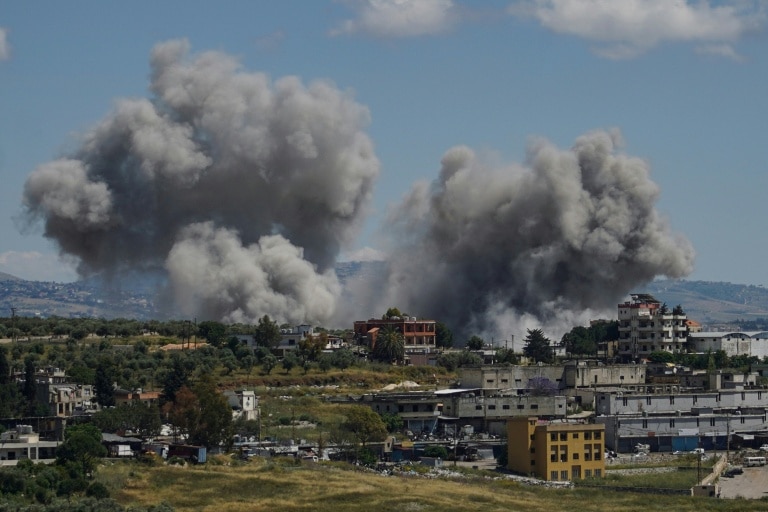
    Regional clashes continued as Israeli forces engaged Hezbollah militants in southern Lebanon’s Khiam village, resulting in at least four militant casualties. Lebanese authorities report over 1,000 deaths and one million displacements from Israeli strikes, while Iranian casualties exceeded 1,300 with 15 killed in Israel and 13 U.S. military personnel fatalities.

  • The fight to control the narrative in the Afghan-Pakistan conflict

    The fight to control the narrative in the Afghan-Pakistan conflict

    A devastating aerial assault on Kabul has triggered the deadliest single incident since hostilities resumed between Pakistan and Afghanistan’s Taliban government in February. The strike targeted a compound that both sides describe in starkly contrasting terms, resulting in verified casualties that continue to mount.

    According to United Nations verification, the attack claimed at least 143 lives with 119 injured—figures expected to rise as investigations continue. Taliban officials have provided dramatically higher estimates, asserting over 400 fatalities.

    The narrative battle unfolded simultaneously on social media platforms. Taliban spokesperson Zabihullah Mujahid condemned what he characterized as Pakistan’s violation of Afghan airspace, labeling the strike on a purported drug rehabilitation facility as ‘a crime against humanity.’ Pakistan’s Ministry of Information promptly countered, branding these claims as propaganda while asserting the operation precisely targeted military installations and terrorist infrastructure.

    Pakistan’s military spokesman, Lt Gen Ahmed Sharif Chaudhry, advanced further allegations without presenting evidence, claiming the facility served as a training center for suicide bombers disguising addicts. This contradicts previous BBC reporting from the site, which documented legitimate rehabilitation activities throughout 2023.

    The incident exemplifies the deteriorating diplomatic relationship between the neighboring nations. Pakistan maintains its actions address cross-border terrorism, citing 2025 as its most violent year in a decade according to security studies. Afghan authorities conversely frame Pakistan’s operations as violations of sovereignty potentially coordinated with external powers.

    Both nations have demonstrated increased military assertiveness. Pakistan now publicly claims responsibility for strikes through official social media channels, while Taliban officials explicitly threaten reciprocal attacks on Islamabad. Despite temporary ceasefires encouraged by Middle Eastern mediators during Eid al-Fitr, the escalating rhetoric and reduced diplomatic engagement suggest diminishing prospects for peaceful resolution.

  • Tons of aid flows into Cuba as humanitarian convoy arrives on the struggling island

    Tons of aid flows into Cuba as humanitarian convoy arrives on the struggling island

    HAVANA — A significant international solidarity movement has mobilized in response to Cuba’s severe energy crisis, with approximately 650 delegates from 33 nations and 120 organizations converging on the island nation. The “Our America Convoy to Cuba” initiative is transporting roughly 20 tons of humanitarian assistance including solar panels, essential medications for cancer treatment, and food supplies.

    Delegates arrived by air from numerous countries including Italy, France, Spain, the United States, and various Latin American nations. Additional participants are scheduled to arrive via maritime transport on Saturday through a three-vessel flotilla departing from Mexico. An advance group of activists had already reached Havana on Wednesday, distributing initial donations to medical facilities.

    This humanitarian effort unfolds against escalating tensions between Cuba and the United States, following the Trump administration’s imposition of an oil embargo in January. The energy blockade has exacerbated Cuba’s existing five-year economic downturn, bringing the nation to a near standstill.

    David Adler, coordinator of Progressive International and a U.S. citizen, emphasized the collective nature of the response: “We represent millions of people in this convoy. We cannot allow this collective punishment. We cannot normalize it.”

    Cuban Deputy Foreign Minister Carlos Fernández de Cossío firmly addressed speculation regarding potential political changes, stating: “The Cuban political system is not up for negotiation, nor is the president, nor the position of any official in Cuba, subject to negotiation with the United States or with the government of any other country.” He acknowledged, however, that dialogue with Washington remains possible on areas of mutual interest.

    The solidarity mission has drawn comparisons to other humanitarian crises, with organizer Manolo de los Santos describing the effort as both “defying the U.S. blockade” and preventing “another Gaza in the Americas.” This perspective echoes concerns raised by several analysts and regional leaders, including Mexican President Claudia Sheinbaum, who have warned of a potential humanitarian catastrophe in Cuba.

    The convoy features participation from prominent international figures including British Parliamentarian Jeremy Corbyn, Colombian Senator Clara López, former Spanish politician Pablo Iglesias, U.S. labor leader Chris Smalls, and Brazilian humanitarian activist Thiago Ávila. Supporting organizations include Mexico’s Morena party, Brazil’s Workers’ Party, and Uruguay’s Broad Front.

    President Miguel Díaz-Canel expressed gratitude via social media, acknowledging: “They bring shipments of aid to combat the attempt to suffocate us. Welcome once again to the compassion of the people.”

    Additional international support has emerged from Brazil, which committed 20,000 tons of food supplies primarily consisting of rice, beans, and powdered milk. Chilean parliamentarians delivered aid on Thursday, while China dispatched a vessel carrying 60,000 tons of rice to address Cuba’s growing food insecurity.

  • Iranian strikes on bases used by US caused $800m in damage, new analysis shows

    Iranian strikes on bases used by US caused $800m in damage, new analysis shows

    New analysis reveals Iranian retaliatory strikes have caused approximately $800 million in damage to US military installations across the Middle East during the initial phase of the ongoing conflict. The assessment, conducted jointly by the Center for Strategic & International Studies (CSIS) and BBC Verify, demonstrates the substantial financial impact of Iran’s targeted campaign against American assets in the region.

    The damage primarily occurred during the first week of hostilities following the joint US-Israeli offensive initiation on February 28. According to CSIS senior adviser Mark Cancian, ‘The damage to US bases in the region has been underreported. Although that appears to be extensive, the full amount won’t be known until more information becomes available.’

    Iran’s strategy has focused on disabling critical defense infrastructure, particularly air-defense and satellite-communication systems. A single strike on a THAAD missile defense radar system at a Jordanian air base accounted for $485 million of the total damage, based on defense budget documentation reviews. Additional strikes caused approximately $310 million in damage to buildings, facilities, and supporting infrastructure across multiple bases.

    Satellite imagery analysis confirms Iran’s pattern of repeated strikes on three key air bases: Ali Al-Salim in Kuwait, Al-Udeid in Qatar, and Prince Sultan in Saudi Arabia. These targeted attacks demonstrate Iran’s systematic approach to degrading specific US capabilities. Intelligence sharing between Russia and Tehran has reportedly enhanced the precision of these operations.

    The conflict has resulted in significant human casualties, with 13 US military personnel killed and an estimated overall death toll of 3,200, including 1,400 civilians according to Hrana. President Trump maintains that US objectives of dismantling Iran’s nuclear program and reducing its conventional military capabilities are being achieved.

    Financial implications extend beyond direct damage, with the Pentagon reporting $16.5 billion in total war costs during the first twelve days of conflict. Defense Secretary Pete Hegseth has requested an additional $200 billion in funding, acknowledging that the figure ‘could move’ as operations continue.

    The near-closure of the Strait of Hormuz has created global economic disruptions, while uncertainty persists regarding potential ground troop deployments and conflict duration. Satellite imagery restrictions imposed by US-based providers have complicated damage assessment efforts, though visible evidence confirms destruction of critical radar components and protective enclosures at multiple facilities.

  • War in the Middle East: latest developments

    War in the Middle East: latest developments

    The ongoing Middle East conflict has entered a complex phase with simultaneous developments suggesting both escalation and potential de-escalation. US President Donald Trump announced on Truth Social that Washington is contemplating “winding down” military operations against Iran, stating the nation is “very close to meeting our objectives” regarding the “Terrorist Regime of Iran.” Despite this apparent shift toward reduction, Trump explicitly ruled out any ceasefire agreement with Tehran.

    Contradicting the rhetoric of de-escalation, multiple US media outlets report substantial military reinforcements heading to the region. The Wall Street Journal and CNN both cite anonymous officials confirming the deployment of 2,200-2,500 Marines from California-based units, potentially signaling preparation for ground operations. This comes as Britain authorized US utilization of its bases for strikes against Iranian sites threatening the vital Strait of Hormuz shipping lane—a decision that has already drawn criticism from Trump.

    The White House issued a stark warning regarding Iran’s Kharg island oil hub, asserting America could “take out” the facility whenever desired. This statement followed reports that the administration was considering plans to either occupy or blockade the strategic location.

    Meanwhile, regional tensions continued to manifest violently. Hezbollah forces targeted Israeli soldiers in six south Lebanon villages as Israeli ground forces attempted advances into southern Lebanon. Kuwait’s Mina Al-Ahmadi oil refinery suffered drone attacks, causing multiple fires though no casualties were reported. Explosions rocked Tehran while air raid sirens sounded across Tel Aviv and Jerusalem, with Israeli police investigating blast impact sites.

    Iranian leadership remained defiant, with Supreme Leader Ayatollah Mojtaba Khamenei claiming the Islamic republic’s enemies were being “defeated” in the conflict. Tehran denied involvement in attacks on Oman and Turkey, instead blaming “deception by the Zionist enemy” (Israel). Additionally, Iran stated it had “no surplus crude oil” to offer international markets, despite US Treasury suggestions that Washington might lift sanctions on Iranian oil at sea.

    NATO completed the relocation of its Iraq mission to Europe, withdrawing the last personnel from its non-combat force of several hundred. Diplomatic channels remained active but tense, with Britain’s foreign minister warning Iran against targeting UK bases, territory, or interests directly—a message delivered following Iranian assertions that any US use of British bases would be interpreted as “participation in aggression” against the Islamic republic.

  • Palestinian worshippers forced to pray in street as Israel bars Eid access to Al-Aqsa

    Palestinian worshippers forced to pray in street as Israel bars Eid access to Al-Aqsa

    In a historic departure from decades of protocol, Israeli authorities implemented a comprehensive closure of Jerusalem’s Al-Aqsa Mosque and Old City during Eid al-Fitr celebrations, marking the first such restriction since Israel’s 1967 seizure of East Jerusalem. The unprecedented measures prevented Palestinian worshippers from accessing Islam’s third holiest site for traditional holiday prayers.

    Security forces erected barricades at all complex entrances early Friday, redirecting thousands of devotees to alternative prayer locations outside the ancient walls. The normally vibrant Old City, typically adorned with Ramadan decorations and bustling with religious activity, stood eerily silent under strict lockdown protocols that limited access exclusively to registered residents.

    Eyewitness accounts describe extraordinary scenes as Palestinian worshippers gathered along Salah al-Din Street, chanting Eid praises while attempting to approach secondary gates. Photojournalist Faiz Abu Rmeleh documented Israeli security personnel deploying stun grenades and tear gas to disperse crowds attempting to pray near Bab al-Zahra entrance. Ultimately, congregants performed Eid prayers outside the local post office under substantial police surveillance, only to be forcibly dispersed immediately following religious observances.

    The restrictions extended beyond religious access, severing traditional family gatherings during the holiday period. Journalist Latifeh Abdellatif reported difficulty re-entering her own neighborhood despite resident status, while family visitors faced complete denial of entry. Simultaneously, security incidents intensified as Iranian missile debris landed near the Old City walls, creating impact craters adjacent to the Jewish and Armenian quarters.

    This closure represents the culmination of months of escalating restrictions on Palestinian access to the holy site. Since October, Israeli authorities have limited Waqf staff to merely 25 personnel per shift within the massive complex and arrested prominent religious figures including Sheikh Ekrima Sabri, the mosque’s senior imam. Analysts interpret these measures as fundamentally altering the delicate status quo governing interfaith access established after the 1967 Six-Day War.

    The Al-Aqsa compound, known to Jews as Temple Mount, constitutes one of the most religiously significant and politically sensitive locations in the ongoing Israeli-Palestinian conflict. Palestinian leadership perceives the closure as strategic implementation of heightened control measures, potentially mirroring the transformation previously enacted at Hebron’s Ibrahimi Mosque where Jewish worshippers now control two-thirds of the partitioned holy site.