分类: world

  • What happened in the seconds before Air Canada plane crashed at LaGuardia

    What happened in the seconds before Air Canada plane crashed at LaGuardia

    A meticulous investigation by BBC Verify has reconstructed the critical timeline leading to the catastrophic collision between an Air Canada aircraft and an emergency response vehicle at New York’s LaGuardia Airport. The incident, which resulted in multiple fatalities, unfolded during challenging weather conditions that significantly impacted visibility and operational protocols.

    According to verified flight data and air traffic control communications, the Airbus A320 was executing its final approach during reduced visibility conditions when the collision occurred. Preliminary analysis indicates the aircraft was slightly off its standard glide path moments before impact. Simultaneously, airport ground control had authorized the fire apparatus to cross the active runway following established emergency response procedures to another potential incident.

    The investigation reveals a critical 8-second window where both vehicles converged on the runway intersection. Enhanced radar tracking shows the aircraft’s descent rate and velocity were within operational parameters, while the emergency vehicle maintained regulated crossing speed. The convergence occurred during a period of particularly dense ground fog that reportedly impaired both cockpit and vehicle operator visibility.

    Aviation safety experts emphasize that such incidents require simultaneous system breakdowns across multiple safety layers. The investigation is examining communication protocols between tower control, ground control, and emergency response teams, alongside instrument landing system performance during the incident. This accident represents one of the most significant runway incursion events in recent U.S. aviation history, prompting immediate review of ground movement procedures at major airports during low-visibility operations.

  • ‘We give what we love’: How Kashmir’s ‘Little Iran’ is giving generous aid to Tehran

    ‘We give what we love’: How Kashmir’s ‘Little Iran’ is giving generous aid to Tehran

    Across the Kashmir Valley, an extraordinary humanitarian movement has emerged in response to the ongoing conflict in Iran. Communities are donating their most precious possessions—family heirlooms, life savings, and essential livelihood assets—to support civilians affected by the war.

    In Budgam, central Kashmir, Masrat Mukhtar donated the gold earrings her father gave her, a symbolic gesture replicated throughout the region during Eid al-Fitr celebrations. The tradition of collecting copper utensils for daughters’ weddings has been redirected toward wartime relief, with families choosing instead to support “daughters who lost mothers and sisters in the attacks,” explained 73-year-old Tahera Jan from Srinagar’s Zadibal neighborhood.

    The scale of sacrifice is profound: Sadakat Ali Mir, a 24-year-old mini truck driver, donated one of his two vehicles, effectively surrendering half his livelihood. “I heard the mosque call and decided to give half my livelihood,” he stated, referencing the historical Battle of Karbala as inspiration for such sacrifice. Similarly, Bilal Ahmad Gazi donated his cherished scooter, stating, “The situation in Iran feels like losing a family member.”

    Notably, the humanitarian effort transcends sectarian divisions. While Shia Muslims (approximately 10-15% of Jammu and Kashmir’s population) have been at the forefront, Sunni communities have participated significantly—sometimes comprising nearly half of all donors—by observing simpler Eid celebrations and redirecting resources. Shopkeepers closed early, families served modest meals, and all demonstrated what Sunni trader Shameen Khan described as “deliberate choice rather than obligation.”

    The response draws upon centuries-deep cultural connections between Kashmir and Persia, dating back to the 14th century when Mir Syed Ali Hamadani arrived from Persia with 700 followers, introducing crafts, architecture, and language that forever shaped Kashmiri culture. This historical bond earned Kashmir the enduring epithet “Iran-e-Sagheer” (Little Iran) from philosopher-poet Allama Muhammad Iqbal.

    Despite strict security measures implemented since India revoked the region’s semi-autonomy in 2019, large mourning processions filled Srinagar’s streets following Ayatollah Khamenei’s killing. Black flags hung from windows, portraits of Iranian leaders appeared in public parks, and thousands marched through Lal Chowk in tightly controlled but striking demonstrations.

    Organizers have developed coordinated relief efforts informed by specific needs in Iran. Students at the Islamic University of Science and Technology organized supply drives, while local doctors assembled tailored medical kits. As social activist Ilyas Bhat observed, “This is coordinated action shaped by knowledge of need, not a loose or symbolic gesture.”

    The Iranian Embassy in New Delhi expressed profound gratitude, acknowledging the “humanitarian support and heartfelt solidarity” from Kashmir. Their social media post highlighted a widow’s donation of gold kept as a memento of her husband who died 28 years earlier, noting how “tears and pure emotions bring comfort to Iran.”

    Lecturer Sakina Hassan, who studies humanitarian practice, emphasized the deeper significance: “People are not only parting with objects—they are extending memory, inheritance, and care into another space.” As Mukhtar watched volunteers wrap her earrings, she envisioned them bringing comfort in Iranian hospital wards, embodying the persistent bond between Kashmir and its namesake through time and conflict.

  • Moldova imposes 60-day energy emergency after Russian strikes in Ukraine cut key power line

    Moldova imposes 60-day energy emergency after Russian strikes in Ukraine cut key power line

    CHISINAU, Moldova — Moldova’s Parliament enacted a 60-day state of emergency within the nation’s energy sector on Tuesday, responding to critical infrastructure damage caused by Russian missile strikes on Ukraine’s power grid. The legislative body approved the measure with 72 votes in favor and 18 abstentions, reflecting bipartisan concern over the energy crisis.

    The immediate catalyst for this decision was the overnight disconnection of the high-voltage Isaccea-Vulcanesti power line, a vital electricity conduit connecting southern Moldova to European Union member Romania. This disruption has significantly compromised Moldova’s energy stability, prompting authorities to urgently advise citizens to ration electricity consumption during peak hours while repair efforts are underway.

    Prime Minister Alexandru Munteanu characterized the situation as a deliberate assault rather than accidental damage. ‘Russia’s attacks on civilian energy infrastructure in Ukraine constitute both war crimes and direct attacks against the Republic of Moldova,’ Munteanu stated during parliamentary proceedings. ‘Moscow bears sole responsibility for this crisis.’

    The emergency declaration, effective Wednesday, will enable swifter mobilization of resources, enhanced protection of critical infrastructure, and implementation of additional crisis mitigation measures. Munteanu emphasized this represents ‘a measure of responsibility, not panic’ designed to ensure citizen safety.

    Energy Minister Dorin Junghietu estimated repairs would require five to seven days to complete. The vulnerability stems from Moldova’s Soviet-era energy systems remaining interconnected with Ukraine’s grid, making the nation susceptible to disruptions since Russia’s full-scale invasion began in 2022.

    President Maia Sandu directly accused Russia of intentional destabilization, noting on Facebook that the damaged power line typically supplies 60-70% of Moldova’s electricity during peak periods. ‘These are not accidents but deliberate actions by Russia to weaken and leave Moldova in the dark,’ Sandu wrote.

    The energy emergency follows last week’s water crisis affecting tens of thousands of Moldovans after Russian strikes on a Ukrainian hydroelectric plant caused oil contamination in a shared river system. This pattern of infrastructure targeting has created sustained humanitarian challenges for the EU candidate country, though Russia consistently denies attempts to destabilize Moldova.

    Reporting contributed from Leamington Spa, England.

  • UCLG ASPAC Youth Leaders China Tour kicks off in Suzhou

    UCLG ASPAC Youth Leaders China Tour kicks off in Suzhou

    Suzhou, China – The United Cities and Local Governments Asia-Pacific (UCLG ASPAC) Youth Leaders China Tour commenced on March 24th at Nanjing University’s Suzhou Campus, marking the beginning of a significant cross-cultural exchange initiative. The opening ceremony featured a unique blend of formal proceedings and cultural performances, including an excerpt from the classic Kunqu Opera ‘The Peony Pavilion’ performed by university students.

    The program, jointly hosted by the Chinese People’s Association for Friendship with Foreign Countries (CPAFFC) and UCLG ASPAC, brings together emerging youth leaders from across the Asia-Pacific region for an immersive six-day journey through Jiangsu province. From March 23rd to 28th, participants will explore Suzhou, Wuxi, and Yancheng, examining China’s advancements in sustainable development, technological innovation, and cultural preservation.

    Professor Tan Tieniu, Chinese Academy of Sciences member and Party Secretary of Nanjing University, emphasized the significance of the gathering: ‘The Asia-Pacific region, with its diverse civilizations, represents one of the world’s most dynamic areas. This event creates a meaningful platform for cultural exchange, idea sharing, and friendship building.’

    CPAFFC President Yang Wanming highlighted youth’s critical role as drivers of peace and development, noting that the program specifically aims to foster intercity cooperation through youth engagement. UCLG ASPAC Secretary-General Bernadia Irawati Tjandradewi described the tour as ‘a journey across cities, ideas, cultures, and perspectives’ designed to empower the next generation of leaders.

    International participants expressed enthusiasm for the learning opportunity. Arjan Shrestha, Senior Financial Officer of Nepal’s Neelakantha municipality, stated: ‘We’re excited to witness China’s achievements in green development and innovation firsthand. This initiative powerfully demonstrates how youth can contribute to sustainable development and socio-economic transformation.’

    The program represents a strategic effort to strengthen regional cooperation through people-to-people exchanges, with participants gaining direct exposure to China’s development model while building networks that span the Asia-Pacific region.

  • Russia rains drones on Ukraine, killing eight, hitting UNESCO site

    Russia rains drones on Ukraine, killing eight, hitting UNESCO site

    In a significant escalation of aerial tactics, Russian forces launched one of their most extensive daytime drone assaults against Ukraine, deploying nearly 1,000 unmanned aerial vehicles over a 24-hour period. The coordinated offensive resulted in at least eight fatalities and targeted multiple western regions far from conventional front lines.

    The attack marked a dramatic departure from Moscow’s typical nighttime bombardment strategy, with 550 drones dispatched during daylight hours following 392 overnight launches. Western cities including Lviv, Ivano-Frankivsk, and Vinnytsia suffered severe impacts, with civilian infrastructure and cultural landmarks sustaining substantial damage.

    In Lviv, a UNESCO-protected historic center came under fire during evening rush hour, with strikes damaging areas adjacent to the 17th-century St. Andrew’s Church and Bernardine Monastery. Eyewitnesses reported flames engulfing residential buildings, with roofs collapsed and windows shattered throughout the city center. First responders and civilians sought refuge in churches during the attack, awaiting clearance to emerge.

    The assault on Ivano-Frankivsk proved particularly devastating, with two civilians killed and four injured—including a six-year-old child. A maternity hospital and approximately ten residential buildings sustained damage in the strike. Vinnytsia region reported one fatality and eleven wounded, while Lviv documented at least thirteen hospitalizations.

    Ukrainian President Volodymyr Zelensky emphasized the urgent need for enhanced air defense capabilities, stating the massive drone numbers demonstrate requirement for increased protection against Russian strikes. The attacks occurred amid growing concerns about Ukraine’s dwindling supplies of US-provided air defense systems, compounded by shifting international attention to the Middle East conflict.

    The bombardment extended beyond western regions, with overnight strikes hitting residential areas and critical infrastructure across Poltava, Kharkiv, Zaporizhzhia, and Kherson. Five additional fatalities occurred in these attacks, which also severed power connections to neighboring Moldova and compromised energy infrastructure serving the Zaporizhzhia nuclear facility.

    This tactical shift to大规模daylight drone warfare represents a new phase in the four-year conflict, challenging Ukraine’s air defense resources and testing civilian resilience across previously relatively secure western regions.

  • Everyday life in Asia is being upended by Iran war fuel crisis

    Everyday life in Asia is being upended by Iran war fuel crisis

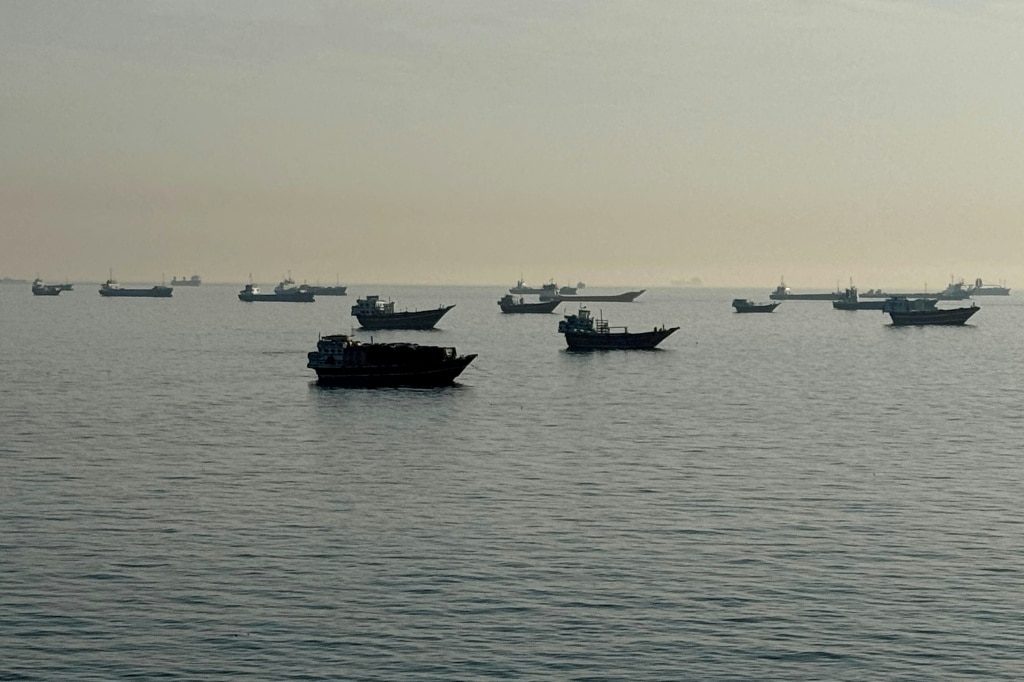
    The strategic closure of the Strait of Hormuz following February’s military escalation between the U.S., Israel, and Iran has precipitated a severe energy crisis across Asia, with devastating socioeconomic consequences. This critical maritime corridor, traditionally facilitating approximately 20% of global oil shipments, now operates at a fraction of its capacity, permitting only minimal daily vessel transit. Concurrent attacks on regional energy infrastructure have further exacerbated supply constraints, sending oil prices skyrocketing and destabilizing financial markets worldwide.

    Asian nations bear the disproportionate impact of this disruption, with nearly 90% of Hormuz-transited hydrocarbons destined for the region. Governments have implemented drastic conservation measures including mandatory remote work policies, reduced workweeks, and premature university closures. Even China, despite maintaining substantial strategic reserves, has intervened to cap domestic fuel price increases after citizens faced 20% cost surges.

    The Philippines has declared a national emergency citing imminent threats to energy stability. Jeepney driver Carlos Bragal Jr. exemplifies the crisis, seeing his daily earnings plummet from 1,200 pesos to merely 500 pesos ($19.92 to $8.30). “This will definitely kill us and our family if it continues,” he lamented, describing how his children’s education now hangs in the balance. Agricultural and fishing communities similarly face paralysis from unaffordable fuel costs.

    In Thailand, news anchors at public broadcaster Thai PBS symbolically removed blazers on air to promote energy conservation. “Taking off the suit shows we’re not ignoring what’s happening,” explained presenter Sirima Songklin. National directives now mandate 26-27°C air conditioning settings and widespread telecommuting.

    Sri Lanka’s fragile economic recovery faces renewed jeopardy. “Previously we had no money to buy fuel—now we have money but no fuel,” observed Colombo resident Dimuthu. Fuel rationing and Wednesday public holidays have created hours-long queues, preventing workers like lawnmower operator Nimal from earning livelihoods.

    Myanmar’s military administration implemented alternate-day driving restrictions, while India’s massive Gulf diaspora and domestic economy face dual pressures. Gujarat’s ceramics industry has shuttered for a month, idling 400,000 workers. Migrant laborer Sachin Parashar stated, “I will have to go hungry if I continue staying here without work.” Nationwide, restaurants removed time-intensive dishes from menus as LPG shortages intensified, with 20% of Mumbai’s eateries partially or fully closing.

    The crisis demonstrates how geopolitical conflicts thousands of miles away create immediate, tangible suffering for ordinary citizens across developing Asia, with no resolution in sight while Hormuz remains effectively closed.

  • Ukraine Unesco site damaged as Russia launches 400 drones in deadly daytime attack

    Ukraine Unesco site damaged as Russia launches 400 drones in deadly daytime attack

    In a significant escalation of tactics, Russian forces executed a massive daytime drone offensive across western Ukraine on Tuesday, deploying over 400 unmanned aerial vehicles in one of the most extensive aerial campaigns within a 24-hour period of the conflict.

    The historic city of Lviv suffered direct hits to its cultural heart, with the 16th-century Bernardine monastery—a designated UNESCO World Heritage site—sustaining damage. Municipal authorities released visual evidence showing intense fires raging through residential structures adjacent to the sacred complex. Preliminary reports indicate at least 13 civilians sustained injuries in Lviv alone, with officials cautioning that casualty numbers are expected to rise.

    Simultaneous strikes targeted three additional western urban centers: Ivano-Frankivsk, Vinnytsia, and Ternopil. The Ivano-Frankivsk region witnessed particularly tragic consequences, with regional head Svitlana Onyshchuk confirming two fatalities and four injuries, including a six-year-old child. Critical infrastructure including a maternity hospital and various civilian buildings suffered substantial damage.

    This daylight assault followed a separate nocturnal attack that claimed at least five lives across multiple regions. Earlier Tuesday, a 61-year-old woman perished when a drone struck an electric train in Kharkiv, with additional casualties reported in Zaporizhzhia, Kherson and Poltava.

    Ukrainian Air Force spokesman Yurii Ihnat characterized the unprecedented scale of the incursion, noting drones entered Ukrainian airspace from northern approaches ‘effectively moving in columns.’ The geographical scope of daytime strikes exceeded that of nighttime operations, marking a concerning evolution in tactical bombardment strategies.

    While four years of conflict have affected virtually all Ukrainian territory, western regions had previously experienced comparatively less intensity than eastern border areas. This coordinated multi-city assault represents a strategic shift in targeting patterns, potentially signaling new offensive methodologies in the ongoing conflict.

  • Pilots killed in LaGuardia plane crash named

    Pilots killed in LaGuardia plane crash named

    A devastating runway incident at New York’s LaGuardia Airport has resulted in the tragic deaths of two Air Canada pilots, identified as 30-year-old Antoine Forest from Québec and recent graduate Mackenzie Gunther from Toronto. The catastrophic collision occurred at 23:40 local time on Sunday (03:40 GMT Monday) when the aircraft struck an emergency response vehicle during landing procedures.

    The Federal Aviation Administration has launched a comprehensive investigation into the circumstances surrounding the accident that injured 41 people and necessitated the complete shutdown of airport operations until Monday afternoon. FAA Administrator Bran Bedford characterized the event as “an absolute tragedy” noting that “these were two young men at the start of their career.”

    Critical evidence includes air traffic control recordings capturing urgent warnings of “‘Truck One, stop, stop, stop!” moments before impact. Investigators will analyze both the cockpit voice recorder and flight data recorder to determine the sequence of events.

    Antoine Forest began his aviation journey flying bush planes in Saguenay in 2018 before joining Air Canada in December 2022. His great aunt, Jeannette Gagnier, revealed to the Toronto Star that Forest had demonstrated exceptional dedication to his craft, having flown his first plane at age 16 while consistently improving his English language skills during summer visits.

    Mackenzie Gunther joined the airline after graduating from Seneca Polytechnic in 2023. The institution announced plans to lower campus flags to half-mast in honor of their alumnus, stating “Seneca sends our deepest condolences to Mr. Gunther’s family and friends, and to his former colleagues and professors. He will be deeply missed.”

    In a remarkable survival story, flight attendant Solange Tremblay from Quebec was ejected from the aircraft and discovered alive while still strapped to her seat over 100 meters (300 feet) from the crash site, sustaining multiple fractures. Her daughter, Sarah Lépine, described the survival as “a complete miracle” and noted her mother had “a guardian angel watching over her.”

    Two fire service personnel inside the struck emergency vehicle were also transported to medical facilities with injuries, adding to the total of 41 hospitalized individuals following the catastrophic airport incident.

  • US detainee Dennis Coyle released by Taliban after more than a year

    US detainee Dennis Coyle released by Taliban after more than a year

    In a significant diplomatic development, Taliban authorities have released American citizen Dennis Walter Coyle after more than a year in detention. The 64-year-old language researcher, captured in January 2025 while working on Afghan linguistics projects, was pardoned to mark Eid al-Fitr celebrations according to the Taliban-run foreign ministry.

    The release occurred at Kabul airport with the participation of UAE Special Envoy Saif Al Ketbi and former US Ambassador Zalmay Khalilzad. The United States government, which recently designated Afghanistan as a ‘state sponsor of wrongful detention,’ confirmed the development through Secretary of State Marco Rubio’s statement acknowledging Coyle’s journey home.

    Coyle’s family maintained through published letters that the researcher carried ‘deep love for Afghanistan in his heart for nearly twenty years’ and meant no harm to the country. His captivity involved near-solitary conditions that raised health concerns among relatives, though no formal charges were ever filed against him.

    The breakthrough follows heightened diplomatic tensions, including Washington’s March 9th declaration labeling Taliban tactics as terrorist methods for kidnapping individuals. Special Envoy for Hostage Response Adam Boehler had previously warned nations holding Americans of becoming ‘the next Venezuela or Iran.’

    Despite the successful release, the State Department continues pressing for other detained Americans including Mahmood Habibi, missing since 2022, and Paul Overby, who disappeared a decade ago. The complex negotiation process occurs through intermediaries like Qatar due to the absence of formal diplomatic relations between the US and Taliban-led Afghanistan.

  • Czech police arrest 3 over arson at drone warehouse supplying Ukraine

    Czech police arrest 3 over arson at drone warehouse supplying Ukraine

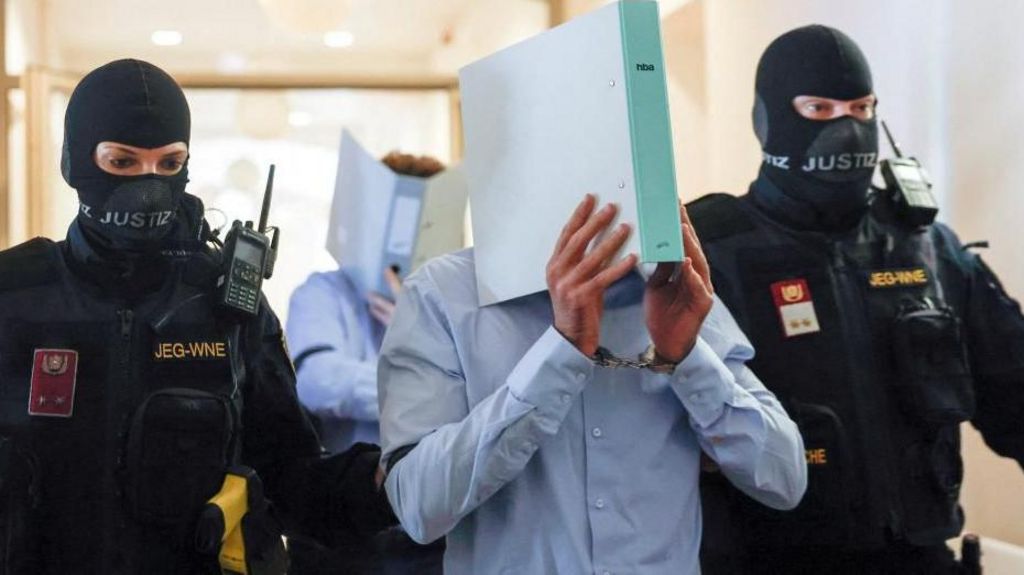
    PRAGUE — Czech authorities have apprehended three individuals in connection with a devastating warehouse fire that targeted a company supplying autonomous drone technology to Ukrainian forces. The incident, now under investigation as a suspected act of terrorism-linked arson, occurred in the industrial zone of Pardubice, approximately 100 kilometers east of Prague.

    Police confirmed the arrests involved two Czech nationals and one U.S. citizen, with two detainees captured on Czech territory and the third apprehended in neighboring Slovakia. Czech authorities have initiated extradition proceedings for the foreign-based suspect. All face serious charges including terrorist attack and participation in terrorist organizations.

    The targeted facility, owned by LPP Holding, specializes in developing dual-use technologies for both civilian and military applications. The company has been instrumental in providing advanced drone systems to Ukraine’s armed forces during ongoing conflict with Russia. While the warehouse sustained complete destruction, no injuries were reported due to the timely response of emergency services.

    Interior Minister Lubomír Metnar confirmed the incident’s potential terrorist connections, noting that investigation details are being shared with international partners. Police Commissioner Martin Vondrášek stated forensic evidence strongly suggests deliberate arson, prompting nationwide security enhancements at arms manufacturing facilities.

    LPP Holding clarified that although the destroyed building contained no weapon production, the company had previously explored establishing a drone development center in partnership with Israeli defense contractor Elbit Systems—a venture that ultimately never materialized.

    The arrests occur against a complex political backdrop where the current Czech government, led by populist billionaire Andrej Babiš, has diverged from previous administrations by rejecting financial aid and EU loan guarantees for Ukraine. This position aligns the Czech Republic with Hungary’s Viktor Orbán and Slovakia’s Robert Fico in opposing unified European support for Ukraine, despite strong popular support for Kyiv among the Czech public.