分类: world

  • Czech police arrest 3 over arson at drone warehouse supplying Ukraine

    Czech police arrest 3 over arson at drone warehouse supplying Ukraine

    PRAGUE — Czech authorities have apprehended three individuals in connection with a devastating warehouse fire that targeted a company supplying autonomous drone technology to Ukrainian forces. The incident, now under investigation as a suspected act of terrorism-linked arson, occurred in the industrial zone of Pardubice, approximately 100 kilometers east of Prague.

    Police confirmed the arrests involved two Czech nationals and one U.S. citizen, with two detainees captured on Czech territory and the third apprehended in neighboring Slovakia. Czech authorities have initiated extradition proceedings for the foreign-based suspect. All face serious charges including terrorist attack and participation in terrorist organizations.

    The targeted facility, owned by LPP Holding, specializes in developing dual-use technologies for both civilian and military applications. The company has been instrumental in providing advanced drone systems to Ukraine’s armed forces during ongoing conflict with Russia. While the warehouse sustained complete destruction, no injuries were reported due to the timely response of emergency services.

    Interior Minister Lubomír Metnar confirmed the incident’s potential terrorist connections, noting that investigation details are being shared with international partners. Police Commissioner Martin Vondrášek stated forensic evidence strongly suggests deliberate arson, prompting nationwide security enhancements at arms manufacturing facilities.

    LPP Holding clarified that although the destroyed building contained no weapon production, the company had previously explored establishing a drone development center in partnership with Israeli defense contractor Elbit Systems—a venture that ultimately never materialized.

    The arrests occur against a complex political backdrop where the current Czech government, led by populist billionaire Andrej Babiš, has diverged from previous administrations by rejecting financial aid and EU loan guarantees for Ukraine. This position aligns the Czech Republic with Hungary’s Viktor Orbán and Slovakia’s Robert Fico in opposing unified European support for Ukraine, despite strong popular support for Kyiv among the Czech public.

  • Qatar gas terminal bombing will push prices higher for years

    Qatar gas terminal bombing will push prices higher for years

    A devastating Iranian missile and drone attack on March 19 has inflicted catastrophic damage upon Ras Laffan, the world’s largest liquefied natural gas terminal located in Qatar. This critical facility, responsible for supplying approximately 20% of global LNG demand, suffered extensive destruction across its 295-square-kilometer complex, with fires raging through its gas-to-liquids infrastructure.

    The assault has resulted in unprecedented financial losses, potentially reaching hundreds of millions of dollars in immediate damage. QatarEnergy CEO Saad Sherida al-Kaabi indicated the company may declare force majeure on long-term contracts, potentially disrupting LNG supplies to Italy, Belgium, Korea, and China for up to five years.

    The attack exposes the extraordinary vulnerability of global energy infrastructure. LNG operations require extremely complex technology to maintain methane at -162°C, consuming approximately 15% of extracted gas during liquefaction and transportation. Ras Laffan’s infrastructure, developed over decades at a cost of tens of billions of dollars, represents precisely the type of highly specialized facility that cannot be rapidly replaced.

    Geopolitically, the strike highlights the complex energy relationship between Qatar and Iran, whose shared North Field/South Pars gas reservoir represents the world’s largest natural gas field. While Qatar exports most of its production, Iran primarily consumes its gas domestically.

    Repairing the damaged facility—affecting roughly 17% of Qatar’s LNG infrastructure—presents extraordinary technical challenges. The process requires gradual temperature adjustments to prevent structural damage, with massive components including 50-meter heat exchangers and 5,000-metric-ton compressors that cannot be quickly manufactured or replaced.

    The global impact will be most acutely felt in Asia, where approximately 75% of Qatar’s LNG exports typically flow to China, India, Taiwan, South Korea, and Pakistan. European nations including Italy, Belgium, and Poland will also experience supply disruptions, though the UK remains less dependent on Qatari imports.

    This supply shock has already driven European gas benchmark prices to more than double since mid-January. The situation may force energy-importing nations toward cheaper alternatives, particularly coal, potentially reversing environmental progress. Unlike temporary oil disruptions, this LNG shortage represents a structural crisis that may keep global gas prices elevated for several years, fundamentally reshaping energy markets and international relations.

  • Philippines declares energy emergency over Iran conflict

    Philippines declares energy emergency over Iran conflict

    The Philippine government has officially proclaimed a nationwide energy emergency in response to mounting threats to fuel security triggered by escalating Middle Eastern hostilities. President Ferdinand Marcos Jr. enacted this decisive measure through an executive order on Tuesday, highlighting the severe disruptions to global energy supply chains caused by the US-Israel conflict with Iran.

    The critical closure of the Strait of Hormuz—a vital maritime corridor for global oil shipments—has generated significant turbulence across international energy markets, resulting in dramatic price increases and supply shortages. This development poses particular vulnerability to the Philippines, which imports approximately 98% of its crude oil from the Gulf region.

    President Marcos emphasized that the declaration enables coordinated governmental intervention to mitigate economic disruptions. A specialized committee has been established to oversee the systematic distribution and availability of essential commodities including fuel, food, and medicines. The emergency status, effective for one year unless modified, follows urgent appeals from Philippine senators addressing the ’emergency-level’ hardships confronting citizens.

    Current data reveals petrol and diesel prices have more than doubled since pre-conflict levels recorded in February. In response to the crisis, authorities have implemented multiple countermeasures including transportation subsidies, reduced ferry operations, and a four-day work week for civil servants to conserve fuel resources.

    Energy Secretary Sharon Garin disclosed that national fuel reserves currently stand at approximately 45 days of supply. The administration will temporarily increase reliance on coal-fired power generation to offset soaring liquefied natural gas costs. Asia remains disproportionately affected by the Strait of Hormuz blockade, with nearly 90% of the waterway’s oil and gas shipments destined for the region last year.

  • War in the Middle East: latest developments

    War in the Middle East: latest developments

    The Middle East conflict continues to escalate with significant developments across diplomatic, military, and security dimensions. Pakistani Prime Minister Shehbaz Sharif has offered Islamabad as a potential mediator for negotiations between the US-Israel coalition and Iran, signaling diplomatic efforts to de-escalate tensions.

    US Secretary of State Marco Rubio is scheduled to meet with G7 counterparts in France to coordinate responses to the ongoing crisis. Despite the alliance’s close ties with the United States, no G7 nation has explicitly endorsed the offensive against Iran, creating diplomatic friction with President Donald Trump’s administration. Trump has claimed ongoing communications with Tehran, though Iranian officials have denied these assertions.

    Iran has intensified internal security measures, announcing the arrest of 466 individuals accused of destabilizing the country through online activities. The Iranian government has maintained internet restrictions since the conflict began on February 28, though specific details regarding the nature of the alleged offenses and arrest timelines remain undisclosed.

    In a significant security appointment, Iran has named Mohammad Bagher Zolghadr, a former Revolutionary Guards commander, as head of Iran’s Supreme National Security Council, succeeding Ali Larijani who was killed in an Israeli strike last week.

    The Gulf security architecture faces potential restructuring as Qatari officials describe a ‘breakdown of the security system’ that will necessitate regional reevaluation. Lebanon has dramatically escalated tensions by withdrawing accreditation for Iran’s ambassador and demanding his departure, accusing Iran’s Revolutionary Guards of directly commanding Hezbollah operations against Israel.

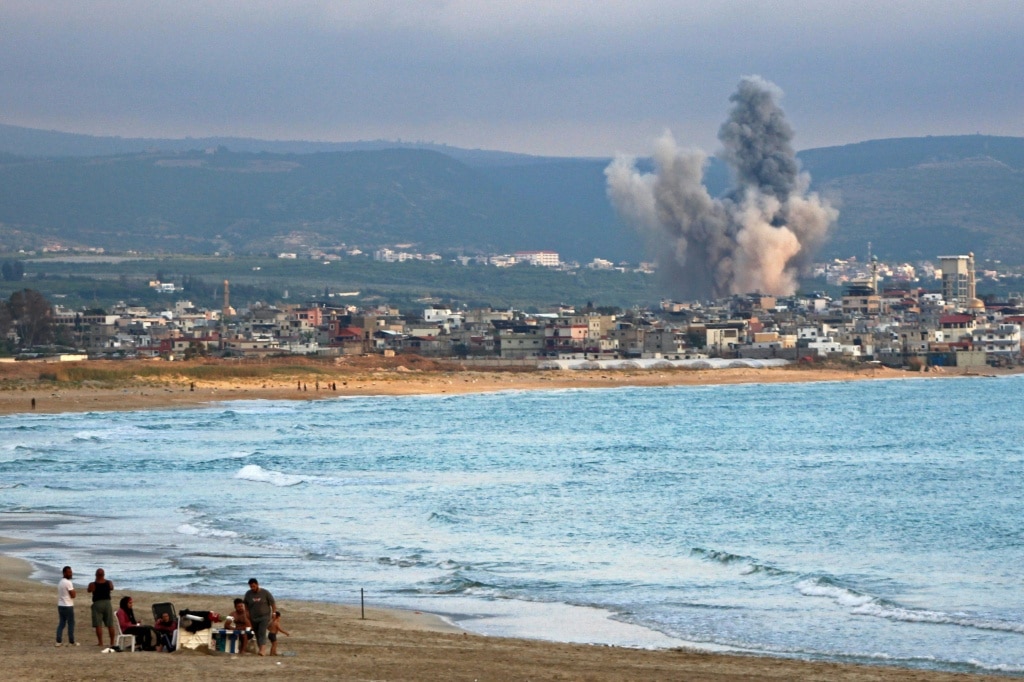
    Military operations have intensified with Israel confirming completion of ‘large wave of strikes’ in Isfahan while announcing plans to establish a 30-kilometer ‘security zone’ inside Lebanon. French Foreign Minister Jean-Noel Barrot has warned against this measure, citing potential ‘major humanitarian consequences.’

    The United Nations Human Rights Council will convene an emergency session to address Iranian strikes targeting Gulf region countries. Energy infrastructure has become a focal point with Iranian media reporting strikes on two gas facilities and a pipeline, though Energy Minister Abbas Aliabadi claims Iran’s distributed energy infrastructure (150 power plants nationwide) provides resilience against such attacks.

    Casualties mount across the region with six Peshmerga fighters killed in Iraqi Kurdistan by what regional authorities describe as Iranian ballistic missiles. Tel Aviv reported four wounded from missile impacts, prompting Iran’s Revolutionary Guards to threaten ‘heavy missile and drone strikes’ in support of Palestinian and Lebanese civilians.

    Lebanon’s health ministry confirmed at least two fatalities from an Israeli strike on Bshamoun, south of Beirut, while western Iraq witnessed the death of 15 fighters including Saad Dawai al-Baiji, provincial commander of the Hashed al-Shaabi forces, in an attack blamed on the United States.

  • Libya tows drifting Russian ‘shadow fleet’ tanker to avert a Mediterranean spill

    Libya tows drifting Russian ‘shadow fleet’ tanker to avert a Mediterranean spill

    Libyan maritime authorities have successfully initiated a complex towing operation for the Russian liquefied natural gas tanker Arctic Metagaz, which had been adrift in the Mediterranean Sea for approximately three weeks following a suspected naval drone assault. The damaged vessel, part of Russia’s sanctions-evading ‘shadow fleet’ transporting fossil fuels amid the Ukraine conflict, is now being guided to a secure zone near Zuwara on Libya’s western coastline.

    Official video documentation released Tuesday depicts a robust tugboat carefully maneuvering the倾斜 tanker using heavy-duty cables, with visible fire damage blackening portions of its hull. The rescue operation follows weekend announcements of collaboration between Libya’s National Oil Corporation and Italian energy giant Eni to prevent a potential environmental disaster.

    Russian officials confirmed the Arctic Metagaz sustained severe damage from Ukrainian naval drone strikes near Maltese waters in early October, resulting in sudden explosions and substantial fires approximately 240 kilometers offshore from Sirte, Libya. All 30 crew members were safely evacuated despite initial erroneous reports of the vessel’s sinking by Libyan maritime authorities.

    The World Wide Fund for Nature had previously expressed grave concerns about the tanker’s instability and potential ecological threats to one of the Mediterranean’s most biologically diverse marine regions. Libyan authorities have implemented comprehensive protective measures to minimize environmental risks and prevent hydrocarbon leakage during the delicate recovery process.

  • 412 million barrels will soon flood oil markets — will it matter?

    412 million barrels will soon flood oil markets — will it matter?

    As the Iran conflict enters its second week, the strategic Strait of Hormuz remains effectively closed, severing approximately 20% of global oil shipments. In response to this unprecedented energy crisis, the International Energy Agency (IEA) has authorized the largest coordinated release of strategic petroleum reserves in history.

    Thirty-two member nations will collectively inject 412 million barrels from their strategic reserves into global markets over a four-month period starting late March 2026. This emergency measure aims to stabilize markets disrupted by the closure of the critical maritime chokepoint.

    The concept of strategic oil reserves traces back to early 20th-century military planning when the US Navy transitioned from coal to oil-powered vessels. Beginning in 1912, Congress designated petroleum-rich areas including California’s Elk Hills and Wyoming’s Teapot Dome as emergency fuel sources for naval operations.

    The modern reserve system, established after the 1973-74 oil crisis, involves storing pre-produced oil for rapid market deployment. That earlier crisis emerged when OPEC nations slashed exports by 25% to protest Western support for Israel during the Yom Kippur War, triggering a 350% price surge that parallels current market conditions.

    Current strategic reserves are designed to replace at least 90 days of import requirements, with some nations like Japan maintaining over 200 days of coverage. The US reserve, containing 415 million barrels as of March 13, 2026, provides merely 64 days of protection at current consumption rates.

    The IEA-coordinated release mechanism has been activated five times previously, most recently during the 2022 Ukraine crisis when prices exceeded $120 per barrel. Member nations collectively maintain approximately 1.2 billion barrels in government stockpiles, supplemented by 600 million barrels in commercial storage.

    The United States will contribute 172 million barrels—nearly half the total release—drawing from its Gulf Coast salt dome storage facilities in Texas and Louisiana. This withdrawal will reduce US reserves to 243 million barrels, their lowest level since the 1980s at just 34% of capacity.

    While strategic releases cannot fully replace the estimated 10 million daily barrels blocked by the Hormuz closure, they provide critical short-term price moderation by influencing futures contracts. Energy experts note that market psychology plays a crucial role, as guaranteed future supply tends to temper speculative price surges.

    The current crisis highlights shifting global energy security landscapes. China has aggressively expanded its reserves to an estimated 1.4 billion barrels, reflecting its dependence on imports for over 70% of consumption. Meanwhile, the US reserve remains significantly depleted following the 2022 release of 180 million barrels during the Ukraine crisis.

    Despite plans to replenish 200 million barrels later in 2026, the extended conflict demonstrates the continuing relevance of strategic petroleum reserves as a buffer against supply disruptions in an increasingly volatile global energy market.

  • Afghanistan releases American national Dennis Coyle held for more than a year

    Afghanistan releases American national Dennis Coyle held for more than a year

    In a significant diplomatic development, Taliban authorities in Afghanistan have released American academic Dennis Coyle after detaining him for over a year. The release, announced on Tuesday, coincided with Eid al-Fitr celebrations marking the end of Ramadan.

    Afghanistan’s Foreign Ministry stated that Coyle was freed in Kabul following appeals from his family and a Supreme Court determination that his previous imprisonment period was “sufficient.” The academic researcher had been held since January 2025 under unspecified legal violations that Afghan authorities never detailed.

    The release occurs against a backdrop of escalating tensions between Washington and Kabul. Earlier this month, the U.S. State Department designated Afghanistan as a sponsor of wrongful detention, accusing Taliban leadership of practicing “hostage diplomacy” to extract policy concessions. This placement puts Afghanistan alongside Iran in a category of nations specifically criticized for detaining American citizens.

    U.S. Secretary of State Marco Rubio welcomed Coyle’s release while emphasizing ongoing concerns. “President Trump is committed to ending unjust detentions overseas – Dennis joins over 100 Americans who have been freed in the past 15 months,” Rubio stated. He added, “While this is a positive step by the Taliban, more work needs to be done.”

    Afghan officials vehemently denied allegations of using detainees for political leverage. Foreign Minister Amir Khan Muttaqi asserted that his country “has not arrested citizens of any country to achieve political goals,” maintaining that Coyle’s case had proceeded through proper judicial processes.

    The diplomatic resolution involved multiple intermediaries, with both U.S. and Afghan officials thanking the United Arab Emirates for mediation efforts and acknowledging Qatar’s supportive role. The foreign ministry noted that Muttaqi had met with former U.S. Special Representative for Afghanistan Zalmay Khalilzad prior to the release.

    Despite this development, at least two American citizens remain unaccounted for in Afghanistan. Mahmood Habibi, an Afghan-American businessman who disappeared in 2022, and Paul Overby, missing since 2014 while researching a book, continue to be subjects of concern for U.S. authorities and their families.

    The Taliban returned to power in 2021 following the withdrawal of U.S. troops, nearly two decades after being ousted in the aftermath of the 9/11 attacks.

  • Search for four missing soldiers after Colombia plane crash kills 66

    Search for four missing soldiers after Colombia plane crash kills 66

    A catastrophic military aviation disaster has struck Colombia, resulting in a devastating loss of life and triggering a national conversation about military modernization. A Hercules C-130 transport aircraft crashed shortly after takeoff from Puerto Leguízamo in the southern Putumayo province, near the border with Peru, claiming the lives of 66 members of the Colombian security forces.

    The aircraft, carrying a total of 128 personnel, was en route to Puerto Asís when it plummeted from the sky. Immediate response came from local residents who rushed to the fiery wreckage, heroically extracting dozens of injured survivors and transporting them to medical facilities on motorbikes—a testament to community resilience in the remote region.

    Colombian President Gustavo Petro ignited a political firestorm by implicitly attributing the tragedy to outdated military equipment. Through social media channels, the president condemned what he termed “bureaucratic problems” obstructing his administration’s efforts to modernize the nation’s armed forces. In a sharply worded statement, Petro referenced the aircraft as “this piece of scrap metal” purchased in 2020 and demanded accountability, vowing to eliminate further delays that jeopardize military personnel safety.

    Disturbing mobile footage circulating online captures the aircraft’s rapid descent followed by explosive eruptions at the crash site. Defense officials confirmed the detonations resulted from ammunition aboard the transport plane igniting in the subsequent fire. Authorities have preliminary ruled out attacks by armed groups active in the region, instead focusing on mechanical or human factors as the likely cause.

    The human toll reflects profound institutional loss: 58 army personnel, six air force members, and two police officers perished in the accident, according to Commander General Hugo Alejandro López’s latest assessment. Rescue operations continue for four individuals still missing.

    This tragedy marks the second catastrophic incident involving a Hercules C-130 within months. On February 27, a Bolivian military counterpart crashed while transporting banknotes, killing 24 people when it overshot a runway and collided with highway traffic near El Alto airport.

    An official investigation is underway to determine the precise causation factors behind Colombia’s deadliest military aviation disaster in recent history.

  • At least five killed in massive wave of Russian strikes across Ukraine, officials say

    At least five killed in massive wave of Russian strikes across Ukraine, officials say

    A massive overnight aerial assault by Russian forces has left at least five civilians dead across multiple Ukrainian regions, marking one of the most severe attacks in recent weeks. The coordinated bombardment, which occurred Monday night into Tuesday, targeted energy infrastructure and residential areas in eleven different regions, with Zaporizhzhia, Poltava, and Kharkiv among the hardest hit.

    According to Ukrainian Air Force reports, the assault involved an extensive arsenal including seven ballistic missiles, 23 cruise missiles, four air-launched guided missiles, and 392 drones. Ukrainian air defense systems successfully intercepted 25 missiles and 365 drones, though the scale of the attack overwhelmed defenses in several locations.

    The human toll was particularly severe in Zaporizhzhia, where a residential high-rise building sustained direct hits from six drones followed by six ballistic missiles, resulting in one fatality and nine injuries. Local resident Dymtro Zaiets described the terrifying moments after a ‘very loud explosion’ forced his family to evacuate their apartment with their three-month-old child as fire engulfed their floor.

    In the Poltava region, strikes on residential buildings and a hotel killed two people and injured twelve, while Kharkiv witnessed the death of a 61-year-old woman when a drone struck an electric train. Additional casualties were reported in Kherson, where shelling destroyed a civilian home, and in Dnipropetrovsk and Sumy regions where elderly residents were hospitalized with injuries.

    The attacks had significant regional implications, with Moldovan President Maia Sandu confirming that strikes on Odesa’s energy infrastructure disconnected the Isaccea-Vulcanesti power line, severing Moldova’s primary electricity import route from Romania. Sandu condemned the attacks as undermining regional energy security, stating unequivocally that ‘Russia alone bears responsibility.’

    The bombardment comes amid shifting dynamics in the conflict, with Russian advances in eastern Ukraine slowing significantly while Ukrainian forces report minor counteroffensives. President Zelensky had previously warned of an imminent ‘massive strike’ in his nightly address, citing intelligence reports of Russian preparations.

    This development occurs against the backdrop of growing concerns about diverted international attention, with Zelensky noting that US focus on the Middle East conflict with Iran has impacted the availability of critical air-defense systems. Ukrainian officials emphasize that Russia appears to be exploiting global tensions to intensify its assault on Ukrainian civilian infrastructure.

  • Vietnam and Russia advance nuclear power deal as energy security concerns grow in Southeast Asia

    Vietnam and Russia advance nuclear power deal as energy security concerns grow in Southeast Asia

    HANOI, Vietnam — In a significant energy security move, Vietnam has reignited its nuclear power program through a landmark agreement with Russia to construct a major nuclear facility. The deal, signed during Vietnamese Prime Minister Phạm Minh Chính’s official visit to Moscow, marks a revival of nuclear ambitions that were previously suspended in 2016 due to financial and safety considerations.

    The Ninh Thuan 1 nuclear plant will feature two Russian-designed reactors with a combined capacity of 2,400 megawatts, utilizing technology based on existing Russian nuclear facilities. Both nations have characterized the project as a “symbolic representation” of their longstanding diplomatic relationship, which dates back to the Cold War era of the 1950s.

    This nuclear initiative aligns with Vietnam’s broader economic objectives to achieve developed nation status by 2050 and transform into Asia’s next prominent “tiger economy.” The renewed push for nuclear energy comes amid global energy market disruptions triggered by international conflicts, which have driven up fossil fuel costs and emphasized the urgency of securing stable domestic power sources.

    Across Southeast Asia, rapidly expanding economies are increasingly turning to nuclear power as a solution for cleaner, more reliable energy. Proponents highlight nuclear technology’s lower emissions profile compared to conventional fossil fuels and note that recent technological advancements have enhanced safety protocols while reducing construction costs and physical footprint requirements.

    The bilateral meeting in Moscow also addressed expanded cooperation in additional sectors including oil and gas infrastructure, technological exchange, and other strategic industries. Despite their historical ties, economic engagement between Vietnam and Russia remains relatively modest, with bilateral trade reaching $4.77 billion in 2025—significantly lower than Vietnam’s commercial relationships with China and the United States. While Russia continues to serve as a major defense supplier, Vietnam has been actively diversifying its international partnerships and arms procurement sources.