分类: world

  • In one of country’s poorest states, Venezuelans hope for post-Maduro boom

    In one of country’s poorest states, Venezuelans hope for post-Maduro boom

    In the sweltering heat of Guaca, a Venezuelan fishing town, residents cluster around rusted propane canisters—the first gas delivery since December. This scene encapsulates the daily struggles in Sucre, one of Venezuela’s most impoverished states, where basic necessities like cooking fuel, running water, and gasoline remain scarce despite the country’s vast oil reserves.

    The recent arrest of Nicolás Maduro in January and subsequent restoration of U.S. relations with interim leader Delcy Rodríguez has sparked discussions of foreign investment in Caracas. However, in remote Sucre—hundreds of kilometers from the capital—these developments feel distant. For ordinary Venezuelans, the pressing question is whether promised American oil investments will translate into tangible improvements in their lives.

    In Cumaná, Sucre’s capital, residents have endured two weeks without running water. While state officials blame a pipeline damaged in last month’s earthquake, locals maintain that water shortages have persisted for years due to chronic underinvestment. Some resort to collecting water from polluted streams, highlighting the infrastructure collapse.

    The fishing industry—Sucre’s economic backbone—exemplifies the economic devastation. Fisherman Pablo Marín explains the cruel economics: “In Ecuador, catching 100kg of fish earns $500 enough to cover fuel with money left over. Here, you must catch another 100kg just to break even.” Hyperinflation has rendered the bolivar nearly worthless, forcing businesses to dollarize while wages remain in local currency.

    Yurmari Martínez, a local fisherwoman, recalls Sucre being “a place with potential” two decades ago when processing plants and diverse industries thrived. Today, fuel shortages, nationalizations, and decaying infrastructure have hollowed out the economy. This degradation has even eroded educational aspirations—Martínez’s 23-year-old son abandoned university, convinced that “no qualification can lead anywhere” in contemporary Venezuela.

    Amidst this despair, Shell’s recently approved “Dragon” natural gas project—located between Venezuela and Trinidad and Tobago—represents a glimmer of hope. U.S. Secretary of the Interior Doug Burgum’s visit earlier this month culminated in signed development agreements. While the gas will be processed in Trinidad for export, Shell claims Venezuelans will benefit.

    However, experts urge tempered expectations. Christopher Sabatini of Chatham House warns that such projects typically create limited local jobs and short-term cash injections without generating broader development. “Companies come in, extract the resources, oftentimes with foreign equipment and engineers, then ship it,” he notes, emphasizing that lasting benefits require effective government revenue reinvestment.

    The U.S. now oversees much of Venezuela’s oil revenue—an “unprecedented” situation according to Sabatini—raising questions about fund allocation. Even with proper management, Sabatini stresses that rebuilding infrastructure, electricity, and housing “can’t be turned around simply in months.”

    Omar Zambrano, chief economist at Anova Policy Research, cites 1990s evidence showing oil investment reduced poverty and improved education when the industry welcomed private companies. But after “25 years of degradation of the country’s institutional, productive, and social fabric” under Hugo Chávez and Maduro, conditions for successful implementation are far less favorable.

    This degradation manifests starkly in Güiria, three hours east of Guaca along potholed roads with no mobile service. Here, the U.S.’s aggressive anti-narcotics campaign—which claims to target “narco-terrorists”—has left dozens dead in boat strikes. Locals insist many victims were not cartel members but poverty-driven individuals seeking survival.

    Diannys, a mother of five whose husband died in an October strike, acknowledges the moral complexity: “People take the wrong path out of necessity… risking their lives to give their family a better future.” An anonymous resident who lost his brother echoes this sentiment, revealing his brother—a fisherman and farmer—was recruited by traffickers offering $10,000 for a sea journey. “I earn $10 weekly, enough for three meals,” he explains, contextualizing the temptation.

    As Venezuela navigates its political transition two months after Maduro’s ousting, Sucre’s residents remain cautiously skeptical. While foreign investment promises economic revival, years of broken promises and institutional decay have forged resilient pragmatism. The path forward requires not just extracting resources but rebuilding the very fabric of Venezuelan society—a task far more complex than signing oil deals.

  • Southeast Asia revisits nuclear power plans for AI data centers as Iran war disrupts energy supplies

    Southeast Asia revisits nuclear power plans for AI data centers as Iran war disrupts energy supplies

    Southeast Asia is undergoing a profound energy transformation as multiple nations revive dormant nuclear power ambitions to address escalating electricity demands driven by artificial intelligence infrastructure and growing concerns about energy security. This strategic pivot marks a historic departure for a region that has never generated nuclear energy despite decades of consideration.

    The convergence of several critical factors is driving this nuclear renaissance. Surging global oil prices exacerbated by Middle East conflicts have highlighted the vulnerability of traditional energy supplies, while climate commitments necessitate low-carbon alternatives. Simultaneously, the explosive growth of data centers—with Malaysia positioning itself as an AI computing hub attracting investments from Microsoft, Google, and Nvidia—has created unprecedented electricity demands that existing grids struggle to meet.

    Five ASEAN members are leading this nuclear charge: Vietnam is constructing two Russian-backed nuclear plants; Indonesia aims to build small modular reactors by 2034; Thailand targets 600 megawatts of nuclear capacity by 2037; the Philippines is revitalizing a never-operated 1970s nuclear facility with a 2032 target; and Malaysia has set a 2031 goal for atomic energy deployment. Even nations without firm plans, including Cambodia, Singapore, and Brunei, are actively exploring nuclear options.

    This regional movement mirrors global trends, with nearly 40 countries committing to triple nuclear capacity by 2050. According to industry projections, Southeast Asia could contribute nearly a quarter of the 157 gigawatts expected from newcomer nuclear nations by mid-century.

    Despite the momentum, significant challenges remain. Safety concerns stemming from historical disasters at Chernobyl and Fukushima continue to shape public perception, while questions about waste management and supply chains persist. Energy analysts caution that nuclear development requires careful consideration compared to renewable alternatives, particularly for nations building nuclear infrastructure from scratch.

    The International Energy Agency notes that Southeast Asia will account for a quarter of global energy demand growth by 2035, making these energy decisions critically important for both economic development and climate objectives. As the region balances its AI ambitions against energy security and environmental goals, nuclear power has emerged as a potentially transformative solution—though one requiring cautious implementation.

  • Israel strikes Iran as Trump says Tehran wants deal to end war

    Israel strikes Iran as Trump says Tehran wants deal to end war

    The Middle East witnessed a significant escalation in hostilities as Israeli forces conducted widespread strikes across Iran on Thursday. This military action directly contradicted claims made by U.S. President Donald Trump that Tehran was secretly seeking a diplomatic resolution to the nearly month-long conflict.

    The Israeli military described the operation as “a wide-scale wave of strikes targeting infrastructure,” with significant damage reported in the central city of Isfahan. In retaliation, Iran launched missile attacks that triggered air raid sirens across central Israel, including Tel Aviv and Jerusalem, marking the first such launches from Iran in over 14 hours.

    President Trump asserted during a dinner with Republican lawmakers that Iranian officials were covertly negotiating a peace agreement despite public denials. “They are negotiating, by the way, and they want to make a deal so badly,” Trump stated, suggesting Iranian leaders feared retaliation from both their own citizens and U.S. forces if they openly pursued diplomacy.

    These claims were vehemently rejected by Iranian Foreign Minister Abbas Araghchi, who declared on state television that Iran would only accept an end to hostilities “on our own terms” to prevent future conflicts. The diplomatic impasse continued as Pakistan reportedly forwarded a 15-point U.S. peace proposal to Tehran, which Iranian state media claimed had been “responded negatively” to by officials.

    The conflict has expanded beyond the initial bilateral confrontation, drawing in multiple regional actors. Saudi Arabia reported intercepting at least 18 drones, while the United Arab Emirates and Bahrain responded to new missile and drone attacks. Kuwait International Airport experienced a fire after a drone struck a fuel tank, further illustrating the expanding regional dimension of the crisis.

    The economic ramifications continued to intensify with Iran largely blocking the vital Strait of Hormuz oil route, through which approximately 20% of global oil and gas passes. This closure has driven energy prices upward and created significant uncertainty in global markets. Iranian officials maintained that the strait was “closed only to enemies,” while Pakistan’s Defense Minister ironically noted that “the goal of the war seems to have shifted to opening the Strait of Hormuz, which was open before the war.”

    White House Press Secretary Karoline Leavitt reinforced the U.S. position with a stark warning: “Trump does not bluff and he is prepared to unleash hell on Iran if no deal is struck.” Meanwhile, China’s top diplomat Wang Yi offered a glimmer of hope, suggesting that signs of openness to negotiations from both sides could provide a pathway to peace.

    The conflict has additionally drawn in Lebanon, where Hezbollah forces have engaged in cross-border exchanges with Israel. Hezbollah chief Naim Qassem declared that negotiations with Israel would amount to “surrender,” as the group launched over 80 attacks against Israeli targets in a single day—the highest daily number since hostilities began.

    With thousands of additional U.S. troops reportedly deploying to the region and Iran threatening to target Red Sea shipping in response to any ground invasion, the situation remains highly volatile. UN Secretary-General Antonio Guterres has called for an immediate cessation of hostilities as the international community watches with growing concern.

  • Pakistan will export surplus food to Gulf as Iran cements control of Hormuz strait

    Pakistan will export surplus food to Gulf as Iran cements control of Hormuz strait

    In a strategic response to mounting food security concerns in the Arab Gulf, Pakistan has initiated plans to export surplus food supplies to the region. This development comes as Iran’s tightening control over the Strait of Hormuz has severely disrupted maritime traffic, creating critical supply chain vulnerabilities for several Gulf nations.

    Prime Minister Shehbaz Sharif has directed Pakistani authorities to accelerate food export mechanisms while ensuring domestic supply stability remains uninterrupted. The government is simultaneously working to expand flight operations and enhance port efficiency to facilitate this crucial trade initiative.

    The maritime crisis stems from Iran’s implementation of a new corridor system through the strategic waterway, which handles approximately 20% of global energy shipments and serves as a vital passage for Gulf food imports. According to Lloyd’s List Intelligence, traffic through the strait has dramatically declined, with Iran selectively permitting vessel transits while imposing fees reaching $2 million in some instances.

    While Saudi Arabia maintains alternative access through the Red Sea, the United Arab Emirates, Kuwait, Bahrain, and Qatar face particularly severe challenges. Approximately 90% of the UAE’s food supplies traditionally transit through Hormuz, making these nations disproportionately vulnerable to the ongoing disruption.

    Pakistan emerges as a uniquely positioned actor in this geopolitical landscape. The country recently demonstrated its ability to navigate the strait successfully when the Pakistan-flagged vessel Lorax (also known as Karachi) became the first non-Iranian crude carrier to transit Hormuz since the implementation of new Iranian protocols.

    This diplomatic tightrope walk reflects Islamabad’s delicate balancing act between maintaining relations with neighboring Iran while preserving crucial partnerships with Gulf states that have long served as financial lifelines. The country itself faces significant economic pressure from reduced Gulf energy exports, implementing fuel rationing measures including a four-day government work week and temporary school closures.

    The evolving situation has broader regional security implications. Saudi Arabia and Pakistan solidified a mutual defense pact last year, a move interpreted partly as diversification beyond US security arrangements. Some Saudi commentators have suggested this agreement potentially places the kingdom under Pakistan’s nuclear umbrella amid ongoing regional tensions.

    According to Financial Times reporting, Iran has circulated communication to International Maritime Organization members indicating that ‘non-hostile vessels’ may coordinate transit with Iranian authorities, potentially creating opportunities for neutral actors like Pakistan to maintain crucial supply lines to food-insecure Gulf nations.

  • Iraqi Kurdish commander says there are no plans to invade Iran

    Iraqi Kurdish commander says there are no plans to invade Iran

    A senior Kurdish military commander in Iraq has vehemently denied any intentions to invade Iran while expressing profound frustration over persistent Iranian attacks on Kurdish positions. Major-General Sirwan Barzani, a prominent Peshmerga leader and successful businessman, revealed that Iran has launched approximately 430 drone and missile assaults against the Kurdistan region of Iraq since the commencement of US-Israeli military operations against Iran on February 28.

    Speaking with Middle East Eye on Tuesday, coinciding with a devastating Iranian ballistic missile strike that killed six Peshmerga soldiers and wounded thirty others, Barzani characterized the attack as an act of terrorism. The commander, who bears responsibility for maintaining Kurdish defensive lines against the Islamic State in northern Iraq, emphasized the historical and trade relations between the Kurds and Iranians while questioning the rationale behind the continuous assaults.

    Despite his visible anger, Barzani firmly dismissed Western media reports suggesting Iraqi Kurds were facilitating border crossings for Iranian Kurds to combat Iranian forces. “We have not made such a decision. This is not our job,” he stated, clarifying that their duty exclusively involves defending Iraqi Kurdistan.

    The situation has grown increasingly complex with the involvement of Iranian-backed Iraqi factions, particularly elements within the Popular Mobilization Forces (PMF). Barzani revealed that 85-90% of attacks on the Kurdistan region originate from these PMF groups, some of which he claims attack Kurdish positions more frequently than Iran itself. These hardline factions have also targeted Iraq’s oil fields, military installations, and intelligence headquarters, potentially jeopardizing the nation’s economy and international relations.

    The conflict has drawn in multiple international actors, including a March incident where an Iranian drone strike near Makhmur killed one French soldier and injured six others. Barzani asserted that Iranian intelligence possesses comprehensive knowledge that Western allegations about French training of Kurdish groups are unfounded.

    With the US-led coalition scheduled to withdraw from Iraq by September 2026 under a 2024 agreement, regional tensions continue to escalate. Barzani noted that even before the current conflict, several coalition countries had already relocated their forces from Erbil due to security concerns.

    The Kurdish commander expressed particular concern about attacks on civilian infrastructure, including his own Korek Mountain Resort which has been struck seventeen times. He warned that Iran’s current policy risks causing irreparable damage to regional relations, suggesting that targeted nations will eventually demand accountability for infrastructure destruction during future negotiations.

  • UN pushes fuel solution for Cuba aid work amid US talks

    UN pushes fuel solution for Cuba aid work amid US talks

    The United Nations has unveiled a critical $94.1 million emergency strategy for Cuba centered on establishing a comprehensive fuel tracking mechanism, amid ongoing negotiations with the United States to permit energy imports exclusively for humanitarian operations. UN Cuba Coordinator Francisco Pichon issued a stark warning Wednesday that without immediate fuel solutions, the nation faces potentially catastrophic human consequences.

    Pichon emphasized the plan’s objective is sustaining essential services for Cuba’s most vulnerable populations, stating current dwindling fuel reserves threaten ‘a rapid deterioration with the potential loss of life.’ The proposed ‘fuel traceability model’ serves as a verification mechanism to ensure all imported petroleum reaches prioritized critical services including healthcare, water distribution, and emergency response systems.

    This crisis stems from the Trump administration’s January imposition of a de facto oil blockade, significantly exacerbating Cuba’s pre-existing economic challenges. While Washington recently permitted limited oil sales to Cuba’s small private sector, humanitarian organizations remain constrained. UN agencies currently face severe operational limitations, unable to conduct field work or efficiently retrieve aid shipments from Havana’s airports.

    The expanded UN plan originally responded to Hurricane Melissa’s October devastation but now addresses the compounding energy emergency. Cubans endure regular blackouts exceeding 20 hours, with two nationwide outages occurring just last week. President Miguel Diaz-Canel has implemented strict fuel rationing and conservation measures amid the worsening crisis.

    Pichon confirmed all solutions remain under consideration, including collaboration with non-state sectors, as diplomatic efforts continue to establish a viable pathway for humanitarian fuel access.

  • Gaza toddler released from Israeli custody with ‘cigarette burn’ wounds

    Gaza toddler released from Israeli custody with ‘cigarette burn’ wounds

    A 21-month-old Palestinian child has been returned to his family bearing injuries consistent with torture after being held for ten hours by Israeli military personnel in the Gaza Strip. Medical documentation indicates the presence of cigarette burns and puncture wounds on the toddler’s body, raising serious allegations of abuse during detention.

    Jawad Abu Nassar was taken into custody alongside his father, Osama Abu Nassar, on March 19 in central Gaza. The incident occurred when Osama, reportedly suffering from severe war-related trauma after losing his home, unborn child, and livelihood, wandered toward Israeli military positions near the Maghazi refugee camp. Eyewitnesses reported that Israeli forces approached Osama after a quadcopter drone sighting, leading to both being detained.

    The International Committee of the Red Cross (ICRC) facilitated Jawad’s release approximately ten hours later. Family members discovered blood stains on the child’s clothing and subsequent medical examination revealed concerning injuries. Physicians documented swelling around the knees and wounds consistent with cigarette burns, alongside a penetrating injury suggesting puncture by a sharp object.

    According to grandfather Muhammed Husni Abu Nassar, the child has exhibited severe psychological distress since returning home, experiencing high fever, vomiting, and persistent crying while clinging constantly to his mother. When attempting to communicate, Jawad could only utter fragmented words referring to blood and his father’s disappearance.

    The Israeli military has categorically denied these allegations, stating through an official spokesperson that claims of abuse are “completely unfounded and serve Hamas propaganda.” The military maintains that the child received appropriate medical care and supervision during detention, describing the father as a “Hamas operative” who endangered the child by bringing him into a dangerous operational area.

    This incident occurs amid ongoing tensions along the Gaza ceasefire demarcation line, where numerous Palestinians have reported abuse during detention by Israeli forces. The case has drawn international attention to the treatment of detainees, particularly vulnerable populations, in the conflict zone.

  • ‘Ethnic cleansing’: Israel evicts 11 Palestinian families from Jerusalem neighbourhood

    ‘Ethnic cleansing’: Israel evicts 11 Palestinian families from Jerusalem neighbourhood

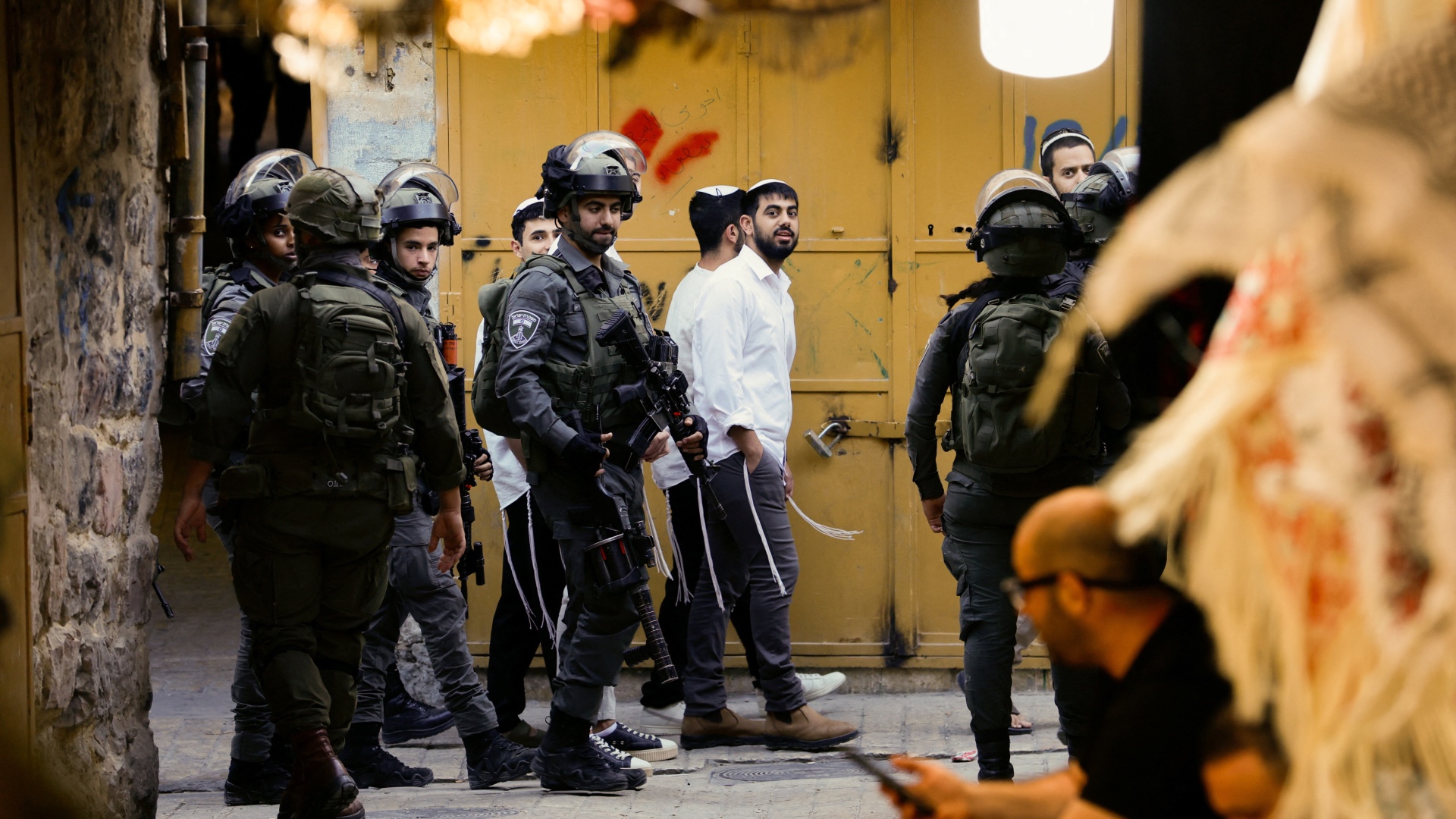
    Israeli security forces accompanied settlers into the Batn al-Hawa sector of Silwan, a neighborhood in occupied East Jerusalem, on Wednesday to forcibly displace eleven Palestinian families from their residences. The operation, facilitated by the Ateret Cohanim organization which promotes Jewish settlement in Palestinian areas, resulted in the seizure of thirteen apartments.

    Documented video evidence shows settlers discarding Palestinian belongings from windows and hoisting Israeli flags atop the captured buildings. According to the Israeli rights organization B’Tselem, approximately 2,200 Silwan residents currently face imminent threat of forced displacement.

    The human rights group condemned these actions as ‘ethnic cleansing,’ alleging the Israeli government is exploiting international focus on tensions with Iran to advance settlement expansion into territories captured during the 1967 war. B’Tselem characterized these measures as systematic, institutionalized violence designed to alter demographic balances through discriminatory laws and achieve ‘Judaization’ of sensitive areas.

    Concurrently, escalating violence erupted across the West Bank as dozens of Israeli settlers conducted coordinated attacks against Palestinian communities. Security footage from Saturday shows multiple structures ablaze in the villages of Jalud, Fandaqumiya, Silat ad-Dhahr and Qaryut, with residents attempting emergency evacuations.

    The Israeli military confirmed numerous arson attacks by settlers occurred Sunday night. Medical services reported three Palestinians injured from settler assaults in Jalud, with six others wounded near Jenin. The Palestinian news agency Wafa documented additional injuries, noting no arrests have been made in connection with the violence.

  • Strike on alleged drug boat kills 4 in the Caribbean Sea, US military says

    Strike on alleged drug boat kills 4 in the Caribbean Sea, US military says

    The U.S. military has confirmed conducting a lethal strike operation in the Caribbean Sea on Wednesday, resulting in four fatalities aboard a vessel suspected of narcotics smuggling. This action represents the latest escalation in the Trump administration’s intensified campaign against alleged drug trafficking networks throughout Latin America.

    According to U.S. Southern Command, the targeted vessel was operating along established smuggling corridors. The military released aerial footage depicting a moving boat suddenly consumed by a massive explosion. Notably, officials did not immediately present physical evidence confirming the presence of illicit drugs aboard the struck vessel.

    This incident raises the documented death toll from such maritime operations to at least 163 individuals since September, when the administration initiated its aggressive targeting of what it characterizes as ‘narcoterrorist’ elements. President Trump has publicly framed these operations as part of an ‘armed conflict’ against cartels, justifying the measures as necessary to combat drug influx and prevent American overdose deaths.

    The campaign continues unabated despite shifting military priorities toward Middle Eastern tensions with Iran. Concurrently, criticism mounts regarding both the legal foundations and practical efficacy of these strikes. Experts note that fentanyl—the primary driver of overdose fatalities—predominantly enters the United States through land routes from Mexico, not maritime channels, raising questions about the strategic focus of these operations.

  • Israeli court closes case into Palestinian teen’s death despite evidence of starvation

    Israeli court closes case into Palestinian teen’s death despite evidence of starvation

    A controversial ruling by an Israeli court has ignited widespread condemnation after it terminated the investigation into the death of Walid Ahmad, a 17-year-old Palestinian who perished in custody in March 2025. The teenager, detained six months prior for allegedly throwing stones in the occupied West Bank, died following a significant deterioration in his health, with evidence pointing to severe weight loss and infection.

    Judge Ehud Kaplan presided over the decision to close the case, asserting that no direct causal link could be established between the documented physical decline and the immediate cause of death. The ruling, previously under a gag order, became public knowledge on Tuesday, revealing a legal stance that human rights advocates describe as dangerously narrow.

    Human rights lawyer Nadia Dakka, who has meticulously followed the proceedings, criticized the judicial outcome as emblematic of a system ill-equipped to address systemic institutional failures. ‘There are clear indications that he died as a result of starvation, yet the court’s discussion was reductively focused on whether starvation was the direct, proximate cause,’ Dakka stated in an interview with Middle East Eye, highlighting the inherent challenge in attributing criminal responsibility in environments of pervasive neglect.

    Testimonies gathered by Defence for Children International depict a harrowing final moments for Ahmad. Fellow detainees reported the teenager collapsing from dizziness on March 22, 2025. Their pleas for assistance were allegedly ignored by guards, forcing them to carry Ahmad to a yard gate before he was finally taken away. His detention was further marred by denial of access to legal counsel and family visits.

    This incident is not isolated. According to Physicians for Human Rights-Israel (PHRI), at least 94 Palestinians have died in Israeli custody between October 2023 and August 2025, with many fatalities linked to severe medical neglect, physical abuse, and significant health deterioration. Naji Abbas, director of PHRI’s Prisoners and Detainees Department, confirmed a drastic decline in food quality post-October 2023, describing it as a ‘complete change’ rather than a minor deterioration. In some facilities, daily caloric intake reportedly plummeted below 1,200 calories—a stark contrast to the World Health Organisation’s baseline of 2,100 calories for maintaining health in emergency settings.

    Dakka and other activists assert that this caloric reduction is part of a declared policy of deterrence. ‘Harsh prison conditions are intended to make potential detainees think twice,’ she explained. This policy is documented through prisoner testimonies, submitted menus, and medical records showing drastic weight loss, with some prisoners losing over 20 kilograms within a year.

    The systemic pressure extends beyond prison walls. The Palestinian Prisoners’ Society reports intensified measures against prisoners released via exchange deals, including repeated re-arrests and field interrogations. Approximately 100 such individuals have been re-detained, some multiple times, under military orders that expand authorities’ power to summon and arrest.

    The UN’s special rapporteur on Palestine, Francesca Albanese, recently warned in a report that torture in Israel has become ‘state doctrine,’ creating a ‘torturous environment’ that erodes human dignity. This climate has reportedly worsened since National Security Minister Itamar Ben Gvir took office in 2022, fostering a more punitive penal environment characterized by medical neglect, poor hygiene, and overcrowding.

    The Sde Teiman facility, where leaked footage previously showed soldiers allegedly raping a detainee, remains a point of contention. Despite sparking investigations, military prosecutors dropped key charges against several soldiers in March 2026, citing evidence handling issues.

    Dakka further illustrated the disparity in treatment by recalling an incident during the Iran conflict sirens, where Israeli personnel were instructed to seek shelter while Palestinian detainees were left exposed in their cells. This incident underscores a broader reality where detainee safety is consistently treated as secondary, even during direct security threats, reflecting a deep-seated systemic bias and a culture of impunity.