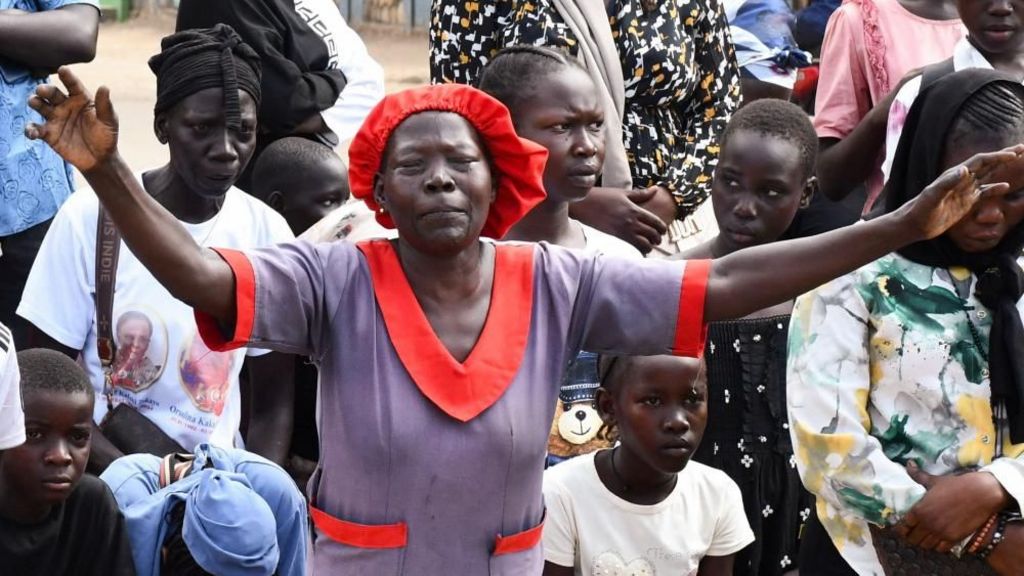
Thousands of Christian worshippers across South Sudan gathered for traditional Easter processions over the holiday weekend, but the tone of this year’s celebrations was defined by urgent appeals for an end to persistent bloodshed and the establishment of lasting peace. The joint calls from both senior church leaders and top government officials come as escalating sporadic violence across the young nation has sparked repeated international warnings that South Sudan could be on the brink of sliding back into full-scale civil war, less than 10 years after a five-year civil conflict formally ended.
The most recent high-profile act of violence occurred just one week before Easter, when unidentified gunmen attacked a mining site in Jebel-Iraq, a region located southwest of the capital Juba, leaving 74 mine workers dead. In the wake of the massacre, government representatives and opposition figures have traded blame, with neither side taking responsibility for the attack, deepening public distrust amid already rising tensions.
At the principal Easter mass held at Juba’s St Theresa’s Cathedral, lead celebrant Santo Loku Pio delivered a blunt rebuke of the violence that has become entrenched in South Sudan’s public life. “Christians don’t practice hatred, they don’t practice violence that leads to the death of someone or somebody, and many other things that destroy life,” Pio told the assembled congregation. He issued a direct call to ordinary citizens to reject orders to carry out violence: “If you are told to go and kill, refuse, even if it means losing your job,” he said, urging attendees to “be a man or woman of peace.”
Turning his address to the country’s ruling leadership, Pio called for a fundamental shift in governance. “Be good leaders – good governors, good commissioners, good ministers and good servants of the society. It is time for us to rise above violence, let us do the right thing and I think peace will reign,” he added, framing the call for peace as central to the spiritual meaning of Easter.
South Sudan’s President Salva Kiir echoed the call for national unity and reconciliation in an Easter message read on his behalf by his press secretary at St Theresa’s Cathedral. Kiir emphasized that the Easter holiday serves as a reminder that hope persists even in the darkest of times. “Let us forgive one another, and support one another, and work hand in hand, and build a country that reflects the strength and dignity of its people,” the statement read.
Other senior religious leaders across the country joined the appeal for urgent action. Justin Badi Arama, Archbishop of the Episcopal Church of South Sudan and Anglican Primate, told worshippers at Juba’s All Saints Cathedral that the nation must “persevere and work for lasting peace.” “We need urgent action to end violence in South Sudan and restore human dignity across our nation,” he said. In the southwestern city of Yambio, Eduardo Hiiboro Kussala, Bishop of the Catholic Diocese of Tombura-Yambio, centered his message on the sanctity of life. “We want to pray for protection of life and we want to tell everybody that God is the source of life,” he said.
The collective calls for peace come against a backdrop of growing political unrest. Former First Vice-President Riek Machar, the leader of the main opposition faction Sudan People’s Liberation Movement/Army In Opposition (SPLM/A-IO), is currently under house arrest and facing trial on charges of treason, war crimes, and crimes against humanity, all of which he denies. Machar’s party has denounced the proceedings as a “political witch-hunt” designed to dismantle the 2018 peace accord that brought the 2013–2018 civil war to an end. Last week, the United States Embassy in South Sudan issued a statement demanding Machar’s release, along with other detained opposition politicians, calling the move a critical prerequisite for holding free, fair, and successful national elections and a key step toward advancing long-term peace and accountability.
South Sudan, the world’s youngest sovereign nation, gained independence from Sudan in 2011, but has struggled with persistent political instability and intercommunal violence in the years following sovereignty. International observers and United Nations officials have repeatedly warned that escalating tensions between the ruling government and opposition, paired with rising intercommunal killings, could push the country back into a widespread civil conflict that would have devastating consequences for the nation’s 11 million people.