Just 48 minutes ago, a breakthrough diplomatic agreement between the United States and Iran for a two-week ceasefire sent shockwaves across global financial markets Wednesday, bringing sharp drops in crude oil prices and sweeping gains to equity indexes worldwide. The deal, mediated by Pakistan, includes Iran’s commitment to temporarily reopen the strategically critical Strait of Hormuz — the chokepoint through which roughly 20% of the world’s daily oil and gas supplies pass — ending weeks of escalating conflict that had disrupted global energy markets and stoked widespread fears of a broader regional war.
The agreement came hours after a dramatic standoff: U.S. President Donald Trump had issued an extreme ultimatum Tuesday, threatening that if the Strait remained closed, “a whole civilization will die tonight, never to be brought back again.” That threat followed pledges to target Iranian civilian infrastructure including bridges and power plants, while Iran responded with its own warning that it would cut off U.S. and allied access to regional energy supplies for years if Washington crossed its red lines. As the global community counted down to the deadline, Trump announced the truce via social media, noting he had received a “workable” 10-point proposal from Tehran.
“Subject to the Islamic Republic of Iran agreeing to the COMPLETE, IMMEDIATE, and SAFE OPENING of the Strait of Hormuz, I agree to suspend the bombing and attack of Iran for a period of two weeks,” Trump wrote, adding that the truce is “double sided” and that U.S. military goals have already been met. He also confirmed ongoing negotiations for a long-term peace deal covering both Iran and broader Middle East stability. Pakistani Prime Minister Shehbaz Sharif, whose country played a core mediation role, confirmed the ceasefire went into effect immediately, and added that the truce also covers Lebanon — implying Israel has agreed to halt its invasion of the northern neighbor.
Market reaction was swift and largely positive, as investors released pent-up anxiety built up over five weeks of war that had squeezed global energy supplies. Benchmark West Texas Intermediate crude fell as much as 20% in early trading, settling 14% lower at $97.12 per barrel by 0230 GMT, while Brent North Sea crude dropped 13.2% to $94.86 per barrel, down from peaks that had stoked inflation fears globally.
Equity markets across Asia jumped on the news: Japan’s Nikkei 225 surged 5.3% to close at 56,270.90, Taiwan’s benchmark added nearly 4%, and markets in Sydney, Hong Kong, Shanghai, Singapore and Wellington all posted sharp gains. Safe-haven assets retreated in line with de-escalation hopes: the U.S. dollar, which had strengthened amid conflict uncertainty, fell against the yen, euro and pound, while gold rallied roughly 5% after earlier declines driven by interest rate fears, and Bitcoin also posted gains. Notably, major Western indexes that closed before the announcement posted slight losses, with the Dow Jones Industrial Average down 0.2% and London’s FTSE 100 falling 0.8% on Tuesday.
Market analysts note the upbeat response reflects widespread relief after weeks of geopolitical uncertainty. “Unsurprisingly, the initial market reaction has been a positive one, albeit perhaps not as sizeable as one might’ve expected, largely owing to the grind higher in risk assets seen since the tail end of Tuesday’s cash session,” said Michael Brown, senior analyst at Pepperstone. “Participants have been desperate for anything resembling good news for some weeks now, and even more desperate to see concrete steps being taken towards de-escalation. Now that we seem able to put a tick in both of those boxes, participants are unsurprisingly willing to significantly take up risk levels once more.”
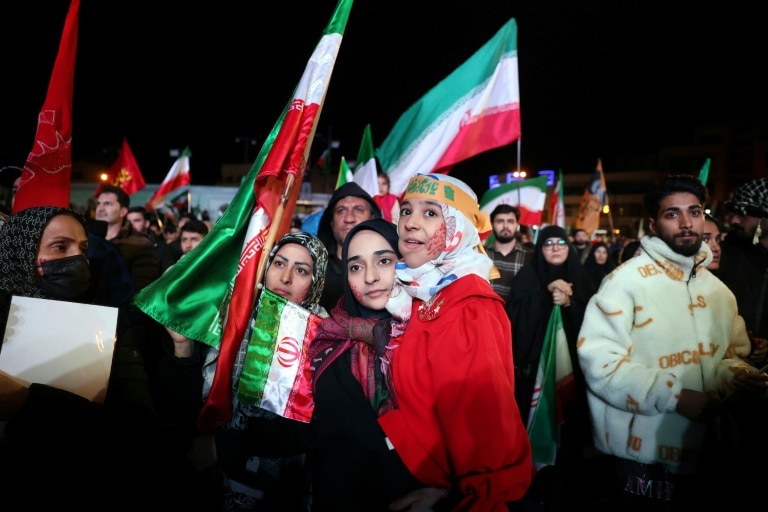
For Asian economies, which have borne the brunt of imported energy inflation in recent weeks, the truce carries outsize importance, according to Stephen Innes of SPI Asset Management. “Lower oil prices remove the chokehold that has weighed on regional risk sentiment, especially in markets that feel imported energy shocks first and hardest,” he explained. “With crude backing off, the pressure on inflation expectations and front-end yields eases at the margin, and that is enough to let capital rotate back toward risk, at least for now.” Iranians have already publicly welcomed the ceasefire news, joining global markets in celebrating a rare step away from open conflict.