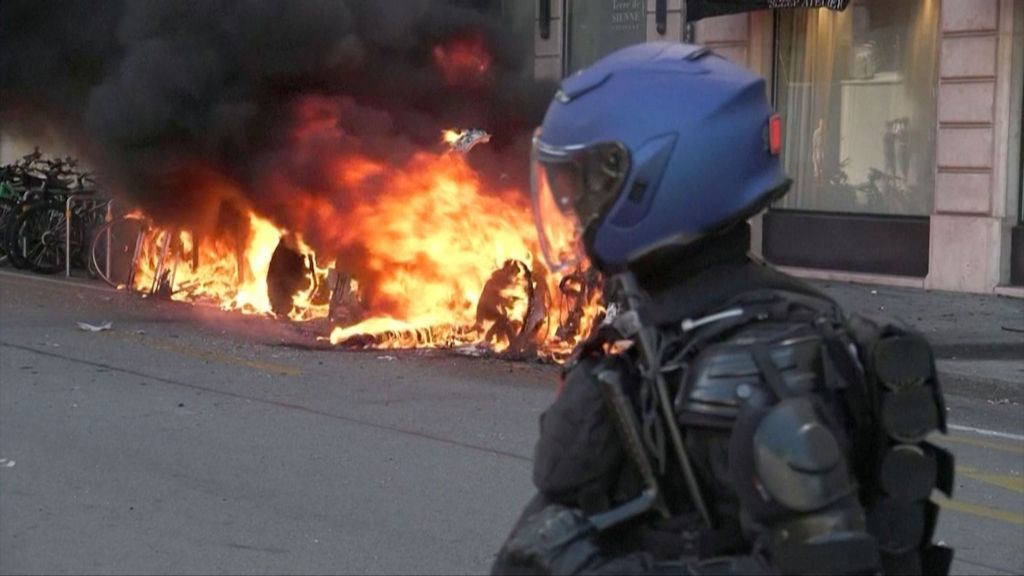
In the hours leading up to the high-stakes G7 summit in Geneva, tense confrontations between demonstrators and law enforcement boiled over into violent street clashes, forcing Swiss police to deploy aggressive crowd control measures to restore order. The unrest unfolded as thousands of anti-globalization and anti-G7 activists gathered in the Swiss city to voice their opposition to the agenda of the world’s most powerful industrialized nations. What began as a planned demonstration quickly escalated into physical conflict between the two sides, prompting authorities to respond with significant force to contain the unrest. In a statement released to the press, Swiss police confirmed that officers used water cannons to push back advancing crowds and fired tear gas to disperse groups of protesters who had engaged in violent acts against law enforcement and public property. The summit, which brings together heads of state and senior government officials from Canada, France, Germany, Italy, Japan, the United Kingdom, and the United States, was already surrounded by heavy security in anticipation of widespread protests. Local officials had warned demonstrators ahead of the gathering that any unauthorized actions or acts of violence would be met with a firm response from security forces. As of the latest updates, there have been no immediate reports of serious injuries or fatalities, but multiple arrests have been confirmed in connection with the clashes. The unrest has added a layer of volatility to the start of the summit, which is expected to cover a range of pressing global issues including climate change, economic policy, international security, and global public health coordination. City officials have urged residents and visitors to avoid the area around the protest zone as police continue to work to clear the streets and reestablish calm ahead of the official start of summit proceedings.
分类: world
-
Thousands of Palestinians buried under rubble in Gaza ‘may never be identified’, says Red Cross
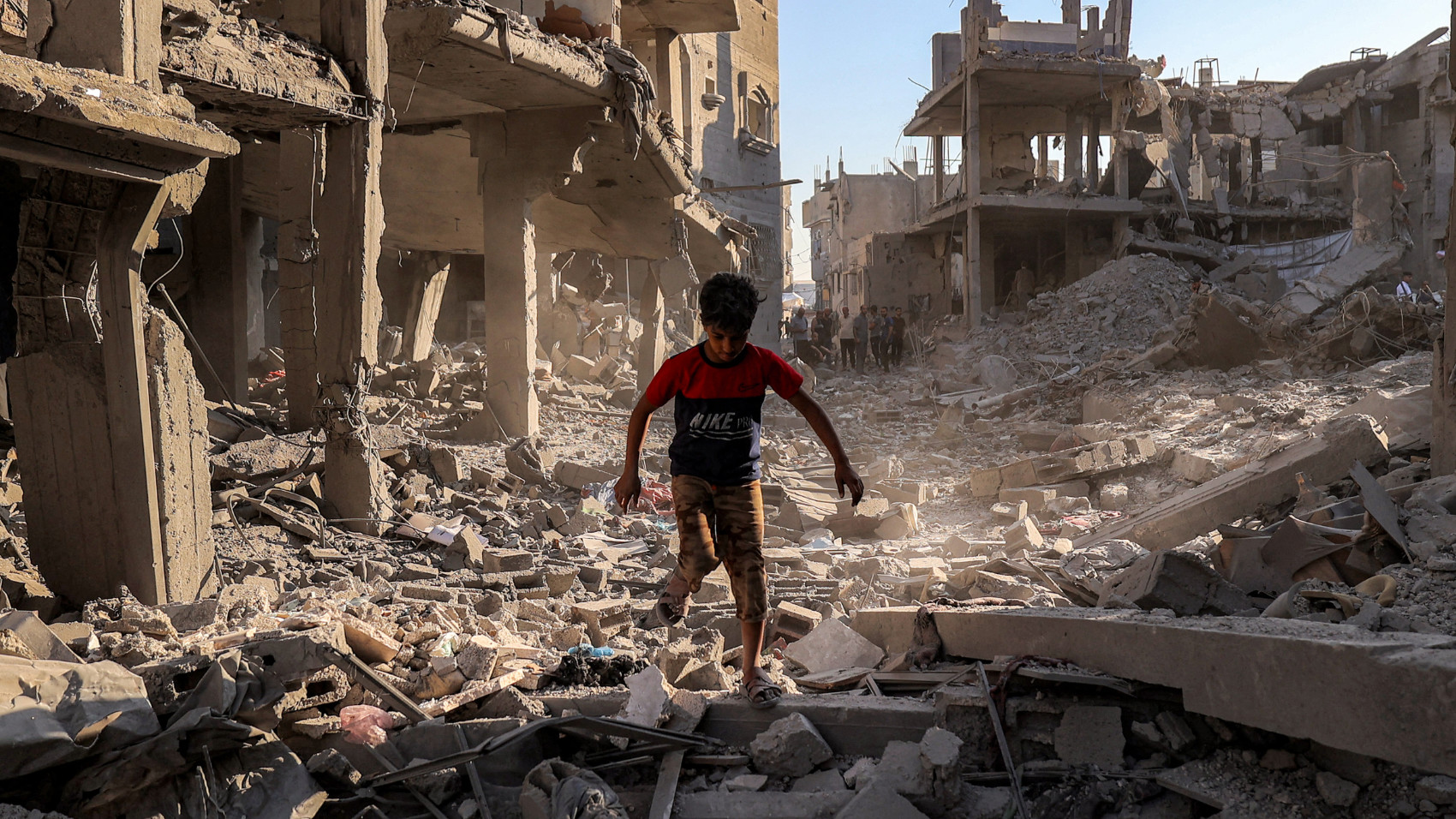
Two years into the ongoing Israeli military campaign in the Gaza Strip, a grave new humanitarian crisis is emerging, with the International Committee of the Red Cross (ICRC) issuing a stark warning that thousands of Palestinians buried under collapsed infrastructure may never receive formal identification, leaving grieving families without closure. The warning, first reported by The Guardian on Sunday, comes against a backdrop of cripplingly slow body recovery efforts and a catastrophic scale of destruction that has left the enclave unrecognizable.
Pat Griffiths, ICRC spokesperson based in Jerusalem, explained to the outlet that the mounting delay in retrieving human remains directly amplifies the risk of permanent identification failure. “The longer it takes for human remains to be recovered, the more difficult it can be to identify them,” Griffiths said. “The longer the deceased lie beneath the rubble, the more likely they will be in advanced stages of decomposition – even skeletonised – when eventually recovered. Forensic experts lose access to circumstantial evidence that can be used to corroborate their identity.”
The ICRC emphasized that critical identifying markers — including intact fingerprints, dental records, and personal belongings that can link remains to missing people — degrade rapidly as time passes. Gaza’s environmental conditions only worsen this challenge: high humidity in the coastal enclave and scavenging animal activity steadily erode what little forensic evidence remains, making the work of identification teams increasingly futile.
Official UN data underscores the unprecedented scale of destruction Gaza has suffered after two years of conflict. Some 61.5 million tonnes of debris now cover the territory, with 75% of all Gaza’s residential and public buildings reduced to rubble. The United Nations Environment Programme has confirmed that this volume of wreckage is 20 times greater than the total debris generated by all conflicts in Gaza combined between 2008 and the start of the current campaign.
Local Gaza residents add another layer of concern: they fear Israeli military bulldozers operating in areas under Israeli control are moving and disturbing remains still trapped under rubble, scattering evidence and making it even harder for families to locate their missing loved ones.
Official casualty figures put the total number of people killed in Israeli attacks across the besieged enclave at nearly 73,000, a toll that has continued to climb even after a nominal ceasefire took effect in December. Back in February, the Palestinian Civil Defence reported that roughly 8,000 bodies remained trapped under rubble across Gaza, even after months of exhaustive recovery work by local teams. An additional 3,000 people are still listed as missing, with no clarity on whether they are alive, dead, or being held in Israeli detention.
Since the ceasefire was implemented, recovery operations have been crippled by systemic shortages of essential heavy machinery. Rescue teams have been forced to rely on basic hand tools — shovels, pickaxes, wheelbarrows — and even bare hands to sift through millions of tonnes of wreckage, as repeated requests to Israel to allow excavators and other heavy recovery equipment into Gaza have been denied.
Griffiths stressed that unimpeded access and proper resources are non-negotiable for the recovery effort to succeed. “Search and recovery teams need access to all sites where human remains are thought to be located,” she said. “We know that much of this machinery and equipment remains almost impossible to bring into Gaza right now. And it remains our call, and part of our ongoing direct dialogue with the relevant authorities, to allow the entry of these items and equipment into Gaza.”
For thousands of grieving Palestinian families, the growing risk of permanent unidentified burials adds another layer of unending trauma, as they face the prospect of never being able to properly bury and mourn their loved ones lost to the conflict.
-
Disabled oil tanker received dozens of warnings before US opened fire, AP source says
A deadly confrontation in the Gulf of Oman has escalated tensions around U.S. sanctions enforcement against Iran, after American military forces disabled a tanker linked to Tehran’s illicit oil trade, leaving three Indian crew members dead and triggering a formal diplomatic protest from New Delhi.
An anonymous U.S. official, speaking on condition of anonymity because they were not cleared to discuss the sensitive operation publicly, has provided new details about the hours-long standoff preceding the strike. According to the official, the Palau-flagged M/T Settebello — identified by Washington as part of Iran’s “shadow fleet” of vessels used to evade international oil sanctions and break the U.S. blockade on Iranian crude exports — ignored nearly 60 distinct verbal warnings from U.S. forces over the course of the standoff. Even after eight separate shows of force, including low-altitude flybys by military aircraft and the deployment of warning flares, the vessel’s crew refused to alter course or comply with orders. Two final, explicit warnings were issued before U.S. forces opened fire on Wednesday.
Earlier official confirmations from the U.S. military note that a U.S. aircraft launched precision munitions directly into the tanker’s engine room to disable the vessel. Indian government officials have verified that three Indian nationals working aboard the Settebello were killed in the strike. The U.S. official added that American forces had maintained contact with the tanker repeatedly across the two weeks leading up to the incident, as the vessel made multiple attempts to breach the U.S. blockade.
In an official statement released after the operation, U.S. Central Command clarified that the tanker’s crew was given a full 15-minute window to evacuate the engine room before the strike was carried out. “After being in place for more than 60 days, it should be clear by now that U.S. forces will strictly enforce the blockade,” the statement added.
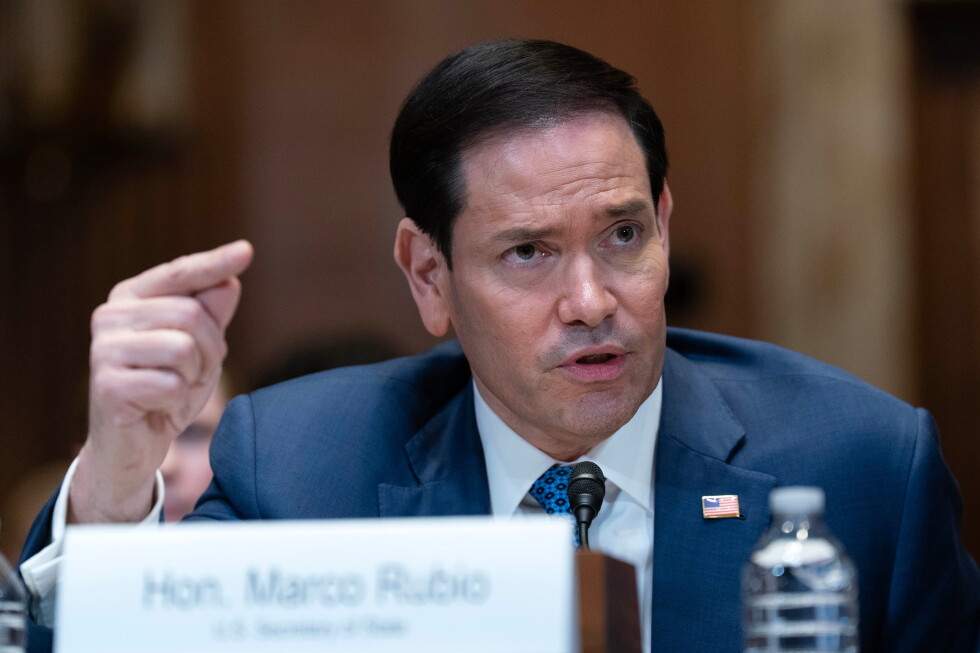
The incident has already sparked immediate diplomatic tension between Washington and New Delhi. India’s Ministry of Foreign Affairs confirmed it has lodged a “strong protest” with U.S. authorities over the deaths of its citizens. On Saturday, the U.S. State Department released a readout of a call between Secretary of State Marco Rubio and India’s top foreign affairs official, in which Rubio emphasized that “all commercial vessels should immediately comply with orders from U.S. forces as they seek to uphold peace and security in the Strait.”
-
Helicopter with singer Oliver Tree on passenger list collides with another in Brazil, killing 6
In a tragic aviation incident that shook Brazil’s largest city on Sunday morning, two helicopters collided in flight over Rio de Janeiro before crashing in the city’s western district, leaving no survivors among the six people on board both aircraft, according to local fire officials.
The Rio de Janeiro Military Fire Department confirmed that one of the downed helicopters fell onto the parking lot of a local car dealership. The crash and subsequent impact ignited an intense blaze that destroyed a number of electric vehicles parked on the lot; emergency crews have already fully extinguished the fire, clearing the crash site for official accident investigation.
Witness accounts from local residents paint a harrowing picture of the mid-air disaster. Fernandes de Freitas, a tire repair worker who was nearby when the collision occurred, told reporters he saw one of the helicopters engulfed in flames immediately after impact. He also recalled that one passenger managed to jump from the second damaged helicopter moments before it crashed into the ground. “It was terrifying, absolutely horrifying,” de Freitas said of the scene he witnessed.
Officials have launched a full official investigation to pinpoint the root cause of the collision, though no preliminary findings have been released to the public as of Sunday. Multiple high-profile public figures are among those confirmed or suspected to be on the passenger manifest provided to aviation authorities.
Police confirmed that American singer and comedian Oliver Tree was listed as a passenger on the documents turned over to aviation officials. However, formal identification of all victims’ remains has not yet been completed, so authorities have not officially confirmed Tree’s death. Tree had recently been touring South America: he performed a show in Buenos Aires, Argentina on June 4, and just one day before the crash, he posted a public Instagram video of himself playing soccer with locals in a Brazilian neighborhood.
One victim has already been formally identified by his employer. Argentine streaming channel Blender confirmed that 23-year-old popular content creator Gaspar Prim Díaz, known widely by his online alias Gaspi, was a passenger on one of the two helicopters. Gaspi had built a massive fanbase on YouTube, amassing more than 2.8 million subscribers for his content. In a public tribute posted to the channel’s X account, the network wrote: “Thanks for your art, your magic and your sensibility, every one of us will miss you.”
Ramiro Barreiro contributed reporting from Buenos Aires, Argentina. Associated Press continues to provide ongoing coverage of Latin American current events, with full reporting available at the outlet’s dedicated Latin America news hub. -
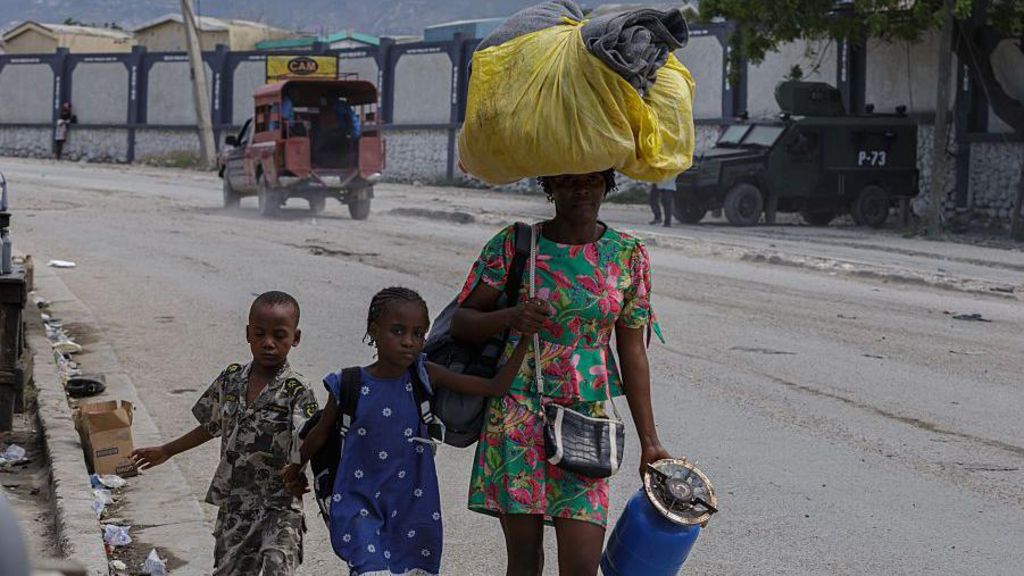
Armed men kidnap high-ranking security official in Haiti
Haiti’s already volatile security landscape has reached a new grim milestone, with armed gang members abducting a high-ranking national security official in the capital Port-au-Prince — the most senior public figure kidnapped in the violence-plagued Caribbean nation in recent memory.
James Boyard, who serves dual roles as chief of staff to Haiti’s defense minister and inspector general of the national police force, was seized by armed assailants during an operation in Port-au-Prince on Thursday, multiple major international news outlets have confirmed via anonymous official sources. The New York Times additionally reports that Boyard’s wife and six-year-old daughter were also taken captive alongside him, and the kidnappers have already submitted a demand for ransom to Haitian authorities, according to a person with direct knowledge of the abduction case.
A widely respected security expert, Boyard was handpicked for his current post after current Defense Minister Mario Andrésol took office this past March. His core mandate was to lead efforts to rebuild Haiti’s national armed forces, a key pillar of the government’s long-delayed plan to restore stability across the country.
The abduction marks a dangerous escalation in gang activity across Haiti, according to regional analysts. Diego Da Rin, a Haiti specialist with the International Crisis Group, explained that kidnappings are now spreading rapidly into neighborhoods of Port-au-Prince that were once considered relatively safe, a shift that has upended assumptions about personal security for even well-connected residents. Da Rin added that kidnappers are increasingly targeting two high-value groups: people holding dual nationalities, and sitting public officials. This trend suggests gangs are seeking larger ransom payouts, while also aiming to pressure Haitian authorities to hold off on offensive operations into gang-controlled territory where hostages are commonly held.
Gang-related violence has been a persistent crisis in Haiti for decades, but it has spiraled out of control in recent years. A multinational security support force deployed by the international community to curb gang expansion has faced steep challenges in gaining access to large swathes of territory already fully controlled by armed groups.
Fresh United Nations figures released earlier this month underscore the scale of the ongoing humanitarian catastrophe. Since the start of 2025 alone, gang violence has killed at least 2,310 people, injured another 1,106, and resulted in 99 confirmed kidnappings across the country. The violence has also driven unprecedented levels of internal displacement: latest data from the UN International Organization for Migration shows that nearly 1.5 million Haitians are now internally displaced, with no permanent access to safe housing. The abduction of such a senior security official is expected to further erode public confidence in the government’s ability to restore order, and could prompt renewed calls for scaled-up international intervention to stem the crisis.
-
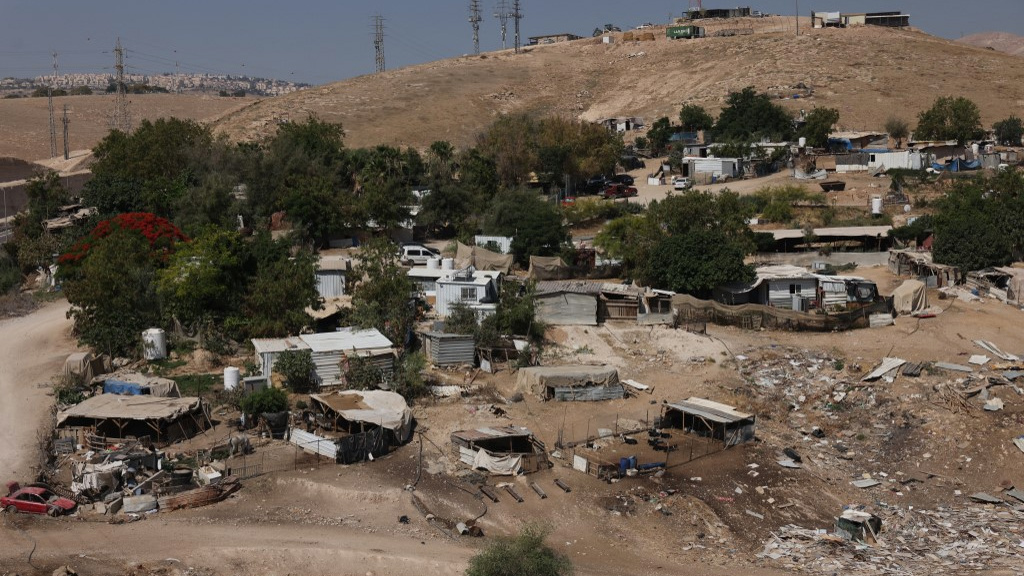
Legal notice sent to London synagogue hosting Great Israeli Real Estate Event
Exclusive reporting from Middle East Eye (MEE) has uncovered growing legal and political controversy surrounding a controversial Israeli real estate event scheduled to take place this weekend at a northwest London synagogue, with the gathering tied directly to the marketing and sale of property in illegally occupied Palestinian territories.
Earlier this week, MEE first published details exposing the event’s deep connections to Israeli settlements that are widely recognized as illegal under international law. While event organizers have refused to publicly disclose the venue, MEE has confirmed that the Great Israeli Estate Event is set to kick off at midday on June 14 at Edgware United Synagogue, located in the Edgware district of northwest London.
In response to the planned gathering, the UK-based International Centre of Justice for Palestinians (ICJP) issued a formal legal notice to the synagogue Saturday evening, alerting venue leadership to what the group calls substantial legal and reputational risks tied to hosting the event. A copy of the letter, reviewed directly by MEE, makes clear that the event is explicitly marketed as a space to promote and sell property located both in Israel and the occupied Palestinian territories.
The legal warning notes that UK government guidance already explicitly bars British businesses from participating in any economic or financial activity linked to Israeli settlements in the West Bank, and clearly outlines the material legal and commercial risks that come with engaging in such activity. Even as the letter acknowledges that the synagogue’s role is limited to providing event space, it emphasizes that hosting the gathering still amounts to facilitating the event’s work and granting unwarranted legitimacy to its illegal goals.
Multiple participating firms named in event materials have documented ties to illegal settlement construction and development. Emanuel Vatari, CEO of the Emanuel Group – one of the event’s primary sponsors – published a full list of participating companies on his public Facebook page earlier this week. The roster includes Harey Zahav, an Israeli property developer that openly advertises residential units in Negohot, an illegal Israeli settlement located in the southern Hebron Hills of the occupied West Bank. Also listed is the Meshulam Levinstein Group, a diversified construction, engineering and real estate conglomerate that has built both residential and commercial projects in illegal settlements across the occupied West Bank and East Jerusalem, including a mixed housing and retail development in the Homat Shmuel settlement neighborhood of occupied East Jerusalem. Additional participants include Tivuch Shelly, a real estate agency that promotes property in the large West Bank settlement of Ma’ale Adunim, and Africa Israel Residences, a subsidiary of the Africa Israel Group that has led multiple development projects in illegal settlements across the West Bank and East Jerusalem.
Political pushback against the event has mounted rapidly in recent days. London Mayor Sadiq Khan publicly confirmed his opposition to the gathering Friday, stating, “I share concerns about the Great Israeli Real Estate Event taking place in our city, which I oppose, and that’s why I’ve discussed this directly with the Met Police.” He added that Metropolitan Police officials have advised him that any credible allegations of criminal activity connected to the potentially unlawful property sales at the event will be fully assessed for potential investigation.
Concurrent with the event, a public protest is organized by a coalition of activist groups including the Palestinian Youth Movement and the International Jewish Anti-Zionist Network, scheduled to take place at the intersection of Edgware Way and Broadhurst Avenue, just a short distance from the synagogue venue.
Over 100 UK members of Parliament signed an open letter Friday to Foreign Secretary Yvette Cooper, calling for the event to be canceled immediately. The letter argues that allowing the gathering to proceed would not only contradict existing UK government guidance on settlement-linked economic activity, but would also violate the UK government’s own binding obligations under international law.
In response to the growing outcry, a UK government spokesperson released a statement acknowledging the dispute, noting that “Expansion in the West Bank is wrong. We will be bringing forward updated guidance in the coming days, giving greater clarity to UK businesses on how to avoid ventures which support these illegal settlements.”
MEE has reached out to Edgware United Synagogue to request a comment on the legal notice and planned event, and has not yet received a response as of publication.
-
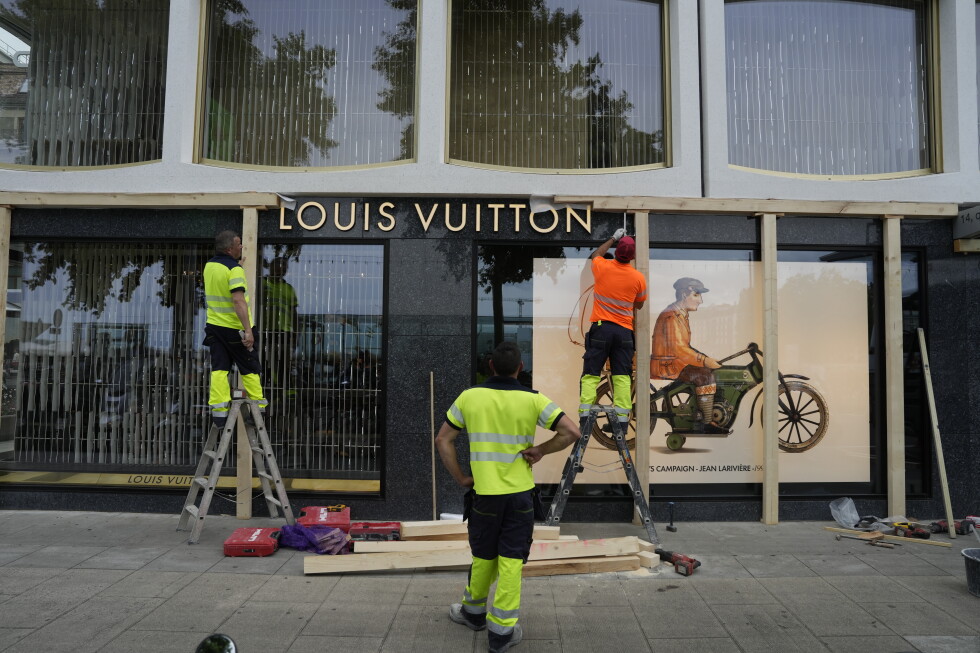
Downtown Geneva boards up as drastic security tightens ahead of anti-G7 protests
As leaders of the world’s seven largest industrialized economies prepare to gather for the 2019 G7 Summit in the French lakeside town of Evian-les-Bains, security forces across the France-Switzerland border have enacted unprecedented safety measures to head off potential unrest, while businesses and local residents brace for planned mass anti-summit demonstrations on Sunday.
The three-day summit, running June 15 to 17, brings together U.S. President Donald Trump and other G7 leaders to discuss high-stakes global issues including tensions in the Middle East, the ongoing conflict in Ukraine, and persistent global economic imbalances. But the elite gathering has drawn fierce opposition from a broad coalition of activist groups, ranging from environmental campaigners and feminist organizers to anti-capitalist activists, who have organized a large-scale march and protest to coincide with the summit’s opening.
Pre-protest actions began days ahead of the main demonstration. On Friday evening, Swiss local media reported that roughly 20 protesters were taken into custody by authorities. On Saturday, a flotilla of nearly 20 small boats cruised across Lake Geneva just off Evian’s shore, unfurling large banners with anti-G7 and pro-Palestinian messaging. A day earlier, public broadcaster RTS documented a protest bicycle ride through downtown Geneva that drew between 100 and 150 participants, who chanted anti-G7 and pro-Palestinian slogans and slowed downtown vehicle traffic.
In central Geneva, just kilometers from the summit site, dozens of retail shops and local businesses have boarded up their storefronts with plywood panels, a precaution driven by memories of violent unrest that damaged dozens of commercial properties during the 2003 G8 Summit, when Russia was still part of the group of major industrialized nations. Local resident Robin Hedz described seeing “wood-walls everywhere” across the city center, expressing confusion at the extreme preparations while acknowledging the lingering trauma of the 2003 property damage that left the city center a “mess.”
To contain potential unrest, authorities on both sides of the border have rolled out massive joint security deployments. The Swiss government confirmed it will deploy approximately 4,000 army personnel to support local and national police forces throughout the summit period. Security operations include enforced restrictions on airspace and key road corridors, regular patrols across Lake Geneva, and the closure of 28 of 35 existing roadway border crossings, leaving only seven open for authorized traffic. City officials in Geneva have also closed a major downtown park that activists had targeted as a gathering space for demonstrators.
Across the border in France, law enforcement has matched that scale of deployment: more than 13,000 police and gendarmerie officers have been assigned to secure the summit perimeter and surrounding areas, while the number of active border control officers has been boosted from the usual 60 to over 800. On Saturday, French gendarmes could be seen patrolling Evian’s waterfront in motorboats, with one officer displaying a large drone-interception device to demonstrate the scope of anti-intrusion and security measures in place.
Activist organizers say their demonstration is driven by widespread frustration with the policy agendas of G7 leaders, particularly the Trump administration’s approach to issues ranging from international trade tariffs and climate change to Middle East conflict. Some activists have also raised criticism of Trump’s past ties to convicted sex offender Jeffrey Epstein. Francoise Nyffeler, a spokesperson for the NoG7 coalition organizing Sunday’s main demonstration, emphasized that opposition extends across all G7 member nations’ leadership.
“We are very afraid of the policy and the politics of Mr. Trump and also of the other leaders of the G7, because they are fighting, making war all over the place,” Nyffeler said. “The planet is in danger and we are very scared about it and we want to protest and say that the people of the world are against their policies.”
Mass protest action has long been a fixture of high-level global summits like the G7, and both security forces and local communities remain on high alert for potential escalation of unrest as the summit gets underway.
-
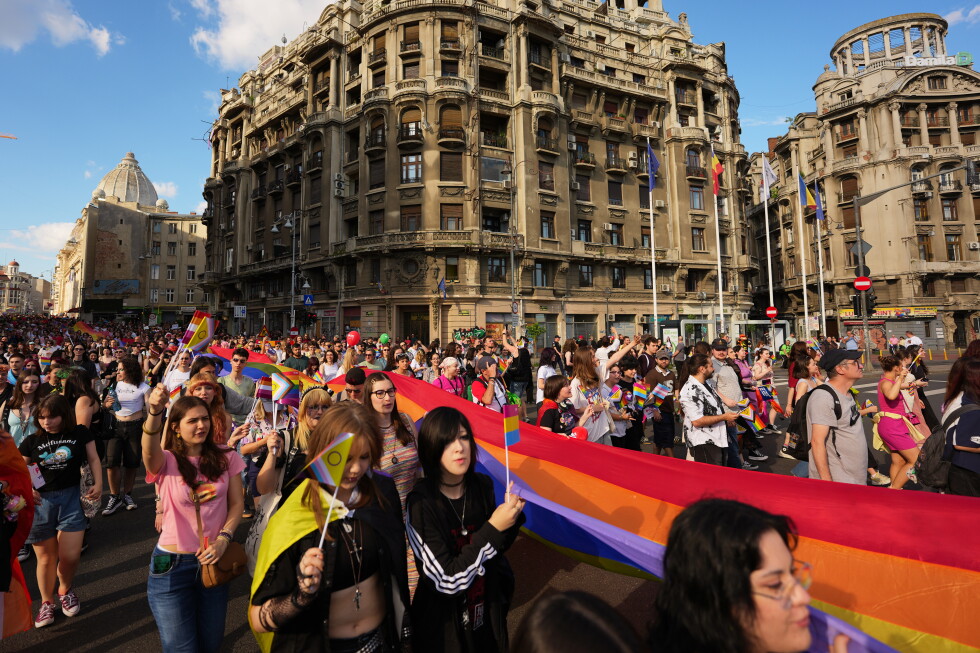
Tens of thousands join Pride marches in Romania, Bulgaria to call for equality
On a recent Saturday, tens of thousands of LGBTQ+ advocates and their allies flooded the central streets of Bucharest, Romania’s capital, and Sofia, Bulgaria’s capital, for their annual Pride parades, staging a public call for equal rights and legal recognition amid growing pushback from conservative and religious factions in the two majority Eastern Orthodox Christian nations.
Marchers in both capitals carried vibrant rainbow flags, sounded whistles, and chanted demands for equal treatment under the law, highlighting the stark gap between the European Union’s non-discrimination standards and the domestic legal status of LGBTQ+ people in both countries. Both Romania and Bulgaria gained EU membership back in 2007, and each implemented sweeping human rights reforms to meet the bloc’s accession requirements at the time. Yet decades later, public and institutional support for LGBTQ+ rights lags far behind most other EU member states. In ILGA-Europe’s 2025 Rainbow Map, which ranks European countries based on the strength of their legal and policy protections for LGBTQ+ communities, the two nations hold the bottom two spots among the EU’s 27 members. Neither country currently offers legal recognition for same-sex partnerships, let alone same-sex marriage, even though EU law explicitly prohibits discrimination on the basis of sexual orientation.
Alina Purcaru, a Bucharest-based writer who participated in the Romanian capital’s Pride march, described the deep-seated cultural barriers that LGBTQ+ Romanians continue to face. “We still have a deeply conservative society, with very strong traditional values,” Purcaru explained. “We still live in a patriarchy, sometimes explicit … with a lot of prejudice and a lot of fear.” For activists, the core demand of this year’s marches centered on establishing legal recognition for civil partnerships, a change that would grant same-sex couples access to fundamental legal protections that most couples take for granted.
Vlad Viski, president of Romanian LGBTQ+ rights NGO MozaiQ, told reporters that these legal protections are not abstract privileges but essential to daily life. “We are talking about essential rights, such as the right to inheritance, hospital visits, medical decisions, survivor’s pension,” Viski said. In Sofia, Simeon Vassilev, one of the lead organizers of Sofia Pride, echoed that sentiment, noting that thousands of same-sex couples in Bulgaria already build shared lives, raise children, and care for one another, yet have no access to legal safeguards for their relationships. “Thousands of same-sex couples live together, build homes, raise children, and care for one another … without the right to legal protection or recognition of their relationships,” Vassilev told journalists.
Human rights organizations monitoring the region have documented a steady rise in open hostility and targeted hate speech against LGBTQ+ communities in both countries over the past several years. That opposition was on full display on Saturday, as anti-Pride rallies organized by conservative, nationalist, and religious groups were held in both capitals simultaneously. In Sofia, the annual “March of the Family,” launched by right-wing and religious groups in 2021, gathered to promote what organizers call “Christian, patriotic and traditional values.” The Bulgarian Orthodox Church, which counts roughly 80% of the country’s population as its members, publicly stated its disagreement with Pride’s messaging and blessed the anti-Pride rally, framing traditional marriage as a core social institution. In Bucharest, a nationalist group held a parallel “March for Normality” opposing LGBTQ+ rights.
This year’s Sofia Pride was organized under the slogan “Different Together,” a deliberate framing designed to counter the polarizing anti-LGBTQ+ rhetoric that has become increasingly mainstream in Bulgarian politics. Notably, the governing Progressive Bulgaria party, led by Prime Minister Rumen Radev which won April’s general election, publicly backed the “March of the Family” in a parliamentary statement, calling the traditional nuclear family “a cornerstone of our national security, identity and future.” The Bulgarian Helsinki Committee, one of the country’s leading human rights watchdog groups, condemned the ruling party’s statement, arguing that it effectively enshrines a hierarchy of citizenship that marks LGBTQ+ Bulgarians as second-class citizens by framing one group of relationships as more valuable than another.
-

Peru police disguised as World Cup mascots arrest a suspected drug dealer in Lima
On the day the 2010 FIFA World Cup kicked off with the opening matchup between Mexico and South Africa, law enforcement in Lima, Pulled off an extraordinary, cleverly orchestrated arrest that has drawn attention around the region. According to Colonel Carlos Alcántara, commander of the Green Squadron—Peru’s specialized unit tasked with targeting common street and organized crime—the operation targeted 48-year-old Carlos Cabrera, a long-sought suspected drug trafficker, relying on a surprisingly effective cover that played directly into the suspect’s own love of football.
Intelligence gathering had revealed a key detail about Cabrera: he was an enthusiastic lifelong football fan completely caught up in the global excitement surrounding the World Cup. Seeing an unmissable opportunity, the tactical team devised an unconventional undercover plan. Two officers volunteered to go undercover in full costume as Clutch, the bald eagle official mascot representing the host nations United States and Canada’s moose mascot Maple, a choice that let them move openly near Cabrera’s location without triggering any of his suspicions.
Once the undercover officers got into position outside Cabrera’s location, the operation moved forward. The mascot-clad officers worked alongside uniformed colleagues to breach the property, using a heavy metal sledgehammer to break through a locked entrance to gain access. A search of the premises after the arrest turned up a major seizure: 2,524 packets of cocaine base, plus an unregistered firearm that Cabrera had on site.
Under Peruvian national law, drug micro-trafficking carries a penalty of three to seven years behind bars for anyone caught holding just five to 50 grams of cocaine base—meaning the quantity seized in this operation will almost certainly result in severe legal consequences for Cabrera if he is convicted. This unorthodox sting is not the first time Peruvian law enforcement has leaned on creative disguise tactics to take suspects off guard. In earlier operations, officers have posed as beloved and instantly recognizable fictional characters from popular film, including the Grinch, Freddy Krueger, Deadpool, and Wolverine, and have even used Santa Claus costumes to avoid raising alarm before making an arrest.
The successful operation highlights how Peruvian police are adapting their tactics to exploit targets’ routines and interests, turning the global excitement around one of the world’s biggest sporting events into an advantage for law enforcement.
-
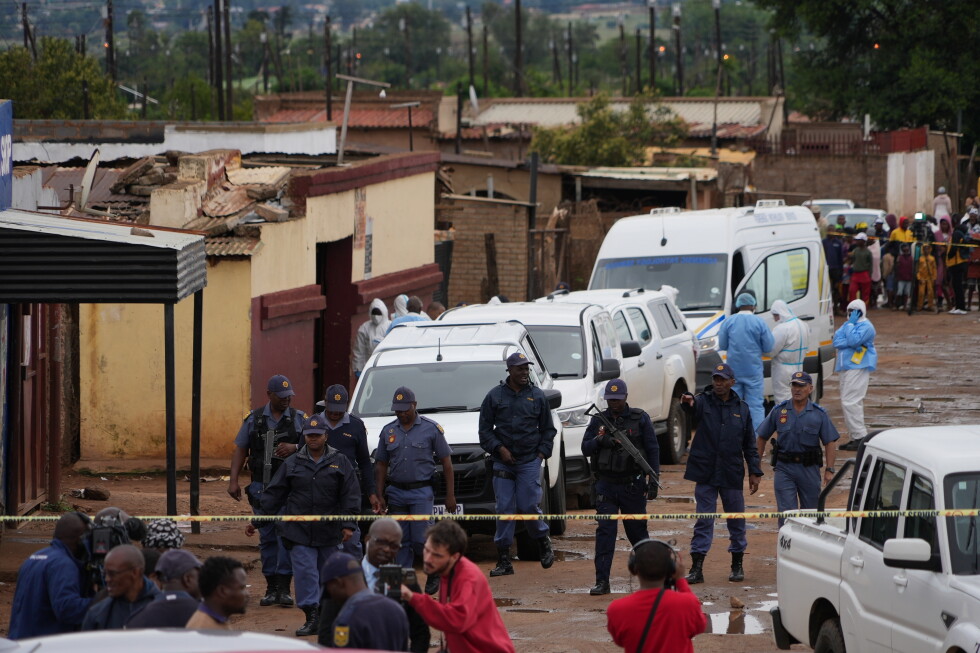
Mass shootings in South Africa’s poorest areas are a symptom of organized crime and police failures
A devastating mass shooting in an informal Johannesburg shack settlement has left 12 people dead and at least 15 injured, amplifying long-simmering concerns over organized criminal activity and systemic failures in South Africa’s law enforcement. No suspects have been taken into custody in the attack, which multiple perpetrators are believed to have carried out earlier this week.
For criminologists and security analysts, the shooting is not an isolated tragedy — it is the latest outcome of a growing pattern of brutal violence concentrated in South Africa’s most underserved low-income communities. Experts agree that this violence stems directly from well-organized criminal syndicates exploiting widespread police dysfunction, from severe under-resourcing to open corruption and even collusion with criminal networks.
Earlier this year, President Cyril Ramaphosa took the extraordinary step of deploying national army troops to high-violence crime hotspots across the country, a move that critics frame as a quiet admission that police have lost control of security in many marginalized communities. The deployment came amid a sprawling corruption scandal that has roiled South Africa’s top law enforcement ranks: more than a dozen senior police officers have been arrested, and both the national police commissioner and national police minister have been suspended over allegations of ties to organized criminal groups.
Jacob Mofokeng, a criminology professor at the University of South Africa, explained that criminal gangs deliberately target under-policed poor settlements because the lack of security, inadequate street lighting, and delayed police response create the perfect cover for illegal activity. “Criminal syndicates explicitly capitalize on this to hide weapons, execute hits, and vanish into the shadows,” Mofokeng told the Associated Press.
South Africa is already grappling with a national crisis of violent crime, with official annual data recording an average of more than 60 homicides per day across the country. The burden of this violence falls overwhelmingly on poor townships and informal settlements, a reflection of the deep socioeconomic inequality that has persisted in South Africa decades after the end of apartheid. Wealthy, gated communities with private security services see drastically lower rates of violent crime.
A primary driver of violence in these Johannesburg-area settlements is the illicit trade in unregulated gold mining, run by notorious local gangs known as *zama zamas* — a Zulu term loosely translated as “hustlers” or “chance-takers.” For decades, these gangs have set up operational bases in underserved, poorly policed areas, where they fight violent turf wars with rival groups to maintain control of illegal mining operations. Many gang members are undocumented migrants from neighboring countries, a detail that makes police investigations far more difficult. With no formal legal identification, registered address, or existing law enforcement biometric data, “they are effectively a ghost,” Mofokeng noted.
The South African government estimates that illicit mining drains more than $3 billion annually from the national economy, and the long-standing *zama zama* crisis was a key justification for Ramaphosa’s year-long military deployment against organized crime. Local residents of the settlement targeted in this week’s shooting confirmed that illegal mining gangs have operated openly in the area for years, and law enforcement officials confirmed that the gangs are the central focus of the ongoing investigation into the mass shooting, though a confirmed motive has not yet been released.
Compounding the crisis is a massive unregulated firearms problem: while South Africa enforces strict rules for legal gun ownership, independent research and civil society groups estimate that between 2 million and 3 million illegal firearms are currently circulating among the country’s 62 million population. Guns are responsible for the vast majority of homicides nationwide.
Willem Els, an analyst with South Africa’s Institute for Security Studies, said the combination of unregulated gun flows and systemic police failure has created an environment where organized crime can operate with near-total impunity. “In South Africa, we actually managed to create conditions that are very conducive for violent crime and also for organized crime syndicates to operate with impunity,” Els told the AP. “We’ve got a lot of unregistered firearms that are not being controlled by the police.”
Beyond resource shortages, widespread allegations of police corruption have eviscerated public trust in law enforcement, creating a further barrier to cracking down on gang activity. Last year, a senior provincial police commander made public allegations that top law enforcement officials were colluding with criminal syndicates, prompting Ramaphosa to launch a national corruption probe that has already led to dozens of arrests of senior officers.
Mike Bolhuis, a private investigator and veteran security specialist, said the corruption crisis has created a cycle of distrust that makes community cooperation with police nearly impossible. “The public doesn’t trust the police, they don’t trust the authorities, and they don’t trust each other,” Bolhuis said.