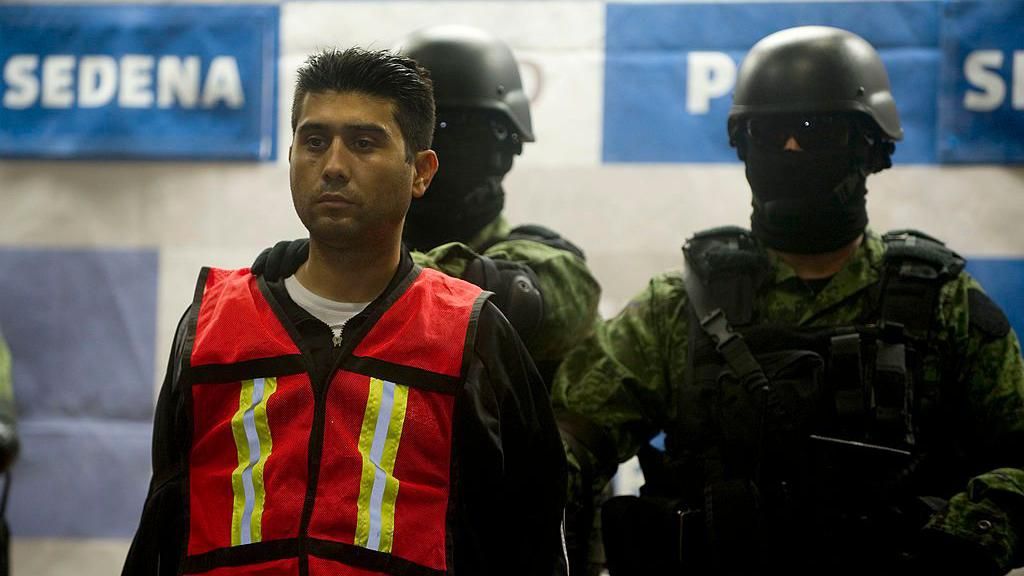
In a significant development in the bilateral fight against transnational drug trafficking, the U.S. Department of Justice has confirmed that Érick Valencia Salazar, one of the founding leaders of Mexico’s infamous Jalisco New Generation Cartel (CJNG), has entered a guilty plea to federal drug trafficking charges. Known widely by his cartel alias “El 85”, Valencia Salazar’s legal process marks one of the highest-profile convictions in recent years against the leadership of the hemisphere’s most powerful drug trafficking organization.
Valencia Salazar’s path to a U.S. courtroom has been years in the making. He was first taken into Mexican custody in 2012, only to be released five years later—an outcome that drew widespread criticism of systemic corruption within Mexican law enforcement at the time. He remained at large until 2022, when Mexican military forces tracked and arrested him in the cartel’s home stronghold of Jalisco. In February 2025, he was part of a major extradition of 29 accused Mexican drug kingpins transferred to U.S. authorities to face trial.
According to statements from the U.S. Drug Enforcement Administration (DEA), Valencia Salazar played an instrumental role in transforming CJNG from a splinter criminal group into one of the world’s most violent narcotics enterprises. Officials say the cartel under his early leadership adopted violence as a core business strategy: eliminating rival groups to seize territorial control across Mexico while smuggling massive volumes of illicit narcotics into American communities across the border. “He helped build CJNG into a ruthless organisation that uses violence as a business model – murdering for control in Mexico while flooding the United States with poison”, the DEA said in its official statement.
Valencia Salazar changed his initial plea of not guilty to plead guilty to a single count of conspiracy to distribute five kilograms or more of cocaine into the United States. U.S. federal law mandates a minimum 10-year prison sentence for this offense, and his formal sentencing hearing is scheduled for July 31 this year.
The conviction comes amid a period of heightened tension and coordinated action against CJNG, which is currently the most powerful criminal organization operating in Mexico. The cartel made global headlines just months earlier when a wave of coordinated violence erupted across 20 Mexican states following reports that CJNG’s supreme leader, Nemesio Oseguera Cervantes, commonly known as “El Mencho”, had died from injuries sustained during his capture by Mexican security forces.
Last year, the Trump administration formally designated CJNG as a Foreign Terrorist Organization (FTO), a rare classification for a transnational criminal group that signaled the U.S. government’s intent to ramp up pressure on cartel networks. In justifying the designation, the administration argued that CJNG’s activities pose a grave threat not just to the safety of American citizens and the security of U.S. borders, but also to the political and social stability of the entire Western Hemisphere. The Trump administration has repeatedly put diplomatic pressure on Mexican President Claudia Sheinbaum to increase resources and operations against cartel groups based on Mexican territory. For her part, Sheinbaum has framed the capture and subsequent death of “El Mencho” as clear evidence of the Mexican armed forces’ unwavering commitment to rooting out the country’s most notorious drug trafficking figures.
This latest guilty plea represents a major milestone in the long-running, binational effort to dismantle CJNG’s leadership structure, though security analysts warn that the cartel remains largely operational across Mexico and continues to control significant portions of the cross-border drug trade into the U.S.