分类: world

  • Japan to release extra 20 days’ oil reserves from May

    Japan to release extra 20 days’ oil reserves from May

    Fresh geopolitical volatility in the Middle East has pushed Japan to expand its emergency oil release, announcing an additional 20 days-worth of national petroleum reserves will enter the market starting next month, Prime Minister Sanae Takaichi confirmed Friday. The move builds on the first round of reserve releases launched in mid-March, as Tokyo continues to shore up energy supply stability amid lingering doubts over the safety of shipping through the Strait of Hormuz.

    The announcement came during a cabinet-level meeting focused on responding to shifting Middle Eastern developments, held nearly two months after a sudden outbreak of regional conflict in late February effectively shut down the critical chokepoint, which handles the vast majority of Japan’s crude oil imports. Despite a recently brokered two-week ceasefire between the United States and Iran, Takaichi noted that Tokyo cannot yet count on a full, smooth return to pre-conflict shipping operations through the strait, one of the world’s most vital energy transit routes.

    Japan first began offloading approximately 50 days of stored reserves to domestic and global markets starting March 16, a preemptive measure designed to offset potential supply disruptions following the strait closure. With this upcoming extra release, Japan will have made a total of 70 days of emergency reserves available to the market in under three months. “We will take every possible measure to ensure a stable supply of crude oil,” Takaichi told reporters following the meeting.

    The prime minister added that by the time the new reserve release begins in May, Tokyo expects to source over half of its total crude oil imports through alternative shipping routes that bypass the Strait of Hormuz, though she declined to specify which alternative suppliers or routes Japan is relying on for this diversification.

    Japan’s energy security framework is uniquely vulnerable to disruptions in Middle Eastern oil supplies: the island nation imports more than 90 percent of its total crude oil from the region, and the overwhelming majority of those imports traverse the Strait of Hormuz. This dependency has forced successive Japanese governments to maintain large strategic petroleum stockpiles and respond quickly to any signs of disruption to global oil transit chokepoints.

  • Humanitarian crisis escalates in Darfur as aid needs soar

    Humanitarian crisis escalates in Darfur as aid needs soar

    As Sudan’s brutal civil conflict enters its third year, having first erupted between the Sudanese Armed Forces and the Rapid Support Forces on April 15, 2023, the Darfur region has become the epicenter of one of the world’s most devastating humanitarian emergencies, with aid organizations warning that growing unmet needs have far outstripped the scale of the global response.

    Data from the International Rescue Committee underscores the staggering scope of the crisis: more than 12 million Sudanese people have been forced from their homes since fighting began, and roughly 34 million people – equal to two-thirds of the country’s entire population – now require urgent life-saving humanitarian assistance. Survivor accounts and on-the-ground reports from humanitarian groups paint a grim picture of daily life in Darfur, where displaced families face repeated cycles of violence, chronic shortages of food and clean water, and almost non-existent access to life-sustaining medical care.

    “The humanitarian situation in Darfur, and across Sudan as a whole, is extremely dire,” explained Ali Almohammed, emergency health manager for Doctors Without Borders (Medecins Sans Frontieres, MSF). He characterized the crisis as driven by four interconnected failures: the complete breakdown of civilian protection, mass population displacement, the widespread destruction of health infrastructure, and a gaping chasm between overwhelming unmet need and the limited aid currently available.

    In extended remarks to China Daily, Almohammed emphasized that women and children bear the brunt of the ongoing conflict, facing amplified risks of disease, severe malnutrition, targeted violence, and total lack of access to essential life-saving care as fighting grinds on with no end in sight. A March 30 MSF report further highlights that danger persists even after civilians escape active frontline combat zones: women and girls face persistent threats of gender-based violence on travel routes, in public markets, while collecting food in agricultural fields, and even within the overcrowded displacement camps that are supposed to serve as safe havens.

    Firsthand survivor testimonies included in the report lay bare the daily terror facing displaced communities. “Every day, when people go to the market, there are four or five cases of rape. When we go to the farm, this happens,” a 40-year-old woman from Sudan’s Jebel Marra region told investigators. Another survivor, sheltering in an internally displaced persons camp near Nyala, described the constant fear that shapes every daily activity: “Our life is so difficult here. We went outside the camp, and when we went outside, they attacked us and they raped us … This is happening to girls, every day — every day, in our area.”

    These accounts reflect a broader protection crisis that compounds existing humanitarian hardship: even the most basic tasks of searching for food, water, and other necessities put vulnerable women and children at heightened risk of further violence, deepening the scale of the emergency.

    According to Almohammed, the most pressing unmet needs are fundamental life-saving support: guaranteed safe access to healthcare, sufficient food supplies, malnutrition treatment, clean drinking water, emergency shelter, essential pharmaceutical stocks, protection services, and mental health support for trauma survivors. Among the most recent wave of people displaced from North Darfur and El Fasher, demand has spiked for emergency trauma care, reproductive health services, and confidential, specialized support for survivors of sexual violence.

    Across Darfur, the region’s already weak health system has been pushed to total collapse. MSF data shows that in the hardest-hit conflict zones, an estimated 70 to 80 percent of all health facilities are either fully shuttered or operating at barely functional levels, crippled by catastrophic shortages of medical staff, essential drugs, vaccines, and life-saving medical equipment.

    Successive waves of displacement from El Fasher and the Zamzam camp have completely overwhelmed already fragile services in host communities such as Tawila, Almohammed explained. “This is not just a question of some shortages,” he said. “It is a structural mismatch between massive needs and a very limited operational response.”

    Children suffer the most acute, long-lasting harm from the ongoing catastrophe. “They are being displaced, exposed to violence, pushed into malnutrition, and cut off from routine healthcare, vaccination, education and protection services,” Almohammed noted. The MSF report quantifies this harm for minors: in South Darfur, 20 percent of all documented sexual violence survivors are under the age of 18, including 41 children younger than five. In Tawila, 27 percent of survivors treated by MSF in late 2025 were also minors.

    Overcrowded emergency shelters, inadequate sanitation, limited food access, and extremely low vaccination coverage have triggered a surge in preventable infectious diseases, Almohammed added, with rising cases of measles, malaria, cholera, and acute respiratory infections across the region. At the same time, conflict-related trauma injuries and life-threatening maternal health complications continue to climb.

    The psychological toll of the conflict is as severe as the physical damage, aid workers warn. “People are not only surviving bombardment, displacement and hunger; many have witnessed killings, lost relatives, and in many cases endured direct violence,” Almohammed said. “Without psychosocial and mental health services, the response is incomplete.”

    MSF stresses that survivors require a full suite of targeted, confidential care: clinical treatment for injuries, emergency contraception, prevention and treatment of sexually transmitted infections, dedicated child protection services, and clear, functional referral pathways for ongoing care.

    As Sudan prepares to mark the third anniversary of the outbreak of war, humanitarian organizations are urgently calling for expanded international support to scale up life-saving assistance and reestablish civilian protection across Darfur. Without immediate, decisive global action, they warn, the crisis will continue to escalate, pushing millions more vulnerable people into life-threatening danger.

  • War in the Middle East: latest developments

    War in the Middle East: latest developments

    Just nine minutes ago, Agence France-Presse released a comprehensive update on the rapidly evolving conflict across the Middle East, bringing together multiple overlapping developments that are shifting regional security and global energy markets.

  • Lava soars into air as Hawaii’s Kilauea volcano erupts again

    Lava soars into air as Hawaii’s Kilauea volcano erupts again

    One of the most consistently active volcanic systems on the planet has erupted once again, sending towering plumes of lava hundreds of feet into the air above Hawaii’s Big Island. Kilauea, a shield volcano famous for its frequent, low-explosivity eruptions that draw both scientific curiosity and tourist attention, has entered a new active phase after months of intermittent activity stretching back to late 2000s.

  • Southeast Asian economies lean toward Beijing

    Southeast Asian economies lean toward Beijing

    The 2026 annual State of Southeast Asia Survey, released this week by Singapore’s ISEAS-Yusof Ishak Institute, has revealed a striking shift in regional sentiment: a slim majority of Southeast Asian respondents now favor China over the United States in a hypothetical choice between the two leading global economic powers, reversing the narrow lead the US held in 2025’s edition of the poll.

    Conducted between January 5 and February 20 of this year among 2,008 respondents across the Association of Southeast Asian Nations (ASEAN), the survey found 52% of participants picked China when asked to choose between the two powers, compared to 48% who selected the US. Stronger support for China was recorded in six ASEAN member states: Indonesia, Malaysia, Singapore, Timor-Leste, Thailand and Brunei.

    Beyond the head-to-head preference, the gap in perceived economic influence is far wider. Nearly 56% of ASEAN respondents identified China as the most influential economic power in the Southeast Asian region, a figure that dwarfs the 15.3% who named the US as the leading regional economic force. China also retains its position as the most widely recognized political and strategic power in the region, followed by the US and ASEAN itself.

    The survey highlights deep growing unease among Southeast Asian observers about the direction of US leadership under the second Trump administration. More than half of respondents — 51.9% — ranked current US leadership as their top geopolitical concern. Analysts note that shifting policy from Washington has eroded regional confidence in US reliability, with tangible economic and geopolitical fallout hitting Southeast Asian economies.

    “This year’s survey suggests that the foundations of US influence in Southeast Asia are gradually narrowing,” explained Joanne Lin, senior fellow and coordinator of ISEAS-Yusof Ishak Institute’s ASEAN Studies Centre and one of the lead authors of the survey. While the result does not signal a total rejection of the US by Southeast Asian nations, it does reflect a growing cautious reevaluation of Washington’s role in the region, Lin noted in commentary published on the institute’s analysis platform Fulcrum.

    Scot Marciel, a former US diplomat and senior adviser at consultancy BowerGroupAsia, told a launch webinar for the report that the rising concern stems from dramatic shifts in US foreign policy that have left regional partners uncertain about Washington’s long-term commitments. Examples of US policy actions, including the imposition of sweeping high tariffs and open flouting of established international norms such as interventions in Venezuela earlier this year, have injected widespread uncertainty and triggered direct economic turbulence across Southeast Asian markets, Marciel said.

    Notably, Marciel added that the survey concluded before the joint US-Israeli military strikes on Iran, a development that has already created new economic shockwaves for the region and deepened questions about US global leadership. “The US started the Iran conflict along with Israel, which obviously is having a major impact economically on Southeast Asia, and also raising concerns about what kind of role the US is playing in the region and in the world,” Marciel added.

    In contrast to the skepticism facing US policy, the survey finds growing optimism about deeper ties with China. More than 55% of respondents expect their country’s bilateral relations with China to improve or improve significantly over the next three years. That figure stands in sharp contrast to the just 32.8% of respondents who forecast an improvement in ASEAN-US relations under the current Trump administration.

    Wang Huiyao, founder and president of Beijing-based independent think tank the Center for China and Globalization, attributes the positive sentiment toward China to decades of consistent economic cooperation that has delivered broad-based prosperity across the region. “China has contributed significantly to prosperity in Southeast Asia and Asia generally, and has become the biggest trading partner for all ASEAN countries. And that boom is still continuing,” Wang said, adding that there remains significant room for both China and ASEAN to deepen collaboration across sectors.

    The survey also identified key sources of negative sentiment toward the US: 43.4% of respondents cited the US’s regular use of sanctions, tariffs, and coercive trade measures against other nations as a top concern that erodes positive views of Washington. This shift marks a notable move toward geoeconomic anxiety becoming the primary source of regional unease about US engagement in Southeast Asia.

    Alongside tracking perceptions of US-China competition, the 2026 survey captured a broad range of other top regional priorities for respondents, including climate change, transnational global scam operations, disputes in the South China Sea, the ongoing political crisis in Myanmar, the Thailand-Cambodia border standoff, and the long-term institutional development of ASEAN itself.

  • Tokyo rally protests arms export plans

    Tokyo rally protests arms export plans

    On Wednesday evening, a massive crowd of Japanese demonstrators assembled outside the National Diet Building in central Tokyo, mounting a public rebuke of the current administration’s sweeping military policy changes that threaten to erode the country’s post-WWII pacifist constitutional framework. The demonstration, organized by a coalition of Japanese civic groups opposed to constitutional revision, drew an estimated 30,000 attendees, who carried hand-painted signs reading “Protect Article 9”, “No War”, and “Takaichi Government Step Down Now”, while chanting unified calls to reject constitutional amendments and avert future conflict.

    The rally in Tokyo was just the centerpiece of a coordinated national action: according to local Japanese outlet Tokyo Shimbun, parallel demonstrations opposing the government’s policy shifts were held at more than 130 locations across the country the same day, uniting activists, concerned citizens, and constitutional scholars behind a shared goal of safeguarding Japan’s 79-year-old pacifist founding document.

    For many protesters, the government’s latest moves directly contradict the core values Japan has embraced since the end of World War II. “As a nation that survived atomic bombings at Hiroshima and Nagasaki, Japan should carry the permanent vow of ‘never waging war again’ as a non-negotiable part of our national identity,” said protester Fujimoto, one of the demonstrators who spoke out against the new policies. Fujimoto noted that the deployment of long-range missiles and the planned rollback of lethal arms export restrictions run directly counter to the pacifist principles codified in the constitution, questioning how offensive weapons can be framed as a legitimate measure of self-defense. “Exporting weapons that will only fuel armed conflicts around the world is simply unacceptable,” she added.

    Another protester, Kin, echoed that frustration, arguing that the series of recent military policy changes not only violate the constitution but also reflect a growing pattern of the administration disregarding Japan’s foundational legal framework. “The government is increasingly acting without respect for the principles that have kept our country at peace for decades,” he said.

    Japan’s post-war constitution, which entered into force in 1947, earned its reputation as a pacifist founding document through its landmark Article 9, which forever renounces war as a sovereign right of the nation and rejects the threat or use of military force as a tool for resolving international disputes. For nearly 80 years, the document has anchored Japan’s “exclusively defense-oriented” national security policy, limiting the country’s military role and banning most exports of lethal weapons.

    But that long-standing framework is now facing unprecedented change under the administration led by Prime Minister Sanae Takaichi. On March 31, the government deployed long-range offensive missiles equipped with “enemy base strike capabilities” to military bases in Kumamoto and Shizuoka prefectures, marking a major break from previous defense policy. Japanese media has also confirmed that the Takaichi administration is on track to revise the country’s “Three Principles on Transfer of Defense Equipment and Technology” and its associated implementation guidelines by the end of April 2026, a change that would open the door to full exports of lethal weapons to foreign nations.

    The rapid succession of military policy shifts has sparked widespread anger and alarm across Japanese civil society. Critics warn that the changes amount to a quiet abandonment of Japan’s long-held exclusively defense-oriented policy, and represent a direct threat to the pacifist constitution that has guided the country’s peace and security for nearly eight decades.

  • Pakistan prepares for US-Iran talks amid heightened security

    Pakistan prepares for US-Iran talks amid heightened security

    As a fragile two-week ceasefire halts weeks of escalating tensions between the United States and Iran, Pakistan has entered the final stretch of rigorous security and logistical preparations to host landmark direct talks between the two rival powers in its capital city of Islamabad, aiming to broker a long-lasting de-escalation of Middle East tensions.

    The negotiations, set to open their first round this Saturday, will bring high-level delegations from both sides to the negotiating table. According to Iran’s Students’ News Agency, Tehran’s delegation will be headed by Parliament Speaker Mohammad Baqer Qalibaf, set to meet with U.S. Vice President JD Vance. The White House has confirmed that the American delegation will include senior envoys Steve Witkoff and Jared Kushner, marking one of the most high-profile direct diplomatic engagements between the two nations in recent years.

    To guarantee complete safety for all visiting foreign delegates, Pakistani Interior Minister Mohsin Naqvi announced Thursday that a comprehensive, layered security plan has been finalized. Islamabad authorities have rolled out sweeping security arrangements ahead of the talks: a public holiday has been declared for the twin cities of Islamabad and Rawalpindi to streamline logistics, heavily trained police, paramilitary troops, and specialized security agencies have been deployed in line with strict Blue Book VVIP protocol, and dedicated, restricted routes have been mapped out for the delegations’ movement.

    Islamabad Police has issued a formal traffic advisory alerting commuters to route diversions along the major Express Highway, while emergency rescue services and city hospitals have been placed on maximum high alert. The Serena Hotel, a five-star luxury property located in Islamabad’s secure Red Zone diplomatic district, has been reserved exclusively for the visiting delegations, and multiple entry points to the capital will remain closed for the duration of the delegates’ stay.

    Pakistan’s months of behind-the-scenes diplomatic work made the talks possible. Prime Minister Shehbaz Sharif and Deputy Prime Minister and Foreign Minister Mohammad Ishaq Dar have held extensive consultations with regional leaders and maintained continuous, open diplomatic channels with both Tehran and Washington to bring the two sides to the negotiating table. Analysts note that Pakistan’s longstanding policy of neutrality, paired with its deep, established ties with both Washington and Tehran, gives the country a unique, unmatched ability to facilitate dialogue between the distrustful powers.

    Retired brigadier and regional security analyst Tughral Yamin called Pakistan’s success in convening the talks a “remarkable achievement”, noting that just months earlier, bringing two powers with decades of deep mutual mistrust to the same table was widely seen as an improbable goal. “It demonstrates ambition and a willingness to take risks in pursuit of regional peace,” Yamin explained.

    While the recently announced ceasefire has created a window for diplomacy, major sticking points remain that will test the negotiators. The future status of the Strait of Hormuz, the critical global maritime chokepoint that carries a large share of the world’s total oil and liquefied natural gas supplies, is one of the most contentious topics on the agenda. Sanctions relief is another core demand for Iran, which has seen its economy and international financial activity severely constrained by long-running U.S. and international sanctions. Disagreements also persist over Iran’s uranium enrichment program: Tehran maintains it has the right to maintain the program for peaceful civilian nuclear energy purposes, while Washington continues to insist on strict enforceable limits on the activity.

    Most analysts and diplomatic observers frame the talks with cautious optimism. Both sides have sustained heavy military, political, and economic losses from recent escalating tensions, creating strong mutual pressure to reach a negotiated settlement. Even so, experts warn that the real challenge will be forging a mutually acceptable final agreement, a outcome that will require pragmatism, flexibility, and carefully calibrated concessions from both delegations. Across diplomatic circles, there is widespread hope that these talks will mark a critical turning point toward lasting stability in one of the world’s most volatile regions.

  • Africa sees Middle East ceasefire deal as test of trust

    Africa sees Middle East ceasefire deal as test of trust

    A 14-day temporary ceasefire between the United States and Iran has sparked cautious hope across the African continent, where policymakers and geopolitical analysts are framing the agreement as a make-or-break trust-building exercise that could reshape global energy security and economic stability for many African nations.

    African heads of state and continental institutions have broadly welcomed the pause in hostilities, which comes after weeks of escalating tensions between the two powers that sent shockwaves through global energy markets. For African economies, a durable end to Middle East hostilities would bring much-needed relief: it would stabilize disrupted fuel supply chains, ease upward pressure on already volatile commodity prices, and prevent further damage to key international trade routes that underpin African trade activity.

    Yet cautious optimism has been tempered by sharp warnings over the ceasefire’s inherent fragility, coming on the heels of a deadly Israeli air strike in Lebanon that killed more than 200 people just one day before the truce took effect. Analysts warn that escalating violence in connected regional conflict zones could derail the fragile agreement before confidence-building can take root.

    Gordon K’achola, founder of the Africa Center for Diplomatic Affairs, emphasized that the two-week truce fills a critical role as a preliminary confidence-building step to test whether Washington and Tehran are willing to work toward a long-term, sustainable settlement after weeks of market-rattling tension. “The 14 days are a trust-building exercise for both sides,” K’achola explained. He added that while the temporary truce creates a vital opening for diplomatic negotiations, its ultimate success hinges on full commitment to halting hostilities from all parties embedded in the broader Middle East conflict. “You can’t have a halfway ceasefire. If it is a ceasefire, it has to be implemented in full,” K’achola said, noting that continued fighting in Lebanon or other regional hotspots could erode faith in the diplomatic process almost immediately.

    For African nations, particularly the continent’s large group of net oil-importing countries that have faced months of fuel supply uncertainty, the ceasefire already offers a degree of much-needed economic relief. Beyond the immediate truce, K’achola argued the entire crisis has served as a critical wake-up call for African governments: he urged leaders to accelerate efforts to diversify their national energy portfolios and scale up investment in domestic renewable energy capacity, to insulate African economies from future geopolitical shocks originating in global energy markets.

    The African Union released a formal statement on Wednesday affirming that the truce creates a rare opening to de-escalate broader Middle East tensions and reduce the harmful cross-border spillover effects that have already driven sharp increases in fuel and commodity prices across most African countries. The bloc also openly praised the diplomatic work of regional and international mediators who negotiated the terms of the ceasefire.

    African Union Commission Chairman Mahmoud Ali Youssouf noted that sustained, inclusive dialogue remains the only path to locking in the tentative progress achieved through the truce, stressing that only continued diplomatic engagement can deliver a durable, comprehensive peace agreement. South African President Cyril Ramaphosa joined in welcoming the ceasefire, calling it an essential milestone toward rebuilding long-term regional stability in the Middle East. “We further call on all countries to respect international law and sovereignty and the territorial integrity of all nations,” Ramaphosa said.

    Egyptian President Abdel Fattah El-Sisi also issued a statement Wednesday welcoming the ceasefire, calling on negotiating parties to work toward a permanent agreement that would bring the broader conflict to a close. He expressed hope that the temporary pause in fighting would pave the way for a lasting settlement that restores full security and stability to the Middle East region, and unlock progress toward the development and prosperity that the region’s people have long aspired to.

    Looking ahead, K’achola noted that the next two weeks will be a decisive period that will determine whether the tentative ceasefire can evolve into a formal, sustainable peace process. “Every party in this negotiation must walk out feeling that they have had a victory. It has to be a careful give-and-take if this ceasefire is to hold,” he said.

  • Trump threatens Iran over tanker transit fees in Strait of Hormuz

    Trump threatens Iran over tanker transit fees in Strait of Hormuz

    Fresh geopolitical friction has emerged along one of the world’s most critical energy chokepoints, as former U.S. President Donald Trump has publicly threatened Iran over plans to charge transit fees for commercial tankers passing through the Strait of Hormuz.

    The confrontation unfolded in a series of public statements, beginning with comments to ABC News Wednesday, where Trump floated the idea of establishing a U.S.-Iran joint venture to collect tolls from vessels transiting the strategic waterway. He framed the proposal as a mutually beneficial project, describing it as “a beautiful thing” that would generate large revenues for both parties. He doubled down on that framing hours later in a post to his social media platform Truth Social, noting that the U.S. could earn “big money” by supporting traffic management efforts in the strait.

    By Thursday, however, Trump shifted to a more confrontational tone, responding to emerging reports of Iran’s planned fee structure. In an explicit public warning posted to Truth Social, Trump stated, “There are reports that Iran is charging fees to tankers going through the Hormuz Strait — They better not be and, if they are, they better stop now!”

    Citing The Wall Street Journal’s Thursday reporting, Iran has formally demanded that oil tankers pay a $1 transit fee per barrel of oil carried to cross the strait, which handles roughly 20% of the world’s daily global oil trade and is widely considered one of the most geographically and economically strategic maritime passages on the planet.

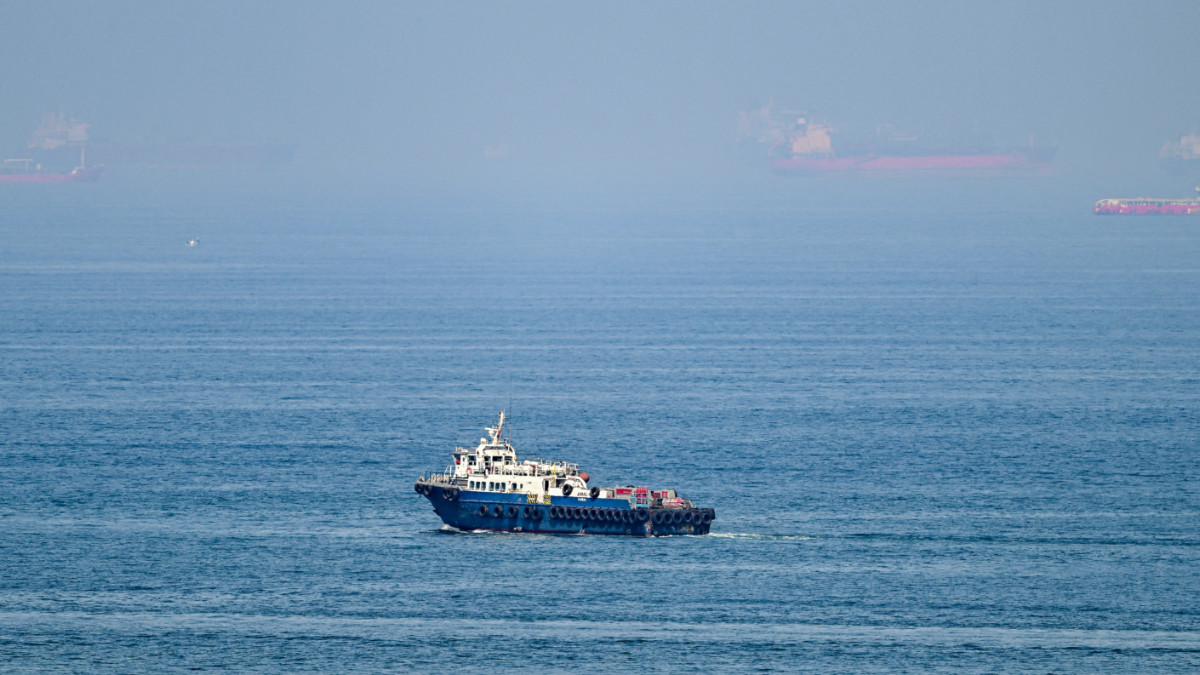
    The latest developments come amid a fragile ceasefire that took effect in the region Tuesday. As of Thursday, commercial marine traffic through the strait remained severely constrained, according to reporting from The New York Times. Citing data from global ship-tracking firm Kpler, the outlet confirmed that only two non-Iranian oil tankers had completed transits of the strait since the ceasefire went into effect, marking the first such crossings since the truce was agreed. For days prior, the strait had been effectively closed to most non-Iranian commercial traffic, forcing hundreds of tankers to divert to alternative routes and pushing up global energy shipping premiums.

  • Investigators believe antisemitism was motive in vandalism at Israeli restaurant in Munich

    Investigators believe antisemitism was motive in vandalism at Israeli restaurant in Munich

    MUNICH — Law enforcement officials in southern Germany have confirmed they are working under the assumption that an antisemitic motive lies behind a destructive overnight attack on an Israeli-owned restaurant in the heart of Munich, local police announced Friday. The incident unfolded in the early hours of the morning, when unknown perpetrators damaged the eatery by shattering its glass windows. No individuals present or nearby were harmed in the attack, authorities confirmed.

    Multiple law enforcement sources shared details with German national news agency DPA, noting that the restaurant’s owners identify as Jewish. While official police statements did not publicly name the targeted establishment, photos and footage of the post-attack scene confirm the location as Eclipse Grillbar. According to the restaurant’s official website, it holds the distinction of being Munich’s first fully authentic Israeli dining establishment. Representatives from the eatery did not immediately respond to media requests for comment in the immediate aftermath of the incident.

    Investigators’ preliminary assessments indicate the attackers used pyrotechnic devices – most likely commercial fireworks – which were thrown into the restaurant space. The projectiles left three separate broken window panels in their wake. Emergency dispatch received the first report of the attack at approximately 12:45 a.m. local time, and responding officers conducted a immediate sweep of the surrounding area, but were unable to locate any suspects at the scene. As of Friday’s update, the identity of the perpetrator or group of perpetrators remains unknown, and the investigation remains active. Early estimates place the total property damage from the attack at several thousand euros, equivalent to a similar amount in U.S. dollars.

    This incident comes against a well-documented backdrop of sharply rising antisemitic incidents across Germany, a shift that followed the October 7, 2023, cross-border attack on Israel by Hamas-led militant groups. During that attack, Hamas fighters killed roughly 1,200 people, the vast majority of whom were unarmed civilians, and abducted 251 additional people to hold as hostages in Gaza. While a two-week ceasefire between Israeli forces and Hamas is currently in effect, and both Israel and the U.S. have carried out targeted strikes against Iranian-linked assets in recent weeks, the broader regional conflict remains tense. Israel has notably ramped up its military offensive against the Iran-backed militant group Hezbollah in southern Lebanon even during the current ceasefire with Hamas, keeping regional tensions elevated and contributing to a polarized environment that has fueled anti-Jewish and anti-Israel sentiment across Europe.