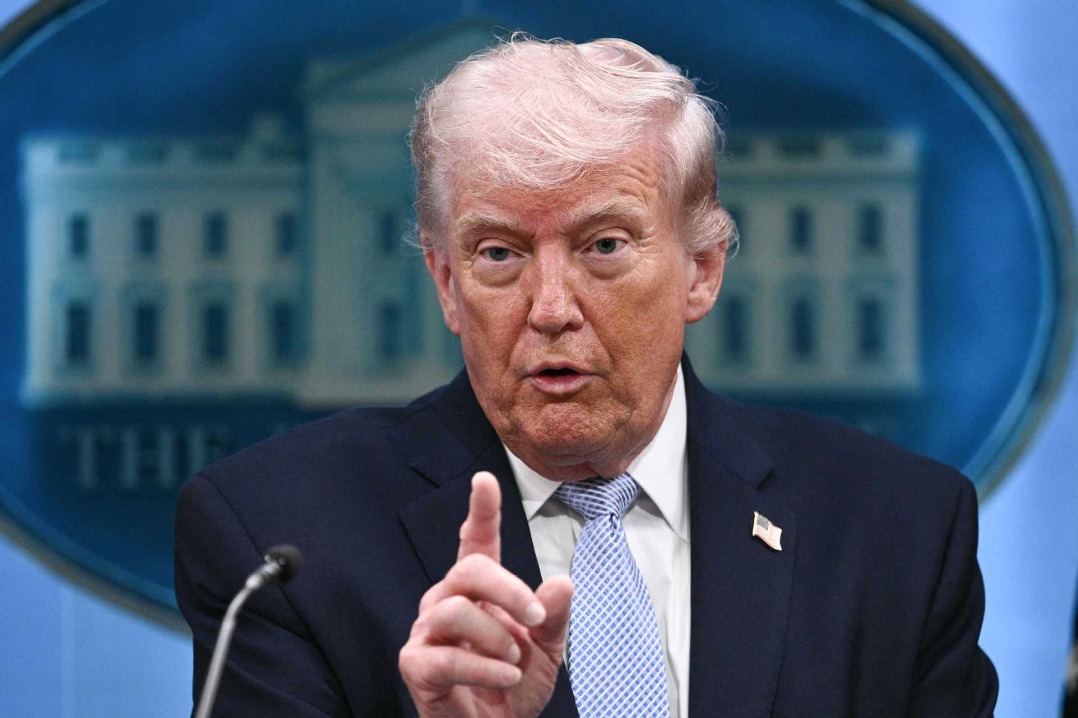
Fresh geopolitical friction has emerged along one of the world’s most critical energy chokepoints, as former U.S. President Donald Trump has publicly threatened Iran over plans to charge transit fees for commercial tankers passing through the Strait of Hormuz.
The confrontation unfolded in a series of public statements, beginning with comments to ABC News Wednesday, where Trump floated the idea of establishing a U.S.-Iran joint venture to collect tolls from vessels transiting the strategic waterway. He framed the proposal as a mutually beneficial project, describing it as “a beautiful thing” that would generate large revenues for both parties. He doubled down on that framing hours later in a post to his social media platform Truth Social, noting that the U.S. could earn “big money” by supporting traffic management efforts in the strait.
By Thursday, however, Trump shifted to a more confrontational tone, responding to emerging reports of Iran’s planned fee structure. In an explicit public warning posted to Truth Social, Trump stated, “There are reports that Iran is charging fees to tankers going through the Hormuz Strait — They better not be and, if they are, they better stop now!”
Citing The Wall Street Journal’s Thursday reporting, Iran has formally demanded that oil tankers pay a $1 transit fee per barrel of oil carried to cross the strait, which handles roughly 20% of the world’s daily global oil trade and is widely considered one of the most geographically and economically strategic maritime passages on the planet.
The latest developments come amid a fragile ceasefire that took effect in the region Tuesday. As of Thursday, commercial marine traffic through the strait remained severely constrained, according to reporting from The New York Times. Citing data from global ship-tracking firm Kpler, the outlet confirmed that only two non-Iranian oil tankers had completed transits of the strait since the ceasefire went into effect, marking the first such crossings since the truce was agreed. For days prior, the strait had been effectively closed to most non-Iranian commercial traffic, forcing hundreds of tankers to divert to alternative routes and pushing up global energy shipping premiums.