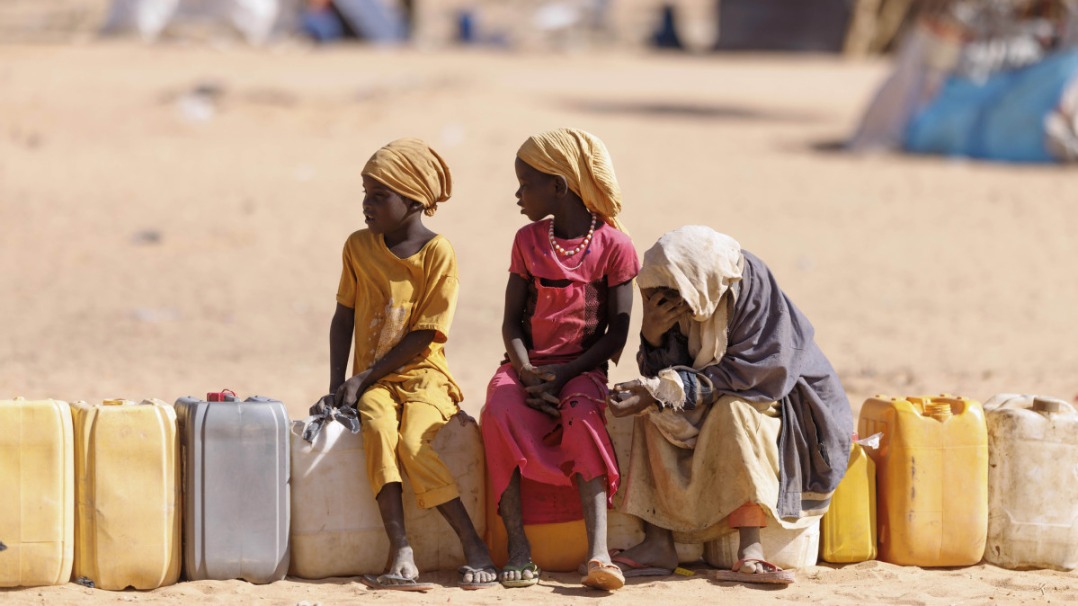
As Sudan’s brutal civil conflict enters its third year, having first erupted between the Sudanese Armed Forces and the Rapid Support Forces on April 15, 2023, the Darfur region has become the epicenter of one of the world’s most devastating humanitarian emergencies, with aid organizations warning that growing unmet needs have far outstripped the scale of the global response.
Data from the International Rescue Committee underscores the staggering scope of the crisis: more than 12 million Sudanese people have been forced from their homes since fighting began, and roughly 34 million people – equal to two-thirds of the country’s entire population – now require urgent life-saving humanitarian assistance. Survivor accounts and on-the-ground reports from humanitarian groups paint a grim picture of daily life in Darfur, where displaced families face repeated cycles of violence, chronic shortages of food and clean water, and almost non-existent access to life-sustaining medical care.
“The humanitarian situation in Darfur, and across Sudan as a whole, is extremely dire,” explained Ali Almohammed, emergency health manager for Doctors Without Borders (Medecins Sans Frontieres, MSF). He characterized the crisis as driven by four interconnected failures: the complete breakdown of civilian protection, mass population displacement, the widespread destruction of health infrastructure, and a gaping chasm between overwhelming unmet need and the limited aid currently available.
In extended remarks to China Daily, Almohammed emphasized that women and children bear the brunt of the ongoing conflict, facing amplified risks of disease, severe malnutrition, targeted violence, and total lack of access to essential life-saving care as fighting grinds on with no end in sight. A March 30 MSF report further highlights that danger persists even after civilians escape active frontline combat zones: women and girls face persistent threats of gender-based violence on travel routes, in public markets, while collecting food in agricultural fields, and even within the overcrowded displacement camps that are supposed to serve as safe havens.
Firsthand survivor testimonies included in the report lay bare the daily terror facing displaced communities. “Every day, when people go to the market, there are four or five cases of rape. When we go to the farm, this happens,” a 40-year-old woman from Sudan’s Jebel Marra region told investigators. Another survivor, sheltering in an internally displaced persons camp near Nyala, described the constant fear that shapes every daily activity: “Our life is so difficult here. We went outside the camp, and when we went outside, they attacked us and they raped us … This is happening to girls, every day — every day, in our area.”
These accounts reflect a broader protection crisis that compounds existing humanitarian hardship: even the most basic tasks of searching for food, water, and other necessities put vulnerable women and children at heightened risk of further violence, deepening the scale of the emergency.
According to Almohammed, the most pressing unmet needs are fundamental life-saving support: guaranteed safe access to healthcare, sufficient food supplies, malnutrition treatment, clean drinking water, emergency shelter, essential pharmaceutical stocks, protection services, and mental health support for trauma survivors. Among the most recent wave of people displaced from North Darfur and El Fasher, demand has spiked for emergency trauma care, reproductive health services, and confidential, specialized support for survivors of sexual violence.
Across Darfur, the region’s already weak health system has been pushed to total collapse. MSF data shows that in the hardest-hit conflict zones, an estimated 70 to 80 percent of all health facilities are either fully shuttered or operating at barely functional levels, crippled by catastrophic shortages of medical staff, essential drugs, vaccines, and life-saving medical equipment.
Successive waves of displacement from El Fasher and the Zamzam camp have completely overwhelmed already fragile services in host communities such as Tawila, Almohammed explained. “This is not just a question of some shortages,” he said. “It is a structural mismatch between massive needs and a very limited operational response.”
Children suffer the most acute, long-lasting harm from the ongoing catastrophe. “They are being displaced, exposed to violence, pushed into malnutrition, and cut off from routine healthcare, vaccination, education and protection services,” Almohammed noted. The MSF report quantifies this harm for minors: in South Darfur, 20 percent of all documented sexual violence survivors are under the age of 18, including 41 children younger than five. In Tawila, 27 percent of survivors treated by MSF in late 2025 were also minors.
Overcrowded emergency shelters, inadequate sanitation, limited food access, and extremely low vaccination coverage have triggered a surge in preventable infectious diseases, Almohammed added, with rising cases of measles, malaria, cholera, and acute respiratory infections across the region. At the same time, conflict-related trauma injuries and life-threatening maternal health complications continue to climb.
The psychological toll of the conflict is as severe as the physical damage, aid workers warn. “People are not only surviving bombardment, displacement and hunger; many have witnessed killings, lost relatives, and in many cases endured direct violence,” Almohammed said. “Without psychosocial and mental health services, the response is incomplete.”
MSF stresses that survivors require a full suite of targeted, confidential care: clinical treatment for injuries, emergency contraception, prevention and treatment of sexually transmitted infections, dedicated child protection services, and clear, functional referral pathways for ongoing care.
As Sudan prepares to mark the third anniversary of the outbreak of war, humanitarian organizations are urgently calling for expanded international support to scale up life-saving assistance and reestablish civilian protection across Darfur. Without immediate, decisive global action, they warn, the crisis will continue to escalate, pushing millions more vulnerable people into life-threatening danger.