分类: world

  • Hot in the city: Energy crisis tests Singapore’s air-con addiction

    Hot in the city: Energy crisis tests Singapore’s air-con addiction

    Against the backdrop of the ongoing Iran war that has choked global energy supply chains, Singapore — a small tropical city-state long synonymous with near-universal, often excessive air conditioning use — has rolled out mandatory energy-saving measures for its public sector, joining a growing number of Asian nations grappling with spiking fuel prices. On April 8, Singapore’s Ministry of Sustainability and the Environment announced that all government employees must adjust office air conditioning thermostats to a minimum of 25 degrees Celsius (77 degrees Fahrenheit), alongside strict requirements to monitor runtime of cooling systems. The guidance notes that every one-degree increase in cooling temperature cuts energy consumption by roughly 10%, a significant efficiency gain for the power-reliant nation. Beyond temperature adjustments, public offices will also roll out energy-efficient upgrades including LED lighting systems and smart power sensors to further cut unnecessary energy use.

    Singapore’s reliance on air conditioning runs deep in the nation’s modern history. As founding prime minister Lee Kuan Yew, the architect of Singapore’s transformation from a resource-poor post-colonial outpost to one of Asia’s wealthiest advanced economies, once famously noted, air conditioning was the foundational innovation that enabled reliable indoor work in the region’s sweltering tropical climate. Shortly after taking office, Lee installed air conditioning in all civil service buildings, calling the move critical to boosting public sector efficiency. Decades later, air conditioning has permeated nearly every corner of daily life in Singapore: nearly all offices, shopping malls, public transit vehicles and the vast majority of private homes have permanent cooling systems. It is common for office workers to keep cardigans or sweaters at their desks to combat overcooled indoor spaces, and pedestrians walking past mall entrances are often hit with gusts of frigid air vented out to the street. For years, observers have pointed out that the nation’s cooling use far exceeds what is necessary for comfort.

    The current energy crisis stems from the Iran war, which has effectively closed off the Strait of Hormuz — the critical shipping chokepoint through which most of the Middle East’s oil and gas exports travel to global markets. According to the U.S. Energy Information Administration, roughly two-thirds of Singapore’s crude oil imports originate from Middle Eastern nations, leaving the country heavily exposed to supply disruptions. Local fuel prices have already climbed sharply, and Singaporean authorities have warned the public to prepare for further economic disruptions tied to the Middle East conflict. As of early April, the nation has not tapped its strategic fuel reserves or implemented fuel rationing.

    Singapore is far from alone in taking urgent action across Southeast Asia and broader Asia. Thailand, another major economy dependent on Hormuz shipping, has ordered public sector employees to work from home and asked all residents to set home and office air conditioning between 26 and 27 degrees Celsius, while encouraging carpooling and greater use of public transport to cut fuel consumption. The Philippines, which sources 98% of its total oil imports from the Middle East, became the first Asian nation to declare a national energy emergency in March after petrol prices more than doubled in just a few weeks. Manila has shortened the workweek for all government offices and ordered public agencies to cut overall electricity and fuel use. Even South Korea, which imports more than two-thirds of its total energy from the Gulf region, has launched a nationwide energy-saving campaign urging residents to take shorter showers and only run washing machines on weekends to cut overall power demand.

    Energy analyst Ichiro Kutani, of Japan’s Institute of Energy Economics, described the broader economic fallout from the Iran war as an emerging “Asian energy crisis”. He noted that developing economies across the region are bearing the brunt of the shock, due to their high volume of gasoline-powered vehicles and widespread household reliance on gas for energy. In the long term, Kutani argued, the crisis serves as a critical wake-up call for the entire region: “We have to learn from this crisis, and work toward both more efficient oil use and greater diversification of our energy supply sources to prevent similar shocks in the future.”

  • Ukraine and Russia will cease fire for Orthodox Easter

    Ukraine and Russia will cease fire for Orthodox Easter

    Four years into the deadliest European conflict since World War II, Russia and Ukraine have agreed to a historic 32-hour ceasefire for the Orthodox Easter holiday, a rare pause in fighting that has already claimed hundreds of thousands of lives and displaced millions. The dual announcements made by both nations’ leaders on Thursday mark one of the few coordinated truces in a conflict defined by broken agreements and near-constant frontline combat.

    The ceasefire will take effect at 13:00 GMT on April 11 and remain in place through the end of April 12, 2026, according to a late Thursday statement from the Kremlin. Russian President Vladimir Putin ordered the halt to all offensive operations across every frontline sector in honor of the upcoming Orthodox Easter celebration, the statement confirmed, while directing Russian troops to remain on high alert to respond to any potential Ukrainian provocations. The Kremlin also expressed its expectation that Ukraine would honor the truce reciprocally, but made no mention of Kyiv’s earlier truce proposal that set the agreement in motion.

    Hours after the Kremlin’s announcement, Ukrainian President Volodymyr Zelenskyy confirmed that Kyiv would match Russia’s ceasefire, noting that Ukraine had first floated the idea of a holiday truce earlier this year through U.S. mediation. “People deserve an Easter free from the constant threat of shelling and attack,” Zelenskyy said. “This ceasefire gives Russia a genuine chance to step back from hostilities and move toward real progress in peace talks, rather than resuming fighting once the holiday ends.”

    The path to this truce has been complicated by shifting global priorities, with long-stalled peace negotiations pushed off track by ongoing conflict in the Middle East. Multiple rounds of U.S.-led talks have failed to bridge core divides between the two sides: Moscow currently occupies roughly 19 percent of Ukrainian territory, most seized in the opening weeks of the 2022 invasion, and demands territorial and political concessions that Zelenskyy has repeatedly rejected as a demand for unconditional surrender. With U.S. foreign policy attention now focused heavily on Iran, no major breakthrough in formal peace talks is expected in the near term.

    Frontline fighting has drifted into a near stalemate in recent years, with Russia making incremental territorial gains at the cost of massive casualties, according to open-source military analysis from the Washington-based Institute for the Study of War (ISW). Since late 2025, however, Russian advances have slowed considerably, a shift analysts attribute to two key factors: successful Ukrainian counterattacks in southeastern Ukraine, and restrictions that have cut Russian forces off from critical communications infrastructure. Russia’s military was blocked from accessing SpaceX’s Starlink satellite network, and Moscow’s own domestic crackdown banned the widely used Telegram messaging app — tools that Russian troops had relied on to coordinate frontline operations and drone strikes, which have become a defining feature of the conflict. Despite this slowdown, ISW notes that the tactical situation remains heavily unfavorable for Ukraine in eastern Donetsk Oblast, particularly around the strategic cities of Kramatorsk and Sloviansk, which Moscow has demanded Kyiv surrender as a condition of any final peace deal.

    In recent weeks, Ukraine has ramped up long-range strikes on Russian energy infrastructure, particularly targeting oil export terminals, after global energy prices spiked following the escalation of conflict in the Middle East. Past short truces between the two nations have quickly collapsed, with both sides blaming each other for almost immediate violations, leaving observers cautious about whether this holiday pause will lead to any longer-term de-escalation.

  • Russia bans Nobel-winning rights group, raids independent newspaper, in one day

    Russia bans Nobel-winning rights group, raids independent newspaper, in one day

    In a sweeping new escalation of its post-invasion crackdown on independent civil society, Russia has implemented a full ban on Nobel Prize-winning human rights organization Memorial and launched a law enforcement raid on the Moscow offices of iconic independent newspaper Novaya Gazeta, actions that mark one of the sharpest blows to remaining dissident voices in the country in recent years.

    Both institutions, rooted in the collapse of the Soviet Union, have stood as Russia’s most respected and high-profile watchdogs documenting systemic human rights abuses for decades. Since Moscow launched its full-scale military incursion into Ukraine four years ago, the Kremlin has rapidly rolled back civil liberties, implementing a nationwide crackdown on dissent that has no precedent since the final decades of Soviet rule.

    Memorial was first founded in the late 1980s with a core mission: to preserve the memory of millions of people killed in the Soviet Union’s Gulag penal system and document the fates of those targeted by political repression. The organization faced near-constant government pressure from its earliest days, and was formally ordered to liquidate its Russian operations by the Supreme Court in 2021, forcing most of its work to shift abroad.

    Thursday’s court ruling reclassifies the entire organization as “extremist,” a designation that effectively outlaws any form of collaboration with Memorial across Russia. Any individual found supporting the group now faces criminal prosecution, eliminating even the quiet grassroots work the organization had managed to maintain inside the country since 2021.

    Novaya Gazeta, Russia’s preeminent independent newspaper for nearly 30 years, was established in 1993 by a group of veteran journalists led by Nobel Peace Prize laureate Dmitry Muratov. For decades, the outlet drew relentless government targeting for its unflinching investigative reporting on human rights violations, high-level corruption, and Kremlin policy. Early backing for the paper came from Mikhail Gorbachev, the final Soviet leader who oversaw the perestroika reforms that opened the Soviet Union to greater political freedom.

    Muratov, who shared the 2021 Nobel Peace Prize with Memorial, was forced to step down as editor-in-chief in 2023 after being labeled a “foreign agent” — a designation that effectively brands recipients as enemies of the Russian state. After the full-scale invasion of Ukraine began, Novaya Gazeta cut its print circulation inside Russia drastically, and many of its leading journalists went into exile to launch an independent European edition, Novaya Gazeta Europe, based outside the country. But the outlet’s original Russian website remained accessible to domestic readers despite repeated court orders to take it down.

    On Thursday, law enforcement agents entered Novaya Gazeta’s Moscow offices in early morning and carried out raids that stretched into the evening. During the operation, officers detained senior investigative reporter Oleg Roldugin, who has led high-profile probes into corruption among Russia’s top political leaders, including former president Dmitry Medvedev and Chechen Republic head Ramzan Kadyrov. Police claimed the detention was tied to allegations of illegal access to personal data.

    In a statement posted to social media after the raid, Novaya Gazeta said: “We are concerned about the condition of our colleagues and demand an end to this lawlessness.” The outlet has a long history of targeted violence against its reporters: more than a dozen of its journalists have been killed in attacks widely linked to their critical work, most notably Anna Politkovskaya, who exposed military abuses in Chechnya and was gunned down in her Moscow apartment building on Vladimir Putin’s birthday in 2006.

    Led originally by iconic Soviet dissident and Nobel laureate Andrei Sakharov, Memorial built the world’s largest publicly accessible database of Gulag victims, preserving a historical record that successive Russian governments have sought to downplay. Emerging as a defining symbol of hope during Russia’s turbulent transition to democracy in the 1990s, the organization in recent decades shifted to documenting the gradual erosion of political freedoms under President Putin, as well as ongoing human rights violations across the country and in Russia’s military conflicts.

    As of 2026, Memorial’s ongoing research documents more than 1,000 political prisoners held in Russia — a dramatic jump from just 46 recorded in 2015, reflecting the accelerating pace of repression amid the Ukraine war. The list includes opponents of the invasion, critics of Putin, and people targeted for their religious beliefs, including more than 200 imprisoned Jehovah’s Witnesses. Memorial has also documented abuses against Ukrainian prisoners of war and rights violations tied to Russia’s military campaigns in Chechnya and Syria.

    Natalia Sekretaryeva, head of Memorial’s legal department, told AFP Thursday that the Supreme Court’s ruling was “absurd” but had been widely expected by the group’s leadership. Outside the Supreme Court building during the ruling, a lone protester held up a sign reading: “Hands off Memorial. Freedom to political prisoners,” a small act of resistance that underscored the growing risk to any open dissent in contemporary Russia.

  • ‘I wished for death’: Sexual violence in Israel’s prisons is an ‘organised state policy’

    ‘I wished for death’: Sexual violence in Israel’s prisons is an ‘organised state policy’

    A groundbreaking new investigation by Euro-Mediterranean Human Rights Monitor has concluded that the widespread sexual torture and abuse of Palestinian detainees from Gaza held in Israeli detention facilities constitutes an organized state policy, explicitly endorsed by Israel’s highest political, military and judicial authorities. The report, which was shared exclusively with Middle East Eye, draws its chilling conclusions from first-hand testimonies collected from dozens of recently released Palestinian former detainees, painting a devastating picture of systematic, institutionalized cruelty across Israel’s prison network.

    Accounts from survivors center heavily on Sde Teiman, the notoriously opaque detention facility where independent monitors and legal representatives have long been barred from access. One 42-year-old female detainee from northern Gaza, who was held at the site, described being bound naked to a metal table and repeatedly raped by two masked soldiers over a 48-hour period. She told researchers she was left shackled, naked and bleeding through the night before the assaults resumed the next day, recalling that her captors filmed the entire ordeal. Later, while she was hung by her wrists during interrogation, soldiers played the footage back to her and threatened to release it publicly if she refused to cooperate with their demands. Describing the unrelenting horror of her experience, she said she begged for death and framed the abuse as “another genocide behind walls.”

    Multiple male survivors shared similarly graphic accounts of brutality, often involving the use of military dogs trained to carry out sexual assault. Amir, a 35-year-old detainee also held at Sde Teiman, recalled being forced to strip naked before soldiers ordered their dogs to urinate on him and rape him. “The dog penetrated my anus in a trained manner while I was being beaten,” he said. “This continued for several minutes. I felt profoundly humiliated and violated.”

    In another documented case, Khaled Mahajna, an attorney with the Commission of Detainees and Ex-Detainees Affairs, described an incident where a soldier inserted the nozzle of a fire extinguisher into a Palestinian prisoner’s anus before discharging its contents, causing catastrophic internal injuries and extreme, prolonged pain. Forty-three-year-old Wajdi, another former Sde Teiman detainee, recounted a days-long campaign of abuse that began when he was shackled to a metal bed and repeatedly raped by both soldiers and a trained military dog. “I felt severe pain in my anus and screamed, but every time I screamed, I was beaten. This continued for several minutes, while soldiers filmed and mocked me,” he said. “The soldier left after ejaculating inside me. I was left in a humiliating position. I wished for death. I was bleeding.” After that first assault, Wajdi said he was untied and raped by the dog, before another soldier forced him to perform oral sex and urinated on him. The repeated assaults by multiple soldiers continued for days.

    Khaled Ahmed, a field researcher for Euro-Med who conducted interviews with survivors, called Wajdi’s case uniquely devastating, noting that it accumulated “almost every form of torture, physical, psychological, and moral, layered with systematic humiliation.” “It also includes the deliberate use of multiple perpetrators and trained dogs as instruments of sexual violence,” Ahmed told Middle East Eye. “The result is not a single act of abuse, but an extended pattern of cruelty designed to destroy dignity, bodily integrity, and any sense of safety. These are acts that defy comprehension.”

    Survivors consistently told researchers that the assaults were filmed and carried out in purpose-built, well-resourced institutional spaces specifically designed to enable torture and sexual violence. This structural coordination, the report argues, confirms the violence is not the work of rogue individual soldiers but an institutionalized state policy.

    Ahmed acknowledged that collecting these testimonies was an emotionally grueling process. “The details the survivors described and the way they relived the emotions and events were overwhelming,” he said. Many interviewees broke down into uncontrollable crying fits while recounting their experiences, and a large number of potential survivors declined to speak publicly due to fear of reprisal from Israeli authorities and deep-seated social stigma around sexual violence in Palestinian conservative society. “But what we noticed was that all of them spoke about what happened as if they were seeing it in front of them,” Ahmed said. “They remembered every detail, as though the scene had been etched into their memory and could never leave it.”

    Ahmed added that the vast majority of survivors who agreed to speak with researchers were men, as women face far more severe social stigma for sexual assault, making it nearly impossible for them or their families to disclose abuse. Researchers also documented that women’s bodies are frequently weaponized to blackmail male relatives: the report includes multiple cases of sexual assault against women who have family ties to Palestinians labeled as “wanted” by Israeli authorities.

    Euro-Med Monitor’s final conclusion is unambiguous: the hundreds of testimonies collected do not reflect isolated incidents of abuse, but concrete evidence of a deliberate policy supported by Israel’s most senior civilian and military leaders, either through explicit orders or tacit approval, enabled by a broader culture of complete impunity for perpetrators.

    The report explains that this scale of systematic abuse has only been made possible through Israeli legislation, military directives and emergency regulations that strip detainees of all legal protections. The 2002 Unlawful Combatants Law, for example, vastly expanded Israeli military detention powers without requiring any judicial oversight, effectively removing all legal safeguards for detainees. In the aftermath of the October 7 attacks, these legal frameworks have accelerated enforced disappearances of Palestinian detainees and turned Israeli detention centers into unaccountable “black holes” where human rights abuses thrive with no outside oversight. Sde Teiman, where multiple independent investigations have already documented routine torture, rape and murder, is the most prominent example of this system, as the International Committee of the Red Cross and legal representation for detainees are routinely denied access to the facility.

    The report also stresses that institutional responsibility extends far beyond the soldiers who directly carry out the abuse. Medical personnel and the Israeli judicial system actively collude to cover up crimes and shield perpetrators, the investigation finds. Doctors reportedly help obscure evidence of torture by hiding injuries in official medical records, concealing perpetrators’ identities, and issuing “fit for interrogation” certificates that clear the way for further abuse. Meanwhile, the Israeli judicial system has repeatedly protected abusers by suppressing victim and witness evidence, downgrading serious felony charges to minor offenses, and dismissing cases entirely. Most notably, in March 2024, the Israeli military dropped all charges against five soldiers accused of gang-raping a Palestinian detainee at Sde Teiman, despite leaked CCTV footage that showed soldiers surrounding the detainee and pinning him against a wall during the alleged assault.

    The authors of the report argue that these widespread abuses violate the Convention on the Prevention and Punishment of the Crime of Genocide. The abuse causes severe, lasting harm to individual detainees and members of the Palestinian community, and is intentionally aimed at preventing births within the Palestinian group, all as part of a broader goal of destroying the Palestinian community in Gaza partially or fully. The report reaffirms that legal and moral responsibility for these crimes extends to Israeli leadership and state institutions that shelter perpetrators, not just the individual soldiers who carry out the assaults.

    This new investigation is not the first to document widespread sexual violence against Palestinian detainees in Israeli prisons. Multiple independent rights groups and news organizations, including Middle East Eye, have published extensive investigations confirming the scale of the abuse. A recent United Nations inquiry went as far as accusing Israel of using sexualized torture and rape as “a method of war… to destabilize, dominate, oppress and destroy the Palestinian people.”

    Ahmed explained that the systematic use of sexual violence serves a deliberate, long-term strategic purpose for Israeli authorities. “It keeps the victim trapped in a cycle of violence, unable to escape it, even after the violence has practically stopped,” he said. “It continues to accompany the victim throughout their life. The survivor keeps experiencing both physical and psychological pain, and in many cases feelings of shame, humiliation, self-blame, inferiority, loss of dignity, and a lack of safety.”

    The trauma does not end with the survivor, he added: it ripples outward to damage entire families and communities. “Especially in a conservative society where anything related to sexual assault is seen as an attack on the dignity of the entire family,” Ahmed said. “It is a complex crime that deeply impacts and fractures the very fabric of society.”

  • IMF chief urges nations to ‘do no harm’ in fiscal response to Iran war

    IMF chief urges nations to ‘do no harm’ in fiscal response to Iran war

    As the ongoing conflict between the United States and Israel and Iran sends shockwaves through the global economy, the head of the International Monetary Fund (IMF) has issued an urgent call to governments worldwide: prioritize disciplined, targeted fiscal measures to avoid worsening the crisis, while the multilateral lender prepares to roll out up to $50 billion in emergency support for the hardest-hit nations.

    Speaking to Agence France-Presse (AFP) on the sidelines of the kickoff for the IMF’s annual Spring Meetings, Managing Director Kristalina Georgieva acknowledged that the conflict’s fallout — from skyrocketing energy prices to snarled global supply chains — has already brought unavoidable economic pain, especially for the world’s most vulnerable populations. Low-income countries, which already operate with extremely constrained national budgets, are bearing the brunt of the instability, she emphasized.

    The war, which began on February 28 after Iran effectively blocked the Strait of Hormuz, a critical global chokepoint for oil and gas shipments, has sent crude prices surging and disrupted trade routes across the Middle East. While a temporary ceasefire is currently in place, both sides have traded accusations of violations, with new negotiations aimed at forging a lasting peace scheduled to take place this Saturday.

    Georgieva laid out clear guidance for fiscal policymakers, who she noted are stuck between a rock and a hard place: acting to ease public hardship can force central banks to maintain restrictive monetary policies longer, triggering a harmful new demand shock, while inaction leaves vulnerable citizens to suffer. “There is no upside scenario at that moment,” she said, stressing that broad, unfocused policies such as blanket price controls, universal subsidies, or widespread export restrictions do more harm than good. Instead, she urged leaders to adopt what she called “restrictive, targeted, temporary actions” that prioritize support for low-income households, preserving limited fiscal space and avoiding additional pressure on monetary authorities.

    “My message is going to be: have the discipline on the fiscal front. You don’t have much fiscal space. Use it very wisely, don’t make the job of central bankers harder,” Georgieva said. She added that the Spring Meetings, which will bring together top economic policymakers from every region of the world next week, will center entirely on coordinating a global response to the conflict’s economic fallout, with a goal of helping leaders build collective consensus to navigate the crisis.

    In addition to her policy guidance, Georgieva announced that the IMF is preparing to deploy between $20 billion and $50 billion in immediate emergency assistance to member states hit hardest by the conflict. As of Thursday, the Fund has already received two formal requests for emergency financing, with multiple other countries signaling they intend to seek support in the coming days. She did not disclose the names of the countries that have submitted requests, but noted that nations in Asia, sub-Saharan Africa, and small island developing states face particularly acute risk.

    Next week’s meetings will include intensive, country-by-country discussions to tailor support to individual needs, she said. In some cases, this will involve adjusting existing IMF loan programs — accelerating fund disbursements or adding additional financing to account for new shocks. Georgieva confirmed that the Fund is already in talks to recalibrate existing programs for a slate of vulnerable nations, including Sri Lanka, Bangladesh, Egypt, Jordan, and Pakistan.

    The IMF chief also confirmed that the Fund will downgrade its already-modest global growth forecast in response to the conflict, warning that the economic damage already done cannot be reversed even if hostilities end immediately. More than five weeks of disrupted oil and gas supplies have already left a permanent mark on global economic performance, she explained.

    While she acknowledged that maintaining fiscal discipline amid widespread public hardship is an enormous challenge for governments, Georgieva argued it is a necessary step to preserve long-term economic stability. “In a world of more shocks, of exogenous forces, they have no control over, what they have control over is getting the economy in good shape,” she told AFP. “It is hard, but countries have to face it.”

  • Israeli attacks on Lebanon leave Iran-US ceasefire in doubt

    Israeli attacks on Lebanon leave Iran-US ceasefire in doubt

    Less than 24 hours after a bilateral ceasefire between Iran and the United States was supposed to take effect, the fragile truce hangs by a thread, as mutual accusations of violations and deadly Israeli attacks on Lebanese territory have plunged the Middle East into renewed uncertainty.

    The core point of contention centers on whether the ceasefire applies to military operations in Lebanon, a nation that declared a national day of mourning on Thursday following a wave of Israeli airstrikes on Wednesday that killed no fewer than 200 Lebanese civilians. Washington and its closest regional ally Israel have insisted the two-week truce was never meant to curb Israeli military action against militant groups operating from Lebanese soil.

    In a late Wednesday post on Truth Social, U.S. President Donald Trump confirmed that American military assets, including warships, combat aircraft, additional ammunition and ground troops, would remain deployed in the region surrounding Iran until what he called “the real agreement reached is fully complied with”. Trump added that the U.S. would retain all capabilities necessary to counter what he labeled a degraded adversary.

    Iran has pushed back firmly against this framing. Foreign Minister Seyed Abbas Araghchi wrote in a post on X that the terms of the Iran-U.S. ceasefire are “clear and explicit”, arguing that Washington cannot simultaneously claim to uphold a truce while allowing Israel to continue its offensive in Lebanon. “The US must choose — ceasefire or continued war via Israel. It cannot have both. The world sees the massacres in Lebanon. The ball is in the US court, and the world is watching whether it will act on its commitments,” Araghchi said.

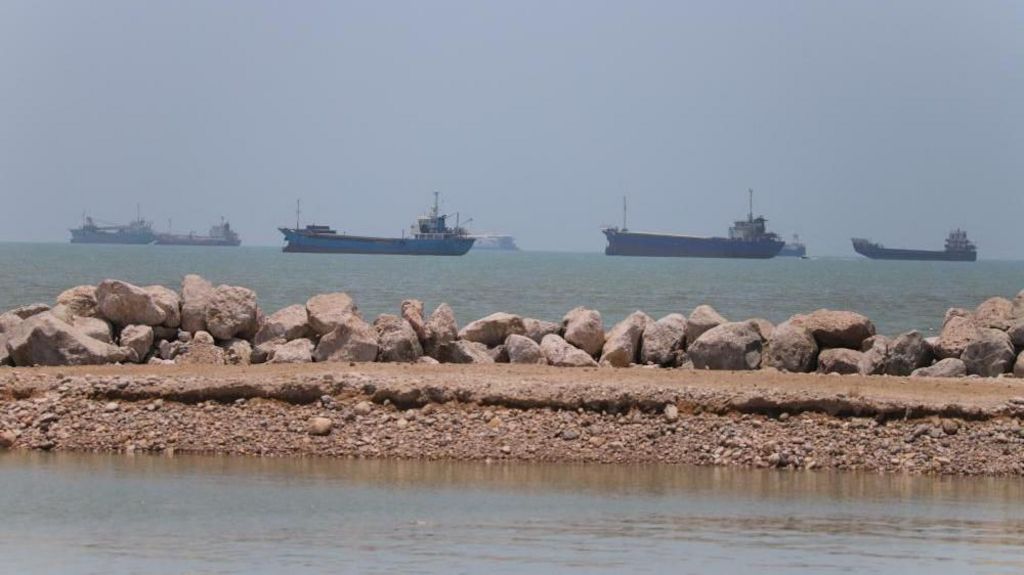
    The dispute comes as Iran implemented a key truce-related concession earlier this week, agreeing to temporarily reopen the Strait of Hormuz, the critical global oil chokepoint that carries roughly one-fifth of the world’s daily crude supplies. In line with this agreement, Iran’s Islamic Revolutionary Guard Corps announced Thursday that it had mapped two alternative transit routes for vessels passing through the strait, advising ships to use these alternate paths to avoid potential sea mine hazards and guarantee maritime safety.

    U.S. Vice President JD Vance, who will lead the American negotiating team in the first round of direct talks with Iranian officials in Islamabad, Pakistan this Saturday, clarified Wednesday that Washington never made any commitment to force Israel to halt its strikes on Lebanon. The Israeli Prime Minister’s Office echoed this position in an official statement, confirming that Israel supports the two-week suspension of strikes targeting Iran, on the condition that Tehran fully opens the Strait of Hormuz and ends all attacks against the U.S., Israel and regional allies.

    The statement added that Israel backs American efforts to eliminate what it describes as Iran’s nuclear, missile and terrorist threats to the region and the wider world, and reaffirmed that the two-week ceasefire between the U.S. and Iran explicitly excludes military operations in Lebanon.

    This framing directly contradicts the initial announcement of the truce made by Pakistani Prime Minister Shehbaz Sharif, who brokered the deal. When Sharif confirmed the ceasefire Wednesday, he stated that Iran, the U.S. and all their respective allies had agreed to an immediate end to hostilities across all territories, “including Lebanon and elsewhere”.

    Israel’s widespread bombardment of Lebanon has drawn sharp condemnation from across the global community. France, Italy, Spain, Turkiye, Qatar and the United Kingdom have all issued statements condemning the offensive and called for Lebanon to be included in the Iran-U.S. ceasefire. Both the United Nations and Pakistan have also publicly denounced the attacks, with the Pakistani government noting that the strikes undermine international efforts to build peace and stability across the region.

    Stephane Dujarric, spokesperson for UN Secretary-General Antonio Guterres, warned in an official statement that the ongoing military activity in Lebanon poses a severe threat to the fragile ceasefire and broader efforts to reach a lasting, comprehensive peace in the Middle East. “The Secretary-General reiterates his call to all parties to immediately cease hostilities,” Dujarric said, adding that international law, including international humanitarian law, must be respected at all times. “Civilians and civilian infrastructure must be protected at all times, and attacks directed against them are unacceptable. There is no military solution to the conflict,” he added. Guterres also renewed his call for all parties to engage through diplomatic channels and recommit to full implementation of UN Security Council Resolution 1701, the 2006 resolution that ended the last major Israel-Hezbollah conflict.

    Israeli military officials continued to expand their operations Thursday, announcing a series of new strikes and targeted killings across Lebanon and Gaza. The Israel Defense Forces (IDF) confirmed it had eliminated Palestinian journalist Muhammad Samir Muhammad Washah in Gaza, claiming he operated as a Hamas terrorist while working on assignment for Al Jazeera. In Beirut, the IDF said it had killed Ali Yusuf Harshi, personal secretary to Hezbollah Secretary-General Naim Qassem, accusing Harshi of playing a central role in managing Qassem’s office. The IDF added that it had also struck two key weapons crossings used by Hezbollah along the Litani River, as well as 10 weapons storage facilities, rocket launchers and command centers across southern Lebanon.

    Even within Israel, the government’s decision to exclude Lebanon from the ceasefire has faced growing public pushback. Organizers have confirmed that at least 11 anti-war protests are scheduled to take place across the country this weekend, opposing both the continuation of hostilities in Lebanon and what organizers describe as “attempts by the Israeli government to undermine the ceasefire with Iran”. Omri Evron, co-director of the Israeli anti-war coalition Peace Partnership, said the ceasefire itself serves as clear confirmation of the movement’s long-held position that there is no military solution to the region’s ongoing conflicts.

  • Russia’s Putin declares a ceasefire in Ukraine for Orthodox Easter

    Russia’s Putin declares a ceasefire in Ukraine for Orthodox Easter

    As Russia’s full-scale invasion of Ukraine enters its fifth year of active conflict, Russian President Vladimir Putin has ordered a 32-hour unilateral ceasefire across all front lines to coincide with the Orthodox Easter weekend, a move that follows an earlier holiday truce proposal from Ukrainian President Volodymyr Zelenskyy. The Kremlin officially published Putin’s decree on Thursday, outlining that the pause in hostilities will begin at 4 p.m. local time on Saturday and extend through the end of Easter Sunday.

    Zelenskyy had first floated a limited truce proposal earlier that same week, calling on both Moscow and Kyiv to halt attacks on one another’s energy infrastructure exclusively for the duration of the religious holiday. The Ukrainian leader noted the offer was transmitted through U.S. diplomatic channels, which have served as the main mediating body for discussions between Russian and Ukrainian delegations throughout the ongoing invasion.

    As of Thursday evening, Kyiv had not issued an immediate public response to Putin’s broader ceasefire announcement. The Kremlin’s statement accompanying the decree made clear that while Russian forces have been ordered to stop all offensive actions across the entire front line for the truce period, troops remain on high alert. “Troops are to be prepared to counter any possible provocations by the enemy, as well as any aggressive actions,” the document reads, adding that Moscow expects Ukrainian forces to match the ceasefire.

    This latest unilateral truce announcement comes against a backdrop of failed past ceasefire efforts. Last Orthodox Easter, Putin declared a 30-hour pause in fighting, but both sides quickly traded accusations of violations that left the truce effectively meaningless. Broader international ceasefire proposals have also stalled: last year, Kyiv and Washington put forward a proposal for a 30-day unconditional truce as a first step toward peace negotiations, but Russia rejected the plan, insisting that any pause must be tied to a comprehensive long-term settlement.

    U.S.-mediated talks between the two delegations have failed to deliver tangible progress on core outstanding issues in months. In recent months, U.S. diplomatic and security focus has shifted largely to the ongoing conflict in the Middle East, leaving the 1,250-kilometer front line between Russian and Ukrainian forces locked in a costly stalemate of incremental positional battles.

  • Israel kills Al Jazeera reporter in Gaza after incitement campaign

    Israel kills Al Jazeera reporter in Gaza after incitement campaign

    On a Wednesday in Gaza City, a 40-year-old Palestinian journalist became the latest media worker killed by Israeli forces in a controversial double-tap drone strike that has reignited global outrage over the targeting of reporters in the besieged enclave. Mohammed Samir Wishah, a veteran correspondent for Al Jazeera Mubasher, was en route with a colleague to cover a humanitarian story when the first strike hit his personal vehicle, igniting it in flames. According to eyewitnesses and first responders who spoke to witnesses on the ground, the deadly incident followed a disturbing pattern common to Israeli strikes in Gaza: a second attack launched minutes after the first, when emergency crews and local residents had gathered to evacuate casualties.

    “The vehicle was hit the first time and caught fire. When civil defence teams and ambulances arrived, clearly marked and with medical personnel present, the site was targeted again,” a paramedic who arrived at the scene shortly after the attack stated in a widely circulated social media video. He added that the bodies of those killed were left charred by the repeated blasts, and roughly 10 to 20 bystanders and first responders were injured in the second strike.

    A native of the Bureij refugee camp in central Gaza, Wishah had built a reputation over more than a decade of reporting for his focus on underreported humanitarian stories in the territory. Colleagues confirmed he was carrying standard press equipment including his microphone when the strike hit, and had worked for Al Jazeera Mubasher since 2014. Due to the Israeli-imposed fragmentation of Gaza’s geographic areas during the ongoing conflict, Wishah had worked alone to cover all events in the central Gaza Strip, making him a well-known and trusted voice for local audiences.

    Months before his killing, colleagues say Wishah was the target of a coordinated Israeli incitement campaign amid his ongoing coverage of the conflict in Gaza. In February 2024, Israeli army Arabic-language spokesperson Avichay Adraee published images on the social platform X claiming to prove Wishah’s affiliation with Hamas, labeling him a member of the armed group. A further accusation came in June 2025 from Hadeel Oueis, editor-in-chief of Jusoor News – an outlet Palestinian journalists widely allege has ties to Israeli intelligence – who claimed Wishah was secretly a member of the Qassam Brigades. Israeli writer Edy Cohen amplified the post with a public “appeal and warning.”

    Colleagues have refuted all these claims, explaining that the images showing Wishah in military-style clothing were taken during production of a journalistic documentary. Wishah himself publicly challenged any party to produce evidence of armed affiliation, and Israel never released concrete proof to back up its allegations. “He was subjected to an incitement campaign launched by some social media pages affiliated with the Israeli occupation,” said Talal Mahmoud, a fellow Al Jazeera Mubasher reporter. “But he continued his work regardless; he did not hesitate for a moment to continue delivering his message.”

    Shortly after Wishah’s death was confirmed, Adraee released a statement endorsing the strike, repeating the unproven claim that “Wishah was not a journalist, but a Hamas terrorist in every sense of the word.”

    The killing of Wishah marks a grim milestone for press freedom in Gaza: he is the seventh Palestinian journalist killed by Israeli forces since a ceasefire agreement took effect in October, and brings the total number of journalists killed in Gaza since the start of the current conflict in October 2023 to at least 262, according to press freedom advocacy groups.

    The death has sparked widespread international condemnation, with leading journalists’ organizations denouncing the attack and calling for an independent international investigation into the strike and efforts to hold perpetrators accountable. Jodie Ginsberg, chief executive of the Committee to Protect Journalists (CPJ), said Wishah’s killing fits a clear pattern of deliberate targeting of journalists by Israeli forces. “That makes Israel the biggest killer of journalists since CPJ started documenting those deaths in 1992. It has killed more journalists than any other government, any other military force, in the world,” Ginsberg told Al Jazeera. She added that the repeated killings of reporters form part of a deliberate strategy to control global information about what is unfolding in Gaza, noting “Journalists are civilians, and they should never be targeted in a war.”

    Gaza-based Palestinian journalist Momen Faiz, who has himself been wounded in previous Israeli strikes, said Wishah was specifically targeted for his unflinching, exceptional on-the-ground reporting from Gaza throughout the conflict. “Mohammed was particularly excellent in live reporting, and he gave a space for humanitarian stories. He used to work under pressure for long days with limited sleeping time,” Faiz told Middle East Eye. “After conducting interviews, he often followed up with the interviewees and tried to help them.”

    Faiz, who lost both legs in an Israeli strike while reporting in Rafah in 2008 and was wounded again in 2018, said all journalists in Gaza operate under the constant threat of being targeted. “After every journalist killed in Gaza, the news does not pass as mere news, but as a personal warning,” he said. “They continue to kill people they know very well are only journalists with clear press signs, vests and microphones or cameras. Israel wants to kill the witnesses to deliver a one-sided story to the world.”

    In the wake of Wishah’s killing, Gaza-based journalists have taken to social media to highlight the constant danger they face, while reaffirming their commitment to continuing their reporting despite the risk. “After every journalist killed in Gaza, the news does not pass as mere news, but as a personal warning, as if death leaves its mark on our doors one by one, whispering inside each of us: you are not far away,” Gaza-based journalist Tariq Dahlan wrote in a Facebook post. “We bid farewell to our colleagues, yet we don’t have the luxury of a complete breakdown; we are compelled to carry on, not out of absolute courage, but out of loyalty to what they began, and because if their voice falls silent, everything else falls with it.”

    Wishah’s killing comes amid ongoing Israeli attacks across Gaza that have pushed the territory’s population deeper into humanitarian catastrophe. Since the ceasefire agreement in October, Israeli military operations have killed at least 723 Palestinians and wounded roughly 2,000 more across the enclave. Since the start of the conflict in October 2023, Israeli forces have killed more than 72,300 Palestinians and wounded over 170,000, according to local health authorities.

  • Venezuelan police block protesters demanding higher wages and pensions

    Venezuelan police block protesters demanding higher wages and pensions

    On a Thursday in downtown Caracas, thousands of public sector employees, union representatives and retired Venezuelans took to the streets, heading toward the Miraflores presidential palace to demand living wages and adequate, dignified pensions. Their demonstration was met with heavy police resistance, as National Security forces had pre-deployed across key downtown routes to block the protesters’ advance. The confrontation marked a sharp public rebuke of the interim government’s economic policies, coming just 24 hours after acting President Delcy Rodríguez addressed the nation on live television to call for worker patience amid ongoing efforts to rebuild Venezuela’s collapsed economy.

  • Hackers say they obtained at least 19,000 files from ex-Israeli army chief Halevi’s phone

    Hackers say they obtained at least 19,000 files from ex-Israeli army chief Halevi’s phone

    An Iran-aligned cyber hacking collective known as the Handala Hack Team has announced it successfully breached the personal mobile device of Herzi Halevi, the former Chief of Staff of the Israel Defense Forces, claiming to have exfiltrated upwards of 19,000 confidential files in the operation. In an official statement published to the group’s website on Thursday, the hackers revealed their infiltration of Halevi’s device was the result of a multi-year surveillance and cyber operation that granted them unfettered access to what they describe as thousands of sensitive images and video recordings from closed-door high-level security meetings.

    In the bold statement, the group claimed that Israel’s most closely guarded national security assets — from top-secret military facilities and crisis command centers to operational strategic maps — have been fully exposed to their team for an extended period. The breach is being described as one of the most impactful cyber incidents targeting a senior leader in Israel’s national security establishment to date, with portions of the stolen data already circulated and reviewed by Middle East Eye. The released materials include visual evidence of previously unreported meetings between Halevi and Arab regional officials.

    One undated photograph places Halevi alongside Michael Kurilla, the former head of U.S. Central Command (Centcom), at a meeting held in Qatar, where a large official portrait of Qatar’s ruling Emir Sheikh Tamim bin Hamad Al Thani is clearly visible in the background. A second undated image shows Halevi visiting the iconic Sheikh Zayed Grand Mosque in Abu Dhabi, United Arab Emirates, while a released video recording captures a meeting between Halevi and Jordan’s Chief of the General Staff, Yousef Huneiti, on Jordanian soil. In the video, Halevi presents Huneiti with a historic dagger that originally belonged to a Jordanian soldier killed during the 1967 Six-Day War, a symbolic gesture that had not been reported publicly prior to the breach.

    Alongside the diplomatic and security-related materials, the hacking group also released personal content pulled from Halevi’s device, including private family photos, national identification cards for Halevi and his wife, and what the group frames as embarrassing personal moments. One short video shows Halevi hiding under a piano in a private living room as a woman enters the space.

    The Handala Hack Team says it is withholding a large volume of additional stolen data that has not yet been made public, including further visual proof of unreported secret meetings, detailed Israeli military strategic maps, and personal identifying information for senior Israeli military commanders. The group warned in its statement that all of this unreleased material, which includes clear, unobscured imagery of senior Israeli military personnel and combat pilots, will be published incrementally at a future time of its choosing.

    This cyber breach is not an isolated incident for the Handala Hack Team, which has built a track record of targeting high-profile Israeli political and security figures. Previous claimed attacks include a breach targeting former Israeli Justice Minister Ayelet Shaked and a senior aide to long-time Prime Minister Benjamin Netanyahu. Last year, the group claimed responsibility for hacking a personal device used by former Israeli Prime Minister Naftali Bennett, releasing hundreds of his private chat messages and a 141-page contact list that included contact details for multiple international heads of state and world leaders. Bennett acknowledged the breach of his Telegram account at the time, but noted that the released content included a mix of authentic and forged materials.

    Herzi Halevi stepped down from his post as IDF Chief of Staff in March 2025, after leading Israeli military operations in the Gaza Strip through the first 17 months of the ongoing conflict. He assumed the role of army chief in January 2023, while Kurilla held his position as Centcom commander from April 2022 through August 2025, placing the Qatar meeting between the two leaders within the timeframe of January 2023 to August 2025.