分类: world

  • Lebanon, Israel to meet for tough talks in Washington

    Lebanon, Israel to meet for tough talks in Washington

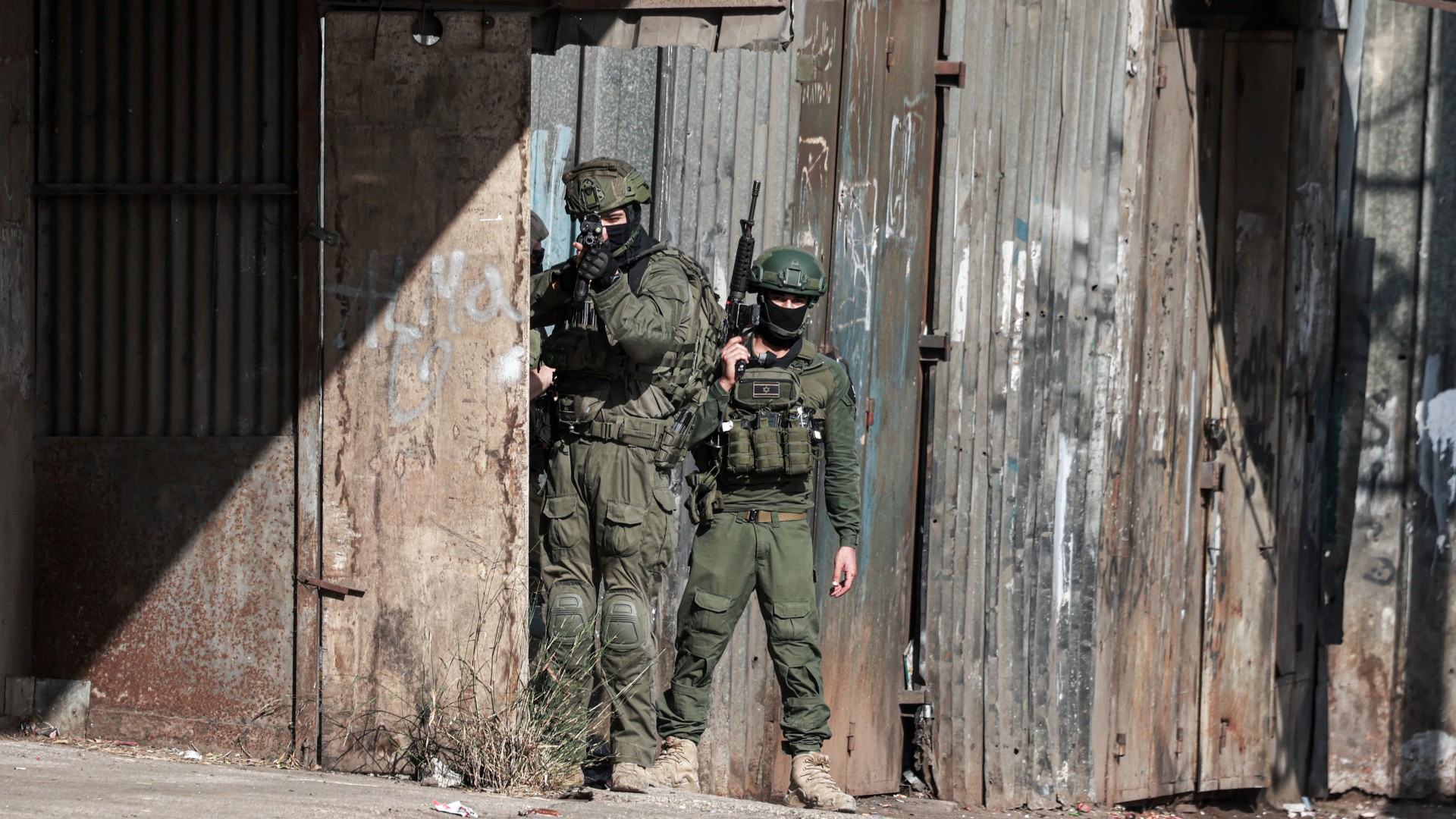
    A high-stakes round of diplomatic talks between Lebanese and Israeli representatives is set to convene in Washington on Tuesday, hosted under the mediation of U.S. Secretary of State Marco Rubio. But as the meeting gets underway, deep irreconcilable gaps between the two sides, combined with open opposition from key armed group Hezbollah, have left even veteran regional observers deeply skeptical that any meaningful breakthrough will be achieved. The talks mark the first direct, high-level diplomatic engagement between the Israeli and Lebanese governments since 1993, according to an anonymous senior State Department official. Attendees will include both nations’ ambassadors to Washington, as well as the U.S. ambassador to Beirut, the official confirmed. The core stated goals of the dialogue are to lay the groundwork for long-term security along Israel’s northern border and back the Lebanese government’s push to reassert full sovereign control over its entire territory, the official added. The conflict that brings delegates to the negotiating table erupted on March 2, when Hezbollah launched attacks against Israel, drawing Lebanon fully into the broader regional conflict centered on tensions between Israel and Iran. Hezbollah’s entry into the fighting came just days after the February 28 joint Israeli-American offensive that killed Iranian supreme leader Ali Khamenei, an attack the group has vowed to avenge. In the months since the conflict escalated, Israeli military operations have devastated large swathes of Lebanon. Intensive air strikes, including a massive bombardment of central Beirut on April 8, and a full ground invasion of southern Lebanon have killed more than 2,000 people and displaced over 1 million Lebanese civilians, despite repeated international calls for an immediate ceasefire. The biggest immediate rift between the parties centers on core demands that neither side appears willing to compromise on. For Israeli officials, any successful outcome is tied to the full disarmament of Hezbollah and the removal of the group from southern Lebanon. Israeli government spokeswoman Shosh Bedrosian told reporters on Monday that the country has no interest in discussing a ceasefire with Hezbollah, which she condemned for continuing unprovoked, indiscriminate attacks on Israeli civilian areas. Israeli Prime Minister Benjamin Netanyahu doubled down on that position over the weekend, emphasizing that Israel’s non-negotiable goals are the full dismantling of Hezbollah’s weapons arsenal and a durable, long-term peace agreement that will stand for generations. Public opinion in Israel heavily backs that hardline approach: a new poll published Monday by the Israel Democracy Institute found that 80% of Jewish Israeli respondents support continuing military operations against Hezbollah in Lebanon regardless of diplomatic progress with Iran, even if that puts the country at odds with the Trump administration. On the Lebanese side, government leaders are framing the talks around an entirely different priority: securing an immediate ceasefire to end the ongoing devastation. Lebanese President Joseph Aoun said Monday he hopes the Washington talks will produce a ceasefire agreement that clears the way for full formal direct negotiations between the two states. Even before the talks began, Hezbollah’s leader Naim Qassem, head of the Iran-aligned movement that has led the fight against Israel, has openly called for the talks to be canceled, dismissing the entire process as “futile.” For the Trump administration, mediating the talks has proven to be a fraught diplomatic balancing act. U.S. officials have insisted that any resolution must meet two core demands that many analysts see as difficult to reconcile: the full disarmament of Hezbollah, and full respect for Lebanon’s territorial integrity and national sovereignty, all while unconditionally upholding Israel’s right to security. The broader regional context has further complicated U.S. efforts: the Washington talks come just days after a new round of U.S.-Iran talks held in Pakistan failed to produce any breakthrough, and U.S. diplomats fear a continued escalation in Lebanon could derail any future progress on the Iranian nuclear and regional security file. Most regional analysts and even former insiders are already bracing for failure. “It would take a lot of imagination and optimism to think that the deep issues dividing Israel and Lebanon can be resolved in one day of talks in Washington,” a former senior Israeli defense official told reporters on condition of anonymity, acknowledging that “expectations are extremely low” going into the meeting. The former official added that if no agreement is reached, Israel is likely to move forward with establishing a large buffer zone in southern Lebanon, mirroring the security arrangement it currently maintains in the Gaza Strip.

  • Greek police using masked migrants to forcibly push other migrants back across border

    Greek police using masked migrants to forcibly push other migrants back across border

    A years-long joint investigation by the BBC and the Consolidated Rescue Group (CRG) has uncovered explosive evidence of systematic illegal pushbacks at Greece’s Evros land border with Turkey, revealing that Greek police have been recruiting migrant mercenaries to carry out violent, unlawful expulsions of asylum seekers and irregular migrants since at least 2020. The 200-kilometer Evros border forms the European Union’s eastern external frontier, a heavily militarized restricted zone dotted with watchtowers that has been a key entry point for more than 1 million migrants arriving in Greece since 2015. What the investigation uncovered is a shadowy, officially overseen system that violates both international and European Union human rights law.

    The inquiry began in autumn 2024, after a disgruntled smuggler shared graphic footage purporting to show migrants being abused by masked, third-country men at the border. While the BBC could not independently verify the footage’s content, its accounts aligned with testimony gathered from more than a dozen independent sources, including current and former Greek border guards, migrant victims, former mercenaries, leaked official disciplinary documents, and independent human rights investigations. Internal police documents reviewed by the BBC confirm that senior Greek police officers ordered and oversaw the recruitment of mercenaries, who are themselves migrants from countries including Pakistan, Syria, and Afghanistan. Recruits are compensated with cash, stolen mobile phones and valuables from other migrants, and unofficial permission to travel onward through Greece. In some cases, recruitment has happened under duress: Marwan, a Moroccan former mercenary who spoke to the BBC from Paris under a pseudonym, said he was pulled from a migrant detention cell in 2020 and given no choice but to agree to work. He described being held in an abandoned prison with other recruits, and told the BBC he witnessed routine brutal violence against migrants at the hands of Greek officers and other mercenaries, leaving him “completely destroyed” by trauma. “I am deeply sorry… I was under threat,” he said of his involvement.

    Multiple witnesses and documents corroborate allegations of widespread brutality against migrants subjected to pushbacks. Testimony collected by the BBC includes accounts of migrants being stripped, beaten until unconscious, robbed, subjected to invasive and degrading body searches, and sexually assaulted. One Syrian migrant, Amal (using a pseudonym for security), described how her family was detained by Greek police in Orestiada in 2025 while traveling to reunite with relatives who had already been granted asylum in Greece. She said police handed the group over to masked mercenaries, who removed her young daughter’s diaper during a search for valuables, leaving the child screaming in fear, and beat a young migrant so severely he lost consciousness. Another Syrian migrant, Ahmad, said he was beaten unconscious by Greek police, then loaded into an overcrowded truck where many passengers struggled to breathe before being handed over to mercenaries who stripped him, beat anyone hiding money, and forced migrants into dinghies half-way across the Evros River, throwing those who refused to jump overboard despite the risk of drowning.

    Official investigations and disciplinary records support these accounts. Excerpts from a 2024 Greek border guard disciplinary hearing reviewed by the BBC show multiple guards openly acknowledged the use of “boatmen” – the coded term for mercenary recruiters – for pushbacks. One guard told the hearing he was ordered to find recruits in 2020, when COVID-19 restrictions and heightened tensions with Turkey made direct police involvement too risky, and that the program was already active in southern Evros. Guards used coded language on the Viber messaging app to coordinate pushbacks, referencing “Special Team” operations, and told the hearing they had reported to senior officers that mercenaries were raping female migrants and stealing valuables, but no action was taken. Five border guards are currently awaiting trial on corruption charges related to the program, all of which they deny.

    A 2023 investigation by Frontex’s own independent Fundamental Rights Office into one ambush of a group of asylum seekers near Evros found that between 10 and 20 third-country nationals were acting under direct instruction of Greek officers. The report confirmed the group was subjected to death and rape threats, invasive sexualized body searches, beatings, stabbings, theft, and forced expulsion back to Turkey, in clear violation of EU human rights law. Greek authorities have denied any migrants were present in the area that day. The Greek National Commission for Human Rights (GNCHR) has itself documented more than 100 alleged forced pushback incidents in Evros dating back to 2020, dozens of which involved third-country mercenaries, with the most recent incident recorded in October 2025. GNCHR president Maria Gavouneli called the BBC’s findings “extremely significant” evidence of widespread human rights abuse.

    When confronted with the allegations by the BBC in March 2026, Greek Prime Minister Kyriakos Mitsotakis said he was “totally unaware” of any program using migrant mercenaries for pushbacks. He defended Greece’s border protection policies, adding that European leaders have made clear they will not repeat past “mistakes” of allowing a “massive influx” of migrants and refugees. Greek national authorities have not responded to the BBC’s detailed written requests for comment on the investigation’s findings. Frontex, the EU’s border and coast guard agency, has rejected claims it turns a blind eye to human rights violations, saying it works to ensure lawful border management and supports frontline states under pressure. A regional police source told the BBC that every uniformed officer serving in Evros – including Greek police, soldiers and Frontex staff – is aware pushbacks are taking place, with mercenaries pushing back as many as hundreds of migrants every week.

    The investigation also identified a leading former mercenary, a Syrian man known as “Mike”, who is referenced in internal police documents and confirmed by five separate sources to have held a senior role in the program. A photo provided by the smuggler shows a group of masked men in a van, and facial recognition analysis found a 90% match between the right-most individual in the photo and publicly available images of Mike. When contacted via social media, Mike did not respond directly, and his lawyer sent a warning letter opposing publication of the image and what he called “unproven allegations”. A lawyer has also confirmed she has filed a case before the European Court of Human Rights on behalf of an Afghan woman who alleges she was raped by a Farsi-speaking masked mercenary during a 2023 pushback.

    Pushbacks – the forced expulsion of migrants and asylum seekers across international borders without formal due process or access to asylum claims – are universally recognized as illegal under international law. Claims of masked third-country men carrying out pushbacks in Evros were first reported in 2022 by Dutch-based independent news outlet Lighthouse Reports. The BBC’s investigation provides the most comprehensive evidence to date of official involvement in the program, spanning more than five years and continuing into 2025.

  • War-weary Lebanese weigh giving talks with Israel a chance

    War-weary Lebanese weigh giving talks with Israel a chance

    Decades of repeated conflict have left many Lebanese civilians desperate for an end to bloodshed, creating deep divisions across the country over whether to proceed with unprecedented direct negotiations with Israel scheduled for this week in Washington.

    For residents like Qassem Saad, a 49-year-old shop owner who sustained minor injuries in a recent Israeli airstrike that leveled a neighboring Beirut building, exhaustion after generations of war has overridden long-held political enmity. From his damaged store overlooking the rubble, Saad told Agence France-Presse that while Israel remains an adversarial power to most Lebanese, the population can no longer bear the cost of ongoing fighting. “What matters to us is to reach a stage where we can raise our children and live in peace. If there is a comprehensive solution for peace, we are for it, on the condition that no one encroaches on the other,” Saad said. He added that he would fully support the talks if Israel agrees to withdraw from all occupied southern Lebanese territory, repatriate Lebanese prisoners, honor Lebanese sovereign rights, and end all cross-border attacks.

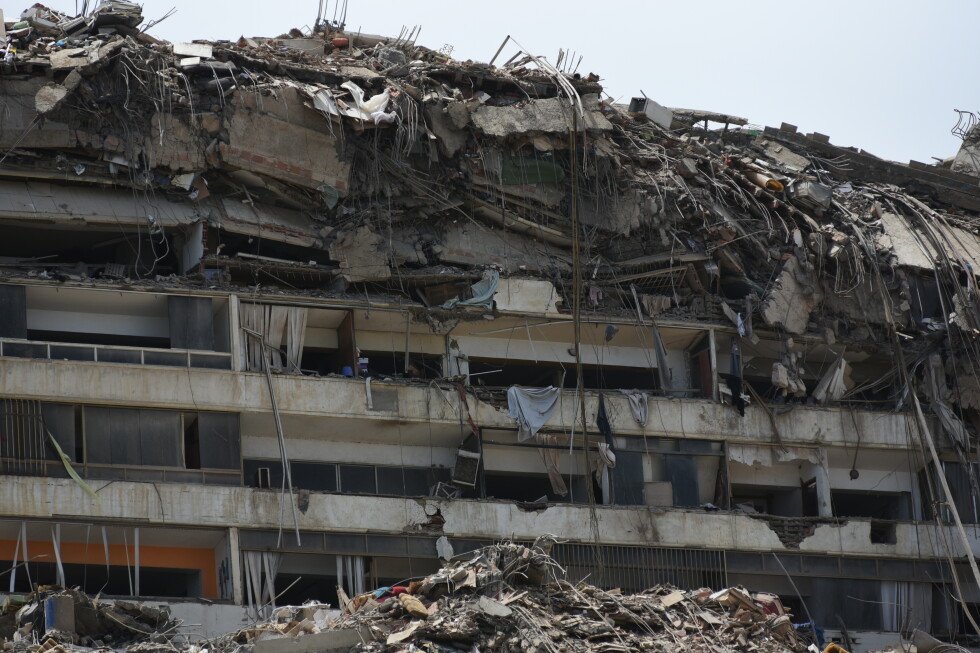
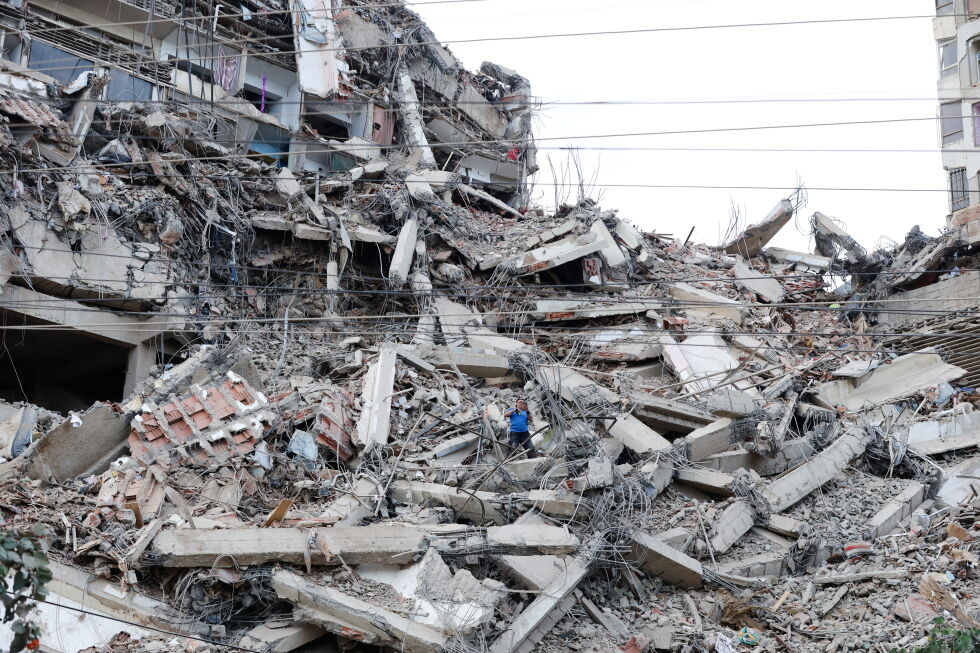
    The upcoming Tuesday meeting between Lebanese and Israeli ambassadors in Washington comes as the death toll from the expanding regional conflict continues to climb. Lebanese official data confirms that at least 2,089 people, including 166 children and 88 healthcare workers, have been killed in Israeli strikes since violence spilled over into Lebanon from the Gaza conflict on March 2. A recent nationwide wave of Israeli air strikes last Wednesday alone killed more than 350 people across the country, leaving neighborhoods like Beirut’s working-class Corniche al-Mazraa in ruins.

    Many ordinary residents recovering from the destruction share Saad’s hunger for peace. Kamal Ayad, another 49-year-old who was repairing strike damage in Corniche al-Mazraa, echoed calls for an end to decades of conflict. “We are in favor of (negotiations) if they serve Lebanon’s interest, if they will resolve matters, end the war, and let us live in peace,” Ayad said. “We want peace… and we hope Iran won’t obstruct it. We are extremely tired… We have lived through many wars and we want rest.”

    But not all Lebanese are convinced that negotiations can deliver a just and lasting peace, especially while bombardment continues. Hezbollah, the Iran-backed militant group that has been the main target of Israeli strikes, has already rejected the talks out of hand. Hezbollah deputy leader Naim Qassem has demanded the meeting be canceled and vowed to fight Israel “until our last breath.” Hundreds of Hezbollah supporters held a protest march in Beirut Saturday to voice their opposition, though the group and its political ally the Amal Movement later called off further demonstrations to preserve domestic civil peace.

    Skepticism also runs deep among some civilian residents who doubt Israel’s commitment to any negotiated agreement. Mohammad Al-Khatib, a 57-year-old electronics business owner whose shop sits near the site of the Corniche al-Mazraa airstrike, where soot still blackens building facades and the smell of smoke lingers, argues that talks held under ongoing attack are illegitimate. “You don’t hold negotiations under bombardment, shelling and humiliation. Where is the justice?” he asked. “They (the Israelis) have never stuck to peace in their lives. Their ambition is expansion and control over Lebanon… throughout its history Israel hasn’t been credible.”

    Other residents warn that the push for talks risks igniting new internal strife in a country still grappling with the legacy of the 1975-1990 Lebanese Civil War. For decades, negotiating with Israel — which is officially classified as an enemy state under Lebanese law — has been a deeply taboo topic in Lebanese politics. Joe Ghafari, a 61-year-old resident of Beirut’s Ashrafiyeh district, noted that the ultimate fate of any peace deal depends on outside powers: the United States, Israel’s main backer, and Iran, which provides funding and military support to Hezbollah. “There has to be a solution between the US and Iran, otherwise negotiations are useless,” Ghafari said. “The decision isn’t in our hands. If it were, I would support negotiations.” He added that deep divisions within Lebanon over talks with Israel mean any progress on the diplomatic front could spark domestic conflict that the small country can no longer withstand. “How can we make peace with Israel if part (of the population) doesn’t want it?” Ghafari asked. “If these negotiations advance while the other side does not want them, there will of course be internal conflict. And Lebanon cannot bear internal wars.”

    The path to talks is already complicated by competing positioning from both sides. Lebanese authorities have emphasized that Beirut’s top priority is securing an immediate bilateral ceasefire between Israel and Hezbollah before formal talks can proceed, but Israel has ruled out that outcome for the moment. Israel insists that Hezbollah must first fully disarm, and says it would rather move straight to formal peace negotiations with the Lebanese state itself. The diplomatic push comes just days after talks between the U.S. and Iran aimed at ending the broader regional war failed to produce a permanent agreement. The two sides agreed to a temporary two-week truce, which Iran and mediator Pakistan say covers cross-border fighting in Lebanon, a claim that both Israel and the U.S. have rejected.

    This week’s meeting is not the first attempt at direct dialogue between the two longtime foes. In December 2024, Lebanese and Israeli civilian representatives held the first direct talks between the two sides in decades, as part of a monitoring mechanism for a temporary ceasefire that ended an earlier round of Israel-Hezbollah fighting. The last formal negotiations between the two countries followed Israel’s 1982 invasion of Lebanon, producing an agreement to end hostilities that was later annulled by Lebanese authorities.

  • LPG shortage from Iran war fuels labour exodus from major Indian cities

    LPG shortage from Iran war fuels labour exodus from major Indian cities

    The widening geopolitical fallout from the US-Israeli war on Iran has sent shockwaves through India’s energy supply chain, triggering the most severe cooking gas shortage in 10 years and pushing hundreds of thousands of low-income internal migrant workers to abandon urban livelihoods and return to their rural hometowns. The crisis traces its roots to Iran’s recent decision to close the Strait of Hormuz, the strategic maritime chokepoint that carries roughly 20% of the world’s daily crude oil shipments. As one of the world’s largest LPG importers, India relies heavily on Middle Eastern energy exports: approximately 60% of the country’s total LPG comes from Qatar, the United Arab Emirates and Saudi Arabia, and 90% of those shipments pass through the Strait of Hormuz. This dependence has left India uniquely exposed to the disruptions sparked by ongoing regional conflict.

    For millions of Indian households, LPG – a blend of propane and butane – is the primary cooking fuel, making consistent access a non-negotiable requirement for daily life. For low-wage migrant workers, who make up the backbone of India’s urban industrial and service sectors, the supply crunch and subsequent price spike has proven catastrophic. Thirty-year-old Raj Kumar, a daily-wage laborer who spent 15 years working at a New Delhi bathware factory earning less than $7 a day, is one of hundreds of thousands of workers forced to leave the capital. For weeks, Kumar attempted to secure LPG to cook for his wife and two children, but skyrocketing prices and persistent shortages made staying impossible. The factory where he worked, one of thousands of small businesses affected by fuel shortages, shut down entirely, leaving Kumar and all 40 of his co-workers unemployed. Left with no other options, Kumar loaded his family’s belongings and traveled 650 kilometers back to his hometown in Mahua, Uttar Pradesh. “It is hard to stay here anymore. We were struggling to eat properly. Seeing my children and wife suffering for the past few days was painful,” Kumar told reporters.

    Stories like Kumar’s are not isolated. Across major Indian industrial hubs including New Delhi, Mumbai and Gujarat, thousands of small and medium enterprises – from textile and ceramic manufacturing units to food processing facilities, local eateries and street food vendors – have scaled back operations or shut down completely as fuel supplies dried up. Migrant workers, who move from rural areas to cities in search of scarce, low-paying work, have borne the brunt of the crisis, a pattern that mirrors the widespread displacement seen during India’s 2020 COVID-19 lockdown.

    Twenty-two-year-old Chandan, who works at a motorcycle spare parts factory in Bhiwandi, Rajasthan, spent all of his wedding savings trying to refill his small 5-kilogram LPG cylinder before being forced to head home to Balia village, also in Uttar Pradesh. After exhausting his savings, Chandan switched to eating at roadside eateries, but found that tripled commercial gas prices had pushed food prices up threefold as well. “Before the unforeseen gas crisis, I would buy a plate of rice for 50 rupees (around half a dollar), but all the eateries have tripled the price for the same plate, claiming an equal rise in commercial gas in the grey markets. I earn around 500 rupees a day ($6), and I cannot purchase a kilo of gas for 400 rupees ($4),” Chandan explained. With no government relief in sight, he joined the wave of reverse migration back to rural Uttar Pradesh.

    Government data and official statements have painted a conflicting picture of the crisis. India’s federal energy ministry has claimed that it maintains uninterrupted domestic LPG supplies and that no large-scale worker outmigration from major cities is occurring, despite long queues of workers seeking tickets home at railway stations across the country. However, during a March 12 parliamentary address, junior petroleum and natural gas minister Suresh Gopi admitted that India holds only five days of strategic crude oil reserves, and just 20 days of LPG reserves to cover unexpected supply disruptions.

    Compounding the crisis for migrant workers are long-standing regulatory barriers that limit their ability to purchase LPG in urban areas. Under current government rules, each household is only eligible for one subsidized LPG connection, which is almost always registered to the worker’s home village. In cities, migrants are only permitted to purchase small 5-kilogram cylinders, a process hampered by heavy bureaucratic restrictions. As a result, most migrants are forced to buy LPG on the unregulated black market, where prices are often multiple times the subsidized rate. In response to growing public pressure, the government announced on April 7 that it would ease these restrictions and double the national allocation of 5-kilogram cylinders, a move analysts say is too little too late.

    The reverse migration trend has experts warning of long-term social and economic damage that mirrors and exceeds the fallout from past crises. Sunil Kumar Aledia, executive director of the Centre for Holistic Development and a prominent social activist, argues that the Indian government has failed to take proactive steps to mitigate the crisis, leaving vulnerable migrant communities to fend for themselves. “They are facing the burden of the LPG crisis. Although it seems the impact is gradual, the government has not offered any help,” Aledia said, warning that the government’s slow response could allow the crisis to escalate into a larger humanitarian catastrophe in the coming months.

    Professor S Irudaya Rajan, chairman of the International Institute of Migration and Development in Kerala, compared the current crisis to the displacement seen during the 2020 COVID-19 pandemic and the 2008 global recession, noting that the long-term damage is likely to be far more severe this time around. Rajan added that the crisis will be compounded by an additional wave of reverse migration from Gulf nations, where thousands of Indian expat workers are employed. “Not only India, but people from several other countries in Southeast Asia earn a significant percentage of remittances from the Gulf nations that outweigh the earnings from domestic labour engagement. As the people start migrating from the war-hit countries, the impact of internal migration would be aggravated by this international reverse migration,” Rajan explained.

    Dr Adfer Shah, a New Delhi-based sociologist and South Asia analyst, described reverse migration as an existential threat to India’s most economically and socially marginalized communities. “Reverse migration places enormous pressure on village economies and rural livelihoods that are structurally not equipped to reabsorb the returning workforce. Such a shock affects their whole life, even their children’s education. It curtails all freedoms and opportunities that urban proximity offers them,” Shah said, noting that the influx of returning workers will push down rural wages, increase joblessness, and destabilize already fragile village economies.

    At major railway hubs across New Delhi, thousands of workers are scrambling to secure tickets home, often paying double or triple the official fare because of overwhelming demand. Twenty-one-year-old Sintu Kumar Bhagat, who has been out of work for more than a month, waited at New Delhi Railway Station to board a train to his home village in Purnia, Bihar, after scraping together enough money to buy overpriced tickets for himself and his brother. “I got the tickets for double the price with difficulty. Booking has to be done a day or two in advance as everyone is leaving for home,” Bhagat said.

    Twenty-seven-year-old Ashok Kumar Chaudhary, who traveled 1,000 kilometers from his Jharkhand village to work in Delhi’s iron manufacturing industry to support a family of five, echoed the despair shared by many returning workers. “I had travelled 1,000 kms from my village in Jharkhand to Delhi to support my family of five, now going back home empty-handed feels like a curse,” Chaudhary said as he waited to board his train at Anand Vihar Railway Station.

    For workers like Raj Kumar, who waited with his wife and newborn child for a train back to Uttar Pradesh, the only hope is that the crisis will end quickly, allowing them to return to the urban jobs that offer their children a better future. “At home, we have firewood to cook and feed ourselves. I will work on farms until the end of the crisis, and I hope the situation here improves soon. We don’t have any option but to return so that we earn better and make a good future for our kids,” Kumar said. With India’s domestic energy reserves stretched thin and geopolitical tensions in the Middle East showing no sign of easing, that future remains increasingly uncertain for hundreds of thousands of the country’s most vulnerable workers.

  • NATO allies bash Trump’s Hormuz blockade as oil passes $100 a bbl

    NATO allies bash Trump’s Hormuz blockade as oil passes $100 a bbl

    Following the collapse of weekend ceasefire negotiations with Iran, U.S. President Donald Trump’s announcement of a full blockade on the strategic Strait of Hormuz has sparked widespread pushback from key NATO allies, while triggering sharp volatility in global energy markets that threatens broader economic fallout. The strait, one of the world’s most critical maritime chokepoints for global energy trade, has become a central flashpoint in the escalating conflict between the U.S.-Israel coalition and Iran.

    Within hours of Trump’s claim that other nations would join the blockade effort, top officials from major NATO member states made their opposition explicit on Monday, just ahead of the proposed implementation of the measure. British Prime Minister Keir Starmer told the BBC that the United Kingdom would not lend any support to the blockade, emphasizing that London’s top priority remains securing the full, unobstructed reopening of the waterway for global shipping.

    “[The closure] is deeply damaging,” Starmer said, adding that the UK and France would host a diplomatic summit this week to develop a coordinated multinational plan to protect commercial navigation through the strait once the broader conflict cools.

    Other European and NATO-aligned nations echoed this sharp rejection. Spanish Defense Minister Margarita Robles described Trump’s order to block all vessels entering or departing Iranian ports and coastal areas in the strait as fundamentally unreasonable, framing the move as the latest escalation in a dangerous downward spiral of conflict. Spain has already consistently condemned the U.S.-Israeli declaration of war on Iran and refused to deploy any Spanish military assets to the conflict zone.

    Turkish Foreign Minister Hakan Fidan also added his voice to calls for a diplomatic resolution to reopen the strait, rejecting any unilateral military escalation that would harm global trade.

    In an apparent partial retreat from Trump’s initial aggressive announcement, U.S. Central Command clarified Monday that American forces would not block the passage of commercial vessels traveling to and from non-Iranian ports through the strait, softening the original pledge of a “complete blockade” that Trump had reiterated as recently as Monday during an interview on Fox News.

    The breakdown of the ceasefire talks followed sharp mutual recriminations between the U.S. and Iranian negotiating teams. Iranian officials have accused U.S. Vice President JD Vance of acting in bad faith during the high-stakes negotiations, while Vance has claimed Iran refused to comply with American demands related to Tehran’s nuclear development program. The collapse comes just one week after the two sides announced a temporary two-week ceasefire, a deal that had been struck hours before a sweeping Trump-imposed deadline that saw the president threaten to “obliterate Iran’s whole civilization” if no agreement was reached.

    The ceasefire had already delivered an immediate calming effect on global energy markets, pushing Brent crude prices below $100 per barrel, but Trump’s blockade announcement reversed those gains almost overnight. By Monday trading, Brent crude had jumped 7.7% to settle at $102.52 per barrel, while U.S. domestic crude rose nearly 8% to hit $104.02 per barrel. The UK’s May wholesale natural gas contract surged by an even steeper 11.7%, underscoring the broad impact of the strait closure on global energy supplies.

    Before the war began and Iran effectively closed the strait, roughly 20% of the world’s total daily oil and liquefied natural gas supplies, plus large volumes of global fertilizer shipments, passed through the narrow waterway connecting the Persian Gulf to the Arabian Sea.

    Market analysts warn that the risk of prolonged disruption to Hormuz shipping carries severe structural consequences for the global economy, already grappling with persistent inflationary pressures. “The market reaction to Trump’s threat underscores a simple but powerful reality: Hormuz risk is not theoretical; it is structural, and it is real,” explained Priyanka Sachdeva, a senior market analyst at brokerage firm Phillip Nova, in comments to The Guardian. “In today’s environment, every barrel of risk added to oil markets carries an inflation price tag for the global economy,” she added.

    Trump’s blockade order would target any vessel that has paid a transit toll to Iran since Tehran closed the strait, with the president accusing Iran of running an extortion racket on commercial shipping. But analysts note that the order would inevitably disrupt energy flows to many U.S. allies, even those that depend entirely on Hormuz shipments for their energy security.

    Writing for Responsible Statecraft over the weekend, analyst Kelley Beaucar Vlahos noted that the U.S. blockade plan would directly impact major treaty allies such as the Philippines, which gets 98% of its total energy supplies via the Strait of Hormuz. The blockade would also impact commercial vessels from other major U.S. partners including Japan, which has had LNG carriers transit the strait in recent weeks.

    Geopolitical analysts warn that the blockade marks a dangerous escalation of the conflict that erodes the norms of international maritime law. Sarang Shidore, director of the Global South program at the Quincy Institute for Responsible Statecraft, described the U.S. move as a further step toward a “might-makes-right” global order. “Illegalities are being heaped on top of illegalities. The attack on Iran that started this war was compounded by Tehran’s seizure of the Strait of Hormuz. Washington’s blockade of the strait has further upped the ante,” Shidore said.

    Iranian officials have already signaled they will take aggressive countermeasures to respond to the blockade. An advisor to Iranian Supreme Leader Ali Khamenei said Tehran retains significant unused leverage to retaliate, while Iranian Parliament Speaker Mohammad Bagher Ghalibaf warned that American consumers will soon face skyrocketing fuel prices, saying U.S. drivers will “be nostalgic for $4-$5 gas.”

    International legal experts echo the widespread concern that the blockade will kill the last remnants of the fragile ceasefire and plunge the region back into full-scale hostilities. Donald Rothwell, an international law professor at Australian National University, wrote in an analysis for The Conversation that a U.S. blockade would almost certainly end the temporary truce and resume full open hostilities. “In purely legal terms, if the US imposes a blockade then the ceasefire is over and hostilities have resumed,” Rothwell wrote.

  • US begins naval blockade of Strait of Hormuz

    US begins naval blockade of Strait of Hormuz

    On April 13, 2026, the United States launched a planned naval blockade of all maritime traffic entering and exiting Iranian ports, a dramatic escalation that came just days after high-stakes peace negotiations between Washington and Tehran in Islamabad, Pakistan, ended without any breakthrough agreement. The order to implement the blockade came directly from US President Donald Trump, who announced the move via a post on his Truth Social platform over the weekend.

    Trump’s announcement confirmed the blockade would officially enter into force at 10:00 a.m. Eastern Time on April 13, targeting all vessels bound for or departing from Iranian coastal facilities across both the Persian Gulf and Gulf of Oman. In an official statement released shortly after the president’s social media post, US Central Command (CENTCOM) confirmed it had begun executing the blockade per presidential direction. The command clarified that its operations would not interfere with commercial shipping transiting the Strait of Hormuz en route to or from non-Iranian ports, and noted that additional navigational guidance would be distributed to commercial mariners via official maritime alerts ahead of full enforcement. CENTCOM also urged all vessels operating in the Gulf of Oman and approaches to the Strait of Hormuz to monitor regular Notice to Mariners broadcasts and maintain contact with US naval forces via bridge-to-bridge radio Channel 16.

    Tehran swiftly rejected the US move as a violation of international law, with the Iranian armed forces’ unified command issuing a forceful counterstatement carried by Iranian state broadcaster IRIB and reported by Al Jazeera. The Iranian statement framed the Strait of Hormuz, one of the world’s most critical global oil chokepoints, as a waterway that must remain open to all vessels or closed to none. It specified that what it labeled “enemy-affiliated vessels” would be blocked from passage, while other ships would be permitted to transit only under Iranian regulatory oversight. The statement labeled Washington’s imposition of maritime restrictions in international waters an unlawful act that equates to state-sponsored piracy.

    Even as he announced the blockade, Trump offered conflicting framing of the current state of tensions, claiming that a two-week ceasefire between the US and Iran, set to remain in effect through April 22, “is holding well.” He added that he does “not care” whether Iran agrees to return to the negotiating table, a comment that analysts have interpreted as a contradictory negotiating tactic.

    Regional policy experts have broken down the strategic logic behind the US’ limited blockade, which explicitly exempts shipping connected to non-Iranian ports. Rasha Al Joundy, a senior researcher at the Dubai Public Policy Research Centre, noted the restricted scope of the measure reveals two core US objectives. First, the blockade is designed to exert tactical diplomatic pressure on Tehran after negotiations stalled following 21 hours of talks in Pakistan. Second, it positions US naval forces to deter potential Iranian strikes against member states of the Gulf Cooperation Council.

    Other analysts have flagged a fundamental contradiction in the US’ simultaneous announcements: confirming a full naval blockade while insisting the existing ceasefire remains intact. Abdolreza Alami, a senior lecturer in communication and media studies at Universiti Teknologi Mara in Malaysia, told China Daily that the dual messaging undermines US credibility on the global stage. Under the United Nations Convention on the Law of the Sea (UNCLOS), a naval blockade is defined as an act of military coercion that is fundamentally incompatible with an active ceasefire, Alami explained. He added that Trump’s claim he does not care if Iran returns to negotiations is a clear tell that the White House is desperate for a renewed diplomatic process, a signal Tehran has already recognized as a negotiating tactic rather than fixed policy. “Iran’s strategic patience has outlasted far greater pressures. Time, in this configuration, favors Tehran,” Alami said.

    Iranian Foreign Minister Seyed Abbas Araghchi emphasized that his country had entered negotiations with Washington in good faith, marking the highest level of diplomatic engagement between the two nations in 47 years, with the goal of ending ongoing hostilities. In a post on X, Araghchi wrote that the talks had been on the cusp of securing a preliminary memorandum of understanding in Islamabad before the US backed away with excessive demands, shifted negotiating positions, and moved forward with the blockade. “Zero lessons earned,” he wrote, adding that “goodwill begets goodwill while enmity begets enmity.”

    The Association of Southeast Asian Nations (ASEAN), which held a second special foreign ministers’ meeting on the Middle East crisis on April 10, issued an official statement on April 13 calling for de-escalation. The bloc reaffirmed its earlier welcome of the two-week US-Iran ceasefire and urged both parties to resume negotiations to reach a permanent end to hostilities that can deliver lasting stability to the region. ASEAN commended Pakistan’s mediation efforts and the work of all parties working toward a diplomatic solution. In its statement, the grouping called for the full restoration of “safe, unimpeded, and continuous transit passage” for all vessels and aircraft through the Strait of Hormuz, in line with the 1982 UNCLOS, and urged all parties to uphold the safety of seafarers and commercial shipping as required by the International Convention for the Safety of Life at Sea (SOLAS).

  • Former Brazilian intelligence chief was arrested by ICE, senator says

    Former Brazilian intelligence chief was arrested by ICE, senator says

    A high-profile development in the aftermath of Brazil’s 2023 attempted coup has crossed international borders, as former Brazilian intelligence chief and ex-lawmaker Alexandre Ramagem has been taken into custody by U.S. Immigrations and Customs Enforcement, a Brazilian senator confirmed this Monday. Ramagem was already convicted over his role in the anti-government uprising staged by supporters of former Brazilian president Jair Bolsonaro, receiving a 16-year prison sentence back in September. He fled Brazil shortly before he was scheduled to begin serving his sentence, leaving Brazilian authorities searching for him across international jurisdictions.

    Brazilian federal police confirmed earlier this Monday that a fugitive convicted by the country’s top supreme court on the same three charges tied to the coup attempt had been arrested in Orlando, Florida, though the agency stopped short of naming Ramagem publicly. ICE’s online detainee registry has since listed Ramagem as being in agency custody as of Monday, though the facility where he is being held and the specific grounds for his detention have not been disclosed to the public.

    Senator Jorge Seif, an ally of the former Bolsonaro administration, announced via his social media platforms that he has formally filed a request with the U.S. Embassy in Brasilia pushing for Ramagem to be granted political asylum in the United States. Seif argued that Ramagem is the target of political retribution, rather than being subject to legitimate criminal prosecution, and claimed that he should therefore not remain in ICE custody. Seif added that the submitted document lays out what his team frames as justifications for granting asylum to both Ramagem and his family.

    “The political persecution against President Bolsonaro, his sons and his allies is now hitting an elected lawmaker in foreign soil,” Seif said in his public statement.

    Ramagem’s conviction over the coup plot led to his removal from Brazil’s Congress in December, just three months after his September sentencing, following institutional procedures to strip convicted public officials of their elected seats. As of Monday evening, neither ICE officials nor Ramagem’s personal legal counsel have responded to requests for comment from The Associated Press on the custody situation and asylum request.

  • Australia to join 40 countries in talks to potentially deploy defensive naval coalition to Strait of Hormuz

    Australia to join 40 countries in talks to potentially deploy defensive naval coalition to Strait of Hormuz

    A multilateral diplomatic push to reopen the strategically critical Strait of Hormuz, closed following cross-border attacks against Iran, is set to move forward this week with 41 nations including Australia participating in high-stakes international negotiations hosted by the United Kingdom and France.

    The waterway, one of the world’s most vital chokepoints for global energy trade, was effectively shut down by Tehran in late February after the U.S. and Israel carried out strikes on Iranian targets. The closure has sent shockwaves through global energy markets, disrupting crude oil exports from the Middle East — the planet’s largest oil-producing region — and driving widespread supply uncertainty that impacts economies worldwide.

    French President Emmanuel Macron has framed the potential multinational response to the crisis as a strictly defensive, neutral initiative focused on reestablishing unimpeded navigation through the strait. In a social media statement released overnight, Macron emphasized that the proposed defensive naval mission would remain independent of the ongoing conflict between warring parties, with deployment possible as soon as conditions on the water allow. He described the effort as a “peaceful multinational” undertaking aligned with international rules governing free maritime passage.

    Australia’s formal participation in this week’s summit was confirmed Tuesday by Federal Defence Industry Minister Pat Conroy, who reaffirmed Canberra’s commitment to a diplomatic resolution to the standoff. Speaking to the Australian Broadcasting Corporation, Conroy noted that Australia has already been involved in ongoing diplomatic efforts to reopen the strait, and said the federal government welcomes the UK and France’s convening of the new multilateral talks.

    “Australia will most definitely participate in that summit, we are very keen to see an opening by diplomatic means, on the Strait of Hormuz,” Conroy said.

    The minister also reiterated Australia’s longstanding call for de-escalation in the region, stating that the Australian government supports extending the current two-week ceasefire and pushing for permanent peace talks between the U.S. and Iran. “We’d like to see Iran and United States return to the negotiating table, and a permanent peace achieved, with the Strait of Hormuz open, so that traffic flows through,” Conroy added. “We think the US has achieved its war aims, and we should continue to encourage a diplomatic opening of the Strait of Hormuz.”

    The latest diplomatic push comes after weekend peace talks mediated by Pakistan failed to produce a breakthrough. Overnight, former U.S. President Donald Trump confirmed that a U.S. military blockade of the waterways is now in effect, raising new concerns about further escalation of tensions in the Persian Gulf region. This is a developing story, with more details expected to emerge from this week’s multilateral talks.

  • A third of Holocaust survivors in Israel living in poverty, study finds

    A third of Holocaust survivors in Israel living in poverty, study finds

    A groundbreaking joint study conducted by two leading Israeli welfare organizations has exposed a devastating humanitarian crisis: more than one in three Holocaust survivors residing in Israel are currently living below the poverty line, with their economic insecurity and mental health trauma dramatically exacerbated by the ongoing US-Israeli military conflict against Iran.

    The findings, released publicly on Monday by the Eran Association — Israel’s largest non-profit organization dedicated to providing mental and emotional health support — and the Foundation for the Welfare of Holocaust Victims, paint a grim portrait of neglect and crisis for a population that already carries generations of trauma from the Nazi genocide. The conflict, which began on February 28 when US and Israeli forces launched a large-scale offensive against Iranian targets, has prompted a surge in urgent need among the elderly survivor community. Eran’s data confirms that the organization has received more than 11,600 calls for help from survivors since the outbreak of hostilities — a staggering increase compared to just 3,200 calls received across the entire year of 2026, before the war began.

    Physical danger has compounded the economic and emotional pressure: Eran confirms that the homes of at least 50 Holocaust survivors across Israel have sustained damage from Iranian retaliatory strikes, which targeted Israeli territory and Gulf Arab states following the initial US-Israeli attack. For survivors already in fragile health and unstable financial situations, the war has rapidly worsened living conditions over the past month. Thirty-six percent of survivors surveyed now report they depend entirely on charitable aid to afford basic food staples, while 27 percent have been forced to skip meals entirely, either due to unaffordable costs or limited mobility that prevents them from accessing grocery stores.

    Pre-existing structural vulnerabilities have been laid bare by the conflict. More than 65 percent of Israel’s estimated 70,000 Holocaust survivors live alone, struggling with chronic loneliness that has been amplified by wartime disruption to care services. Many survivors shared harrowing accounts of helplessness during air raid sirens, including one bedridden woman who was left stranded alone above ground when her caregiver fled to an underground bomb shelter without assistance for her. In another troubling incident shared with Eran, an 87-year-old survivor contacted her local municipal government for guidance on reaching a bomb shelter located hundreds of meters from her home, only to be told she “needed to run” to the shelter with no additional support offered.

    “These calls are heartbreaking. It’s very difficult,” said David Koren, chief executive officer of Eran Association, in an interview following the report’s release. Beyond immediate wartime fear, survivors contacting the hotline described reactivated trauma from their experiences during the Holocaust, alongside persistent anxiety, grief, and unmet needs related to age-related disability and chronic illness.

    This crisis is not new: it is the culmination of years of systemic neglect, pre-dating the current conflict. Back in December 2026, Israel’s public broadcaster Kan released an investigation revealing that some 5,000 Holocaust survivors were on waiting lists for public housing assistance. The investigation found that 2,500 survivors had died over the preceding five years while waiting for state-supported housing support to materialize. Most of these waiting list survivors were immigrants from the former Soviet Union, who do not qualify for state pensions in Israel.

    Speaking after the Kan investigation was published, Yasmin Sachs Friedman, chair of the Israeli parliament’s special committee on Holocaust survivor welfare, acknowledged the state’s failure to address the crisis. “The data is very, very difficult, and what are we waiting for? The average age is 87,” Friedman said. “I understand that the state has failed and will not be able to create immediate housing solutions for Holocaust survivors.” The new study from Eran and the Foundation for the Welfare of Holocaust Victims puts renewed pressure on the Israeli government to address the unmet needs of the last generation of Holocaust survivors, even as the country remains absorbed by the ongoing conflict with Iran.

  • Witnesses reunite at 55th anniversary of China-US Ping-Pong Diplomacy

    Witnesses reunite at 55th anniversary of China-US Ping-Pong Diplomacy

    Fifty-five years after a groundbreaking people-to-people exchange that altered the course of China-US relations, key witnesses from both nations gathered in Shanghai on April 13 to celebrate the anniversary of the iconic China-US Ping-Pong Diplomacy. Hosted at Shanghai University of Sport, the opening of the Shanghai leg of the anniversary event featured an official welcome ceremony followed by friendly exhibition table tennis matches, reviving the spirit of the historic 1971 exchange.

    Shanghai holds a special place in the legacy of Ping-Pong Diplomacy. When the US table tennis team made their landmark trip to China in 1971 — the first group of American athletes to visit the country in decades — Shanghai served as one of the most memorable stops on their itinerary. The team competed in friendly matches at Jiangwan Stadium, and was greeted by warm, enthusiastic crowds on the city’s streets, laying the early groundwork for the eventual normalization of relations between the two countries through people-to-people connection.

    This year’s gathering brought surviving original witnesses from both sides back to the city where they once helped make history. Among the American attendees were Judy Louise Hoarfrost, Jan Carol Berris, Connie Mae Sweeris and her husband Dell Arthur Sweeris, who joined Chinese table tennis veterans Yao Zhenxu and Xu Yinsheng, alongside a contemporary US table tennis delegation. Over the course of the event, participants shared personal anecdotes from the 1971 visit, reflecting on how the small, informal exchange of the 1970s grew into a 55-year tapestry of cultural and people-to-people ties between China and the United States.

    For Hoarfrost, who was just 15 years old and the youngest member of the 1971 American team, the 1971 trip left an unerasable mark on her life, with Shanghai holding a particularly lasting impression. Now on her 10th visit to China, she noted that the city has undergone dramatic, transformative change over the past five and a half decades — but the warm hospitality that the Chinese people showed her in 1971 remains just as heartfelt and unchanged today.