分类: world

  • Cameroon separatists to pause fighting ahead of Pope visit

    Cameroon separatists to pause fighting ahead of Pope visit

    As Pope Leo XIV continues the second day of his landmark 11-day tour across four African nations, a remarkable development has unfolded in violence-wracked Cameroon, where armed Anglophone separatist groups have agreed to a three-day ceasefire to open a “safe travel passage” ahead of the pontiff’s upcoming visit.

    The ceasefire, announced by the Unity Alliance — a coalition of major armed secessionist groups active in Cameroon’s two English-speaking regions — will come into effect ahead of Pope Leo’s arrival on Wednesday. In an official statement, the alliance framed the pause in hostilities as a recognition of the “profound spiritual importance” of the papal visit, and a commitment to protecting civilian life and facilitating smooth movement for pilgrims and attendees gathering for the papal events. The statement emphasized that the decision reflects a deliberate commitment to responsibility, restraint, and respect for human dignity, even amid years of ongoing conflict. The alliance also added that the visit should remain strictly spiritual and pastoral in nature, warning against any attempts to politicize the historic occasion.

    Cameroon’s francophone-dominated national government has not yet issued an official comment on the ceasefire announcement, though local authorities have confirmed that comprehensive security measures have already been put in place to protect the pontiff and all visitors at scheduled event locations across the country. Local preparations in Bamenda, the capital of Cameroon’s North-West region and the focal point of the separatist conflict where Pope Leo will hold a key peace gathering, are already well underway: street billboards featuring portraits of Pope Leo and Cameroonian President Paul Biya have been erected across the city, and officials have confirmed that all papal event sites will be open to visitors free of charge.

    The conflict in Cameroon’s Anglophone regions erupted nearly a decade ago, when separatist movements launched an armed campaign for secession from the country’s majority French-speaking government. The violence has claimed at least 6,000 lives and displaced hundreds of thousands of civilians from their homes. A 2019 national dialogue convened by the Cameroonian government failed to resolve the standoff, leaving the region locked in a cycle of persistent violence. Pope Leo’s planned stop in Bamenda is widely viewed as a symbolic outreach by the Catholic Church to advance peace and reconciliation in the divided region, where he is scheduled to host a special peace gathering at the city’s Saint Joseph’s Cathedral.

    Pope Leo launched his 11-day African tour on Monday, with his first stop in Algeria — marking the first ever papal visit to the North African nation, which is predominantly populated by Sunni Muslims. Algeria also holds deep personal significance for the new pontiff: it is the birthplace of St Augustine, and Pope Leo is the first pope from the religious order that follows St Augustine’s teachings. Currently based in Annaba, where St Augustine served as bishop centuries ago, the pontiff visited the archaeological site of the ancient city of Hippo Regius on Tuesday, and is scheduled to lead a public Mass at the Basilica of Saint Augustine later that same day.

    After concluding his stop in Cameroon, Pope Leo will continue his tour with visits to Angola and Equatorial Guinea, adding up to 11 stops across four African nations overall. This trip marks only his second major foreign visit since he was elected to the papacy in 2025, and it underscores the growing global importance of the Catholic Church in Africa. Latest 2024 demographic data shows that Africa is home to roughly 288 million Catholics — accounting for more than one-fifth of the global Catholic population, a share that continues to grow steadily year over year.

  • French woman, 86, held by ICE after moving to US to reunite with long-lost love

    French woman, 86, held by ICE after moving to US to reunite with long-lost love

    A decades-long romance that defied time and distance has ended in an unexpected and grim turn: an 86-year-old French woman, who moved to the U.S. last year to build a new life with her reconnected 1960s sweetheart, is now being held in an Immigration and Customs Enforcement (ICE) detention facility in Louisiana.

    The story of Marie-Thérèse, a native of Nantes, France, reads like a romantic drama that has shifted into a chilling real-life legal nightmare. Back in the 1960s, she was working as a secretary when she met Billy, an American soldier stationed at a NATO base in Saint-Nazaire. The pair forged a connection, but when Billy was ordered back to the U.S. in 1966, they lost contact completely. Both moved on with their separate lives: they married other partners, raised children, and built families in their respective countries.

    Decades later, in 2010, the former sweethearts reconnected, and began visiting one another regularly, even alongside their respective spouses at the time. By 2022, both had been widowed, and the pair rekindled their old romance. Marie-Thérèse’s son described the couple as being smitten “like teenagers,” calling Billy a “charming, adorable man” who won his mother’s heart. The pair married in 2024, and Marie-Thérèse relocated to Anniston, Alabama, to start her new life, submitting an application for a green card to secure permanent legal residency in the U.S.

    Tragedy struck just months later, in January 2025, when Billy died suddenly. What followed was a bitter dispute over his estate between Marie-Thérèse and her stepson, Billy’s son. According to Marie-Thérèse’s son, who spoke to French newspaper Ouest-France, the stepson launched a campaign of harassment against his mother: he threatened her, intimidated her, and even cut off access to basic utilities including water, electricity and internet at her home.

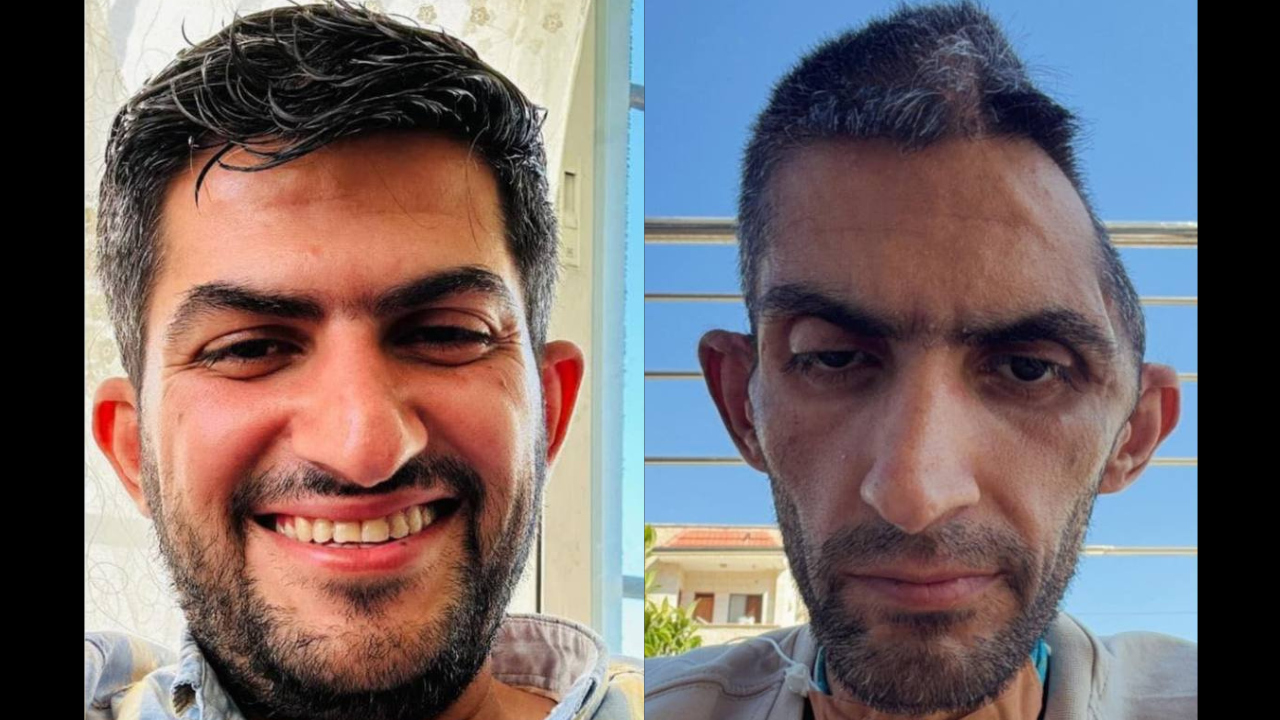
    Marie-Thérèse retained legal counsel to resolve the inheritance conflict, but she was taken into ICE custody the day before a scheduled court hearing on the matter. Neighbors of the elderly woman alerted her biological children in France after the arrest, and her son has since spoken out to raise awareness of her case.

    He described the arrest to Ouest-France, saying that agents restrained his mother by handcuffing both her hands and feet, treating her “like she was a dangerous criminal.” While there is no concrete evidence linking the stepson’s alleged harassment to the detention, the timing of the arrest has raised serious questions about the circumstances that led to ICE taking an 86-year-old woman with chronic health conditions into custody.

    Currently, the French Ministry of Foreign Affairs has intervened in the case, and consular officials have already visited Marie-Thérèse in detention. Her son says despite her advanced age and pre-existing health conditions including heart disease and chronic back pain, his mother, who he describes as a “fighter,” is holding up as well as can be expected. Still, he warns that her health cannot tolerate the conditions of detention long-term.

    “Our priority is to get her out of this detention center and repatriate her to France,” he said. “Given her health, she won’t last a month in such conditions of detention.”

    This case comes amid a major expansion of ICE’s authority and operations following the start of Donald Trump’s second presidential term. The agency has been placed at the center of the administration’s aggressive mass deportation policy, with its budget and enforcement mandate significantly expanded to carry out removals of undocumented immigrants across the country.

    For Marie-Thérèse’s family, the entire ordeal feels surreal. “This story was like a bad American film,” her son said. “Every morning I wake up and tell myself none of it is true, that it was just a nightmare.”

    As of reporting, the BBC has reached out to the U.S. Department of Homeland Security, which oversees ICE, to request comment on the case, and has not yet received a response.

  • Sixteen injured after ex-student opens fire at high school in Turkey

    Sixteen injured after ex-student opens fire at high school in Turkey

    A violent shooting incident has shaken a southeastern Turkish community, after a former high school student opened fire on campus Wednesday, leaving at least 16 people wounded before taking his own life. Local authorities confirmed the details of the attack, which unfolded on the grounds of Ahmet Koyuncu Vocational and Technical Anatolian High School in Siverek District at approximately 9:30 a.m. local time, or 6:30 a.m. GMT.

    Local governor Hasan Şıldak, the region’s top local official, told reporters that the attacker was in his late teens, who carried an illegally obtained shotgun onto the campus and began firing indiscriminately at people inside the school grounds before turning the weapon on himself. Among the 16 injured victims are 10 students, four teachers, one cafeteria employee and one responding police officer. Five of the wounded have been transferred to larger medical facilities in other regions for more advanced treatment, while the remaining injured receive care at local hospitals. Immediately after the shooting, authorities ordered a full evacuation of the entire campus, and have launched a formal criminal investigation into the circumstances of the attack.

    In a surprising statement, Şıldak noted that the 17 to 18-year-old attacker had no prior criminal record on file with Turkish law enforcement, and that the school had long been classified as a safe facility by local police. Witness testimony collected by Turkish news agency IHA has painted a chaotic picture of the attack. One unnamed witness described the gunman entering the school’s front gate without warning, pulling out a long, pump-action shotgun and immediately opening fire in all directions.

    “He immediately started shooting left and right. Then he fired towards the main school building. Then he ran inside. He started shooting at anyone who came in front of him, and then with the students’ screams, the teachers’ screams, everyone immediately scattered,” the witness recalled in their account.

    One injured student, Ömer Furkan Sayar, spoke to Turkey’s state-owned public broadcaster TRT from his hospital bed, describing how the gunman moved through at least two occupied classrooms during the rampage, including his own. “First we threw ourselves to the ground, then two of us jumped out of the window. He didn’t say anything to us, he just came in and started shooting,” Sayar said.

    As of Thursday morning, authorities have not released a possible motive for the attack, and the investigation is ongoing.

  • Youth from Vietnam explore Red ties

    Youth from Vietnam explore Red ties

    In a landmark cross-border youth exchange initiative hosted in Guangzhou, the capital of China’s southern Guangdong province, 200 young Vietnamese delegates from diverse professional backgrounds gathered in mid-April 2026 for a three-day “Red Study Tour” designed to deepen understanding of the shared revolutionary history and dynamic cultural connections between China and Vietnam.

    Organized by the Central Committee of the Communist Youth League of China, the delegation brought together young participants spanning civil servants, youth league cadres, working journalists, university students, youth advocates, and digital content creators — reflecting the broad cross-section of contemporary Vietnamese youth society.

    Over the three-day program from Saturday to Monday, delegates toured a curated lineup of historically significant, cultural, and innovation-focused sites across Guangzhou. These included the former headquarters of the Vietnamese Youth Revolutionary Comrades Association, the resting place of Vietnamese revolutionary martyr Pham Hong Thai, the Memorial Hall of the First National Congress of the Socialist Youth League of China, and the Whampoa Military Academy Memorial Hall — sites that anchor the shared revolutionary legacy of the two nations. The tour also extended to cultural landmarks such as the historic Yongqing Fang old alley district, modern infrastructure at Guangzhou Metro Group, the advanced Fushan Circular Economy Industrial Park, leading Chinese technology enterprises, and popular scenic destinations.

    Throughout their visits, participants explored the deep revolutionary camaraderie forged between early Chinese and Vietnamese pioneers who fought side-by-side for national independence and liberation. The experience allowed delegates to gain a more nuanced, personal understanding of the sacrifices that laid the foundation for modern national development in both countries, and to reaffirm the enduring value of bilateral friendship and cooperative partnership.

    To strengthen people-to-people connections, the tour included three themed symposiums and a collaborative joint painting project that brought Vietnamese delegates together with local Chinese young people, creating space for open dialogue and relationship-building beyond guided visits.

    Huynh Thi Thanh Thuy, the 2022 Miss Vietnam and 2024 Miss International titleholder, who was among the delegates, praised the rich artistic expression and inclusive cultural fusion that defines Lingnan culture, the regional culture of southern China’s Guangdong area. She proposed a new vision for youth-led cross-border cultural collaboration that leverages digital platforms.

    “I hope young people from both countries can work together to breathe new life into cultural heritage through digital platforms,” she said. “For example, we could create joint music projects that blend traditional Lingnan and Vietnamese musical instruments with modern harmony and orchestration, or integrate the iconic imagery of Vietnamese ao dai into the traditional architectural spaces of Guangzhou’s Xiguan old mansions. This is how heritage can truly come alive in the hearts of Generation Z.”

    Tran Tuan Hiep, a performer of Tuong, Vietnam’s centuries-old traditional theatrical art form, highlighted that both China and Vietnam boast deep-rooted, distinct cultural heritages — noting that Peking Opera holds a similar place as a iconic national cultural treasure in China, mirroring Tuong’s role in Vietnam.

    “Having had the opportunity to visit China in person, I am deeply impressed by your country’s outstanding efforts in preserving traditional culture,” he said. “I hope there will be more opportunities for exchanges in the future so that we can learn from each other and jointly protect and develop the traditional arts and cultures of our two countries.”

    Vietnamese children’s book author Bui Thi Thu Ha emphasized that cultural and artistic exchange acts as a durable bridge between the two peoples, helping build greater mutual understanding of shared and distinct values, traditions, and national identities.

    “Through artistic performances, exhibitions, music, food and other events, we can not only appreciate beauty but also feel the soul, history and way of thinking of each nation,” she said.

    The Guangzhou leg of the tour concluded on Monday afternoon, with the delegation set to travel to Beijing to continue their study tour and explore more of China’s cultural and historical heritage, extending what organizers frame as a growing people-to-people partnership between the next generations of the two neighboring nations.

  • Police officers among seven arrested over deadly Haiti stampede

    Police officers among seven arrested over deadly Haiti stampede

    A devastating crowd crush at one of Haiti’s most iconic cultural landmarks has left 25 people dead, triggering national mourning and a sweeping official investigation that has resulted in seven arrests, including senior local security and heritage officials, Haiti’s national police confirmed this week.

    The fatal incident unfolded Saturday during an unsanctioned gathering at the Laferrière Citadel, a UNESCO World Heritage Site perched in northern Haiti that stands as the country’s most prominent symbol of post-independence sovereignty. Initial casualty estimates put the death toll at 30, but authorities have since revised the figure downward to 25.

    Of the seven people taken into custody, five are active local police officers and two are staff members of the National Institute for the Preservation of Heritage (ISPAN), the government body tasked with managing and protecting Haiti’s major cultural and historical landmarks. All seven remain in detention as investigators piece together the sequence of events that led to the crush, police said.

    Haitian Prime Minister Alix Didier Fils-Aimé confirmed the disaster on Saturday, noting that the stampede occurred during a youth-focused gathering that drew hundreds of attendees to the mountain-top fortress. In response to the tragedy, the government has declared three days of national mourning scheduled to begin Tuesday.

    Local officials have raised serious questions about how the unapproved event went forward. Milot Mayor Wesner Joseph told local radio outlet Magik9 on Monday that his municipal administration received no prior notification of any planned activity at the citadel that day. After the incident, investigators learned the gathering had been organized by a local disc jockey who promoted the event to the public via the TikTok social media platform.

    Additional details surrounding the crush have emerged from site officials. Jean-Hérold Pérard, a civil engineer who previously led ISPAN and still works at the Citadel, told the Haitian Times that security personnel closed off one of the site’s only two public entrances so that entry fees could be collected from attendees. As a heavy rain shower moved through the area, crowds already gathered outside the single open entrance began pushing to get inside the fortress for shelter.

    Pérard also alleged that unknown individuals fired gunshots into the air and deployed tear gas into the crowd, exacerbating the panic. “People were pushing each other in a frantic bid to escape, and many victims died from asphyxiation, especially after the tear gas was released,” he explained.

    The Laferrière Citadel, sometimes called Citadelle Henry, holds enormous historical significance for Haiti. Constructed in the years immediately after Haiti won its independence from France in 1804, the massive mountain fortress was built under the direction of revolutionary leader Henri Christophe. It took more than 10 years to complete, and was designed as a defensive stronghold to protect the newly independent nation from foreign invasion. Today, it remains one of Haiti’s top tourist attractions and a core part of the country’s national identity.

    This deadly disaster unfolds against a backdrop of profound instability in Haiti, where rampant gang-related violence has already plunged the country into a humanitarian crisis that has killed thousands of people and displaced hundreds of thousands more since the start of 2024.

  • Fresh from conflict, Pakistan plays ‘peacemaker’ in US-Iran talks

    Fresh from conflict, Pakistan plays ‘peacemaker’ in US-Iran talks

    As the United States and Iran edged toward full-scale conflict last week, with a hard deadline set by former US President Donald Trump looming over the region, an unexpected actor stepped forward to de-escalate tensions: Pakistan. In a matter of hours, Pakistani Prime Minister Shehbaz Sharif secured a critical two-week ceasefire between the two adversarial powers, setting the stage for the first round of direct talks hosted in Islamabad. Now, following the conclusion of the initial negotiations, Pakistan is embracing its newfound identity as a reliable regional peace broker, even as work continues to arrange a second round of talks.

    This diplomatic breakthrough marks a striking shift in global perceptions of Pakistan. For decades, the South Asian nation has been framed largely through the lens of regional security instability – grappling with domestic armed extremism and separatist movements, while facing longstanding international accusations of backing the Taliban in Afghanistan. Just last year, Pakistan itself was engaged in brief but intense armed conflicts: a high-stakes border clash with India in May, and two separate rounds of hostilities with neighboring Afghanistan, where Islamabad accuses the Taliban-led government of sheltering anti-Pakistan militant groups.

    Analysts argue that Pakistan’s firm military responses to those 2024 conflicts laid critical groundwork for its current diplomatic success. “In international politics, the currency is power. When you have demonstrated it operationally, and now you are just building it up diplomatically,” explained Raja Qaiser Ahmed, an international relations professor at Islamabad’s Quaid-i-Azam University. Michael Kugelman, senior South Asia fellow at the Atlantic Council, echoed that assessment, noting Pakistan is keen to build on the momentum of its new role as a critical mediator.

    Kugelman also highlighted Pakistan’s trailblazing strategic autonomy, calling it an “unsung success story” in this regard. For Pakistani leadership, the diplomatic push is as much about rebranding the nation’s global image as it is about securing regional peace. “Pakistan is looking to change global perceptions about its capacities as a global player,” Kugelman told AFP. “It does not like the fact that it has a poor global image and wants to essentially push back against its critics and show that it has the capacity to affect change and be influential on the global stage.”

    Pakistan’s unique geopolitical position makes it an ideal neutral broker for the US-Iran conflict. From the outbreak of hostilities between Washington and Tehran, Islamabad intentionally avoided aligning with either side, a calculated choice that preserved its ability to mediate. Ties between Pakistan and the US have warmed considerably during the Trump administration, after Islamabad credited Trump with helping mediate an end to its 2024 border conflict with India – a claim New Delhi has repeatedly denied. A high-profile visit to Washington by Sharif and Pakistan’s powerful army chief Asim Munir followed the ceasefire, with Trump now openly referring to Munir as his “favourite field marshal.”

    At the same time, Pakistan maintains deep, longstanding ties with Iran: it shares a 900-kilometer porous border with the country, and the two nations share extensive cultural and trade links, despite occasional diplomatic frictions. Pakistan also enjoys close diplomatic and economic ties with China, a key ally of Iran that both diplomats and Trump have credited with helping persuade Tehran to join negotiations. Additionally, Islamabad holds strong partnerships with Gulf nations including Saudi Arabia – with whom it has a mutual defense pact – many of which have been drawn into the conflict by Iranian retaliatory strikes.

    After 21 hours of marathon negotiations in Islamabad, US Vice President JD Vance took the podium Sunday to announce no final deal had been reached. Even so, he was quick to praise Pakistan’s hosting and mediation efforts, thanking Sharif and Munir by name: “They did an amazing job and really tried to help us and the Iranians bridge the gap and get to a deal.” Iran’s top negotiator Mohammad Bagher Ghalibaf offered similar gratitude to Pakistani officials. Asif Durrani, former Pakistani ambassador to Tehran, noted that the first round of talks had already cemented Pakistan’s status as a consequential regional power, regardless of the final outcome. “I think Pakistan is a power to be reckoned, and very much Pakistan is a player,” Durrani said. “Its geography is so unique that it cannot be ignored.”

    As of Monday, Sharif confirmed that diplomatic efforts are ongoing to organize a second round of negotiations. Vance, however, has struck a harder line, telling Fox News that while further talks are not off the table, Washington retains “no flexibility” on its demands regarding Iran’s nuclear program. Even if negotiations collapse and hostilities resume, analysts say Pakistan will still walk away with tangible diplomatic gains. Kugelman argues that Pakistan faces no reputational risk from a failed deal, and has already secured a significant boost to its global standing. “If anything, it’s enjoyed reputational boost because it’s been able to push back against criticism that it doesn’t have the capacity to pull off this type of diplomacy,” he said. “It’s also strengthened its image. It’s been able to project itself as a peacemaker.”

  • Afghan migrants in Poland fear forced deportations as asylum applications remain suspended

    Afghan migrants in Poland fear forced deportations as asylum applications remain suspended

    On the eastern edge of the European Union and NATO, a growing humanitarian controversy is unfolding in Poland, where sweeping temporary restrictions on asylum access have left hundreds of Afghan migrants facing deportation to a Taliban-led regime that rights groups and survivors say threatens their lives. The policy, first rolled out in March 2025 as a 60-day emergency measure targeting irregular border crossings from Belarus, has been repeatedly extended by Polish authorities, creating a de facto suspension of asylum rights that has now stretched well over a year. Human rights organizations say officials are stretching the scope of the original law far beyond its stated parameters, applying it to any migrant who first entered Poland across the Belarus border regardless of where they are apprehended within the country.

  • Efforts underway for second round of US-Iran talks as ships reported transiting Strait of Hormuz

    Efforts underway for second round of US-Iran talks as ships reported transiting Strait of Hormuz

    Escalating tensions between the United States and Iran reached a new critical juncture this Tuesday, after Washington announced a full blockade of Iranian ports, Tehran issued sharp threats of retaliation across the Middle East, and Pakistan has ramped up urgent diplomatic outreach to bring the two warring parties back to the negotiating table.

    While a fragile ceasefire reached last week has so far held across most frontlines, the escalating standoff centered on the strategic Strait of Hormuz has stoked widespread fears that open hostilities could reignite, worsening the already devastating economic shockwaves the seven-week conflict has sent across the global economy.

    The conflict, which erupted on February 28 when the U.S. and Israel launched coordinated strikes against Iranian targets, saw an initial round of peace talks held last weekend fail to reach a breakthrough agreement. Pakistan, which led the first mediation effort, has tabled a proposal to host a second round of negotiations in the coming days. Two Pakistani officials, speaking on condition of anonymity due to restrictions on speaking to media about the sensitive diplomatic process, confirmed the first round of talks was never intended as a one-off attempt, but rather the opening step of a sustained diplomatic push.

    U.S. officials confirmed Monday that internal discussions over scheduling a new negotiating round are still ongoing, and a diplomat from a third-party mediating country confirmed that both Tehran and Washington have formally agreed to participate in the next talks. According to two U.S. officials, the most likely target date for the new negotiations is Thursday, though final details on venue, timing, and delegation composition have not been locked in. Both Islamabad and Geneva are currently under consideration as potential host cities. All parties involved have requested anonymity due to the sensitive nature of ongoing private negotiations.

    Over its seven weeks, the conflict has already caused massive disruption to global markets and sent shockwaves through the world economy, as key shipping lanes have been cut off and widespread airstrikes have destroyed critical military and civilian infrastructure across the region. The human cost of the fighting has been staggering: at least 3,000 people have been killed in Iran, more than 2,000 in Lebanon, 23 in Israel, over a dozen in Gulf Arab states, and 13 U.S. service members have also lost their lives.

    The newly imposed U.S. port blockade is designed to cut off a key source of revenue for Iran, which has exported millions of barrels of oil largely to Asian markets since the conflict began. Most of these exports have moved via so-called “dark transit” operations that evade international sanctions and oversight, generating critical cash flow that keeps the Iranian government functioning.

    On Tuesday, the first full day of the blockade, key details remained unclear about how the measure will be enforced and how commercial shipping operators will comply. Tankers approaching the strait on Monday turned around shortly after the blockade took effect, though one vessel reversed course again and successfully transited the waterway early Tuesday. That tanker, the Rich Starry, had been waiting off the coast of the United Arab Emirates, according to shipping data from Lloyd’s List, which drew on tracking information from energy cargo monitoring firm Vortexa. While it was not immediately confirmed if the vessel had previously docked at an Iranian port, the U.S. Treasury’s Office of Foreign Assets Control already lists the Rich Starry as linked to Iranian shipping interests. Lloyd’s List data, pulled from ship registry and tracking records, shows the tanker is owned by a Chinese shipping firm and is ultimately bound for a Chinese port. U.S. Central Command, which oversees American military operations in the region, has not yet responded to requests for comment on the Rich Starry’s passage. A day before the transit, Central Command confirmed the blockade applies to all vessels traveling to and from Iranian ports.

    Even before the formal U.S. blockade, the conflict had severely curbed maritime traffic through the Strait of Hormuz, with most commercial ships choosing to avoid the waterway entirely. Iran’s de facto closure of the strait, which normally carries one-fifth of all globally traded oil during peacetime, has already caused global crude oil prices to skyrocket, driving up the cost of gasoline, food, and other essential commodities far beyond the Middle East.

    U.S. President Donald Trump framed Iran’s control over the strait as “blackmail and extortion” in comments Monday, as the U.S. blockade went into effect. In a social media post, Trump claimed Iran’s navy had been “completely obliterated” while acknowledging the country still retains fast attack craft. He issued a stark warning: “if any of these ships come anywhere close to our BLOCKADE, they will be immediately ELIMINATED.”

    Iran quickly responded with threats of retaliation against ports across the Persian Gulf if the country comes under further attack. “If you fight, we will fight,” Iran’s parliamentary speaker Mohammad Bagher Qalibaf said in a direct statement addressing Trump.

    In a separate diplomatic development, France and the United Kingdom announced Tuesday that French President Emmanuel Macron and British Prime Minister Keir Starmer will co-host a conference this Friday for nations willing to deploy warships to escort commercial oil tankers and container ships through the Strait of Hormuz. A spokesperson for Macron said the escort deployment will move forward “when security conditions allow.”

    Parallel to the U.S.-Iran negotiations, long-awaited direct talks between Israel and Lebanon are set to get underway Tuesday in Washington, marking the first formal direct negotiations between the two countries in decades.

    Israel has continued its air and ground offensive in Lebanon even after last week’s ceasefire deal with Iran, with Israeli officials emphasizing the truce does not apply to operations against Lebanese militant group Hezbollah. Israel has however halted airstrikes on central Beirut since April 8, after a deadly bombardment hit multiple crowded commercial and residential areas in the capital. That attack sparked international condemnation and a threat from Iran that it would exit the ceasefire agreement if strikes on Beirut resumed.

    Hezbollah launched daily rocket attacks into northern Israel starting more than a year ago, and Israel dramatically escalated its ground and air offensive in southern Lebanon in the opening days of the broader U.S.-Iran war. According to Lebanese government data, the fighting has left a trail of destruction from border agricultural towns all the way to Beirut, killing more than 2,000 people and displacing over 1 million others.

    Tuesday’s opening talks are expected to be preliminary, focused on setting negotiating parameters rather than resolving long-standing core disputes. Lebanese officials have made a full ceasefire their top priority, while Israel has framed the negotiations around demands for Hezbollah’s full disarmament and a potential long-term peace deal, without publicly committing to a permanent halt to hostilities or a full withdrawal of Israeli forces from Lebanese territory.

    Israel is demanding that the Lebanese government take formal responsibility for disarming Hezbollah, a framework originally outlined in a 2024 November ceasefire agreement. But the militant group, which has survived decades of international and regional efforts to curb its power, issued a statement Monday confirming it will not be bound by any agreements that emerge from the Washington talks.

  • Pope to walk in Augustine’s footsteps on day two of Algeria visit

    Pope to walk in Augustine’s footsteps on day two of Algeria visit

    On the second day of his groundbreaking first-ever papal visit to Algeria, Pope Leo XIV is set to travel to the northeastern coastal city of Annaba on Tuesday to walk in the footsteps of one of Christianity’s most influential theologians, Saint Augustine. This trip marks the opening stop of a four-nation African tour that already made history on Monday, when the American-born pontiff became the first pope to set foot on Algerian soil — but the opening day of his journey was largely overshadowed by sharp public criticism from United States President Donald Trump.

    Annaba, which was known as the ancient Roman city of Hippo in centuries past, was Saint Augustine’s long-time home. The theologian’s autobiographical work *Confessions* remains a foundational text across Christian denominations worldwide, holding deep spiritual and cultural significance for believers across the globe. As a member of the Augustinian religious order, Pope Leo has previously described himself as a “son” of Saint Augustine, adding personal weight to this stop on his itinerary.

    During his day in Annaba, the pontiff will first tour the archaeological vestiges of the city’s ancient Roman and early Christian past, before stopping at a reception center operated by Catholic nuns that provides support and care for low-income elderly residents of the city. In the afternoon, he is scheduled to lead an open-air Mass at the hilltop Basilica of Saint Augustine, with clergy from across the African continent in attendance.

    On Monday, during his first public remarks in the Algerian capital of Algiers following his arrival, Pope Leo honored the memory of those killed during Algeria’s 1954–1962 war of independence from French colonial rule, and issued a powerful call for cross-community forgiveness. His comments come at a moment of sharply elevated diplomatic tensions between Algiers and Paris, and were delivered just days after he held a private meeting with French President Emmanuel Macron at the Vatican.

    Beyond addressing historical tensions, the pope also used his address to urge Algeria’s ruling leadership to embrace greater public participation in national political life, calling for the growth of a “vibrant, dynamic and free civil society.” His appeal follows years of restricted civic space after the 2019 pro-democracy Hirak protest movement, which demanded sweeping governmental reform and greater institutional transparency. International human rights organizations have documented consistent rolling back of civil freedoms and increased state control over public assembly and expression in the years since the protests began. “Authorities are called not to dominate, but to serve the people and foster their development,” the pontiff told the crowd gathered at Algiers’ Basilica of Our Lady of Africa.

    The most high-profile drama of the trip’s opening day came not from Algerian politics, however, but from across the Atlantic, where Trump launched repeated public attacks on the pope over his recent calls for peace in the Middle East. Pope Leo’s calls for de-escalation in the ongoing U.S.-Israeli war against Iran have drawn fierce pushback from the American president, who lashed out at the pontiff before the trip even began. In pre-trip comments, Trump accused the pope of “toying with a country (Iran) that wants a nuclear weapon,” and added that he was “not a big fan” of the current pontiff.

    When faced with public outcry over his remarks after the pope arrived in Algeria on Monday, Trump doubled down on his criticism, saying he had “nothing to apologise for” and insisted that the pope was “wrong” to speak out on the conflict. Aboard the papal plane en route to Algiers, the pope pushed back against the attacks with calm resolve, telling reporters that the Gospel itself mandates advocacy for peace. “The Gospel says… blessed are the peacemakers,” he said, adding: “I have no fear, neither of the Trump administration, nor speaking out loudly about the message of the Gospel.”

    After wrapping up his two-day visit to Algeria on Wednesday, Pope Leo will travel onward to Cameroon, the second stop on his four-nation African tour. He will then continue to Angola and Equatorial Guinea for official visits before concluding the trip.

  • Afghanistan’s capital is in the grip of a water crisis

    Afghanistan’s capital is in the grip of a water crisis

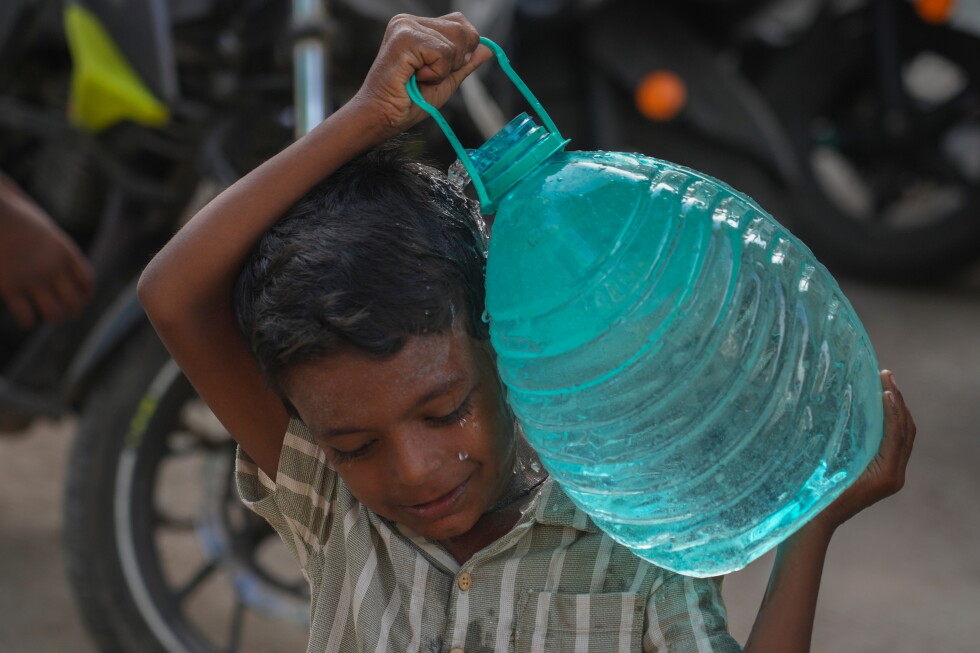
    On a muddy, sloped lane in one of Kabul’s poorest neighborhoods, 52-year-old Marofa stands visibly frustrated, pulling back her headscarf to show her thick graying hair. Like thousands of other residents in the Afghan capital, she is forced to haul heavy water containers long distances every day just to access drinkable water for her household.

    “My back has no strength left, my legs can barely carry me,” she says. “Even with my white hair, I still have to do this work.”

    Down the hill, a local mosque operates a free well, but its water is too yellow and brackish to drink, meaning residents still have to haul it for other uses. Potable water is only available via small three-wheeled water trucks that sell it at a price out of reach for many low-income families. “We can barely afford bread to eat,” said 90-year-old Wali Mohammad, another angry Deh Mazang neighborhood resident. “How are we supposed to pay for water?”

    Both long-term residents say that just months after the Taliban retook control of Afghanistan in 2021, Taliban authorities cut illegal pipes that some households had laid to siphon water from a shared communal well directly to their homes. Mohammad says officials gave no explanation for the cut-off: “They hold all the power, and they did not even tell us why they cut our water.” But 32-year-old local resident Najibullah Rahimi says the unregulated piping drained the well’s water level so drastically that households further up the hill were left completely dry, forcing the government to intervene.

    This tense neighborhood conflict is just one visible symptom of a far deeper, rapidly accelerating crisis unfolding across Kabul: the capital is running out of groundwater at an alarming rate, threatening an unprecedented humanitarian disaster in the coming years, aid experts warn.

    Nestled in a high-altitude valley of the Hindu Kush mountains, Kabul’s population of 6 million relies almost entirely on groundwater pumped from underground aquifers for daily use. A 2025 report from international aid organization Mercy Corps found that aquifer levels across the city have plummeted by 25 to 30 meters (80 to 100 feet) over the past decade. Today, some new wells must be drilled as deep as 150 meters (nearly 500 feet) just to reach usable water.

    Aquifers are underground storage zones that collect water slowly over decades, as rain and melted snow seep through natural soil to replenish supplies. Depletion occurs when water is pumped out faster than it can be refilled, a process driven by two major forces: climate change and unregulated population growth.

    Climate change, fueled by global fossil fuel emissions, has brought repeated multi-year droughts to Afghanistan, cutting the snowpack that normally melts gradually through spring and summer to replenish Kabul’s aquifers. Instead, the region now sees more frequent sudden, intense downpours that cause destructive flash flooding rather than slow recharge of groundwater. A recent 10-day period of heavy rain and landslides already killed 77 people across the country, underscoring the new climate reality facing the nation.

    But water expert Najibullah Sadid, a Germany-based member of the Afghanistan Water and Environment Professionals Network, says the crisis would have arrived even without climate change. Kabul’s population has exploded more than twofold over the past 20 years: from 2.5 million in 2001, when the Taliban first fell from power and many Afghan refugees returned from neighboring countries, to an estimated 6 million today. A second wave of refugee returns began in 2023, when Pakistan and Iran launched large-scale expulsions of undocumented Afghans, putting even more strain on the capital’s infrastructure.

    Rapid unplanned urbanization has compounded the problem: most new development has covered open natural ground with concrete and asphalt, eliminating the porous soil needed to absorb rainwater into aquifers. “Even if it rained every single day, it would not raise groundwater levels anymore,” Sadid explained. “There is simply no unpaved ground left for water to seep through.” Longstanding mismanagement has made the crisis worse, he added, pointing to unregulated groundwater extraction by large commercial beverage companies and commercial greenhouses that draw down massive amounts of water for profit.

    Taliban authorities acknowledge the gravity of the situation. “The water situation in Kabul city is in a critical state,” said Qari Matiullah Abid, spokesman for the Afghan Ministry of Water and Energy. “The main causes are a dramatic population increase, reduced rainfall, and sharply higher consumption across the city.”

    Abid says the Taliban administration has already implemented a series of corrective measures: it has restricted commercial groundwater extraction by beverage producers, large-scale farmers and other businesses, installed water meters and imposed usage quotas on high-consumption operations like car washes and large commercial buildings, with eviction from the city as a penalty for exceeding limits. To boost groundwater recharge, the government has built small check dams across seasonal waterways in all 14 of Kabul’s districts, and dug thousands of absorption wells to capture stormwater for recharge. It also completed the Shah wa Arous Dam, inaugurated in 2024 with a 10 million cubic meter storage capacity, and removed millions of tons of sediment from the existing Qargha Dam to expand its usable storage.

    Even with these steps, experts say the measures are not enough to reverse the depletion trend. Two large-scale infrastructure projects that could deliver a long-term sustainable solution for roughly 4 million Kabul residents have been bogged down by delays and funding gaps.

    The first is a 200-kilometer pipeline that would carry fresh water from the Panjshir River north of Kabul to the capital, and the second is the planned Shah Toot Dam, a reservoir project located 30 kilometers southwest of the city. Together, the two projects would deliver a sustainable long-term water supply for the capital, Sadid says. While the dam would require six to seven years of construction, the pipeline could be completed relatively quickly if funding and approvals move forward.

    Shafiullah Zahid, Kabul Zone Director for Afghanistan’s state-run Urban Water Supply and Sewage Corporation, says the Panjshir pipeline’s $130 million budget has been approved, but the original survey completed under the former Afghan government has required full revision, and an additional review is still pending. Once the review is complete, construction can begin, he said. The Shah Toot Dam, first planned as a joint Afghan-Indian project months before the 2021 Taliban takeover, has also been held up by funding delays, and would take six to seven years to complete if construction launches.

    Sadid says the persistent delays stem from a long-running pattern, across both the current and former Afghan governments, of prioritizing flashy, visible infrastructure over life-sustaining water projects. “They spend billions on new roads and flyovers that catch the public eye,” he said. “But water projects that are fundamental to public health and people’s basic human rights get no priority. Water is essential to life — it is more important than any road.”