分类: world

  • Australia to join 40 countries in talks to potentially deploy defensive naval coalition to Strait of Hormuz

    Australia to join 40 countries in talks to potentially deploy defensive naval coalition to Strait of Hormuz

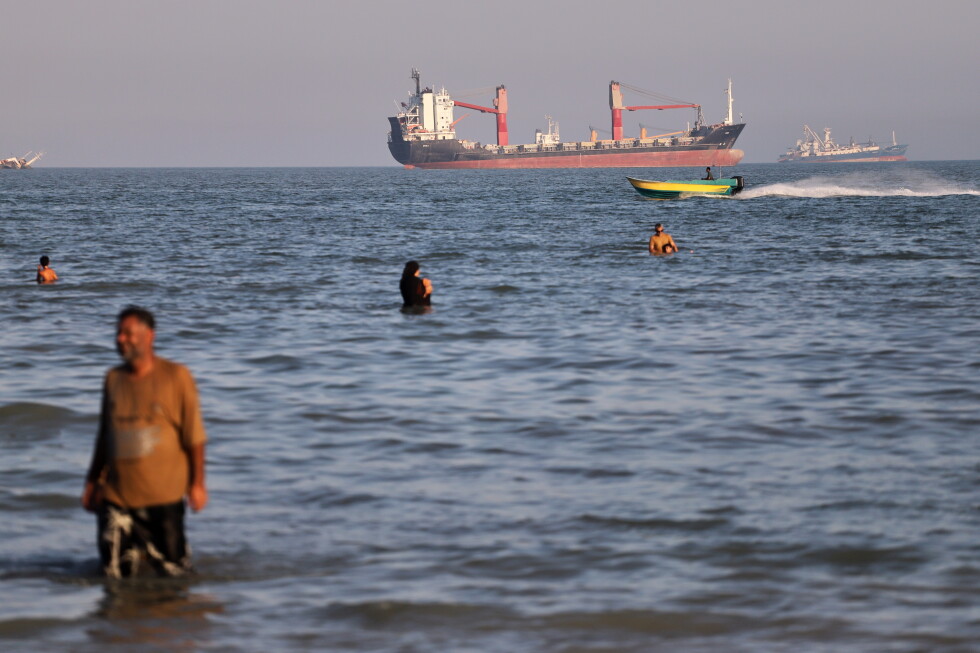
    A multilateral diplomatic push to reopen the strategically critical Strait of Hormuz, closed following cross-border attacks against Iran, is set to move forward this week with 41 nations including Australia participating in high-stakes international negotiations hosted by the United Kingdom and France.

    The waterway, one of the world’s most vital chokepoints for global energy trade, was effectively shut down by Tehran in late February after the U.S. and Israel carried out strikes on Iranian targets. The closure has sent shockwaves through global energy markets, disrupting crude oil exports from the Middle East — the planet’s largest oil-producing region — and driving widespread supply uncertainty that impacts economies worldwide.

    French President Emmanuel Macron has framed the potential multinational response to the crisis as a strictly defensive, neutral initiative focused on reestablishing unimpeded navigation through the strait. In a social media statement released overnight, Macron emphasized that the proposed defensive naval mission would remain independent of the ongoing conflict between warring parties, with deployment possible as soon as conditions on the water allow. He described the effort as a “peaceful multinational” undertaking aligned with international rules governing free maritime passage.

    Australia’s formal participation in this week’s summit was confirmed Tuesday by Federal Defence Industry Minister Pat Conroy, who reaffirmed Canberra’s commitment to a diplomatic resolution to the standoff. Speaking to the Australian Broadcasting Corporation, Conroy noted that Australia has already been involved in ongoing diplomatic efforts to reopen the strait, and said the federal government welcomes the UK and France’s convening of the new multilateral talks.

    “Australia will most definitely participate in that summit, we are very keen to see an opening by diplomatic means, on the Strait of Hormuz,” Conroy said.

    The minister also reiterated Australia’s longstanding call for de-escalation in the region, stating that the Australian government supports extending the current two-week ceasefire and pushing for permanent peace talks between the U.S. and Iran. “We’d like to see Iran and United States return to the negotiating table, and a permanent peace achieved, with the Strait of Hormuz open, so that traffic flows through,” Conroy added. “We think the US has achieved its war aims, and we should continue to encourage a diplomatic opening of the Strait of Hormuz.”

    The latest diplomatic push comes after weekend peace talks mediated by Pakistan failed to produce a breakthrough. Overnight, former U.S. President Donald Trump confirmed that a U.S. military blockade of the waterways is now in effect, raising new concerns about further escalation of tensions in the Persian Gulf region. This is a developing story, with more details expected to emerge from this week’s multilateral talks.

  • A third of Holocaust survivors in Israel living in poverty, study finds

    A third of Holocaust survivors in Israel living in poverty, study finds

    A groundbreaking joint study conducted by two leading Israeli welfare organizations has exposed a devastating humanitarian crisis: more than one in three Holocaust survivors residing in Israel are currently living below the poverty line, with their economic insecurity and mental health trauma dramatically exacerbated by the ongoing US-Israeli military conflict against Iran.

    The findings, released publicly on Monday by the Eran Association — Israel’s largest non-profit organization dedicated to providing mental and emotional health support — and the Foundation for the Welfare of Holocaust Victims, paint a grim portrait of neglect and crisis for a population that already carries generations of trauma from the Nazi genocide. The conflict, which began on February 28 when US and Israeli forces launched a large-scale offensive against Iranian targets, has prompted a surge in urgent need among the elderly survivor community. Eran’s data confirms that the organization has received more than 11,600 calls for help from survivors since the outbreak of hostilities — a staggering increase compared to just 3,200 calls received across the entire year of 2026, before the war began.

    Physical danger has compounded the economic and emotional pressure: Eran confirms that the homes of at least 50 Holocaust survivors across Israel have sustained damage from Iranian retaliatory strikes, which targeted Israeli territory and Gulf Arab states following the initial US-Israeli attack. For survivors already in fragile health and unstable financial situations, the war has rapidly worsened living conditions over the past month. Thirty-six percent of survivors surveyed now report they depend entirely on charitable aid to afford basic food staples, while 27 percent have been forced to skip meals entirely, either due to unaffordable costs or limited mobility that prevents them from accessing grocery stores.

    Pre-existing structural vulnerabilities have been laid bare by the conflict. More than 65 percent of Israel’s estimated 70,000 Holocaust survivors live alone, struggling with chronic loneliness that has been amplified by wartime disruption to care services. Many survivors shared harrowing accounts of helplessness during air raid sirens, including one bedridden woman who was left stranded alone above ground when her caregiver fled to an underground bomb shelter without assistance for her. In another troubling incident shared with Eran, an 87-year-old survivor contacted her local municipal government for guidance on reaching a bomb shelter located hundreds of meters from her home, only to be told she “needed to run” to the shelter with no additional support offered.

    “These calls are heartbreaking. It’s very difficult,” said David Koren, chief executive officer of Eran Association, in an interview following the report’s release. Beyond immediate wartime fear, survivors contacting the hotline described reactivated trauma from their experiences during the Holocaust, alongside persistent anxiety, grief, and unmet needs related to age-related disability and chronic illness.

    This crisis is not new: it is the culmination of years of systemic neglect, pre-dating the current conflict. Back in December 2026, Israel’s public broadcaster Kan released an investigation revealing that some 5,000 Holocaust survivors were on waiting lists for public housing assistance. The investigation found that 2,500 survivors had died over the preceding five years while waiting for state-supported housing support to materialize. Most of these waiting list survivors were immigrants from the former Soviet Union, who do not qualify for state pensions in Israel.

    Speaking after the Kan investigation was published, Yasmin Sachs Friedman, chair of the Israeli parliament’s special committee on Holocaust survivor welfare, acknowledged the state’s failure to address the crisis. “The data is very, very difficult, and what are we waiting for? The average age is 87,” Friedman said. “I understand that the state has failed and will not be able to create immediate housing solutions for Holocaust survivors.” The new study from Eran and the Foundation for the Welfare of Holocaust Victims puts renewed pressure on the Israeli government to address the unmet needs of the last generation of Holocaust survivors, even as the country remains absorbed by the ongoing conflict with Iran.

  • Witnesses reunite at 55th anniversary of China-US Ping-Pong Diplomacy

    Witnesses reunite at 55th anniversary of China-US Ping-Pong Diplomacy

    Fifty-five years after a groundbreaking people-to-people exchange that altered the course of China-US relations, key witnesses from both nations gathered in Shanghai on April 13 to celebrate the anniversary of the iconic China-US Ping-Pong Diplomacy. Hosted at Shanghai University of Sport, the opening of the Shanghai leg of the anniversary event featured an official welcome ceremony followed by friendly exhibition table tennis matches, reviving the spirit of the historic 1971 exchange.

    Shanghai holds a special place in the legacy of Ping-Pong Diplomacy. When the US table tennis team made their landmark trip to China in 1971 — the first group of American athletes to visit the country in decades — Shanghai served as one of the most memorable stops on their itinerary. The team competed in friendly matches at Jiangwan Stadium, and was greeted by warm, enthusiastic crowds on the city’s streets, laying the early groundwork for the eventual normalization of relations between the two countries through people-to-people connection.

    This year’s gathering brought surviving original witnesses from both sides back to the city where they once helped make history. Among the American attendees were Judy Louise Hoarfrost, Jan Carol Berris, Connie Mae Sweeris and her husband Dell Arthur Sweeris, who joined Chinese table tennis veterans Yao Zhenxu and Xu Yinsheng, alongside a contemporary US table tennis delegation. Over the course of the event, participants shared personal anecdotes from the 1971 visit, reflecting on how the small, informal exchange of the 1970s grew into a 55-year tapestry of cultural and people-to-people ties between China and the United States.

    For Hoarfrost, who was just 15 years old and the youngest member of the 1971 American team, the 1971 trip left an unerasable mark on her life, with Shanghai holding a particularly lasting impression. Now on her 10th visit to China, she noted that the city has undergone dramatic, transformative change over the past five and a half decades — but the warm hospitality that the Chinese people showed her in 1971 remains just as heartfelt and unchanged today.

  • Gaza ‘heading towards famine’ as bread shortages deepen amid Israeli curbs

    Gaza ‘heading towards famine’ as bread shortages deepen amid Israeli curbs

    Six months after a ceasefire agreement that promised large-scale humanitarian access to the war-ravaged Gaza Strip, the enclave’s 2.2 million residents are once again grappling with crippling shortages of bread, food, fuel and other basic necessities, driven by Israel’s decision to tighten restrictions on aid and goods entry.

    In recent days, Palestinians across the blockaded territory have endured hours-long queues at the handful of still-operating bakeries just to purchase subsidized bread bundles, priced at three Israeli shekels (approximately $1) per pack. Free bread distributed by international aid organizations remains extremely limited, leaving many households unable to access even this critical staple. Market shelves are increasingly bare: prices for fresh vegetables have skyrocketed, while eggs, poultry and red meat have all but disappeared from local vendors’ stalls.

    Sabreen Abu Ouda, a 45-year-old Gaza City resident supporting a family of 11, told Middle East Eye that her household only receives one bundle of 10 loaves of bread twice a week. “When we get that bag of bread, it’s barely one loaf per person. That’s nowhere near enough, and we go entire days without any bread at all,” she explained. Abu Ouda added that her family has not been able to afford to purchase vegetables since the end of Ramadan in mid-March, as skyrocketing prices put fresh produce completely out of reach.

    This deepening humanitarian crisis comes in direct violation of the six-month-old ceasefire deal, which included explicit provisions to enable large-scale entry of humanitarian relief into the enclave. Israel has not only cut the volume of entering goods but also imposed stricter bureaucratic regulations on humanitarian shipments, disrupting operations for major aid groups and in many cases halting deliveries entirely. The World Food Programme, one of the largest providers of food assistance in Gaza, has been forced to pause or scale back deliveries of critical supplies including flour and fresh vegetables.

    The Gaza Government Media Office issued a statement Sunday condemning Israel’s actions as an escalation of what it calls “engineered starvation” of the besieged population. The office characterized the restrictions as systematic and deliberate, carried out through Israel’s complete control over all border crossings into Gaza. Official data highlights the gap between what Gaza needs and what Israel allows in: the territory requires roughly 450 tonnes of flour every day to feed its population, but only around 200 tonnes currently enter. While the ceasefire mandates 600 aid trucks enter Gaza daily, only an average of 200 trucks are allowed through, leaving shelter materials, medical supplies and food almost entirely depleted.

    This new wave of scarcity has revived terrifying memories of the widespread starvation that gripped Gaza during the active conflict, when Israel imposed a total blockade, bombed hundreds of bakeries, and destroyed vast swathes of agricultural land. Famine was officially declared in multiple areas of Gaza during the conflict, with dozens of civilians confirmed dead from malnutrition-related causes. Today, that same threat looms large over the population.

    Fears of an impending return to full-scale famine are widespread across the enclave. Many residents like Abu Ouda have already started hoarding what little food they can access to prepare for worse days ahead. “I managed to get a small amount of flour over the past few months, but I’m saving it for when things get even harder,” she said. “Most of the time we rely on charity kitchens, and we only eat enough to stop feeling hungry. When food is distributed to us, we often skip bread or rice just to save what little we have.”

    Jamal Saeed Qaddoum, a 70-year-old Gaza resident, said living conditions have deteriorated sharply in just the past few days. “With prices going up and basic goods nowhere to be found, it’s harder and harder just to meet our daily needs, let alone stock up supplies,” he said. “What most people fear is that we are heading towards famine.”

    Beyond the immediate food crisis, Gaza is also facing a crippling shortage of fuel and cooking gas, which has sent prices for firewood—one of the only alternative cooking fuels—surging. Shams al-Din Abu Oud, a 52-year-old Gaza resident, said residents have been forced to burn dangerous alternative materials including nylon, plastic and household waste to cook food, creating major public health risks that threaten respiratory health across the enclave. “The media says Israel is allowing gas to enter, but what actually comes in is just a drop in the ocean,” Abu Oud said. “It’s nowhere near enough for the entire population.”

    International humanitarian and human rights groups have repeatedly condemned Israel’s refusal to comply with the ceasefire terms, noting that the already catastrophic living conditions for Palestinian civilians—worsened by mass displacement, limited access to medical care, and chronic fuel shortages—are only declining further.

    Six months after the ceasefire took effect, life in Gaza remains “suffocated,” Doctors Without Borders (MSF) said in a statement released last week. “The ceasefire has failed to end the devastation in Gaza, with Israeli authorities continuing to impose conditions that undermine basic living standards,” said Claire San Filippo, MSF’s emergency manager. She added that the situation remains “catastrophic”: “People’s needs are immense, yet the Israeli authorities have continued to systematically restrict the entry of humanitarian aid.”

  • Senegal has first conviction under law toughening punishment for homosexual acts

    Senegal has first conviction under law toughening punishment for homosexual acts

    In a landmark and deeply concerning ruling that marks a turning point for LGBTQ+ rights in West Africa, a Senegalese court has handed down the first conviction under a controversial new legislation that drastically escalates criminal penalties for same-sex relations between consenting adults. \n\nThe conviction was issued Friday by a court in Pikine-Guédiawaye, a densely populated suburb of the Senegalese capital Dakar. The defendant, a 24-year-old laborer whose identity has not been released to the public, was arrested earlier this month on charges of “acts against nature and public indecency.” Following the hearing, the judge sentenced him to six years of imprisonment and ordered a fine of 2 million CFA francs, equivalent to roughly 3,300 U.S. dollars.\n\nAs a majority-Muslim nation of 17 million people, Senegal joins a growing wave of African countries that have moved in recent years to enact harsher restrictions targeting members of the LGBTQ+ community. The new law, enacted earlier this year, raises baseline prison sentences for same-sex activity to a range of five to 10 years, a major increase from the previous penalty structure.\n\nBeyond criminalizing consensual same-sex relations, the legislation also introduces punitive measures for what the text describes as the “promotion” or “financing” of homosexuality. Rights advocates widely view this provision as a deliberate attempt to shut down civil society organizations that provide support, legal aid, and healthcare access to sexual and gender minorities across the country.\n\nIn an interview with the Associated Press on Monday, Larissa Kojoué, a researcher with global rights organization Human Rights Watch, warned that the new law has already fostered a pervasive atmosphere of “constant fear” for LGBTQ+ Senegalese. Kojoué added that law enforcement arrests targeting queer people have become far more aggressive, noting that officers now operate with explicit backing from the country’s state apparatus.\n\nThe conviction in Senegal fits into a broader, disturbing pattern of anti-LGBTQ+ policy across the African continent. Currently, more than half of the continent’s 54 sovereign nations — 32 in total — retain laws that criminalize consensual same-sex sexual acts. In several countries, including Somalia, Uganda, and Mauritania, individuals convicted of homosexual acts can legally be sentenced to death.

  • UN concerned as opposition retakes a strategic town in South Sudan

    UN concerned as opposition retakes a strategic town in South Sudan

    Fresh violence has shaken the conflict-wracked nation of South Sudan, as opposition forces have seized control of the strategic border town of Akobo in Jonglei State, triggering urgent concern from United Nations officials over a deepening humanitarian crisis.

    Clashes broke out across the town over the weekend, following weeks of escalating military pressure from government forces. Lam Paul Gabriel, spokesperson for the Sudan People’s Liberation Army-in-Opposition, confirmed in a Monday briefing that opposition fighters had ousted government troops from Akobo, seized dozens of military vehicles and stockpiles of weapons, and secured key strategic sites including the local airstrip and administrative headquarters. Circulating social media footage has corroborated Gabriel’s claims, showing opposition fighters deployed across central parts of the town. Government troops originally captured Akobo from the opposition back in March, but withdrew from the town following the latest offensive with no immediate casualty reports released.

    Ezekiel Lol Gatkuoth, South Sudan’s public service minister, denounced the opposition’s takeover as an unprovoked and senseless act of aggression, accusing rebel fighters of deliberately endangering the lives of civilian residents still in the town. Gatkuoth noted that the national military would release a full official accounting of the battle in the coming days, but the country’s army spokesperson has declined to offer any immediate comment on the engagement.

    Akobo holds major strategic significance for South Sudan’s ongoing civil conflict: it is one of the last remaining strongholds of opposition forces loyal to Riek Machar, the country’s detained former vice president. The town sits directly along South Sudan’s border with Ethiopia, making it a critical supply and staging location for armed groups operating in the region. Last month, government forces ordered all remaining residents to evacuate Akobo to clear the way for a large-scale military offensive to dislodge the opposition from the area. That evacuation order forced thousands of civilians to flee their homes, many seeking shelter across the border in Ethiopian territory.

    The current round of fighting between the South Sudanese government and opposition groups comes roughly one year after a 2018 nationwide peace deal collapsed, reigniting full-scale civil conflict across the country. On Monday, the United Nations Mission in South Sudan (UNMISS) issued an official statement warning of rapidly deteriorating humanitarian conditions in the area, and calling on all warring parties to implement an immediate ceasefire.

    “Our teams are engaging intensively with all parties at every level to help prevent further escalation of violence and restore calm to the region,” said Priyanka Chowdhury, UNMISS’s spokesperson. The mission’s next steps remain uncertain, however, as UNMISS is scheduled to close its permanent peacekeeping base in Akobo in the coming months amid widespread global cuts to humanitarian and peacekeeping budgets for South Sudan.

  • Another round of US-Iran peace talks may take place in days: report

    Another round of US-Iran peace talks may take place in days: report

    Tensions across the Middle East remain on a knife’s edge as regional mediators work against the clock to organize a second round of peace negotiations between the United States and Iran in the coming days, according to a new report from the Wall Street Journal. Citing anonymous officials familiar with the diplomatic push, the outlet confirmed that the first round of talks, hosted last week by Pakistani authorities in Islamabad, wrapped up without a binding agreement, leaving a fragile two-week ceasefire teetering on collapse.

    Three core disputes have emerged as the primary barriers to a lasting diplomatic breakthrough. The first contentious issue is Iran’s recent demand to collect transit fees for commercial vessels passing through the Strait of Hormuz, a critical global chokepoint that carries roughly 20% of the world’s daily oil trade. The United States insists Iran reopen the waterway to all traffic without any new charges. Second, negotiators remain deadlocked over the future of Iran’s existing stockpile of highly enriched uranium, a material that can be refined to build nuclear weapons if processed to higher purity. Finally, Tehran is pushing hard for the full release of approximately $27 billion in state revenues that have been frozen by international sanctions imposed by Washington and its allies over the past decade.

    Pakistan, which took on the role of neutral host for the inaugural negotiating session, has emerged as the key broker leading efforts to restart talks before the ceasefire expires on April 22. A senior Pakistani government source told the Wall Street Journal that the entire diplomatic effort is focused on one urgent goal: “wrap it up before the deadline” to avert a full resumption of open hostilities between the two long-time adversaries. While the first round failed to deliver a breakthrough, Pakistani officials remain cautiously optimistic that continued engagement can bridge gaps between the two sides. Active bilateral consultations are already underway with both Washington and Tehran to lock in dates for the second round of talks in the near term, according to insiders.

  • Iran’s military warns that no Gulf ports will be safe if its own threatened: report

    Iran’s military warns that no Gulf ports will be safe if its own threatened: report

    Tensions in the Persian Gulf region have spiked following a stark public warning from Iran’s military, which has asserted that no ports across the Gulf will be secure if Iran’s own security interests come under threat, according to recent regional media reports. The alert, dated April 13, 2026, comes at a moment of already heightened friction between Iran and Western powers, most notably the United States, with high-stakes diplomatic discussions between Washington and Tehran recently concluding in Pakistan without reaching any breakthrough agreement.

    The warning marks a significant escalation in rhetorical posturing from Iranian military leadership, amid long-running disputes over Iran’s nuclear program, regional military activity, and international sanctions levied against the country. For years, the Gulf has been a flashpoint for global geopolitical competition, as the waterway handles roughly a third of the world’s seaborne oil trade and a substantial share of global liquefied natural gas shipments. Any disruption to shipping or port operations in the region would send shockwaves through global energy markets, with far-reaching economic consequences for consumer and producer nations alike.

    This latest development follows a string of recent diplomatic engagements between US and Iranian representatives held in Pakistan, which ended without a consensus on core sticking points, leaving both nations bracing for the next round of pivotal negotiations. Analysts note that the harsh tone of Iran’s warning is likely intended to deter any potential military action or further economic pressure from the United States and its regional allies, by signaling that Tehran would be willing to disrupt critical infrastructure across the Gulf in the event of an attack on its own territory or core interests.

    Regional and global powers have long monitored military rhetoric from Iran closely, as any escalation in the region threatens to draw in outside actors and spark a wider conflict that would undermine global energy security and regional stability. As of now, no additional details have emerged regarding specific potential responses from the United States or other Gulf nations to Iran’s warning, with the situation remaining fluid ahead of upcoming diplomatic talks.

  • Monster typhoon in the Pacific Ocean is bearing down on group of remote US islands

    Monster typhoon in the Pacific Ocean is bearing down on group of remote US islands

    The strongest tropical cyclone recorded on Earth so far this year, Super Typhoon Sinlaku, is advancing rapidly toward remote U.S. island territories in the Western Pacific, with emergency officials bracing for catastrophic wind damage, widespread flooding, and destructive rainfall as the storm nears landfall. As of Monday, the storm had maintained sustained maximum winds of 173 miles per hour (278 kilometers per hour), placing it well within the super typhoon classification—an intensity category equivalent to a Category 4 or 5 Atlantic hurricane, reserved for the North Pacific’s most powerful systems. The Joint Typhoon Warning Center, which has tracked super typhoons in the region since 1947, projects Sinlaku will make landfall on the Northern Mariana Islands Tuesday, and will retain Category 4 or 5 strength even as it weakens slightly over the coming 48 hours. The storm’s projected path places the islands of Rota, Tinian, and Saipan directly at risk, while Guam, a major U.S. territory that hosts key American military installations, has already been placed under a tropical storm warning, with damaging winds expected to begin impacting the island as early as Monday. U.S. Coast Guard officials first issued high wind and flood warnings for Guam over the weekend, and military leaders have ordered service members to prepare for the storm and shelter in place—an urgent step that comes just two years after Typhoon Mawar knocked out power across Guam for days, causing widespread disruption. Over the weekend, President Donald Trump approved emergency disaster declarations for both Guam and the Northern Mariana Islands, unlocking federal resources to support local emergency response efforts and speed assistance to affected communities after the storm passes. Super typhoons are the highest classification for tropical cyclones that form in the northwestern Pacific, the ocean basin that consistently produces Earth’s most intense storm systems. To qualify as a super typhoon, a cyclone must produce sustained winds of at least 150 mph (240 kph), and more than 300 such storms have been recorded by the Joint Typhoon Warning Center since the naming convention was adopted in 1947. The approaching storm aligns with recent research finding that rising ocean temperatures driven by climate change are supercharging tropical cyclone intensity, increasing the risk of extreme damage when powerful storms make landfall.

  • French cement giant guilty of financing militant groups including Islamic State

    French cement giant guilty of financing militant groups including Islamic State

    In a historic legal milestone that marks the first time a corporation has stood trial on terrorism financing charges in France, Paris-based judges have delivered a guilty verdict against global cement manufacturer Lafarge for paying millions of dollars in extortion and protection payments to designated jihadist groups, including the self-proclaimed Islamic State (IS), to maintain operations at its Syrian plant amid the country’s ongoing civil war. Eight former senior Lafarge employees, including the firm’s one-time chief executive officer Bruno Lafont, were also convicted of the same terrorism financing charges on Monday, with Lafont handed a six-year prison sentence by the court.

    The judicial panel confirmed that between 2013 and 2014, at the height of escalating conflict in northern Syria, Lafarge transferred a total of $6.5 million (equivalent to €5.59 million or £4.83 million at current exchange rates) to armed militant groups to keep its Jalabiya cement factory operational. The plant, which Lafarge acquired for $680 million in 2008 and launched just months before the 2011 outbreak of the Syrian civil war, sat in territory that had fallen under the control of multiple jihadist factions by 2013.

    Presiding judge Isabelle Prevost-Desprez outlined the gravity of the offenses in court, emphasizing that these direct payments allowed banned terrorist organizations to consolidate control over Syria’s critical natural resources, generating critical revenue that they used to fund violent attacks across the Middle East and into European countries. “It is clear to the court that the sole purpose of the funding of a terrorist organisation was to keep the Syrian plant running for economic reasons. Payments to terrorist entities enabled Lafarge to continue its operations,” Prevost-Desprez stated. She added that the financial arrangement amounted to “a genuine commercial partnership with IS.”

    Prosecutors laid out details of the payments during the trial, explaining that Lafarge’s personnel were based in the nearby northern town of Manbij and were forced to cross the Euphrates River to reach the plant. Of the total transfers, roughly €800,000 went toward securing safe passage for staff and supplies, while an additional €1.6 million was paid to access raw material from quarries controlled directly by IS. Alongside IS, the court confirmed the Nusra Front—an al-Qaeda-affiliated group designated as a terrorist organization by the European Union and most of the global community—also received payments from the firm.

    Beyond Lafont’s six-year sentence, Christian Herrault, Lafarge’s former deputy managing director, received a five-year prison term. Syrian former employee Firas Tlass, who directly facilitated the payments to militant groups, was sentenced in absentia to seven years behind bars. Herrault had defended his actions during the trial, arguing that the decision to keep the factory open stemmed from a sense of responsibility to local staff. “We could have washed our hands of it and walked away, but what would have happened to the factory’s employees?” he said.

    Lafarge, which is now a subsidiary of Swiss building materials conglomerate Holcim, was fined more than €1 million ($1.3 million) as part of the verdict. The company has not yet issued an official public statement following the ruling, and a separate parallel investigation into allegations that the company was complicit in crimes against humanity remains ongoing.

    This French conviction comes three years after a 2022 legal settlement in the United States, where Lafarge admitted to violating U.S. sanctions by providing support to designated terrorist groups and agreed to pay a $777.8 million (£687.2 million) penalty to resolve the charges. The case is widely regarded as a landmark precedent for corporate accountability in relation to business operations in conflict zones where terrorist groups control territory.

    To provide context for the case, Syria’s civil war erupted in March 2011 after the regime of then-president Bashar al-Assad launched a brutal crackdown on peaceful anti-government protests. By 2014, IS had seized large swathes of territory across northern Syria and neighboring Iraq, declaring a transnational “caliphate” and enforcing a violent, extremist interpretation of Islamic law across the areas under its control.