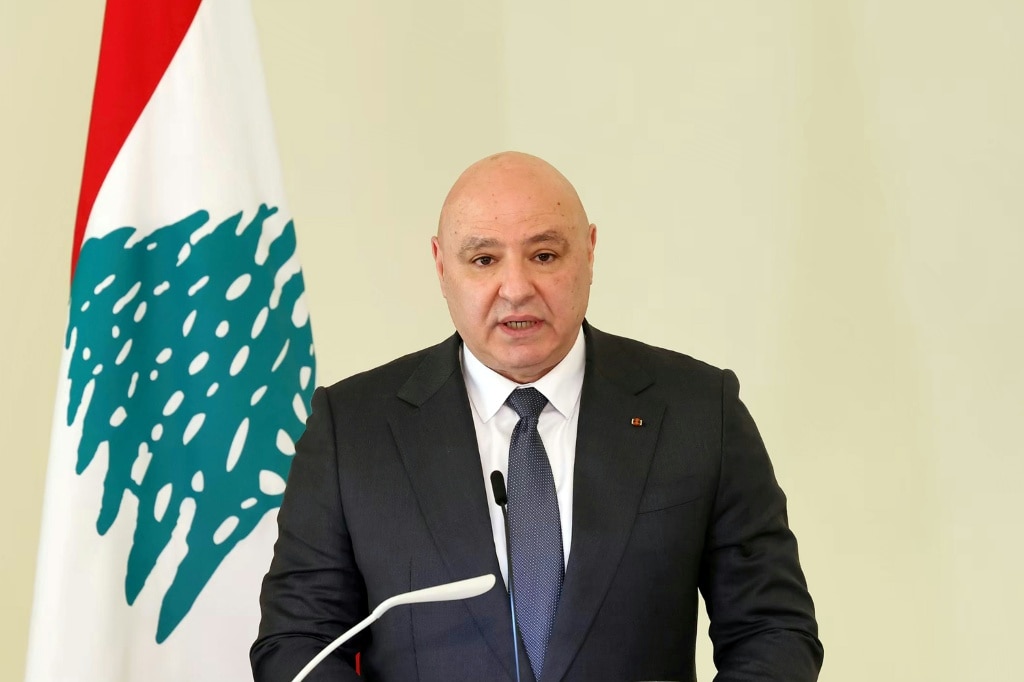
A high-stakes round of diplomatic talks between Lebanese and Israeli representatives is set to convene in Washington on Tuesday, hosted under the mediation of U.S. Secretary of State Marco Rubio. But as the meeting gets underway, deep irreconcilable gaps between the two sides, combined with open opposition from key armed group Hezbollah, have left even veteran regional observers deeply skeptical that any meaningful breakthrough will be achieved. The talks mark the first direct, high-level diplomatic engagement between the Israeli and Lebanese governments since 1993, according to an anonymous senior State Department official. Attendees will include both nations’ ambassadors to Washington, as well as the U.S. ambassador to Beirut, the official confirmed. The core stated goals of the dialogue are to lay the groundwork for long-term security along Israel’s northern border and back the Lebanese government’s push to reassert full sovereign control over its entire territory, the official added. The conflict that brings delegates to the negotiating table erupted on March 2, when Hezbollah launched attacks against Israel, drawing Lebanon fully into the broader regional conflict centered on tensions between Israel and Iran. Hezbollah’s entry into the fighting came just days after the February 28 joint Israeli-American offensive that killed Iranian supreme leader Ali Khamenei, an attack the group has vowed to avenge. In the months since the conflict escalated, Israeli military operations have devastated large swathes of Lebanon. Intensive air strikes, including a massive bombardment of central Beirut on April 8, and a full ground invasion of southern Lebanon have killed more than 2,000 people and displaced over 1 million Lebanese civilians, despite repeated international calls for an immediate ceasefire. The biggest immediate rift between the parties centers on core demands that neither side appears willing to compromise on. For Israeli officials, any successful outcome is tied to the full disarmament of Hezbollah and the removal of the group from southern Lebanon. Israeli government spokeswoman Shosh Bedrosian told reporters on Monday that the country has no interest in discussing a ceasefire with Hezbollah, which she condemned for continuing unprovoked, indiscriminate attacks on Israeli civilian areas. Israeli Prime Minister Benjamin Netanyahu doubled down on that position over the weekend, emphasizing that Israel’s non-negotiable goals are the full dismantling of Hezbollah’s weapons arsenal and a durable, long-term peace agreement that will stand for generations. Public opinion in Israel heavily backs that hardline approach: a new poll published Monday by the Israel Democracy Institute found that 80% of Jewish Israeli respondents support continuing military operations against Hezbollah in Lebanon regardless of diplomatic progress with Iran, even if that puts the country at odds with the Trump administration. On the Lebanese side, government leaders are framing the talks around an entirely different priority: securing an immediate ceasefire to end the ongoing devastation. Lebanese President Joseph Aoun said Monday he hopes the Washington talks will produce a ceasefire agreement that clears the way for full formal direct negotiations between the two states. Even before the talks began, Hezbollah’s leader Naim Qassem, head of the Iran-aligned movement that has led the fight against Israel, has openly called for the talks to be canceled, dismissing the entire process as “futile.” For the Trump administration, mediating the talks has proven to be a fraught diplomatic balancing act. U.S. officials have insisted that any resolution must meet two core demands that many analysts see as difficult to reconcile: the full disarmament of Hezbollah, and full respect for Lebanon’s territorial integrity and national sovereignty, all while unconditionally upholding Israel’s right to security. The broader regional context has further complicated U.S. efforts: the Washington talks come just days after a new round of U.S.-Iran talks held in Pakistan failed to produce any breakthrough, and U.S. diplomats fear a continued escalation in Lebanon could derail any future progress on the Iranian nuclear and regional security file. Most regional analysts and even former insiders are already bracing for failure. “It would take a lot of imagination and optimism to think that the deep issues dividing Israel and Lebanon can be resolved in one day of talks in Washington,” a former senior Israeli defense official told reporters on condition of anonymity, acknowledging that “expectations are extremely low” going into the meeting. The former official added that if no agreement is reached, Israel is likely to move forward with establishing a large buffer zone in southern Lebanon, mirroring the security arrangement it currently maintains in the Gaza Strip.