
A high-profile murder trial kicked off on Monday in the northern Mexican coastal city of Ensenada, Baja California, for three men accused of orchestrating the 2024 killings of two Australian siblings and an American traveler who disappeared during a camping and surfing trip to a remote local beach. Court officials confirmed the start of proceedings, which have drawn international attention over the violent killing of foreign visitors in one of Mexico’s popular tourist regions. The three defendants face charges of both murder and aggravated robbery connected to the deaths of 33-year-old Callum Ryan Robinson, 30-year-old Jake Martin Robinson, and 30-year-old Jack Carter Rhoad. The lead defendant, Jesús Gerardo García, commonly known by the alias “El Kekas,” appeared alongside his two co-accused, identified only as Irineo Francisco N. and Ángel Jesús N. In accordance with Mexican criminal procedure regulations, the full surnames of the two junior defendants have not been released to the public to protect due process rights. Just days after the trio of travelers went missing, their remains were discovered dumped inside a cliff-top shaft, each victim bearing fatal gunshot wounds to the head. Martin Robinson, father of the two slain Australian brothers, traveled to Ensenada to attend the opening hearing alongside his wife. Speaking to reporters on the courthouse steps ahead of the proceeding, he shared that the couple felt compelled to be present to honor their sons. “I know they would want us to be here; they would do the same for us,” Robinson told assembled media. Prosecutors laid out their early narrative of the crime, alleging the travelers were killed during a pre-planned attempt to steal their pickup truck. The vehicle was later found burned to a shell just a short distance from where the victims’ bodies were recovered. The case has already seen one conviction: García’s former partner, Silva Raya, accepted a 20-year prison sentence last year after confessing that she helped instigate the robbery, with the original goal of stealing the truck’s tires. Following the opening session on Monday, court officials confirmed the trial is scheduled to resume with further proceedings on Tuesday, as prosecutors will present evidence and witness testimony over the coming days of proceedings.
分类: world
-

EU warns of a chilling new terror menace 25 years after 9/11 as online youths seek violent thrills
BRUSSELS – Twenty-five years on from the devastating al-Qaeda attacks that shook the United States on September 11, 2001, European security officials are sounding the alarm over a shifting threat landscape. While traditional transnational jihadist networks still remain a persistent danger to the continent’s security, a far newer, more insidious menace has emerged: a nihilistic form of violent extremism largely organized online, led and recruited primarily by and for young people.
Unlike ideologically driven extremist movements of the past, this new brand of violence lacks clear political or religious goals. EU Counter-Terrorism Coordinator Bartjan Wegter described the phenomenon to the Associated Press as “violence for the sake of violence,” driven by a dangerous obsession with brutality and a desire to gain social status within closed online communities.
In a coordinated cross-border crackdown carried out across nine European nations in June and July, law enforcement investigators uncovered more than 4,300 web URLs tied to “The COM,” the shadowy online community at the heart of this emerging threat. To date, the full scale and reach of this network remain unclear, as Europol, the EU’s law enforcement agency, does not track formal statistics for this type of extremism. Disagreements over how to classify these acts — which often blur the line between ordinary violent crime and terrorism — have made systematic data collection difficult.
Official EU data underscores the scale of the broader terror challenge facing the bloc. In 2023, 45 separate terrorist incidents were reported across 10 of the EU’s 27 member states. While none of these attacks rose to the level of large-scale, mass-casualty events that defined 9/11 and early 2000s terrorism, roughly half of the plotted attacks were successfully foiled before they could be carried out. Still, six people lost their lives to terrorist violence over the year, and law enforcement agencies across 21 member states arrested a total of 486 individuals on suspicion of terror-related links.
Traditional jihadist groups, often inspired or directed by networks based outside of Europe, were still responsible for more than half of all recorded attacks in 2023, and accounted for over 70% of all terror-related arrests. What has shocked security officials, however, is the rising share of young people involved in extremist activity: roughly one-third of all individuals taken into custody on terror charges last year were under the age of 18, the vast majority of whom were male.
Recent high-profile incidents across Europe illustrate how this new nihilistic extremism plays out in the real world. In a 2025 attack in Finland, a 16-year-old boy carried out a stabbing that injured three female classmates. According to an internal EU threat assessment document, the teen shared an unhinged “manifesto” in encrypted WhatsApp groups, live-streamed his attack on Snapchat, and asked social media contacts to preserve and share his footage after the attack. In his writing, he stated he only wanted to carry out something “significant” and “exciting,” with no clear political or ideological motive linked to the attack. In another 2023 case in Italy, authorities uncovered a plot by a 15-year-old boy who planned to commit murder solely to gain notoriety among these online circles. His phone was found to store a large collection of violent content, including footage of past school shootings, assaults, murders, and child sexual exploitation material.
Wegter emphasized that these scattered individual attacks are far from isolated events. Over the past two to three years, the frequency of these incidents has climbed steadily, with networks coordinated online that cater specifically to young, vulnerable boys. These radicalizing spaces have repeatedly pushed individuals to commit offline violence, including unprovoked attacks such as the random stabbing of an elderly person with no connection to the attacker, he noted.
Countering this threat presents unique, unprecedented challenges for law enforcement. Unlike older extremist networks that left clear paper or investigation trails, most of these young radicals have no prior criminal records. Their radicalization and planning take place almost entirely online, often hidden behind end-to-end encryption in closed, private communities, making surveillance and intervention extremely difficult.
One of the most high-risk groups currently on security agencies’ watchlists is the network 764, originally founded by American high school dropout Bradley Cadenhead, who is currently serving an 80-year prison sentence for child pornography and sexual offenses. Despite Cadenhead’s incarceration, the group remains active across borders. Last year in Germany, a 20-year-old man identified as a leading 764 member went on trial facing 123 criminal charges, including offenses the EU described as “an unimaginable level of brutality and inhumanity” — ranging from murder and rape to child sexual abuse.
The shift toward online-organized extremism marks a stark departure from the threat landscape 25 years ago, when 19 al-Qaeda operatives, mostly from Saudi Arabia, entered the U.S. for training before carrying out the 9/11 attacks. Today, “the online environment, for all the good things it brings, it is still too permissive,” Wegter said. He added that the internet has become “a petri dish for the connection between different threats” that allows disparate radicalized individuals to connect and mobilize.
The rise of artificial intelligence has only amplified these risks, security officials warn. Europol reports that bad actors are already leveraging AI tools to create and edit extremist propaganda, including convincing deepfakes, shareable memes, and GIFs that spread violent messaging. AI-powered bots are used to scale up recruitment of new members and spread terrorist ideologies, while AI tools are even used to help attackers research and plan attacks. “The kind of violent content, violence inciting content, propaganda, manuals, tactics, everything that is available, is very much amplified by AI,” Wegter explained.
The push for stronger law enforcement digital tools has sparked ongoing debate, with privacy advocates arguing that individuals hold a fundamental right to communicate free from unwarranted government surveillance. These critics warn that new surveillance powers and the growing use of spyware by authorities and tech companies erode long-standing privacy protections. But Wegter argued that law enforcement must adapt to the changing nature of the threat. Currently, 85% of all terror investigations now involve digital evidence, he noted, meaning regulatory and investigative frameworks must be updated to match the current threat landscape.
For the EU, addressing this borderless threat requires closer cross-border and international cooperation, particularly with countries that these online networks use as operational rear bases. “Because what happens outside our borders impacts on our security,” Wegter said, including violent content that is amplified online and reaches vulnerable young people across the continent.
-
Nepal endured months of political upheaval. Devastating floods are now testing its new government
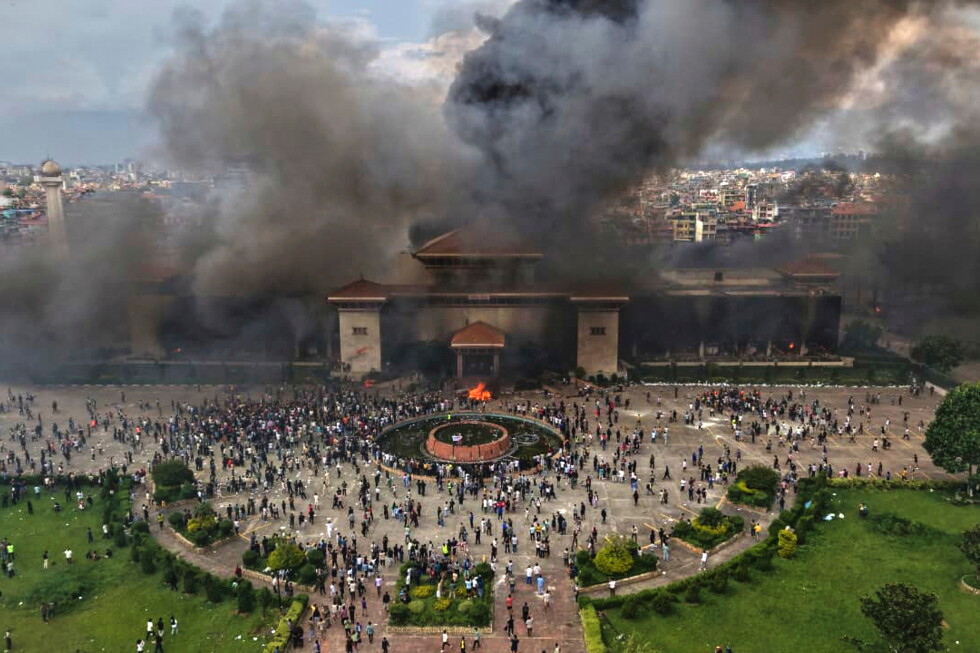
Two weeks after catastrophic flash floods tore through Nepal’s mountainous regions and river valleys, the full scale of destruction is coming into focus, presenting a severe early test for the Himalayan nation’s newly formed administration. The disaster has swallowed entire residential settlements, washed out critical road connections and bridges, leaving widespread ruin in its wake. Preliminary damage assessments count 7,500 homes completely destroyed, a further 20,000 structures in need of major reconstruction, and at least 12 operational hydropower projects heavily damaged. With the current estimated damage toll reaching $2.56 billion, the recovery burden falls disproportionately on a country whose total national budget for the 2024 fiscal year stands at just $14 billion, making the cost of recovery staggering even at this early stage. By official counts, more than 1,300 people across Nepal and neighboring Tibet have been confirmed dead, with roughly 5,000 others still unaccounted for as search operations continue in hard-to-reach remote areas. This disaster arrives at an exceptionally delicate moment for Nepal, which is only just emerging from months of crippling political unrest that toppled the previous government and left the country in a prolonged period of uncertainty. The upheaval that shook the nation began in September last year, when widespread youth-led protests over systemic government corruption and a controversial social media ban escalated into violent clashes. Security forces opened fire on demonstrators, killing dozens of protesters, while angry demonstrators set fire to government buildings and the private residences of senior political figures. The unrest ultimately forced then-Prime Minister K.P. Sharma Oli to resign, leaving the country governed by an interim caretaker administration for months. It was from this period of chaos that 36-year-old Balen Shah, a former Kathmandu mayor and political outsider who became the face of the nation’s youth-driven reform movement, emerged to lead his party to a landslide electoral victory in March. Sworn into office just months ago, Shah’s new administration holds a popular mandate to overhaul a dysfunctional political system widely criticized for failing to deliver basic services and public goods to the Nepali people. Now, before the new government can even solidify its footing, it must confront an unprecedented natural disaster that demands immediate, coordinated action. To its credit, the administration has already mobilized the national army, police forces, helicopter rescue fleets and medical teams to coordinate evacuation efforts and deliver emergency relief alongside local government authorities. Thousands of affected residents have been rescued from flood-hit areas to date, but the response effort has been hampered by significant obstacles. Blocked mountain roads, debris-choked hydropower tunnels, widespread shortages of specialized heavy rescue equipment and a lack of trained disaster response personnel have slowed efforts to reach cut-off remote communities, exposing deep gaps in Nepal’s national emergency response capacity. These challenges are further compounded by the fact that most of Shah’s cabinet and senior leadership are new to national-level governance, with little prior experience managing large-scale crises of this magnitude. Guna Raj Luitel, editor of the Kathmandu-based current affairs magazine *The Diplomat Nepal*, argues that the government’s inexperience has left it poorly prepared to respond to a catastrophe of this scale. “Nepal is a disaster-prone country, but we have failed to learn from the past,” he noted in an interview. Even as search and rescue operations continue, attention is already turning to the daunting long-term task of reconstruction, which threatens to strain Nepal’s limited public resources to breaking point. While preliminary damage assessments put direct losses at $2.56 billion – nearly one-fifth of the country’s entire annual national budget – independent analysts estimate the full cost of complete reconstruction could reach $4 billion to $5 billion. Beyond the immediate physical damage, the disaster is expected to deal a major blow to tourism, one of Nepal’s most critical economic lifelines. The flooding hit during the peak tourism season, leaving communities that rely on visitor income for the majority of their annual earnings facing prolonged financial hardship. The floods also caused severe damage to one of Nepal’s key hydropower corridors, which contributes roughly 10% of the country’s total current electricity generation capacity. When counting projects currently under construction, the corridor accounts for nearly 20% of Nepal’s total planned generation capacity, according to Uttam Bhlon, vice president of Nepal’s Independent Power Producers’ Association. The massive reconstruction bill adds new pressure to a new government already facing demands to increase funding for public education, healthcare, job creation and national infrastructure investment. Nepal has already formally requested international assistance from the United Nations and the global community, and several countries and humanitarian aid groups have already dispatched emergency supplies and specialized rescue teams to support the response effort. But government officials have made clear that far more international support will be required to complete the full reconstruction of affected regions. Luitel argues that wealthy developed nations have a particular responsibility to step up support, noting that Nepal cannot be expected to shoulder the entire cost of a climate-linked disaster on its own. While researchers have not yet drawn a direct causal link between this specific flood event and human-caused climate change, the broader context of Nepal’s growing vulnerability to extreme weather is impossible to ignore. Scientists suspect the disaster was triggered by a high-altitude slope collapse involving rock and glacial ice that sent a massive surge of debris and water downstream through Himalayan river valleys. Broader climate data confirms that the Himalayan region is warming far faster than the global average, with rapidly retreating glaciers and shifting patterns of rainfall and snowfall altering the landscape dramatically. Nepal is uniquely exposed to these risks because the majority of its population and critical infrastructure are located in steep river valleys below unstable mountain slopes. At the same time, the country contributes a negligible share to global greenhouse gas emissions: the World Bank estimates Nepal accounts for just 0.1% of global emissions, despite facing some of the worst climate impacts. Sumnima Udas, a Nepali member of Parliament and chair of the country’s international relations and tourism committee, who has seen the flood damage firsthand, describes the affected regions as “a wasteland” and warns that reconstruction will not be a simple process. Udas notes that while Nepal has taken meaningful steps to reduce its own environmental footprint – including nearly doubling its national forest cover over the past 30 years, generating the majority of its electricity from clean hydropower, and emerging as a leader in electric vehicle adoption among low-income nations – these efforts cannot protect the country from the wider climate changes transforming the Himalayas. She argues that Nepal needs more than just emergency relief: the country must invest in more robust early warning disaster systems, build more climate-resilient infrastructure, and reconsider the placement of new settlements, roads and hydropower projects to reduce future risk. Udas echoes calls for industrialized nations to take greater responsibility for supporting vulnerable developing countries like Nepal in adapting to and recovering from climate-linked disasters. “This is not them versus us,” she said. “This is about humanity and the planet.”
-
Flights to and from Indonesia’s capital resume after volcanic eruption forced a 2-day closure
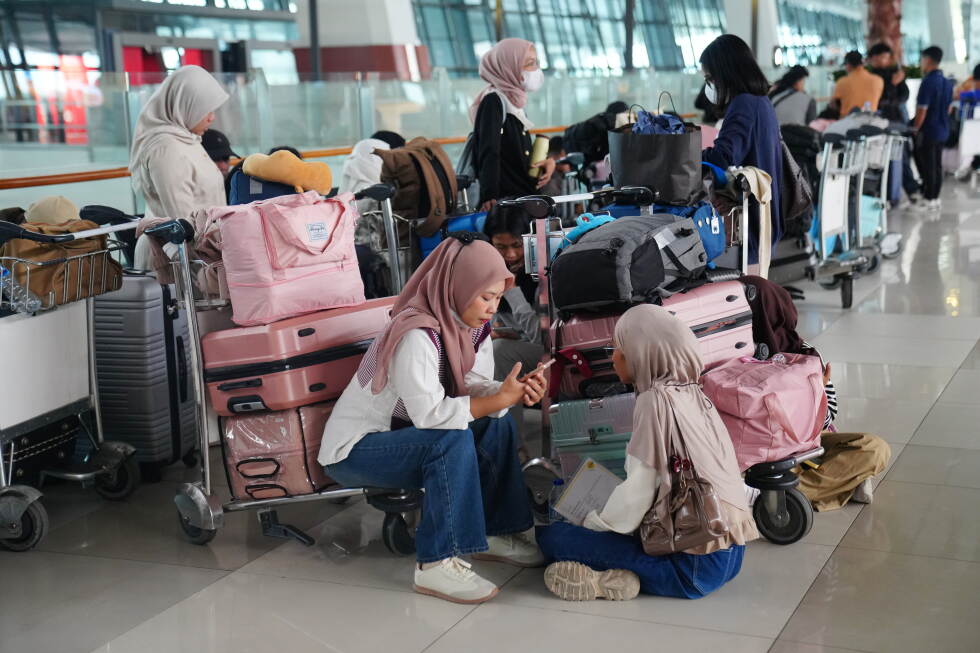
When the lingering ash plume from the ongoing eruption of Anak Krakatau forced a 48-hour shutdown of major aviation hubs across western Indonesia, nearly 3,000 flights were grounded and more than 340,000 passengers were left stranded, throwing regional travel into chaos. In the early hours of Tuesday, the most critical airports — including Jakarta’s two primary gateways Soekarno-Hatta International and Halim Perdanakusuma, Husein Sastranegara Airport in the West Java tourist hub of Bandung, and two smaller regional facilities in Banten province — officially resumed service just after midnight, Indonesia’s Transportation Minister Dudy Purwagandhi confirmed.
While atmospheric conditions have improved across most affected regions, three additional airports — including Radin Inten II Airport serving Lampung at Sumatra’s southern tip — remained shuttered through 10 a.m. local time Tuesday as a precaution. One South Sumatran airport, Atung Bungsu in Pagar Alam, had already restarted full operations on Monday morning. This cautious, phased reopening follows a deliberate, risk-averse strategy, as officials note wind patterns in the region remain highly unpredictable.
“We are taking a conservative approach because wind direction is highly dynamic,” Purwagandhi explained in an official statement. “We want to ensure that volcanic ash has moved away from airports around Anak Krakatau.”
Even after initial air quality testing at multiple reopened airports returned no detectable traces of volcanic ash, the temporary extended closures allowed critical maintenance teams to fully inspect and clear ash residue from runways, taxiways, ground support equipment, and parked aircraft that may have been exposed during the eruption. Volcanic ash poses extreme safety risks to aviation, as it can melt in jet engine turbines to form glass deposits that cause mid-flight engine failure and damage critical aircraft navigation systems.
After days of sustained explosive activity marked by lava fountains and loud rumbling, Anak Krakatau’s active eruptive phase calmed on Sunday, but the volcanic island remained geologically active Tuesday morning. Two new small eruptions were recorded at 5:08 a.m. and 5:34 a.m. local time, though thick cloud cover prevented monitoring teams from measuring the height of the resulting ash columns.
The two-day shutdown of multiple airports between Sunday and Monday disrupted a total of 2,961 flights, 622 of which were international services, leaving passengers stranded at terminals across the region and disrupting connecting travel globally. Beyond aviation disruptions, Indonesian public health authorities have also authorized temporary shifts to online learning for schools in ash-affected regions, a precaution designed to limit student exposure to fine volcanic ash particles that can irritate the respiratory system.
Located in the Sunda Strait between Indonesia’s two most populous main islands, Java and Sumatra, Anak Krakatau translates to “Child of Krakatau” — a reference to its origin as a new volcanic cone that formed after the catastrophic 1883 eruption of the original Krakatau volcano, which was one of the most explosive volcanic events in recorded history. The 1883 eruption triggered global climate anomalies that caused a multi-year period of global cooling, disrupting agricultural production across the world. Anak Krakatau itself has a history of deadly activity: a 2018 eruption triggered an underwater landslide that generated a tsunami which killed more than 430 people along the coasts of Sumatra and Java.
Indonesian authorities have kept Anak Krakatau at the nation’s second-highest volcanic alert level since July, and have ordered a permanent exclusion zone extending 3 kilometers (1.9 miles) around the active crater. Residents, commercial fishing crews, and tourists are all prohibited from entering the area to avoid risk from sudden new eruptions, pyroclastic flows, and flying volcanic debris.
Indonesia, a sprawling archipelago nation that sits along the Pacific Ring of Fire — the global zone of intense seismic and volcanic activity that circles the Pacific Ocean basin — is home to more than 120 active volcanoes, making volcanic eruptions a frequent hazard for communities and infrastructure across the country.
-

Flight recorders recovered from ‘devastating’ Amazon cargo plane crash
A tragic aviation accident at Miami International Airport on the busy Labor Day holiday weekend has left five people dead and five more with severe injuries, triggering a full-scale investigation led by the U.S. National Transportation Safety Board (NTSB). The incident unfolded shortly before 2 p.m. local time on Sunday, when a Boeing 767-300 cargo jet operated by logistics firm 21 Air on a flight from San Juan, Puerto Rico, overran the runway during landing.
According to NTSB chair Jennifer Homendy, the aircraft carried just two crew members as part of its third operational trip of the day. After overrunning the runway, the plane first struck airport navigational infrastructure before colliding with a contracted cleaning company’s white Ford van that was inside the airport perimeter. The van held seven passengers at the time of impact. The jet then broke through a perimeter fence and crashed into a separate Toyota Corolla carrying three people, before coming to a complete stop roughly 1,300 feet (396 meters) beyond the end of the runway.
Homendy described the crash site as overwhelmingly devastating during a Monday press briefing held at the airport, noting that debris from the destroyed aircraft, damaged ground vehicles, and shattered perimeter fencing was spread widely across the impacted area. “It’s hard to see, and I’m sure very difficult for the first responders as well,” she told reporters, emphasizing that victim recovery remains the top priority for response teams. “The investigation and access to the aircraft, as well as evidence, can wait,” she added.
While investigators have already successfully retrieved both the flight data recorder and cockpit voice recorder — the key tools for determining crash causes — the devices have been shipped to NTSB headquarters in Washington D.C. for detailed analysis. Homendy stressed that the probe is still in its early fact-finding phase, and no conclusions about the root cause of the crash can be drawn at this stage.
The multi-pronged investigation will cover a wide range of potential contributing factors: dedicated teams will review the aircraft’s maintenance and flight history, the aircrew’s training and experience, radar tracking data, the jet’s in-flight performance, the functionality of its core systems and engines, and weather conditions at the time of landing. Early analysis from BBC Verify found an active thunderstorm was active near the airport in the minutes before the crash, with wind gusts reaching as high as 26 knots.
One key line of inquiry will focus on whether the runway was equipped with an Engineered Materials Arresting System (EMAS), a specialized safety infrastructure designed to slow and stop aircraft that overrun runways during landing. Homendy confirmed that assessing the presence and adequacy of this system will be a central component of the probe. The NTSB has also issued a public appeal for any witnesses or passersby who captured photographs or video of the crash or its immediate aftermath to share their footage to aid the investigation.
In the wake of the incident, two of Miami International Airport’s four runways remain closed, causing ongoing travel disruption for passengers. Sunday’s crash forced widespread flight cancellations that disrupted crew scheduling and aircraft positioning, with travelers warned to expect continued delays and changes to itineraries. The crash fell during the Labor Day holiday weekend, one of the busiest periods for air travel across the United States each year.
Both e-commerce giant Amazon, which contracted the cargo flight, and operating carrier 21 Air have issued statements reacting to the tragedy. Amazon said it was “heartbroken” by the loss of life, and confirmed it is working closely with investigating authorities. 21 Air also extended its condolences to the victims and their families, and confirmed it is fully cooperating with the NTSB’s ongoing probe. Looking ahead, Homendy noted that the NTSB will issue binding safety recommendations once its investigation is complete, a core part of the agency’s mission to prevent future fatal aviation accidents. “That’s why we’re here – to prevent the next tragedy,” she said. “Our recommendations must be implemented, or we’ll be here again.”
-
Journeying through Syria’s shattered cities as war turns to peace
It began with an unplanned detour at a wedding in Hama, but what three peace and conflict researchers discovered during their week-long 2026 field trip across Syria would upend distant, secondhand narratives of a country still reeling from more than a decade of war. Between June 1 and 7, 2026, Bahadir Dincer, Bahar Baser, and Zeynep Sahin-Mencütek became the first independent researchers to travel freely across government-held areas of Syria following the collapse of the Assad regime, documenting the messy, uneven coexistence of destruction and recovery that rarely makes global headlines.
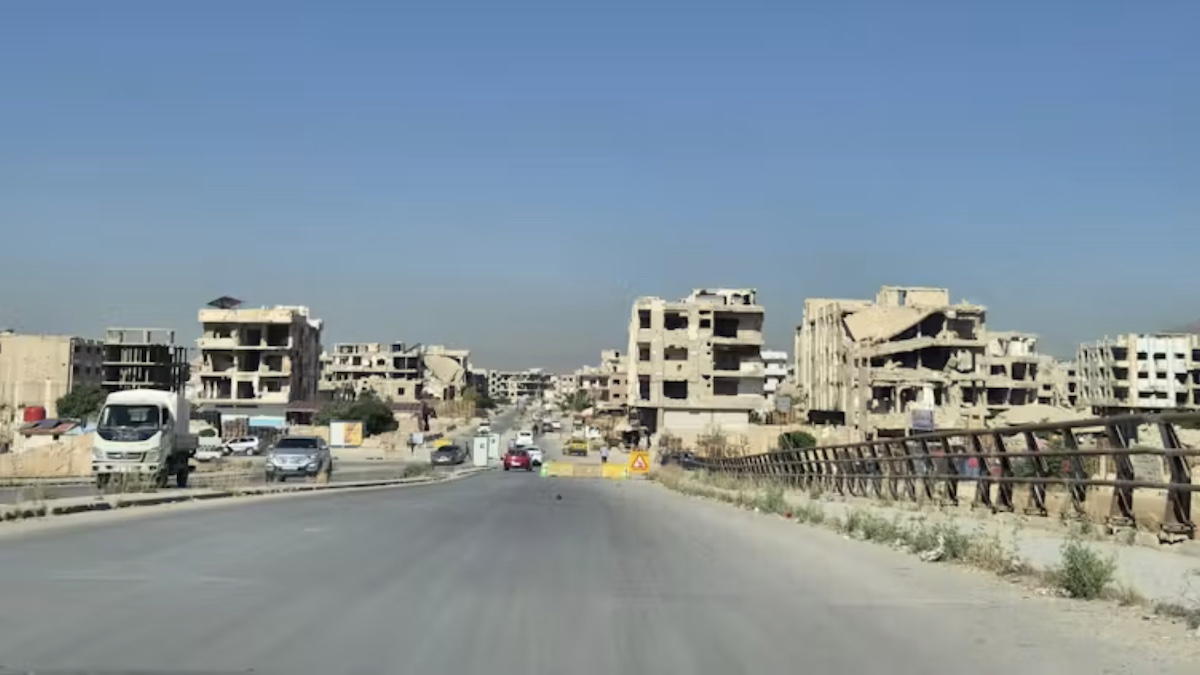
The team’s journey started on a warm June morning in Damascus, where they set out to visit four key regions: Rural Damascus, Aleppo, Raqqa, and Hama. Before leaving the capital, they took a short detour through the war-scarred districts of Jobar and Yarmouk. Jobar, once one of the capital’s fiercest frontlines between 2013 and 2018, remains almost entirely reduced to rubble. A young local activist who had recently returned home put it simply: “Even though Jobar has always been part of Damascus, it was forgotten during the war and remained forgotten afterwards.” While returning residents clear rubble and patch damaged structures on their own, most long-term Damascenes have never set foot in the district since the regime fell, leaving recovery fragmented and incomplete.
Yarmouk, once Syria’s largest Palestinian refugee camp, paints an equally stark picture. The researchers encountered an elderly couple sitting on plastic chairs outside one of the only partially repaired homes, surrounded by crumbling ruins. The scene encapsulated a core contradiction of post-war Syrian life: life has returned to devastated areas, but for most residents, that means learning to live alongside wreckage rather than rebuilding beyond it. Even in Eastern Ghouta, where entire neighborhoods still bear the marks of intense fighting, small signs of daily life emerge: a bread shop opens beside a collapsed apartment block, children play on potholed streets that once saw active combat, and families ride together on a single motorcycle through former frontlines. Recovery, it turns out, often moves far faster than formal reconstruction.
As the team traveled north along the M5 highway toward Aleppo, the road itself told a story of shifting fortunes. Abandoned factories and depopulated villages lined the route, constant reminders of the war’s enduring legacy, but new signs of normalcy appeared just as frequently: roadside fruit vendors, newly reopened roadside cafes, and even newly imported SUVs – a sight that would have been unthinkable on Syrian roads just a year earlier, their driver noted. Outside Hama, they stopped at a fully stocked roadside supermarket, where local hospitality offered a quiet reminder that cultural traditions and daily routines persist even amid chaos.
Arriving in Aleppo, a city the researchers had only studied through news reports and refugee testimonies for more than a decade, they encountered a city divided between restoration and ruin. Parts of the historic Old City’s famous souk have been restored, drawing visitors back to its narrow stone streets, but large swathes of the Old City and working-class districts like Shaar and Hanano remain piled with rubble. Local guide Amr explained that returning residents have cleared blocked streets themselves, without formal government support, just to access the remains of their homes. Yet as evening fell, the city came alive: cafes buzzed with conversation, crowded restaurants hosted family dinners, and pedestrians filled the streets to escape the summer heat. Aleppo is neither fully frozen in conflict nor fully rebuilt – it exists in the in-between, where destruction and daily joy coexist.
The next morning, the team set out on the long drive east to Raqqa, a route their driver Ahmed had not traveled in more than 15 years. For Ahmed, who grew up in Raqqa before displacement forced him to resettle in Damascus, the drive was as much a journey of personal rediscovery as it was research: a weathered roadside wall unlocked childhood memories of playing with his brothers, and a shuttered abandoned cement factory reminded him of the familiar landmarks that structured life before the war. When they crossed the Euphrates into Raqqa, rolling green fields replaced the arid plains west of the river, offering a brief moment of calm after a bumpy drive over cratered highway.
Raqqa carries a unique weight of trauma: after decades of neglect under the Assad regime, it became a hub of anti-regime protest, then the de facto capital of the Islamic State, then a region under separate Kurdish-led SDF administration until just months before the researchers’ visit. The cumulative effect of overlapping conflicts leaves the city and its residents visibly exhausted. Yet even here, small signs of connection and renewal emerge. During Friday prayers at a packed city mosque, the imam announced a national collection for flood-affected communities in Deir ez-Zor – a small act that carried enormous weight after years of fragmented governance and divided communities. Two local sisters who had recently returned to Raqqa shared their story of family separation: one had returned from Turkey to resume teaching, another from Jordan, while the rest of their large family remains scattered across Turkey, Germany, and other parts of Syria. “The others have scattered like leaves in the wind,” one sister said. “But we wait, hoping they will come home again.”
On the drive back to western Syria, the team encountered one of the most widely celebrated changes of the post-Assad era: freedom of movement. Where the road once was dotted with checkpoints that could delay travelers for hours, now convoys of commercial trucks move freely between regions, and even foreign researchers passed through checkpoints without delay. “Five months ago, I would have been stopped at ten checkpoints to get here,” a young 20-something shopkeeper who had recently returned from Turkey told the team. “Economically, life may have been easier then. But we had no freedom of movement. Now I can travel without anyone stopping me.” For Syrians across every region the team visited, this simple right to move unimpeded was described as a quiet revolution: “the road has become a road again,” multiple residents said.
For most Syrians, the post-Assad era is described as liberation – a shift that is felt not in abstract political speeches, but in small daily changes: working traffic lights, police officers managing intersections, the ability to speak openly without fear. This quiet hope is not just spoken, but acted on. In Aleppo, the team visited a former Baath Party youth center that has been transformed into a community education and support center for returnees, run by Syrians who gave up stable lives abroad to come home. “My country is trying to stand up again,” Esma, a teacher who returned from Turkey, told the team. “People here need us. If not now, when will we contribute?” In Raqqa, families gather for picnics along the banks of the Euphrates, young boys swim in the river, and local operators run sightseeing boat trips – ordinary activities that carry profound meaning, as people reclaim public spaces once defined by war.
Yet for every sign of hope, the researchers encountered constant reminders of the immense challenges that remain. More than 90% of Syrians live below the poverty line, 16.5 million require humanitarian aid, and the World Bank estimates total reconstruction costs will exceed $200 billion. As of mid-2025, the UN’s humanitarian response plan had received only 14% of its required funding, leaving basic infrastructure like water, electricity, and sanitation networks non-functional across large parts of the country. Nearly a quarter of all housing stock is damaged or destroyed, more than two million children remain out of school, and millions of acres of farmland are still littered with landmines and unexploded ordnance that kill civilians every week.
Experiences of recovery are deeply uneven too: wealthy Damascus neighborhoods like Abu Rummaneh boast crowded cafes and full restaurants, while just kilometers away, entire districts like Jobar remain abandoned. The return of displaced Syrians, many of whom settle in Damascus before returning to their hometowns, has put additional pressure on already strained housing, services, and food prices. The researchers heard firsthand from returnees navigating these barriers: a local research assistant who returned from Turkey cannot afford an apartment and lives in a room at the youth center where he works, and a university-educated taxi driver who returned from Idlib five years earlier relies on a constantly breaking old taxi for his only steady income. Returning home, it turns out, is only the first step toward rebuilding a life.
For policy debates in Europe that frame post-Assad Syria as ready for large-scale refugee returns, the researchers’ findings offer a sobering correction. The real question facing Syria today is not whether Syrians want to return – most do – but whether conditions exist for them to stay permanently. With widespread unemployment, severe housing shortages, and fragile public services, many returnees simply exchange one form of uncertainty for another. Rapid large-scale returns would overwhelm Syria’s already strained institutions and economy, leaving communities worse off. As one Damascus resident put it, “returnees will drown Syria” – not because they are unwelcome, but because the country is not yet able to absorb them.
The team’s journey ended where it began, with that wedding in Hama. As guests filled the church courtyard, traditional Ewiha wedding chants echoed through the building, punctuated by the joyful high-pitched ululation of zalghouta that has marked Arab celebrations for generations. On the surface, it was an ordinary wedding. But for the researchers, it was the most powerful reminder of what they had learned across 7 days of travel: Syrians are not just rebuilding buildings and infrastructure. They are rebuilding ordinary life, holding onto cultural traditions and social bonds even when the odds are stacked against them. Hope and hardship coexist, the team found – and so do recovery and ruin. This is the unspoken reality of Syria today.
This article is based on a two-year research project including more than 200 interviews with Syrian returnees, displaced people, officials, and humanitarian workers, republished with permission from The Conversation.
-

Israel threatens senior Palestinian officials with ‘all-out war’ in occupied West Bank
Tensions across the occupied West Bank have spiked sharply after Israeli Defense Minister Israel Katz issued a stark warning: Israel will launch an all-out military campaign in the territory if any militant operations planned by groups affiliated with the Palestinian Authority (PA) are uncovered.
Speaking to reporters on Monday, Katz outlined the scope of the potential operation, confirming that Israeli forces would target senior PA leadership, the organization’s formal security apparatuses, and what Israel classifies as “terrorist infrastructure” throughout the occupied West Bank. He added that Prime Minister Benjamin Netanyahu has already issued formal orders to the Israel Defense Forces (IDF) to finalize preparations for the campaign, should the regional security situation deteriorate further.
Katz emphasized that Israeli leadership would not tolerate a return to the sustained uprising that marked the Second Intifada, a period of widespread conflict between 2000 and 2005 that claimed thousands of lives, the majority of them Palestinian alongside hundreds of Israeli civilians and security personnel. “We will not allow a return to the reality of an intifada lasting for years, as was the case in the past,” he stated. “We will not allow a return to the reality of October 7 – we will ensure the security of Israeli residents and communities everywhere.”
Historical context frames Katz’s warning: during the Second Intifada, multiple factions tied to the PA, including the al-Aqsa Martyr Brigades linked to the PA’s ruling Fatah party, participated in armed operations against Israeli targets. In the decades following the intifada, the PA has faced widespread domestic criticism for its long-standing security coordination with Israeli intelligence and military forces, including actions to suppress Palestinian armed groups and political activists in the West Bank.
Katz noted that any large-scale offensive against PA-linked targets in the West Bank would mirror the “security zone” model Israel has already implemented in the Gaza Strip and southern Lebanon, a framework that creates heavily restricted military-controlled areas along Israel’s border.
The warning comes amid a fresh wave of deadly violence in the West Bank on the same day. The IDF confirmed it shot and killed a Palestinian man who carried out a stabbing attack against an Israeli settler in the northern West Bank. Israel’s national emergency service, Magen David Adom, reported that the injured settler, a man in his 20s, was transported to a nearby hospital in moderate to serious condition.
Separately, the Palestinian Ministry of Health confirmed that Jewish settlers fatally shot a second Palestinian man in Hajeh village, located east of the West Bank city of Qalqilya. The ministry also verified earlier reports that both Israeli forces and settlers opened fire on Palestinian residents in the village, leaving multiple other people wounded.
This ongoing escalation comes amid already heightened Israeli-Palestinian friction across the West Bank, with a sharp rise in settler violence and military raids since the October 7 attacks that triggered the current ongoing Gaza conflict.
-
Germany asks ICJ to dismiss Gaza genocide case brought by Nicaragua
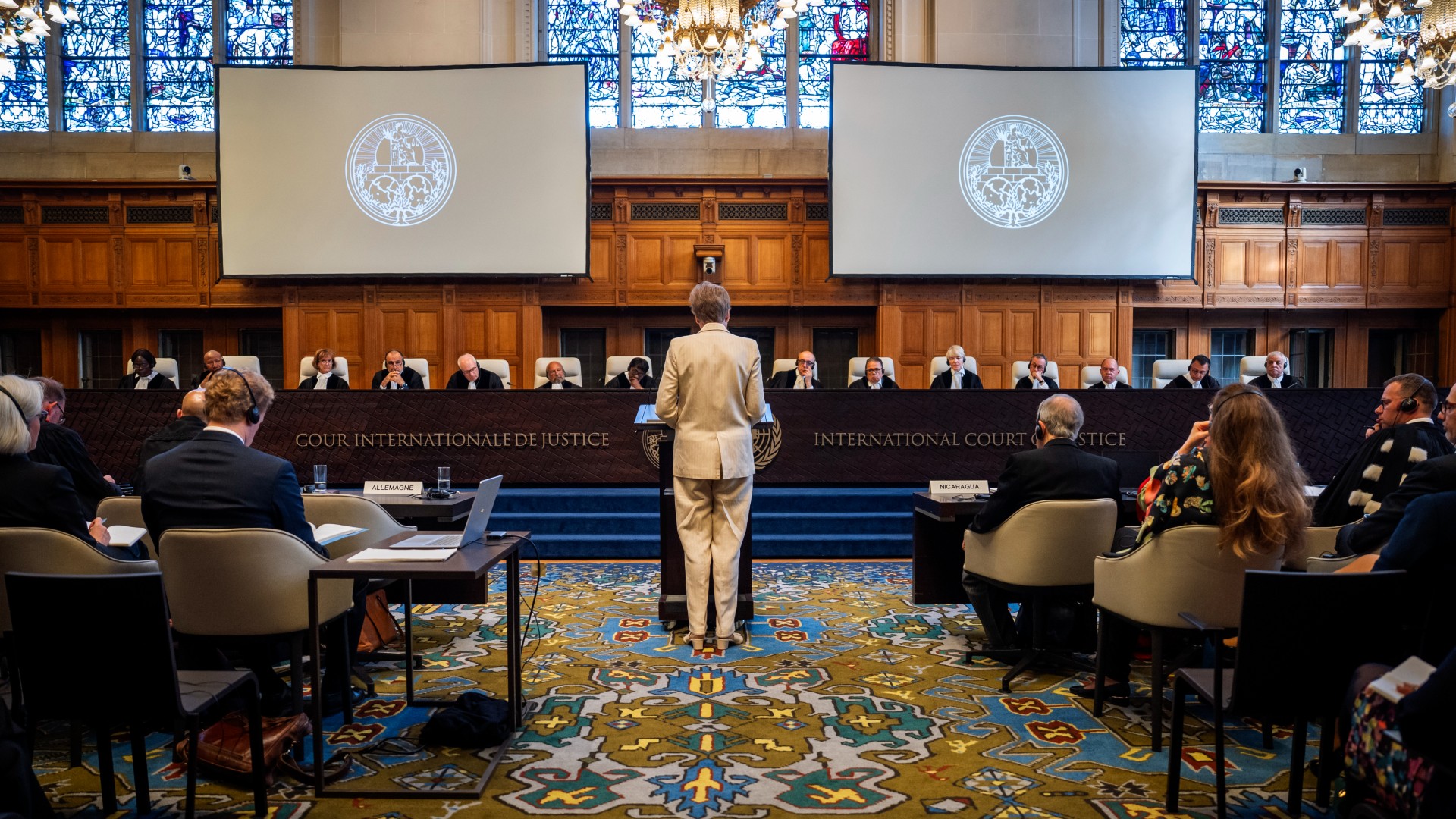
On the opening day of preliminary hearings at the International Court of Justice (ICJ) in The Hague on Monday, Germany formally pushed to dismiss a landmark case filed by Nicaragua that accuses Berlin of facilitating genocide in the Gaza Strip through its ongoing military support for Israel. The proceedings currently focus on Berlin’s challenges to the court’s jurisdiction and the admissibility of Nicaragua’s claims, rather than the core question of whether Germany violated international law, with a ruling expected at an undetermined future date.
German officials argued to the ICJ that Nicaragua failed to meet basic procedural requirements before launching its 2024 lawsuit. In remarks to the court’s panel of judges, Julia Monar, legal adviser at the German foreign ministry, said Nicaragua had not established that a formal legal dispute existed prior to filing, and that portions of the suit fall outside the ICJ’s legal mandate. Monar added that Nicaragua had “not interested in hearing Germany’s view on its allegations, but simply in bringing Germany before this court,” noting that the Central American nation also failed to provide adequate notification of the claims or sufficient time for Germany to prepare a response before initiating proceedings.
At the heart of Germany’s preliminary objections is its reliance on the ICJ’s long-standing Monetary Gold principle. Berlin maintains that Israel qualifies as an indispensable third party to the case, whose legal responsibility would be the very core of any ruling against Germany. Since Israel is not a party to the proceedings and has never consented to the ICJ weighing its conduct, Germany argues the court cannot hear the claim. This stance reflects Berlin’s position that any finding of German complicity in alleged genocide or humanitarian law violations would first require the court to rule that Israel itself has broken the 1948 Genocide Convention.
Nicaragua is set to counter these arguments on Tuesday, arguing that the proceedings center exclusively on Germany’s independent conduct and obligations under international law, not a formal finding against Israel. Nicaragua’s suit accuses Germany of multiple violations of the Genocide Convention and international humanitarian law: Berlin has continued sending weapons and military support to Israel despite documented awareness that the arsenal could be used to commit widespread harm in Gaza, and it violated its duty to prevent genocide by suspending critical funding to the United Nations Relief and Works Agency for Palestinian Refugees (UNRWA), deepening the already catastrophic humanitarian crisis in the enclave.
Recent official data underscores the scale of Germany’s military supply relationship with Israel. As the second-largest arms supplier to Israel, trailing only the United States, new German government figures show that approvals for military exports to Israel surged dramatically in the first half of 2026, reaching a provisional total of €799.4 million ($865 million). This marks a nearly fourfold increase from the full-year total of €201 million recorded in 2025. Of the exports approved between April and June 2026, 67 percent were tied to a major maritime defense project, while 21 percent stemmed from bilateral German-Israeli industrial cooperation serving the German military.
Independent arms data confirms the depth of this relationship. A March 2026 analysis from the Stockholm International Peace Research Institute found that between 2021 and 2025, Germany accounted for 31 percent of all major conventional weapons imports to Israel, cementing its position as Israel’s second-largest supplier, compared to 68 percent from the United States. German policy has shifted incrementally in recent months: Chancellor Friedrich Merz imposed partial restrictions on arms exports to Israel in August 2025, halting approvals for equipment that could be deployed in Gaza, but the government lifted those restrictions three months later after a US-brokered ceasefire took effect, announcing that future export applications would be reviewed on a case-by-case basis.
This is not the first time Nicaragua has sought action from the ICJ in this matter. In 2024, the country requested binding provisional measures that would have ordered Germany to immediately suspend all military supplies to Israel and reverse its funding cut to UNRWA. The ICJ declined to grant those measures in April 2024, noting that German arms exports had declined at that time and that Berlin maintained a formal legal framework for reviewing export licenses. However, the court also rejected Germany’s bid to have the case thrown out entirely at that stage, ruling that there was no manifest lack of jurisdiction over the claim. Germany submitted its formal preliminary objections in 2025 after Nicaragua filed its full written case, pausing all proceedings on the core merits of the claim.
Legal experts say the outcome of this preliminary phase will carry major implications for international law around the duty to prevent genocide. Mike Becker, an ICJ expert and law professor at Trinity College Dublin, explained that the case offers a critical opportunity for the court to clarify long-unresolved questions about states’ obligations to prevent genocide and ensure compliance with international humanitarian law. “The ICJ could decide that none, or only some, of Nicaragua’s claims can proceed to the merits,” Becker told Middle East Eye. If any portion of the claim survives Germany’s current challenge, Becker noted, a final ruling on the merits would not come until a later phase of proceedings, and could take years to resolve.
This case runs parallel to a separate high-profile ICJ case brought by South Africa against Israel, which accuses the Israeli state of committing genocide in its 2023–present military campaign in Gaza. Multiple independent bodies have already backed the core allegation that Israel’s campaign amounts to genocide: a panel of sitting UN special rapporteurs and the International Association of Genocide Scholars, the world’s largest body of genocide academics, have both formally concluded that Israel’s operations in Gaza meet the legal definition of genocide.
As of 2026, the death toll from Israel’s campaign in Gaza stands at more than 73,650 Palestinians, according to on-the-ground counts. A fragile ceasefire brokered by the United States has been in place since October 2025, but even during the truce, Israeli forces have killed at least 1,300 Palestinians in Gaza, leaving the enclave’s population trapped in a catastrophic humanitarian situation that Nicaragua’s case argues Germany helped enable.
Following Nicaragua’s response to Germany’s objections on Tuesday, both parties will present a second round of legal arguments Wednesday and Thursday. The ICJ will issue its ruling on the preliminary objections at a later date, with no timeline currently set for a final decision on the case if it proceeds to the merits phase.
-
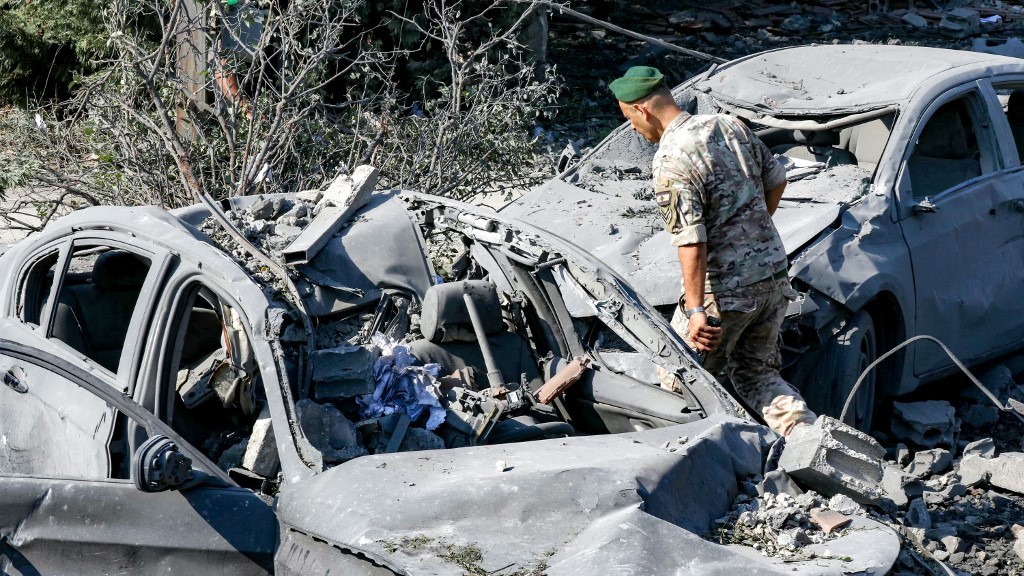
Israeli strikes kill 11 in southern Lebanese village, including two infants
Overnight attacks carried out by Israeli forces on the southern Lebanese town of Kfar Rumman left 11 people dead, including two infants, Lebanese state media confirmed Monday. The violence marks a sharp escalation of hostilities in the region just weeks after a renewed ceasefire between Israel and Lebanese armed group Hezbollah.
According to Lebanon’s official National News Agency (NNA), the first and deadliest strike leveled a three-story residential building in the town, killing nine people and wounding five more. In a separate coordinated attack, an Israeli drone targeted a civilian vehicle in the same town, killing two local paramedics identified as Ali Shahrour and Hadi Farhat. The pair were active volunteers with the Islamic Scout Association, the NNA reported.
By Monday morning, local rescue teams were still sifting through the concrete rubble of the destroyed residential block, searching for any trapped survivors or additional fatalities. Photos from the attack site distributed by international outlets show the entire building collapsed into a pile of debris, scattered with children’s school textbooks and broken household furniture. Adjacent structures also suffered heavy structural damage, forcing dozens of nearby residents to evacuate the area to avoid further risk, Agence France-Presse reported.
Kfar Rumman is located just kilometers from Nabatieh, one of the largest urban centers in southern Lebanon. Many of the town’s residents had only recently returned to their homes after being displaced by months of cross-border fighting, following the truce agreement reached in June. Notably, the Israeli military did not issue any advance evacuation warning to local residents before launching the strikes on Kfar Rumman, in contrast to a separate attack carried out the same period in nearby Deir Zahrani. In that incident, the IDF warned civilians to evacuate a building it claimed housed a Hezbollah facility before destroying it 22 minutes after the alert was sent.
The Israeli military justified the latest wave of attacks by stating it had responded to a drone laden with explosives that was launched toward its troops, though it did not confirm whether the drone caused any Israeli casualties. It added that ongoing Hezbollah activities in southern Lebanon forced it to carry out a forceful response.
The current cycle of cross-border conflict dates back to March 2, when Hezbollah launched strikes on Israel in retaliation for the killing of a senior Iranian leader and repeated Israeli violations of an earlier ceasefire arrangement. Israel responded with widespread air and ground strikes across southern Lebanon, triggering months of sustained fighting.
As of Sunday, Lebanon’s Ministry of Public Health reported that the ongoing conflict has killed 4,362 people and wounded an additional 12,378 since hostilities resumed earlier this year. While fighting calmed after a truce was first reached in April and renewed in June—following a bilateral memorandum between Washington and Tehran to de-escalate broader regional tensions—Israel has continued to carry out frequent strikes across southern Lebanon and maintain military control over a swath of Lebanese territory.
Israeli forces currently occupy a self-declared buffer zone that stretches up to 10 kilometers inside Lebanese territory. A June report from Amnesty International found this zone covers approximately 6% of Lebanon’s total sovereign land. Even after the June 26 renewal of the ceasefire, Israeli strikes have continued: on Sunday alone, attacks killed at least seven people, including two women, and wounded 20 others.
Israeli authorities have ramped up military operations in areas surrounding Nabatieh since last Thursday, when the IDF announced it had seized the strategically important Ali al-Taher ridge from Hezbollah. Hezbollah has not yet issued an official response to Israel’s claim of control over the site.
Israel has repeatedly accused Hezbollah of violating the terms of the ceasefire by attempting to rebuild its military infrastructure in southern Lebanon. “Repeated drone attacks. Weapons storage. Terror infrastructure. Command centres embedded in civilian areas,” Israel’s Ministry of Foreign Affairs wrote in a post to X on Monday. “These violations will not be accepted.” The current ceasefire agreement includes formal provisions requiring Hezbollah to disarm and withdraw its fighters north of the Litani River.
Lebanese President Joseph Aoun has issued an urgent appeal to the United States and the broader international community to intervene immediately to halt Israel’s ongoing attacks. In a statement Sunday, Aoun called the latest strikes—which have damaged official government buildings and destroyed a non-operational hospital—a “dangerous escalation” that now targets Lebanese state institutions and civilian health infrastructure. He called on Washington and other global powers “to urgently act to stop these violations” of Lebanese sovereignty and the existing ceasefire.
-

Small plane crashes near regional airport in Florida
Aviation safety authorities are responding to a new plane crash incident in central Florida, where a small general aviation aircraft went down near Space Coast Regional Airport in Titusville just 24 hours after a fatal Amazon cargo plane accident in Miami.
Local law enforcement and federal investigators have confirmed the downed aircraft is a Mooney M20F, a single-engine four-seat propeller plane. Footage captured from the scene shows the wreckage engulfed in flames along a public roadway, which has since been fully closed to through traffic in both directions by the Titusville Police Department to facilitate emergency response and investigation work.
According to official incident timelines, the crash occurred at approximately 10 a.m. Eastern Standard Time (3 p.m. British Summer Time) just off Florida’s east coast, roughly 40 miles (64 kilometers) directly east of Orlando. As of the latest update, confirmation of casualties or injuries has not yet been released to the public.
As a safety precaution, Florida Power and Light, the state’s primary energy provider, has cut electrical service to neighborhoods and areas surrounding the crash site. Emergency crews are still working to secure the area and clear wreckage ahead of a full investigation by the National Transportation Safety Board, the federal agency tasked with probing U.S. civil aviation accidents.
This incident comes less than a full day after another major aviation accident in southern Florida. On the previous day, an Amazon-operated Boeing 767-300 cargo jet overran the runway at Miami International Airport. The aircraft crossed onto a public road beyond the airfield and collided with multiple ground vehicles, leaving five people dead and five more with critical, life-altering injuries. The back-to-back incidents have renewed attention on aviation safety protocols across the state of Florida.