分类: world

  • Pope heads to epicenter of Cameroon’s separatist conflict to preach message of peace

    Pope heads to epicenter of Cameroon’s separatist conflict to preach message of peace

    YAOUNDE, Cameroon – In a high-stakes visit focused on reconciliation and accountability, Pope Leo XIV has arrived in Cameroon as part of his groundbreaking four-nation tour of Africa, marking the first papal visit to the continent by the first American pope. His journey centers on Bamenda, the heart of a long-simmering separatist conflict in Cameroon’s Anglophone northwest that humanitarian organizations have labeled one of the globe’s most underreported and neglected humanitarian crises.

    The 93-year-old pontiff is scheduled to lead an interfaith peace gathering Thursday in Bamenda, a city located just kilometers from Cameroon’s western border with Nigeria. The dialogue will bring together leaders from across Cameroon’s religious and traditional communities, including a Mankon traditional ruler, a Presbyterian Church moderator, a Muslim imam, and a Catholic nun. The gathering is designed to amplify the work of local interfaith movements that have spent years working to end the violence and support thousands of civilians left traumatized by the conflict. Following the peace meeting, Pope Leo will celebrate an open-air Mass for local residents.

    The conflict, which stretches back to 2017 when separatists launched an armed rebellion for an independent Anglophone state called Ambazonia, has deep roots in Cameroon’s colonial history. After World War I, the former German colony of Cameroon was split into two territories administered by Britain and France. In a 1961 United Nations-supervised referendum, the two British-administered Anglophone regions voted to unite with the independent French-speaking Republic of Cameroon. Separatist leaders argue that for decades, the Anglophone minority has faced systematic political and economic marginalization at the hands of the country’s French-speaking majority. The ongoing conflict has killed more than 6,000 people and forced more than 600,000 residents to flee their homes, per data from the International Crisis Group, even as global media and diplomatic attention has largely overlooked the crisis.

    In a notable gesture ahead of the pope’s visit, separatist military factions announced a three-day ceasefire to facilitate safe passage for the papal delegation and local worshippers. Lucas Asu, spokesperson for the separatist Unity Alliance, framed the pause in fighting as a demonstration of the movement’s commitment to humanitarian principle even amid active conflict. “This pause reflects a deliberate commitment to responsibility, restraint and respect for human dignity, even in the context of ongoing conflict,” Asu said, adding that the pope’s visit should remain a spiritual rather than political event, and should not be interpreted as an endorsement of Cameroon’s sitting government.

    Upon his arrival in Cameroon Wednesday, the first stop of his leg in the country, Pope Leo delivered a blunt address to the nation’s leadership, calling for an end to systemic graft in the resource-rich nation. He directly urged that “the chains of corruption” be broken, in a public rebuke to long-ruling President Paul Biya. At 93, Biya is the world’s oldest sitting head of state, having held uninterrupted power since 1982. He secured a disputed seventh term in 2018 and claimed victory in last year’s contested election that extended his rule to an eighth term, a result that opposition leaders rejected as fraudulent.

    While the frequency of deadly attacks has dropped in recent years, the conflict remains far from resolved. International-mediated peace negotiations between the Cameroonian government and separatist factions have stalled, with both sides repeatedly accusing the other of negotiating in bad faith. This visit marks a rare moment of global attention on a crisis that has spent years off the international agenda, with hopes among local peacebuilders that the papal spotlight will reinvigorate efforts toward a lasting negotiated settlement.

    This Associated Press religion coverage is produced through AP’s collaboration with The Conversation US, with funding from Lilly Endowment Inc. AP retains sole editorial responsibility for all content.

  • Russian missiles and drones bombard Ukraine in hourslong attack, killing at least 16 people

    Russian missiles and drones bombard Ukraine in hourslong attack, killing at least 16 people

    On Thursday, Ukrainian officials confirmed that Russian forces have carried out the largest multi-wave aerial assault on the country in nearly two weeks, a relentless hours-long attack that targeted civilian population centers across Ukraine from daylight through the overnight hours. The bombardment has left at least 16 civilians dead and more than 80 others wounded, according to official casualty updates.

    Authorities reported that Russian forces deployed nearly 700 drones alongside dozens of ballistic and cruise missiles for the assault, with nearly all strikes focused on civilian infrastructure and residential areas. This large-scale attack fits a consistent pattern of Moscow’s military strategy since launching its full-scale invasion of Ukraine more than four years ago: daily small-scale strikes on civilian areas, punctuated periodically by massive, widespread barrages. To date, the United Nations has recorded more than 15,000 confirmed civilian fatalities from these ongoing Russian airstrikes and bombardments across Ukraine.

    The latest attack comes just days after Ukrainian President Volodymyr Zelenskyy completed a urgent 48-hour diplomatic tour of Germany, Norway, and Italy, where his core mission was securing additional air defense systems to counter Russian aerial assaults. Ukraine has repeatedly raised alarms that existing stockpiles of critical American-made air defense interceptors are being depleted faster than new supplies can arrive, exacerbated by diversion of military resources to confront the ongoing conflict in Iran. Kyiv has also publicly opposed a recent temporary U.S. waiver on Russian oil sanctions, arguing the exemption generates critical revenue that the Kremlin uses to fund its invasion.

    In a post on the social platform X following the attack, Zelenskyy emphasized, “Another night has proven that Russia does not deserve any easing of global policy or lifting of sanctions.” The Ukrainian president expressed gratitude to Germany, Norway, and Italy for the new air defense support agreements reached during his trip, adding that Ukrainian officials are currently negotiating additional air defense supplies with the Netherlands. At the same time, he acknowledged that some allied partner nations have failed to deliver on previously made military support pledges. “I have instructed the Commander of the Air Force to contact those partners who earlier committed to providing missiles for Patriot and other systems,” Zelenskyy stated.

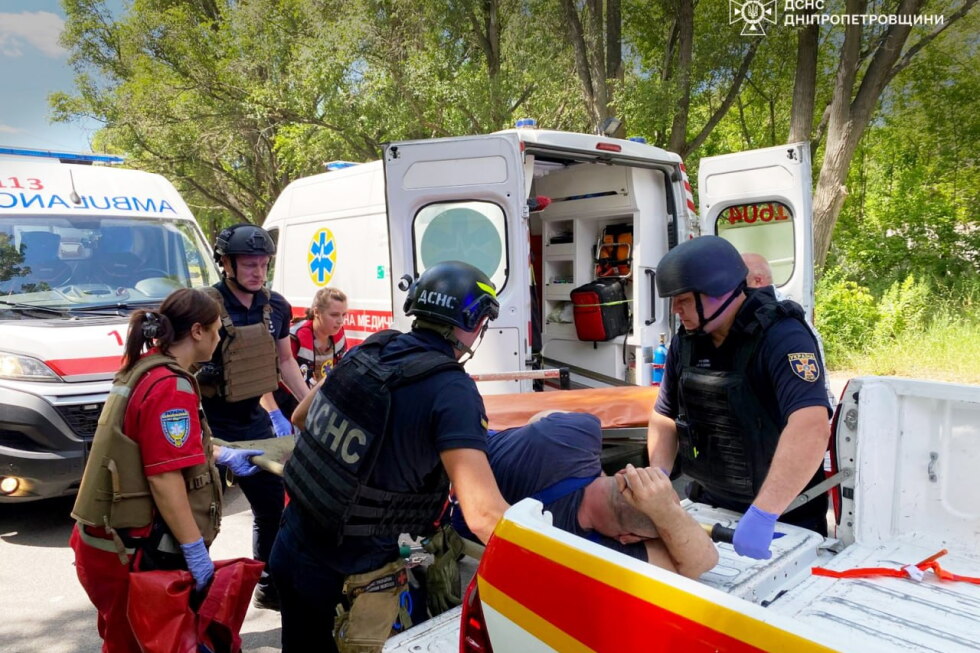
    Casualty reports from across the country reflect the broad impact of the barrage. Four civilians, including a 12-year-old child, were killed in Kyiv, with more than 50 others injured in the capital. Tetiana Sokol, a 54-year-old Kyiv resident, described the terror of the attack to the Associated Press: two missiles struck just blocks from her home, forcing her and her dog to take shelter in an interior hallway as blast waves shattered windows and lit up the night sky. “On the third attack everything broke, everything flew, we were shocked, we didn’t know where to run. I grabbed whatever came to hand and ran away with the dog,” she said. “I still can’t find the cats in the house, they climbed out somewhere, I don’t even know. No windows, nothing, the dog is still walking around in stress.”

    Beyond Kyiv, nine civilians were killed and 23 wounded in the southern port city of Odesa, three killed and roughly 36 injured in the central Dnipro region, and one civilian killed in the southern Zaporizhzhia region. Ukrainian Foreign Minister Andrii Sybiha condemned the attack in a post on X, writing, “Such attacks cannot be normalized. These are war crimes that must be stopped and their perpetrators held to account.”

    Ukraine’s Air Force reported that its air defense systems successfully intercepted or disabled 667 of the 703 incoming Russian targets, including 636 Iranian-made Shahed drones and other uncrewed aerial vehicles. Despite this high interception rate, 20 attack drones and 12 missiles still reached their targets, striking 26 populated and civilian locations across the country. The Associated Press continues to cover developments in the Russia-Ukraine war at its dedicated hub.

  • ‘Deliberate and powerful’: Daughter of Bondi terror attack victim welcomes council plan to co-host antisemitism summit

    ‘Deliberate and powerful’: Daughter of Bondi terror attack victim welcomes council plan to co-host antisemitism summit

    Almost one year after Australia’s devastating 2025 Bondi terror attack that left 15 innocent people dead, a new push to confront rising antisemitism has gained the support of a victim’s family. On Saturday, details emerged of Waverley Council’s proposed plan to co-host a national antisemitism summit, scheduled for late November, two weeks ahead of the December 14 first anniversary of the mass shooting. The proposal has already earned public backing from Sheina Gutnick, whose father Reuven Morrison was among those killed in the brutal attack.

    Gutnick, who joined the global Combat Antisemitism Movement (CAM) earlier this month following her father’s death, has thrown her full support behind the summit, framing the event as a critical step to root out violent hate before it can claim more lives. In a statement shared with media, Gutnick emphasized that holding the gathering in Bondi itself carries profound symbolic weight. This community, she noted, has already paid the ultimate price for unchecked antisemitism, making it the logical place to expand Australia’s national response to the ideology.

    “My father was killed because of hatred that was allowed to grow unchecked,” Gutnick said. “If this summit is to mean anything, it has to confront that hatred at its source. That means bringing local councils together with interfaith leaders, educators, and youth workers to invest in deradicalization, early-intervention, and prevention measures that stop the next attack before it is ever planned.” The summit will bring together cross-sector leaders from across the country to map out actionable strategies to identify, expose, and address antisemitism in all its forms.

    Waverley Council is set to hold a formal vote on the proposal next week, which would see the local government partner with the New South Wales state government and the Commonwealth government of Australia to stage the two-day event on November 26 and 27. Waverley Mayor Will Nemesh has also voiced strong support for the plan, arguing that the summit comes at a critical moment for both local and national efforts to build inclusive, cohesive communities.

    “Co-hosting the summit presents a powerful and timely opportunity to bring together councils, community leaders and government partners to reflect, honour the memory of victims, and recommit to building cohesive communities free from antisemitism,” Nemesh said. For Gutnick and other families affected by the attack, the summit is more than a commemorative event—it is a chance to turn a national tragedy into meaningful action that can prevent future acts of terror fueled by hate.

  • Fresh Russian barrage kills 14 in Ukraine

    Fresh Russian barrage kills 14 in Ukraine

    In a sharp escalation of hostilities following a widely violated 32-hour Orthodox Easter truce, overnight missile and drone barrages launched by Russia against multiple Ukrainian cities have killed at least 14 people — including a 12-year-old child — and left dozens more wounded, Ukrainian officials confirmed Thursday. Simultaneously, Ukrainian counter-strikes on Russian territory claimed the lives of two young children, according to Russian regional authorities, marking another bloody chapter in the four-year ongoing conflict.

    The deadliest of Thursday’s reported attacks hit the southern Ukrainian Black Sea port city of Odesa, where seven people lost their lives in the barrage, regional military administration head Sergiy Lysak announced via his Telegram channel. In Ukraine’s capital Kyiv, the strikes left four people dead, including the 12-year-old boy, and injured at least 45 more — a group that includes several frontline medical workers, Kyiv Mayor Vitali Klitschko shared in a public update.

    Images and damage assessments shared by Ukraine’s State Emergency Service paint a grim picture of the destruction across the capital: residential and commercial structures were set ablaze, vehicle parks were reduced to charred wrecks, building windows were shattered across multiple neighborhoods, and several prominent hotel buildings suffered significant external damage. In Kyiv’s Podilsky district, one attack leveled part of an 18-story residential apartment block after a drone struck the building directly; emergency responders managed to pull one surviving child from the rubble of the collapsed structure, Klitschko added.

    Further casualties were recorded in central Ukraine’s Dnipropetrovsk region, where three people were killed in the strikes, regional administration head Oleksandr Ganzha confirmed. A separate attack on Kharkiv, Ukraine’s largest northeastern city, left two elderly residents wounded, regional military administration head Oleg Synegubov said.

    The Russian strikes triggered a city-wide missile air raid alert across Kyiv, with capital military administration chief Tymur Tkachenko urging all residents to remain in secured shelter facilities until the threat was formally cleared.

    On the Russian side of the border, two children — ages 5 and 14 — were killed in what regional governor Veniamin Kondratyev described as a terrorist drone attack on residential buildings in Tuapse, located in southern Russia’s Krasnodar Krai region. Kondratyev shared the news of the children’s deaths via his own Telegram channel Thursday morning.

    The fresh wave of violence comes just days after the 32-hour unilateral Orthodox Easter truce, declared by Russia earlier in the week, ended amid mutual accusations of widespread violations from both Moscow and Kyiv. For months, Russia has launched near-daily drone and missile strikes across Ukrainian territory, while Ukrainian forces have regularly carried out retaliatory strikes on targets inside Russian borders, a tit-for-tat pattern that has continued to drive civilian casualties on both sides.

  • Ukraine’s army evolves under fire, with new units challenging Soviet legacy

    Ukraine’s army evolves under fire, with new units challenging Soviet legacy

    In the chaotic opening weeks of Russia’s full-scale invasion of Ukraine in 2022, a Ukrainian agricultural tycoon gathered 30 volunteers to form a small self-defense unit. He had no guarantee he would survive to see the group’s future, let alone watch it grow into one of Ukraine’s most capable and innovative fighting forces. Today, that small contingent has expanded into the 40,000-strong Khartiia Corps, a core component of Ukraine’s official defense structure that is leading a quiet revolution in the country’s military, breaking from decades of rigid Soviet-era doctrine.

    Vsevolod Kozhemyako, founder of the unit and now a senior adviser to the corps’ commander, framed the group’s mission around a core truth for Ukraine: the nation’s ultimate security guarantee lies in building a modern, effective army of its own. “Ukraine needs to have an effective modern army. And this is our number one guarantee of the country’s security,” Kozhemyako said. “We have kids, we have grandkids, and we will stay on this territory. The future of this country depends on us.”

    Khartiia’s rapid rise comes as Ukraine navigates stalled peace talks, shifting global attention away from the conflict to other global hotspots, and a decades-long struggle to shed Soviet military traditions that have plagued its forces for years. After the collapse of the Soviet Union, Ukraine inherited a massive military arsenal and force structure, but decades of underinvestment, corruption, and unaddressed institutional weakness were laid bare in 2014, when Russia annexed Crimea and launched its full-scale invasion of the Donbas. That shock sparked the first wave of volunteer mobilization and long-delayed military reforms, changes that helped Ukraine fend off Russia’s 2022 full-scale invasion. But as the war dragged into its third year, old flaws reemerged: rigid top-down command, crippling bureaucracy, and a culture that punishes bad news rather than encouraging honest problem-solving, all with tangible costs on the front line.

    From its founding, Kozhemyako said Khartiia was built to reject that outdated model. As a service member who had fought since 2014, he knew first-hand the shortcomings of Ukraine’s post-Soviet force structure, and many of his earliest volunteers were veterans who refused to serve in traditional army units, but were eager to defend their country. Many of those early recruits came from civilian business backgrounds, bringing with them a mindset focused on initiative, adaptability, and results rather than rigid formalities.

    The corps built its doctrine from the ground up, adapting U.S. Army planning frameworks to Ukraine’s battlefield realities. It integrated Western protocols including Troop Leading Procedures (TLP) and After Action Reviews (AAR), refining the systems through in-house expertise rather than forcing rigid adherence to external models. TLP empowers lower-level units to plan operations far faster than traditional top-down structures, a critical advantage for seizing fleeting tactical opportunities on dynamic front lines. AAR requires troops to systematically debrief every mission, identifying what went wrong, why, and how to improve — a practice the corps has applied with particular rigor to its rapidly evolving drone and robotics program.

    Khartiia’s pioneering work with battlefield technology has even drawn international attention from U.S. military leaders. In an article published in Military Review, the U.S. Army’s official professional journal, Major General Curtis Taylor highlighted Khartiia’s December 2024 drone assault on Russian positions near Kharkiv as a milestone: the first fully robotic offensive against enemy positions in modern warfare. For the U.S. Army, Taylor argued, the operation is a critical wake-up call to rethink how traditional armored formations must adapt to survive on future battlefields.

    Today, robotics and autonomous systems are a routine part of Khartiia’s daily operations, used for everything from front-line supply deliveries to casualty evacuation. One 23-year-old platoon commander, who transferred to the corps from a traditional army unit and spoke on condition of anonymity per Ukrainian military rules, said he was immediately struck by how little emphasis the unit placed on unnecessary rigid formalities that had defined his previous posting — from strict, combat-irrelevant dress codes to repetitive administrative busywork.

    “People understand why we are here, and they don’t overload us with unnecessary tasks,” he said, noting he had just patrolled his position in a pair of soft blue house slippers. He also pointed to a starkly different command culture: unlike traditional units, where a rigid hierarchy and fear of punishment discouraged honest communication between junior troops and senior officers, Khartiia’s structure is built on mutual trust.

    “When officers look at you from above, like in rear units, they become almost like enemies to you,” he said. “In Khartiia, relationships are different. When you go on a mission, you trust the people giving you orders.”

    That cultural and doctrinal shift has delivered tangible battlefield results. In December 2025, Khartiia led a major counteroffensive in the Kupiansk direction, liberating multiple villages north of the city and pushing Russian forces back to the Oskil River. The Washington-based Institute for the Study of War noted that seizing control of Kupiansk had been a top Russian priority since mid-2025, and after months of sustained assaults, Russian forces had failed to secure any significant gains in the sector. The think tank assessed that the operation proved Ukraine’s military remains fully capable of pulling off successful counterattacks and securing tactically important gains, particularly when Russian forces are overstretched across multiple front sectors. Like military forces on both sides of the conflict, Khartiia does not disclose public casualty figures, and has not suffered any major operational setbacks to date.

    Beyond its battlefield successes, Khartiia has also revolutionized how Ukrainian military units handle recruitment, outreach, and internal management. Operating largely on independent recruitment and private fundraising, the corps built a professional human resources system and a strong public brand, leveraging YouTube and social media, partnering with public figures, and simplifying online donations to expand its support base. A senior Ukrainian Ground Forces officer noted that the Third Army Corps and Khartiia were the first Ukrainian units to build distinct public brands, a model that other formations are now actively studying as the entire army faces ongoing pressure to recruit new troops.

    “The approaches that work in the commercial sphere translate perfectly here — only you are competing not for profit, but for people, equipment and attention of the volunteers,” the officer said.

    Inside one of Khartiia’s underground frontline command posts near Kharkiv, the unit’s philosophy is on full display: large screens stacked wall-to-wall display real-time reconnaissance footage from the front, overseen by a former bodybuilding coach who rose through the ranks from ordinary soldier to senior commander, dressed in a Khartiia hoodie with an energy drink at his keyboard. The command post feels more like a high-tech gaming facility than a traditional military headquarters, a reflection of the corps’ informal, results-first culture.

    “One of our secrets is that we don’t spare people during training — we train them constantly,” the commander said. “But during combat, it’s the opposite. People come first. We don’t save drones or equipment at the expense of our people.”

    Khartiia is now working to spread its model across Ukraine’s military, forging formal partnerships with other reform-minded formations. Most recently, Khartiia and the Third Army Corps, another leading new-wave formation, launched a joint training initiative to share resources, tactics, and expertise to standardize their modern fighting approach across units. For the two corps’ commanders, who are adjacent on the front line, the initiative grew from a shared practical observation: the biggest gap across Ukraine’s wider military is the urgent need to overhaul outdated basic combat training for troops, non-commissioned officers, and junior commanders.

    Khartiia commander Ihor Obolienskyi estimates that roughly 300,000 Ukrainian troops are deployed along the entire front line, with Khartiia and the Third Army Corps accounting for around 80,000 of that total — a large enough force to drive meaningful institutional change, even within a military system that remains inherently resistant to rapid overhaul. Commanders from other traditional army units have already reached out to study Khartiia’s model, a sign of growing demand for reform across the force. Still, it remains unclear whether Ukraine’s senior military command will be willing to fully abandon the Soviet legacy that has shaped the force for decades.

    Andrii Biletskyi, commander of the Third Army Corps, said during a joint briefing with Khartiia that the goal of the initiative is simple: to deliver a proven, tested reform tool to Ukraine’s General Staff. “Whether they accept it or not — that is their decision,” Biletskyi said.

  • Japan pledges $10bn to help Asian countries deal with oil crisis

    Japan pledges $10bn to help Asian countries deal with oil crisis

    Against a backdrop of sweeping energy market chaos sparked by the ongoing Iran war, Japan has launched a landmark $10 billion (£7.4 billion) cooperation initiative to support neighboring Asian economies, particularly those in Southeast Asia, in stabilizing critical energy supplies including crude oil. The new framework was formally announced Wednesday by Japanese Prime Minister Sanae Takaichi, following a virtual summit that brought together leaders from across the region.

    In a post-meeting press briefing, Takaichi emphasized the deep, interconnected economic ties that bind Japan to the broader Asian region, noting that Japan itself relies on Southeast Asian supplies of petroleum-derived products, most crucially for the manufacturing of essential medical equipment. “Japan is closely interconnected with each Asian country through supply chains and mutually dependent with them,” she stated.

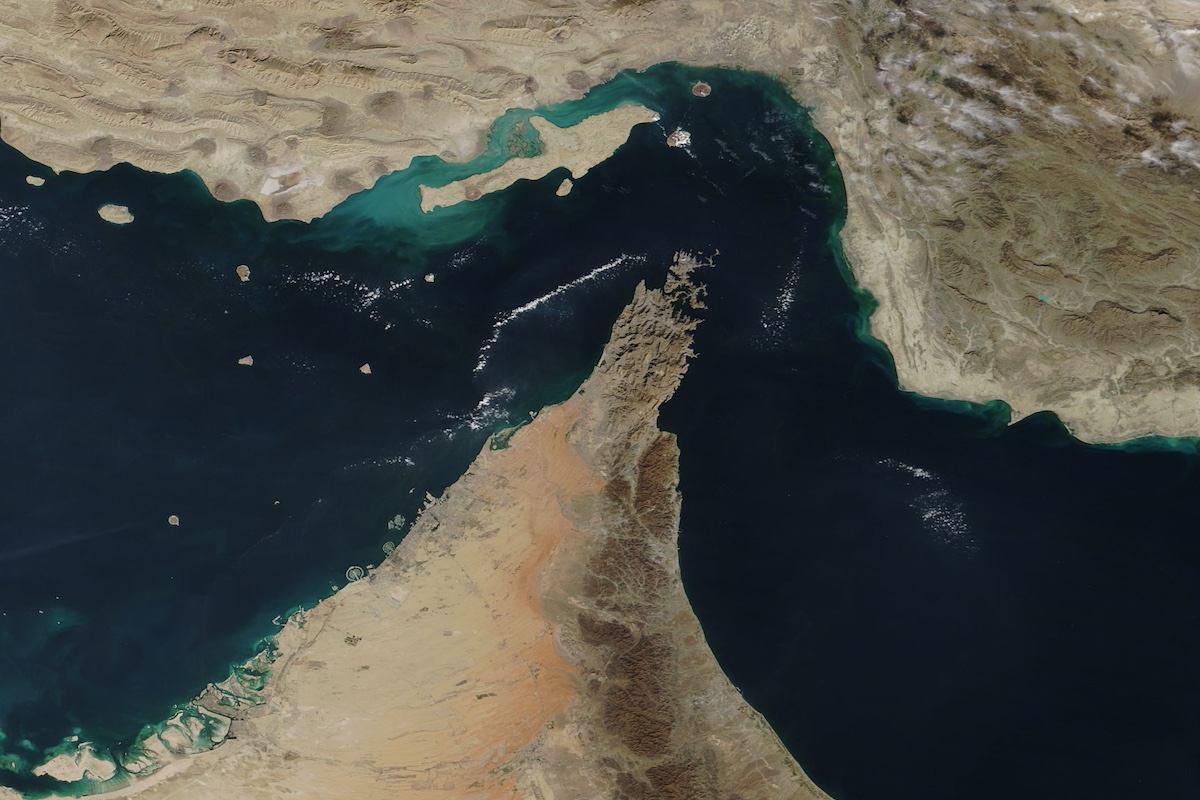
    The core goals of the cooperation framework are threefold: to help regional states secure steady access to crude oil and refined petroleum products, to preserve the integrity of cross-border supply chains, and to expand strategic energy stockpiling capacity across the region. Geographically, Asia faces uniquely high risk from energy disruptions tied to tensions around the Strait of Hormuz: nearly 90 percent of all oil and gas moving through the critical global chokepoint is destined for Asian markets, leaving the region disproportionately exposed to blockades or shipping interruptions.

    According to Japan’s Ministry of Foreign Affairs, the $10 billion pledged is roughly equal to the total annual value of crude oil imports by all member states of the Association of Southeast Asian Nations (ASEAN). The initiative received broad backing from participating leaders, including representatives from the Philippines, Malaysia, Singapore, Thailand, Vietnam, Bangladesh and South Korea. Funding for the plan will be pooled from multiple sources, including Japan’s state-backed financial institutions such as the Japan Bank for International Cooperation, Nippon Export and Investment Insurance, and the Japan International Cooperation Agency, alongside contributions from the Asian Development Bank.

    Takaichi moved to reassure the Japanese public, confirming that the new initiative would not compromise domestic energy security in Japan. As of the end of 2025, Japan holds strategic crude oil reserves sufficient to cover 254 days of domestic consumption, though the ongoing global energy crisis has already prompted Japanese authorities to draw down these stockpiles. Last month, Japan released a historic volume of reserves equal to 50 days of domestic use, with a further release equivalent to 20 days of consumption scheduled for early May.

    Domestically, Japan continues to grapple with growing anxiety over potential shortages of naphtha, a crude-derived petrochemical that serves as a foundational raw material for plastic manufacturing. These concerns are most acute in the country’s healthcare sector, where critical supplies ranging from syringes and disposable gloves to dialysis equipment depend on naphtha inputs. Japan’s healthcare system is already operating under significant strain from an aging population, and shortages of the material could exacerbate existing pressures. While Takaichi has called for calm, affirming that no immediate supply disruptions are expected, market jitters and public worry persist.

    Energy insecurity has already spread across Southeast Asia, where skyrocketing oil prices have hit household budgets and government budgets hard. Many regional governments have rolled out public energy conservation campaigns, urging citizens to carpool and reduce air conditioning use to cut demand. The Philippines has already gone a step further, declaring a national energy emergency. Speaking at Wednesday’s Japan-hosted summit, Philippine President Ferdinand Marcos Jr. called on ASEAN to activate its longstanding regional fuel-sharing pact to mitigate the crisis. “No single country in Asia can insulate itself from supply chain shocks of this scale by acting alone,” he told attendees.

  • Harry and Meghan join Aboriginal walking tour in Melbourne

    Harry and Meghan join Aboriginal walking tour in Melbourne

    On the third day of their private visit to Australia, the Duke and Duchess of Sussex Prince Harry and Meghan dived deep into the 60,000-year-long cultural history of Australia’s First Nations people during a guided walking tour through Melbourne’s most significant Indigenous heritage sites.

    Led by local Indigenous knowledge-holders, the couple traced the banks of the Birrarung – the traditional First Nations name for what is now known as Melbourne’s Yarra River – starting the journey at the Koorie Heritage Trust located in the city’s Federation Square. The walking route, known as the Scar Tree Walk, is widely recognized as one of Melbourne’s most culturally important Indigenous heritage experiences, designed to connect visitors to the ongoing story of Australia’s first peoples.

    During the tour, Harry and Meghan had the rare opportunity to examine and handle a Marngrook, a traditional handmade ball crafted from possum fur. Historians and Indigenous cultural leaders broadly believe this traditional object, used for centuries in First Nations communal games, is the original inspiration for the signature oval ball used in Australian Rules Football (AFL) – Australia’s most popular professional sport. The hands-on encounter came one day after Prince Harry joined an AFL team for a public training session to learn the fundamentals of the game, a connection Koorie Heritage Trust CEO Tom Mosby, a proud Kulkalgal and Kemer Kemer Meriam man, called deliberate and meaningful.

    “The fact that the Duke yesterday was at a football club, I think it’s a really great connection,” Mosby told the BBC in an interview after the tour. Beyond the Marngrook demonstration, the couple explored a public art installation centered on Indigenous storytelling and learned how the Birrarung and its surrounding lands have served as a critical source of food, fishing, and hunting for First Nations traditional owners for millennia.

    Mosby explained that the tour was designed to pull back the curtain on Melbourne’s layered history, showing that beneath the surface of one of the world’s most modern global cities lies a living, ongoing Indigenous connection to the land. “Melbourne is a contemporary urban place, but at the same time there is still a very strong connection by the Aboriginal people to this traditional country,” he added.

    The conversation also turned to Victoria’s groundbreaking Treaty process, a landmark policy shift that made national history when the state passed Australia’s first formal legally recognized treaty with First Nations traditional owners just this year in 2025. Mosby noted that the couple expressed keen interest in learning about the treaty and its implications for Indigenous self-determination across Australia.

    The couple’s low-key cultural outing drew spontaneous encounters with locals and tourists along the river. A Brazilian traveler, who was in Melbourne for her sister’s wedding and out for an early morning run, stumbled on the couple and called the meeting a warm, unexpected delight, describing them as “the most gorgeous couple.”

    Local resident Narelle Zagami sought out the pair to greet them, saying she felt emotional meeting Harry and calling them “just beautiful people.” When asked about public criticism of the couple’s decision to mix charitable engagement with commercial activities during their private trip as non-working royals, Zagami pushed back, arguing that as private citizens, “They’ve got to make a living as well. It’s part of their life now, this sort of thing, so I think it’s good.”

    Local Vita Benic, who also made a point to meet the couple, shared that she had previously waited to greet Harry’s father King Charles III, then Prince of Wales, and his first wife the late Princess Diana during their 1983 tour of Australia. Benic brought hand-selected children’s colouring books as gifts for Harry and Meghan’s two children, Prince Archie and Princess Lilibet, and said, “I just wanted to let them know what wonderful people they are… They’re the epitome of what a family should be.”

    This trip marks Harry and Meghan’s first visit to Australia since 2018, just months after their royal wedding, when they drew massive crowds across a nine-day official working tour. This year’s visit is being conducted in a private capacity, blending charity appearances, cultural engagement, and commercial ventures. On the day before the cultural tour, Harry headlined the launch of a new report on father’s mental health, where he opened up about his own experiences as a parent and urged new generations to build better parenting legacies than the ones they inherited. He also paid his respects at the Australian War Memorial in Canberra earlier in the trip. Meanwhile, Meghan filmed a guest appearance as a judge on the upcoming episode of top-rated cooking competition MasterChef Australia, set to air on Sunday.

  • Russian attacks leave three dead in Ukraine

    Russian attacks leave three dead in Ukraine

    Five years into the full-scale Russian invasion of Ukraine, a fresh wave of coordinated Russian missile and drone assaults across multiple Ukrainian cities has renewed civilian bloodshed, just days after a fragile Orthodox Easter ceasefire fell apart amid mutual accusations of violations.

    Ukrainian officials confirmed that the overnight strikes on Wednesday left at least three civilians dead and dozens more injured across the country, with the capital Kyiv bearing some of the deadliest tolls. Kyiv Mayor Vitali Klitschko announced via Telegram that two civilians — a 12-year-old boy and a 35-year-old woman — were killed in attacks on the capital, while at least 18 other people were wounded. In Kyiv’s central Podilsky district, rescuers raced against time to pull a trapped mother and child from the rubble of a partially collapsed 16-story residential building, while repeated shelling in the city’s northern outskirts left four emergency medical responders among the injured.

    The violence was not limited to the capital. In the southeastern Ukrainian city of Dnipro, regional administration head Oleksandr Ganzha confirmed one civilian death and at least 10 injuries, with social media footage showing large uncontrolled fires burning in damaged urban buildings. Further strikes left casualties across other populated areas: a 77-year-old woman and 66-year-old man were wounded in a drone attack on Kharkiv in northeastern Ukraine, while five additional people were injured in an assault on the key southern port city of Odesa.

    The cross-border violence spilled into Russian territory as well, with Veniamin Kondratyev, governor of Russia’s southern Krasnodar Krai region, stating via Telegram that a Ukrainian drone attack killed two children, aged five and 14, at the site.

    This latest escalation comes on the heels of a brief, weekend ceasefire declared for Orthodox Easter celebrations, which collapsed almost immediately as both Moscow and Kyiv traded accusations of hundreds of ceasefire violations from the opposing side.

    Peace efforts to end the five-year conflict have remained deadlocked for months. Multiple rounds of negotiations mediated by the United States had previously moved toward potential talks, but the process has stalled completely since U.S. President Donald Trump redirected U.S. diplomatic and security focus to the ongoing conflict in the Middle East. Negotiating positions remain far apart: Ukraine has repeatedly pushed for a full, permanent ceasefire as a binding first step before any further talks on a lasting peace agreement to end the Russian invasion. Moscow, by contrast, has refused to implement a ceasefire before a final peace deal is reached, a stance that has led Kyiv to accuse Russian leadership of acting in bad faith and having no genuine intention of ending the full-scale invasion.

  • Pope to visit Cameroon conflict zone under high security

    Pope to visit Cameroon conflict zone under high security

    Nearly a decade after a deadly separatist insurgency first erupted in Cameroon’s English-speaking northwest region, Pope Leo XIV arrived in the conflict’s epicenter, Bamenda, on Thursday for a heavily secured peace mission aimed at healing divisions and ending years of bloodshed.

    The pontiff’s visit to the volatile zone comes on the third leg of his first major international tour, which already saw two days of unrest and political tension in Algeria, marked by twin suicide bombings and a public spat with former U.S. President Donald Trump. Ahead of the trip, separatist fighters fighting for an independent “Ambazonia” announced a three-day truce to clear the way for the papal visit, clearing a path for an expected gathering of 20,000 worshippers to attend the pope’s public mass and keynote address.

    For local residents and religious leaders, the pontiff’s visit carries profound hope for a breakthrough in the conflict that has shattered communities across Cameroon’s two anglophone regions. “The pope’s visit will soften the hearts of the extremists so that we can find common ground… and reach a peaceful solution,” said Andrew Nkea, Archbishop of Bamenda, echoing widespread local expectations of progress. Even among those who have personally suffered from the violence, the visit has sparked tentative optimism: Giovanni Mbuna, a 36-year-old who was abducted by separatists in 2023, told reporters that all violence and kidnapping should cease the moment the pope sets foot on Bamenda’s soil.

    Not all voices have greeted the visit with unreserved support, however. Some Cameroonian Catholics have raised concerns that the trip could inadvertently lend credibility to 93-year-old long-serving President Paul Biya, whose disputed fourth-term re-election six months prior was met with a violent government crackdown on protesters. On Wednesday, during a meeting with Biya at the presidential palace, the pope pushed back against government abuses carried out in the name of counterinsurgency, delivering an uncharacteristically pointed rebuke that the president heard firsthand. “Security is a priority, but it must always be exercised with respect for human rights,” Leo stated, a clear call for accountability amid reports of extrajudicial violence by both government forces and separatist fighters.

    The conflict that brings the pope to Cameroon dates back to 2016, when protests against systemic marginalization of the country’s anglophone minority—who make up roughly one-fifth of the national population—by the French-speaking majority were violently suppressed by authorities. The crackdown escalated into a full insurgency by 2017, and by 2024, human rights groups estimate the conflict has killed more than 6,000 people and displaced hundreds of thousands.

    Leo’s visit to Cameroon is only the fourth papal trip to the central African nation, and the first since Pope Benedict XVI’s 2009 visit. When the U.S.-born pontiff arrived in the country on Wednesday, crowds of singing worshippers turned out to greet him despite the lingering security and political tensions.

    The papal tour has already faced political headwinds before arriving in Cameroon, after Trump publicly stated he was “not a big fan” of Leo following the pope’s calls for peace in the Middle East. U.S. Vice President JD Vance, a practicing Catholic, added to the criticism, urging the Vatican to “stick to matters of morality.” Leo dismissed the attacks outright during a press briefing aboard the papal plane on Monday, saying: “I have no fear, neither of the Trump administration, nor speaking out loudly about the message of the Gospel.”

    After concluding his visit to Bamenda, the pope will travel to Cameroon’s economic capital Douala on Friday to lead mass for a crowd projected to reach hundreds of thousands, before departing for Angola on Saturday to continue his international tour.

  • Australian judge rejects US Marine pilot’s appeal against extradition to US

    Australian judge rejects US Marine pilot’s appeal against extradition to US

    CANBERRA, Australia — In a landmark ruling that keeps an extradition process on track, an Australian federal judge has rejected a legal challenge from a former U.S. Marine Corps pilot fighting his transfer to U.S. authorities, who accuse the aviator of leading illegal training for Chinese military personnel more than 10 years ago.

    Fifty-seven-year-old Daniel Duggan, a Boston-born former pilot who had been residing in Australia before his 2022 arrest, stands accused of conducting unlicensed training for Chinese military aircrew while working as an instructor for South Africa’s Test Flying Academy between 2010 and 2012, according to a U.S. indictment. Duggan has repeatedly denied all charges against him, arguing the accusations are nothing more than political maneuvering and that he has been unfairly targeted by U.S. authorities.

    Federal Court Justice James Stellios handed down his ruling Thursday, confirming that no legal or jurisdictional error was committed by former Australian Attorney-General Mark Dreyfus when he approved Duggan’s extradition earlier in 2024. The judge’s decision to dismiss the appeal clears a major legal hurdle for the extradition process.

    Speaking to reporters outside the Canberra courthouse immediately after the ruling, Saffrine Duggan — Daniel Duggan’s wife and mother to their six children — said the defendant’s legal team would explore all available avenues to challenge the extradition order. The team has also formally requested that current Attorney-General Michelle Rowland, Dreyfus’s successor, overturn the extradition approval.

    “We are deeply disappointed by this outcome, and we will take time to carefully assess every legal option open to us,” Saffrine Duggan told reporters. “Make no mistake: we are not backing down. Today’s ruling does not mark the end of our fight for justice.”

    In a formal statement released after the judgment, a spokesperson for Rowland’s office acknowledged the court’s ruling and confirmed that Duggan will remain in Australian extradition detention until he is formally transferred to U.S. custody.

    The case against Duggan originated from a 2016 indictment issued by the U.S. District Court in Washington, which remained sealed until it was unsealed in late 2022. Prosecutors claim Duggan received roughly 88,000 Australian dollars, equal to around 61,000 U.S. dollars, split across nine separate payments from a co-conspirator, in addition to covering travel costs to the U.S., South Africa and China. Prosecutors note that much of this travel was labeled as “personal development training” to mask the true nature of the work, according to the indictment.

    Since his arrest in 2022 at a grocery store near his New South Wales family home, Duggan has been held in maximum-security detention in Australia, a status that will continue following Thursday’s ruling.