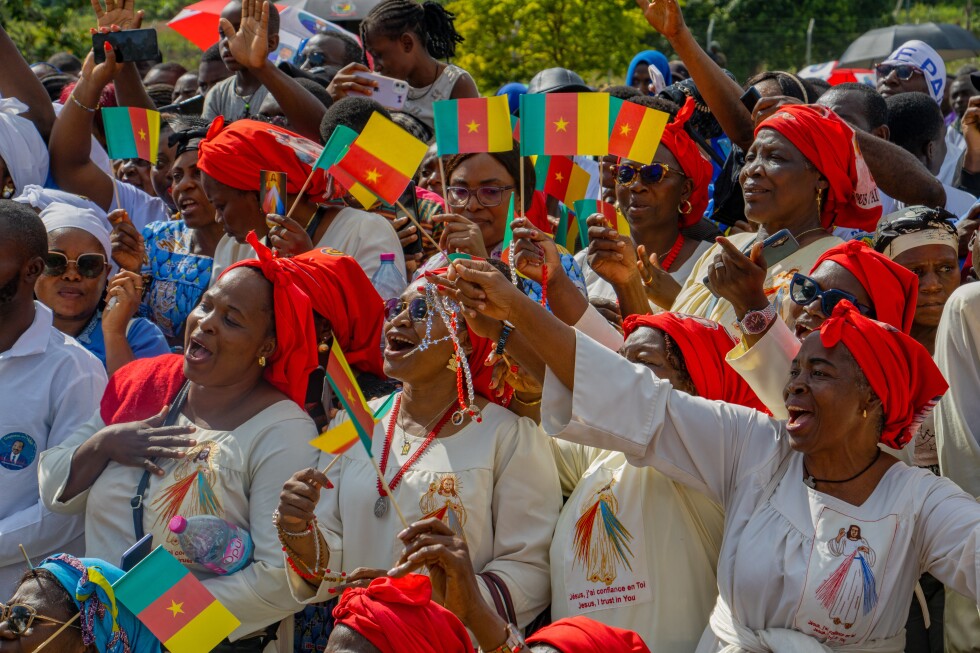
YAOUNDE, Cameroon – In a high-stakes visit focused on reconciliation and accountability, Pope Leo XIV has arrived in Cameroon as part of his groundbreaking four-nation tour of Africa, marking the first papal visit to the continent by the first American pope. His journey centers on Bamenda, the heart of a long-simmering separatist conflict in Cameroon’s Anglophone northwest that humanitarian organizations have labeled one of the globe’s most underreported and neglected humanitarian crises.
The 93-year-old pontiff is scheduled to lead an interfaith peace gathering Thursday in Bamenda, a city located just kilometers from Cameroon’s western border with Nigeria. The dialogue will bring together leaders from across Cameroon’s religious and traditional communities, including a Mankon traditional ruler, a Presbyterian Church moderator, a Muslim imam, and a Catholic nun. The gathering is designed to amplify the work of local interfaith movements that have spent years working to end the violence and support thousands of civilians left traumatized by the conflict. Following the peace meeting, Pope Leo will celebrate an open-air Mass for local residents.
The conflict, which stretches back to 2017 when separatists launched an armed rebellion for an independent Anglophone state called Ambazonia, has deep roots in Cameroon’s colonial history. After World War I, the former German colony of Cameroon was split into two territories administered by Britain and France. In a 1961 United Nations-supervised referendum, the two British-administered Anglophone regions voted to unite with the independent French-speaking Republic of Cameroon. Separatist leaders argue that for decades, the Anglophone minority has faced systematic political and economic marginalization at the hands of the country’s French-speaking majority. The ongoing conflict has killed more than 6,000 people and forced more than 600,000 residents to flee their homes, per data from the International Crisis Group, even as global media and diplomatic attention has largely overlooked the crisis.
In a notable gesture ahead of the pope’s visit, separatist military factions announced a three-day ceasefire to facilitate safe passage for the papal delegation and local worshippers. Lucas Asu, spokesperson for the separatist Unity Alliance, framed the pause in fighting as a demonstration of the movement’s commitment to humanitarian principle even amid active conflict. “This pause reflects a deliberate commitment to responsibility, restraint and respect for human dignity, even in the context of ongoing conflict,” Asu said, adding that the pope’s visit should remain a spiritual rather than political event, and should not be interpreted as an endorsement of Cameroon’s sitting government.
Upon his arrival in Cameroon Wednesday, the first stop of his leg in the country, Pope Leo delivered a blunt address to the nation’s leadership, calling for an end to systemic graft in the resource-rich nation. He directly urged that “the chains of corruption” be broken, in a public rebuke to long-ruling President Paul Biya. At 93, Biya is the world’s oldest sitting head of state, having held uninterrupted power since 1982. He secured a disputed seventh term in 2018 and claimed victory in last year’s contested election that extended his rule to an eighth term, a result that opposition leaders rejected as fraudulent.
While the frequency of deadly attacks has dropped in recent years, the conflict remains far from resolved. International-mediated peace negotiations between the Cameroonian government and separatist factions have stalled, with both sides repeatedly accusing the other of negotiating in bad faith. This visit marks a rare moment of global attention on a crisis that has spent years off the international agenda, with hopes among local peacebuilders that the papal spotlight will reinvigorate efforts toward a lasting negotiated settlement.
This Associated Press religion coverage is produced through AP’s collaboration with The Conversation US, with funding from Lilly Endowment Inc. AP retains sole editorial responsibility for all content.