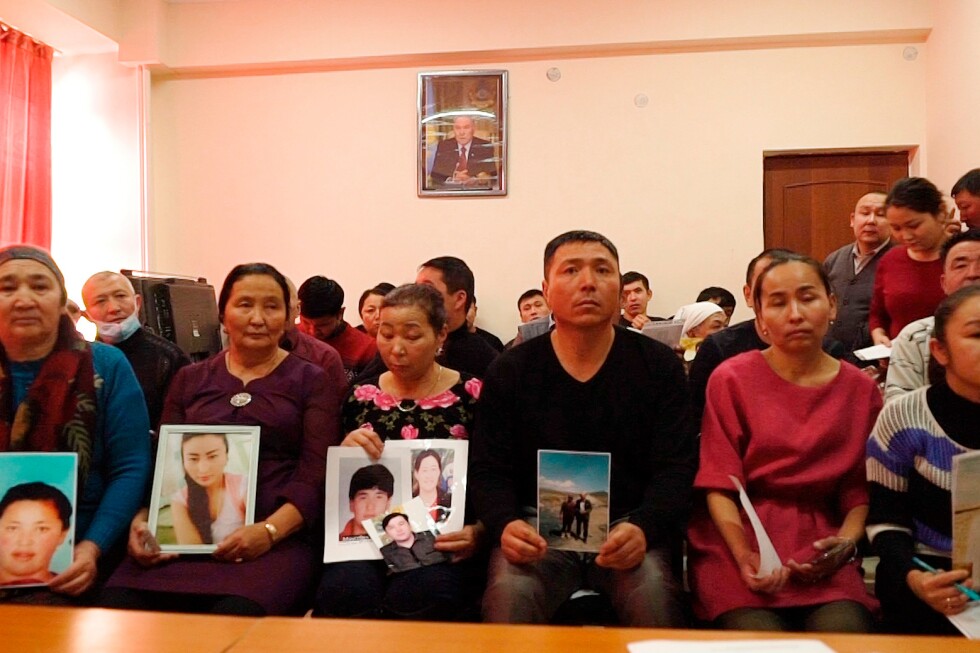
In a landmark decision that human rights advocates call an unprecedented shift in Central Asian geopolitical alignment, a Kazakh court has convicted 19 ethnic Kazakh activists who staged a protest against China’s long-running crackdown in the Xinjiang Uyghur Autonomous Region in late 2023. The ruling marks the harshest crackdown to date on voices critical of Chinese policy in the neighboring country, according to regional experts and rights watchdogs.
The November 2023 demonstration, held near Kazakhstan’s border with China, saw the activists call for the release of a Kazakh citizen detained by Chinese authorities in Xinjiang. During the protest, participants burned Chinese national flags and portraits of Chinese leader Xi Jinping, actions that Beijing later decried as a deliberate provocation. All 19 individuals convicted are citizens of Kazakhstan.
Court documents and local media reports confirm the sentencing: 11 of the activists received five-year prison terms on charges of “inciting discord,” while the remaining eight were handed down suspended sentences with strict movement restrictions. Shinquat Baizhan, the legal representative for the convicted group, has publicly verified these details.
Background to the verdict stretches back to 2017, when the Chinese government launched a sweeping security campaign in Xinjiang that interned more than one million Uyghurs, Kazakhs and other Muslim-majority ethnic minority groups in mass detention camps and prisons. While Beijing claims the campaign targeted extremism and has since wound down large-scale detentions, the region remains under heavy authoritarian control, with severe constraints on religious practice, cultural expression and cross-border movement. More than one million ethnic Kazakhs reside in Xinjiang, with thousands detained and countless others separated from family members across the border in Kazakhstan.
For Kazakhstan, a Central Asian nation of 19 million people that counts China as its largest trading and investment partner, Xinjiang policy has long been a sensitive diplomatic issue. Yalkun Uluyol, a China researcher with Human Rights Watch, explained that Kazakh authorities launched criminal probes into the protesters only after receiving a formal diplomatic protest from the Chinese consulate in Almaty, Kazakhstan’s largest commercial city. The Associated Press obtained and reviewed the diplomatic note, in which Beijing called the demonstration “an open provocation against the national dignity of the People’s Republic of China and an insult to the Chinese Communist Party and the Chinese people.”
When contacted for comment on the verdict, China’s Ministry of Foreign Affairs framed the proceedings as an exclusive internal matter for Kazakhstan, adding that the country is a “friendly neighbor” that “understands China’s position on Xinjiang governance.” Kazakhstan’s foreign ministry declined to provide any comment on the case.
The convicted protesters are all affiliated with Atajurt, a grassroots human rights organization that advocates for ethnic Kazakhs affected by repression in Xinjiang. The group has long operated under pressure in Kazakhstan, an authoritarian state that has little tolerance for domestic dissent. In 2019, authorities arrested Atajurt founder Serikzhan Bilash, forcing him into exile after he signed an agreement pledging to end all political activity. Until recently, however, the Kazakh government allowed limited Atajurt operations, acknowledging widespread public sympathy in the country for ethnic Kazakhs suffering persecution across the border.
That quiet tolerance has now evaporated, Uluyol said, as Kazakhstan deepens its economic and political ties to Beijing. “This is unprecedented. It signals that Kazakhstan is willing to sacrifice freedom of its people to maintain good relations with Beijing,” he noted. Prior to this ruling, individual activists speaking out on Xinjiang had faced pressure, but rights groups confirm this is the first time such a large group of activists has been given prison sentences for their advocacy.
Exiled Atajurt founder Bilash, now residing in the United States, warned the convictions will have far-reaching consequences for human rights documentation and support in Xinjiang. For years, the group has provided financial aid to families of detained ethnic Kazakhs, submitted testimonial evidence to the United Nations and foreign embassies, and collected hundreds of first-hand accounts from people searching for missing relatives detained in China.
“The world will lose more than just a human rights organization; it will lose the biggest window into the humanitarian disaster in neighboring Xinjiang,” Bilash said.