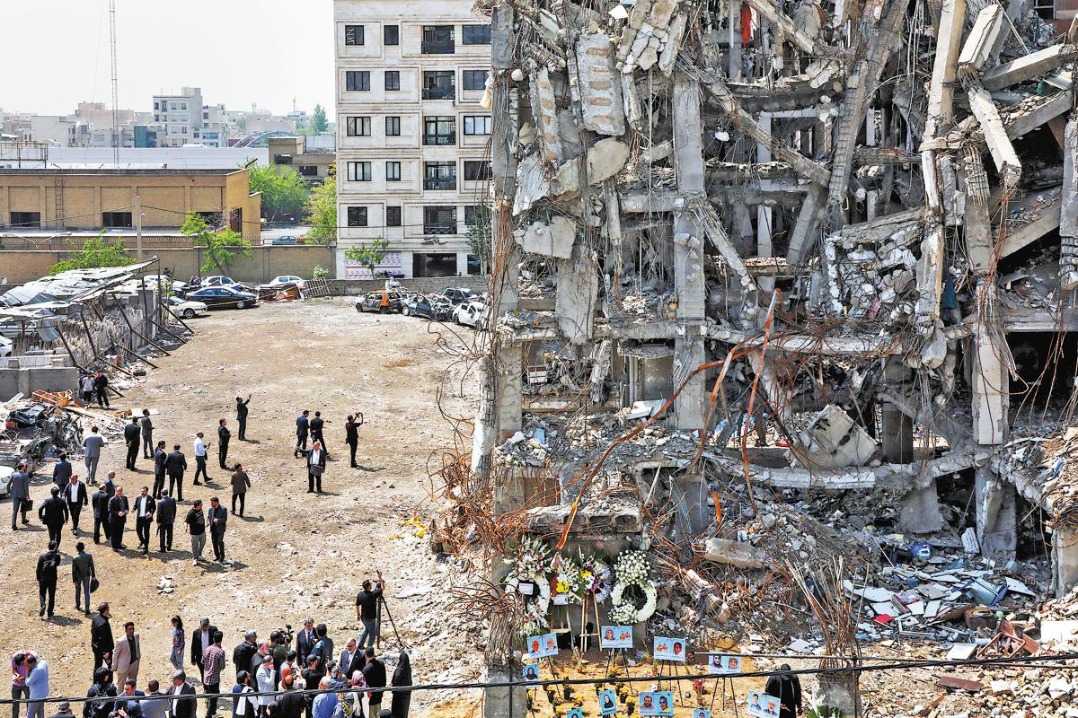
Tensions are rising across the Persian Gulf as a fragile ceasefire between the United States and Iran is set to expire Wednesday, with the United Nations calling for urgent action to preserve open navigation through the strategically critical Strait of Hormuz. Against a backdrop of conflicting rhetoric from both sides and ahead of a second round of peace talks scheduled in Islamabad, global powers are scrambling to prevent a wider regional conflict that could upend global energy markets.
During a Monday press briefing, Stephane Dujarric, spokesperson for UN Secretary-General Antonio Guterres, outlined the world body’s deep concern over recent maritime disruptions and escalating incidents in the strait over the prior 48 hours. The UN chief is calling for the immediate full restoration of international navigation rights through the waterway, which Dujarric noted has been plagued by conflicting reports and widespread uncertainty over its operational status. Dujarric emphasized that freedom of navigation must be respected by all parties involved, and rejected any military actions that target civilian infrastructure or intentionally harm civilian populations.
Diplomatic efforts are continuing to de-escalate tensions, with Pakistani-mediated peace talks set to open in Islamabad early Wednesday. Unnamed Pakistani officials, speaking on condition of anonymity due to their lack of authorization to speak publicly, confirmed to The Associated Press that US Vice President JD Vance will lead the American delegation, while Iranian Parliament Speaker Mohammad Bagher Qalibaf will head Tehran’s negotiating team. Multiple regional media outlets have confirmed additional high-profile members of the US delegation, including Trump’s special envoy Steve Witkoff and Jared Kushner, the US president’s son-in-law and senior advisor.
US President Donald Trump has delivered stark warnings about the outcome of the talks, telling PBS NewsHour Monday that if no agreement is reached before the ceasefire expires, “lots of bombs” will be launched against Iran. Trump has also left open the possibility of making a surprise appearance at the talks, after previously telling the New York Post that he would be willing to meet directly with senior Iranian leaders if negotiators are able to secure a preliminary breakthrough.
Iranian leaders have pushed back against American pressure, issuing firm statements rejecting what they describe as coercive diplomacy. Iranian President Masoud Pezeshkian wrote Tuesday on the social platform X that honoring commitments is the only foundation for meaningful negotiation. He noted that Iran holds deep, historically rooted mistrust of US actions, and that contradictory and unconstructive signals from Washington make clear the US is seeking Iran’s unconditional surrender — a outcome Pezeshkian said will never happen. “Iranians do not submit to force,” he wrote.
Iran’s top diplomat Abbas Araghchi echoed that sentiment during a phone call with Russian Foreign Minister Sergey Lavrov, saying contradictory US positions undermine Washington’s claims of pursuing diplomacy. According to Iran’s Mehr News Agency, Araghchi reaffirmed that Tehran will take all necessary steps to protect its national interests and security.
Senior Iranian military commander Ali Abdollahi also issued a warning Tuesday, saying Iranian armed forces are fully prepared to deliver immediate, proportional responses to any aggression from the US or its allies. Speaking in a statement marking the anniversary of the founding of the Islamic Revolutionary Guard Corps (IRGC), Abdollahi said the Iranian people are proud of the IRGC’s recent heavy missile and drone strikes against Israel and US targets. He added that Iranian forces will not allow the Trump administration to manipulate the situation or spread false narratives about battlefield conditions, especially developments surrounding the Strait of Hormuz.
Tensions spiked further this week after US military forces seized an Iranian container ship, the Touska, off Iran’s southern coast in the Sea of Oman Monday. Iran’s Foreign Ministry condemned the action as an act of “maritime piracy” and a blatant violation of international maritime law, per Iran’s official IRNA news agency. The ministry called on the United Nations, International Maritime Organization, and the international community to issue a firm, decisive response to what it called a criminal attack on legitimate international commercial shipping, adding that Iran will use all available tools to defend its national security and interests.
A second maritime incident followed Tuesday, when the US Department of Defense announced that US forces had boarded the Tifani, an oil tanker previously sanctioned for smuggling Iranian crude oil to Asian markets. The Pentagon said the operation was a routine right-of-visit maritime interdiction and was completed without incident.
The escalating conflict has already triggered serious consequences for global energy security. Fatih Birol, executive director of the International Energy Agency, told France Inter radio that the ongoing US-Iran tensions have sparked what he described as “the world’s worst-ever energy crisis” in modern history. With roughly 20% of global oil shipments passing through the Strait of Hormuz daily, any prolonged disruption to navigation through the waterway would send global energy prices soaring, exacerbating already strained energy markets worldwide.