分类: world

  • Trump warns Iran better ‘get smart soon’ and accept nuclear deal

    Trump warns Iran better ‘get smart soon’ and accept nuclear deal

    Escalating tensions between the United States and Iran have reached a new critical juncture this week, after former President Donald Trump issued a blunt public warning demanding Tehran capitulate to Washington’s strict nuclear oversight demands, while stalled peace negotiations have sent energy markets soaring and raised alarm over a global humanitarian catastrophe.

    For two months, Iran has held the Strait of Hormuz—one of the world’s most critical chokepoints for global oil and natural gas shipments, through which roughly a fifth of global daily oil consumption passes—under blockade, a retaliatory move after the United States and Israel launched a regional war two months ago. The U.S. has responded with its own naval blockade of Iran, putting massive pressure on the Islamic Republic’s already fragile economy while working to minimize fallout for American consumers.

    In a dramatic post to his social media platform Wednesday, Trump doubled down on his administration’s hardline stance, writing that “Iran can’t get their act together… They better get smart soon.” The post was paired with a viral doctored image showing Trump carrying a rifle against a backdrop of a destroyed desert fortress, emblazoned with the slogan “No more Mr. Nice Guy!”

    A senior U.S. administration official, speaking on condition of anonymity, confirmed that Trump recently met with oil industry executives to discuss extending the American naval blockade for months if negotiations remain deadlocked, while outlining steps to limit price increases for U.S. gasoline consumers. The official’s comments came after multiple press outlets reported Trump had already rejected a recent Iranian proposal brokered by Pakistan to reopen the Strait of Hormuz as broader talks proceed.

    The breakdown in talks immediately rippled through global energy markets Wednesday. By 13:35 GMT, Brent crude futures for June delivery jumped 5.16% to settle at $117 per barrel, marking the highest price point since a fragile bilateral ceasefire between the U.S. and Iran took effect on April 8.

    Beyond market volatility, the United Nations Development Programme has warned the conflict’s ripple effects—including skyrocketing energy and fertilizer prices—could push more than 30 million people across 160 countries into extreme poverty this year. UNDP chief Alexander De Croo described the crisis as “development in reverse” in comments to AFP.

    For Iran, the ongoing standoff is already taking a severe domestic toll. The Iranian rial hit an all-time historic low against the U.S. dollar this week, and ordinary Iranians expressed widespread despair and disillusionment with the endless cycle of negotiations and escalating sanctions. “Every time in recent years that negotiations have taken place, the economic situation of the people has only gotten worse. Sanctions have either started or intensified,” a 52-year-old Iranian architect told AFP, speaking on condition of anonymity. “They go to negotiate and come back with even more sanctions, and the issue is always nuclear. There’s no talk about people, the economy or freedom. People have the right to not even want to hear the word ‘negotiation.’”

    Speaking at a White House state dinner for Britain’s King Charles III Tuesday, Trump reiterated his non-negotiable position on Iran’s nuclear program, claiming Tehran had been “militarily defeated” and adding “we’re never going to let that opponent have a nuclear weapon.” Trump also claimed King Charles shared his stance on the issue.

    Iranian officials have rejected Trump’s demands and pushed back against claims of military defeat, with a senior army spokesman telling state TV Tuesday that Tehran “do not consider the war to be over” and hold “no trust in America.” “We have many cards that we have not yet used… new tools and methods of fighting based on the experiences of the past two wars, which will definitely allow us to respond to the enemy more decisively” should hostilities resume, said spokesman Amir Akraminia.

    The latest Iranian peace proposal, which was relayed to Washington via Pakistani mediators and reviewed by Trump administration officials at a Monday meeting, set clear Iranian red lines on both nuclear policy and the Strait of Hormuz, according to Iran’s semi-official Fars News Agency. Under the draft plan, Tehran would ease its blockade of the strait in exchange for Washington lifting its retaliatory naval blockade, while broader negotiations over the future of Iran’s nuclear program continue. But Iranian defense ministry spokesman Reza Talaei-Nik said Wednesday that Washington “must abandon its illegal and irrational demands,” adding that “the United States is no longer in a position to dictate its policy to independent nations.”

    Qatar, a U.S. ally that has served as a mediator in the conflict but still suffered Iranian strikes on its territory, warned this week that the standoff could devolve into a long-term “frozen conflict” if negotiators fail to reach a definitive breakthrough soon.

    Tensions have also spilled over onto the Lebanese front of the conflict, even after a recently extended ceasefire between Israel and Iran-backed Hezbollah, the armed group that drew Lebanon into the war after launching rocket attacks on Israel two months ago. Israel responded with widespread air strikes and a ground incursion into southern Lebanon.

    Lebanese officials confirmed Wednesday that an Israeli air strike killed one Lebanese soldier, marking the first deadly attack on Lebanese army forces since the ceasefire went into effect. A separate strike a day earlier wounded two additional soldiers. Lebanese President Joseph Aoun called for an end to the ongoing attacks Wednesday, saying “Israel must finally realise that the only path to security is through negotiations, but it must first fully implement the ceasefire in order to move on to negotiations. Israeli attacks cannot continue as they are. We are now waiting for the United States to set a date to begin direct negotiations.”

    A new UN-backed report released Wednesday warned that more than 1.2 million people in Lebanon are expected to face acute food insecurity in the coming months as a result of the conflict.

  • Israel accused of using ‘water as a weapon’ against Palestinians in Gaza

    Israel accused of using ‘water as a weapon’ against Palestinians in Gaza

    On April 29, 2026, global medical humanitarian organization Doctors Without Borders (MSF) released a damning new report that levels serious accusations against Israel, charging that the country has deliberately weaponized access to clean water against Palestinian civilians trapped in the besieged Gaza Strip as part of what MSF calls an ongoing campaign of genocide.

    The 36-page report, titled *Water as a Weapon: Israel’s Destruction and Deprivation of Water and Sanitation in Gaza*, draws its conclusions from on-the-ground field interviews, firsthand witness testimonies, and verified medical data collected by MSF teams operating in Gaza. The investigation confirms that Israel has systematically cut off Gaza’s population from adequate water supplies, a policy MSF frames as a deliberate act of collective punishment that is central to broader atrocities against Palestinians.

    “Deliberately denying Palestinians access to water is an integral part of Israel’s genocide,” the report states. MSF documents that the forced water shortage has been imposed in tandem with mass forced displacement of Palestinian communities, widespread destruction of civilian infrastructure, and ongoing targeted killings—including attacks on civilians who leave their shelters to collect water for their families.

    One harrowing account included in the report comes from Hanan, a grandmother living in Gaza City, who described the killing of her 10-year-old grandson in July. The child had been standing in a line waiting to collect drinking water when Israeli forces opened fire, killing him instantly. “Getting water is not supposed to be dangerous,” Hanan told MSF investigators, a line that underscores the daily mortal risk Gaza residents face to meet a basic human need.

    Claire San Filippo, MSF’s emergency manager for the Gaza response, emphasized that Israeli authorities are fully aware of the catastrophic consequences of their water policy. “They know that without water life ends, yet they have deliberately and systematically obliterated water infrastructure in Gaza – while consistently blocking water-related supplies from entering,” San Filippo explained.

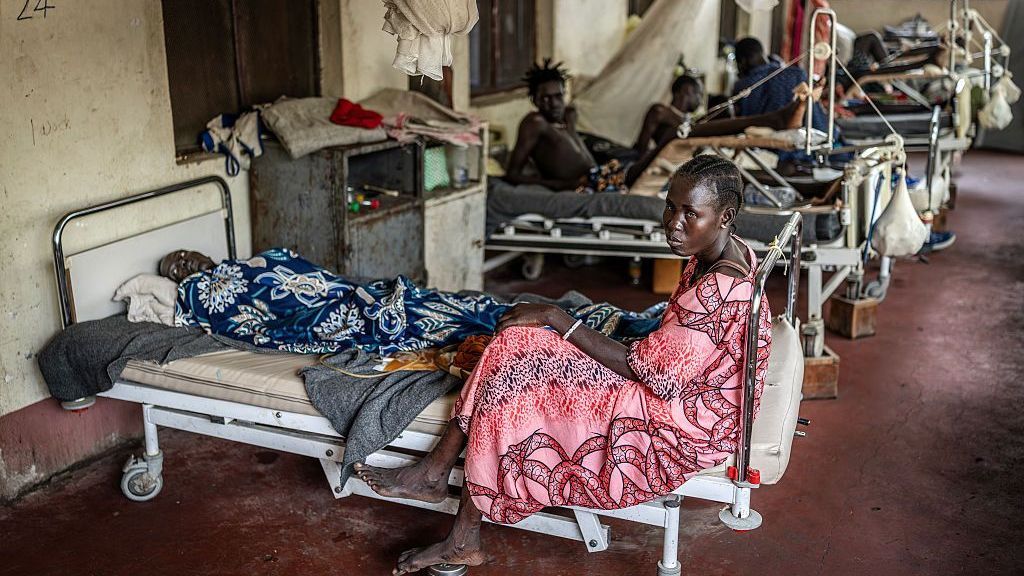
    Official data from the report confirms that since the start of Israel’s military campaign in October 2023, nearly 90 percent of all water and sanitation infrastructure across Gaza has been damaged or completely destroyed by Israeli attacks. Beyond the collapsed infrastructure, Gaza residents face a litany of daily barriers to accessing even small amounts of safe water: collection points are often located miles from overcrowded displacement camps, supplies are irregular, the physical labor of carrying heavy water containers puts vulnerable people at risk, prices for smuggled water are out of reach for most families who have lost their incomes, and Israeli authorities continue to restrict the entry of materials needed to repair damaged water systems.

    MSF also documented direct, intentional attacks on clearly marked water infrastructure and delivery vehicles, including targeted strikes on water trucks and functional boreholes that serve entire displacement communities.

    San Filippo warned that the combination of widespread water deprivation, catastrophic overcrowding in emergency shelters, collapsing sewage systems, and a completely non-functional health system has created ideal conditions for deadly infectious disease outbreaks to spread across the enclave. “This is a deliberate public health disaster that Israel has created to harm as many Palestinian civilians as possible,” she added.

    The release of the MSF report comes as violence across Gaza surges, in what Palestinian officials describe as widespread violations of the temporary ceasefire agreement reached in October. On the same day MSF published its investigation, Israeli forces carried out multiple air strikes and ground operations across Gaza that killed at least nine Palestinians, including four children. Among the victims was 9-year-old Adel Lafi al-Najjar, who was killed in an air strike on central Khan Younis near the Abu Hamid roundabout—an area that was meant to be outside Israeli military deployment zones, according to local residents.

    Two separate strikes targeting civilian vehicles in Gaza City killed another four Palestinians on Tuesday. Updated data from the Palestinian Ministry of Health confirms that more than 820 Palestinians have been killed by Israeli forces since the ceasefire went into effect, a death toll that continues to climb daily. Since the start of the Israeli campaign, nearly 72,600 Palestinians have been confirmed killed, with thousands more still missing and presumed dead under the rubble of destroyed residential and commercial buildings across Gaza.

  • Hundreds march in Johannesburg against illegal migration as shops shut over looting fears

    Hundreds march in Johannesburg against illegal migration as shops shut over looting fears

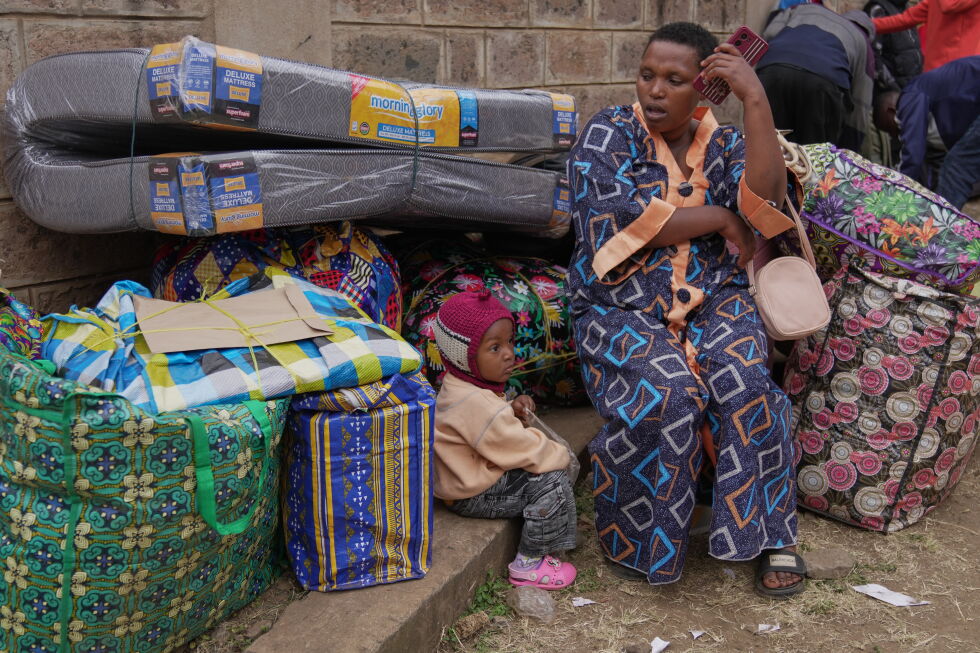
    A wave of anti-illegal immigration demonstrations has gripped South Africa this week, with hundreds of protesters marching through the streets of Johannesburg on Wednesday to demand stricter border controls and mass deportations of undocumented migrants. The Johannesburg rally follows a similar protest held just one day earlier in the nation’s capital, Pretoria, marking a growing public mobilization around the hot-button issue of unauthorized migration.

    As Africa’s most industrialized economy with a wide range of economic opportunities, South Africa has long drawn migrants from across the continent and beyond, with both documented and undocumented people arriving in search of better work and living prospects. Current estimates of the country’s undocumented migrant population vary wildly, with commonly cited figures falling between 3 million and 5 million. No accurate, up-to-date official count exists because most migrants without legal status avoid government documentation processes.

    Wednesday’s demonstration was led by the anti-immigration group March and March, and drew participation from other prominent anti-migration organizations including Operation Dudula, as well as two registered political parties: ActionSA and the Patriotic Alliance. In comments during the march, ActionSA representative Themba Mabunda pushed back against accusations of xenophobia, framing the protest as a demand for equitable policy rather than anti-foreign sentiment. “We are not xenophobic, we just want the right thing to done in South Africa, to put the South African first,” Mabunda said. “We do want to live with foreigners in our country, but those foreigners must be legally in the country.”

    The protest disrupted daily life across Johannesburg, forcing dozens of businesses—owned by both South African locals and migrant entrepreneurs—to close their doors out of fear of potential looting, violence, or opportunistic criminal activity.

    Anti-immigration groups anchor their demands on South Africa’s ongoing socioeconomic crisis: the nation’s official unemployment rate currently sits above 30%, leaving millions of local people out of work. Proponents of stricter enforcement argue that undocumented migration contributes to urban overcrowding, unfair competition in the labor market, lost tax revenue, rising crime, and weakened border security. In some high-tension cases, anti-migration activists have even forcibly turned foreign nationals away from public health clinics, claiming undocumented visitors worsen drug shortages and overcrowding in already under-resourced facilities.

    Tensions around the issue have already spilled over into violence in recent weeks. Last month, an anti-migration march in Eastern Cape Province ended with protesters setting fire to minibus taxis and destroying public infrastructure. In KwaZulu-Natal, reported targeted attacks on Ghanaian migrants sparked a full diplomatic incident, which led to Ghana’s government summoning South Africa’s ambassador to Accra to formally address the violence.

    United Nations Secretary-General António Guterres has recently raised alarm over the growing unrest, issuing a public statement expressing concern over xenophobic attacks, harassment, and intimidation targeting migrants and foreign nationals across multiple South African provinces including KwaZulu-Natal and Eastern Cape.

    In response to rising political and public pressure, South African authorities have ramped up deportation efforts in recent years. Government data shows that between the 2021 and 2023 financial years, South Africa deported more than 109,000 undocumented migrants living in the country.

  • Russia scales back Moscow Victory Day parade, blaming threat from Ukraine

    Russia scales back Moscow Victory Day parade, blaming threat from Ukraine

    For decades, Russia’s May 9 Victory Day parade on Red Square has stood as one of the most prominent showcases of national pride and military power, marking the Soviet Union’s 1945 defeat of Nazi Germany in World War II. This year, however, the iconic event will look drastically different, after the Kremlin formally confirmed it will pare back major elements of the celebration in response to what it calls a rising terrorist threat from Ukraine.

    Dmitry Peskov, spokesperson for Russian President Vladimir Putin, told reporters on Wednesday that security officials have enacted sweeping precautionary measures to reduce potential risks amid what the Kremlin frames as expanded hostile activity from the Kyiv government. “The Kyiv regime, which is ceding ground daily on the frontlines, has now shifted to full-scale terrorist operations,” Peskov said. He emphasized that despite the cuts, the parade will proceed as scheduled on Red Square, with all steps taken to keep attendees and participants safe.

    The Russian Ministry of Defense clarified the scope of changes in an official statement released Tuesday evening. While representatives from all branches of the Russian armed forces will still take part, and a ceremonial aerial flyover will be held, traditional elements that have been staples of the parade for years will be absent this year. Notably, cadets from the country’s elite Suvorov military schools, Nakhimov naval schools and other military cadet corps will not march, and no heavy military vehicles or armor will roll across Red Square’s cobblestones. National television will instead broadcast footage of Russian service members carrying out their duties in what Moscow officially calls the “special military operation zone” — its formal term for the full-scale invasion of Ukraine launched in early 2022.

    This is not the first time Russia has adjusted its traditional Victory Day format in recent years, but it marks the first time since the 2022 invasion that no armored column will be featured in the central Moscow parade. Putin, who revived the Soviet-era tradition of marching heavy military hardware through Red Square in 2008, has used the annual event to demonstrate Russia’s growing military strength to both domestic audiences and the international community. In 2024, which marked the 80th anniversary of the 1945 victory, Moscow hosted more than 20 global leaders for an elaborate, high-profile celebration that featured a full procession of modern military equipment, including frontline tanks and combat drones.

    Rumors of a scaled-back 2025 parade first circulated on Russian social media earlier this month, when pro-Kremlin military bloggers publicly raised concerns about the risk of long-range Ukrainian air attacks on the large public gathering. “If you have a parade in full swing and then a missile threat is announced, that would be a massive public relations blow even if no strike actually lands,” prominent pro-war blogger Ilya Tumanov told Russian media outlets. Other pro-Kremlin commentators also noted that none of the usual large-scale parade rehearsals, which require widespread road closures across central Moscow, had taken place in the lead-up to the event, matching the formal announcement of cuts.

    In line with stepped-up security measures, a telecommunications source told BBC Russian that enhanced restrictions on mobile connectivity will be enforced across Moscow on May 5, 7 and 9. This follows widespread mobile internet outages in central Moscow back in March, which Russian authorities tied to unspecified security priorities.

    The decision to scale back the parade comes against a backdrop of a clear increase in Ukrainian strikes targeting Russian territory deep behind the front lines, more than three years into Moscow’s full-scale invasion. In recent weeks, Moscow — widely considered Russia’s most heavily defended city — has already faced multiple Ukrainian drone incursions, with Russian military officials consistently stating that most of the drones are intercepted and shot down before they can hit targets.

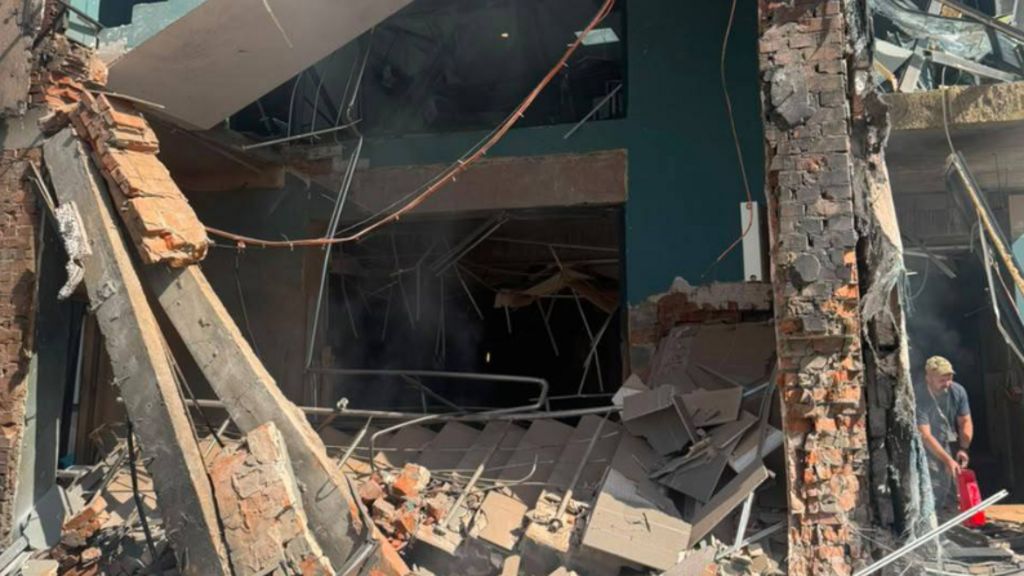
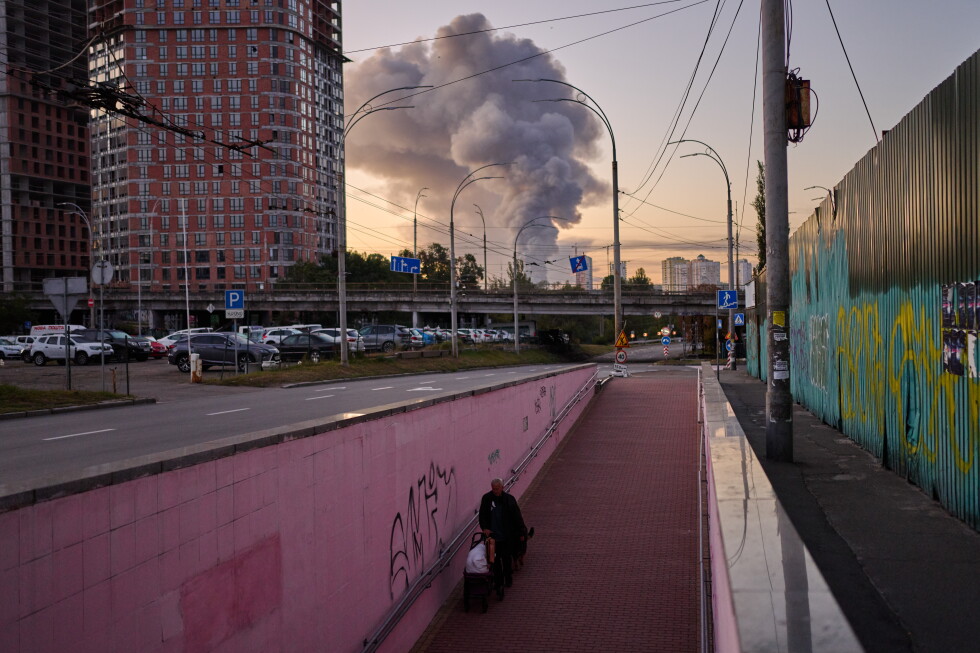
    Ukraine has significantly ramped up attacks on critical energy infrastructure across Russia in recent weeks, stretching thousands of kilometers from the border. On Wednesday, plumes of smoke were reported near Perm, a major Ural Mountains city roughly 1,500 kilometers from Ukrainian territory. Ukrainian officials confirmed the site was an oil pumping station hit by a drone, while local Russian authorities only described it as an industrial facility incident. That strike came just one day after Russia’s major oil refinery in the Black Sea port of Tuapse was hit for the third time in April. Earlier strikes on the Tuapse refinery triggered a large oil spill into the Black Sea, with local residents reporting “black rain” laced with oily residue that coated residential areas across the city.

    Kyiv has repeatedly stated that all of its strikes deep inside Russia target legitimate military or war-related infrastructure, arguing that these facilities directly enable Moscow to sustain its invasion. Ukraine has not yet issued an official public response to the Kremlin’s latest terrorism accusations, but a senior Ukrainian official last week explicitly ruled out any attack on the Moscow Victory Day parade. Mykhailo Podoliak, an advisor to Ukrainian President Volodymyr Zelenskyy’s office, noted that the event would draw large crowds of ordinary civilian onlookers, and stressed that “nobody is attacking civilians and civilian infrastructure.”

    For most Russians, the victory over Nazi Germany — referred to domestically as the Great Patriotic War — remains one of the most unifying historical events in the country’s modern history. Many international and domestic analysts broadly agree that Putin has centered this victory as a core national narrative to bind Russian society together, particularly amid the ongoing conflict in Ukraine and heightened tensions with the West.

  • Robert Mugabe’s son to be deported from South Africa over firearms offence

    Robert Mugabe’s son to be deported from South Africa over firearms offence

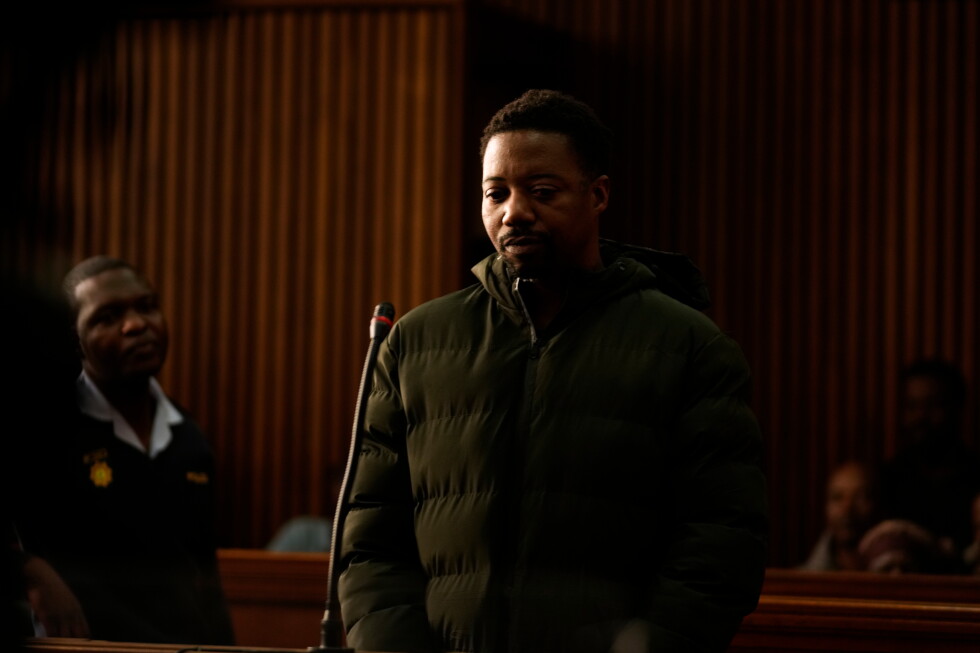
    A Johannesburg court has handed down a ruling ordering the immediate deportation of Bellarmine Mugabe, the 28-year-old youngest son of Zimbabwe’s late former long-ruling president Robert Mugabe, following his guilty pleas on weapons and unlawful immigration charges.

    The court also handed down an additional penalty requiring Mugabe to pay a $36,000 (equivalent to roughly £26,700) fine for his convictions. His co-accused, Tobias Matonhodze, received a far harsher sentence: three years of imprisonment after pleading guilty to a slate of charges including attempted murder, unlawful possession of ammunition, defeating the ends of justice, and illegal entry into South Africa.

    The arrests of both men date back to February 19, when local law enforcement responded to a disturbance call at Mugabe’s private residence in Hyde Park, an upscale, exclusive suburb of Johannesburg. During the incident, a 23-year-old security guard was shot and rushed to a local hospital in critical condition. Prosecutors told the court that the violence erupted after a verbal altercation between the three men on the property. As the victim attempted to escape the confrontation by running outside, he was struck by two gunshots to the back, authorities confirmed. To date, the weapon used in the shooting has not been recovered by investigating officers.

    Initially, Bellarmine Mugabe also faced a charge of attempted murder connected to the shooting. However, that charge was formally withdrawn after Matonhodze accepted a guilty plea for that offense. The charge of pointing a firearm to which Mugabe pleaded guilty stems from a separate, unconnected incident; South Africa’s National Prosecuting Authority (NPA) confirmed earlier this month that Mugabe had agreed to have both cases consolidated into a single hearing to streamline proceedings.

    This is not the first time Mugabe has run afoul of the law across the Southern African region. In 2024, he was taken into custody in Zimbabwe’s border town of Beitbridge on allegations of assaulting a serving police officer. He was granted bail following that arrest, but local state-run newspaper *The Herald* reported at the time that an arrest warrant was subsequently reissued after Mugabe failed to appear for his scheduled court hearing. Just one year later, in 2025, he was arrested again on allegations of assaulting a security guard at a mining operation located in Mazowe, a town roughly an hour’s drive north of Zimbabwe’s capital, Harare. That case remains open and ongoing, with no final ruling issued as of the court’s latest decision in South Africa.

    Bellarmine Mugabe is one of two sons born to former Zimbabwean president Robert Mugabe and his second wife, Grace Mugabe. The elder Mugabe, who ruled the southern African nation for 37 years, was removed from power in a military-led coup in 2017 and died in 2019.

  • A son of late Zimbabwe leader Mugabe is ordered deported from South Africa

    A son of late Zimbabwe leader Mugabe is ordered deported from South Africa

    JOHANNESBURG – In a landmark ruling handed down Wednesday, a South African magistrate has ordered the immediate deportation of Bellarmine Mugabe, the youngest son of Zimbabwe’s former longtime autocratic ruler Robert Mugabe, after the 29-year-old entered guilty pleas to two criminal charges earlier this month.

    Magistrate Renier Boshoff ruled that law enforcement officials must transport Bellarmine Mugabe directly to Johannesburg’s OR Tambo International Airport for expulsion back to his native Zimbabwe. The conviction stems from an arrest in February, when Mugabe and his cousin, Tobias Matonhodze, were taken into custody following a shooting incident at Mugabe’s Johannesburg residence that left a domestic employee injured. Initially, both men faced far more severe attempted murder charges connected to the shooting, but investigators have never recovered the weapon used in the attack.

    As part of a plea deal with South African prosecutors, Bellarmine Mugabe pleaded guilty to two reduced charges that are not linked to the shooting: illegally residing in South Africa without valid immigration status, and brandishing an item designed to convince others it was a functional firearm. As part of his sentencing, Mugabe was given the option to pay a fine of roughly $36,000 or serve a two-year prison term, with the deportation order taking effect regardless of his fine payment.

    In contrast, Matonhodze pleaded guilty to the full attempted murder charge and additional related offenses, receiving a three-year prison sentence. The magistrate ruled that Matonhodze will also be deported to Zimbabwe once he completes his custodial sentence. Addressing Bellarmine Mugabe directly during the hearing, Boshoff acknowledged the unusual nature of the plea arrangement, noting, “I do not know whether the second accused took the rap for you. Number two pleaded guilty on all these counts… and I can only act on what is before me.”

    Bellarmine Mugabe is the youngest child of Robert Mugabe and his second wife, Grace Mugabe. Robert Mugabe, who ruled Zimbabwe as an autocrat for 37 years, was ousted from power in a 2017 military coup and died two years later at the age of 95. This latest legal action is not the first time the Mugabe family has faced high-profile criminal scrutiny in South Africa. In 2017, when Grace Mugabe still held the position of Zimbabwe’s first lady, she was accused of assaulting a young model with an electrical cord at an upscale Johannesburg hotel, in front of her sons. Though a court initially ordered her to appear for trial, she was ultimately granted diplomatic immunity and avoided prosecution.

  • Russian paramilitary carried out air strikes in Mali as rebels advanced, footage shows

    Russian paramilitary carried out air strikes in Mali as rebels advanced, footage shows

    Mali has been plunged into a dramatic new phase of its decade-long insurgency after a coordinated multi-group rebel offensive killed the country’s top defense official and forced a strategic retreat by Russian-backed government forces, newly verified video and satellite evidence confirms.

    On Saturday, a coalition of jihadist fighters from Jama’at Nusrat al-Islam wal-Muslimin (JNIM), an al-Qaeda-linked group, and Tuareg separatists from the Azawad Liberation Front (FLA) launched simultaneous attacks across multiple regions of the West African nation. The deadliest strike targeted the residence of Defense Minister Sadio Camara in the garrison town of Kati, located just 12 miles outside the capital Bamako. A suicide bomber drove an explosive-laden vehicle into the compound, sparking a fierce firefight that left Camara dead, according to a Malian government spokesperson. Satellite imagery of the aftermath confirms the entire residence was leveled in the blast, with widespread damage to adjacent properties in the neighborhood.

    In response to the Kati attack, the Kremlin-controlled Africa Corps — the Russian paramilitary force that backs Mali’s ruling military junta — launched a series of retaliatory air strikes against rebel positions near the capital. Verified footage posted by the Africa Corps shows attack helicopters launching missiles at ground targets, while drone footage captures a direct missile strike on a rebel convoy speeding along an outer Kati highway, triggering a massive fireball. BBC Verify’s geolocation analysis confirmed all clips were filmed in the Kati area, matching the group’s claims of offensive operations near Bamako.

    Despite this show of force, the Africa Corps and Malian government forces have confirmed they have fully withdrawn from Kidal, a strategically critical northern hub that served as the center of government counterinsurgency operations in the region. Kidal was captured by joint Wagner Group and Malian forces in a bloody 2023 battle, and hosted a large heavily armed garrison for over a year. However, intensifying rebel attacks in recent weeks left the base increasingly untenable.

    Before the official withdrawal announcement, BBC Verify verified footage showing military convoys evacuating the Kidal base. The Africa Corps claimed it removed all heavy equipment ahead of the pullout, but footage posted by advancing rebels shows multiple armored personnel carriers, patrol vehicles and jeeps were abandoned during the hasty retreat. Verified video from the base after the withdrawal shows rebel fighters freely roaming the abandoned facility. Malian forces have also withdrawn from the more northerly town of Tessalit, and scattered clashes have been reported on the outskirts of Bamako near the Africa Corps’ main headquarters in the capital.

    Mali has been mired in a widespread insurgency for more than a decade, and the current military junta seized power in a 2020 coup, arguing the previous civilian government had failed to contain the growing rebel threat. Since the junta took power, it cut security ties with Western nations including France, which pulled all its peacekeeping and counterinsurgency troops out of the country by 2022, and turned to Russian mercenary forces first the Wagner Group and after restructuring of Russian irregular forces, the Kremlin-controlled Africa Corps. Under the terms of the partnership, the Africa Corps provides security support to the junta in exchange for cash and access to Mali’s valuable natural resource reserves.

    However, the paramilitary force has been unable to reverse the growing momentum of rebel groups across the country, with a senior French military official estimating last year that the Africa Corps only has around 2,500 personnel deployed across Mali. Late last year, Bamako itself was placed under a rebel blockade, and Saturday’s offensive marks a major new escalation in the conflict, according to regional analysts.

    “This is a major escalation of the conflict between the military government and rebel groups,” said Jean-Hervé Jezequel, Sahel director for the International Crisis Group. “Where JNIM originally focused on seizing rural and peripheral areas, it is now directly targeting major population centers.” BBC Verify has confirmed 22 separate videos of rebel movements across seven Malian locations since Saturday’s offensive began, confirming the broad scope of the attacks. The Africa Corps has claimed that as many as 12,000 rebel fighters participated in the coordinated offensive, a figure that has not been independently verified.

    Analysts warn the fall of Kidal and the death of Camara represent significant strategic setbacks for both the Malian junta and the Russian Africa Corps model of security partnership. “Other countries that have hired the Africa Corps are watching this very closely,” said Dr. Sorcha MacLeod, a former member of the UN working group on mercenaries and a lecturer at the University of Copenhagen. “The model Moscow offers isn’t working, and it’s already costing poor countries millions of dollars in natural resources. It’s unsustainable.”

    Charlie Werb, an analyst with Aldebaran Threat Consultants, noted that while the loss of abandoned armored vehicles will be a tangible loss for the Malian military, it remains unclear whether rebel groups will be able to integrate the heavy equipment into their speed and maneuver-focused insurgent tactics. The setbacks in Mali have already raised new questions about the long-term viability of Russia’s irregular security partnerships across the Sahel, as rebel groups continue to expand their control of territory across the region.

  • France urges citizens to leave Mali after rebel attacks

    France urges citizens to leave Mali after rebel attacks

    Over the weekend of late April 2026, Mali was thrown into a fresh state of crisis after a wave of coordinated large-scale attacks launched by separate separatist and jihadist militant groups rocked multiple regions across the West African nation, prompting former colonial ruler France and the United Kingdom to issue urgent evacuation orders for all their citizens still present in the country.

    Witnesses reported loud explosions echoing across neighborhoods and sustained bursts of automatic gunfire in multiple locations starting Saturday. The violence stretched from the capital city of Bamako to northern frontier regions and central population hubs, marking one of the most broad coordinated assaults on Malian state positions in recent years. Among the most high-profile casualties was Malian Defence Leader Sadio Camara, who was killed in a targeted suicide bombing in the garrison town of Kati, which hosts a major military base just outside Bamako. In the far north, separatist fighters from the Azawad Liberation Front (FLA), an ethnic Tuareg group pushing for an independent breakaway state, successfully seized full control of the strategic city of Kidal, with clashes continuing into Sunday even after the initial assault.

    Official accounts confirm the attacks were coordinated between two distinct factions: FLA separatists focused on capturing northern territory aligned with their decades-long independence campaign, while Jama’at Nusrat al-Islam wal-Muslimin (JNIM), an al-Qaeda-linked jihadist network, carried out simultaneous bombings and raids on military and government targets across the country. The coordinated nature of the assault exposed critical gaps in the military junta’s security promises, after it seized power in a 2020 coup under the leadership of Gen Assimi Goïta.

    In his first public address since the attacks delivered Tuesday evening, Goïta sought to reassure the public, claiming that Malian armed forces had inflicted a “violent blow” to the attackers and that overall security across the country had been brought back under government control. His claims have not been independently verified, and ongoing tensions in Kidal and other northern areas cast doubt on the junta’s assertion.

    On Wednesday, France’s foreign ministry issued an updated advisory leveling its strongest warning yet for French citizens in Mali. “French nationals are advised to make arrangements to leave Mali temporarily as soon as possible on the commercial flights that are still available,” the statement read, adding that all travel to Mali, regardless of purpose, is strongly discouraged. For citizens who cannot immediately depart, the advisory orders them to shelter in place, restrict all non-essential movement, and stay in constant contact with their families and local authorities.

    The United Kingdom echoed France’s warning, maintaining evacuation guidelines that were first implemented over the weekend. The UK Foreign Office advises against all travel to Mali due to the highly unpredictable security landscape, and urges all British citizens already in the country to depart immediately via remaining commercial routes, if they assess it is safe to do so. The advisory explicitly warns against overland travel to neighboring countries, calling the route “too dangerous” due to consistent threats of terrorist attacks along major national highways. “If you choose to remain in Mali, you do so at your own risk,” the UK statement adds, noting that British citizens cannot rely on UK government support for emergency evacuation in the region.

    Mali’s current political landscape has been shaped by nearly a decade of overlapping insurgency and political upheaval. The Tuareg rebellion that first broke out in northern Mali in 2012 was quickly hijacked by Islamist militant groups, sparking a long-running security crisis that has destabilized large swathes of the country. Goïta’s military junta seized power in 2020 on a platform of restoring national security and pushing back armed insurgents, earning broad popular support at the time for its pledges to end the chronic instability. After the junta took control, UN peacekeeping forces and French counter-insurgency troops that had been deployed to the region withdrew from the country, and the military government turned to Russian mercenary groups to assist with counter-insurgency operations. Despite this partnership, jihadist insurgency has continued to spread, and large portions of northern and eastern Mali remain outside the control of the central government in Bamako.

  • EU chief warns billions could be wasted if energy aid is not well targeted as the Iran war bites

    EU chief warns billions could be wasted if energy aid is not well targeted as the Iran war bites

    STRASBOURG, France – As escalating Middle East tensions roil global oil and gas markets, European Commission President Ursula von der Leyen has issued a urgent warning to European Union member states: billions of euros in energy relief will go to waste unless aid is prioritized exclusively for vulnerable households and energy-reliant industries. Speaking to EU lawmakers in Strasbourg on Wednesday, von der Leyen framed the new energy volatility sparked by Middle East conflict as a critical test of the bloc’s ability to learn from costly mistakes made during the 2022 Russian energy crisis.
    The ongoing conflict in the Middle East, compounded by potential disruption to shipping through the Strait of Hormuz — a critical chokepoint through which roughly a fifth of the world’s daily oil supplies pass — is already extracting a heavy economic toll from the 27-nation bloc. Current estimates put the daily cost of elevated energy prices at close to 500 million euros (equivalent to $600 million), pushing up retail fuel prices for consumers and triggering widespread warnings that jet fuel supplies could run critically low within weeks.
    Von der Leyen stressed that the EU cannot repeat the missteps of 2022, when Russia cut natural gas exports to Europe in retaliation for the bloc’s support of Ukraine. At that time, member states allocated more than 350 billion euros to broad, untargeted energy relief programs that strained national budgets without delivering support to the groups that needed it most. “So let us not make the same mistake again, and let’s focus our support where it matters most,” she told the assembled legislators.
    Beyond short-term relief policy, von der Leyen used the address to double down on the bloc’s push for full energy independence, noting that just as Europe successfully broke its reliance on Russian fossil fuels after 2022, it must now cut broader dependence on imported fossil fuels by scaling up domestic low-carbon energy sources. “Our over dependency on imported fossil fuels makes us vulnerable,” she said, pointing to wind, solar, and nuclear power as the core of a secure domestic energy future.
    Progress in cutting Russian energy reliance already speaks to what the bloc can achieve, von der Leyen noted. Since 2022, Russian gas imports to the EU have plummeted from 45% of total imports to just 12% in 2023. Coal imports from Russia were fully eliminated via sanctions, while oil imports have dropped from 27% of the bloc’s total in 2022 to just 2% today — with only Hungary and Slovakia continuing to receive Russian crude under limited exemptions.
    Von der Leyen warned that the economic ripple effects of the current Middle East energy shock “may echo for months or even years to come.” The only long-term solution, she argued, is expanding “homegrown, affordable, clean energy supply from renewables to nuclear.” She called on member states to transition more end-uses — from passenger and air transport to residential heating and industrial production — to electricity generated from domestic low-carbon sources, a shift that would undercut global fossil fuel price volatility. Currently, electricity accounts for less than a quarter of the EU’s total final energy consumption, leaving massive room for expansion.
    The gravity of the current crisis has been clear from top EU energy officials for days. Last week, EU Energy Commissioner Dan Jørgensen emphasized that the current shock is far more than a temporary minor price blip. “This is a crisis that is probably as serious as the 1973 and the 2022 crises combined,” he said, noting that Europe has been forced into a defensive position with limited control over geopolitical developments in the Middle East. “Even in a best-case scenario, it’s still bad,” Jørgensen added. “Whether or not we will be in a security of supply crisis is primarily a result of what goes on in the Middle East. What we can do is to try and prevent, and limit the damage.”

  • War in the Middle East: latest developments

    War in the Middle East: latest developments

    Just 13 minutes ago, Agence France-Presse released a comprehensive update on the rapidly unfolding conflict across the Middle East, capturing multiple interconnected developments that ripple across global politics, energy markets and human rights. The update comes as the war, sparked by US-Israeli strikes in late February, continues to reshape regional dynamics and send shockwaves through the global economy.

    At the heart of US strategy toward Iran, former President Donald Trump has directed American national security officials to draw up plans for a sustained naval blockade of Iranian ports, according to reporting from the Wall Street Journal. The push for a long-term blockade stems from Trump’s deep skepticism that Tehran is negotiating in good faith on its nuclear program. The US administration’s core demands include a 20-year full suspension of uranium enrichment, followed by permanent stringent oversight and restrictions on Iran’s nuclear activities. Trump doubled down on this hardline stance in a post to his Truth Social platform, writing: “Iran can’t get their act together. They don’t know how to sign a nonnuclear deal. They better get smart soon!” The post included a graphic of Trump holding an assault rifle emblazoned with the phrase “NO MORE MR. NICE GUY!”.

    Trump made his first public remarks on the conflict’s trajectory during a White House state dinner honoring Britain’s King Charles III on Tuesday, claiming that Iran had been “militarily defeated”. “We have militarily defeated that particular opponent,” Trump told attendees, adding, “Charles agrees with me even more than I do — we’re never going to let that opponent have a nuclear weapon.”

    On the human rights front, the United Nations has issued sharp criticism of Iran, confirming that at least 21 people have been executed and more than 4,000 arrested across the country since the outbreak of the wider Middle East war. The UN Office of the High Commissioner for Human Rights detailed that nine of those executed were connected to anti-government protests held in January 2026, 10 were accused of membership in opposition groups, and two were executed on charges of espionage. The UN described the Iranian government’s crackdown as “harsh and brutal” against its own population.

    In Congress, US Defense Secretary Pete Hegseth is set to face intense bipartisan scrutiny Wednesday during his first congressional testimony since the war began. Appearing before the House Armed Services Committee to discuss Trump’s $1.5 trillion defense budget request, Hegseth will face tough questions over the administration’s handling of the conflict with Iran. Top US military officer General Dan Caine will also testify, and the hearing is widely expected to be fiery, as lawmakers from both major parties have already voiced deep frustration over the lack of transparency in classified briefings on the war’s progress.

    Violence continues to flare in southern Lebanon despite a fragile ceasefire implemented on April 17. Lebanon’s health ministry confirmed Tuesday that new Israeli strikes killed eight people, including several civilian civil defense rescuers, and wounded two Lebanese soldiers. Israel has been engaged in active ground combat with the Iran-backed Hezbollah militant group since early March, and low-intensity clashes have persisted despite the formal ceasefire agreement.

    For global energy markets, the conflict has already delivered significant financial windfalls for major fossil fuel producers. French energy giant TotalEnergies announced that its first-quarter net profit surged 51% year-over-year to hit $5.8 billion, a new record, driven largely by the sharp rise in crude oil prices tied to Middle East supply chain disruptions. The company noted that expanded oil and gas production in Brazil and Libya fully offset lost output from the Gulf region, which normally accounts for 15% of TotalEnergies’ total hydrocarbon production. The company highlighted its resilience, noting it has been able to capitalize on elevated global prices to boost its bottom line.

    In a separate operational update, TotalEnergies confirmed it has restarted operations at the Satorp refinery in Saudi Arabia, a joint venture with Saudi Aramco. The facility was shut down as a safety precaution after airstrikes in early April damaged three of its processing units. As of April 14, the refinery has returned to full operational capacity, processing 230,000 barrels of crude per day, with undamaged units brought back online to restart production.

    Global oil prices jumped sharply this week following two key developments: reports that Trump is unlikely to accept an Iranian proposal to reopen the Strait of Hormuz to commercial shipping traffic, and a warning from Qatar that the conflict could devolve into a protracted “frozen conflict”. By Tuesday, West Texas Intermediate crude breached the $100 per barrel mark for the first time in two weeks, while Brent crude climbed above the price point it reached before a temporary ceasefire was announced in early April. On Wednesday, both contracts continued their upward climb, with Brent holding above $113 per barrel and WTI trading above $101 per barrel.