分类: world

  • Ukraine fires 400 drones toward Moscow as Zelenskyy grapples with protests

    Ukraine fires 400 drones toward Moscow as Zelenskyy grapples with protests

    A sharp escalation in cross-border hostilities has rocked the Russia-Ukraine conflict this week, after Ukraine launched one of its largest drone attacks on Moscow in recent months just hours after Russia pummeled Ukrainian population centers with a wave of ballistic missiles, deepening a cycle of retaliatory violence that pushes any diplomatic resolution further out of reach more than four years into Russia’s full-scale invasion.

    Moscow Mayor Sergei Sobyanan confirmed Monday that more than 400 Ukrainian drones were launched at the Russian capital between late Sunday and early Monday. According to official Russian statements, the vast majority of incoming unmanned aerial vehicles were shot down far from central Moscow, with 85 intercepted within Moscow’s immediate perimeter. Andrei Vorobyov, governor of the Moscow Oblast surrounding the capital, reported 10 civilian injuries and damage to multiple residential buildings and critical civilian infrastructure sites.

    Yevgeniya Khrustaleva, head of Domodedovo District south of Moscow, confirmed the attack sparked a large blaze at the Yuzhnye Vrata industrial park, located roughly 18 miles from the city center. Unconfirmed reporting from independent Russian outlet Astra also claimed a fire broke out at an oil depot in Podolsk, 12 miles south of Moscow, but the claim has not been verified by official Russian sources.

    This major drone attack underscores how far Ukraine’s long-range drone technology has advanced since the full-scale invasion began, creating a persistent security challenge for Russia: the country’s expansive territory makes comprehensive air defense coverage nearly impossible to maintain. Ukrainian forces have increasingly targeted Russian energy infrastructure in these strikes, leading to localized fuel shortages and undermining public confidence in the Kremlin’s ability to secure the home front. The scale of Monday’s attack is among the largest; in May, Russian defense officials reported downing 1,054 Ukrainian drones in a single 24-hour period.

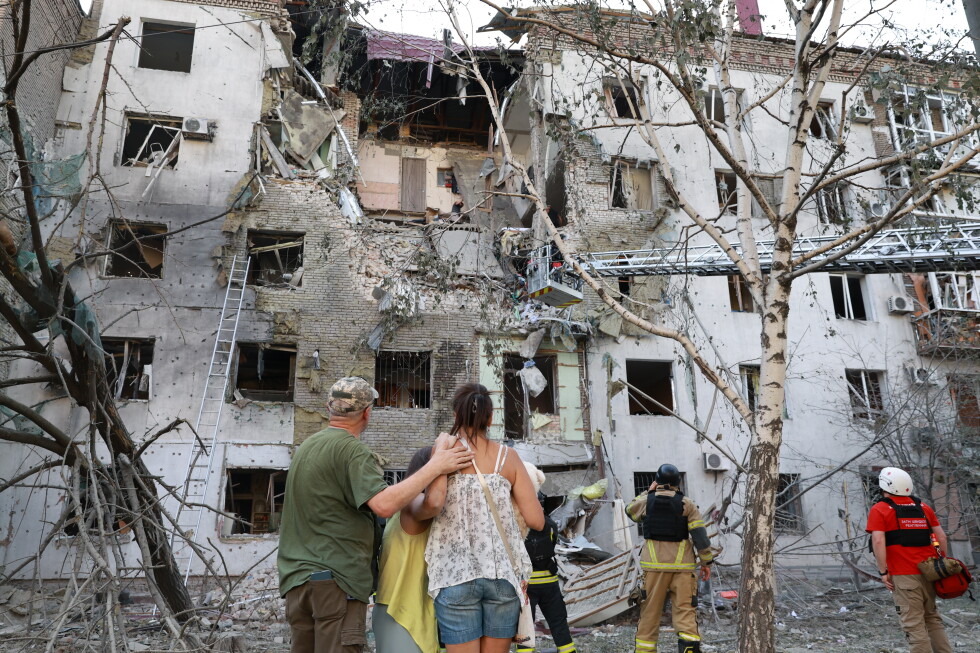
    The tit-for-tat strike came on the heels of a major Russian bombardment that used large numbers of ballistic missiles against Ukrainian cities. Ukrainian officials confirmed that Sunday’s Russian attack killed at least six civilians and wounded dozens more. Russia’s Defense Ministry claimed the overnight strike targeted fuel storage facilities in the southern Ukrainian port of Odesa, while Ukraine’s Air Force reported that Russia launched two ballistic missiles and 94 long-range drones in the overnight assault. Ukrainian air defenses intercepted or jammed 81 of the drones, but nine remaining drones and one Russian missile caused damage across nine separate Ukrainian locations.

    A Washington-based think tank, the Institute for the Study of War, noted Sunday that Russian forces have fired more ballistic missiles into Ukraine in July than the country is estimated to produce in a single month. The organization concluded that Russia is drawing down its stored stockpiles of ballistic missiles to ramp up strikes, as these weapons have a far higher penetration rate than slower drones or cruise missiles, allowing them to exploit gaps in Ukraine’s layered air defense network. Russia has significantly stepped up ballistic missile use in recent weeks to capitalize on these defensive gaps, as Kyiv continues to appeal to Western allies for more advanced interceptor systems capable of countering the hard-to-stop weapons.

    Beyond the frontline escalation, Ukrainian President Volodymyr Zelenskyy is working to navigate a growing domestic political crisis sparked by a major government reshuffle last week that laid bare deep divisions between military establishment leaders and younger reformist factions over the strategy for continuing the war. Zelenskyy announced last week that he would replace 35-year-old former Defense Minister Mykhailo Fedorov, while retaining 60-year-old Soviet-trained General Oleksandr Syrskyi as the head of Ukraine’s armed forces. The decision sparked days of public street protests, with demonstrators rallying in support of Fedorov and calling for the removal of Syrskyi. Zelenskyy has said he will hold “key negotiations” on Monday to shore up public and political unity, as he works to convince Ukrainians that the cabinet shake-up will not undermine the country’s military campaign against Russian forces.

  • In one of Kyiv’s most frequently bombed neighborhoods, residents choose to stay

    In one of Kyiv’s most frequently bombed neighborhoods, residents choose to stay

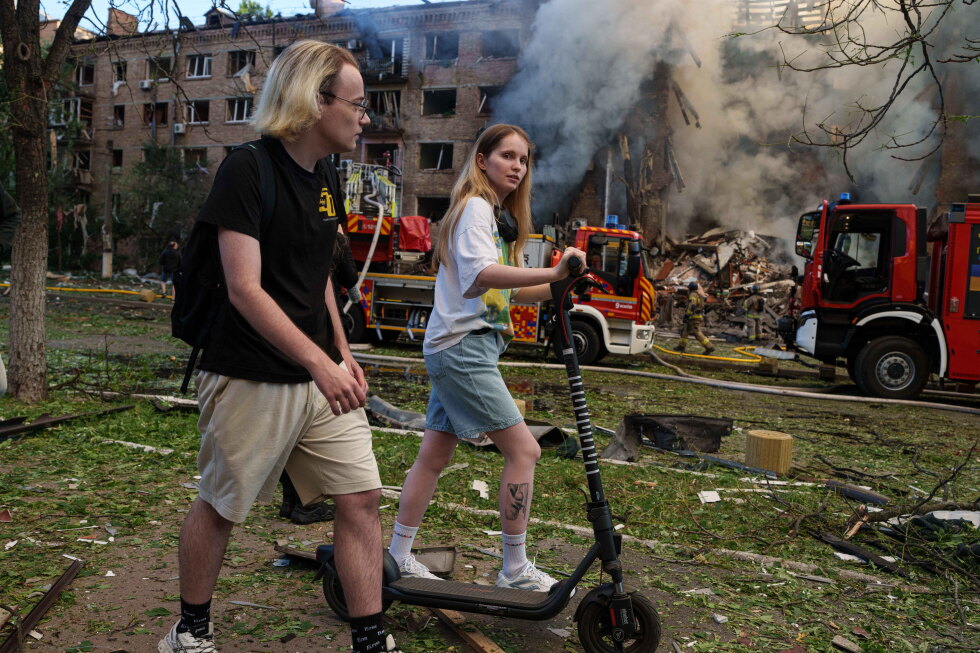
    In Kyiv’s historic Lukianivka district, a neighborhood scarred by repeated Russian missile attacks, residents have turned stubborn perseverance into a daily way of life. Facing near-constant bombardment that has left craters pockmarking the urban landscape and iconic landmarks reduced to charred ruins, the people of this heavily targeted area have refused to surrender their home.

    Local real estate agent Dmytro Zhekov does not hide the danger when marketing properties to prospective tenants in one of the Ukrainian capital’s most frequently hit districts. He leads with transparency, warning every curious renter upfront that the neighborhood sits firmly in a high-risk strike zone, while also highlighting its unique advantages: affordable monthly rents, unbeatable proximity to Kyiv’s city center, a well-connected metro link, and a rich tapestry of historic sites. “From the beginning I tell them, ‘This is a place in the danger zone. It gets hit regularly. If you are all right with that, then we can see it,’” Zhekov explains.

    The neighborhood’s repeated targeting stems from its long-standing connection to arms manufacturing: the Soviet-era Artem weapons plant, located in the district, has become one of Russia’s top priority targets in Kyiv, its roof blackened by wave after wave of strikes. Directly across the street, Lukianivka metro station — the neighborhood’s namesake — has been struck no fewer than eight times, doubling as a civilian air raid shelter between attacks. For locals, the question is no longer if another strike will hit, but when. Still, they have chosen to rebuild, reopen businesses, and carry on with daily life rather than flee.

    Steeped in centuries of history, Lukianivka’s main thoroughfare Dehtiarivska Street follows the ancient path of Via Regia, the medieval trade route that brought merchants pouring into Kyiv for hundreds of years. It later evolved into a working-class district packed with factories, public markets, and the historic Lukianivka prison, which once held former Ukrainian Prime Minister Yulia Tymoshenko in a case widely seen as political retribution. In 1997, Ukraine’s first McDonald’s opened its doors here, becoming an enduring symbol of the nation’s post-independence rebirth. Today, even that restaurant bears the marks of war: a plastic sign outside remains permanently warped by the heat of a recent Russian strike. “It’s part of our history now,” says local historian Kyrylo Stepanets.

    One of the neighborhood’s most beloved community hubs, the iconic Lukianivka Market that had served local residents since the late 19th century, was completely destroyed in a Russian strike on May 24. What remains is a charred, twisted maze of destroyed kiosks, frozen in the moment of the blast — blackened loaves of bread still sit on the shelves of what was once a neighborhood bakery. For long-time residents, the market lives on in childhood memories, of parents and grandparents leading them through crowded aisles to buy fresh fruit, flowers, and daily necessities.

    Alyona Lukianets, 32, spent 11 years building her small produce business at the market. When the strike hit, she returned to find her stall turned to ash. Just weeks later, she was back at work, assembling a new makeshift stall from wooden pallets and tarpaulin just outside the market’s ruins. Every morning, she still arranges baskets of fresh berries and vegetables with the same careful attention she used before the war, even as the acrid smell of burnt destruction lingers in the air from the destroyed market behind her. “I don’t know what it will take for us to leave this place,” Lukianets says. “We are unmovable.”

    The Artem weapons plant that draws so much Russian fire has not pushed residents to flee, even those who relocated here after being displaced by the war elsewhere. Julia Sosnovska, who was forced out of her home when Russia seized the southern port city of Mariupol, chose Lukianivka for its low rental costs — studio apartments start at less than $200 a month, with one- and two-bedroom units available for roughly $270 and $310 respectively — despite the fact her apartment overlooks the plant directly.

    Founded in the late 19th century as an industrial machinery facility, Artem grew into one of the Soviet Union’s leading arms manufacturers before becoming a key part of Ukraine’s domestic defense industry after the country gained independence. It expanded production in 2014, when Russian-backed separatists seized territory in eastern Ukraine. Following Russia’s full-scale invasion in 2022, the plant became a top target for Russian missile strikes, as Moscow claims it still produces weapons for Ukraine’s military. Ukrainian officials cannot comment on the facility’s operations due to wartime security restrictions, and residents note that relocating production would do little to make the neighborhood safer: Russian missiles have struck every district of Kyiv, meaning no corner of the capital is truly immune.

    When the latest Russian missile barrage hit on a Sunday morning, Sosnovska was jolted awake by a blinding flash outside her bedroom window, followed by the crash of flying shards of glass. Her dog Perry, who she had finally been allowed to adopt after a May strike destroyed part of the building, bolted from the bed in panic. Clutching the trembling dog, her identity documents, and her laptop, Sosnovska joined neighbors sheltering in the basement parking garage as more explosions shook the area. By dawn, all her apartment windows had been blown out and her car was damaged, but she counts herself lucky. “Glass is the least you can lose in these attacks,” she says. When asked why she stays, she shrugs: “Where else would I go? You never know which place will be next.”

    That same defiant resolve runs through every corner of the neighborhood. Vitalii Zhdaniuk opened a barber school in Lukianivka because of his love for the area. The building’s walls are pocked with shrapnel holes, and a chunk of brick thrown from a neighboring auto shop during a 2023 strike still remains embedded in one exterior wall. “No matter how many missiles fly here,” he says, “I’ll stay.”

    Even the district’s vibrant cultural life has adapted to war, refusing to be silenced. Tucked behind Lukianivka metro station, Mala Opera — a small theater that has long been a staple of Kyiv’s cultural scene — now stages all its productions in the theater’s basement, leaving the grand upper auditorium empty. When the full-scale invasion began, the theater’s director Mykhailo Miskun made a deliberate choice: the company would only stage comedies, to give war-weary audiences a much-needed break from the stress of conflict. His latest production centers on love, sex, and feuding neighbors, lighthearted themes designed to help attendees forget the war for a few hours.

    The company has adapted its process, holding rehearsals online and gathering in smaller, safer spaces to work. After one recent strike, the troupe briefly debated relocating elsewhere, but ultimately chose to stay. “despite everything,” Miskun says. Outside, theatergoers line up to descend the stairs into the basement, where the evening’s performance is about to begin.

    As Miskun puts it: “We live. We create. We give birth. Just like any part of Ukraine, Lukianivka is also being restored and continues to live.”

  • Children describe how Nigerian militants moving south are seizing more young captives

    Children describe how Nigerian militants moving south are seizing more young captives

    In the quiet agrarian community of Oriire, southwestern Nigeria’s Oyo state, a day of joyous feasting and interfaith prayer unfolded Friday as dozens of schoolchildren snatched from their classrooms by al-Qaida-linked militants returned to the embrace of their families. For Aliyu Saheed, a local farmer whose three young sons – the youngest just 5 years old – were among the captives, the news of their July 10 rescue marked the most euphoric moment of his life, ending two months of sleepless nights haunted by fear he would never see his boys again.

    The mass abduction carried out on May 15 marked a worrying new chapter for Nigeria, Africa’s most populous nation. For years, large-scale school kidnappings by armed jihadist groups were concentrated in the conflict-battered northeast and northwest. But this attack, which targeted children as young as 3 in a region previously untouched by such violence, confirms what security analysts have warned about for months: armed factions are expanding southward, pushing beyond their traditional strongholds to seize new territory and control key natural resources.

    When the gunmen stormed three local schools, they abducted 39 children and three teachers, marching their captives into a sprawling nearby forest reserve that connects northward to Kwara State, a region already grappling with persistent militant abduction activity that often targets students for large ransom payments. The attack left one teacher dead during the abduction, with two more losing their lives while in captivity, local media reports confirm. Nigerian President Bola Tinubu has identified the perpetrators as Ansaru militants, a breakaway faction of the notorious Boko Haram group that has reemerged and grown more active across the country in recent years.

    Survivors of the two-month captivity have shared harrowing accounts of abuse and deprivation at the hands of their captors. Nine-year-old Shuaib, Saheed’s eldest son, recalled that the group was held in open ground without any shelter, left exposed to sweltering sun and heavy rain, fed only a meager diet of boiled rice and palm oil. “I could not say anything for fear of getting beaten,” Shuaib told the Associated Press. “They flogged us with a cane all over the body, and they hit me in the back with the butt of their gun.” Alamu Folawe, head of one of the targeted schools, added that the youngest children suffered the worst violence, with their mouths stuffed with cloth to muffle their cries and avoid drawing attention to the militants’ hideout.

    While the rescue operation – a joint effort by Nigeria’s military, intelligence services and police forces – resulted in eight kidnappers arrested and multiple other militants killed, many of the freed children carry lasting physical scars and deep psychological trauma. Eight-year-old Kehinde Kaosarat, one of the last children released from hospital, has not left her mother’s side since returning home, and multiple families report that their children now refuse to consider going back to school. For Saheed, this fear is shared: “Sending them back to the school does not sound meaningful to me right now,” he said. The trauma comes at a time when Nigeria already has one of the highest out-of-school child populations in the world, a crisis that deepens with every attack on educational institutions.

    The abduction has drawn urgent new attention to Nigeria’s under-patrolled forest reserves, which have increasingly become strategic corridors and hiding spots for expanding armed groups. “The thing to learn is that the forested areas of the country must be much better surveilled because that is where those armed groups operate and keep their victims,” explained Joachim MacEbong, senior analyst at global risk consultancy Control Risks.

    The militant expansion into the southwest has piled mounting pressure on President Tinubu, who was elected in 2023 on a campaign promise to end Nigeria’s persistent security crisis. While the U.S. military provides limited logistical and intelligence support to Nigerian forces focused on the northern insurgency, the country’s overstretched security apparatus remains largely absent from remote southern communities bordering forest zones. Though Tinubu announced that the Ansaru informant network was dismantled during the rescue, analysts note that the root drivers of insecurity – including systemic corruption and weak governance – remain unaddressed.

    James Barnett, an Africa security research fellow at the U.S.-based Hudson Institute, pointed out that Ansaru has spent years quietly building networks in southwestern Nigeria, and a high-profile attack like this could encourage further militant activity in the region. Even as the community came together Friday to celebrate the children’s safe return – with Christian and Muslim leaders joining in prayers of gratitude – many residents remain on edge. Hundreds fled the area after the abduction, and while some have begun to trickle back, farmers whose lands sit close to the forest reserve still hesitate to resume their daily work.

    “The rescue of the Oriire abductees is wonderful news and should inspire some confidence in Nigeria’s ability to better manage these threats,” Barnett said. “But it is not the end of insecurity in the southwest or Nigeria as a whole.”

  • Ferry capsizes off Guyana, authorities still searching for 66

    Ferry capsizes off Guyana, authorities still searching for 66

    A disaster has struck the South American nation of Guyana, where an over 80-year-old passenger ferry carrying 133 people capsized in Atlantic waters off its coast over the weekend, leaving 66 people unaccounted for as rescue teams work around the clock to locate survivors.

    The vessel, identified as MV Barima, departed the country’s capital Georgetown on Saturday afternoon, bound for the inland jungle town of Port Kaituma. The route, a common one for the ferry, takes travelers along Guyana’s Atlantic coast before turning upriver into the Essequibo region, a vast 160,000-square-kilometer territory that has emerged as a major oil-rich area in recent years. According to initial official assessments, the accident occurred after the aging vessel was struck by an unusually large wave, which caused it to flip over.

    By Sunday, rescue teams had pulled 67 people from the water, Public Works Minister Juan Edghill confirmed in an official social media update. Prime Minister Mark Phillips later released a breakdown of the rescued: 41 men, 11 women, six boys, and nine girls, including 15 children in total. Among the survivors is 18-year-old Wayne Kitson, who recalled the tragedy unfolding late Saturday night while most passengers were asleep. Kitson, who suffered only minor injuries to his arm, leg, and neck after spending six hours adrift in open water before being pulled out, said he fears his wife and young daughter are among the missing.

    Crucially, both the captain and first mate of the ferry survived the incident, and have returned to the disaster zone to support search and rescue teams with on-the-ground context, Phillips noted. Authorities have notified all relatives of recorded passengers and crew, and have so far classified the 66 unaccounted-for people as missing rather than deceased, holding out hope that more survivors may be found.

    The MV Barima was constructed all the way back in 1939, according to global shipping vessel tracking database VesselFinder. Official records confirm the vessel was carrying 116 passengers and 17 crew members when it departed, and was outfitted with 250 life jackets, two full lifeboats, and six inflatable rafts. Edghill added that a distress call from the ferry was received roughly eight hours after it began its voyage. As of Sunday, search operations were ongoing, with private local vessels joining government-led rescue teams to comb the area for any sign of the missing passengers.

  • Norway opens new memorial for victims of 2011 Breivik massacre

    Norway opens new memorial for victims of 2011 Breivik massacre

    Fifteen years after Norway’s deadliest peacetime atrocity sent shockwaves across the Scandinavian nation, the country has inaugurated a permanent public memorial honoring the 77 lives lost to far-right extremist Anders Behring Breivik’s 2011 terror attacks.

    On July 22, 2011, Breivik first detonated a car bomb in central Oslo’s government district, killing eight people before traveling to nearby Utoeya island, where he gunned down 69 more attendees — most of them teenage members of the Norwegian Labour Party’s youth wing, the AUF — at the group’s annual summer camp. Hundreds of others were wounded in the two-pronged attack, which remains the worst act of domestic terrorism Norway has seen in modern history.

    Just days ahead of the 15th anniversary of the atrocity, survivors, victim family members, royal representatives, and senior government officials gathered in Oslo’s renovated government quarter on Sunday for the official unveiling of the new memorial, named Upholding. The large-scale contemporary artwork sits steps from the original site of Breivik’s opening bomb blast.

    Created by Norwegian artist Matias Faldbakken, who first spotted the small native wading bird that inspired the work during a visit to Utoeya, the memorial centers on a 12-meter-tall stone mosaic of the bird, framed by a massive blue steel structure. The piece also integrates straw, sticks, and mirrored elements reflecting the surrounding environment, and the full names of all 77 victims are engraved into its surface. Per Faldbakken, the work serves a dual purpose: it preserves memory of the lives cut short, and stands as a public act of democratic resilience against the violent far-right ideologies that motivated Breivik’s attack.

    Merete Stamneshagen, leader of a national support organization for victims and survivors, emphasized the attack’s broader target beyond individual victims, telling reporters from AFP, “July 22, 2011 was a brutal attack not only on individuals, but also on our democracy.” Norway’s Crown Prince Haakon was among the senior dignitaries in attendance at the inauguration, and he also toured the newly opened 22 July Centre, the country’s national memorial and educational hub dedicated to documenting the attacks and their legacy.

    The attack itself continues to cast a long shadow over Norwegian public life more than a decade on. Breivik was convicted in 2012 and handed a 21-year prison sentence — the maximum penalty available under Norwegian law — with provisions that allow for indefinite sentence extensions as long as he is deemed a threat to public safety. Breivik has repeatedly challenged the conditions of his incarceration in the years since his conviction: in 2016, he won a partial ruling in a human rights case against the Norwegian government, only for that decision to be overturned a year later. He was denied parole in 2022, with courts ruling he had not renounced his extremist views and remained a danger to society. Most recently, in 2024, he lost a lawsuit against the government over his separate incarceration, a security measure implemented to prevent him from radicalizing other incarcerated people.

  • ‘Everyone’s afraid to die’: Struggle to recruit soldiers in Ukraine turns violent

    ‘Everyone’s afraid to die’: Struggle to recruit soldiers in Ukraine turns violent

    Five years into Russia’s full-scale invasion, Ukraine’s push to mobilize new troops has devolved into a cycle of violence that is tearing at social cohesion within the country, leaving both serving soldiers and civilians injured and exposing deep flaws in the nation’s conscription system.

    For Vasyl Krupych, a veteran machine gunner who survived brutal Russian assaults on Ukraine’s eastern Donbas region, the danger did not end when he was reassigned to rear-area duty searching for people avoiding conscription. Last December, he encountered two men who refused to present identity documents and fled the scene. When his patrol gave chase, the pair beat Krupych severely with a crowbar, breaking one of his ribs and leaving him struggling to breathe. He spent six weeks recovering in a hospital, and still grapples with disillusionment over the attack. “What did we fight for, if soldiers can now get beaten?” the frontline veteran asked in a recent interview.

    Krupych’s assault is far from an isolated incident. Ukraine’s military ombudswoman has confirmed that attacks on conscription officers are now “regular” and represent a “major problem” as Kyiv races to replenish frontline ranks depleted by years of continuous combat. While the topic is rarely discussed openly in Ukraine, out of caution that it could be exploited by Russian propaganda, official data tells a stark story: Ukraine’s National Police Service has recorded more than 600 assaults on recruitment personnel to date, and has warned that the violence is growing increasingly aggressive.

    The first major public outcry over the crisis came in April, when several recruiters were stabbed in a single attack that left one dead. Just this month, tensions boiled over in the western city of Lviv, where roughly 200 protesters surrounded officers attempting to detain a suspected draft dodger. The crowd smashed and overturned the officers’ vehicle, sparking national headlines and drawing condemnation from President Volodymyr Zelenskyy.

    In the wake of the Lviv riot, Zelenskyy’s controversial decision to dismiss Defence Minister Mykhailo Fedorov has thrown efforts to resolve the conscription crisis into further chaos. Fedorov, who was removed over reported disagreements over strategy and leadership with Ukraine’s commander-in-chief, had only served six months in the role and had just begun implementing reforms to address growing conscription tensions. His departure leaves the ministry with only an acting minister, and all planned overhauls of the conscription system are currently stalled. Despite the policy pause, public anger over the current system has reached a breaking point, making urgent action unavoidable.

    Analysts and politicians point to multiple root causes of the current backlash. After five years of war, nearly every Ukrainian knows someone who has been killed or injured on the front line, and widespread fear is compounded by a sense that the conflict has no clear end in sight. Enthusiasm for voluntary enlistement peaked only once after the initial 2022 wave of mobilization, during Ukraine’s late 2023 counteroffensive to retake southeastern territory. When that counteroffensive failed to deliver major territorial gains, public willingness to volunteer faded rapidly. Opposition MP Oleksandr Honcharenko argues that the government’s shift to what he calls “brutal mobilization” tactics after the counteroffensive directly sparked the current wave of violence. “These officers are hunting for people on the streets and sometimes using quite violent methods,” Honcharenko explained. “Violence leads to violence. It’s a huge problem and it’s going to get worse.”

    Military analyst Ivan Stupak agrees that aggressive tactics are the core of the problem. He notes that mounting battlefield casualties and a growing shortage of manpower forced Ukraine’s high command to adopt the controversial practice widely known as “busification” — mobile conscription patrols that detain eligible men on the street and bundle them directly onto buses bound for recruitment centers. “When they need an extra 5,000 men, they start grabbing them — and if they refuse it turns into fights on the street,” Stupak said.

    Accounts of abuse by conscription officers are just as common as reports of attacks on those officers. Ukraine’s Human Rights Commissioner received more than 6,000 complaints about illegal or aggressive conscription practices last year — double the number recorded in 2024. Complaints range from excessive use of force and unlawful detention to poor, dangerous conditions at recruitment processing centers.

    Kyrylo Ogdansky, a university professor who qualifies for a legal draft exemption, is one of hundreds of civilians who have experienced this abuse firsthand. Last November, he was stopped on a street in Dnipro by an unaccompanied man in plain clothes who demanded to check his conscription status — a violation of official rules that require uniformed officers and police presence for street checks. When Ogdansky objected, he was violently assaulted. “One of them knocked the phone from my hand and two pushed me into the bus from behind. When I asked what’s happening, one started to beat me to the head. He hit me in the nose several times,” Ogdansky recalled. The recruiters even threatened to ship him directly to the frontline city of Pokrovsk regardless of his exemption. Ogdansky spent two weeks in hospital recovering from a suspected neck injury and severe bruising, and has filed formal complaints over the attack. Like many Ukrainians, he hesitated to speak publicly out of fear his story would be exploited by Russian propaganda, but ultimately decided to go public to force change. “If everyone is silent, then why would it stop? I understand the problem of conscription, but no official has the right to act like this,” he said.

    For Krupych, the violence exposes a painful disconnect between soldiers who have fulfilled their duty and civilians willing to use violence to avoid service. The veteran volunteered on the first day of the full-scale invasion, survived an FPV drone strike that killed two of his comrades, and dragged an injured friend to safety. He still bears the physical and psychological scars of the war, suffers from regular nightmares, and wears a neck tattoo reading “Glory to the Ukrainian Armed Forces” as a testament to his pride in his service. His own assault case remains tied up in Ukrainian courts, and he says the anger he feels runs deeper than his own injuries. “We are doing our duty. We fought, we defended our people — and now they are attacking us,” he said.

    When asked what could encourage more voluntary enlistment instead of relying on coercive patrols, Krupych pointed to higher salaries for frontline troops, but ultimately acknowledged there are no easy fixes. “It can’t be done differently, it can’t. Our lads need to be replaced. But nobody volunteers,” he said. “Everyone is afraid to die.”

    Before his dismissal, Fedorov had begun rolling out incremental reforms to make military service more appealing, including fixed-term contracts with an option to end service after the contract term, and increased pay for troops in high-risk frontline roles. The reforms were still in their early stages, and a full overhaul of the flawed conscription system was still on his to-do list when he was removed from office. Policy proposals still on the table include shifting responsibility for conscription patrols from military recruiters to police officers, who are seen as less likely to use aggressive tactics, as well as requiring formal training and psychological screening for all recruitment staff.

    For the first time, the Ukrainian government has openly acknowledged it has a serious crisis on its hands. But with no permanent defence minister in place and no consensus on how to move forward, a concrete solution to the growing cycle of violence remains out of reach.

  • This farmer wanted to quit the cocaine industry – he couldn’t

    This farmer wanted to quit the cocaine industry – he couldn’t

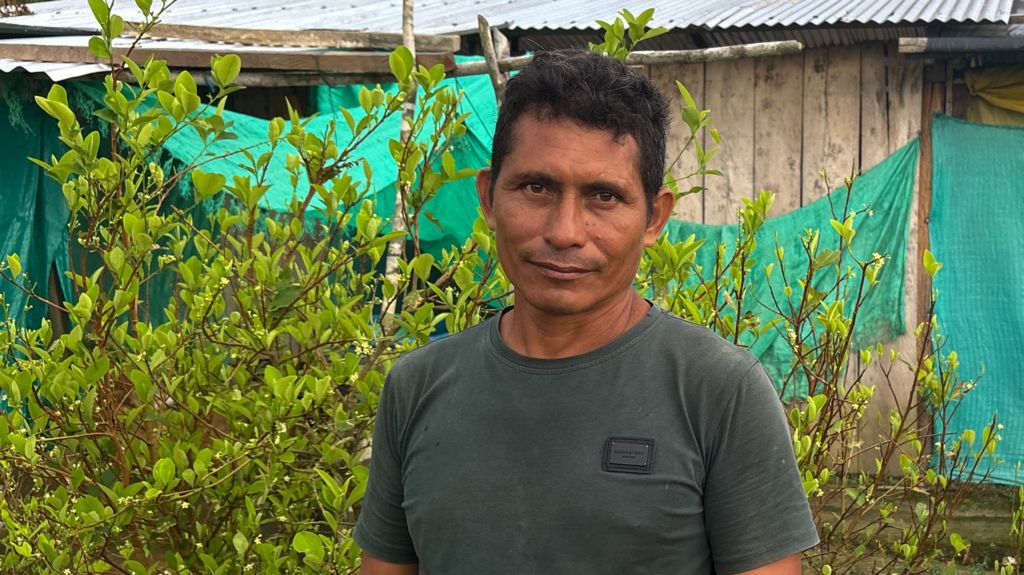
    Deep in the river-accessed remote farmlands of Colombia’s Meta province, coca farmer Juan Perea once made a promise: after pulling up every one of his coca bushes, he would never return to the crop that forms the base of illegal cocaine production. He replaced his illicit crop with legal staples – cassava and plantain – joining tens of thousands of Colombian smallholders who signed on to state-run initiatives designed to wean rural communities off coca cultivation. But for Perea, the support the government had guaranteed never materialized. Cut off from markets by a lack of paved roads and battered by repeated seasonal flooding that destroyed portions of his harvest, he had no way to earn a stable income to feed his family. By 2024, disillusioned and desperate, he replanted his fields with coca. “It’s a tragedy,” Perea said, standing amid the green bushes surrounding his small wooden home. “But when you have children and no work, what choice do you have? If no help ever arrives, you go back to growing it.”

    Coca has deep ancestral roots in Colombia, where indigenous communities have long used the leaf in traditional teas and remedies. Today, however, roughly 70% of the world’s illegal cocaine supply originates from Colombian coca crops, making the country central to the global trade in illicit drugs. For smallholder farmers, coca holds inherent economic advantages that legal crops struggle to match, explains Lucas Marín Llanes, a Colombian researcher specializing in the coca economy and substitution policy. Farmers can harvest three to four crops a year, the compact leaf is far easier to transport over unpaved rural terrain than bulkier legal produce, and growers face far less price volatility than they do with traditional agricultural goods. Marín’s own research found that between 2014 and 2019, coca cultivation boosted municipal GDP by as much as 10% in heavily affected growing regions, embedding the crop deeply into local economic systems.

    The most ambitious effort to date to reverse this trend grew out of the 2016 peace accord between the Colombian government and former guerrilla group FARC: the National Comprehensive Programme for the Substitution of Illicit Crops, known by its Spanish acronym PNIS. Launched nationally in 2017, the programme promised roughly 100,000 participating households 36 million Colombian pesos (around $11,000) in staggered financial support over two years, alongside technical agronomic guidance and support for soil management to help farmers transition to sustainable legal livelihoods. For Elena Hernández, who moved to Guaviare’s coca-growing region in the 1990s lured by higher wages, the initiative seemed like a path out of the violence and insecurity that had long defined the coca trade. Armed groups had battled for control of trafficking routes for decades, while government crackdowns – including manual eradication, aerial fumigation, and mass arrests – left families without income but failed to meaningfully reduce cultivation. “The way it was presented to us, it seemed very promising for the development of our territory,” Hernández said.

    In its early days, PNIS delivered results: across parts of southern Meta and Guaviare, coca fields were cleared and replaced with lemon groves, banana plantations, and small livestock operations. But systemic flaws quickly undermined progress. Payments were repeatedly delayed, and promised technical support rarely reached remote rural communities. Weak state presence in isolated growing regions and poor inter-agency coordination left thousands of participating farmers without the help they had been guaranteed. When Iván Duque took office as president in 2018, political priorities shifted back to forced eradication and security-focused crackdowns, draining momentum from the substitution initiative. By the time current President Gustavo Petro took office in 2022, PNIS was years behind schedule and failing to reach most target communities. Today, despite decades of interventions, Colombian coca cultivation sits at an all-time high, covering more than 250,000 hectares, with thousands of former substitution participants reporting they have been abandoned by the state.

    The programme has not been without its success stories, however. For Doralba Bejarano, a farmer in Puerto Rico, southern Meta, the stalled PNIS support eventually arrived, and her life has transformed for the better. “Before the programme we were terrified,” she explained. “We had to hide the coca paste because the police, the military, would put us in jail.” Today, she moves freely through her community without fear of arrest, and her local group now receives government support to market and sell legal produce. “I go wherever I want. I have no reason to hide,” she said.

    Beyond domestic policy failures, external forces continue to drive coca expansion. Global demand for cocaine remains high across traditional markets in the United States and Europe, and is growing rapidly in new markets around the world. “Right now there is expanding demand, and so there will be supply to meet that,” said Michael Weintraub, co-director of the Centre for the Study of Security and Drugs at Bogota’s University of the Andes. “That means Colombia will grow coca for the foreseeable future.” Weintraub added that Colombia’s ongoing security fragility further undermines substitution efforts: while the 2016 peace deal disbanded most of FARC, new armed groups have moved in to control trafficking routes and local coca economies, creating an unstable environment for legal development. The Petro administration’s “Total Peace” policy, which seeks to negotiate ceasefires with all active armed and criminal groups, has so far made limited progress, analysts note.

    In response to PNIS’s shortcomings, the government launched a new initiative, RenHacemos, last year, rolling it out first in pilot regions. The new programme retains the core commitment to financial support for participating farmers, but expands its scope beyond just crop replacement to tackle the entire local coca economy. Planned interventions include upgrading rural road infrastructure, expanding access to higher education, improving digital connectivity, and upgrading rural housing. “Coca is a business,” explained Gloria Miranda, director of the Colombian government agency in charge of illicit crop substitution. “It’s a criminal enterprise, but it functions like any other business. RenHacemos aims to replace not only the coca plant, but the entire economy surrounding it – from processing and agro-industry to transport and logistics.”

    Still, analysts remain sceptical that the new approach will deliver lasting change. Marín notes that the continuing record growth of coca cultivation demonstrates that decades of repeated policy interventions have failed to resolve the root drivers of the trade. For Perea and thousands of farmers like him, there is little confidence that government support will arrive any time soon. “The state has completely abandoned us,” he said. “We live day to day, sometimes even running out of food.” For now, he will keep growing coca – not out of a desire to participate in organized crime, he says, but because it is the only option he has to support his family. “We are not the drug traffickers – if I was, I wouldn’t be living like I do.”

  • Iran accuses US of violating international law after strike on nuclear plant

    Iran accuses US of violating international law after strike on nuclear plant

    Tensions between the United States and Iran have surged to their highest level in months after a US air strike targeted the under-construction Darkhovin Nuclear Power Plant in southwestern Iran, marking a sharp escalation following the collapse of a one-month-old interim ceasefire last week.

    In an official statement released after the attack, the Atomic Energy Organisation of Iran (AEOI) issued a fierce condemnation of the United States, framing the strike as an assault on a core symbol of Iranian national pride and the country’s decades-long push for technological self-reliance in the nuclear sector. “The terrorist and criminal US regime, whose very identity is rooted in bullying and open disregard for international law, has committed an aggressive, barbaric act that violates every norm of global governance,” the statement read. While the AEOI confirmed the strike targeted the nuclear construction site, it has not released any details on the scale of damage incurred, but reaffirmed that the attack constitutes a clear breach of international law.

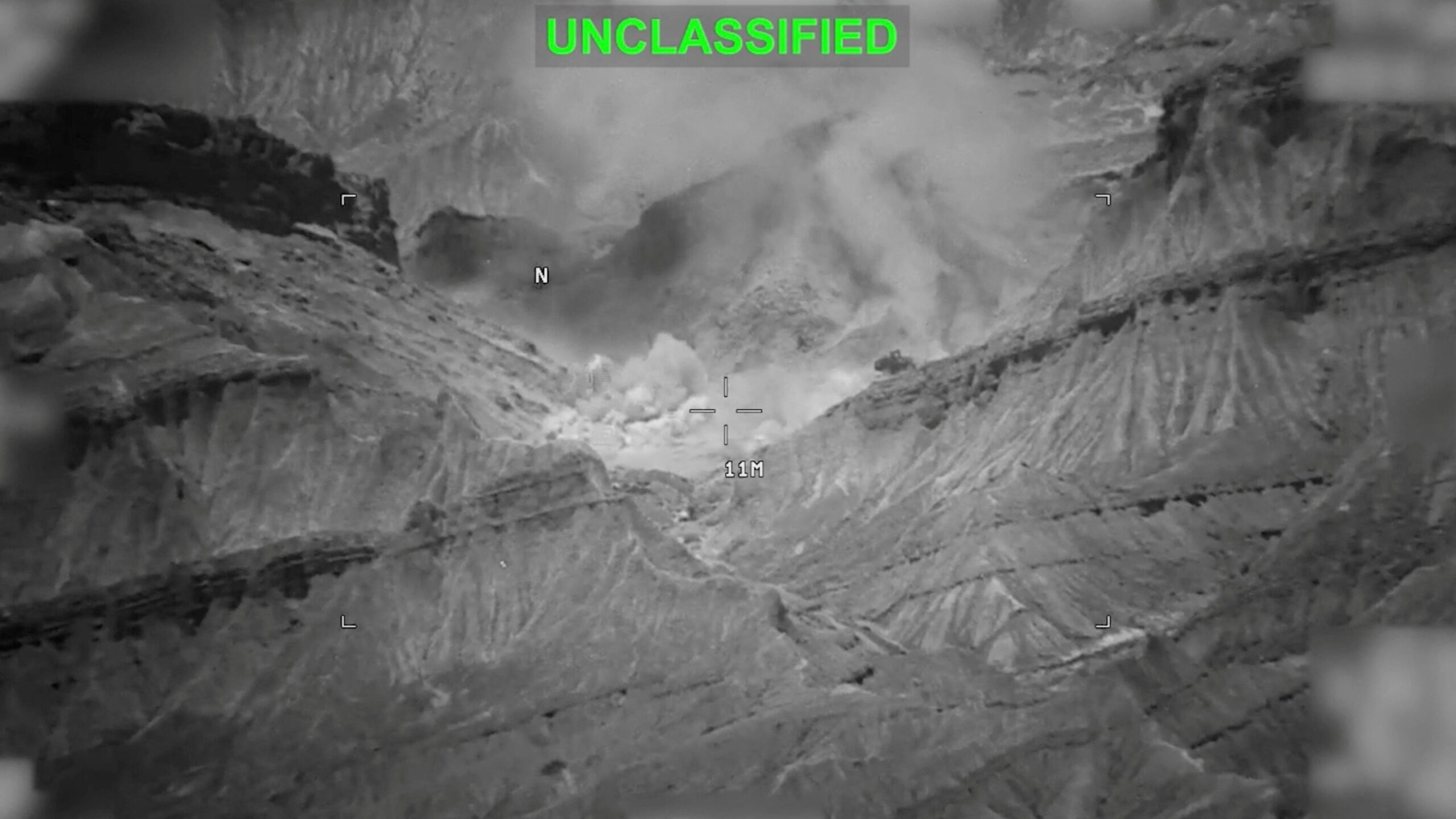
    Located in Khuzestan Province along the banks of the Karun River, the Darkhovin facility sits roughly 70 kilometers south of Ahvaz and 100 kilometers north of the Persian Gulf. Construction on the plant’s new reactor only began in 2022, and the project remains in its earliest phase of development. The International Atomic Energy Agency (IAEA), the United Nations’ nuclear oversight body, confirmed that no nuclear material was present at the site during its most recent inspection, meaning the attack does not pose any public radiological hazard. The agency announced it is currently investigating credible reports of the overnight strike. IAEA Director General Rafael Grossi repeated his longstanding call for global powers to exercise strict military restraint around all nuclear-related facilities, regardless of their operational status.

    The strike on the nuclear site came as part of a broader wave of US air operations ordered directly by US President Donald Trump, which launched at 6 p.m. ET (10 p.m. GMT) Saturday, according to US Central Command (Centcom). In its official statement, Centcom said the strikes were ordered to achieve two core goals: to erode Iran’s capacity to disrupt commercial shipping in the strategically critical Strait of Hormuz, and to deliver immediate retaliation for a recent attack by the Islamic Revolutionary Guard Corps (IRGC) that targeted American service members stationed in Jordan. After completing the first wave of attacks, Centcom confirmed it had targeted multiple Iranian military assets, including coastal surveillance outposts and air defense systems along Iran’s southern coast.

    Local Iranian media outlets have offered conflicting initial reports on casualties and non-nuclear damage. Iran’s state-aligned Mehr News Agency reported that one strike near the southern city of Sirik caused no reported casualties and no damage to major civilian infrastructure. Semi-official Tasnim News Agency also confirmed a second strike near Shadegan, a city located close to Iran’s border with Iraq.

    The renewed full-scale hostilities follow the collapse of an interim ceasefire agreement that was signed roughly one month prior, ending a brief period of de-escalation and raising urgent fears across the global community that the two sides will return to open, all-out war. Earlier on Saturday, Iranian officials confirmed the country had formally withdrawn from a bilateral memorandum of understanding with the Trump administration, in response to the resumption of US bombardments across Iranian territory.

    The current round of conflict traces back to February 28, when joint strikes by the United States and Israel were launched against targets across Iran, with the stated goal of disabling Iran’s nuclear and ballistic missile programs and weakening the network of regional proxies aligned with the Iranian government. That opening wave of strikes included an air attack that killed Ali Khamenei, Iran’s long-serving former supreme leader. The current supreme leader, Mojtaba Khamenei, who succeeded his father, has not appeared in public since the first day of the war, a point that has fueled widespread speculation about his status.

    In a written statement carried by all major Iranian state media outlets Saturday evening, Mojtaba Khamenei issued a sharp rebuke of the Trump administration, arguing that the latest strikes prove any agreement signed by the US president is completely lacking in credibility and value. “Donald Trump’s signature is utterly worthless and devoid of credibility,” the statement read, warning that the United States will face “even heavier costs and further humiliation” in response to its aggression.

    Beyond the immediate human and security risks, the escalating conflict has already triggered major ripple effects across the global economy: it has severely disrupted regional energy supplies, stoked new fears of sustained global inflation, and intensified the high-stakes competition for control over the Strait of Hormuz, the chokepoint through which roughly 20% of the world’s global oil supplies pass every day.

  • US soldier killed and one injured after Iranian attack in Iraq

    US soldier killed and one injured after Iranian attack in Iraq

    An eight-day cycle of escalating reciprocal strikes between the United States and Iran has sent shockwaves across the Middle East, driving up casualty counts, drawing sharp international condemnation, and reigniting fears of a full-scale regional conflict after a short-lived preliminary ceasefire collapsed earlier this month.

    The latest violence unfolded quickly over the weekend, following a Friday attack on a US military base in Jordan that left two American soldiers dead and one service member unaccounted for. On Saturday, a third US service member was killed while conducting a controlled detonation of unexploded ordnance from a downed Iranian attack drone in northern Iraq, US Central Command (Centcom) confirmed. A second service member was wounded in the same operation. Centcom also announced that search teams had recovered unidentified remains at the Jordan attack site, with formal identification processes still ongoing.

    Verified footage obtained from inside the Jordanian air base confirms that at least one Iranian projectile struck the facility, showing clear signs of multiple impact sites and a large explosion. In a subsequent incident, Jordan’s military intercepted three Iranian missiles launched toward the kingdom, while a fourth crashed in an unpopulated remote area. The strike came after US intelligence warnings that the Jordanian port of Aqaba faced imminent targeting. Jordanian authorities swiftly summoned Iran’s acting head of mission in Amman to issue a formal protest, demanding an immediate end to what the foreign ministry described as “unjustified and blatant Iranian attacks,” and emphasizing that Jordanian national security is an inviolable red line.

    Across the border in Israel, the Israel Defense Forces confirmed it launched several interceptors to destroy incoming missile debris headed toward Israeli territory, preventing impacts in populated areas. Fragments from one interceptor landed near the southern border city of Eilat, but no injuries or damage were reported.

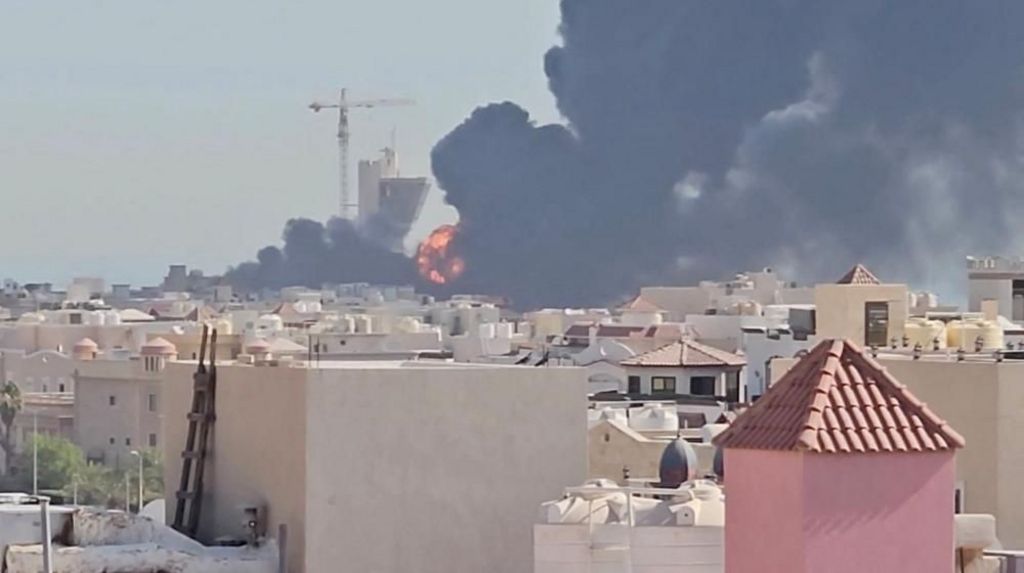
    The conflict has spread to other Gulf states in recent days. In Kuwait, local officials confirmed that an electricity and water plant that was hit by an Iranian strike on Saturday was targeted a second time, sparking a large fire that left critical infrastructure damaged. The Gulf Cooperation Council (GCC), a regional alliance comprising Bahrain, Kuwait, Oman, Qatar, Saudi Arabia and the United Arab Emirates, condemned Iran for targeting civilian facilities, calling the attacks a clear violation of international law.

    Overnight attacks on Sunday targeted sites inside Iran, with Iranian state media confirming that an under-construction nuclear power plant in the southwestern city of Darkhoveyn and locations on Qeshm Island were hit. The International Atomic Energy Agency (IAEA), the United Nations’ nuclear oversight body, issued an urgent call for all parties to exercise maximum restraint, noting that the Darkhoveyn facility is still in early construction phases and held no nuclear material during the watchdog’s most recent inspection.

    Tensions have also flared around the Strait of Hormuz, one of the world’s most critical energy chokepoints. After Washington reimposed a full blockade on Iranian ports following the ceasefire’s collapse, Tehran announced it was closing the strait to commercial shipping linked to US and allied interests. The Islamic Revolutionary Guard Corps (IRGC), Iran’s elite military force, claimed two commercial vessels that ignored Iranian warnings about using unauthorized transit routes were involved in a “maritime accident” this week, and issued a blunt warning that all vessels “influenced by the United States” that use “unsafe routes” will “certainly face accidents” going forward. The US says its latest strikes against Iranian targets are intended to degrade Tehran’s ability to threaten commercial shipping in the strait and punish IRGC forces it blames for the Jordan base attack.

    Casualty figures on both sides continue to climb. The total US death toll from the conflict that began in late February now stands at 17, after a missing American Navy pilot was formally declared dead earlier this week. Iran’s health ministry reports that at least 50 Iranians have been killed and more than 500 injured in US strikes carried out over the past three weeks.

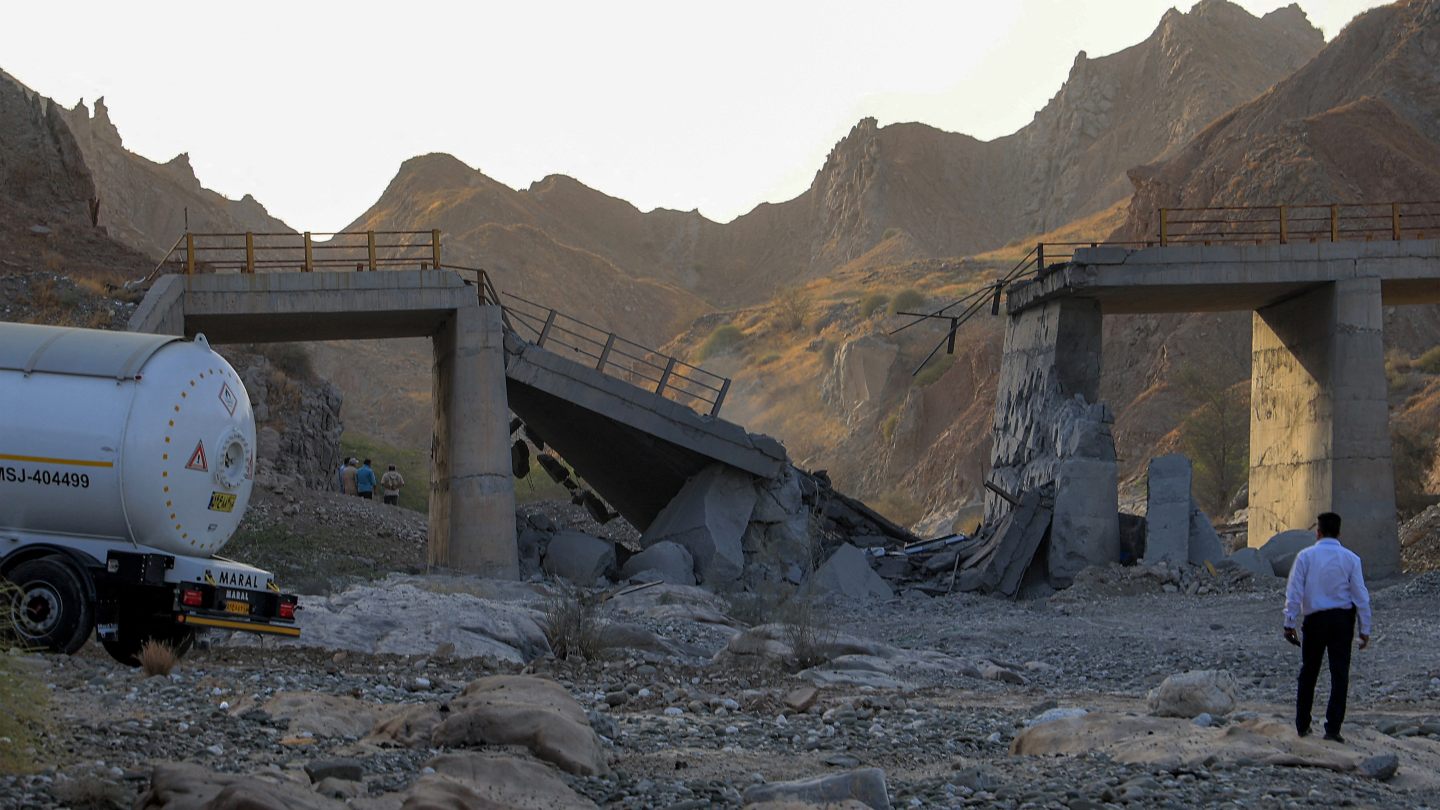
    Both sides have traded accusations over targeting civilian infrastructure, a breach of international humanitarian law that prohibits deliberate attacks on non-military sites. Iran accuses the US of striking civilian bridges, a commercial airport and a train station in recent strikes. Washington has repeatedly denied the claims, asserting that all of its operations target exclusively military objectives, including military logistics infrastructure. Under international law, civilian objects can lose their protected status if they are used to directly support an adversary’s military campaign.

    The current escalation comes after a preliminary ceasefire agreement between Washington and Tehran reached in June fell apart in less than a month. US President Donald Trump officially declared the deal “over” on July 8. In a written statement released late Saturday, Iran’s Supreme Leader Mojtaba Khamenei blamed repeated US violations of the agreement for its collapse, arguing that the breakdown exposed a core reality: “the signature of the US president is utterly worthless and devoid of credibility.”

  • US completes eighth night of strikes as Iran retaliates across Gulf

    US completes eighth night of strikes as Iran retaliates across Gulf

    On Sunday, the United States concluded its eighth straight night of military strikes targeting Iranian territory across the country’s southern regions, hitting both designated military sites and civilian infrastructure, according to multiple on-the-ground and official reports.

    Al Jazeera’s on-the-ground reporting noted that this latest round of airstrikes was marked by lower intensity compared to the three waves of attacks carried out in the preceding three nights. In an official statement, US Central Command (Centcom) confirmed that American military forces successfully engaged multiple key Iranian assets, including coastal military surveillance outposts, air defense installations, maritime operational capabilities, and storage depots holding missiles and drones.

    The command added that the strikes also specifically targeted units of the Islamic Revolutionary Guard Corps (IRGC), which the US holds responsible for a fatal attack that killed two American service members in Jordan on July 17.

    Local Iranian media documented multiple explosions across five locations in two southern provinces: Qeshm Island, Bandar Abbas, Hajiabad, Sirik in Hormozgan Province, and Shadegan in Khuzestan Province. Iran’s Tasnim News Agency reported that at least six blasts were heard across Qeshm Island before emergency civil defense teams were dispatched to the area to survey damage and respond to any emergencies.

    Major-General Ali Abdullahi, commander of Iran’s Khatam al-Anbiya Central Headquarters, issued a stark warning in response to the strikes, emphasizing that any further acts of American aggression will be met with a firm and devastating retaliatory response. Abdullahi accused Washington of seeking to sow internal division within Iran, and pledged that Iran would impose far heavier costs on the United States for its military campaign than it had in previous rounds of conflict.

    Alongside its defensive warnings, Iran immediately launched retaliatory actions targeting Gulf states that host US military forces. Iranian officials confirmed that they carried out a large-scale drone assault on what they described as two key US military facilities in Kuwait: an ammunition storage depot at Camp Al Adiri and air defense systems at Ali Al Salem Air Base. In response, Kuwait’s military announced that its air defense units were actively intercepting incoming hostile drones and missiles.

    Simultaneously, Bahrain triggered air raid sirens for the sixth time within a multi-hour window, urging all residents to immediately move to designated emergency shelters. In another development, the IRGC announced that its air defense units intercepted and destroyed an American MQ-9 reconnaissance drone over the southwestern city of Ahvaz. Separately, Iraqi Kurdish leadership condemned recent Iranian missile strikes targeting the Kurdistan Region as a clear violation of Iraqi national sovereignty.

    Iranian officials confirmed that the ongoing US airstrikes have caused widespread damage to civilian infrastructure across southern Iran. Local media reports confirm that critical public assets including bridges, highways, railway lines, road tunnels, and regional airports have been hit by strikes, disrupting civilian travel, commercial freight movement, and the delivery of humanitarian aid to affected areas. Multiple hospitals have been forced to evacuate patients due to damage or safety risks, and scheduled school examinations across affected regions have been postponed indefinitely.

    Iranian officials argue that the US campaign aims to cut off Iran’s southern provinces and weaken the IRGC’s control over the Strait of Hormuz, a critical global chokepoint for oil maritime trade. They have reiterated that the IRGC will not cede control of the strategic waterway under any circumstances.

    The escalating conflict has also amplified urgent concerns over water security across the entire Gulf region. On Saturday, Kuwait issued its second public accusation against Iran for targeting a major power and desalination plant, a critical piece of infrastructure for the arid nation. Local residents interviewed by AFP confirmed that they have already begun stockpiling bottled water and non-perishable canned food, amid widespread fears that ongoing conflict will disrupt critical supply chains.

    The Gulf Cooperation Council region holds approximately 60 percent of the world’s total desalination capacity, making these facilities irreplaceable for maintaining drinking water supplies in one of the most water-scarce regions on the globe. Earlier, Iranian officials reported that previous US strikes destroyed a desalination facility in Hormozgan Province, cutting off drinking water access for roughly 10,000 residents across 20 local villages.

    In response to the rapidly escalating tensions across the Middle East, the US Department of State has issued a global advisory urging all American citizens around the world to exercise heightened caution due to the rising risk of spillover conflict.