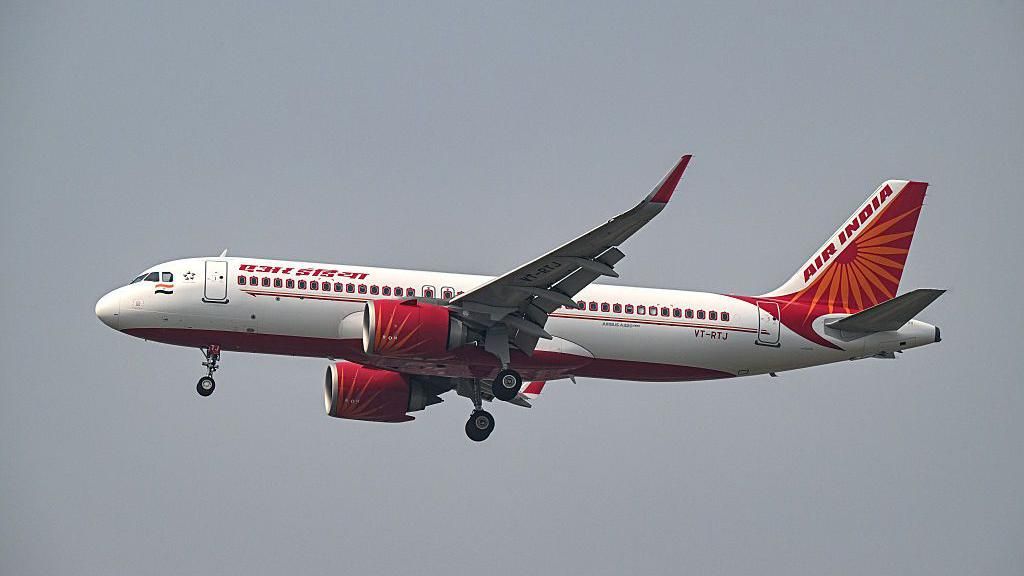
On August 4, a routine commercial flight from Phuket to New Delhi operated by Air India took an unexpected turn when the Airbus A320 suddenly dropped around 300 feet (91 meters) in altitude mid-flight. The sudden plunge left 13 passengers and four crew members injured, though the aircraft ultimately landed safely at its destination with all 137 passengers and eight crew members on board. What began as a standard incident investigation quickly erupted into a national discussion across India about aviation safety protocols and the complexities of drug testing for pilots, after unconfirmed media reports claimed the flight’s captain tested positive for cannabis in a follow-up laboratory analysis.
India’s aviation ministry confirmed that both pilots on board completed mandatory post-incident screening for psychoactive substances following the landing. The initial test result for the captain triggered the need for additional confirmatory testing, and both pilots have been suspended from active flight duties pending the outcome of the full investigation. Multiple outlets have cited anonymous sources claiming the confirmatory test returned a positive result for marijuana, but neither Air India nor Indian aviation regulators have issued an official confirmation of this finding to date.
Most critically, no official link has been drawn between the alleged positive test result and the sudden altitude loss that sparked the incident. Investigators are conducting a broad review of all contributing factors, including technical aircraft performance, operational protocols, medical conditions and human performance variables, leaving the root cause of the plunge undetermined.
While the public has focused immediately on whether cannabis use caused the incident, aviation researchers and toxicology experts point to a much more nuanced question that does not have a clear answer: what can a positive cannabis test actually reveal about a pilot’s level of impairment at the time the incident occurred, hours before the test was administered?
Decades of small-scale research on cannabis and pilot performance has established that the drug can interfere with the core skills required for safe flight. In a 1976 simulator study, 10 pilots who consumed a moderate dose of cannabis showed measurable performance declines in altitude control, heading maintenance and radio navigation, with impairment lasting at least two hours and fading within four to six hours. Follow-up research conducted in the 1980s and 1990s found even more concerning results: pilots tested on flight simulators 24 hours after cannabis consumption still showed significant performance declines in critical functions including aircraft control, landing accuracy and approach deviation. Most alarmingly, the vast majority of participating pilots had no awareness that their performance had been compromised.
A 2000s review conducted by aviation medicine specialist David Newman for Australia’s Transport Safety Bureau echoed these conclusions, noting that cannabis affects cognition, behavior and psychomotor function in a dose-dependent relationship, with complex, high-concentration tasks such as commercial flight particularly vulnerable to impairment. The review also confirmed evidence of residual performance effects that can last up to 24 hours after consumption.
But as cannabis use has become more widespread globally and product potency has increased significantly in recent decades, the science linking test results to real-time impairment has grown far more complicated. A 2022 randomized clinical trial led by researcher Thomas Marcotte at the University of California San Diego tested 191 regular cannabis users on simulated driving tasks. The study found that while users who smoked THC showed initial performance declines, impairment could not be predicted by the THC content of the product, the user’s prior experience with cannabis, or even blood THC concentration. By roughly four and a half hours after consumption, performance for most test participants was comparable to that of participants who did not receive active THC.
This finding upends simplistic assumptions about positive cannabis tests, experts say. A positive test only confirms that THC or its metabolites are present in the body, not when the cannabis was consumed or whether the person was impaired at the time of the incident. The relationship between test results and impairment varies widely based on dose, method of consumption, frequency of use and individual biological differences, creating a challenge that regulators do not face with alcohol.
“Unlike with alcohol where there’s a more robust relationship between alcohol concentrations in blood and impairment, the association is much more complex with THC. THC rapidly leaves the bloodstream after smoking, and there is limited to no correlation between blood THC concentrations and impairment,” Marcotte explained. “In people who use at least occasionally, THC can be detectable in blood for days and sometimes weeks after last use, particularly in more frequent users. This is long after any acute impairment has subsided.”
Impairment timelines also vary by consumption method: after smoking cannabis, acute impairment typically lasts between three and five hours, while impairment from edible cannabis products lasts longer, generally between six and eight hours. For edible consumption, the metabolite 11-OH-THC is often more closely tied to cognitive impairment than THC itself, which may be present at low detectable concentrations.
To date, no widely accepted standardized test exists that can definitively confirm whether a person is currently impaired by cannabis to the point that they are unfit to fly. Regulators have responded to this uncertainty with a range of policy approaches. Canada, which legalized recreational cannabis in 2018, implemented a strict rule requiring all flight crew and air traffic controllers to abstain from cannabis for a minimum of 28 days before beginning duty, with individual airlines permitted to enact even stricter rules. The policy is explicitly designed to account for the ongoing uncertainties around impairment detection.
A 2026 study from the U.S. National Transportation Safety Board (NTSB) underscores the risk of overinterpreting positive tests. The NTSB analyzed pilots killed in U.S. civil aviation accidents between 2018 and 2022, finding that 52.8% had at least one drug detected in their system, with THC driving most of the increase in positive illicit drug results. However, the NTSB emphasized that the study only measured drug presence, not impairment at the time of the crash.
Past accident investigations have reflected this nuance. In a 2011 small plane crash in Canada, investigators concluded that 50.1 ng/ml of THC in the pilot’s blood was sufficient to cause cognitive impairment that contributed to the crash. By contrast, after a 2017 helicopter crash in New Zealand, THC was detected in the pilot’s blood from consumption two days prior, but forensic experts ruled he was almost certainly not impaired at the time of the accident, and investigators concluded cannabis did not contribute to the crash.
The core takeaway from these cases is that a positive cannabis test does not inherently prove the drug caused an incident, nor is it meaningless. Its significance depends on concentration, timing of consumption, context of use and supporting evidence, experts say.
In the Air India case, this means investigators need to answer far more than whether the captain’s confirmatory test was positive. They will need to confirm what type of sample was tested, whether the test detected THC itself or a breakdown metabolite, what concentration of the substance was present, and what that reveals about when the cannabis was consumed.
In response to the public controversy sparked by the reports, Air India has announced it will immediately implement mandatory drug testing for all of its pilots, expanding on existing regulations that only require random testing of at least 10% of pilots annually. Toxicology experts note that even with expanded testing, common testing methods using urine, blood or saliva can only confirm exposure to THC, not reliably pin down the timing of use or confirm impairment at the time of the flight hours earlier. While saliva testing is more closely linked to recent use, it can still detect THC up to a day or more after consumption.
For investigators, the question is not a simple yes or no on whether the pilot used cannabis. Three distinct questions need to be answered: was cannabis consumed, was the pilot impaired during the flight, and did that impairment contribute to the sudden altitude drop? While the first question may be answered soon, the second and third will require far more rigorous analysis to resolve.