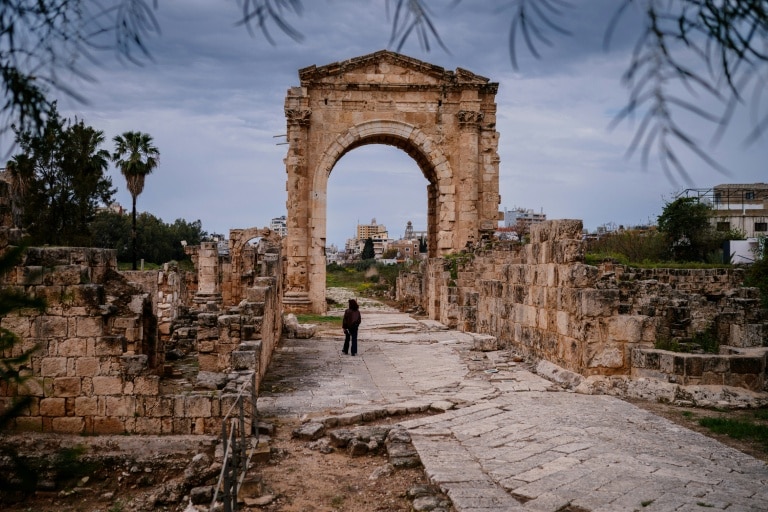
Against the backdrop of ongoing cross-border conflict between Israel and Lebanese militant group Hezbollah, one of the Mediterranean’s most historically significant ancient settlements has been formally recognized as a cultural site at immediate risk. On Wednesday, during the 48th session of the World Heritage Committee in Busan, South Korea, UNESCO voted to add the ancient Lebanese city of Tyre to its official List of World Heritage in Danger.
Located roughly 80 kilometers south of Beirut and just 20 kilometers north of the Israeli-Lebanese border, Tyre was first inscribed as a UNESCO World Heritage Site in 1984. Founded approximately 4,700 years ago, the coastal city carries layers of civilizations across millennia, having been ruled by Phoenician, Persian, Hellenistic, Roman, and Byzantine powers. Its protected heritage zones hold exceptionally well-preserved Roman-era archaeological remains, including a iconic 2nd-century triumphal arch and an ancient hippodrome that draw scholars and tourists from across the globe.
But the site’s future has been thrown into peril by months of cross-border hostilities. In June this year, one of Tyre’s two protected heritage zones suffered a direct Israeli airstrike. According to Lebanese culture ministry officials speaking to Agence France-Presse after the strike, an on-site administrative building was destroyed in the attack, while flying debris from nearby bombardments caused visible damage to irreplaceable archaeological features including stone columns, decorative capitals, and intricate ancient mosaics.
As violence intensified in subsequent months, the Israeli military issued mandatory evacuation orders for populated districts of Tyre that overlap with portions of the archaeological site. Tens of thousands of local residents fled the area en masse, though a large majority have since returned to their homes after the immediate intensity of strikes ebbed. In its official announcement of the new danger listing, UNESCO noted that the site has already sustained direct damage from bombardment, and worsening conditions have created growing alarm over its long-term preservation, particularly given the persistent risk of further military impacts. The UN body confirmed that the conditions required to protect and conserve Tyre’s “outstanding universal value” no longer exist, and added that the designation came at the formal request of the Lebanese government.
Lebanese Culture Minister Ghassan Salame welcomed UNESCO’s decision, saying the designation would draw urgent attention from the global body and its member states to a culturally critical site located at the heart of one of the world’s most volatile ongoing conflicts. Earlier this year, Salame publicly condemned Israel for failing to adhere to the 1954 Hague Convention for the Protection of Cultural Property in the Event of Armed Conflict, an international treaty that requires all warring parties to avoid targeting recognized cultural sites. He also accused Israeli forces of intentionally disregarding “blue shield” markings—the internationally recognized emblem established by a UNESCO-linked committee to mark protected cultural sites during armed conflict.
The conflict that pushed Tyre to this point began when Hezbollah opened rocket fire on Israeli targets to avenge the killing of Iran’s supreme leader by a joint US-Israeli operation. Israel responded with intense air strikes and limited ground incursions into southern Lebanon that have killed more than 4,300 Lebanese people to date, leaving cultural sites and civilian communities across the border region facing widespread destruction and displacement.