分类: technology

  • Elon Musk summoned by French prosecutors amid ongoing X probe

    Elon Musk summoned by French prosecutors amid ongoing X probe

    A high-stakes legal and regulatory clash over Elon Musk’s social media platform X has entered a new phase, with French authorities calling both the tech billionaire and X’s former CEO Linda Yaccarino to appear for a voluntary interview in Paris this Monday. As the investigation into alleged criminal activity on the platform stretches into its second year, uncertainty lingers over whether Musk will comply with the summons, following a well-documented pattern of him declining to appear for official questioning in the past.

    The probe first launched in January 2025, after French prosecutors received multiple formal reports flagging harmful content circulating on X’s recommendation algorithm. Just one month later, in February 2026, cybercrime units from the Paris prosecutor’s office executed raids on X’s French offices as the scope of the inquiry expanded. The investigation now encompasses serious new allegations tied to Grok, X’s controversial in-house AI chatbot. Prosecutors suspect Grok has been leveraged to generate non-consensual sexual deepfake imagery, including manipulated content targeting women and reportedly even underage individuals.

    The list of suspected offences being probed extends far beyond deepfake misuse. French investigators are also examining claims that X facilitated complicity in the possession and organized distribution of child sexual abuse material (CSAM), violated personal image rights through non-consensual explicit synthetic content, and carried out fraudulent large-scale data extraction via an organized criminal network.

    This latest summons follows a reported diplomatic rift between French and U.S. justice authorities. The Wall Street Journal revealed over the weekend that the U.S. Department of Justice sent an official letter to French prosecutors declining to assist with the X investigation, and accusing French officials of misusing the U.S. legal system to advance their inquiry. Musk quickly weighed in on the report via a post on his own platform, writing simply, “indeed, this needs to stop.”

    Musk and X’s leadership have repeatedly framed the entire investigation as a politically motivated attack rather than a legitimate legal inquiry. Following the February office raids, X issued a formal statement denying all wrongdoing, dismissing the allegations as entirely baseless. The company argued that the raids amounted to a “staged” action that distorted French law, bypassed standard due process, and threatened protections for free speech. “X is committed to defending its fundamental rights and the rights of its users,” the company added in that statement.

    Yaccarino, who led X through the period when the alleged offences occurred, has echoed this hardline stance. She previously took to X to accuse French prosecutors of waging “a political vendetta against Americans.” Now, she joins Musk in being called to appear for voluntary questioning this month.

    A history of non-compliance has fueled speculation that Musk may skip the scheduled Monday interview, which was initially set by prosecutors back in February. In September 2024, the billionaire failed to appear for a court-ordered questioning as part of a U.S. Securities and Exchange Commission investigation into his 2022 takeover of the platform, then known as Twitter.

    The French investigation has already triggered a wave of additional legal and regulatory action against X and its parent AI firm xAI across the globe, including multiple probes launched by regulators in the United Kingdom and throughout the European Union. As of Monday morning, neither the Paris prosecutor’s office nor the U.S. Department of Justice has issued an updated comment on the case in response to requests from the BBC.

  • Novel ‘firewall’ boosts battery safety

    Novel ‘firewall’ boosts battery safety

    Battery safety has long been a critical pain point for the global energy storage and consumer electronics industries, and a team of Chinese researchers has now delivered a transformative solution that upends decades of conventional industry thinking. In a newly published study in *Nature Energy*, the team introduced an innovative liquid electrolyte that activates instantly when a battery overheats, forming a protective ‘firewall’ that stops catastrophic thermal runaway before it can begin. This work also marks the first time researchers have demonstrated full thermal runaway prevention in commercial-scale sodium-ion batteries, a milestone that could reshape the future of energy storage.

  • Mine scars healed with green technology

    Mine scars healed with green technology

    For decades, the sky over Songwan Village, tucked in the industrial heart of Daye, central China’s Hubei Province, was often choked by a thick, gritty dust that blew from the region’s hundreds of active mines. 57-year-old Zuo Zijian, who has lived in the village his entire life, recalls the grim reality of life in a mining community: on clear, windy days, the mineral dust was so dense it burned residents’ eyes and left them gasping for air, while heavy rain turned unpaved roads into muddy swamps that were nearly impassable.

    Daye’s rich mineral deposits fueled China’s rapid industrial expansion for more than a century, building the foundation of the nation’s heavy industry while leaving a legacy of environmental devastation. Decades of intensive extraction stripped the landscape bare, drained local ecosystems, and left thousands of acres of abandoned mining pits scarring the countryside. By 2008, the city’s mineral reserves had been depleted to the point that China’s State Council officially designated Daye a “resource-depleted city,” forcing local leaders and residents to make a fateful choice: allow the city to fade into industrial decline, or reimagine the very mining pits that built the city as a launching pad for a new, sustainable future.

    Today, that choice has delivered a remarkable transformation. The air over Songwan Village is now crisp and clear, and the once-barren hillsides that were stripped of vegetation by mining activity are now covered in dense, thriving green forest. The turning point for the village came when the large, abandoned Baoshan mining pit on its outskirts was redeveloped into a cutting-edge production facility for Lyuye Hydrogen Energy Co, turning a long-standing environmental hazard into a high-value asset for China’s fast-growing green economy.

    Daye’s strategic pivot from a historic “mining capital” to a leading green energy hub aligns perfectly with the priorities laid out in China’s newly released 15th Five-Year Plan (2026-2030), which centers on accelerating the transition to a low-carbon economy and meeting national carbon reduction targets. As the central government has set a binding goal of cutting carbon intensity by 17 percent by 2030, former resource-dependent cities like Daye are stepping forward to turn their industrial legacies into assets for the nation’s clean energy transition. What was once a landscape of ecological damage is now becoming a core part of China’s rapidly expanding green hydrogen sector, turning century-old mining scars into economic opportunity.

    For a city that anchored China’s mining industry for generations, the ecological restoration and economic reinvention of Daye delivers three layers of critical benefits: it heals longstanding damage to the natural environment, creates high-quality new jobs for former mining workers, and builds a sustainable, forward-looking economic base that aligns with global efforts to combat climate change. The transformation of Daye stands as a working model for resource-depleted cities across the world, showing how industrial history can be reimagined to deliver both environmental and economic prosperity.

  • Blue Origin launches rocket with used booster for first time

    Blue Origin launches rocket with used booster for first time

    Blue Origin, the private space exploration firm founded by Amazon billionaire Jeff Bezos, has achieved a major technical milestone over the weekend: the company successfully launched its heavy-lift New Glenn rocket using a pre-flown, refurbished booster, and pulled off a controlled landing of the recycled first stage on an ocean floating platform. The milestone marks a long-awaited step forward for Blue Origin as it works to match SpaceX’s reusable rocket technology and ramp up its competitive position in the fast-growing global launch market.

    Sunday’s mission, which lifted off at 7:25 a.m. local time from Cape Canaveral Space Force Station in Florida, marked the third overall flight of the 98-meter New Glenn rocket. The vehicle carried a commercial communications satellite built by AST SpaceMobile, which aims to deliver cellular connectivity to remote and underserved regions of the globe. Approximately nine and a half minutes after liftoff, the reused first stage completed its descent and touched down safely on the company’s landing platform stationed in the Atlantic Ocean, capping a process that had been years in development for Blue Origin.

    However, the mission hit an unexpected partial failure after stage separation. In a post-launch statement posted to the social platform X, Blue Origin confirmed that while the AST SpaceMobile satellite powered on successfully after reaching space, it was deployed into what the company described as an “off-nominal orbit” that does not match the mission’s planned orbital parameters. The company added that teams are still conducting assessments to determine the full extent of the anomaly and what impact the incorrect orbit will have on the satellite’s functionality.

    This milestone represents the first time Blue Origin has reused a New Glenn booster, after two earlier launches that exclusively used brand-new first stages. Prior to this, the company had only flown reused components on its smaller New Shepard suborbital rocket, a vehicle primarily used for short space tourism flights that presents far fewer technical challenges for reusability than orbital launch systems.

    Blue Origin first successfully recovered a New Glenn booster in November 2024, after a failed recovery attempt in January 2025 when the booster’s engines failed to reignite during its descent to the platform. The booster used in Sunday’s mission underwent extensive refurbishment following its previous flight, including a full replacement of all its engines and multiple other structural and system modifications to prepare it for reflight.

    The push for reusable rocket technology comes amid cutthroat competition between Blue Origin and SpaceX, the market-leading private space firm founded by Elon Musk, which has been flying and reusing orbital rocket boosters for more than a decade. The two firms are also direct competitors in NASA’s Artemis program, which aims to return American astronauts to the lunar surface. Both companies are under contract to develop human-rated lunar landers for the program, which has a target of landing the first crew on the Moon by 2028, a deadline aligned with the end of U.S. President Donald Trump’s second term and set to outpace China’s own lunar landing ambitions.

  • Robots outrun humans at marathon

    Robots outrun humans at marathon

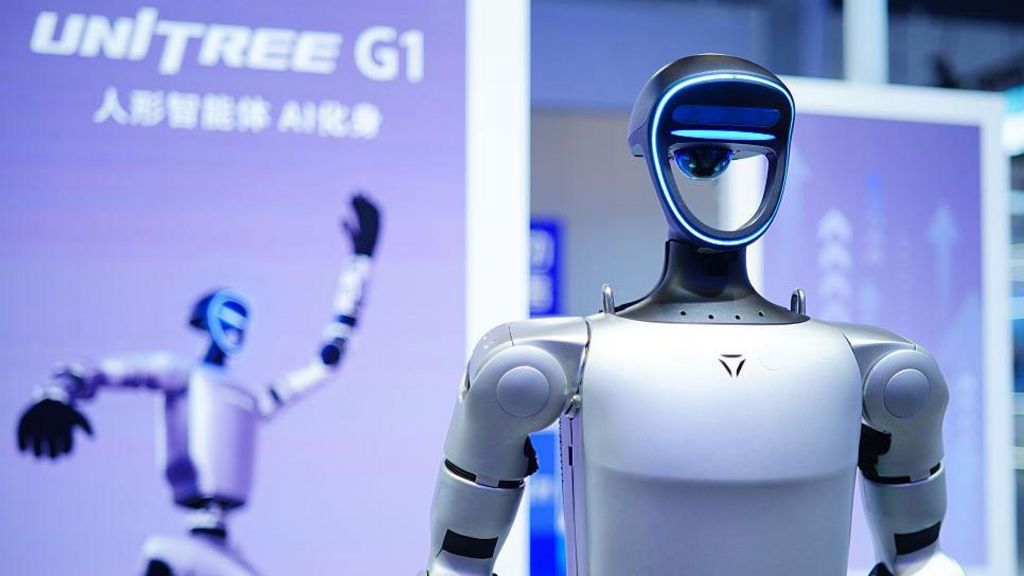
    In a landmark demonstration of advancing robotics capability that stunned observers, a humanoid robot developed by Chinese consumer technology firm Honor has broken the half-marathon world record previously held by a human elite athlete, capping a dramatic year of progress in the sector at a landmark competition in Beijing on Sunday.

    Named Flash, the Honor-built humanoid crossed the 21-kilometer finish line of the 2026 Beijing E-Town Half Marathon and Humanoid Robot Half Marathon in a time of 50 minutes 26 seconds. That mark is nearly seven minutes faster than the existing human record of 57 minutes 20 seconds set by Ugandan distance star Jacob Kiplimo in Lisbon, Portugal just one month prior.

    The milestone comes just 12 months after the inaugural edition of the humanoid robot race, where the winning entry crossed the line more than two hours slower, at 2 hours 40 minutes 42 seconds, and only six out of nearly 20 competing teams managed to get their robots across the finish line at all. This year’s event tells a story of explosive growth in the sector: more than 100 teams from 13 Chinese provinces (up from just five in 2025) plus five international teams competed, with a record-high share of participants completing the full course. All three podium positions were claimed by humanoids built by Honor, a company that has pivoted from smartphone manufacturing into humanoid robotics development in only 12 months.

    Du Xiaodi, an Honor engineer who served as Flash’s team coach, noted after the race that the firm has not yet launched commercial humanoid robot sales, and still faces key technical hurdles to overcome, particularly in the development of fully independent high-performance electric motors for the devices. Honor was far from the only competitor: other participating entries came from established Chinese robotics firms including Unitree and Noetix.

    A year ago, one of the most memorable moments of the event came when human engineers ran alongside their robots the entire way, holding laptops to adjust performance and fix navigation errors mid-race. This year, more than 40 percent of competing robots operated fully autonomously. Using on-board sensors, cameras and embedded processing systems, the robots independently perceived their surrounding environment in real time, completing complex tasks including self-localization, course mapping, dynamic path adjustment and obstacle avoidance without any human intervention.

    Organizers also increased the difficulty of this year’s course to put robot adaptive capabilities to a stricter test, adding additional curves, varying elevation and multiple uphill and downhill segments that wind through scenic local landmarks including the E-Town milu deer park and tree-lined urban avenues. All three top-finishing robots successfully navigated the full challenging course entirely on their own.

    The breakthrough performance comes as Beijing positions humanoid robotics as a core strategic future industry, expected to follow the growth trajectories of smartphones and smart connected vehicles to become a key pillar of the city’s innovation economy. Beijing Municipal Bureau of Economy and Information Technology Party secretary and director Jiang Guangzhi explained that the city is actively developing real-world testing scenarios to accelerate the growth of this new economic engine.

    To support that goal, Beijing has already built more than 18,000 square meters of dedicated robot testing grounds and data collection centers across the E-Town development zone, Haidian District and Shijingshan District. These facilities generate hundreds of thousands of hours of high-quality performance data annually, providing critical support for technological innovation and iteration for both startups and established industry leaders.

    A city-wide action plan for embodied intelligent technology innovation and industry development sets clear targets for 2027: Beijing aims to build a fully domestic integrated upstream and downstream industry chain for embodied intelligence, achieve breakthroughs in more than 100 core technologies, and cultivate a humanoid and robotics industry cluster with an output value of hundreds of billions of yuan.

    Industry data underscores China’s leading position in the global humanoid robot market right now: global shipments of humanoid robots reached approximately 17,000 units in 2025, with Chinese manufacturers accounting for 14,000 of those units, more than 80 percent of total global supply. Looking ahead, the second World Robot Games is scheduled to open in Beijing this coming August, where the world will get another look at the cutting edge of robotic capability coming out of the country’s fast-growing innovation ecosystem.

  • A humanoid robot sprints to victory in Beijing, beating the human half-marathon world record

    A humanoid robot sprints to victory in Beijing, beating the human half-marathon world record

    On a race day in Beijing’s Beijing Economic-Technological Development Area (Beijing E-Town), a milestone event unfolded Sunday that underscores China’s rapid advancement in humanoid robotics: an autonomous humanoid built by Chinese consumer electronics firm Honor claimed the top spot at the world’s second annual robot-only half-marathon, clocking a finish time that outpaces the official human world record for the 21-kilometer distance.

    The winning Honor robot crossed the finish line in 5 hours? No, 50 minutes and 26 seconds, according to an official post from Beijing E-Town on China’s super-app WeChat. That time beats the current human men’s half-marathon world record of 57 minutes 31 seconds set by Uganda’s Jacob Kiplimo at the 2025 Lisbon Half Marathon in March by nearly seven full minutes. A separate remotely operated Honor robot finished even faster at 48 minutes 19 seconds, but under the competition’s weighted scoring framework that prioritizes autonomous navigation, the autonomously running unit was awarded the official championship. Two additional autonomous Honor robots took second and third place, finishing in 51 minutes and 53 minutes respectively.

    This dramatic improvement from the 2024 inaugural race is impossible to ignore: last year’s winning robot crossed the line after 2 hours 40 minutes and 42 seconds, a time that is more than double the 2025 winner’s result. Even with the clear progress, the competition was not without small missteps that highlight the technology is still maturing: one robot collapsed immediately at the starting line, while another collided with a course barrier along the route. Organizers noted that roughly 40 percent of all competing robots completed the course fully autonomously, with the rest operating via remote control.

    Du Xiaodi, a test development engineer leading Honor’s robot project, explained the design choices that enabled the standout performance. The team modeled the robot’s proportions off elite human long-distance runners, outfitting it with 95-centimeter legs, and integrated an in-house developed high-performance liquid-cooling system to manage heat output during extended operation. Du added that the core technologies refined through this racing project have broader practical potential: innovations like structural reliability testing and liquid-cooling systems can be adapted for future industrial use cases, even as full commercialization of general-purpose humanoid robots remains years away.

    Spectators at the joint human-robot race event expressed astonishment at how far the technology has come in just 12 months. Sun Zhigang, who attended the 2024 race and returned this year with his son, called the progress “enormous”, noting that a robot beating the human world record was something he never expected to see so soon. Another attendee, Wang Wen, who attended with his family, observed that the humanoid racers had already overtaken human runners as the main attraction of the day. “The robots’ speed far exceeds that of humans, this may signal the arrival of a new era of robotics,” he said. Beyond the race itself, event organizers even deployed a humanoid robot to work as a traffic marshal, directing participants using a combination of arm gestures and pre-programmed audio cues.

    The breakthrough performance comes as humanoid robotics has become a core priority of China’s national technology development strategy. The country’s recently released 14th Five-Year Plan (2026-2030) identifies accelerating the research, development, and real-world deployment of humanoid robots as a key target, part of Beijing’s broader push to lead global innovation in frontier technology sectors amid ongoing tech competition with the United States.

    Industry data already reflects China’s growing clout in the general-purpose embodied intelligent robot space. A 2025 global assessment from London-based technology research firm Omdia ranked three Chinese robotics firms — AGIBOT, Unitree Robotics, and UBTech Robotics — as the only first-tier global vendors based on shipment volume. All three companies shipped more than 1,000 units of general-purpose intelligent robots in 2024, with AGIBOT and Unitree Robotics each shipping more than 5,000 units, confirming China’s position as a major mass producer of advanced robotic systems.

    The race result is being seen widely as a visible public demonstration of how quickly Chinese humanoid robot capabilities are advancing, moving beyond lab demonstrations to real-world dynamic navigation and sustained operation that challenges even the limits of top human athletic performance.

  • China sex toy makers cautiously embrace AI wave

    China sex toy makers cautiously embrace AI wave

    At a recent adult product exhibition held in Shanghai, attendees were captivated by a new wave of AI-integrated intimate wellness products, as China’s leading sex toy manufacturers begin to tap into the global artificial intelligence boom. As the world’s largest manufacturing hub for adult products, China’s tech-driven innovation has already reshaped countless other industries, and the intimate wellness sector is now starting to explore AI’s transformative potential — though many players are moving cautiously to avoid running afoul of existing regulatory frameworks.

    During a visit to the exhibition by AFP on Friday, a clear divide in approach emerged among participating companies. While some firms were eager to showcase their AI-enhanced offerings, others openly acknowledged wariness over the legal and privacy risks associated with machine-generated sexual content.

    Across the sprawling exhibition floor, banners advertised Guangzhou-based firm Luvmazer’s “AI character dating” app, which syncs conversational interactions with virtual partners to real-time pulse adjustments on connected vibrators, with marketing copy promising responsive, immersive experiences that “leave you trembling with one sentence.” At the Cydoll exhibition booth, a life-sized cyberpunk-themed silicone doll with adjustable metal joints was displayed as a working prototype. According to factory manager Zhou Yuanqing, the prototype is engineered to deliver natural conversational responses and simulate authentic emotional expression, filling a growing demand for companionship amid shifting social habits. “Nowadays, many people don’t go out to socialize or meet friends anymore, they’d rather stay home alone playing games on their phones or computers,” Zhou explained to AFP. “But that doesn’t mean they don’t still need connection and companionship.”

    Several other manufacturers showcased AI-powered tools that use machine learning to analyze adult video content, translating on-screen action into dynamic adjustments to device pressure, vibration speed, and pulse patterns — a feature that was little more than a niche novelty just a few years ago. “Almost every brand offers video syncing now,” noted an employee at Amorlink, a leading teledildonics brand that showcased its new connected vacuum cups built with high-performance processing chips at the event. Domestic condom giant Jissbon exhibited a two-in-one suction vibrator equipped with equally impressive AI features: long-distance remote control access, a library of customizable virtual “boyfriend” personas, and the ability to match vibration frequency and intensity to surrounding environmental noise.

    Beyond consumer-facing products, some companies are also developing AI tools for back-end operations, offering AI-powered customer service agents for marketing and running offline adult retail stores, while others provide custom development solutions for brands looking to build their own smart intimate products. A promotional poster for Hong Kong-based firm metaXsire, which did not have a physical booth at the exhibition, advertised an AI-powered adult image and video generator capable of generating sexually explicit dialogue in over 80 languages. The company’s website claims its tool can swap the faces of celebrities or personal contacts onto pornographic video content, which can then be synced to connected smart toys. While the app’s terms of service prohibit users from leveraging the deepfake feature to shame or harass others, it provides no clear details on how the company will verify consent for the faces used in generated content.

    Despite the rush to innovate, many exhibitors emphasized that caution remains the watchword for integrating AI with adult content, particularly given China’s strict regulatory landscape around explicit material. Pornography is technically illegal in mainland China, and most international adult video platforms are blocked by the country’s national internet firewall, only accessible via unauthorized virtual private network services. For many manufacturers, this regulatory environment means balancing innovation with risk mitigation.

    Sam Xie, founder of Shanghai-based adult toy manufacturer Magic Motion, said his company’s products are compatible with third-party AI agents, but the firm carefully vets all software development partners to avoid compliance issues. “We have to be extremely careful, otherwise we can face all kinds of problems, even getting reported by consumers,” Xie told AFP.

    For China’s $XX billion sex toy industry, the integration of AI represents both a major market opportunity and a complex regulatory balancing act, as manufacturers work to bring cutting-edge smart products to both domestic and global consumers while navigating uncertain legal terrain around AI-generated explicit content and user privacy.

  • CSSC’s rotor sail aims to drive global green ship tech

    CSSC’s rotor sail aims to drive global green ship tech

    As the global push for decarbonization reaches every corner of industrial activity, the international shipping sector — a long-contributing source of global carbon emissions — is facing mounting pressure to green its operations. Now, China State Shipbuilding Corp (CSSC), the world’s largest shipbuilding group, has delivered a major breakthrough in wind-assisted propulsion technology with the development of one of the world’s largest commercially viable rotor sail systems, built to capture growing global demand for sustainable shipping solutions.

    Designed and developed by CSSC’s Luoyang Ship Material Research Institute, an R&D center specializing in advanced shipbuilding materials and engineering techniques, the unnamed new rotor sail has already completed a full suite of ground-based system tests, clearing a key milestone ahead of commercial deployment. Engineers leveraged the institute’s deep existing expertise in green composite materials and wind turbine blade design to refine the system’s performance and durability, resulting in a cutting-edge product that outperforms many smaller existing rotor sail models on the market.

    Standing 35 meters tall with a diameter of 5 meters, the new system ranks among the largest rotor sail designs ever brought to testing phase. Each unit can reach a maximum rotational speed of 180 revolutions per minute, generating over 355 kilonewtons of thrust to help propel fitted vessels. For context, rotor sails — also known as Flettner rotors — operate on a simple but effective physical principle: upright spinning cylinders mounted on a ship’s deck interact with surrounding wind flow to create usable thrust, reducing the need for fossil fuel-powered propulsion.

    First invented in the 1920s, rotor sail technology saw extremely limited adoption for nearly a century, deployed only on a small handful of cargo ships and experimental test vessels before the 2010s. But as the global shipping industry, which moves more than 80% of world trade volume by volume and accounts for roughly 3% of global carbon emissions, has faced growing mandatory decarbonization requirements, the technology has experienced a rapid renaissance. Today, rotor sails are increasingly being integrated into commercial vessels ranging from bulk carriers to roll-on/roll-off ships.

    Feng Wei, project manager for the new CSSC rotor sail, outlined the urgency of decarbonization in a press briefing Friday, noting that the green transition in shipping has evolved from an optional sustainability measure to a mandatory global requirement aligned with international climate goals. “Wind-assisted propulsion represents one of the most promising and practical pathways for the shipping industry to achieve immediate emission reductions,” Feng said.

    Unlike other wind-assisted propulsion technologies, Feng explained, rotor sails offer unique practical benefits that make them ideal for widespread commercial adoption. They take up minimal deck space, do not interfere with standard cargo loading and unloading operations, operate with a high degree of automation, and require almost no modifications to a vessel’s original structure or standard operating procedures. These characteristics make them suitable for installation across most major commercial vessel types, including bulk carriers and oil tankers, with average fuel savings ranging from 5% to 25% per voyage.

    Beyond emission reductions, the system delivers tangible economic benefits for shipowners: it helps buffer against volatile global oil prices and cuts down on future carbon tax expenses that will come into force as international decarbonization regulations tighten. The new design also incorporates a network of smart exterior sensors, boosting its automation capabilities and making it exceptionally easy to control and maintain.

    Industry projections from leading global research organizations cited by Feng forecast that around 7,000 ships worldwide will be fitted with wind-assisted propulsion systems by 2030, with that number jumping to roughly 21,000 by 2050. CSSC’s new large-format rotor sail positions the Chinese shipbuilding giant to capture a substantial share of this fast-growing global green shipping technology market, while supporting the global shipping industry’s collective push to cut carbon emissions and meet international climate targets.

  • Shenzhou XXI crew complete third spacewalk

    Shenzhou XXI crew complete third spacewalk

    China’s ongoing human space exploration program reached a new milestone earlier this week, when the three-person Shenzhou XXI crew stationed at the nation’s Tiangong space station successfully wrapped up their third extravehicular activity, according to official announcements from the China Manned Space Agency.

    The excursion, which concluded at 1:36 a.m. Beijing Time on Friday, saw mission commander Senior Colonel Zhang Lu and spaceflight engineer Major Wu Wu spend roughly five and a half hours operating outside the massive orbiting outpost before returning safely to the Wentian experimental module. The third member of the crew, payload specialist Zhang Hongzhang — a researcher from the Chinese Academy of Sciences — remained inside the space station throughout the spacewalk to coordinate operations and provide critical in-orbit support.

    Working in tandem with ground control teams and leveraging the station’s robotic arm for assistance, the astronauts checked off every scheduled task on their itinerary, including the installation of protective shields designed to mitigate damage from orbital space debris and comprehensive inspections of extravehicular hardware.

    This spacewalk carries special historical significance for China’s human space program: it marks the 27th extravehicular activity conducted by Chinese taikonauts overall, and it is the seventh spacewalk for commander Zhang Lu. With this milestone, the 49-year-old Hunan-born astronaut has become the new record holder for the most spacewalks completed by any Chinese astronaut. Zhang previously completed four spacewalks during his first mission, the six-month Shenzhou XV expedition that launched in November 2022.

    The Shenzhou XXI mission is China’s 16th crewed spaceflight, and the trio has served as the 10th long-term resident crew aboard Tiangong, currently the only operational space station fully developed and operated independently by a single nation. The crew has now lived and worked in low-Earth orbit for more than five months, having arrived at the station on November 1, 2025.

    Over the course of their stay, Zhang Lu and his crewmates have carried out a wide range of work, from cutting-edge scientific experiments in space life science, human physiology and microgravity physics to routine maintenance and operations. These routine tasks include in-orbit environmental monitoring, regular equipment checks and upkeep, and organization of cargo delivered to the station. The team has also completed required emergency preparedness training, including a full-system pressure emergency response drill and on-orbit emergency survival training, alongside all pre-deployment preparations for extravehicular activities.

    In a surprise announcement included in the agency’s news release, officials confirmed that after comprehensive technical analysis and risk assessment, the Shenzhou XXI mission will be extended by approximately one additional month. The adjustment is designed to further test and validate key technologies required for long-duration human spaceflight, and to allow the crew to make full use of additional mission supplies and materials transported to the station by the uncrewed Shenzhou XXII spacecraft.

    Shenzhou XXII launched in late November 2025 on an uncrewed resupply mission to Tiangong, dispatched after a window damage incident affected the return capsule of the earlier Shenzhou XX mission during its reentry. In addition to delivering critical replacement hardware, the spacecraft carried a large volume of additional mission supplies to support extended operations aboard the station.

    Looking ahead, the CMSA confirmed that the Shenzhou XXI crew will continue carrying out their ongoing scientific research and technical tasks for the duration of their extended stay, advancing China’s growing body of knowledge about long-duration human spaceflight and orbital operations.

  • White House and Anthropic set aside court fight to meet amid fears over Mythos model

    White House and Anthropic set aside court fight to meet amid fears over Mythos model

    A surprising shift in relations between the Trump White House and leading artificial intelligence developer Anthropic has unfolded, with senior administration officials holding a “productive and constructive” meeting with Anthropic CEO Dario Amodei — even as the AI firm continues its legal battle against the U.S. Department of Defense.

    The high-stakes sit-down, which took place on Friday, brought Amodei face-to-face with Treasury Secretary Scott Bessent and White House Chief of Staff Susie Wiles, according to reporting from Axios. The gathering comes just one week after Anthropic launched the public preview of its latest cutting-edge AI system, Claude Mythos, a tool the company says exceeds human performance in a range of specialized hacking and cybersecurity tasks. To date, access to Claude Mythos has been restricted to only a small group of vetted organizations, but independent cybersecurity researchers have already confirmed the system’s unusual capabilities, describing it as “strikingly capable at computer security tasks.” Per Anthropic’s own documentation, Claude Mythos can independently detect hidden vulnerabilities in decades-old legacy code and autonomously develop working methods to exploit those flaws.

    This new overture from the White House marks a dramatic reversal from just two months ago, when the Trump administration publicly derided Anthropic as a “radical left, woke company.” Just months earlier in March, the Department of Defense labeled Anthropic a “national supply chain risk,” marking the first time a major U.S. technology company had received this public designation, which bars the firm from new federal government contracts. In response, Anthropic launched a lawsuit against the Defense Department and multiple other federal agencies, challenging the designation in court.

    Anthropic has been a key provider of AI tools for high-level U.S. government and military work since 2024, and the company argues the supply chain risk label is nothing more than retaliation from Defense Secretary Pete Hegseth. According to Anthropic’s legal filing, Hegseth retaliated after Amodei rejected the Pentagon’s demand for unfettered access to the company’s full AI model stack, over Amodei’s deep concerns that the technology could be misused for mass domestic surveillance and the development of fully autonomous lethal weapons. While a California federal court ruled largely in Anthropic’s favor in early proceedings, a federal appeals court recently rejected the firm’s request for an emergency temporary stay to block the supply chain risk designation. Even so, Anthropic’s tools remain in active use across all federal agencies that had already deployed the technology prior to the designation.

    Prior to Friday’s meeting, the White House had not issued any positive public remarks about Anthropic, with President Donald Trump himself taking to social media earlier this year to call for an outright ban on the company’s technology across the federal government. In that post, Trump claimed Anthropic was led by “left wing nut jobs” attempting to “strong arm” the U.S. defense establishment, writing, “We don’t need it, we don’t want it, and will not do business with them again!” When reporters questioned Trump about Amodei’s White House visit during a public appearance in Phoenix, Arizona on Friday, the president told reporters he had “no idea” the meeting was taking place.

    In an official statement after the meeting, the White House confirmed the two sides discussed pathways for potential collaboration, as well as shared frameworks and safety protocols to manage risks associated with scaling advanced AI systems like Claude Mythos. “We discussed opportunities for collaboration, as well as shared approaches and protocols to address the challenges associated with scaling this technology,” the White House said, adding that the meeting “explored the balance between advancing innovation and ensuring safety.” Industry analysts say the meeting makes clear that despite the Trump administration’s public hostility toward Anthropic, the company’s advanced AI capabilities — particularly in the cybersecurity space — have become too strategically critical for the U.S. government to cut ties entirely. A representative for Anthropic declined to provide any additional comment on the details of Friday’s meeting when contacted by reporters.