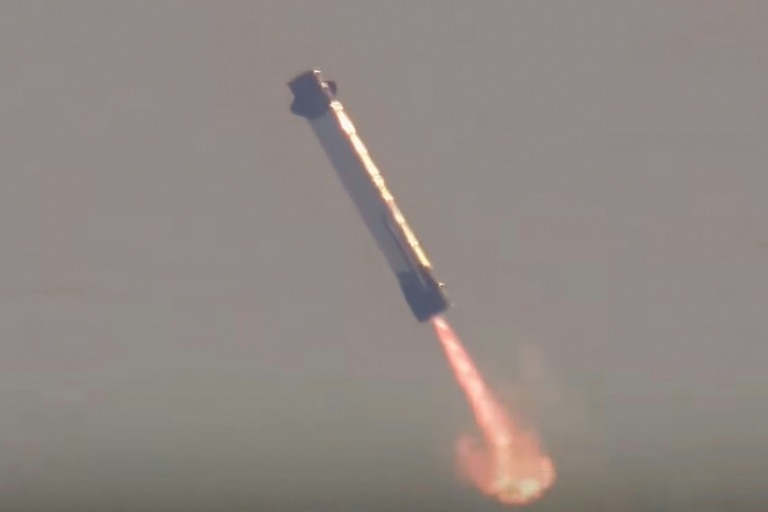
Blue Origin, the private space exploration firm founded by Amazon billionaire Jeff Bezos, has achieved a major technical milestone over the weekend: the company successfully launched its heavy-lift New Glenn rocket using a pre-flown, refurbished booster, and pulled off a controlled landing of the recycled first stage on an ocean floating platform. The milestone marks a long-awaited step forward for Blue Origin as it works to match SpaceX’s reusable rocket technology and ramp up its competitive position in the fast-growing global launch market.
Sunday’s mission, which lifted off at 7:25 a.m. local time from Cape Canaveral Space Force Station in Florida, marked the third overall flight of the 98-meter New Glenn rocket. The vehicle carried a commercial communications satellite built by AST SpaceMobile, which aims to deliver cellular connectivity to remote and underserved regions of the globe. Approximately nine and a half minutes after liftoff, the reused first stage completed its descent and touched down safely on the company’s landing platform stationed in the Atlantic Ocean, capping a process that had been years in development for Blue Origin.
However, the mission hit an unexpected partial failure after stage separation. In a post-launch statement posted to the social platform X, Blue Origin confirmed that while the AST SpaceMobile satellite powered on successfully after reaching space, it was deployed into what the company described as an “off-nominal orbit” that does not match the mission’s planned orbital parameters. The company added that teams are still conducting assessments to determine the full extent of the anomaly and what impact the incorrect orbit will have on the satellite’s functionality.
This milestone represents the first time Blue Origin has reused a New Glenn booster, after two earlier launches that exclusively used brand-new first stages. Prior to this, the company had only flown reused components on its smaller New Shepard suborbital rocket, a vehicle primarily used for short space tourism flights that presents far fewer technical challenges for reusability than orbital launch systems.
Blue Origin first successfully recovered a New Glenn booster in November 2024, after a failed recovery attempt in January 2025 when the booster’s engines failed to reignite during its descent to the platform. The booster used in Sunday’s mission underwent extensive refurbishment following its previous flight, including a full replacement of all its engines and multiple other structural and system modifications to prepare it for reflight.
The push for reusable rocket technology comes amid cutthroat competition between Blue Origin and SpaceX, the market-leading private space firm founded by Elon Musk, which has been flying and reusing orbital rocket boosters for more than a decade. The two firms are also direct competitors in NASA’s Artemis program, which aims to return American astronauts to the lunar surface. Both companies are under contract to develop human-rated lunar landers for the program, which has a target of landing the first crew on the Moon by 2028, a deadline aligned with the end of U.S. President Donald Trump’s second term and set to outpace China’s own lunar landing ambitions.