分类: sports

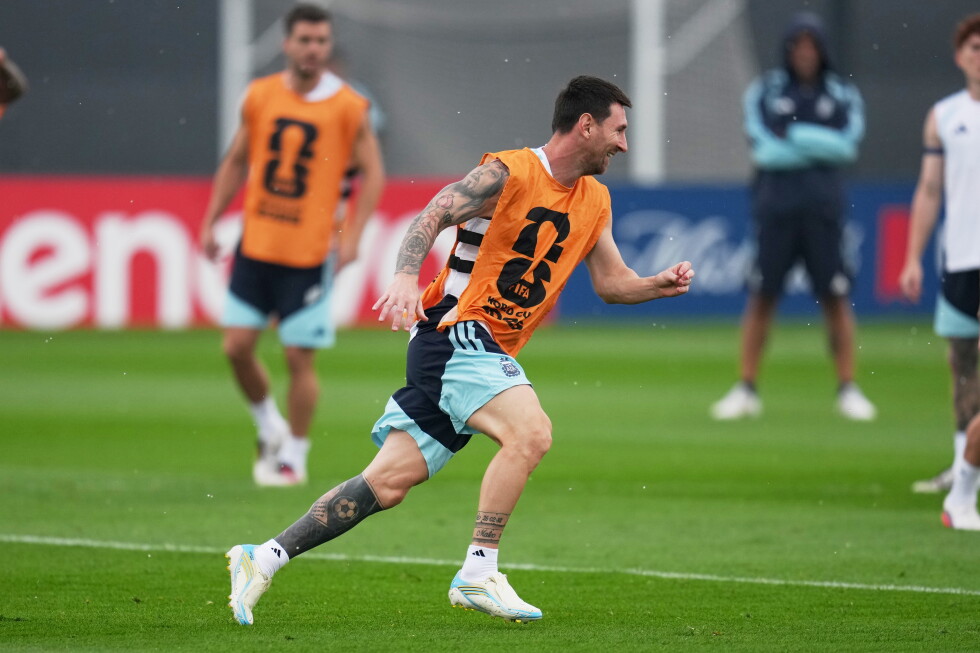
  • Spain vs. Argentina World Cup final a very high-priced ticket to watch Messi and Yamal

    Spain vs. Argentina World Cup final a very high-priced ticket to watch Messi and Yamal

    Soccer fans hoping to catch a last-minute spot at one of the most anticipated World Cup finals in modern history are facing sticker shock of historic proportions, as resold tickets for the Sunday clash between Lionel Messi’s Argentina and Lamine Yamal’s Spain at East Rutherford, New Jersey have soared to five and even six-figure price points.

    By Saturday morning, just 24 hours before kickoff at the New Jersey venue, the least expensive entry listed on FIFA’s official secondary ticket marketplace was priced at $6,411.25 — for a mid-tier seat positioned behind one of the goals. Those budget-friendly (by resale standards) options were completely sold out by midday, leaving only far more premium listings up for grabs.

    Upper-deck seats located in the corner sections of the stadium were still listed for close to $10,000 apiece Saturday afternoon. Fans hoping for a closer view of the on-field action can expect to pay roughly $16,000 for lower-tier seating, with exclusive hospitality packages commanding asking prices that climb to nearly $60,000 per ticket.

    Major third-party ticketing platforms have followed a similar trend: SeatGeek and StubHub both list the cheapest available upper-deck entries starting around $10,000, with premium lower-bowl seats approaching $35,000 for the high-stakes final.

    For many die-hard soccer supporters, the exorbitant cost is seen as a justifiable expense to watch a once-in-a-generation matchup. Messi, widely regarded as the greatest men’s soccer player to ever step onto the pitch, is chasing unprecedented historical glory with Argentina, who are gunning for their fourth overall World Cup title and second consecutive tournament win. No men’s national team has claimed back-to-back World Cup crowns since Brazil achieved the feat back in 1958 and 1962. Standing in Argentina’s way is Spain, the 2010 World Cup champion, led by 16-year-old wunderkind Lamine Yamal, one of the sport’s most exciting and highly touted young rising stars.

  • The World Cup final awaits, with Messi and defending champion Argentina set to face Spain

    The World Cup final awaits, with Messi and defending champion Argentina set to face Spain

    The 48-nation expanded World Cup co-hosted across the United States, Canada and Mexico is set to conclude Sunday with a historic championship clash that lives up to the sport’s highest billing, pitting arguably the greatest player to ever touch a ball against the most dominant international team of the current era. For years, the narrative around global men’s soccer has held that Lionel Messi rarely tastes defeat, and Spain has been unbeatable — a trend that will collide on one of the sport’s biggest ever stages at New Jersey’s MetLife Stadium.

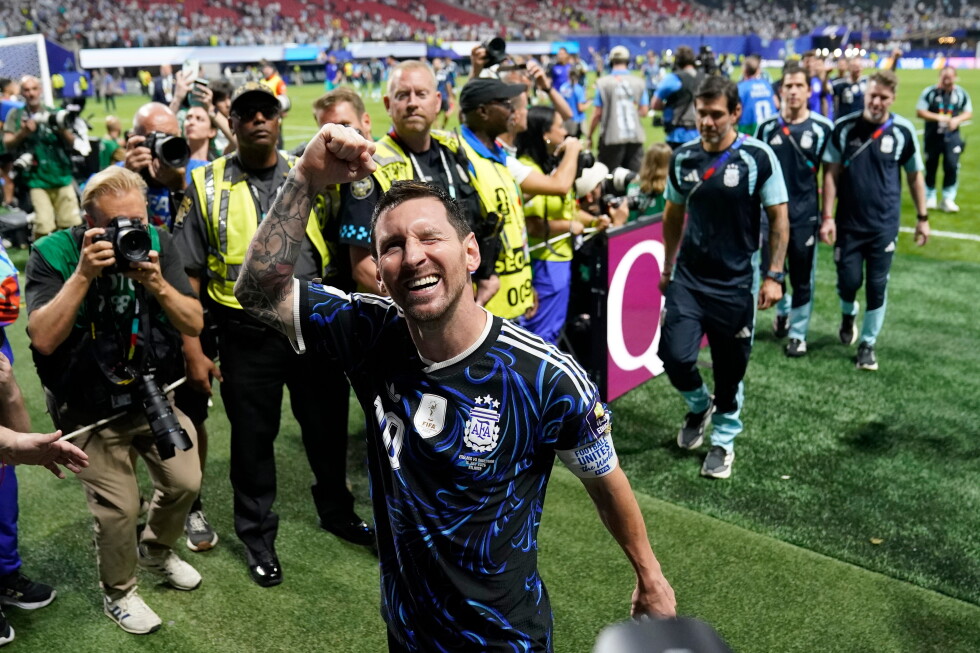
    Lionel Messi and defending champions Argentina enter the final against a Spanish side that has not lost a single match in 37 consecutive outings, a streak stretching back to the start of 2024. For Spain, a win would secure a second World Cup title 14 years after their 2010 triumph, and cement their status as the undisputed global powerhouse of men’s soccer. For Argentina, victory would make them the first men’s national team to win back-to-back World Cup titles since Pele led Brazil to back-to-back crowns in 1958 and 1962. For Messi himself, the match is a chance to cap off what he has signaled will be his final World Cup run with Argentina with the fairy-tale ending all fans of the sport are craving.

    Spain head coach Luis de la Fuente, who has led the side to an undefeated 28-0-9 record across their current unbeaten streak, framed the matchup as a collision of two elite squads built for the big stage. “On Sunday, we will watch a great show,” he said. “Two great national teams — two superteams, in my opinion — very similar in some aspects in terms of attitude, footballers’ talent. I think that it’s going to be an amazing final.” While the matchup is often framed simply as the world’s best individual against the world’s best collective team, the storylines run far deeper than that surface-level narrative.

    The rivalry between Messi and Spanish soccer carries decades of history. Though Messi was born in Argentina, he developed his game as a youth player and spent nearly all of his legendary club career in Spain. At multiple points, the Spanish national federation attempted to convince him to switch allegiances and represent La Roja, but Messi never wavered in his commitment to his home country. Sunday’s match will mark the first time Messi has taken the pitch against Spain since a 2010 friendly, when Argentina defeated the then-reigning world champions in a lopsided rout. When asked about the massive expectations around the match, Messi downplayed the hype, framing it as simply another chance to play the game he loves with his teammates — even with 80,000 fans in the stadium and an estimated 2 billion global viewers tuning in.

    One of the most surreal subplots of the final is the meeting between Messi and Spanish teenage star Lamine Yamal. Nearly 20 years ago, a toddler-aged Yamal was photographed with Messi during the Barcelona star’s early days at the club. Now, the young prodigy will share the same World Cup final pitch with the player he once posed for a photo with as an infant.

    Reflecting on the roots that brought him to this historic match, Messi spoke in his native Spanish about the joy that first drew him to the sport. “We grew up playing soccer with passion, eager to play,” he said. “We played everywhere. We played on the street. We played at school. We played with teams. We didn’t think about the pressure. It was just natural play.”

    Make no mistake, however: the pressure on Sunday will be unprecedented. For Argentina, the match is widely understood to mark the end of the Messi era for the national team, regardless of the final result. Argentina head coach Lionel Scaloni summed up the magnitude of Messi’s legacy for his nation and the sport, calling him “The best footballer that the world has seen.”

    This historic final run was almost derailed before it even began, after a high-profile retirement a decade ago. In 2016, a heartbroken Messi walked away from the national team after missing a decisive penalty in a Copa América final loss to Chile, leaving Argentina empty-handed in another major tournament. At 29, he had grown exhausted from falling short of the ultimate prize for his country, and his retirement only lasted a few weeks. In the years since, Argentina has claimed the 2021 Copa América, the 2022 World Cup, and a second Copa América title in 2024, cementing a dynastic run that no one could have predicted after that 2016 loss. What makes the moment even more poetic is that the 2016 final that prompted his retirement was held on the exact same pitch that will host Sunday’s World Cup final: MetLife Stadium.

    Messi never truly left the game, of course. He continued to dominate at the club level, starring for Barcelona, Paris Saint-Germain, and now Major League Soccer’s Inter Miami, where he has claimed back-to-back MLS MVP awards and led the club to a league title. Even at this stage of his legendary career, he remains capable of producing match-winning moments in the biggest games with almost effortless ease. Scaloni summed up his legacy simply: “He is pure history. History. A legend.”

    Spain is also chasing unprecedented history of its own at this World Cup. Entering Sunday’s match as pre-tournament favorites, La Roja have conceded only one single goal across their first seven matches of the tournament, and have not trailed for even one second of play across the entire tournament. By comparison, Argentina has spent more than 100 minutes of the tournament trailing, including stoppage time. Historic defensive performances of this caliber are almost unheard of at the World Cup. Only three previous World Cup-winning teams — the 1998 French squad, the 2006 Italian side, and Spain’s own 2010 champions — finished the tournament with just two goals conceded. This current Spanish squad is on track to beat that record by miles.

    Spain captain Rodri emphasized that his side is not overlooking Argentina’s strength beyond Messi, noting that the two finalists are the most cohesive collective teams in the tournament. “Argentina is far more than Messi,” he said. “They’ve proven that they’re a very complete team with top players. … We are the best two teams playing in a collective manner as a group. Of course, we need to be mindful of Leo, but many other players.”

    After a month of thrilling matches, the 104th and final match of the biggest World Cup in history comes down to this: the defending champions against the next generation of global soccer greats, the biggest star the sport has ever known against a squad of players who grew up idolizing him, now with a chance to end his reign on the biggest stage.

    This 2026 iteration of the World Cup was not without its share of controversies and challenges, echoing the geopolitical tensions that define the modern era. The tournament faced widespread criticism over multiple high-profile issues, including onerous travel restrictions imposed on the Iranian team amid ongoing geopolitical conflict between Iran and the United States, backlash against FIFA after the governing body lifted a red-card suspension for U.S. star Folarin Balogun following public pressure from former U.S. President Donald Trump — who will be in attendance Sunday to present the championship trophy — and calls for an investigation into Argentina’s squad from the British government after players posed with a banner claiming sovereignty over the Falkland Islands following their semifinal win over England.

    Regardless of off-field controversy, the World Cup will end as it always does: with one team lifting the trophy in celebration, and the other left to process heartbreak. Argentina goalkeeper Emiliano Martinez summed up the shared hope of players and fans alike ahead of kickoff: “They’ve got their strengths. So do we. I wish it will be a final that goes down in history.”

    AP Sports Writer Stephen Whyno in New York contributed to this report.

  • Spain, Argentina tune up for World Cup final in smoggy New Jersey

    Spain, Argentina tune up for World Cup final in smoggy New Jersey

    As the 2026 FIFA World Cup co-hosted by Canada, Mexico and the United States heads toward its historic conclusion, two of football’s strongest national sides Argentina and Spain are wrapping up final preparations for Sunday’s championship match at MetLife Stadium in East Rutherford, New Jersey — all while a thick, choking smog from Canadian wildfires hangs over much of the eastern U.S.

    With only two matches left on the 104-game schedule for this expanded 48-team tournament, Saturday will first see the third-place playoff between 2022 runners-up France and European powerhouse England in Miami. Sunday’s main event, however, carries historic stakes for both finalists. Lionel Messi’s Argentina are chasing an unprecedented back-to-back World Cup title: if they win, they will become the first men’s side to defend the crown since Brazil’s legendary 1962 squad. For Spain, the match offers a chance to claim a second World Cup trophy, a decade and a half after their maiden win in South Africa in 2010.

    The match is set to draw a high-profile crowd of over 80,000 spectators, including former U.S. President Donald Trump, who will attend his first World Cup match during the tournament. Mexican President Claudia Sheinbaum also confirmed she would attend the final after accepting an invitation from Trump. On Friday, Trump hosted a reception for FIFA President Gianni Infantino at Trump Tower in New York, where he praised the 2026 tournament as the most successful sporting event “maybe in the history of the world.”

    Infantino echoed the praise with equally enthusiastic remarks, saying the tournament has “exceeded all expectations.” “The American dream, Mr President, came to reality. We united the world,” Infantino proclaimed, going on to call the 2026 World Cup “the greatest human, social, and cultural event that mankind has ever witnessed.” He even joked that FIFA is “the official happiness provider to humanity,” to which Trump quipped back: “Unless your team loses.”

    The upbeat celebration, however, has been overshadowed by poor air quality across the Northeast U.S. Uncontrolled wildfires burning across Canada have sent thick, acrid smoke drifting south across the U.S.-Canada border, forcing residents in major cities from New York to Washington D.C. and across the Midwest to stay indoors due to unsafe air pollution levels. Air quality tracker IQAir reported that at one point Saturday, New York City ranked as the most polluted major city in the world, just ahead of Toronto and the U.S. capital.

    MetLife Stadium, located just across the Hudson River from New York in northern New Jersey, has not escaped the hazardous conditions. Early Saturday morning, New York’s iconic skyline was completely hidden by dense smog, with people venturing outdoors seen wearing protective face masks. Forecasters predict some relief may come via incoming heavy storms that could clear much of the smoke, but the weather system also carries risks of flash flooding and dangerous damaging winds.

    Beyond the unusual environmental conditions, Sunday’s final is widely expected to be the last World Cup appearance for Argentina’s captain Lionel Messi, the 39-year-old Inter Miami forward who is widely regarded as the greatest men’s footballer of all time. Heading into the match, Messi is tied with France’s Kylian Mbappé for the tournament’s Golden Boot lead, both having scored eight goals. Argentina head coach Lionel Scaloni urged fans to savor the chance to see Messi leading his side, calling him a legend who has already cemented his place in football history after leading Argentina to the 2022 Qatar World Cup title.

    Argentina, a three-time World Cup champion, has displayed a gritty never-say-die attitude throughout the 2026 tournament, highlighted by a dramatic late comeback win over England in the semi-finals that booked their place in the final. In contrast, Spain has delivered an almost perfect run to the championship: La Roja has conceded just one single goal in seven matches on their way to the final, after a dominant semi-final win over France.

    Spain captain Rodri said his side is preparing for a physical, hard-fought encounter with Argentina, and that the team has trained to adapt to whatever style of play Argentina brings. “It will be a more physical one, and we must be prepared,” he said. “But I believe that if we are known for something in this national team, it is that we know how to play different games based on the moment.”

    Sunday’s final will also make World Cup history with its entertainment lineup: it will host the first ever standalone halftime show in World Cup final history, with A-list performers Madonna and Shakira set to take the stage after the first half. Hollywood star Tom Cruise will perform during the pre-game closing ceremony ahead of kickoff.

    Looking ahead to Saturday’s third-place match, both beaten semi-finalists England and France are focused on ending their tournaments on a high note. England head coach Thomas Tuchel acknowledged that his side’s 2-1 last-minute semi-final defeat to Argentina left a lasting mark on the squad. “It is our scar that we carry now. It is a very painful defeat, and we have to live with this defeat,” he said. For France head coach Didier Deschamps, Saturday’s match will be his final game in charge of Les Bleus, and he pledged his side would play with pride, saying there would be no tears from his side ahead of the fixture.

  • Former Spain defender Capdevila asks Trump for help getting into the US for the World Cup final

    Former Spain defender Capdevila asks Trump for help getting into the US for the World Cup final

    MADRID — A decorated Spanish football legend is making a public plea for help, scrambling to secure entry into the United States in time to watch his national team take on Argentina in Sunday’s highly anticipated World Cup final at New Jersey’s MetLife Stadium. Former Spain national team defender Joan Capdevila, who was a key part of Spain’s only men’s World Cup title win in 2010 and their 2008 European Championship triumph, has found himself locked out of the U.S. due to a long-standing travel restriction, stemming from a single exhibition match he played in Iran more than a decade ago.

    Capdevila took to the social platform X on Friday night to launch his public appeal, directly tagging former U.S. President Donald Trump, U.S. Secretary of State Marco Rubio, and Spain’s national ministry of sport in a bid to cut through red tape. “I NEED HELP @realDonaldTrump!” Capdevila wrote, confirming that his application for visa-free entry through the U.S. Electronic System for Travel Authorization, commonly known as ESTA, had been formally rejected.

    For 48-year-old Capdevila, being at Sunday’s final is far more than a casual spectator trip: he hopes to reunite with all of his 2010 World Cup-winning teammates in the stands to cheer on the current generation of La Roja as they chase the sport’s biggest global prize. The barrier to his entry traces back to 2010s, when Capdevila joined a squad of Spanish La Liga legends for an exhibition all-star match against a team of Iranian top players in Tehran.

    Under current U.S. visa waiver program rules, which allow pre-screened travelers from eligible countries to enter the U.S. without a full visa via ESTA, travelers who have visited Iran after March 1, 2011 are explicitly barred from ESTA eligibility. Any traveler in that category is required to apply for a formal visitor visa through U.S. consular offices before entering the country, a process that often takes weeks or months to complete — too slow for Capdevila to get approval in time for Sunday’s match. The U.S. Department of Homeland Security, which oversees both the visa waiver program and the ESTA system, has been contacted for comment on Capdevila’s case as of Friday.

  • The classroom moment that bonds finalists De la Fuente & Scaloni forever

    The classroom moment that bonds finalists De la Fuente & Scaloni forever

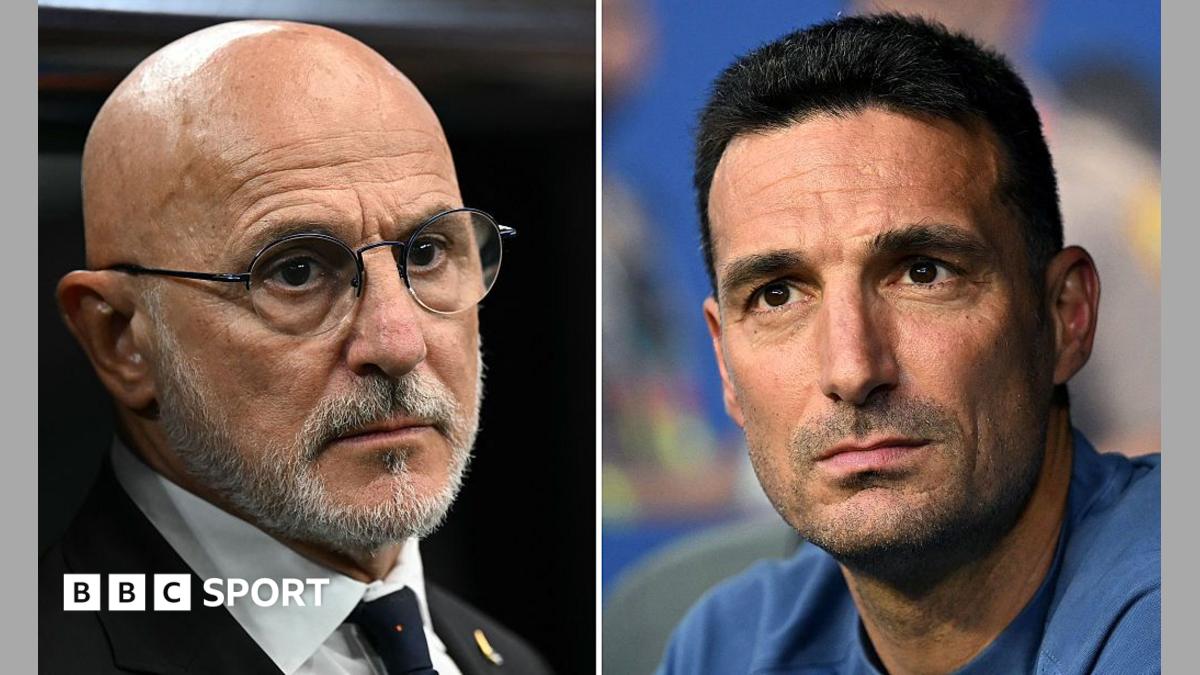
    The 2026 FIFA World Cup final will bring two very different coaching journeys to a head in New Jersey, when Spain’s Luis de la Fuente and Argentina’s Lionel Scaloni go head-to-head for the sport’s most prestigious international prize. Though their paths to the final diverged wildly in every sense, a little-known personal connection binds the two managers together, one that traces all the way back to 2017.

    That year, Scaloni found himself adrift after retiring from playing, and enrolled in the Spanish Football Federation’s UEFA Pro Licence course – the highest-level coaching qualification available in European football. It was here that the two men first crossed paths: De la Fuente, who was then leading Spain’s Under-19 national team, taught the course’s technical skills module. Scaloni went on to graduate with one of the highest marks in his cohort, and has repeatedly credited De la Fuente for providing critical, generous guidance to him and his fellow students. The pair have maintained a close bond in the years since.

    Where De la Fuente is a product of Spain’s structured national youth development system, Scaloni’s coaching ethos was shaped by the unique, unwritten locker-room culture of Argentine club football. What unites them, beyond that 2017 classroom encounter, is that both climbed to the pinnacle of international football after periods where the sport had left them on the margins, and both have built their national sides around the core principle of team as family – values rooted in the shared Catholic faith both men practice. It is an unlikely milestone for two coaches who have never managed a single top-flight club game between them.

    De la Fuente’s journey to the World Cup final began in Haro, the heart of Spain’s Rioja wine country famous for its annual chaotic wine battle where thousands drench each other in red wine. After hanging up his playing boots in 1994, he spent 15 years bouncing between lower league club roles, youth coaching positions and assistant coaching jobs. He was dismissed from his role as manager of Segunda División side Deportivo Alaves in 2011, and spent 18 months out of work, slowly drifting away from the sport he dedicated his life to.

    His turning point came when he spotted a newspaper advertisement for a youth coaching role with the Spanish Football Federation. He reached out to former Spain manager Inaki Saez, who endorsed him to the federation as the perfect candidate. He was offered a three-month contract to lead Spain’s Under-19 side at the European Championship in Lithuania; while they lost to France in the semi-finals, his performance earned him a permanent spot. His next Under-19 squad, featuring future senior stars Rodri, Unai Simon and Mikel Merino, took home the European title, and a steady rise up the ranks followed. By the time he was appointed senior Spain manager in 2022, he had coached most of the current 2026 World Cup squad since their teenage years, across Under-19, Under-21 and Olympic levels, winning multiple youth titles along the way. He has known star players including Pedri, Dani Olmo and Martin Zubimendi, and their families, for more than a decade.

    De la Fuente’s coaching philosophy centers on fostering respect for opponents, trust in the process, and calm, patient leadership. His life and work are built on sacrifice, humility and collective responsibility – values that mirror his religious beliefs, visible in small, personal gestures. Ahead of the Euro 2024 final, as the stadium filled with fans, he took time to call his family to confirm they had arrived safely. Midway through a World Cup match this year, when he learned the federation’s photographer had lost his mother, he pulled the man into a group hug with the entire squad. And ahead of this tournament’s semi-final against France, he was visibly overcome with emotion when asked about his brother, who passed away three years ago. For De la Fuente, family is the foundation of everything: his own son Alberto now serves on his senior Spain coaching staff.

    In contrast, Scaloni’s coaching education did not come from a federation classroom, but from the decades he spent in Argentine locker rooms, where unwritten hierarchies and norms place senior players’ authority above all else. He grew up in the small farming town of Pujato, near Rosario, where his family still grows corn, wheat and soy, and he learned the game on local fields driven by his father Angel. Scaloni was part of Argentina’s 1997 Under-20 World Cup winning squad alongside Walter Samuel and Pablo Aimar, who now work alongside him as assistant coaches. That tournament also left him with a lifelong fear of flying after a forced landing during the event; for years, while playing for Deportivo La Coruna, he would travel to away matches with the team but drive hundreds of kilometers home alone with his father after the game. He made more than 200 appearances for Deportivo, helped the club win a La Liga title, and went on to play for a string of European clubs, including a loan spell at West Ham United in 2006, before retiring in 2015.

    Retirement hit Scaloni harder than he expected. Having settled in Mallorca with his wife Elisa and their two young children, he struggled to adjust to life off the pitch. He took a job coaching a local under-14 side at small club Son Caliu, just 10 minutes from his home, and stood on the touchline freezing through cold mornings, but found it the first content he had felt since retiring. He has since spoken out in support of every club employing psychologists to help players prepare for the disorientation of post-retirement life.

    Unlike De la Fuente, Scaloni never built a career bouncing between domestic club roles. He became an assistant coach at Sevilla under fellow Argentine Jorge Sampaoli in 2016, and the pair moved to the Argentina national set-up a year later. When Sampaoli was sacked after Argentina’s early exit from the 2018 World Cup in Russia, Scaloni was eventually named interim, then permanent manager – despite widespread public criticism of his lack of top-level experience. He has held the post ever since.

    Scaloni’s greatest strength is not tactical innovation. His coaching staff is made up almost entirely of former teammates and players, who understand that elite international players need less tactical lecturing and more connection. Casual barbecues, team karaoke nights, and deliberately blending superstar status with ordinary, shared moments are the foundation of Argentina’s locker room culture. After leading Argentina to a 2022 World Cup win and a Copa America title, Scaloni began seeing a psychologist himself to process the pressure and emotion of the achievement, compounded by his parents’ illness at the time; long bike rides and therapy helped him navigate that period.

    For both coaches, their sides’ greatest strength is not individual stardom, but the collective trust built through intentional team culture. Former Spanish Football Federation director Fernando Hierro described De la Fuente as “an expert of the raw material there is in Spanish football who has built a family where they enjoy themselves” – a description that fits Scaloni’s Argentina equally well. Both prioritize continuity over upheaval: De la Fuente stuck by the generation of players he nurtured from their teens, while Scaloni retained the core of Messi’s supporting cast even after a devastating semi-final loss to Brazil at the 2019 Copa America. That loyalty paid off just two years later, when Argentina won the 2022 World Cup at the Maracana, securing Messi his first senior international trophy.

    When asked what success with their national team means, both men give nearly identical answers. De la Fuente calls it a privilege to watch “the people of your country enjoy themselves again”, while Scaloni repeatedly emphasizes the effort of fans who follow the team across the world and wait for them back home.

    On final match day, the former teacher and his former student will meet again as rivals. Both know that defeat is an inevitable part of sport. But whoever lifts the trophy, the moment will be a historic one: two men who were once cast aside by football have written their names back into the sport’s biggest story.
  • Schmidt signs off in style as the Wallabies beat Italy 57-10 to end a 6-test skid

    Schmidt signs off in style as the Wallabies beat Italy 57-10 to end a 6-test skid

    PERTH, Australia – In a fitting send-off for departing head coach Joe Schmidt, Australia’s national rugby union team the Wallabies snapped a six-match losing skid on Saturday, recording a dominant 57-10 victory over Italy in the first concluding round of the inaugural Nations Championship.

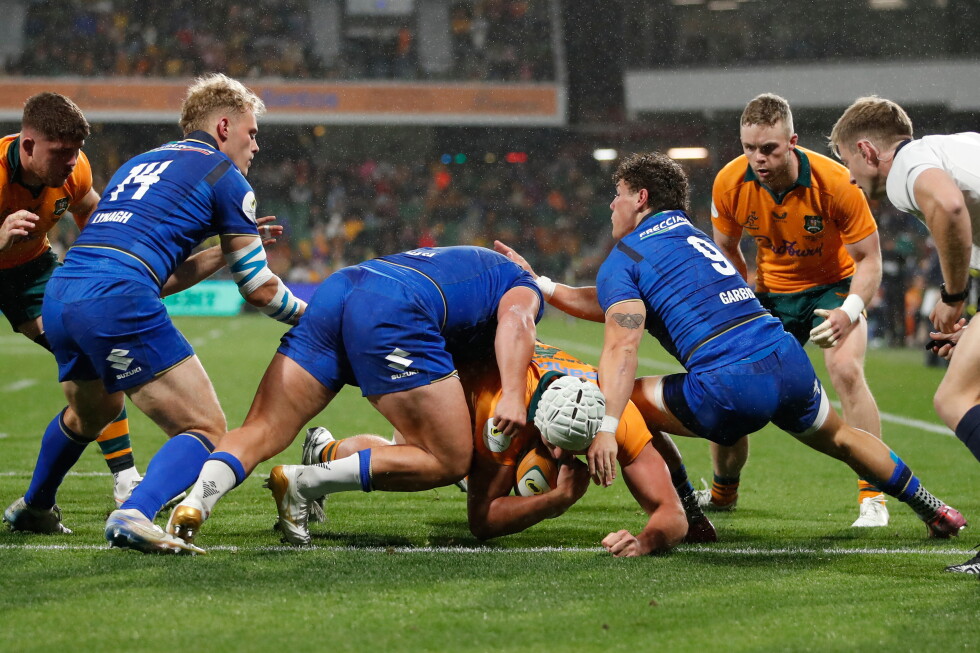
    From the opening kickoff at Perth’s venue, the Wallabies seized control of the match that had evaded them in their previous two tournament outings. Lock Josh Canham, who would finish the day with a hat-trick of tries, crossed the try line just four minutes into the game. Fullback Tom Wright and hooker Brandon Paenga-Amosa added two more tries within the next eight minutes, putting the home side up 19-0 before the 15-minute mark. Prop Angus Bell and center Len Ikitau extended the lead further with tries in the closing 15 minutes of the first half, bringing Australia’s first-half try total to six. Italy’s only bright spot of the opening 40 minutes came from captain Michele Lamaro, who scored the Azzurri’s lone first-half try in the 20th minute, sending the two sides into halftime with Australia holding an unassailable 38-5 lead.

    Canham completed his hat-trick seven minutes into the second half, picking up the ball at the base of a ruck just meters from Italy’s try line and burrowing over to push the lead to 45-10. Montanna Ioane scored Italy’s second try shortly after halftime, but that would mark the final points the visitors would put on the board. A late Italian try in the 75th minute was disallowed after video review confirmed a knock-on in the in-goal area.

    The match ended on a high note for the Wallabies, with replacement hooker Billy Pollard and substitute back Ben Donaldson adding late tries. Donaldson’s 80th-minute try, capped off by a rampaging break from backrower Rob Valetini, put the finishing touches on the 47-point blowout.

    The win carries extra weight for the Wallabies after their late-game collapses in the opening two rounds of the Nations Championship. The side held comfortable leads against both Six Nations champion France in Brisbane and Ireland in Sydney, only to surrender those advantages and drop both matches by narrow margins. This time around, Australia held onto its momentum from the opening whistle, closing out Schmidt’s tenure with the positive result the squad had targeted.

    “When you’ve let slip leads like that a few times, you’ve got to learn from those experiences, and I felt we did that tonight,” Schmidt told reporters after the match. “We got far enough in front that it wasn’t really going to matter if we weren’t as good in the second half, but there was still some really good stuff out there from the guys.”

    For Italy, the first phase of the Nations Championship ended without a single win, and the campaign was marred by off-field disciplinary issues. Head coach Gonzalo Quesada was suspended for the match after receiving an initial two-game ban for criticizing match officials following Italy’s 47-17 loss to New Zealand last week; his suspension was reduced to one game on appeal, leaving him unable to join his team on the sidelines Saturday. The Azzurri already dropped their tournament opener to Japan, and disciplinary trouble extended to the playing side Saturday: already-replaced prop Marco Riccioni received a red card after a melee between players spilled from the touchline into Italy’s technical area, knocking several support staff off their chairs.

    Lock Niccolò Cannone also received a four-match suspension after his yellow card for a head-butt against New Zealand was upgraded to a red card post-match. Captain Lamaro acknowledged the team’s underwhelming performance across the opening tournament phase.

    “Gutted. Obviously very disappointed with the result and the performance we put in,” Lamaro said of Saturday’s outcome and the tour as a whole. “We played a very good first half against the All Blacks last week, but apart from that we’ve been pretty poor.”

    Schmidt first announced his departure from the head coaching role last year, agreeing to stay on through the opening Nations Championship round to allow his successor, Les Kiss, time to complete his existing commitments with Super Rugby side the Queensland Reds. Looking back on his two-and-a-half year tenure, Schmidt said he leaves the program in a better position than he found it, with the squad building toward the 2027 Rugby World Cup, which will be hosted on Australian home soil. Despite a low overall winning percentage during his tenure, Schmidt noted clear progress in team culture and core on-field performance.

    “I think the players are more connected. I think the leaders are more vocal,” Schmidt said. “Our fundamentals, our set piece is getting better. To the rugby public, thank you for sticking with us. We’ve just had massive support, and it makes a difference to the players.”

  • US must learn to navigate its pay-for-play world to find a pipeline to World Cup competitiveness

    US must learn to navigate its pay-for-play world to find a pipeline to World Cup competitiveness

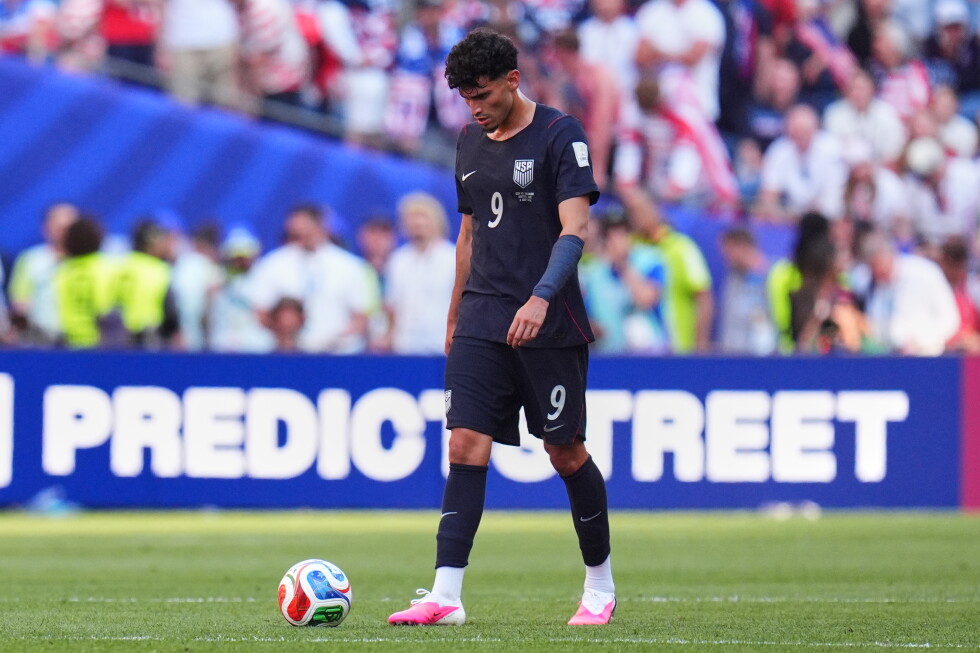
    As Argentina prepares to face Spain for its fourth FIFA World Cup title, a stark contrast in soccer development models has renewed longstanding questions about why the United States, a nation of 330 million people, has never reached the upper echelons of men’s international soccer success. After the U.S. men’s team’s early exit from the 2026 World Cup, soccer leaders and analysts across the country are zeroing in on one core issue: the pay-to-play system that dominates American youth soccer, and how it is holding back the nation’s soccer potential.

    Unlike Argentina, where developing a homegrown star who goes on to play for the national team is the highest honor for a local club, the U.S. youth soccer ecosystem is built around charging families for access to competitive play. Most youth organizations rely on player fees to stay operational, retaining players as long as their families can keep paying. For elite programs, the costs are staggering: a 2024 Project Play report found the average U.S. family spends $1,016 per year on a child’s primary youth sport, a 46% jump from five years prior. For elite soccer, that annual figure can top $12,000 once team dues, equipment, and tournament travel are added up. Retired Colorado salesman Dan Chisesi, who raised two children who played youth soccer, estimates he spent tens of thousands of dollars on the sport over decades. Even though his children gained positive memories, he echoes a common concern: “I believe youth sports have become somewhat elitist. I think we’re missing out on a lot of talent because people just can’t afford these travel competitive teams.”

    This financial barrier means countless talented young players never get the chance to showcase their skills. With between 4 million and 6 million children playing soccer across the U.S., the sport’s elite tier remains out of reach for low-income families. Longtime U.S. men’s national team goalkeeper Kasey Keller summed up the issue bluntly, noting that even a generational talent like Erling Haaland would likely be pushed into the NFL rather than professional soccer if he grew up in the current American system, where football and basketball dominate the attention of sports fans and athletes alike.

    The fragmented governance of U.S. youth soccer only exacerbates the problem. The sport is overseen by more than seven national governing bodies and 54 state federations, creating a fractured system that former U.S. Youth Soccer CEO Skip Gilbert describes as more focused on poaching players between competing leagues than building a cohesive talent pipeline. Gilbert, who recently updated his proposal for structural reform, argues that consolidating all youth soccer organizations under the umbrella of the U.S. Soccer Federation (USSF) would create a unified national talent database, eliminating the fragmented competition for paying players that currently plagues the system. Critics warn the plan would only consolidate power among existing governing bodies, but Gilbert counters that the current status quo leaves families with no alternative to the pay-to-play model: “And parents, God love all of us, we’re more than happy to write checks if we think it’s going to help our kids. The downside is, there isn’t another pathway. You have to go into that pay-or-play model.”

    Major League Soccer (MLS), which took over the country’s primary national development program as MLS Next in 2020 after the USSF shuttered its previous program amid COVID-19-related financial losses, is currently the closest thing to an official national talent pipeline. This fall, the league will serve roughly 53,000 players, but only a tiny fraction receive full subsidies for training, physical therapy, travel, and equipment. The top-tier homegrown division has more than 17,000 players, with just 3,000 playing for free in MLS club academies. While MLS has launched a grant program that compensates grassroots clubs for developing players who go on to join the top league, the fledgling system pales in comparison to the open talent ecosystems common in Argentina, Europe, and other South American soccer powerhouses.

    In those countries, a system of promotion and relegation across hundreds of pro and semi-pro leagues creates constant incentive for clubs to scout and develop undiscovered talent wherever it exists. Young players can earn a spot on a top team through performance alone, and transfer fees for top talent create a steady revenue stream that funds grassroots scouting and development. This system is far from perfect: Argentina’s top academies have faced decades of allegations of minor exploitation and sexual abuse, and constant high-stakes talent evaluation takes a heavy emotional toll on young players. But it also eliminates the financial barrier that locks talented low-income players out of elite development in the U.S.

    “If you’re not in that ecosystem, you might have a hard time understanding, ‘Well, how could what happens at the professional level have any impact on my son or daughter’s 12-year-old soccer team?’ But it has a huge impact. It’s just a very different bar to cross” than in America, explained Pennsylvania grassroots coach Rory O’Neill.

    USSF and MLS leaders are not calling for copying international models wholesale, however. USSF CEO JT Baston explained the federation’s current strategy: “Our strategy should not be to copy and paste what works in another country. It’s, how do we, in partnership with the pro clubs, design the right youth pathways here. It looks like the hub-and-spoke model where you’re leveraging the best of the professional clubs, leveraging the best of the rest of the ecosystem here and the national team program.”

    MLS leaders point to small wins that show the potential of improving the current system rather than replacing it. Brad Sims, CEO of MLS side NYCFC, shared the story of Seymour Reid, an 18-year-old Jamaican-born player from New York who was discovered playing pickup soccer five years ago, with no prior experience in an organized club. Reid has now signed a professional contract with NYCFC and was a finalist for the 2025 MLS Pathway Player of the Year. But Sims acknowledges that success stories like Reid’s are rare: “I wonder how many kids like that are playing around the country who don’t have the connections or don’t have the finances to play. But this is a bigger problem that’s not on MLS clubs or maybe even the MLS league to solve independently. I think U.S. Soccer obviously wants to figure that out as much as anybody.”

    Former U.S. men’s national team captain Michael Bradley, now head coach of MLS side New York Red Bulls, says the U.S. must build a model that fits its own unique sports culture rather than trying to mimic global powers. “We have our own soccer culture,” he said. “The way the game looks in this country, the way it feels, what we are as a soccer nation, is going to be different than other places, and that’s OK. We don’t need to pretend to be something that we’re not.”

    Even so, experts and families agree that overhauling the pay-to-play model and unifying the fragmented youth system will take decades. While incremental improvements to the current system can yield better results sooner, creating a sustainable pipeline of top-tier talent that can compete for World Cup titles will require long-term, structural change that addresses the core inequalities of the current American system.

  • France beats Japan 42-15 in Nations Championship rugby as Lucu tallies 15 points

    France beats Japan 42-15 in Nations Championship rugby as Lucu tallies 15 points

    In a decisive display of attacking rugby at Tokyo’s National Stadium on Saturday, the Six Nations champions France wrapped up a three-week summer tour with a 42-15 win over host Japan in the inaugural 12-team World Rugby Nations Championship. The result caps off a mixed but ultimately successful run for the French side, which opened the new tournament with a narrow 34-32 defeat to New Zealand’s All Blacks before bouncing back to beat Australia 42-26 in Brisbane a week prior to facing the Brave Blossoms.

    The opening half of the match proved far more competitive than the final scoreline suggests, with Japan matching France’s physical intensity across the pitch and keeping the game within one score going into the halftime break. France got off to a blistering start, taking the lead just two minutes in after hooker Maxime Lamothe crossed the line following a close-range lineout drive. Japan responded quickly, however: fullback Takuro Matsunaga slotted a penalty to cut the deficit, then sparked a blistering long-range counter-attack from his own 22-meter line that saw winger Kippei Ishida finish the move in the left corner, putting Japan up 8-5 by the 15th minute.

    France seized control of the match over the next 20 minutes, capitalizing on sustained forward pressure that earned Japan lock Harry Hockings a yellow card for repeated infringements. Fullback Matthieu Jalibert scored his first try of the night in the 19th minute, followed just four minutes later by a five-pointer from No. 8 Alexandre Roumat that extended France’s lead. Skipper and scrumhalf Maxime Lucu put the result out of immediate reach for Japan just before the half-hour mark, darting over the line after a strong, contact-breaking run from Lamothe to secure France’s fourth try and the all-important bonus competition point.

    Japan refused to wilt under pressure, though, and crossed for a second try four minutes before halftime to cut France’s lead to 28-15 going into the break, keeping their hopes of an upset alive.

    Those hopes faded quickly in the early stages of the second half, as France scored two quick tries to pull away out of sight. Jalibert notched his second try of the match in the 43rd minute, adjusting his running angle to take a short inside pass from Lucu and cross near the posts for an easy score. Lamothe followed suit eight minutes later, touching down after another sustained period of pressure from France’s powerful forward pack to push the score to 42-15.

    The final 20 minutes saw a shift in momentum after Jalibert was sent to the sin bin for a high tackle in the 58th minute. While Japan was unable to convert their one-man advantage into any points during the 10-minute power play, they successfully halted France’s scoring run. A late Japanese try was disallowed by officials in the 63rd minute, and the home side failed to put any more points on the board in the final half-hour of the hot, humid Tokyo evening.

    For Japan, the result leaves them with a 1-2 record after the first phase of the Nations Championship, having opened the tournament with a 27-10 win over Italy before dropping consecutive matches to Ireland and France.

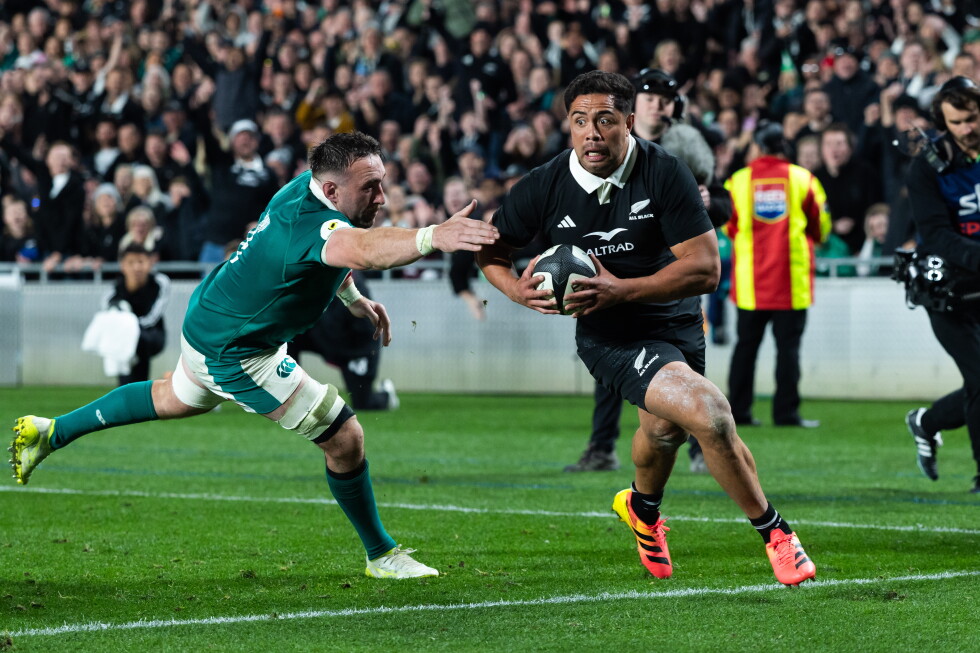
  • New Zealand beats Ireland 40-21 to stay unbeaten in the Nations Championship

    New Zealand beats Ireland 40-21 to stay unbeaten in the Nations Championship

    AUCKLAND, New Zealand – Decades of unbroken dominance at Auckland’s iconic Eden Park stretched further Saturday, as the New Zealand All Blacks delivered a clinical 40-21 defeat to a confidence-high Ireland side. The victory, which marked the All Blacks’ 53rd consecutive win at the venue across 32 years, validated head coach Dave Rennie’s tactical push for an aggressive, ball-in-hand playing style that had been inconsistent earlier in the Nations Championship tournament.

    Rennie’s young squad had previously secured wins over France and Italy while trialing this open, attack-focused approach, but those performances were marked by spotty execution, costly disciplinary lapses, and inconsistent momentum. Against Ireland, however, the team translated their practice-field preparation into polished, decisive action that kept the opposition off-balance for most of the 80 minutes.

    From the opening whistle, the All Blacks corrected a recurring flaw that plagued their earlier matches: slow starts that forced them to climb back from early deficits. Ireland did not push into New Zealand’s 22-meter line until the 12th minute, and that venture came to nothing when Tadhg Beirne was called for offside. New Zealand opened the scoring in the 15th minute, after a powerful break from Tupou Vaa’i – who impressed following a positional shift from lock to backrow – put the All Blacks deep in Irish territory. Sustained possession and smart distribution opened space for Patrick Tuipulotu to cross the line, scoring his first test try of the 2024 Nations Championship.

    The home side doubled their lead seven minutes later, turning down a straightforward penalty kick at goal to opt for a 10-meter scrum. Caught off-guard by the choice to prioritize a try rather than three points, Ireland’s defense split as they expected a wide pass to the All Blacks backline. Instead, Ardie Savea broke directly from the back of the scrum to score New Zealand’s second try. By the 25-minute mark, Ireland had already missed 19 tackles, with visible fractures starting to appear in their defensive structure.

    A brief disruption came for New Zealand in the 28th minute, when backrower Luke Jacobson was sin-binned for a dangerous cleanout at the ruck. Ireland capitalized quickly, with Jack Conan finishing off a structured attack to score his side’s first try off a short pass from Jamison Gibson-Park. But the All Blacks responded almost immediately off the subsequent restart: a loose Irish pass in their own 22 was intercepted by Will Jordan, who crossed for his 51st test try in the 35th minute. Four minutes later, Asafo Aumua scored his first try of the match on his second carry over the Irish line, sending the All Blacks into halftime with a commanding 28-7 lead that left Ireland playing perpetual catch-up.

    Ireland struck back early in the second half, with Joe McCarthy driving over the line to score after a well-worked lineout following a break from Gibson-Park. Just as they had earlier, however, the All Blacks quashed the comeback attempt almost instantly. A sustained attacking sequence earned New Zealand a penalty, and after multiple forward carries opened the Irish defense, a long pass to Ruben Love was stopped short of the line – only for Damian McKenzie to pick up the loose ball and score. Ireland rallied once more, with fullback Hugo Keenan crossing for a try in the 63rd minute, but could not close the substantial gap.

    Even after holding out against more than 20 consecutive phases of All Blacks attack near the 70-minute mark, Ireland’s tired defense broke one final time. Center Anton Lienert-Brown crossed for the All Blacks’ sixth try in the 79th minute, closing out a comprehensive six-tries-to-three victory.

    Individual performances highlighted the All Blacks’ strength across the pitch. Midfielder Quinn Tupaea was a relentless dynamic force in the center of the park, while McKenzie proved consistently dangerous both in his starting role at fullback and when shifting to flyhalf later in the match. Speaking after the final whistle, McKenzie emphasized the team’s tactical balance that won out over Ireland’s attempt to slow the pace of play.

    “We wanted to start well and we did,” McKenzie said. “We had a pretty good balance between our kick game and our run game.”

    Tactically, New Zealand’s edge was clear across all areas of the pitch. Strong set piece work, aggressive physical play at the breakdown, and consistent ability to win front-foot ball allowed the All Blacks to maintain their expansive attacking structure. When Ireland attempted to slow the match tempo to disrupt New Zealand’s rhythm, the All Blacks adapted effectively, forcing frequent turnovers and limiting their kicking to keep pressure on the Irish defense. Backline play was also far more precise than in earlier tournament matches, while aggressive pressure forced Ireland into repeated unforced errors in the opening half.

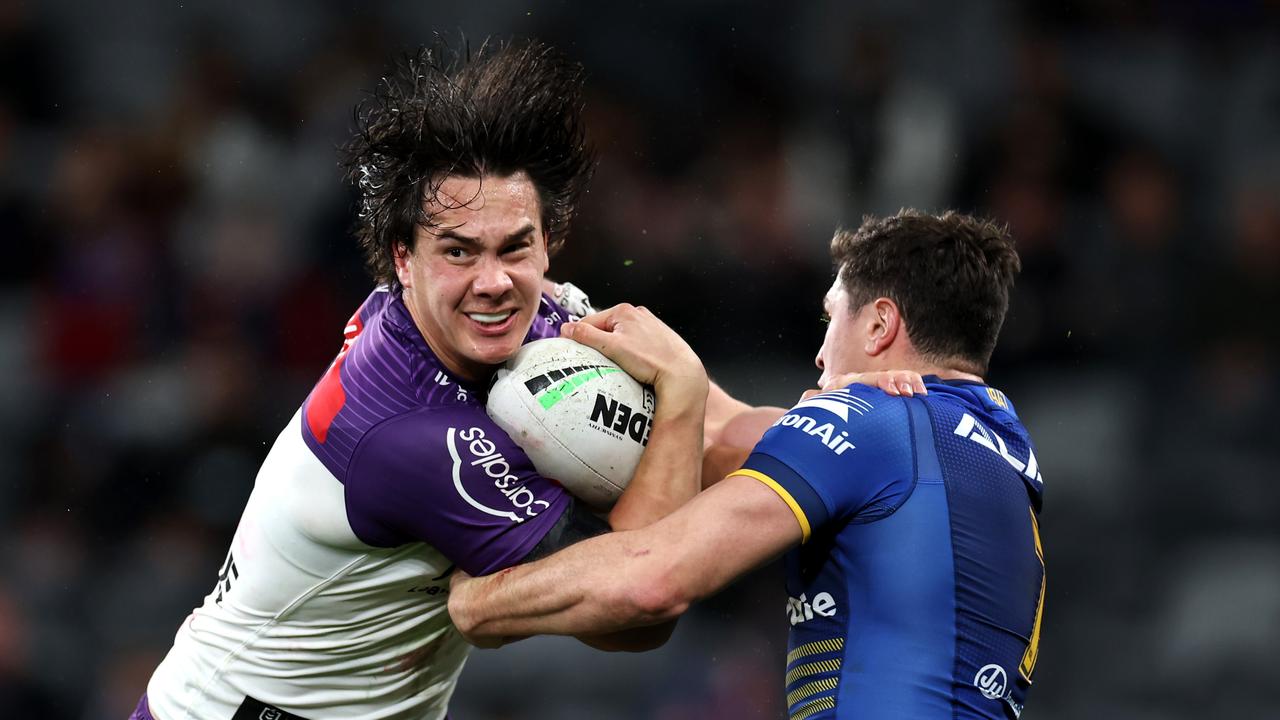
  • ‘We’re all behind him’: Storm rally around Will Warbrick as Jack Howarth responds to Eels links which have now been blocked

    ‘We’re all behind him’: Storm rally around Will Warbrick as Jack Howarth responds to Eels links which have now been blocked

    The Parramatta Eels’ 2027 roster strengthening campaign has suffered another setback, after the Melbourne Storm formally announced young centre Jack Howarth will see out the final year of his existing contract at the club, ending widespread speculation of a player move that would have sent Howarth to western Sydney.

    Rumors of a potential deal first emerged earlier this year, when league insiders floated a swap arrangement that would have sent Howarth to the Eels in exchange for former Parramatta back Zac Lomax. That proposal never moved forward, however, after Lomax was released from his NRL contract to pursue a career in rugby union. This latest confirmation of Howarth’s retention by the Storm marks the second high-profile recruitment miss for the Eels in their search for additional pace and finishing power on the wing, who were also turned away when star outside back Bronson Xerri signed a deal to join the Storm starting in 2027.

    Howarth originally joined the Storm in 2022, penning a five-year, high-value contract after a standout junior representative career. But his path to first-team stardom has been slowed by a long string of serious, career-disrupting injuries that have limited his playing time at the top level.

    For Melbourne, the decision to hold onto Howarth comes as the club faces significant roster turnover in its backline ahead of 2027. Star outside backs Will Warbrick, Nick Meaney and Tyran Wishart are all set to depart for rival NRL clubs in the coming off-season, leaving the Storm needing to retain depth to reinforce their squad. The club has already moved to address these departures by signing Xerri and Jamayne Isaako to add depth and firepower to their backline ahead of the 2027 season.

    Speculation around Howarth’s future ramped up following the Storm’s narrow 14-6 loss to the Sydney Roosters at Allianz Stadium last Friday. Speaking to reporters in the team sheds after the match, Howarth declined to comment on transfer rumors, emphasizing that he was focused on contributing to Melbourne for the remainder of the current season. “At the moment I’m just trying to focus on playing consistently each week, and then whatever happens, happens. My focus is just playing good for the team that I’m signed with at the moment and put my best foot forward for those guys,” Howarth told NewsWire after the loss. “I’ve got my manager dealing with all that sort of stuff. Like I said before, my goal is just trying to play the best footy I can at the moment.”

    Howarth also addressed the devastating season- and Storm career-ending Achilles injury suffered by Warbrick in the first half of the Roosters match. With multiple stars already sidelined for the season – including Eli Katoa, Xavier Coates and Tui Kamikamica, plus key playmakers Cameron Munster and Jahrome Hughes – the injury cut short Warbrick’s tenure at the club before his scheduled departure. “It just hurts because when people like that have injuries like that, they don’t deserve it, and it’s just hard seeing your mate in that type of state,” Howarth said. “We’re all behind him and we’re going to be supporting him through these next couple of weeks. I hope his recovery goes well.” He added that the squad has maintained a “next man up” mentality through the rash of injuries, noting that while the losses are devastating for the injured players, they create opportunities for other squad members to step into first-team roles. The club formally confirmed Howarth would remain under contract on Saturday, ending the Eels’ hopes of adding the young centre to their 2027 roster.