分类: sports

  • Why the World Cup final has morphed into a debate on Palestine and Israel

    Why the World Cup final has morphed into a debate on Palestine and Israel

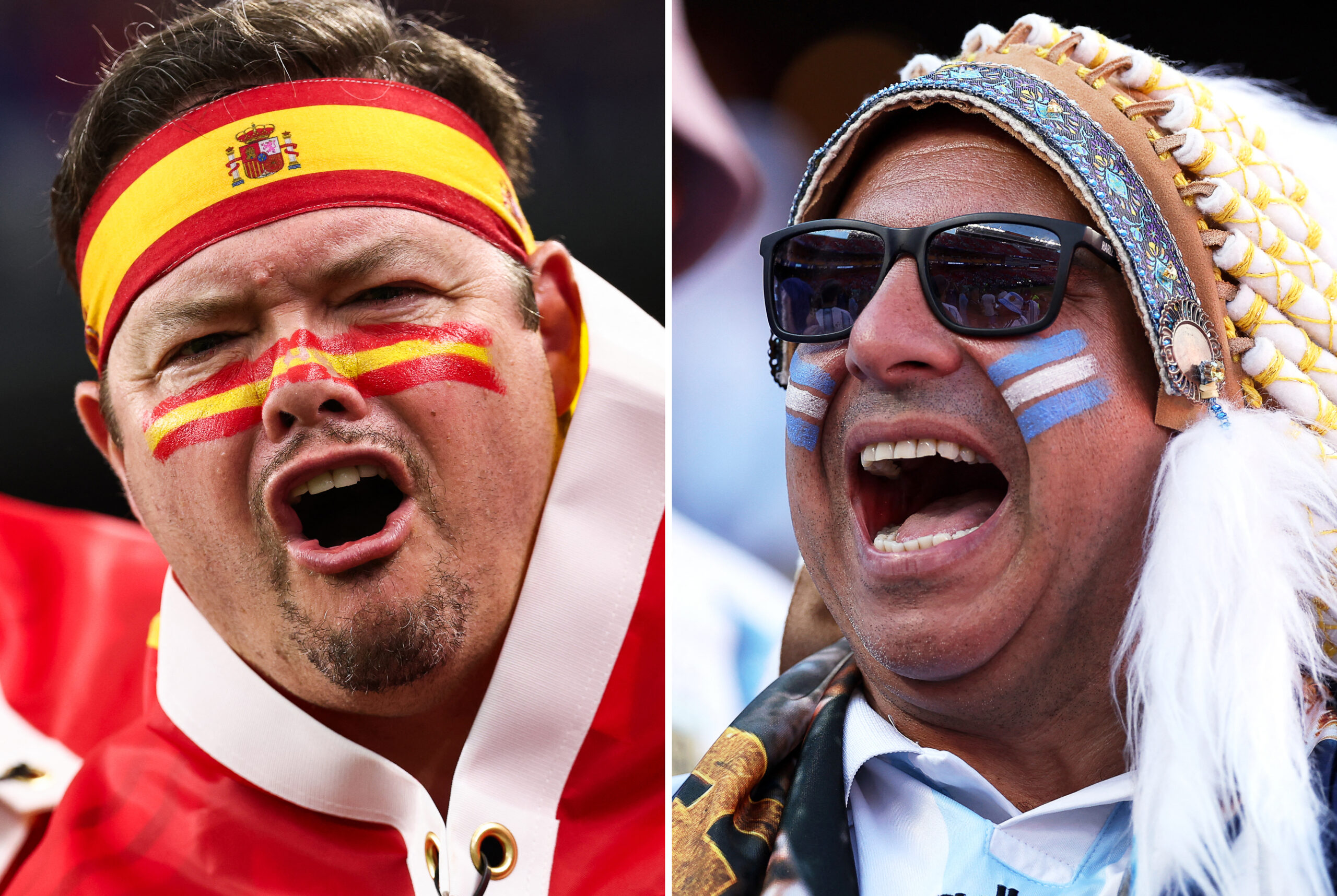
    As global football communities and sports networks engage in heated debates over the outcome of the 2026 FIFA World Cup final, the showdown between Spain and Argentina has transformed into far more than a contest for the sport’s most prestigious trophy or a battle for national bragging rights. Across social media platforms, from viral TikTok clips to widely shared X posts and memes, thousands of fans worldwide have framed Sunday’s final as a de facto referendum on political solidarity with Palestine, amid the ongoing Israeli military campaign in Gaza that has drawn widespread global condemnation.

    Many online observers have framed the match in stark political terms: “Pro-Palestine vs Pro-Israel,” one X user posted of the upcoming clash. Tensions have risen online as Argentina faces widespread criticism from pro-Palestinian advocates, who link the defending 2022 champions to Israel due to the close political alignment between the current Argentinian government and Tel Aviv. Argentinian President Javier Milei has publicly declared himself “sincerely proud to be the most Zionist president in the world,” a statement that has drawn significant international attention and backlash. Last week, Israeli Prime Minister Benjamin Netanyahu openly confirmed his support for Argentina in the final during a podcast interview, specifically citing Milei as “a great friend of Israel” as the reason for his backing. Israeli politicians further amplified this connection on Wednesday, taking to social media to publicly celebrate Argentina’s semi-final victory over England.

    On the opposite side, Spanish Prime Minister Pedro Sánchez has earned a reputation as one of Europe’s most prominent and vocal advocates for Palestinian statehood and rights. Under Sánchez’s leadership, Spain officially recognized the State of Palestine as a sovereign nation in 2024, implemented a full arms embargo on Israel, and has consistently pushed for a permanent ceasefire to end the humanitarian crisis in Gaza. This clear political stance has won Spain widespread support from pro-Palestinian fans globally, with many sharing footage of Sánchez’s 2024 recognition announcement alongside posts declaring “Full support to Spain in the World Cup Final.”

    “You have a team that is literally endorsed by Netanyahu… That doesn’t look good… Against the team that is representing the country in Europe that is most outspoken against the genocide in Gaza,” one TikTok user posted, echoing a sentiment shared by thousands of other fans. “We were all rooting for Argentina four years ago, but some more fucked up shit happened, and we don’t feel that way anymore.” Another X user expanded on this framing, writing, “This Sunday’s World Cup final is about more than just football. It’s a battle between good and evil: between one of the countries that has been among the strongest supporters of Palestine and the world’s most Zionist country, in the words of its own president.”

    The political framing has extended beyond government leadership to the players themselves. A viral video of Spanish young star Lamine Yamal waving the Palestinian flag during FC Barcelona’s La Liga title celebration parade in May has been widely reshared by pro-Palestinian fans, who contrast this public display with the silence of Argentina’s global icon Lionel Messi on the Israel-Gaza conflict. Critics of Argentina have also highlighted Messi’s past brand partnerships with Israeli companies, as well as photographs from FC Barcelona’s 2013 “Peace Tour” to Israel and Palestine, which show Messi posing with then-Israeli Prime Minister Benjamin Netanyahu and former Israeli President Shimon Peres at the Western Wall. These images have been heavily promoted by Israeli official channels, sparking backlash from pro-Palestinian activists. However, other observers have noted that Messi also met Palestinian President Mahmoud Abbas in the occupied West Bank during the same tour, arguing that the football star should not be held personally responsible for an official club trip organized by FC Barcelona.

    This politicization of football is not a new development during this 2026 World Cup, with Palestine taking center stage in multiple matches throughout the tournament. In one notable earlier incident, Argentinian fans waved Israeli flags at Egyptian head coach Hossam Hassan after he celebrated his team’s first ever knockout stage victory by entering the pitch carrying a Palestinian flag. During Spain’s 2-0 semi-final win against France, Oscar-winning Spanish actor Javier Bardem made headlines after he was filmed accepting a Palestinian flag from a fan in the stands. When asked for a message to the Palestinian people, Bardem pressed his hand to his heart and responded simply, “Existence is resistance,” and later reaffirmed “Spain stands with Palestine” in a separate video posted during the team’s round-of-16 match against Portugal.

    Beyond the debate over Palestine solidarity, Argentina has also faced online criticism over widespread perceptions of unfair bias from FIFA in favor of the defending champions. The wave of international criticism has prompted many Argentinian fans to push back online, working to clarify that Milei’s hardline pro-Zionist stance does not reflect the views of the general Argentinian public, many of whom hold pro-Palestine views. Other Argentinian supporters have pushed back against what they call an oversimplification of the match, pointing out that Argentina recognized Palestine as a free and independent state all the way back in 2010, under then-president Cristina Fernández de Kirchner, far earlier than Spain’s 2024 recognition.

    Dyab Abou Jahjah, president of the Hind Rajab Foundation, offered a nuanced perspective on the politicization of the final in a post Wednesday. “Sport has always been intertwined with politics, and it always will be. But reality is more complex than that,” he wrote. “Argentina is not Israel. Argentina is not Zionist. It cannot be reduced to any ideological camp… On Sunday, I will still be supporting Spain, out of genuine gratitude for that explicit solidarity. But I will not approach the match as a fanatic or an ideologue. If Argentina plays as brilliantly as they did today, they will deserve to win.”
  • Uncertainty clouds the forecast on whether wildfire smoke will affect the World Cup final

    Uncertainty clouds the forecast on whether wildfire smoke will affect the World Cup final

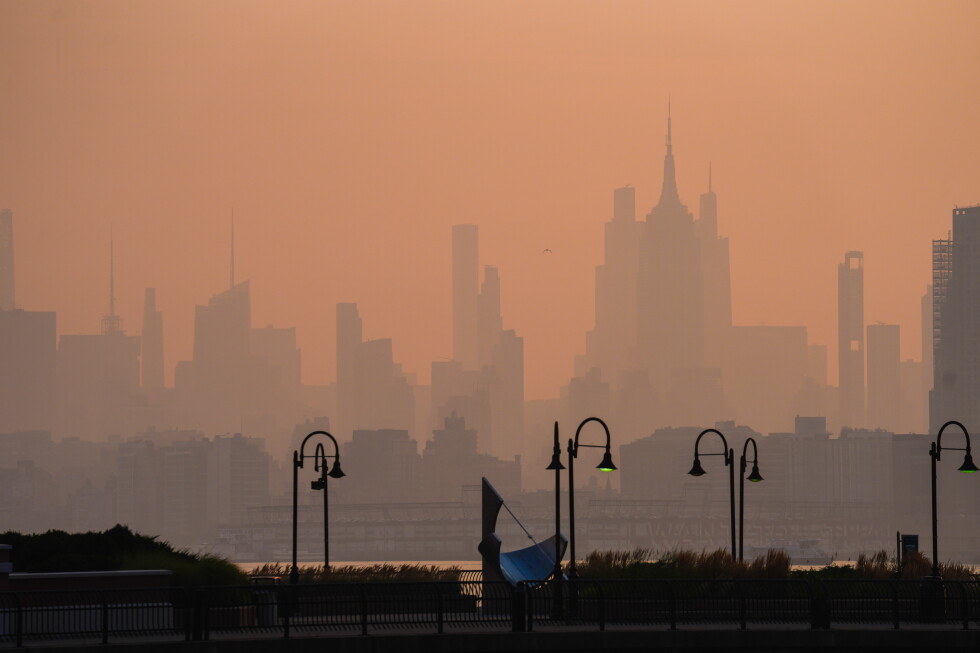
    EAST RUTHERFORD, N.J. — As the highly anticipated World Cup final between Spain and Argentina approaches Sunday, a shroud of uncertainty from distant Canadian wildfires hangs over the match, with hazy conditions and unpredictable air quality threatening to disrupt one of soccer’s biggest global stages.

    Spanish midfielder Mikel Merino acknowledged Friday that the acrid scent and visible haze from the wildfires, which have spread across large swathes of the eastern U.S., are impossible to miss, but his team is working to tune out the disruption. “For a game that is as important as a World Cup final, you have to be able to shut out external factors as much as possible,” Merino said. “Luckily, we are being careful with every detail thanks to the federation and the organizers of the World Cup.”

    At present, the full impact of the smoke on Sunday’s match remains unclear. The World Health Organization projects that air quality in East Rutherford, the host city for the final, will improve to the “moderate” range by game day. However, that forecast is complicated by incoming weather and shifting wildfire activity.

    A controversial misstep last week amplified concerns over team safety: Spain held a full outdoor practice in East Hanover on Thursday, when local air quality fell into the hazardous range. Environmental and health experts have criticized the decision, noting the session should have been moved indoors. Requests for comment sent to FIFA and the Spanish Football Association asking whether an indoor practice was considered or logistically possible went unanswered.

    Air quality did show measurable improvement across the region on Friday, forecasters say, but shifting conditions could change the outlook rapidly. Up to 1.25 inches of rain is expected to fall across northern New Jersey on Saturday, but a second mass of smoky air is projected to move in behind the storm system.

    “If the fire intensity really picks up again through Saturday, it’s possible it puts more smoke into the atmosphere that then might quickly follow that rain event,” explained Mark Parrington, senior scientist at the Copernicus Atmosphere Monitoring Service. “Following that, it looks like there is another smoky air mass following in behind that system, but it’s not clear right now how much or how it might reach New York or New Jersey, when it comes to actually Sunday.”

    Beyond the disruption to the match, health experts warn that wildfire smoke poses significant risks to attendees and athletes alike, a threat amplified by rising global temperatures that have driven larger and more intense wildfire seasons across North America. Multiple medical studies have confirmed that wildfire smoke contributes to tens of thousands of premature deaths annually, impacting nearly every organ system in the human body.

    Within hours of smoke exposure, particulate matter can trigger severe asthma flare-ups and increase emergency ambulance dispatches. Medical researchers explain that smoke irritates the body, triggering widespread inflammation that targets a person’s pre-existing vulnerable areas, setting off a cascade of immune system responses that can lead to serious cardiovascular and respiratory complications. As a general rule, Parrington noted, public health guidance advises limiting strenuous outdoor activity when pollutant levels are high, a warning that carries extra weight for at-risk attendees with pre-existing conditions.

    White House officials confirmed Friday that former President Donald Trump is scheduled to meet with FIFA President Gianni Infantino later that day to discuss the situation. Senior members of the White House FIFA Task Force, including executive director Andrew Giuliani, have been in ongoing talks with soccer’s governing body to monitor the wildfire impact and coordinate preparations, according to an anonymous official familiar with internal discussions.

    Sunday’s final is expected to draw roughly 80,000 fans to the open-air MetLife Stadium in the Meadowlands, the shared home venue of the NFL’s New York Giants and New York Jets. Organizers have not yet announced any plans to postpone, move, or modify the match schedule as of Friday’s update.

    This report was assembled with contributions from SNTV videographer Davidde Corran (East Hanover, N.J.), AP White House reporter Seung Min Kim, AP Science Writer Seth Borenstein (Washington, D.C.), and AP Sports Writer Jim Vertuno (Austin, Texas).

  • Schalke signs former Germany winger Robin Gosens on loan from Fiorentina

    Schalke signs former Germany winger Robin Gosens on loan from Fiorentina

    Fresh off earning promotion back to Germany’s top-tier Bundesliga, FC Schalke 04 has announced a high-profile loan signing of 32-year-old former German national team winger Robin Gosens from Italy’s Serie A club ACF Fiorentina. The deal, confirmed by the Gelsenkirchen-based club on Friday, includes a pathway to a permanent transfer at the end of the loan spell if pre-agreed performance and league conditions are met.

    German football outlet Kicker has detailed the two key clauses tied to the permanent move: Schalke must successfully avoid relegation and retain its Bundesliga status for the 2025-26 season, and Gosens must hit a specified threshold of first-team appearances for the club across the loan term.

    Schalke’s sporting director Youri Mulder expressed overwhelming enthusiasm about the acquisition, framing Gosens as a transformative addition for the newly promoted side. “We’re delighted that Robin Gosens has chosen us,” Mulder stated in the club’s official announcement. “We’re getting a player of immense quality and a true leader for our squad. Over the past few years, Robin has demonstrated his commitment, mentality, and an unwavering drive for success at both club and international levels.”

    A versatile left-sided player capable of playing both wing and full-back, Gosens brings more than a decade of top-flight experience across three major European leagues to Schalke. He earned 24 caps for the German men’s national team, with his most recent international appearance coming in 2025.

    Gosens’ career path traces back to his birthplace of Emmerich, a German town on the border with the Netherlands, where he was born to a German mother and Dutch father. He moved across the border to join the youth academy of Dutch top-flight club Vitesse Arnhem just before his 18th birthday in 2012, kicking off his professional career in the Eredivisie. After a breakout spell with Heracles Almelo, he earned a move to Italy’s Atalanta BC in 2017, where he first rose to global prominence under manager Gian Piero Gasperini. Atalanta’s iconic 3-4-3 formation played to Gosens’ relentless work rate, allowing him to thrive in both overlapping left-back and attacking left winger roles.

    Following his successful stint at Atalanta, Gosens moved to Inter Milan, before returning to the Bundesliga with Union Berlin in 2023, his first spell at a German club. He joined Fiorentina in 2024, and now returns to the Bundesliga just one year later to link up with newly promoted Schalke.

  • Garry Sobers, towering West Indies cricket all-rounder, dies at 89

    Garry Sobers, towering West Indies cricket all-rounder, dies at 89

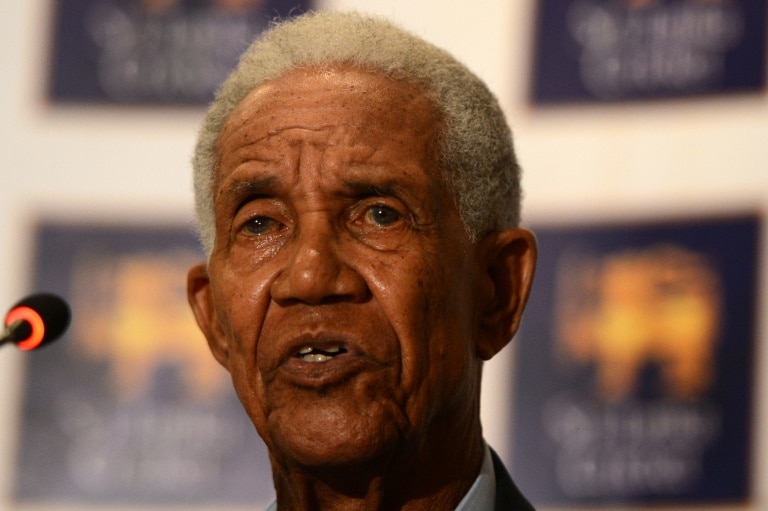
    The global cricket community is mourning the passing of Sir Garfield ‘Garry’ Sobers, the iconic West Indies all-rounder universally regarded as one of the greatest players to ever step onto a cricket field, who died at the age of 89.

    Across the 20th century, cricket produced no shortage of generational talent, but fans and experts alike have long placed just two players in a tier of their own: legendary Australian batsman Donald Bradman and Sobers. Confirming the loss on social media Friday, West Indies Cricket shared a heartfelt tribute: “A great innings has come to an end. In our hearts, now and forever, Sir Garfield Sobers.”

    Sobers’ standing in the sport was cemented decades ago. In a 1999 poll of 100 leading cricket experts conducted by Wisden for its selection of Five Cricketers of the 20th Century, Sobers earned 90 votes — falling just 10 votes shy of a perfect tally that only Bradman achieved. Even Bradman himself, who passed away in 2001, offered Sobers the highest possible praise, calling him “in my opinion, the greatest cricketer of all time.”

    That glowing acclaim stems not just from Sobers’ impressive statistical record or his graceful on-field style, but from the unprecedented breadth of his skill across every aspect of the game. As a batsman, he compiled 8,032 Test runs across 93 matches at an average of 57.78 — a career mark that would alone secure any player a place in cricket’s hall of fame. As a bowler, he claimed 235 Test wickets at an average of 34.03, with the rare versatility to open the bowling with fast left-arm pace or switch to orthodox or wrist spin when pitches deteriorated, a talent that caught the eye of West Indies selectors when he was just a teenager. He was also one of the most agile and sharp fielders of his era, holding 109 Test catches — most often at slip, though as captain he would regularly position himself in the high-risk short-leg spot when off-spinner Lance Gibbs was bowling.

    Australian all-rounder Alan Davidson summed up Sobers’ unmatched versatility in a 2016 interview marking Sobers’ 80th birthday: “The bloke could do just about anything on a cricket field except umpire. He was a complete cricketer, magnificent fielder, bowled all types of bowling, and when in form, he absolutely decimated great bowling attacks. You could not set a field to him because he just had that innate ability to be able to score runs whenever he wanted to.”

    Born Garfield St Aubrun Sobers in Bridgetown, Barbados, in July 1936, Sobers’ early life was marked by tragedy when he was just six years old: his father, a merchant seaman, died when his ship was torpedoed by a German U-boat off the coast of North Carolina. Even from a young age, Sobers displayed extraordinary athletic talent across multiple sports, and he made his first-class debut for Barbados as a spinner against touring India in January 1953, at just 16 years old. A year later, after facing the touring Marylebone Cricket Club (MCC) side and just two first-class appearances total, he was called up as a last-minute replacement for the injured Alf Valentine to make his Test debut against England at Sabina Park in March 1954. Though England won the match by nine wickets, Sobers made an immediate impact, dismissing star batsman Trevor Bailey in his very first Test over and finishing with four wickets for 75 runs in England’s first innings.

    It took just four years for Sobers to etch his name into the record books, during a Test against Pakistan in Kingston. At the time, Len Hutton’s 364 against Australia had stood as the highest individual Test score for 20 years. Sobers hit an unbeaten 365 in that match, breaking the record in his first ever Test century; the new record stood for 39 years, until fellow West Indian Brian Lara hit 375 against England in 1994. Later that same decade, in the famous tied Test of Brisbane in 1960-61, Sobers scored a blistering 132 that set the pace for one of the most memorable Test series in cricket history. Davidson later called that innings “absolutely one of the greatest I have ever seen in my life. He didn’t just beat the field. He split the field. His placement was just incredible.”

    In 1964-65, Sobers took over from Frank Worrell as West Indies captain, leading the side to its first ever series win against Australia at home. He captained the side through 1972, when he handed the reins to Rohan Kanhai, with mixed overall results, but his leadership laid critical groundwork for the West Indies team that would grow into the most dominant side in international cricket through the 1970s and 1980s. Even as his career wound down, Sobers delivered historic performances: in 1972, he scored 254 for the Rest of the World team at the Melbourne Cricket Ground, an innings Bradman called “probably the greatest exhibition of batting ever seen in Australia.”

    Beyond international cricket, Sobers led South Australia to a Sheffield Shield title and played county cricket for Nottinghamshire in England. In 1968, he made global cricket history once again, becoming the first first-class cricketer to hit six sixes off a single six-ball over — a feat that was only matched once in top-tier first-class cricket in the decades that followed, by Indian all-rounder Ravi Shastri in 1985.

    Sobers retired from Test cricket in 1974, and was knighted for his contributions to sport a year later. In 2004, the International Cricket Council created the Sir Garfield Sobers Trophy, awarded annually to the best men’s cricket player in the world, in his honor. For most fans and contemporaries, however, Bradman’s simple, unreserved praise will remain the defining description of his legacy: the greatest cricketer of all time.

  • Messi eyes glorious farewell as Spain, Argentina clash in World Cup final

    Messi eyes glorious farewell as Spain, Argentina clash in World Cup final

    The 2026 FIFA World Cup, the largest edition of the tournament in history, will reach its climax this Sunday at East Rutherford’s MetLife Stadium, where European champions Spain and South American titleholders Argentina will lock horns for the sport’s most coveted global prize. The 80,012-capacity venue will host a star-studded crowd that includes former U.S. President Donald Trump, alongside thousands of passionate fans from both nations who have traveled across continents to witness the historic cross-continental showdown.

    Preparations for the final have not been without minor disruptions: tournament organizers confirmed this week that they are closely monitoring air quality in the New Jersey metropolitan area, where smoke plumes from ongoing Canadian wildfires have drifted south. The match is scheduled to kick off at 3 p.m. local time (1900 GMT), and the half-time break will be extended to an unprecedented 25 to 30 minutes to accommodate a star-studded Super Bowl-style halftime show featuring global music icons Madonna, Shakira and Justin Bieber.

    All off-field buzz will fade into the background once the first whistle blows, however, as the match centers on one of the biggest narratives in modern football: what is widely expected to be the final World Cup appearance of Argentina captain Lionel Messi. At 39 years old, the Argentine icon, regarded by most fans and pundits as the greatest player to ever step onto a football pitch, will make history as only the second men’s player to feature in three World Cup finals, matching the legendary feat of Brazil’s Cafu, who played in the 1994, 1998 and 2002 title matches.

    Messi has delivered a career-defining tournament to reach this final, currently leading all scorers with eight goals and on track to claim the Golden Boot. Beyond his goal tally, the eight-time Ballon d’Or winner has repeatedly dragged his side back from the brink of elimination, embodying the relentless, never-say-die resilience that head coach Lionel Scaloni has built into the Argentine squad. In the round of 16 against Egypt, Messi inspired a stunning late comeback after Argentina trailed 2-0 with just 11 minutes left, engineering a 3-2 victory that kept their title defense alive. Most recently, he notched two assists in a dramatic 2-1 semi-final comeback against England in Atlanta, securing Argentina’s spot in the championship match.

    Scaloni, who has led Argentina to consecutive Copa America titles and the 2022 World Cup crown, says his squad’s strength comes from their collective fearlessness and team unity. “This group is difficult to explain,” he said. “It is a show of the collectiveness, the brotherhood that we are in, the willingness to fight to the very end. I know the guys. They fear nothing.”

    Standing between Argentina and a historic title defense – which would make them the first team to retain the World Cup in 64 years – is a Spanish side that has dominated the tournament with their trademark possession-based style of play. Spain, who won their first and only World Cup title in 2010, entered the tournament as dark horses but have steadily built momentum, shutting out pre-tournament favorites France 2-0 in the semi-finals to book their place in Sunday’s final.

    La Roja’s biggest strength this tournament has been their impenetrable defense: the side has conceded only one goal across seven matches, notching six clean sheets. If they win Sunday’s final and keep Argentina off the scoresheet, they will set a new World Cup record for the fewest goals conceded by a title-winning team. Led by captain Rodri, Spain’s midfield trio of Rodri, Fabian Ruiz and Dani Olmo completely neutralized France’s high-powered attack in the semi-finals, controlling possession for large stretches and creating the openings that led to their decisive goals.

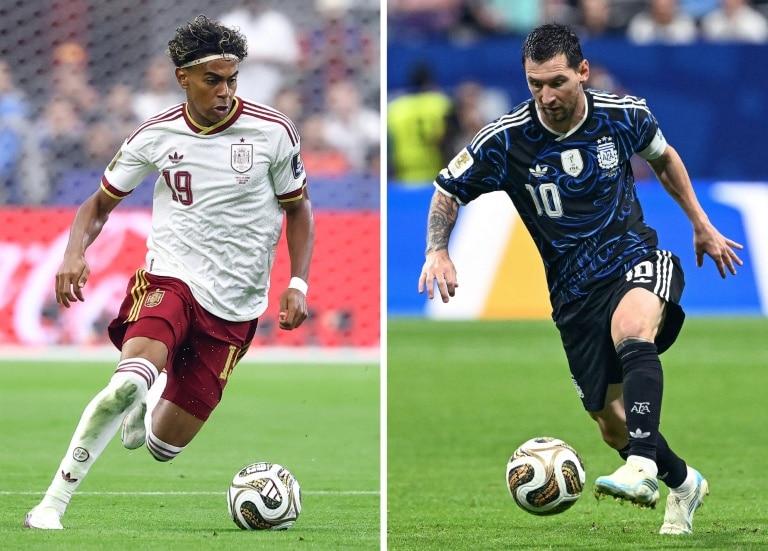
    The outcome of the final could well hinge on the form of Spanish teenage prodigy Lamine Yamal. The 19-year-old Barcelona winger, who was the standout star of Spain’s 2024 European Championship winning campaign, has been working his way back from a hamstring injury through much of this World Cup and has yet to hit his electrifying best. But he showed glimpses of his elite talent against France, drawing the penalty that gave Spain their opening lead and having a spectacular goal ruled out by only the narrowest of offside calls.

    Adding another layer of personal drama to the matchup is the relationship between the two head coaches. Spain manager Luis de la Fuente, 65, who took over the senior national team in 2022 after a successful career leading Spain’s youth sides, mentored Scaloni when the Argentine was working toward his professional coaching license in 2018. Scaloni, 46, maintains deep personal and professional ties to Spain, where he lives with his family, but says he will put his friendship and respect for his former mentor on hold for 90 minutes on Sunday.

    “He was my mentor, and he taught me everything I know and now we are facing each other in a final,” Scaloni said. “Everyone knows I live in Spain and have Spanish family. And I’m very, very sorry, but on Sunday I’m going to try to beat him.”

    For millions of football fans around the globe, Sunday’s final is more than just a match: it is a chance to witness one of the game’s greatest legends cap his historic career with one last world title, while watching a new generation of Spanish stars write their own place in football history.

  • With Deschamps stepping down after 14 years, France needs a new coach and Zidane is in pole position

    With Deschamps stepping down after 14 years, France needs a new coach and Zidane is in pole position

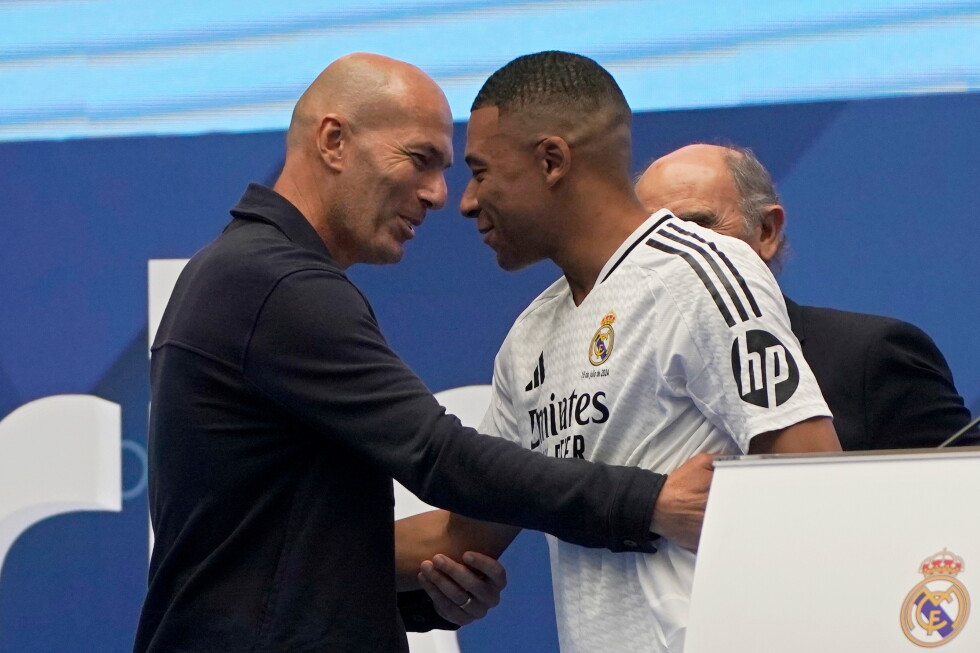
    PARIS (AP) – This Saturday, France national men’s football team will face England in the World Cup third-place playoff in Miami, a match that will mark the end of Didier Deschamps’ 11-year tenure as Les Bleus’ head coach. For both sides, the bronze medal match is a hollow consolation prize, coming after crushing semifinal eliminations that cut short each team’s dreams of lifting the sport’s most coveted trophy. The outcome marks a underwhelming close to Deschamps’ reign, after widespread expectations that his star-stacked squad would compete for a second world title under his leadership. In the wake of his departure, football legend Zinedine Zidane is widely tipped to be confirmed as the new head coach by the French Football Federation in the coming days.

    Deschamps’ legacy with the French national team is defined by both historic glory and lingering debate. As a manager, he led France to a World Cup victory in 2018, a gut-wrenching penalty shootout loss in the 2022 World Cup final, and an early semifinal exit against Spain in this year’s tournament. Over his 14 years at the helm, Deschamps claimed only one major senior trophy – the 2018 World Cup – after falling to Portugal in the 2016 UEFA European Championship final on home soil. Critics argue that this trophy haul underdelivered given the elite talent Deschamps had at his disposal, a group that included global stars such as Kylian Mbappé, Paul Pogba, Antoine Griezmann, 2022 Ballon d’Or winner Karim Benzema and Ousmane Dembélé. Supporters, however, point out that Deschamps delivered consistent high-level results for Les Bleus throughout his tenure. Regardless of differing takes on his legacy, the next France head coach will face enormous pressure to live up to Deschamps’ track record, and few candidates carry the prestige and profile to match the role better than Zidane. Widely regarded as France’s greatest ever player, and a coach with three Champions League titles to his name during a trophy-laden spell at Real Madrid, Zidane looks like an ideal fit for the job.

    Ironically, Deschamps and Zidane have been linked to French football glory for decades, despite their wildly contrasting playing styles. When France claimed its first home World Cup title in 1998 and followed it up with a Euro 2000 crown, Deschamps was the hard-working, tireless defensive captain who anchored the midfield, while Zidane was the magical creative playmaker who drove the team’s attacking threat and produced the iconic moments that lifted the side to glory.

    France’s 2-0 semifinal defeat to Spain exposed clear tactical gaps in Deschamps’ game plan that have fueled calls for a new approach. Pinned back by Spain’s relentless, fluid possession play, France was completely overrun in central midfield, its pressing system failed to generate any disruption, and its vaunted attack was effectively neutralized – with Deschamps unable to adjust with an effective alternative strategy to turn the tide. This has long been a core criticism of Deschamps from detractors, including former France teammate Christophe Dugarry, who have repeatedly argued that Deschamps’ pragmatic, defensive-focused approach stifles creative freedom in midfield. For Zidane, who made his name as one of the most creative playmakers in football history, a shift to a more expansive, attacking style is widely expected. That could open the door for technically gifted young talents such as Michael Olise or Rayan Cherki to earn increased opportunities in central playmaker roles, or a tactical shift that sees Dembélé drop into a deeper playmaking position, a role he has excelled in at Paris Saint-Germain.

    One of the most anticipated potential changes under Zidane would be a return to the national squad for Benzema, who shares a close personal and professional bond with Zidane from their time together at Real Madrid. The pair won three consecutive Champions League titles between 2016 and 2018, and Zidane was widely credited with developing Benzema into a complete, ruthless goalscorer who would go on to claim the Ballon d’Or in 2022. At 38, Benzema’s age is cited as a barrier to a return to international football, but Zidane may well see an outside role for the veteran, following in the footsteps of 39-year-old Lionel Messi, who turned back the clock to lead Argentina to glory in this tournament. Benzema could thrive in a more withdrawn attacking role, where his elite technical skill and passing vision would create space for younger, faster forwards, an outcome that would draw a sharp contrast with Deschamps, who excluded Benzema from the national squad for nearly six years over his alleged involvement in a blackmail scandal involving former teammate Mathieu Valbuena. Benzema was eventually recalled for Euro 2020, where he finished as France’s top scorer with four goals, and formed a lethal attacking partnership with Mbappé as France won the 2021 UEFA Nations League. Their relationship fractured permanently ahead of the 2022 World Cup, when Benzema was sent home from the squad with a thigh injury, a sequence of events Benzema has publicly disputed. While recalling Benzema would be a bold decision for Zidane, it remains firmly on the table.

    A key question surrounding Zidane’s potential appointment is his readiness for the high-pressure role of France manager, given he has not held a coaching position since departing Real Madrid for a second time in 2021. On the flip side, the five-year break from the scrutiny and stress of top-tier management leaves Zidane refreshed and hungry for a new challenge. If confirmed, Zidane’s first match in charge of France will be an away Nations League fixture against Turkey on September 25, followed by a trip to Belgium three days later. French fans will get their first look at Zidane as head coach at the Stade de France on October 2, when Les Bleus face Italy. That match carries extra narrative weight: Zidane’s final appearance as a France player also came against Italy, in the 2006 World Cup final, where he opened the scoring with a cheeky Panenka penalty before being sent off in extra time for a infamous headbutt on Italian defender Marco Materazzi. France went on to lose the final on penalties, but the French public never held the incident against their beloved “Zizou”, whose deep connection with the nation remains as strong as ever.

  • ‘Completely laughable’: Trent Robinson outraged by penalty call as Roosters overcome poor attack to beat the Storm

    ‘Completely laughable’: Trent Robinson outraged by penalty call as Roosters overcome poor attack to beat the Storm

    The National Rugby League premiership race has been shaken up by a tense, rain-soaked clash that ended with a controversial refereeing call and a crucial win for the Sydney Roosters over defending contender Melbourne Storm, leaving Melbourne’s 2024 finals hopes all but dashed.

    The 14-6 final result pushes the Roosters to within just two points of ladder-leading Penrith Panthers, but the victory was overshadowed by a soft penalty decision in the second half that has drawn fierce criticism from Roosters head coach Trent Robinson.

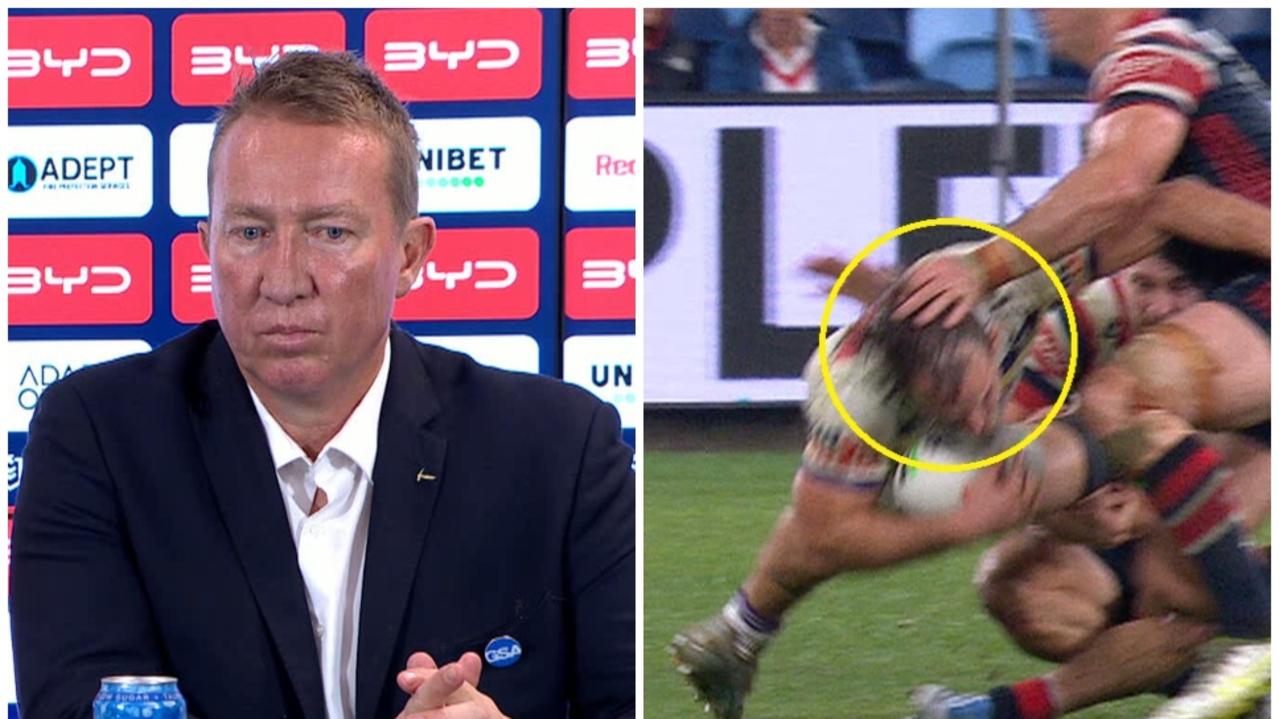
    Melbourne had failed to threaten the Roosters’ try line for the opening 55 minutes of the match, until referee Gerard Sutton awarded the Storm a critical penalty for an alleged high tackle from Roosters forward Nat Butcher on Melbourne’s Alec MacDonald. The penalty gifted Melbourne prime field position deep in Roosters territory, and two minutes later, Stefano Utoikamanu crossed for the Storm’s only try of the night, setting up a nervy final stretch for the home side.

    Replays of the tackle contradicted the referee’s call, showing barely any contact between Butcher and MacDonald with negligible force applied. Robinson did not mince words in his post-match press conference, calling the decision “completely laughable.”

    “How do you find that (a penalty)? Why would a referee even look at that? It was laughable. It was completely laughable,” Robinson told reporters. “You’ve got to defend it, and there were some things that went our way against it, but if they have an error on that and then you’re looking at that, then you’re looking at the wrong thing.”

    The controversial call left Butcher fuming, and the forward immediately began arguing with match officials, only to be calmed down by teammate Victor Radley—until Radley saw the replay on the stadium big screen. “Nat was blowing up at the time. I was thinking ‘mate, be quiet Nat’ until I saw it on the big screen. I said ‘oh, you’ve probably got a right to blow up there,’” Radley recounted after the match.

    Despite the controversial setback, the Roosters’ defensive line held firm through the closing minutes of the game, and a late try from winger Daniel Tupou sealed the narrow win. Robinson acknowledged that the Roosters’ attacking play was far from their best, a issue he attributed to disrupted combinations following the recent State of Origin series and wet, slippery playing conditions. The side earned plenty of field position throughout the match but failed to convert those chances into points, leaving the coach frustrated with his side’s offensive execution.

    “We should have defended it, which is disappointing, but it is what it is,” Radley said. “It is reassuring (for us to win those tight games). It didn’t feel great at all, but our defence just held on, which was pleasing. I think those games, it didn’t feel great at the end of it at full-time there, but often those close contest games can be enjoyable. We won in the end, so happy days.”

    While Robinson was critical of the refereeing and his own side’s attacking performance, he praised the team’s relentless defensive energy in wet conditions, a result he believes will build critical confidence heading into the Finals series, where close, low-scoring contests are the norm.

    “I loved the defensive performance. We didn’t execute well and it wasn’t pretty, but I felt the energy we did have we put into defence, and I felt like we controlled the game through our defence,” he said. “There was a lot of live play, so the ball was in play a lot. There was a lot of kick return footy, both teams were going with high completion rates. If you want to play in decent games, you’ve got to play that style, so that was really pleasing. The execution of our attack was poor. I’ll take that. Just coming out of Origin, I’ll take that with different guys in and out in the wet. Of course I would have liked to have had better combinations and increased that because I thought we had enough field position there to do so. But there are also some really good signs on the defensive side of the ball.”

    For Melbourne, the loss all but ends their 2024 premiership campaign, falling further adrift of the top eight with few rounds remaining in the regular season.

  • Germany’s fastest sprinter Owen Ansah faces an anti-doping process

    Germany’s fastest sprinter Owen Ansah faces an anti-doping process

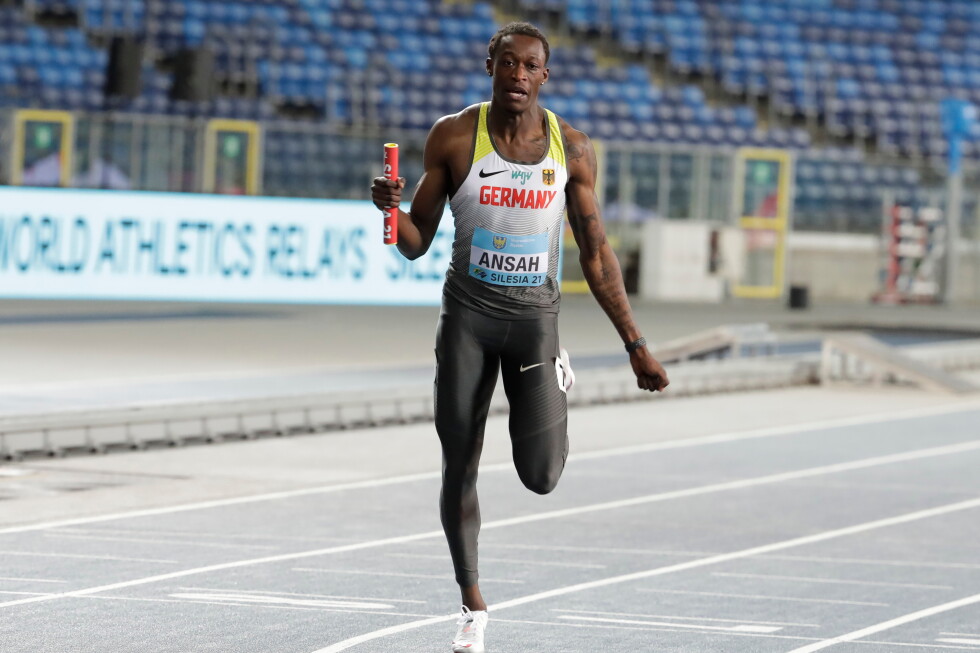
    BONN, Germany — One of Germany’s most decorated track and field athletes, history-making sprinter Owen Ansah, is at the center of an ongoing investigation by the country’s national anti-doping body that could result in a competition ban, over allegations he did not comply with required doping testing protocols.

    Ansah, who made history earlier this year as the first German sprinter to break the 10-second barrier in the men’s 100-meter event, will remain eligible to compete during the investigation, which the National Anti-Doping Agency of Germany (known commonly as NADA) has labeled a standard “results management process.”

    In an official announcement released Friday, NADA confirmed the probe is being conducted under anti-doping regulations that explicitly prohibit athletes from evading, declining, or failing to complete mandated out-of-competition or in-competition doping tests. This rule has resulted in lengthy competition bans for athletes across a wide range of sports in previous cases. Most recently, former Wimbledon singles champion Marketa Vondrousova was handed the maximum four-year suspension, the standard penalty for a first offense under this rule, just last month after she refused to submit to a test.

    Unlike some anti-doping cases that trigger an immediate provisional suspension, NADA confirmed that no mandatory temporary ban is in effect for Ansah at this stage of the investigation.

    The 25-year-old runner shaved enough time off his personal best to set a new German national record of 9.98 seconds in the 100-meter just last month, and he has been widely ranked as a legitimate medal contender for both the individual 100-meter and men’s 4×100-meter relay events at the upcoming European Athletics Championships, set to kick off next month in the United Kingdom.

    As of Friday, Ansah had not issued any public statement or responded to requests for comment on NADA’s confirmation of the investigation.

  • Spanish Prime Minister Pedro Sánchez to attend World Cup final against Argentina

    Spanish Prime Minister Pedro Sánchez to attend World Cup final against Argentina

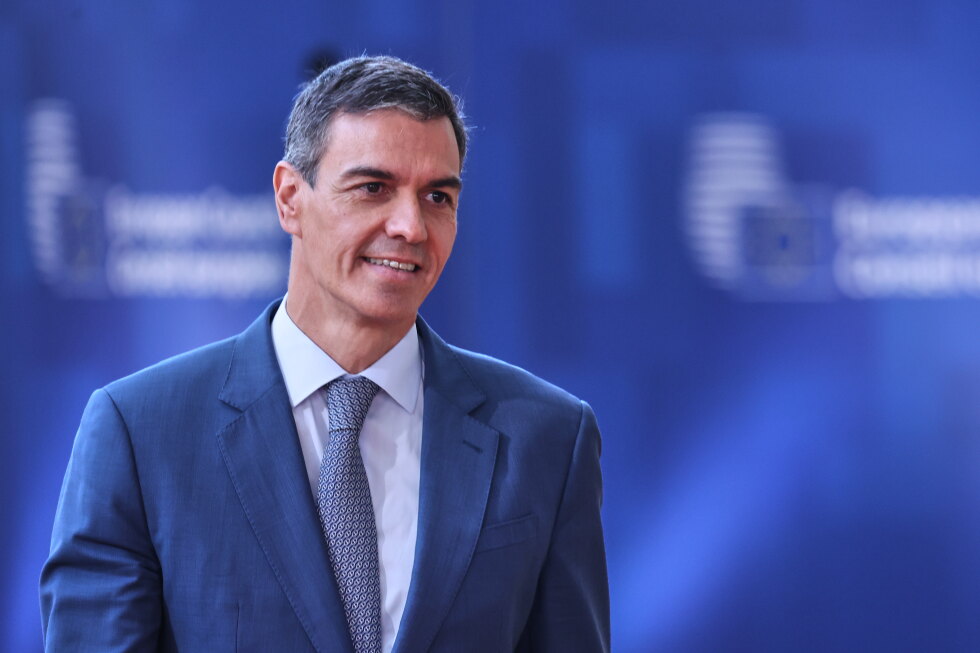
    MADRID – In a surprising convergence of global politics and elite soccer, the office of Spanish Prime Minister Pedro Sánchez announced Friday that he will travel to the United States to attend Sunday’s highly anticipated World Cup final between Spain and Argentina.

    Sánchez will not be the only high-profile dignitary in the stands at the East Rutherford, New Jersey venue: Spanish King Felipe VI has also confirmed his planned attendance at the match, while former U.S. President Donald Trump has also been slated to appear for the title decider.

    The gathering sets up a high-stakes public meeting between two leaders who have a long history of sharp public disagreements on major global issues. Sánchez and Trump have clashed repeatedly on the international diplomatic stage over multiple divisive topics, ranging from escalating tensions around the Iran conflict to disputes over Spain’s required defense spending commitments to NATO, and most recently, over Washington’s unwavering backing of Israel’s military campaign in Gaza following the 2023 Hamas attacks.

    Notably, Argentine President Javier Milei – a well-known political ally of Trump – will skip the in-person final. The leader has explained his absence as rooted in personal sports superstition, saying he will follow the match from his private residence in Argentina instead. Sunday’s final will be a historic clash between two of global soccer’s most decorated programs: Argentina, which enters the match as the defending three-time World Cup champion, will face off against 2010 tournament winner Spain as both sides compete to lift the sport’s most prestigious trophy.

  • How the World Cup made an ‘NFL-obsessed’ American a football fan

    How the World Cup made an ‘NFL-obsessed’ American a football fan

    The 2026 FIFA World Cup, co-hosted by the United States, has ignited a sudden and widespread wave of new soccer enthusiasm among American viewers, turning casual onlookers into die-hard fans and driving measurable growth in participation and viewership across the country.

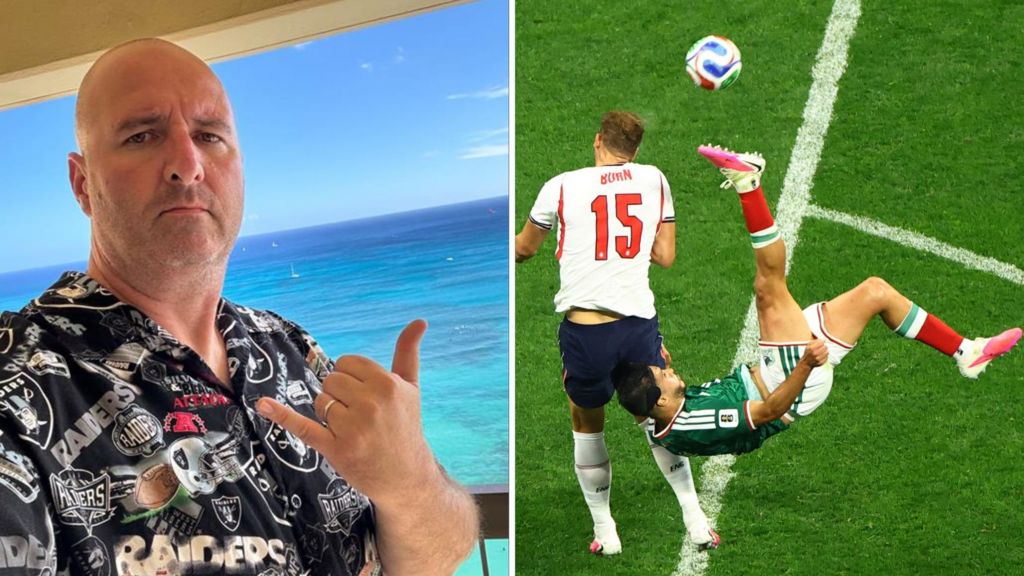
    One of the thousands of newly converted fans is Jamie Druley, a 51-year-old car salesman from Indiana and self-proclaimed lifelong NFL fanatic. His journey into soccer fandom began when he learned about the boisterous, widely documented celebrations of Scotland’s iconic Tartan Army fan contingent during their time in Boston for the tournament. Curious about what drew thousands of fans to travel thousands of miles and spend thousands of dollars just to cheer on their national teams, Druley decided to tune into the matches.

    What started as a casual experiment quickly turned into a full-blown obsession. Druley’s passion grew so intense that his wife eventually texted him from their bedroom asking him to lower his volume as he yelled at match broadcasts from the living room. On slow work days, Druley and his colleagues would stream matches directly in the car dealership’s showroom; the tense semi-final match between England and Argentina sparked such heated friendly banter and shouting between coworkers that it ended with a formal bet between Druley and his boss ahead of the tournament’s final. Today, Druley is even considering purchasing season tickets for his local minor league side Fort Wayne FC, which opened a new 9,200-seat stadium earlier this year.

    Druley is far from alone in this newfound love for soccer. Countless Americans with little to no prior interest in the sport have jumped on the World Cup bandwagon, driving record-breaking viewership numbers across major US broadcasters. Nielsen Media Research data shows that an average of 5.1 million American viewers tuned in to watch each of the 72 matches broadcast across Fox, FS1, and Tubi – a 92% increase in average viewership compared to the 2022 World Cup in Qatar. The broadcast of the United States’ knockout stage loss to Belgium drew 30 million viewers alone, making it the most-watched English-language soccer broadcast in US history, according to Fox.

    Courtney Silbaugh, a 33-year-old mother from Pennsylvania who describes herself as “not a sports spectator at all,” is among the scores of newly minted fans. Silbaugh had never connected with traditional American sports: she tried watching American football with no success, and struggles to follow baseball due to impaired vision that makes it hard to track the ball. But since the World Cup kicked off, she has watched every match except six, and now calls soccer her favorite sport. “I’m understanding the game more while watching the World Cup… versus watching recreational leagues,” she explained.

    Another new fan is 54-year-old Indiana banker and grandmother Heather Earhart. While her son-in-law works as a high school soccer coach and her grandchildren play youth soccer, Earhart had long felt confused by the sport’s rules and flow, leaving her unengaged even when attending her grandchildren’s games. That all changed during the 2026 tournament, when she found herself fully caught up in England’s World Cup run, even falling in love with the fan favorite chants *Hey Jude* and Oasis’s *Wonderwall*. She now streams the songs while cleaning her kitchen, checks match highlights on YouTube first thing every morning, and has even watched beginner tutorials to learn the sport’s rules and basic skills, from bending free kicks to offside regulations. Earhart says she is now considering following a Manchester club and Real Madrid to watch English star Jude Bellingham, and is eager to visit a local soccer bar in Indianapolis to watch matches now that she understands the action.

    The surge in interest extends far beyond living room viewership, according to soccer industry insiders across the US. Nate Roberts, a 40-year-old soccer coach and fitness instructor who moved to Connecticut from Lincoln, England more than a decade ago, says his organization has been flooded with inquiries from people eager to play. In response, he is launching a new adult pickup “beer league” (with alcohol restricted to those of legal drinking age) in the coming weeks to meet unanticipated demand. Roberts says he now receives 10 to 20 personal emails a week from prospective players and parents looking to sign their children up for youth programs, with double that number of inquiries coming through social media. “We’re noticing players that are looking for that rec experience or that first opportunity to start their soccer journey,” he explained.

    Much of the new enthusiasm for the sport among American fans stems from the unique atmosphere of the co-hosted tournament, which brought thousands of international fans to cities across the US. Many new fans say they were struck by the widespread positivity, good sportsmanship, and cross-cultural camaraderie on display as fans from every corner of the globe celebrated together in North American host cities.

    Druley, who is now considering following Manchester City and MLS clubs alongside his NFL fandom, summed up the sentiment: “It sounds cliche as can be, but the whole world getting along, in the way that I saw them doing while here in America, visiting for the World Cup, was just eye-opening to me. As silly as a game or a sport may be to some people, seeing people come together the way that they did over this was just truly amazing to me. It was… maybe what the world needs right now, you know?”

    For all his newfound love of the sport, however, Druley is standing firm on one longstanding American tradition: he will not be calling it “football.” “I know that the entire world outside of us pretty much calls it football, but I am so ingrained in American football that I just cannot call it anything but soccer,” he said. “I have my limits.”