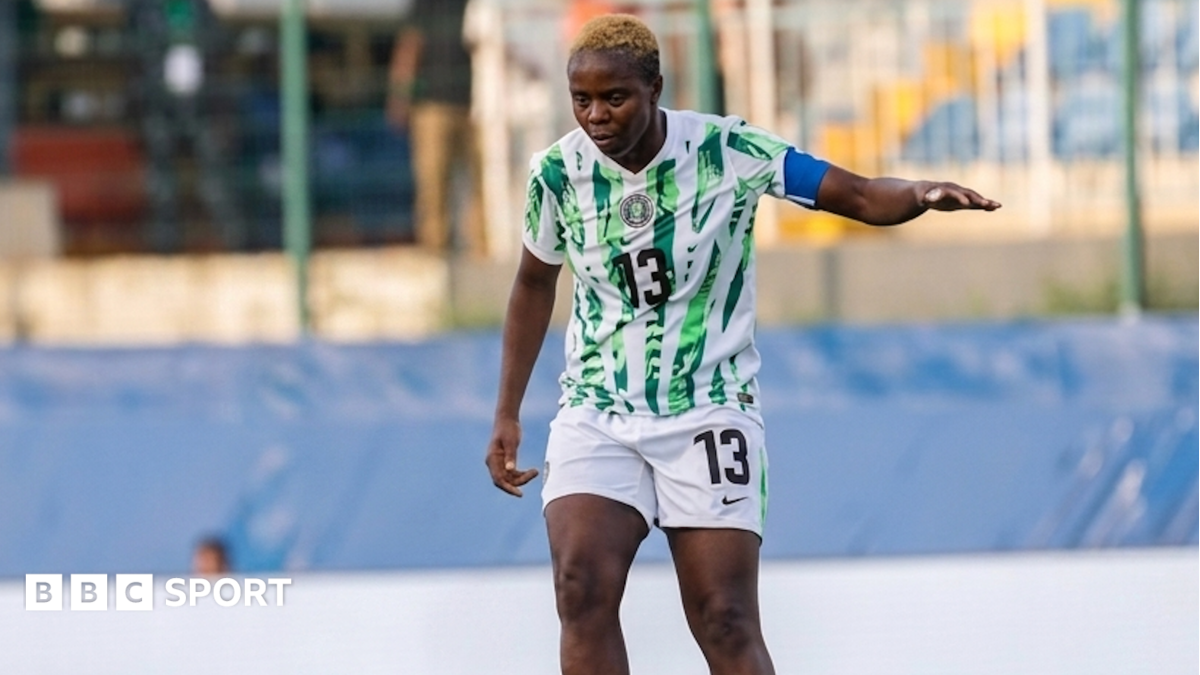
Ahead of the 2026 Women’s Africa Cup of Nations (Wafcon) kicking off in Morocco, one of Nigeria’s most decorated female footballers has broken her silence to challenge pervasive harmful cultural attitudes that sideline athletes who choose to start families.
Ngozi Okobi-Okeoghene, a 32-year-old four-time Wafcon winner with 75 caps for Nigeria’s Super Falcons, returned to the national team setup earlier this year after a four-year absence that followed the birth of her first son in 2024. Though her recall marked a triumphant comeback for the veteran midfielder, her presence in the pre-tournament training squad drew widespread criticism from segments of the Nigerian football public.
In an interview with BBC Sport Africa in Lagos, Okobi-Okeoghene laid bare the harmful narrative that plagues female athletes across the country: “Nigerians, most of the fans out there, feel when a woman is married, she’s old. When a woman gives birth, she’s old, she doesn’t have the strength to do whatever she’s doing.”
This pervasive stigma, she warns, is already distorting the life choices of her young teammates. “They keep making us feel bad about ourselves. Most of the girls are so scared to get married. They feel by the time they get married, they won’t be called to the national team anymore,” she explained. “Being a soccer player doesn’t stop me from being a wife. It doesn’t stop me from being a career woman, an athlete. Motherhood should not be the end of anyone’s story.”
Okobi-Okeoghene, who represented Nigeria at both the 2015 and 2019 FIFA Women’s World Cups, said her own post-birth experience pushed her to speak out publicly. She returned to structured training just five months after welcoming her son, a process she describes as physically and emotionally grueling. “It was tough and a struggle to get myself back, that actually took a long while,” she recalled. “It didn’t take out the ability in me, it only took out my fitness.”
To her surprise and delight, new Super Falcons coach Justin Madugu recalled her to the national side for international friendlies against Cameroon and Senegal earlier this year. Though she did not make the final 2026 Wafcon squad ahead of Nigeria’s bid to secure a record-extending 11th continental title, Okobi-Okeoghene described her return to the setup as an unrivaled privilege. “I always love representing my country any day, any time. Come rain, come sun, I’ll keep supporting the team because it’s my team. I am not an outsider,” she said.
Her experience echoes a broader challenge facing women’s football across much of Africa. While global governing body FIFA has introduced landmark regulations in recent years mandating paid maternity leave and anti-discrimination protections for female players and coaches, and professional leagues in Europe, North America and Australia have expanded support with extended leave and childcare access, implementation of these protections remains deeply uneven across the continent. Women’s football in most African nations still lacks the formal professional structures needed to enforce these safeguards, leaving athletes to navigate bias alone.
Drawing a comparison to her time playing in Sweden, Okobi-Okeoghene noted the stark difference in cultural and institutional support: she witnessed a teammate continue training through pregnancy, a choice that allowed her to return to full competitive strength seamlessly after giving birth. The core barrier, she argues, is rooted in cultural norms that frame motherhood as a career end for female athletes, adding that many Nigerian players even fear that having a child will ruin their chances of securing contracts with professional overseas clubs.
For Okobi-Okeoghene, her own successful comeback would not have been possible without unwavering family support. “One thing I’m so grateful for is that I have a husband and a family who support me,” she said. “There are times I get so tired. After training he is there for me. He wants me to do what I love. He didn’t want me to stop my career because I gave birth.” Her young son has also become a core source of motivation: “Every day I wake up and I see my son, it motivates me to do more. It makes me want to go to the field and work hard, because I need him to see me play football.”
Ann Chiejine, Nigeria’s assistant coach and a former international goalkeeper who balanced motherhood with her own playing career, echoed Okobi-Okeoghene’s message, stressing that players should never be forced to choose between starting a family and pursuing their athletic dreams. With the 2026 Wafcon set to run from July 26 to August 16, and the four semi-finalists set to qualify for the 2027 Women’s World Cup in Brazil, Okobi-Okeoghene has a clear message for Nigerian men: “You have to support your wife. No matter how much she needs, please give to them. Because you’re the only ones that could actually make us do what we love and also make us satisfied from what we wanted in life.”
Nigeria will kick off their title defense against Zambia, Egypt and tournament debutants Malawi in Group C, as the team chases another historic continental crown.