分类: sports

  • Amputee football players in Rwanda find healing and a sense of community

    Amputee football players in Rwanda find healing and a sense of community

    Against the backdrop of Kigali, Rwanda’s rolling hills, a revolutionary form of athletic competition is transforming lives and stitching together the fabric of a nation still healing from deep historical trauma. On grassy community pitches, athletes balance on crutches, striking them against one another in playful competition as they chase a football — and a shared, ambitious dream of competing on the world’s biggest stage for their sport. In the stands, young children scream with delight as a one-armed goalkeeper dives full-stretch to block a shot with her only functional hand, a moment that captures both the grit and joy that define this growing movement.

    Amputee football, a modified seven-a-side variant where outfield players maneuver across the pitch on crutches and goalkeepers are restricted to one functional arm, has expanded steadily across Rwanda over the past 10 years. For athletes who once assumed competitive sport was forever out of reach after limb loss, the pitch has become more than a place to play: it is a community, a path to physical rehabilitation, and a space to reclaim a sense of belonging after life-altering injury or trauma.

    Much of the sport’s growth in Rwanda is rooted in the country’s long road to recovery from its darkest chapter: the 1994 genocide, where an estimated 800,000 Tutsis and moderate Hutus were killed in a 100-day campaign of violence, leaving thousands of survivors living with amputations and other permanent disabilities. Today, amputee football brings together people from all backgrounds — genocide survivors, accident survivors, and people who have lost limbs to illness — to build connection across divides.

    For Nyiraneza Solange, the sport has been life-changing. Born two years after the genocide, Solange lost her leg at age 5 following a fall that developed into a severe infection. She was drawn to the sport after witnessing the extraordinary resilience of genocide survivors who had limb loss, and was encouraged by the coach of Rwanda’s first-ever amputee football team, who told her she could adapt her crutches to compete. She quickly cast aside her fears, and now says she rarely thinks about her amputation while playing. “I don’t even think about I don’t have a leg,” she explained. On the pitch, she feels completely free, and has overcome the deep social stigma that once surrounded her status as an amputee.

    Official estimates place the number of lower-limb amputees in Rwanda at more than 3,000, a population encompassing genocide survivors, road accident victims, and people affected by chronic illness. Louise Kwizera, vice president of the Rwanda Amputee Football Federation, says the sport does more than build physical fitness: it helps people learn to trust one another again, rebuilding unity in a society that was once torn apart by division. “In communities affected by conflict or trauma, the playing field becomes a place of peace,” Kwizera told the Associated Press. “People who may have different pasts come together as teammates.”

    Today, that growing community has its sights set on a major global milestone: Rwanda is preparing to field a full national women’s team for the second women’s amputee football World Cup, scheduled to take place in 2025 in either Poland or Brazil. The 2024 inaugural edition of the tournament only included one Rwandan competitor, making next year’s event a historic step forward for the country’s program. Amputee football, overseen globally by the World Amputee Football Federation, is now played in more than 50 countries, and Rwanda has built a robust domestic structure: five professional women’s teams and 10 men’s teams across the country.

    Fred Sorrels, manager of the Haitian women’s amputee football team, recently traveled to Rwanda to support the development of the local program, and has thrown his support behind a potential future Rwandan bid to host the World Cup. While Rwandan sports authorities have not yet submitted a formal bid, Sorrels says he has seen firsthand the life-changing impact the sport has on participants. “It’s a win psychologically and mentally for these ladies to have an opportunity to experience wholeness and wellness again,” he said.

    Gilbert Muvunyi Manier, director general of sports development at Rwanda’s Ministry of Sports, echoed that sentiment, describing amputee football as a “powerful tool” for national healing, intergroup reconciliation, and building social cohesion across the country.

    Athletes acknowledge that the sport comes with unique challenges. Goalkeeper Nikuze Angelique, for example, notes that defending shots that bounce toward the side of her missing arm presents a constant technical hurdle. But like Solange, she emphasizes that the community she has found on the pitch far outweighs any challenges. As players posed for selfies after a recent training match, Angelique shared her hope that the team will qualify for next year’s World Cup — a milestone that would mark the fulfillment of a decades-long dream for Rwandan amputee athletes. “It will be a dream come true,” she said.

  • Where do Bayern’s prolific trio rank in greatest front threes ever?

    Where do Bayern’s prolific trio rank in greatest front threes ever?

    When Harry Kane, Michael Olise and Luis Diaz surge toward the opponent’s goal, opposition defenses rarely come away unscathed. From top-flight German sides to Champions League giants like Real Madrid and Atalanta, every team that has faced this Bayern Munich trio has seen firsthand just how lethal this attacking unit can be.

    Since the three forwards first linked up at the Allianz Arena in August 2024, they have racked up more than 100 goals across all club competitions this season, making them only the fifth European front three to hit the century mark since the turn of the 21st century. This historic milestone is one of the core reasons the Bavarian giants are on the cusp of a historic treble, having already secured the Bundesliga title last month and now competing for the DFB Pokal and Champions League trophies. With the second leg of their Champions League semi-final against Paris Saint-Germain kicking off Wednesday — after a chaotic nine-goal first leg left Bayern trailing 5-4 — BBC Sport journalists Keifer MacDonald and Charlotte Coates break down how this dynamic trio stacks up against the greatest forward threes in modern football.

    Three-man forward lines have been a foundational tactical setup across football history, but the system has seen a major mainstream resurgence over the past 15 years. This revival can be traced directly to Pep Guardiola’s dominant Barcelona side between 2008 and 2012, where Guardiola built a trophy-winning dynasty around a fluid possession-based system centered on a mobile front three. Though Lionel Messi, a nine-time Ballon d’Or winner, was typically positioned as the nominal central attacker, he frequently dropped deep to pull opposing defenders out of shape, create gaps for his attacking teammates, or add a numerical advantage in midfield. This flexible, unstoppable style delivered 14 major trophies for Barcelona during Guardiola’s first tenure, cementing the three-front system as a go-to for elite clubs across the continent.

    In the years following Barcelona’s breakthrough, teams from Real Madrid to PSG began adopting similar tactical setups. In the Premier League, the closest parallel to Guardiola’s legendary front three came from Jurgen Klopp’s Liverpool, where Sadio Mane, Roberto Firmino and Mohamed Salah fired the club to both a Premier League title and a Champions League crown across five seasons together. Mirroring Messi’s role at Barcelona, Firmino served as the central forward, dropping between opposition lines to link play with midfield and open up attacking channels for Mane and Salah to exploit. The trio is widely considered one of the greatest attacking units in English football history, having claimed a full haul of major domestic and European honors.

    Today, that mantle has passed to Bayern Munich, who have carefully constructed this dominant attacking unit through three consecutive summer transfer windows starting in 2023. After all three forwards got on the scoresheet in last week’s thriller against PSG, the club made German football history: no Bayern front three had ever hit the 100-goal mark in a single season before, with the previous high of 99 goals set by Gerd Muller, Uli Hoeness and Willi Hoffman back in 1972-73.

    Century-goal front threes remain an extraordinary rarity in modern European football. Since the 2013-14 season, only five different attacking trios have broken the 100-goal barrier, and three of those came from the same legendary Barcelona unit: Messi, Luis Suarez and Neymar. Across three consecutive seasons from 2014-15 to 2016-17, the iconic Barcelona trio hit 122, 131 and 111 goals respectively, setting a benchmark that has yet to be matched. Real Madrid’s iconic trio of Gareth Bale, Cristiano Ronaldo and Karim Benzema also hit the 100-goal mark in the 2014-15 season, while Liverpool’s Salah-Firmino-Mane unit came close in 2017-18, finishing with a total of 91 strikes.

    Now, Bayern’s Kane-Olise-Diaz trio has joined that exclusive 100-goal club, leading to inevitable comparisons with the treble-chasing PSG side they face in this year’s Champions League semi-finals. PSG itself once boasted a star-studded front three of Messi, Neymar and Kylian Mbappe, and currently fields a dynamic attacking unit led by Ousmane Dembele, Desire Doue and Khvicha Kvaratskhelia. While Luis Enrique’s current PSG trio is not as prolific as Bayern’s century-mark unit, they overwhelm defenses with constant positional rotation and creative flair. Even so, the numbers don’t lie: this season, Dembele, Doue and Kvaratskhelia have combined for 48 goals, less than half of Bayern’s 101. Last campaign, PSG’s highest-scoring attacking trio (Dembele, Goncalo Ramos and Bradley Barcola) managed 72 goals in total, still far behind Bayern’s historic mark.

    Beyond the raw goal count, the two sides’ front threes differ sharply in tactical approach. Bayern operates with a fixed, predictable structure that delivers consistent output week in and week out: Diaz lines up on the left flank, Olise on the right, and Kane leads the line as the out-and-out central striker. PSG, by contrast, leans fully into the fluid approach that popularized the modern three-front system, with forwards constantly swapping positions and stepping up to deliver in high-stakes matches. As the two sides prepare for a decisive second leg to decide who advances to the 2025 Champions League final, football fans will get to see whether Bayern’s historic, record-breaking attacking unit can overturn PSG’s first-leg lead and secure their place in the final — and cement their spot among the all-time great front threes.

  • AFL 2026: Coaches hopeful for clarity and funding for full-time psychs

    AFL 2026: Coaches hopeful for clarity and funding for full-time psychs

    The Australian Football League’s recent mandate requiring all AFL and AFLW clubs to employ full-time in-house psychologists has sparked mixed reaction from two veteran senior coaches, who have raised practical and financial concerns over the new rule.

    The regulation was introduced as a key disciplinary sanction against Carlton Football Club, stemming from the controversial Elijah Hollands incident that brought club mental health support protocols under intense scrutiny. AFL chief executive Andrew Dillon and executive Laura Kane formally announced the policy change earlier this week, with additional implementation details promised for release in the coming weeks.

    Western Bulldogs head coach Luke Beveridge has publicly questioned the logic behind the strict full-time requirement, noting that his club’s existing psychologist already works a near-full-time schedule dedicated to player welfare. In comments to reporters, Beveridge said he remains confused by the wording of the new mandate, pointing to the disjointed, travel-heavy nature of the AFL competition that makes a rigid full-time role structure difficult to implement. “What happens in an AFL environment is we all take care of the players’ welfare,” Beveridge explained. “I think the empowerment of staff and the playing group to support each other is absolutely critical, and a skilled practitioner like our club psychologist Andrew Waterson is absolutely critical to any organisation. But it’s also your senior high performance management that needs to continue to oversee that and make sure everyone’s empowered to look after each other.”
    Beyond the full-time psychologist rule, Beveridge also hit out at the AFL’s updated illicit drug policy, which bars club coaching staff from being informed when a player returns a positive drug test. He argued that this restriction directly undermines the quality of care clubs can provide to at-risk athletes, as coaches are left unable to address underlying mental health struggles that may be tied to substance use.

    For his part, Essendon senior coach Brad Scott centered his criticism on the financial burden the new mandate places on already cash-strapped clubs. Scott called on the AFL to either fully fund the new full-time psychology positions or exempt their salaries from the existing club soft salary cap, arguing the league’s inconsistent financial rules create unnecessary strain for club management.
    “There’s this complex formula of exemptions that the AFL deem are more important than others. Whether that be setting a minimum spend for medical, setting a minimum spend for mental health and wellbeing,” Scott said. “Personally, it gets very frustrating when the AFL are reactive to something and decide you must spend on this after cutting the soft cap and dictating what we can and can’t do with our money. Clubs get held responsible, as Carlton have been in this case, and then the AFL come over the top and mandate things. It’s been a constant challenge that soft caps have been cut and clubs are forced to decide where to allocate money, then the AFL have an incident and respond like this.”

    The new mandate marks the AFL’s latest attempt to strengthen player mental health support across both the men’s and women’s competitions, but the pushback from two high-profile senior coaches signals ongoing debate over how best to structure welfare resources while balancing the operational constraints of individual clubs.

  • Strasbourg on verge of European final amid fan displeasure at owners BlueCo

    Strasbourg on verge of European final amid fan displeasure at owners BlueCo

    As RC Strasbourg Alsace prepares to write what could be the most iconic chapter in its 118-year history this Thursday, the historic French club finds itself caught between the thrill of a once-in-a-generation European achievement and simmering discontent over the ownership structure that got it here.

    Strasbourg, which shares its BlueCo consortium ownership with English Premier League giant Chelsea, hosts La Liga side Rayo Vallecano at its recently upgraded Stade de la Meinau for the second leg of the UEFA Conference League semi-finals. Needing to overturn a narrow 1-0 deficit from the opening fixture in Madrid, Patrick Vieira’s side? No, Gary O’Neil, the English manager appointed earlier this year, will lead the squad out for the biggest match the club has ever contested on the continental stage. The winner of the tie will advance to the May 27 final in Leipzig, where they will face either England’s Crystal Palace or Ukraine’s Shakhtar Donetsk — neither of which have secured a European final spot before this tournament either.

    For long-time supporters of the Strasbourg-based club, located on France’s eastern border with Germany and home to the European Parliament, even the prospect of reaching a continental final would have been unthinkable not long ago. The club has only ever claimed one Ligue 1 title, back in 1979, and its prior best European run came a year later, when it bowed out to Ajax in the European Cup quarter-finals. A memorable 1997 upset over Liverpool in the UEFA Cup remains the only other high-profile continental win in the club’s history, putting Thursday’s opportunity in stark context.

    The road to this semi-final has not been an easy one. Just 15 years ago, Strasbourg was on the brink of extinction, forced into liquidation after catastrophic financial mismanagement that sent it tumbling down to the amateur regional fourth and fifth tiers of French football. After a painstaking rebuild led by club president and former Strasbourg player Marc Keller, the club fought its way back to Ligue 1 in 2017, nearly a decade after its relegation, and cemented its place as a steady top-flight outfit. But competing at a continental semi-final level remained out of reach with the club’s small, fan-aligned operating model — which is what led Keller’s board to approve BlueCo’s takeover in June 2023, one year after the American consortium purchased Chelsea.

    “We were conscious that we had gone as far as we could with our existing model,” Keller explained to French broadcaster RMC after Strasbourg knocked out German side Mainz 05 in the quarter-finals. Since the takeover, significant investment has poured into the first team, allowing the club to bring in talented young players, many loaned in from Chelsea, and qualify for the Conference League on the back of a strong 2023-24 league campaign under former manager Liam Rosenior.

    But that investment has come with a steep cost that has alienated the club’s core supporter base. Fans have grown increasingly frustrated by a clear pattern emerging under BlueCo: any player or coach that posts strong results at Strasbourg is quickly poached by the consortium’s flagship club, Chelsea, turning the French side into little more than a development feeder team. The anger boiled over in September 2024, when starting striker and fan favorite Emmanuel Emegha confirmed he would move to Stamford Bridge at the end of the season. Then, in January 2025, Chelsea poached Rosenior himself to take over as their first-team manager, a move that left supporters furious. Rosenior did little to defuse tensions, telling reporters he hoped Strasbourg fans would be proud that his work at the club earned him a job at a Champions League-winning side.

    Rosenior was replaced by O’Neil, who has already guided Strasbourg to a French Cup semi-final defeat this season. Ahead of Thursday’s make-or-break tie, O’Neil has called for the full-throated support of the home crowd, saying: “Thursday’s game is the biggest in the club’s history. We will need the same support and energy that we got against Mainz.”

    Yet the club’s most passionate and vocal supporters have no plans to set aside their grievances, even for a historic European night. Since the start of last season, leading supporters group Ultra Boys 90 has organized a silent protest for the first 15 minutes of every home match, holding their cheers to demonstrate their opposition to BlueCo’s ownership model. In an open letter published earlier this year, the group warned that Strasbourg’s current situation is a warning sign for football globally: “What is happening at Strasbourg is what the future could look like for the vast majority of clubs. They will be relegated to the role of feeder teams, without their own resources, with no soul and no link to where they come from.”

    While the group is urging fans to gather outside the stadium ahead of kick-off to welcome the team bus, the 15-minute silent protest will go ahead as planned on Thursday. Despite the discontent, the recently renovated Stade de la Meinau — which expanded its capacity to 32,000 after the construction of a new main stand — is sold out once again for the semi-final. For many fans in the stands, the day will bring a complicated mix of emotion: the chance to cheer their club to a historic first European final, but a growing unease about whether the club they have supported for generations will retain its identity under its new American owners, even if it lifts a trophy that was won by BlueCo’s Chelsea just 12 months ago.

  • Infantino defends World Cup ticket prices

    Infantino defends World Cup ticket prices

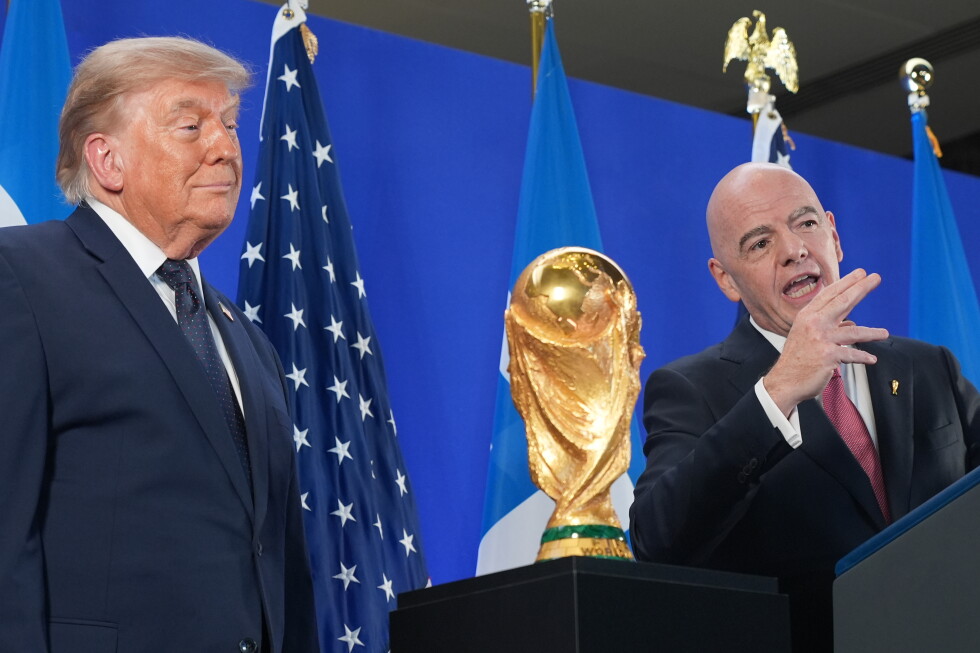
    As criticism from global football fan groups continues to mount over the exorbitant pricing of 2026 FIFA World Cup tickets, FIFA President Gianni Infantino has stepped forward to defend the governing body’s policies, pushing back against accusations of exploitative pricing during his appearance at the Milken Institute Global Conference in Beverly Hills this Tuesday.

    The controversy surrounding World Cup ticketing erupted into a formal dispute earlier this year, when European fan advocacy group Football Supporters Europe (FSE) filed an official lawsuit with the European Commission, calling out FIFA for what it labels “excessive ticket prices” for the upcoming tournament. FSE has gone as far as branding the 2026 pricing structure “extortionate” and a “monetary betrayal” of the global football community.

    Public anger reached a new peak last week, when four tickets for the 2026 World Cup final, scheduled to take place in New Jersey on July 19, were listed for more than $2 million apiece on FIFA’s official resale platform, FIFA Marketplace. The sky-high listing prices drew widespread condemnation from fans and sports commentators alike, who pointed to the stark contrast between 2026 pricing and the 2022 Qatar World Cup, where the most expensive face-value final ticket cost just around $1,600 — compared to the 2026 final’s $11,000 original price tag.

    Addressing the backlash directly, Infantino pushed back against claims that FIFA is responsible for the exorbitant resale prices. He argued that the multi-million dollar listings do not reflect actual baseline ticket costs, and there is no guarantee any buyer will actually pay those extreme sums. In a characteristically blunt remark, Infantino joked that if any fan does actually purchase a $2 million final ticket, he will personally deliver a hot dog and a Coke to their seat to ensure they have an enjoyable experience.

    Infantino defended the sharp rise in face-value ticket prices, framing the increase as a reasonable adjustment to market conditions. He noted that the 2026 World Cup is being hosted in the United States, the world’s most commercially developed entertainment market, where market-rate pricing is unavoidable. He added that U.S. regulations permit legal ticket resale, meaning if FIFA set lower original prices, scalpers would simply buy up large blocks of tickets and resell them for far higher margins, leaving FIFA with no revenue from the markup.

    “Even though some people say our prices are high, the resale market still marks them up to more than double our original prices,” Infantino explained. He also pushed back on claims that all tickets are out of reach for casual fans, pointing out that 25 percent of group stage tickets are priced below $300, a rate that he argues is competitive for major live events in the U.S. “You cannot go to a U.S. college sports game for less than $300 these days, let alone a top-tier professional event, and this is the World Cup,” he said.

    Infantino also highlighted unprecedented demand for the 2026 tournament as justification for the pricing model. He told the conference that FIFA has already received more than 500 million ticket requests for the 2026 World Cup, a figure that dwarfs the combined total of fewer than 50 million requests for both the 2018 Russia World Cup and 2022 Qatar World Cup.

  • Arsenal on cusp of history after reaching Champions League final

    Arsenal on cusp of history after reaching Champions League final

    For 20 long years, Arsenal football club has dreamed of a return to the biggest stage in European club football. On Tuesday night, that dream became reality, as a 1-0 second-leg semi-final victory over Atletico Madrid at the Emirates Stadium sealed the Gunners’ spot in the 2025 Champions League final — their first appearance in the showpiece match since a heartbreaking defeat to Barcelona back in 2006.

    The decisive moment came in the first half, when winger Bukayo Saka tucked home a close-range finish to secure a 2-1 win on aggregate for Mikel Arteta’s side. The full-time whistle triggered wild celebrations: 60,000 cheering fans packed into the north London stadium, while a frenzied Arteta joined his players for an emotional lap of honour, his high-energy celebration matching the momentous occasion.

    The win leaves Arsenal on the cusp of something no side in the club’s 140-year history has ever achieved: a domestic and European double. With three remaining Premier League fixtures against West Ham United, Burnley and Crystal Palace, three wins will hand the Gunners their first English top-flight title since Arsène Wenger’s iconic Invincibles side went unbeaten to claim the crown in 2004.

    Once the Premier League title race with closest contender Manchester City concludes, Arteta’s squad will travel to Budapest on May 30 to compete for their first ever Champions League trophy. Their opponent will be either defending champions Paris Saint-Germain or Bayern Munich, with PSG holding a 5-4 aggregate lead heading into Wednesday’s second leg in Munich. Ironically, it was PSG who knocked Arsenal out of the Champions League at the semi-final stage last season.

    The electric atmosphere began hours before kickoff, when thousands of Arsenal supporters gathered outside the Emirates to greet the team bus, waving red flares, unfurling club flags and roaring defiant words of encouragement for the side. In the aftermath of the win, Arteta said that energy had shifted the entire mood around the club, and he urged his players to channel that momentum across their final four matches of the season.

    “Everybody can feel a shift in energy, in belief, in everything,” Arteta told reporters post-match. “Let’s use it in the right way and understand that the margins and the difficulty of what we are trying to achieve are huge, but that we have the ability and the conviction to do it. I’m really going to enjoy it tonight, everybody is enjoying this moment now. But the high is not too high and the low is not too low. My job is to be quite stable. We have an incredible game against West Ham, a really tough one, and we’re going to have four days to do that.”

    It has been more than two decades since Wenger’s Invincibles cemented their place in English football history, and in the years following the 2006 Champions League final defeat to Barcelona, the club drifted away from the pinnacle of the sport. But Arteta, who took over as the club’s first team manager in 2019 for his first senior managerial role, has spent six years rebuilding the bond between players, fans and the club’s historic identity — a project that looked uncertain during a four-year trophy drought that followed Arsenal’s 2020 FA Cup win.

    This season, the rebuilding work has come to fruition, putting Arsenal on the brink of erasing the pain of three consecutive second-place finishes in the Premier League. Arteta hailed the contribution of the club’s supporters, who he said created an unmatched atmosphere that pushed the team over the line against Atletico.

    “It was an incredible night. We made history again together and I cannot be happier and prouder for everybody that’s involved in this football club,” he said. “The supporters were with us for every ball. They made it special and unique, and I have never felt it like that in this stadium. We knew how much it meant to everybody, we put everything on the line, the boys did an incredible job.”

    Looking back at his tenure at the club, Arteta admitted he never could have imagined getting this close to such historic glory when he first took the job. The side didn’t even qualify for European competition when he first arrived, making their run to the Champions League final even more remarkable.

    “They are the ones that have to make these kind of performances. I didn’t really imagine it because we weren’t in Europe at the beginning. This is a big achievement,” he said. “We have been building little by little. We believed in what we wanted to do. Now we have to maintain it.”

  • LIV Golf boss sees hope for new sponsors beyond 2026

    LIV Golf boss sees hope for new sponsors beyond 2026

    Just months after Saudi Arabia’s Public Investment Fund (PIF) confirmed it would end its massive financial backing of LIV Golf at the close of the 2026 season, the breakaway tour’s chief executive Scott O’Neil says he is optimistic about the circuit’s long-term future, pointing to growing early interest from a wide range of potential new investors.

    Speaking to reporters Tuesday ahead of this week’s LIV Golf tournament hosted at Trump National Washington in Virginia, O’Neil revealed he has already held preliminary discussions with prospective financial backers as he drafts a sustainable long-term business plan to present to both tour players and potential sponsors. While he declined to share specific details of the upcoming strategy, O’Neil confirmed the 2027 season will bring substantial, meaningful changes to the tour’s operating model.

    Most notably, the era of LIV Golf players earning inflated salaries for competing in fewer events than their counterparts on the PGA Tour is set to end once PIF pulls its support in August 2026. Despite that shift, O’Neil said he remains confident that the tour’s top athletes will choose to remain with LIV once the new business model is finalized.

    “Do I believe that when we have a business plan and we raise money, that this is the place the players will choose? I do,” O’Neil told reporters. “I have a lot of confidence this is a place players want to be.”

    That confidence stems from early outreach from potential backers: O’Neil says he received roughly a dozen unsolicited inquiries from interested parties over the previous weekend alone, split evenly between private equity firms, private family investment offices, and high-net-worth individuals with a history of investing in professional sports and sports franchises. O’Neil added that he has also held productive conversations with existing broadcast and marketing partners about continuing their partnerships with the tour under new ownership, leaving the leadership team with a clear sense of the circuit’s future direction.

    Under O’Neil’s proposed framework, LIV Golf would retain its current 14-event annual schedule, while pushing for reciprocal agreements with other major global golf tours that would allow LIV athletes to compete in outside events. The goal, O’Neil explained, is to create more opportunities for the world’s top golfers from across different circuits to face off against one another in head-to-head matchups throughout the year. Currently, the PGA Tour bans LIV Golf players from its events, only offering a limited reinstatement path that has allowed just a small number of athletes, including major champion Brooks Koepka, to return in 2026.

    While O’Neil would not share a firm timeline for rolling out the finalized business plan to players and investors, he emphasized that the LIV leadership team is working with urgency to lock in new funding ahead of the 2027 season. When discussing long-term value for potential investors, O’Neil highlighted the tour’s team-based format, which has been adjusted in recent months to feature more nationality-aligned rosters. O’Neil argued that once the tour establishes a stable revenue and cost structure, individual LIV teams will hold significant long-term value for owners.

    Notably, O’Neil said current LIV players have already volunteered to help court private equity investors, joining meetings to make the case for the tour’s sustainability. The circuit has already proven its ability to draw massive live crowds in key international markets, he noted, pointing to 115,000 attendees at its 2025 event in Adelaide, Australia, 100,000 attendees in South Africa, and 60,000 attendees at its 2024 UK event. Those turnouts, O’Neil argued, demonstrate that the LIV brand and its team model are gaining traction with fans globally.

    “I’m feeling good. I’m feeling an appropriate amount of pressure. I’m feeling inspired and I feel like we have a clear path to a win,” O’Neil said.

  • AFL 2026: Essendon coach Brad Scott says he ‘loved’ Nate Caddy’s post-game frustration

    AFL 2026: Essendon coach Brad Scott says he ‘loved’ Nate Caddy’s post-game frustration

    Ahead of Essendon’s upcoming clash with GWS at Engie Stadium this Saturday, two off-field controversies have dominated headlines surrounding the AFL club, but head coach Brad Scott is framing both as opportunities for growth rather than causes for division. At the center of the first talking point is star third-year forward Nate Caddy, who sparked widespread fan and media speculation last weekend after opening up about his frustration with the Bombers’ recent on-field performance. Following a lopsided loss to reigning premiers Brisbane Lions, Caddy told 3AW in a post-game interview that he refused to accept what he called Essendon’s ongoing “mediocrity”, a blunt assessment that quickly ignited debate over whether the young forward would seek a trade to another club in pursuit of premiership success. Across 34 career matches, Caddy has been on the winning side in less than a third of his outings, a stat that adds context to his public call for improvement.

    Far from criticizing Caddy for his candid comments, Scott has welcomed the young star’s hunger for victory, describing the forward’s “explicit desire” to lead the club to success as exactly the kind of attitude the developing Bombers need. In a recent media briefing, Scott spoke enthusiastically about the growth Caddy has shown throughout the 2024 season, noting that the forward has shifted his focus from simply establishing his place in the AFL lineup to taking responsibility for driving the entire club forward. “I loved what he said,” Scott explained, wearing a visible smile during the briefing. “I talk to Nate constantly about his competitiveness, and how he’s stepped up as a third-year player to lead our forward line. He’s clear about his goal to get this club into a sustained period of success, he’s hungry for it, and he’s impatient – that’s exactly what excites me. He’s the ultimate competitor, he loves this club and the environment we’re building here. I’ve watched that growth in him week by week this year, it’s been remarkable.”

    Scott also pushed back firmly against speculation that Caddy or any of Essendon’s young core are considering leaving the club to pursue success elsewhere. Throughout more than a decade of leading young developing teams as a head coach, Scott says he has seen no indication that Caddy or any of his recruited teammates are looking to exit. Instead, he argues that Caddy’s comments are proof that the club’s young leaders are taking ownership of Essendon’s future, rather than shying away from responsibility for poor results.

    The second controversy to hit the club this week has been dubbed “whiteboard gate”, after Brisbane Lions’ internal player-by-player scouting analysis of the entire Essendon squad was leaked to the public. Scott acknowledged that the leak has been an unexpected talking point for his squad, but he is choosing to frame the incident as a valuable learning opportunity rather than a distraction. Scott noted that the Lions conduct this kind of detailed opposition analysis for every club they face, and Essendon was just unlucky to have the internal document made public – a problem that ultimately rests with Brisbane, not his side. For the Bombers, however, the leak gives Scott a chance to reinforce the club’s internal evaluations of players, and to confront any gaps between how the club sees its players and how opponents perceive them. “You can either choose to ignore external opinions and pretend they don’t exist, or you can sit down, analyse them, and if that’s the perception people have, you go out and change it,” Scott said. “Our own view of our players is what matters most, but that doesn’t mean we should just dismiss what an opposition who studies us closely has to say.”

    All off-field discussion will be put aside this weekend when Essendon takes on GWS at Engie Stadium, in a match that will test whether the club can turn its growing hunger for improvement into a much-needed win.

  • AFL 2026: Melbourne coach Steven King says Paul Guerra sacking hasn’t distracted Demons

    AFL 2026: Melbourne coach Steven King says Paul Guerra sacking hasn’t distracted Demons

    In the high-stakes world of Australian Football League (AFL) competition, off-field drama rarely stays out of the headlines, but Melbourne Demons interim head coach Steven King is pushing back against any narrative that recent front-office upheaval has thrown his playing group off course.

    The club sent shockwaves through the local footy community last week when it terminated chief executive Paul Guerra just seven months after he stepped into the top administrative role. Sources close to Guerra indicate he is currently reviewing potential legal action following his unexpected dismissal. In a swift move to steady the off-field ship, Melbourne’s board moved quickly to name former Stan chief executive Dan Taylor as Guerra’s permanent replacement.

    Despite the swirling public speculation and front-office turnover that followed the sacking, King maintains the separation between the club’s football operations and administrative division has kept the disruption from touching the playing group. “To be honest, not really,” King told reporters when asked if the off-field chaos had pulled focus from the team’s on-field preparations. “Obviously there is noise around it externally, but the football department operates entirely on its own track. What we do as coaches, and what our players need to do to prepare for game day, that doesn’t change. It hasn’t taken too much focus off what we’re here to do. Externally there might be a lot of chatter, but for us day-to-day and week-to-week, the goal of winning matches stays exactly the same. Our job doesn’t shift – it’s still to build an environment where our players can improve every day, and walk onto the field confident they can get the win. The great thing, and the great challenge, of this game is you just focus on the next week and move on from everything else.”

    The off-field shakeup came just days before Melbourne’s clash with ladder leaders Sydney Swans at the Sydney Cricket Ground, where the Demons turned in a gritty performance but fell short of an upset victory. The result broke Melbourne’s recent momentum, which had seen the side secure four wins from their previous five outings. King, who is in his first season leading the Demons and has already overseen a clear on-field rejuvenation, praised his side’s fight against one of the competition’s top sides but refused to celebrate a narrow, brave defeat.

    “At the end of the day, it was a bad loss because we lost,” King said. “We went up there to win, so of course it’s disappointing. I was really proud of the way the boys fought it out for four quarters, but you don’t get any bonus points for just competing hard – you walk away with nothing. Looking back on it, we played three really solid quarters where we stuck to our game plan and played with courage, but the second quarter got away from us. To give credit where it’s due, Sydney is a fantastic side that capitalized on that lapse. It was a good chance for us to look back at that quarter and identify clear areas where we can improve moving forward.”

  • Saka ends Arsenal’s 20-year wait to reach Champions League final

    Saka ends Arsenal’s 20-year wait to reach Champions League final

    After two decades of near misses, unfulfilled potential and long-suffering fan expectation, Arsenal Football Club has finally punched its ticket to the UEFA Champions League final, with homegrown star Bukayo Saka delivering the decisive goal in a tense 1-0 semi-final second leg victory over Atletico Madrid at a sold-out, electric Emirates Stadium on Tuesday.

    The result sees Mikel Arteta’s side advance 2-1 on aggregate, after the two sides played out a 1-1 draw in the first leg in Madrid last week. Saka’s clinical finish in the 44th minute of the first half proved enough to hold off a late Atletico push, ending the north London club’s 20-year drought since their only previous Champions League final appearance in 2005-06.

    Arsenal now set their sights on the May 30 final in Budapest, where they will face either defending champions Paris Saint-Germain or German powerhouse Bayern Munich. PSG carry a narrow 5-4 aggregate lead into their second leg tie in Munich on Wednesday, and have already knocked Arsenal out of the Champions League at the semi-final stage last season.

    For a club that has not lifted European football’s most prestigious prize in its history, the milestone marks a cathartic turning point. Arsenal’s only previous major European honours date back to the 1970 Inter-Cities Fairs Cup and the 1994 Cup Winners’ Cup, and their most recent continental final appearance ended in a 4-1 defeat to Chelsea in the 2019 Europa League. This run to the final is already the highlight of decades of European effort for the Gunners.

    What makes this achievement even more remarkable is that the club is on the cusp of an unprecedented domestic and European double, sitting atop the Premier League table with just three matches remaining in the title race. Just 24 hours before Saka’s match-winning strike, second-placed Manchester City dropped points in a draw at Everton, handing the Gunners a critical advantage in the title chase. If Arteta’s side can close out wins against West Ham United, Burnley and Crystal Palace, they will claim their first English top-flight title since the iconic 2003-04 ‘Invincibles’ season – and could cement this as the greatest season in the club’s entire history if they go on to win the Champions League.

    It is fitting that it was Saka, the face of Arsenal’s youth-driven rebuild under Arteta, who delivered the decisive moment. The academy graduate, who has been a consistent standout for the Gunners throughout this historic campaign, reacted fastest to a parried shot to slot home from four yards out. The sequence started with a clever run from Viktor Gyokeres that stretched Atletico’s defense, pulling defenders out of position and creating space for Leandro Trossard to fire a low effort toward goal. Atletico keeper Jan Oblak could only push the shot weakly into the path of Saka, who made no mistake from close range.

    The opening 15 minutes of the match had been fraught with tension for Arsenal, with Atletico carving out two dangerous early chances on the counter: Julian Alvarez dragged a shot just wide, before Giuliano Simeone’s close-range effort deflected past the post. But Arsenal stabilized after those early scares and seized control of the half, ultimately earning the reward they deserved with Saka’s goal.

    After the break, Atletico threw everything forward in search of an equalizer to force extra time, but Arsenal’s defense held firm. Gabriel Magalhaes produced a last-ditch tackle to deny Simeone a certain goal, while keeper David Raya made a key save to turn away a powerful strike from Antoine Griezmann, preserving the clean sheet and the aggregate lead.

    In the stands, and long before kick-off, the emotion was palpable. Thousands of jubilant Arsenal fans gathered outside the Emirates Stadium, greeting the team bus with flares, flags and deafening chants, turning north London into a sea of red and underlining how much this milestone means to a fanbase that has waited a generation for a return to the Champions League final. Only weeks earlier, the side faced heavy criticism after a four-loss dip in form that sparked old fears of another late-season collapse, with fans and pundits alike labeling the Gunners ‘nearly men’ and questioning their mental toughness. Those doubts are now all but erased, as the club stands 90 minutes from a domestic title and one win from a historic European crown.

    Arteta, the Spanish architect of Arsenal’s rebuild, celebrated jubilantly after Saka’s goal, punching the air in front of the delirious home crowd. The manager has revealed in recent weeks that he visualized this exact moment even during the difficult, early stages of his tenure, when the club was fighting just to qualify for the Champions League. Now, his long-held daydream is just one win away from becoming a glorious reality.