分类: sports

  • ‘You’re going to have to give up football’: Inside Cody Ramsey’s remarkable return to the NRL

    ‘You’re going to have to give up football’: Inside Cody Ramsey’s remarkable return to the NRL

    It has been 1337 days of relentless struggle, unthinkable physical pain, and endless doubt for Australian rugby league winger Cody Ramsey. On Saturday night, the 26-year-old turned the impossible into reality, stepping back onto an NRL pitch for the first time since his career was declared over by medical experts, in what is already being hailed as the most inspirational rugby league story of the year.

    Ramsey’s world collapsed in 2022, during his promising third season with the St. George Illawarra Dragons. The rising young talent was diagnosed with ulcerative colitis, a chronic inflammatory bowel disease that affects roughly one in every 100 people globally. The condition ravaged his large intestine, leaving the entire organ irreparably damaged. In the seven weeks following his diagnosis, Ramsey dropped 28 kilograms, plummeting to just 62 kilograms as the disease drained his strength and threatened his life.

    To save his life, Ramsey underwent emergency surgery to remove his entire large bowel, leaving him with a temporary stoma and external collection bag for six months. He later went through a second, equally grueling reversal procedure to reconnect his small intestine to his remaining bowel stump, forcing him to reintroduce every food he had ever eaten to his altered digestive system from scratch.

    In the immediate aftermath of his diagnosis, Ramsey’s first surgeon delivered a crushing verdict: his professional rugby league career was over. But sitting on his hospital bed alongside his father, Ramsey refused to accept that outcome. “He doesn’t know what it takes to be an NRL player, but I do,” he told his dad that day, a mantra that would carry him through three and a half years of hardship.

    The road to recovery was far from smooth. After his reversal surgery, Ramsey endured daily agony, needing to use the bathroom up to 40 times a day, and at one point begged medical staff to put him in a coma to escape the pain. His wound split open at one stage, and even the simplest daily tasks felt insurmountable. But a single, brutal 4-kilometer run from his home to his father’s house along the Appin Highway changed everything. Weighing just 62 kilograms, carrying his phone to call for emergency help if his body gave out, Ramsey pushed through the agony and finished the run. In that moment, he proved to himself he could make it back to the top.

    “It’s all in your head,” Ramsey explained after his comeback. “If you tick these little boxes off in your head, then you can do it. I spent a whole year thinking I’d have an accident every time I ran. But then one training session I didn’t, then a week, then a month, and then I got to the game and I was fine. The doubt is all in your head.”

    Ramsey missed the entire 2023 and 2024 NRL seasons, working his way back through reserve grade before earning a spot with the Sydney Roosters ahead of the 2025 campaign. He was not originally slated to take the field against the Brisbane Broncos on Saturday, but an early syndesmosis injury to winger Mark Nawaqanitawase opened the door, giving Ramsey his long-awaited chance. By full time, the emotion of the moment overwhelmed him, as he broke down in tears reuniting with family and friends who had supported him through every step of his journey.

    When asked if his return felt like a second debut, Ramsey said the moment meant far more than his first NRL appearance. “The people around me and everyone at the club know what I’ve been through, so it’s definitely way better than the debut for sure.”

    Roosters captain James Tedesco said the entire club has been inspired by Ramsey’s attitude and resilience. “He’s been an 18th man for us since the start of the year, and just hearing his story and the journey he’s been on, all of us are just so happy to see him get back on the field,” Tedesco said. “He’s been a breath of fresh air coming into the club. His energy, his great personality – he’s just amazing to have around. He’s been ready to play since round one, and to see him out there back in first grade was a special moment for all of us.”

    With Nawaqanitawase expected to be sidelined for six to eight weeks, Ramsey is set to earn more opportunities in the top flight, capping one of the most remarkable comeback stories in Australian sporting history.

  • Arsenal hit stride to go six points clear, West Ham loss offers Spurs hope

    Arsenal hit stride to go six points clear, West Ham loss offers Spurs hope

    The 2024-25 Premier League title race took a dramatic turn this weekend, as Mikel Arteta’s Arsenal side rediscovered their best form to open a six-point gap at the top of the table, while results at the bottom of the division threw Tottenham Hotspur a critical lifeline in their fight to avoid relegation.

    Arsenal, who have looked fatigued and nervous in recent weeks as they chased their first top-flight title in 22 years — blowing a substantial earlier lead over defending champions Manchester City — got a huge boost from the return of star winger Bukayo Saka, who made his first start in six weeks ahead of their decisive Champions League semi-final second leg against Atletico Madrid. The Gunners turned in a dominant 3-0 home victory over Fulham, silencing growing concerns about their ability to sustain a title push through a congested fixture list.

    Summer signing Viktor Gyokeres, who joined Arsenal in a £64 million ($87 million) move from Sporting Lisbon this season, also silenced his recent critics with a two-goal performance, taking his league tally for the campaign to 21. The Swede struck first after just nine minutes, tapping in a perfectly placed cross from Saka to calm early nerves around the Emirates Stadium. Riccardo Calafiori had a second goal ruled out by VAR for a marginal offside, but the home side doubled their lead before half time when Gyokeres turned provider, playing Saka through to blast a shot past former Arsenal goalkeeper Bernd Leno at the near post. Gyokeres grabbed his second just before the break, rising highest to power a header from Leandro Trossard’s cross into the net, stretching Arsenal’s goal difference advantage to four over Manchester City — a margin that could prove decisive in the final title race standings, given City hold two games in hand over the leaders.

    With the three points secured, Arteta was able to rotate his squad ahead of next week’s Champions League second leg, which is tied at 1-1, bringing Saka off at half time and resting key starters including Gyokeres, Declan Rice and Eberechi Eze in the closing stages. The result leaves Fulham’s hopes of qualifying for European competition next season heavily dented, with the Cottagers remaining in 10th place in the table after the defeat.

    In the day’s other key fixtures, Brentford boosted their own hopes of a top-six finish — which could yet deliver Champions League qualification — with a convincing 3-0 home win over West Ham United, a result that gives Tottenham Hotspur fresh hope of escaping relegation. Tottenham remain in the relegation zone, two points adrift of safety, but can climb out of the bottom three with a win against Aston Villa on Sunday, after West Ham suffered just their third defeat in 11 league outings.

    Brentford opened the scoring after an own goal from West Ham defender Konstantinos Mavropanos, who was denied a quick equaliser minutes later when his powerful header was ruled out for offside by VAR. The Bees extended their lead early in the second half when Dango Ouattara won a penalty, with top scorer Igor Thiago converting coolly to notch his 22nd league goal of the season. Mikkel Damsgaard added a late third to round off the win, leaving West Ham manager Nuno Espirito Santo admitting his side faces a quick reaction to turn their form around ahead of next weekend’s trip to face Arsenal.

    Elsewhere, Newcastle United ended a five-game losing streak to ease their own relegation fears with a 3-1 win over Brighton & Hove Albion. Goals from William Osula and Dan Burn inside the opening 24 minutes put Eddie Howe’s side in control, and despite a consolation goal from Brighton’s Jack Hinshelwood, Harvey Barnes sealed the win in stoppage time. The result lifts Newcastle up to 13th in the table, taking them clear of the relegation fight, while the defeat leaves Brighton’s European hopes hanging in the balance — the Seagulls started the weekend in sixth place but could end it outside the top half of the table. Howe praised his side’s resilience through their poor run, saying the three points was a just reward for their togetherness during a difficult period.

    In the final game of the weekend’s early fixtures, Sunderland’s European qualification hopes were dented by a 1-1 draw away to bottom-of-the-table Wolverhampton Wanderers. Sunderland played most of the match with 10 men after defender Dan Ballard was sent off in the first half for pulling an opposition player’s hair.

  • ‘Looks like he’ll have an op’: Cruel blow for Blues hopeful as coaches reveal full extent of carnage out of wild clash

    ‘Looks like he’ll have an op’: Cruel blow for Blues hopeful as coaches reveal full extent of carnage out of wild clash

    An NRL round clash between the Sydney Roosters and Brisbane Broncos at Allianz Stadium ended not just with a 38-24 Roosters victory, but with a wave of high-profile injuries that has shaken up State of Origin selections and left Brisbane bracing for a challenging upcoming fixture against Manly. The most devastating blow landed on rising star Mark Nawaqanitawase, a NSW Blues State of Origin hopeful whose dream series debut is now all but off the table after he sustained a serious syndesmosis injury that requires urgent surgery.

    Roosters head coach Trent Robinson confirmed the devastating news in his post-match press conference, confirming that the dynamic winger, a former Wallaby set to return to rugby union in 2027, will miss 6-8 weeks on the sidelines. The injury occurred in the first half of Saturday night’s game when Nawaqanitawase’s foot became trapped under teammate Robert Toia during a collision. Though he initially tried to push through the pain, he was forced off the field just 15 minutes after the incident. NRL physiotherapy experts later confirmed the injury mechanism was typical for a high ankle syndesmosis sprain, occurring when the foot is caught under contact and forced to rotate outward.

    Just 24 hours before the match, Nawaqanitawase had opened up about his long-held dream of representing the Blues in the upcoming State of Origin series, which kicks off with its opening clash on May 27. NSW coach Laurie Daley had previously named the in-form winger as one of the top contenders for a starting wing spot alongside Brian To’o, in a three-way race with Campbell Graham and Josh Addo-Carr. A 6-8 week recovery period from surgery rules Nawaqanitawase out of the series opener entirely, ending his campaign before it could officially begin.

    Nawaqanitawase was far from the only star forced to exit the game early with injury. Brisbane Broncos captain Adam Reynolds was already officially ruled out of the club’s next fixture against Manly next week after a brutal head knock sustained while attempting a tackle. Queensland Origin enforcer Lindsay Collins also failed his first-half head injury assessment, ruling him out of Brisbane’s upcoming trip to Gosford next Friday. Roosters and Blues veteran Angus Crichton was also forced off midway through the second half with a suspected medial knee injury, and he is currently awaiting scan results to confirm the severity of the damage.

    Robinson noted after the match that Crichton could have stayed on the field, but the injury required repeated attention throughout the first half, prompting the coaching staff to pull him early as a precaution. On Collins’ exit, Robinson added that the Brisbane forward was lucid and alert in the sheds after the incident, but did not meet concussion protocol requirements to return to play.

    For Brisbane, young halfback Tom Duffy is set to step into Reynolds’ starting spot against Manly. Broncos coach Michael Maguire praised Duffy’s recent performances, noting he has already proven his ability to lead the team around the park when given the opportunity. The injury crisis extends far beyond Reynolds and Collins for Brisbane: star front-rower Payne Haas and halfback Ben Hunt are already ruled out of next week’s fixture, while wingers Josiah Karapani (ankle) and Deine Mariner (cork) are serious doubts to take the field. Mariner was forced off in the first half after sustaining his cork, but returned to the game shortly after when Karapani exited with his ankle injury. Maguire said Mariner should not have returned to action, but praised the young winger’s commitment to his teammates, noting that the moment reflected the tight team culture that saw Brisbane claw back from a 30-0 deficit to come within six points of a stunning upset.

    “Deine probably shouldn’t have gone back out, but that’s what they’re doing for each other,” Maguire said. “I could talk about many other players, but that’s what the competition is demanding of you at the moment. Deine, straight away he jumped up and out he went. So they’re competing really hard for each other. We just needed to be smarter.”

    Beyond the injury toll, Brisbane is also waiting anxiously on the outcome of potential match review committee charges, after star centre Kotoni Staggs was sent to the sin bin late in the game for an elbow to the back of Roosters winger Hugo Savala’s head. The sin bin timing proved critical for Brisbane’s comeback: with Staggs off the field, the Roosters scored eight unanswered points in the final eight minutes to seal the win. Brisbane lock Patrick Carrigan took responsibility for the team’s late collapse, admitting a loose carry that turned over possession had shifted momentum back to the Roosters just before Staggs’ sin bin.

    “To be honest, that was my fault,” Carrigan said. “I made an error down in the good ball set, just a loose carry and I turned over the ball and put us on the back foot and released pressure of the game. I know ‘Tones’ (Staggs) plays aggressively but I know he wouldn’t have meant to do any harm. To be honest, I didn’t even see it until after the game, so we play a hard fast game, he made a mistake and I’m sure he’ll own that. I love when he’s playing aggressive and I love running out with him.”

  • Ex-F1 driver turned Paralympic champion Zanardi dies

    Ex-F1 driver turned Paralympic champion Zanardi dies

    Italian sporting icon Alex Zanardi, whose remarkable career transitioned from Formula One racing to Paralympic gold-medal success after a life-altering accident, has passed away at the age of 59, his family confirmed in an official statement Saturday.

    Widely regarded as one of Italy’s most beloved and influential athletes, Zanardi died on Friday evening. In the announcement shared via Obiettivo3, the non-profit organization he founded, his family shared that he died suddenly, yet peacefully, while surrounded by loved ones.

    Zanardi’s extraordinary life was marked by repeated battles against adversity. His first catastrophic crash came in 2001 during a CART race at Germany’s Lausitzring circuit. After a spin left his car stalled on the track, another vehicle traveling at over 300 kilometers per hour collided with him, resulting in the amputation of both of his legs. Rather than ending his athletic career, the accident paved the way for a second chapter that would inspire millions around the globe.

    Prior to that 2001 incident, Zanardi had already built an impressive motorsports resume. He competed in Formula One for teams including Jordan, Minardi and Lotus in the early 1990s before moving to the United States to race in the CART championship, where he claimed back-to-back series titles in 1997 and 1998. He returned to F1 with Williams in 1999 before going back to North America to continue his CART career.

    Following his amputation, Zanardi rebuilt his life as a Paralympic athlete, earning four Paralympic gold medals: two in cycling at the 2012 London Games, and two more at the 2016 Rio de Janeiro Games. Beyond his competitive success, he was widely credited with shifting public perception of disability across Italy, breaking down stigma and showing what disabled athletes could achieve.

    Six years before his death, in June 2020, Zanardi suffered a second devastating crash when his handbike collided with an oncoming truck during a road race in Tuscany. He sustained severe traumatic brain injuries in the accident and spent 18 months in care before returning to his home.

    Tributes have poured in from across the global sporting and political community following news of his death. Italian Prime Minister Giorgia Meloni praised Zanardi as a great champion and an extraordinary human being, noting he turned every life challenge into a lesson in courage, strength and human dignity. Cordiano Dagnoni, president of the Italian Cycling Federation, added that Zanardi transformed the country’s cultural understanding of disability, bringing joy to those who met him and hope to countless people across Italy and the world. A minute of silence will be held at all Italian cycling races this weekend to honor his legacy.

    Born in Bologna in October 1966, Zanardi is survived by his wife Daniela and his son Niccolo.

  • Jacobs powers New Zealand to 6-wicket win over Bangladesh to level T20 series

    Jacobs powers New Zealand to 6-wicket win over Bangladesh to level T20 series

    On a rain-disrupted match day in Mirpur, Bangladesh, debutant batter Bevon Jacobs delivered a career-defining innings to drag New Zealand back from the brink of defeat, securing a six-wicket victory over Bangladesh in the third and final T20 of their three-match series on Saturday. The result left the all-square series tied at 1-1, after the hosts claimed a six-wicket win in the opening fixture and the second match was washed out entirely by bad weather.

    Bangladesh, sent into bat first by New Zealand, got off to a rocky start that foreshadowed their eventual collapse. The hosts lost their first three wickets in just 14 deliveries, slumping to 50-3 after 6.4 overs before a heavy rainstorm halted play for more than two hours. The match was cut to a 15-over-per-side contest when play resumed, and Bangladesh’s aggressive all-out attacking strategy backfired spectacularly. The hosts lost their final seven wickets for only 39 runs off 35 balls, being bowled out for 102 in 14.2 overs.

    Towhid Hridoy top-scored for Bangladesh with 33 runs, while captain Litton Das contributed 26 and opener Saif Hassan added 16. No other Bangladesh batter reached double figures, capping off a dismal batting performance. For New Zealand, pacer Josh Clarkson put in a career-best display, claiming 3 wickets for just 9 runs in his two overs. Fast bowlers Ben Sears and Nathan Smith supported Clarkson with two wickets each, tearing through Bangladesh’s lower order. Leg-spinner Ish Sodhi also made history, picking up 1 wicket for 22 runs to overtake Tim Southee as New Zealand’s leading T20 wicket-taker with 165 career wickets, one more than Southee’s 164.

    New Zealand’s chase got off to a disastrous start, putting the tourists firmly on track for a series defeat. Pacer Shoriful Islam gave Bangladesh a massive early advantage, claiming three wickets for only four runs in his opening two overs, leaving New Zealand reeling at 25-3 after just four overs. Off-spinner Mahedi Hasan extended the hosts’ momentum by dismissing stand-in captain Nick Kelly soon after, dropping New Zealand to 33-4 and leaving the side in a precarious position.

    But Jacobs, playing in the early stages of his international career, turned the tide of the match single-handedly. Captain Das kept Shoriful in the attack, and Jacobs responded by hammering consecutive boundaries off the pacer to ease mounting pressure on New Zealand. The young batter brought up his maiden international half-century off 29 balls, finishing the innings unbeaten on 62 runs off just 31 deliveries, a knock that included five fours and three towering sixes. Jacobs sealed the victory in style with back-to-back boundaries, hitting a boundary followed by a six to push New Zealand to 104-4 after 11.4 overs, completing the required chase with more than three overs to spare. Shoriful Islam finished as Bangladesh’s leading wicket-taker with 3 wickets for 19 runs, denied a match-winning performance by Jacobs’ sensational knock.

  • Injury crisis: Adam Reynolds headlines huge list of injuries as the Roosters survive epic Broncos comeback

    Injury crisis: Adam Reynolds headlines huge list of injuries as the Roosters survive epic Broncos comeback

    On a chaotic Saturday night in Sydney, the Sydney Roosters held off a late, breathtaking comeback attempt from the Brisbane Broncos to secure a 38-24 NRL victory, but the match will be remembered far more for its devastating injury toll, historic individual milestones, and high-stakes State of Origin audition between two of the game’s biggest stars. The fixture got off to a one-sided start, with the Roosters racing out to a dominant 30-0 lead early in the second half, leaving the Broncos on the brink of a blowout defeat. That narrative shifted completely when Broncos fullback Reece Walsh, playing his first match back after recovering from a facial fracture, pulled off a miraculous try-saving tackle that stopped Roosters winger Hugo Savala from scoring a guaranteed try. The momentum swung wildly in Brisbane’s favor after that play, with the Broncos crossing for four tries in just 15 minutes to slash the 30-point deficit to just six points, putting the club on the cusp of pulling off the greatest comeback in NRL history.

    That dream comeback was derailed with 10 minutes left to play, however, when Brisbane centre Kotoni Staggs was sent to the sin bin for 10 minutes after elbowing Savala in the back of the head while Savala was on the ground. The Roosters capitalized on the numerical advantage almost immediately, slotting a penalty goal to extend their lead, and held on for the final whistle to claim the win.

    The result will prove costly for both franchises, however, as the bruising physical contest left a trail of key sidelined players that will impact upcoming round matches. Brisbane’s injury crisis deepened dramatically, with star captain and halfback Adam Reynolds forced off the field just three minutes into the second half after his head slammed into the turf while attempting to tackle Roosters forward Naufahu Whyte. The head knock rules Reynolds out of Brisbane’s next match against Manly, with rookie Tom Duffy lined up to replace him in the starting side. Reynolds’ injury adds to an already long list of sidelined Brisbane stars: key forward Payne Haas and playmaker Ben Hunt were already out of action before Saturday’s match, winger Josiah Karapani left the game with a foot injury, and replacement Deine Mariner was forced off in the first half with a corked muscle.

    The Roosters also face significant absences for their next clash against the Titans. Prop Lindsay Collins was forced off early in the first half after a head clash, and failed the mandatory head injury assessment, ruling him out of next week’s fixture. Outside back Mark Nawaqanitawase is unlikely to feature after leaving the match with an ankle injury, while experienced forward Angus Crichton did not finish the contest, leaving the field with a knee injury wrapped in ice.

    Beyond the scoreline and injury toll, the match doubled as a high-profile State of Origin audition for two of the game’s most high-profile fullbacks, incumbent Queensland Maroons star Reece Walsh and NSW Blues hopeful James Tedesco. Tedesco, a former NSW captain who has not featured for the Blues since the opening game of the 2024 series, put in a performance that strengthened his case for a recall to the side ahead of the upcoming series. The experienced fullback ran for 153 metres and set up Daly Cherry-Evans for the game’s opening try, proving a constant threat through the middle of the field and outplaying his Queensland counterpart on the night.

    Walsh, meanwhile, had a quiet opening 40 minutes in his first game back from injury, but delivered the match’s most memorable highlight with that game-changing try-saving tackle, before crossing for a try himself and setting up another for Jordan Riki, finishing the game with six tackle busts to remind selectors of his dynamic threat with ball in hand. The match also saw standout performances from two other Roosters players: Sam Walker, a bolter for the Maroons Origin side, controlled the attack with a sharp short kicking game that punished the Broncos, while Whyte, called on to play extra minutes due to early Roosters injuries, ran 21 times for 190 metres in a dominant display up front.

    One of the most emotional moments of the night came for outside back Cody Ramsey, who made his first NRL appearance since the 2022 season after Nawaqanitawase’s injury opened up a spot in the side. Ramsey, a former St George Illawarra Dragon, was told he would never play professional rugby league again after being diagnosed with ulcerative colitis that required multiple invasive surgeries. He lost 28 kilograms in just seven weeks during his recovery, but never abandoned his dream of returning to the top tier of the sport. After working his way back through reserve grade in 2025, he waited 1337 days for his NRL return, which finally came in one of the most chaotic matches of the 2026 season.

    The night also delivered a historic milestone for Roosters veteran winger Daniel Tupou, who scored the 190th try of his 13-year NRL career to draw level with Melbourne Storm legend Billy Slater for third place on the all-time NRL try-scoring leaderboard. Tupou crossed for the milestone try 18 minutes into the match, finishing a slick backline movement in the left corner. Later this month, he is set to play his 300th NRL game, fittingly against Slater’s former club, the Melbourne Storm.

  • Fifa Congress: Infantino tried to stage an Israel-Palestine handshake. He failed

    Fifa Congress: Infantino tried to stage an Israel-Palestine handshake. He failed

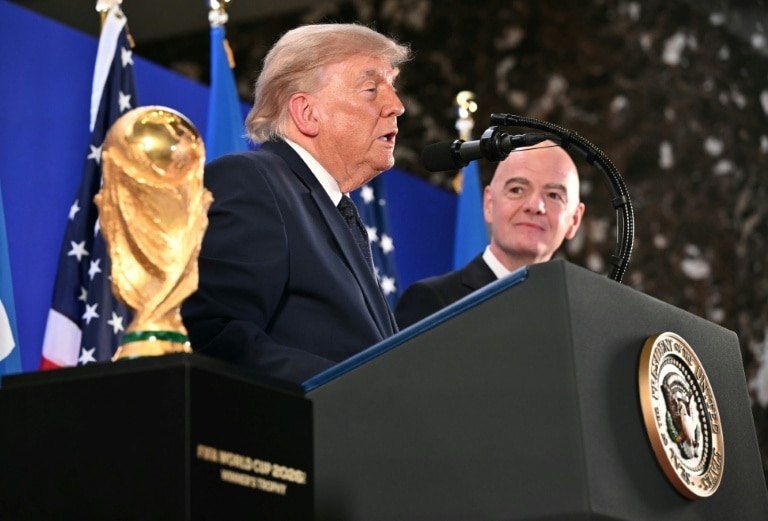
    At FIFA’s annual global congress held in Vancouver on Thursday, a staged gesture of reconciliation orchestrated by FIFA President Gianni Infantino devolved into a high-profile public standoff, drawing fierce backlash across global sports and human rights circles. Infantino had invited both Jibril Rajoub, president of the Palestinian Football Association, and Basim Sheikh Suliman, vice president of the Israel Football Association, onto the main stage, gesturing for Rajoub to approach his Israeli counterpart for a public handshake and photo opportunity. What followed exposed the deep, unresolved political tensions that have long plagued regional soccer governance, and renewed scrutiny of Infantino’s controversial approach to Middle East politics. After a brief, heated exchange with the FIFA leader, Rajoub declared, “We are suffering,” before stepping off the stage, stopping only to share an amicable hug with Infantino before exiting. In an immediate explanation of Rajoub’s refusal, Palestinian FA Vice President Susan Shalabi told Reuters that Rajoub told Infantino he cannot “shake the hand of someone the Israelis have brought to whitewash their fascism and genocide.” The incident came directly after Rajoub used his allotted speaking time at the congress to deliver a blistering rebuke of FIFA’s recent decision to reject sanctions against Israel over Israeli football clubs operating in illegal Israeli settlements in the occupied West Bank. Shalabi emphasized that forcing a handshake immediately after Rajoub’s speech completely undermined the core message of his address. “He spent 15 minutes trying to explain to everyone how the rules matter, how this could easily become a precedent where the rights of member associations are violated with impudence, and then we’ll just wrap this under the carpet. It was absurd,” Shalabi said. Speaking publicly after the incident, Rajoub – a long-time Fatah politician who has been repeatedly detained by Israeli authorities – acknowledged the value of sportsmanship, but drew a clear line at engaging with a representative of what he called a criminal Israeli administration. “If the other side is representing a criminal like Bibi [Israeli Prime Minister Benjamin Netanyahu] and speaking on behalf of Bibi as if Bibi is Mother Teresa, how can I shake hands or have a photo with such a man?” Rajoub asked. Infantino, who used the Vancouver congress to officially announce his candidacy for a third term as FIFA President next year, attempted to frame the failed gesture as a step toward progress. “We will work together, President Rajoub, Vice President Suliman. Let’s work together to give hope to the children. These are complex matters,” he told delegates after Rajoub’s exit. Reactions to Infantino’s move online were overwhelmingly critical, with many observers labeling the attempt tone-deaf, cynical, and a dangerous trivialization of ongoing human suffering in Gaza. Amnesty UK’s Kristyan Benedict posted a sarcastic rebuke on social media platform X, writing, “Why can’t they just get along…..with genocide, apartheid, and an ever expanding occupation?” Sports journalist Leyla Hamed echoed that criticism, noting, “Gianni Infantino treating genocide like it can be solved with a handshake and a camera. There’s something deeply unsettling about seeing such horror reduced to nothing more than optics.” Other commentators slammed the moment as a failed act of performative soccer diplomacy, accusing Infantino of staging the moment to boost his own public image and cast himself as a global peacemaker ahead of his re-election bid. “Dreaming of the Nobel Peace Prize himself, Infantino sought to stage a handshake between the Israeli and Palestinian federations at the Fifa annual Congress. Complete failure of his ‘soccer diplomacy’ and irritation from the Palestinian president, Jibril Rajoub,” French sports journalist Romain Molina posted on social media. This incident is far from the first time Infantino has faced widespread criticism over his handling of Israel’s military campaign in Gaza. UN experts and Palestinian and global human rights activists have repeatedly called for FIFA to suspend Israel from the international governing body, pointing to the same precedent FIFA set when it suspended Russia from all international competition following its 2022 full-scale invasion of Ukraine. Infantino has also drawn condemnation for other controversial political moves in recent months, including awarding the first-ever FIFA Peace Prize to former U.S. President Donald Trump during the 2026 World Cup draw in December. FIFA has repeatedly defended the award as an apolitical gesture, but human rights groups across the globe uniformly condemned the decision. In the days leading up to the Vancouver congress, the Norwegian Football Association called on FIFA to abolish the new prize entirely to avoid dragging the governing body into partisan political disputes. Australian men’s national team player Jackson Irvine argued that decisions like the Trump Peace Prize award have severely eroded FIFA’s claimed credibility as a force for global good. “As an organisation, you would have to say decisions like the one that we saw awarding this peace prize make a mockery of what they’re trying to do with the human rights charter,” Irvine told Reuters.

  • Kenya celebrates Sawe’s historic run with state recognition

    Kenya celebrates Sawe’s historic run with state recognition

    Nairobi, Kenya – May 1, 2026 – Thousands of Kenyans turned out to welcome distance running star Sabastian Sawe back to the capital this week, capping a historic milestone in marathon racing with formal state recognition and nationwide celebration that framed his sub-two-hour achievement as both a personal victory and a landmark national moment.

    At an official ceremony held Thursday at Kenya’s State House, President William Ruto presented Sawe with a combined financial award of 8 million Kenyan shillings, equal to roughly $61,900. Of the total, 5 million shillings recognizes Sawe’s unprecedented record-breaking marathon run, while an additional 3 million shillings honors his 2026 London Marathon gold medal win.

    Along with the cash prize, Sawe received a one-of-a-kind custom license plate etched with the time 1:59:30 – the exact mark of his trailblazing finish that cemented his place in athletic history.

    In his remarks during the ceremony, President Ruto emphasized that Sawe’s breakthrough achievement has redefined global understandings of human athletic potential, and will serve as a touchstone of inspiration for generations of young Kenyan athletes to come. Ruto added that the runner’s historic performance has further strengthened Kenya’s long-held reputation as a global powerhouse in long-distance running.

    “You have not only broken a record; you have expanded the horizon of human potential. You have made the impossible possible. You have inspired a nation, a whole generation and the world,” Ruto told the gathering.

    For his part, Sawe dedicated his historic win to all Kenyans, emphasizing that he competed to lift his country’s profile on the world stage. He also expressed gratitude to the Kenyan government for its consistent investment and support for the nation’s athletic community.

    “I did it on behalf of all of us, to build the name of our country so that it continues to shine,” Sawe said.

    Claudio Berardelli, Sawe’s long-time coach, credited the runner’s unprecedented success to relentless discipline and extraordinary natural endurance. Berardelli revealed that Sawe maintains an grueling training routine, averaging more than 200 kilometers of running each week, with his mileage peaking at 241 kilometers in the final weeks leading up to the London Marathon.

    “In over two decades of coaching in Kenya, I have not seen such a complete athlete,” Berardelli said, praising Sawe’s unwavering focus and fierce competitive spirit.

    Veteran retired Kenyan marathoner Ibrahim Hussein, who made history as the first African athlete to win the Boston Marathon, called Sawe’s performance a potential turning point for the sport of distance running. Hussein noted that Sawe’s sub-two-hour finish could open the door to even faster times in future races, when run under optimal competitive conditions.

  • Athletics won’t strangle super-shoe innovation – Coe

    Athletics won’t strangle super-shoe innovation – Coe

    The world of long-distance running has been sent into a frenzy of debate following one of the most groundbreaking achievements in the sport’s modern history: 31-year-old Kenyan runner Sabastian Sawe becoming the first competitive athlete to complete a marathon in under two hours at the 2025 London Marathon. Sawe crossed the finish line with a time of 1 hour 59 minutes 30 seconds, breaking a barrier that experts and athletes alike once viewed as an unbreakable limit of human physical endurance. Not far behind him, Ethiopian runner Yomif Kejelcha also finished under the two-hour mark, just 10 seconds adrift of Sawe, while women’s winner Tigst Assefa set a new women’s marathon world record on the same day. All three athletes shared one common detail that has sparked global conversation: they all wore the new Adidas Adizero Adios Pro Evo 3, the latest iteration of the controversial “super shoe” technology that has redefined elite marathoning over the past decade.

    Speaking to BBC Sport Africa on the sidelines of the upcoming World Relays event in Gaborone, Botswana, World Athletics President Sebastian Coe pushed back against calls to restrict or ban advanced shoe technology, arguing that stifling innovation has never benefited any industry or society. “I don’t think any society, any civilisation, any sector of the economy has been served well if you try to strangle innovation,” Coe stated. He clarified that World Athletics’ role sits at the intersection of enabling technological progress and upholding fair competition, noting that the governing body carries a clear responsibility to regulate the space to prevent unfair advantages.

    The Adidas super shoe worn by the London podium finishers marks a new milestone in footwear innovation: it is the first elite racing shoe to weigh less than 100 grams, lighter than a standard bar of soap. Adidas claims the proprietary technology built into the shoe improves running efficiency by 1.6%, a small but potentially decisive margin in a race decided by seconds. Sawe himself has praised the design, calling it the best shoe he has ever raced in, highlighting its exceptional lightness and stability. However, cutting-edge technology comes at a steep price: consumers looking to purchase the shoe will pay roughly $500 for a pair, putting it out of reach for many recreational runners.

    Coe pushed back against the narrative that super shoes are the primary driver of recent record-breaking performances, arguing that athlete mentality, physical conditioning, high-level coaching and federation support programs remain the most critical factors behind improved results. Sawe’s own preparation backs this framing: he cut more than two minutes off his personal best at the London race, a gain he attributes largely to his rigorous training routine of 200 kilometers per week at altitude, as well as improved race fuelling strategies that saw him consume 115 grams of carbohydrates per hour during the event, after a pre-race breakfast of just two slices of bread with honey and tea. After returning to his home country of Kenya following his historic win, Sawe gifted one of his record-setting shoes to Kenyan President William Ruto during jubilant homecoming celebrations in Nairobi.

    The growing prevalence of super shoes has forced World Athletics to evolve its regulatory framework over the past decade. The first wave of widespread debate around the technology emerged at the 2016 Rio Olympics, where all three men’s marathon medallists wore prototype versions of the Nike Vaporfly 4%, which claimed a 4% improvement in running performance. By 2020, World Athletics introduced formal rules limiting sole thickness, carbon-fibre plate design, and requiring all shoe technology to be commercially available, in an effort to prevent sportswear brands from gaining an unfair edge through unapproved custom designs.

    As major brands continue to push the boundaries of current regulations, Coe confirmed that the rulebook will continue to evolve alongside technology. He described the regulatory process as an inherently evolutionary journey, noting that World Athletics only recently established a formal evaluation system for new footwear designs. “We work closely with the athletes, the coaches, the shoe companies. We don’t want them to go off and spend hundreds of millions of dollars on shoes that we’re going to find illegal. So there is a balance,” Coe explained. He also highlighted an often-overlooked benefit of advanced footwear design: much of the research that improves performance also leads to innovations in injury prevention, allowing athletes to train longer, compete longer, and sustain longer careers in the sport — an outcome Coe described as an unambiguous positive.

    Reflecting on his own legendary career as a two-time Olympic 1500-meter champion, Coe joked that even with modern super shoes, he would not have been capable of running a sub-two-hour marathon, though he acknowledged the technology would have helped him clock a faster time in his signature 800-meter event.

    Critics of super shoe technology argue that the issue goes beyond simple regulation, warning that excessive reliance on engineering could erode the core identity of distance running, turning record performances into a victory for lab technology rather than human grit and endurance. Coe acknowledged these concerns but said he believes World Athletics has struck the right balance so far. “Life is always about balances,” he said. “I think at World Athletics we have technical teams that are always going to be conscious of where that balance is. At the moment, I think we’re the right side of it.”

  • Exorbitantly expensive tickets for early World Cup games still on general sale

    Exorbitantly expensive tickets for early World Cup games still on general sale

    With just over 30 days remaining until the 2026 men’s FIFA World Cup kicks off across the United States, Canada and Mexico on June 11, the majority of the tournament’s group stage matches still have tickets available to the general public – but steep pricing has left many soccer fans frustrated and locked out of attending.

    FIFA has been releasing tickets in staggered sales phases since last September, and currently, remaining seats are listed through the governing body’s official website in a dedicated “last-minute sales” portal. Prices vary dramatically based on seating tier, with premium Front Category 1 seats commanding the highest costs and Category 4 being the most affordable entry point. The lowest current price for general sale group stage tickets is $380, a rate available for seven different matches, including the group stage clash between World Cup first-time qualifier Curacao and Ivory Coast, hosted in Philadelphia.

    Even with this baseline entry price, cost disparities between matches and seating tiers are striking. For example, a Category 3 seat for the United States’ opening group game against Paraguay in Los Angeles currently lists for $1,120 – nearly three times the $380 price tag of a Category 2 seat for the Austria vs. Jordan group fixture. The most expensive general sale ticket for any group stage match tops out at $4,105 for the US-Paraguay game, with dozens of other group stage matches carrying average ticket prices around the $2,000 mark. Other high-priced group fixtures include Argentina’s match against Austria at $2,925 for top-tier seats, Ecuador vs. Germany at $2,550, Uruguay vs. Spain at $2,520, and England’s clash with Croatia at $2,505. Top-tier tickets for defending champion Lionel Messi’s Argentina side range between $2,475 and $2,925, while Brazil’s tickets run from $2,280 to $2,310 for premium seating.

    This year’s tournament marks the first time FIFA has implemented dynamic pricing for the World Cup, meaning listed ticket prices can shift based on demand over time. Back in January, FIFA president Gianni Infantino claimed that public demand for World Cup tickets was equal to “1,000 years of World Cups at once,” predicting that all 104 tournament matches would sell out completely. To date, that prediction has not held: while 17 total group stage matches are listed as sold out on FIFA’s website, dozens more still have general sale inventory. The tournament’s opening match between co-host Mexico and South Africa in Mexico City is sold out, alongside seven other matches held across Mexican venues, including Mexico’s two additional group games against South Korea (Guadalajara) and Czech Republic (Mexico City). Other sold out group fixtures include Turkey vs. USA in Los Angeles, Brazil’s match against Morocco in the New York/New Jersey metro area, and Scotland’s clash with Brazil in Miami. Even for top national sides including defending champions Argentina, Brazil, Spain, France, and England, fans who can afford the current asking prices are still able to purchase tickets directly.

    Beyond group stage play, no general sale tickets are currently available for the tournament final. However, premium seats for the two semifinal matches are still on offer, with prices reaching five figures: a top-tier ticket for the Atlanta semifinal lists for $9,660, while the same seating tier for the Dallas semifinal costs $11,130.

    The unprecedented pricing has sparked significant backlash from fans worldwide, who have called FIFA’s pricing strategy a “monumental betrayal” of soccer supporters. Fan anger has been amplified by the introduction of additional high-priced seating categories as the tournament approaches, with most of the remaining general sale tickets falling into these more expensive tiers. Fans looking for resold tickets also face extreme markup: last month, four final seats were listed on third-party resale platforms (including FIFA’s official resale marketplace) for just under $2.3 million per ticket. While FIFA does not set resale prices or directly list resold tickets on its marketplace, the organization takes a 30% cut of every resale transaction, allowing it to profit a second time from the same seat.