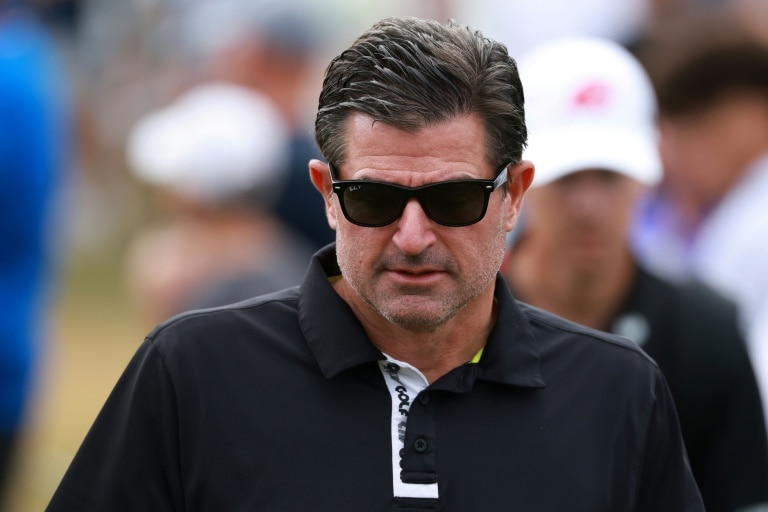
Just months after Saudi Arabia’s Public Investment Fund (PIF) confirmed it would end its massive financial backing of LIV Golf at the close of the 2026 season, the breakaway tour’s chief executive Scott O’Neil says he is optimistic about the circuit’s long-term future, pointing to growing early interest from a wide range of potential new investors.
Speaking to reporters Tuesday ahead of this week’s LIV Golf tournament hosted at Trump National Washington in Virginia, O’Neil revealed he has already held preliminary discussions with prospective financial backers as he drafts a sustainable long-term business plan to present to both tour players and potential sponsors. While he declined to share specific details of the upcoming strategy, O’Neil confirmed the 2027 season will bring substantial, meaningful changes to the tour’s operating model.
Most notably, the era of LIV Golf players earning inflated salaries for competing in fewer events than their counterparts on the PGA Tour is set to end once PIF pulls its support in August 2026. Despite that shift, O’Neil said he remains confident that the tour’s top athletes will choose to remain with LIV once the new business model is finalized.
“Do I believe that when we have a business plan and we raise money, that this is the place the players will choose? I do,” O’Neil told reporters. “I have a lot of confidence this is a place players want to be.”
That confidence stems from early outreach from potential backers: O’Neil says he received roughly a dozen unsolicited inquiries from interested parties over the previous weekend alone, split evenly between private equity firms, private family investment offices, and high-net-worth individuals with a history of investing in professional sports and sports franchises. O’Neil added that he has also held productive conversations with existing broadcast and marketing partners about continuing their partnerships with the tour under new ownership, leaving the leadership team with a clear sense of the circuit’s future direction.
Under O’Neil’s proposed framework, LIV Golf would retain its current 14-event annual schedule, while pushing for reciprocal agreements with other major global golf tours that would allow LIV athletes to compete in outside events. The goal, O’Neil explained, is to create more opportunities for the world’s top golfers from across different circuits to face off against one another in head-to-head matchups throughout the year. Currently, the PGA Tour bans LIV Golf players from its events, only offering a limited reinstatement path that has allowed just a small number of athletes, including major champion Brooks Koepka, to return in 2026.
While O’Neil would not share a firm timeline for rolling out the finalized business plan to players and investors, he emphasized that the LIV leadership team is working with urgency to lock in new funding ahead of the 2027 season. When discussing long-term value for potential investors, O’Neil highlighted the tour’s team-based format, which has been adjusted in recent months to feature more nationality-aligned rosters. O’Neil argued that once the tour establishes a stable revenue and cost structure, individual LIV teams will hold significant long-term value for owners.
Notably, O’Neil said current LIV players have already volunteered to help court private equity investors, joining meetings to make the case for the tour’s sustainability. The circuit has already proven its ability to draw massive live crowds in key international markets, he noted, pointing to 115,000 attendees at its 2025 event in Adelaide, Australia, 100,000 attendees in South Africa, and 60,000 attendees at its 2024 UK event. Those turnouts, O’Neil argued, demonstrate that the LIV brand and its team model are gaining traction with fans globally.
“I’m feeling good. I’m feeling an appropriate amount of pressure. I’m feeling inspired and I feel like we have a clear path to a win,” O’Neil said.