分类: sports

  • New Zealand beats West Indies in a 1-wicket thriller to clinch ODI cricket series

    New Zealand beats West Indies in a 1-wicket thriller to clinch ODI cricket series

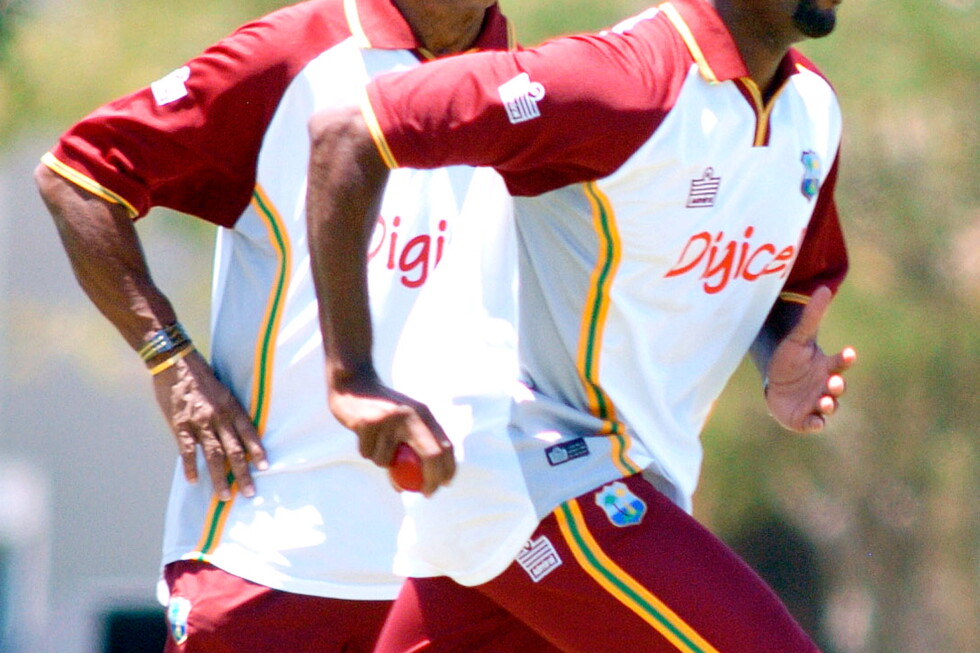
    BRIDGETOWN, Barbados – A dramatic final-over finish at Kensington Oval on Sunday delivered New Zealand a heart-stopping one-wicket victory over the West Indies in the fourth ODI of their five-match series, locking in an unassailable 3-1 series lead for the tourists ahead of Tuesday’s final fixture.

    The match was played under the shadow of mourning, just days after the passing of West Indian cricket icon Garry Sobers at the age of 89 in his hometown Bridgetown. Widely regarded as the greatest all-rounder in the history of international cricket – with more than 8,000 Test runs and 200 Test wickets to his name – Sobers cut his teeth at Kensington Oval, where the venue’s main pavilion bears his name. To honor his legacy, both teams wore black armbands, official flags were flown at half-mast across the ground, two seats were left vacant in the Sobers Pavilion, and a minute’s silence was held before the first ball. West Indies had entered the match with a fierce determination to seal a series-leveling win as a fitting tribute to their legendary compatriot.

    Play opened with New Zealand winning the toss and electing to bowl first, extending a curious trend that has seen the team bowling first claim victory in all four matches of the series so far. Batting conditions proved challenging from the first over, and West Indies collapsed to 81-6 before a resilient 81-run seventh-wicket partnership between wicketkeeper Amir Jangoo and spinner Gudakesh Motie dragged the hosts to a modest final total of 188 all out. Jangoo notched his first half-century of the series with a 71-ball 51, while Motie contributed a valuable 41 to the innings. For New Zealand, young pace bowler Matthew Fisher enjoyed a dream ODI debut with the ball, claiming 3 wickets for 40 runs including the prized scalp of West Indies captain Shai Hope, who fell to a searing cross-seamer that jagged sharply back into the top of off stump.

    New Zealand’s chase got off to a disastrous start, with the tourists slipping to 6-2 inside the first six overs. A steady 65-run fifth-wicket stand between batsman Mark Chapman and all-rounder Michael Bracewell pulled New Zealand back into control, with Chapman hitting a fluent 80 to put the visitors on the brink of victory. When Chapman was dismissed, New Zealand stood at 142-5, requiring just 47 more runs with almost 25 overs remaining – a target that looked well within their reach for a comfortable win.

    What followed was a breathtaking collapse that put West Indies on the cusp of a fairytale tribute win. A short rain break disrupted New Zealand’s rhythm, and Motie ripped through the tourists’ lower order, claiming Bracewell with his first delivery after the restart before quickly dismissing Nathan Smith, Jacob Duffy and Matthew Fisher. Motie finished the innings with outstanding figures of 5 wickets for 47 runs, while fast bowler Alzarri Joseph kept the pressure on with economical line and length that yielded just 23 runs from his allocation.

    New Zealand’s final pair of captain Mitchell Santner and No. 11 batter Jayden Lennox entered the match with the Black Caps needing just 8 runs to win. Santner inched the team within three runs of victory before a dropped catch off his own batting left the door open for a dramatic finish. When Santner left Lennox to face a full over from fast bowler Vitel Lawes, the last batter survived two separate reviews for caught behind and leg before wicket, turning aside confident West Indies appeals to stay at the crease.

    Lennox’s survival allowed Santner to hit the winning run from the very first ball of the 45th over, finishing the innings unbeaten on 34 and sealing the nervy win with 35 overs still to spare. Speaking after the match, Santner described the closing stages as chaotic.

    “It was pretty chaotic, especially the ending,” Santner said. “You try to chip off the total as much as you can. Even partnerships of 10 or 15 at that stage was going a long way. It probably shouldn’t have got that close but it was nice to get over the line.”

    West Indies captain Shai Hope praised his team’s fighting performance despite the narrow loss, noting that the tense match was a treat for neutral fans. “It’s been a really good cricket game for the onlookers,” Hope said. “If you watch a game like this as a neutral you’re going to be really happy to see play like this. It was one that could have gone to either side. I must commend our guys for the fight they showed.”

    After the match, New Zealand hold an unassailable 3-1 lead in the five-match series, having lost the opening fixture by seven wickets before claiming wins by five wickets in Game 2, six wickets in Game 3, and Sunday’s one-wicket thriller. The fifth and final match of the series will be held at Kensington Oval in Bridgetown this Tuesday.
  • Messi denied dream farewell as abject Argentina lose World Cup final

    Messi denied dream farewell as abject Argentina lose World Cup final

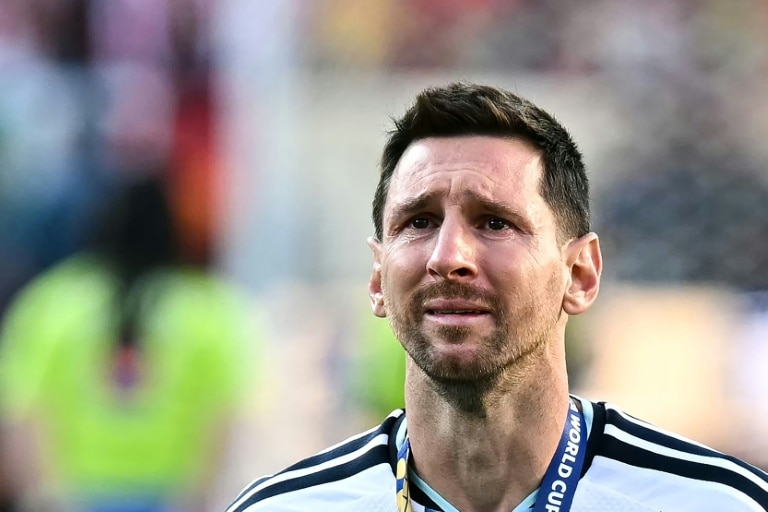
    For soccer icon Lionel Messi, Sunday’s 2026 World Cup final was supposed to be the perfect coda to a legendary career: a second consecutive world title with Argentina that would silence any remaining debate over his status as the greatest men’s soccer player of all time. Instead, the 39-year-old left the pitch at MetLife Stadium in tears after a lopsided 1-0 extra-time defeat to Spain, bringing an underwhelming end to what had been billed as his final World Cup campaign.

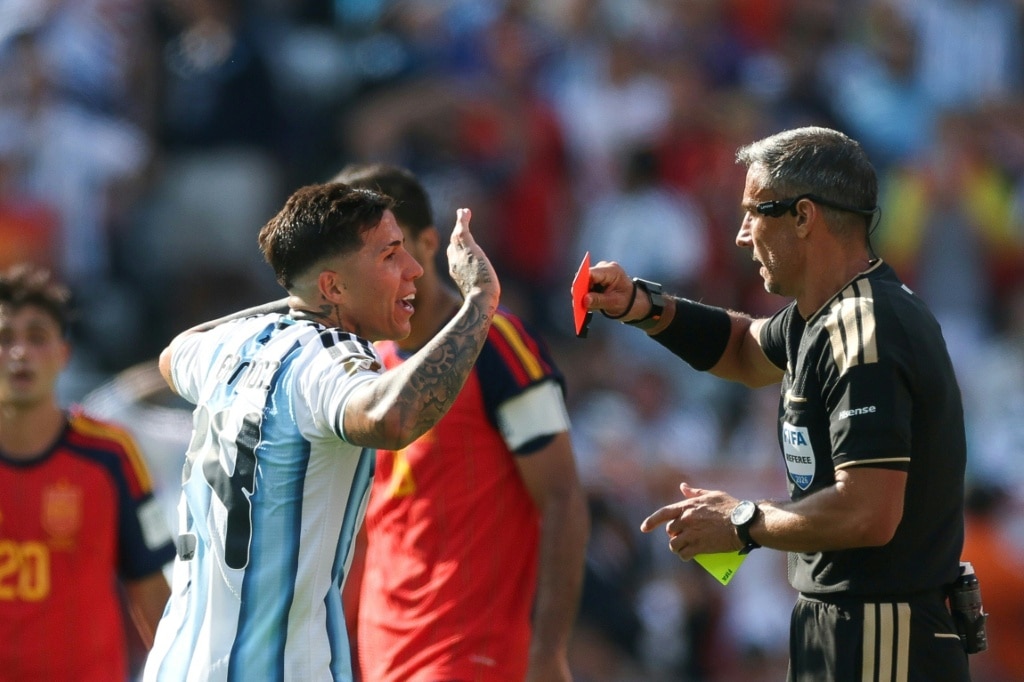
    Messi carried Argentina through the tournament, dragging the defending champions back to the final with a standout performance that included eight tournament goals, headlined by a dramatic late comeback against England in the semi-finals that included two assists from the captain. But from kickoff, the 2026 final never went Argentina’s way. Things turned for the worse when star midfielder Enzo Fernandez was shown a red card in first-half stoppage time, leaving the South American side down to 10 men for the entirety of the second half and extra time.

    The undermanned Argentine side failed to mount any meaningful offensive pressure against a dominant Spanish side, struggling to string together coherent attacks and relying heavily on cynical fouling to disrupt Spain’s rhythm. The match stayed scoreless until the 106th minute, when Ferran Torres broke the deadlock to put Spain ahead, a lead they would not relinquish. For Messi, the match was particularly quiet: he recorded just 54 total touches on the ball, nearly half of which came in extra time, and never came close to scoring the goal that would have tied Kylian Mbappe’s all-time men’s World Cup scoring record of 22 goals.

    Down a player, coach Lionel Scaloni opted to leave Messi on the pitch as a lone striker rather than bring on fresh-legged forward Lautaro Martinez, a decision that left many questioning whether the aging captain ultimately became a liability for his already stretched team. The defeat means Argentina failed to become the first men’s national team to defend a World Cup title since Brazil in 1962, a milestone that would have capped Messi’s international legacy perfectly.

    Even in defeat, the 2026 final gave Messi a historic milestone to add to his collection. His appearance in Sunday’s match marked his third World Cup final appearance, tying the all-time record held by Brazilian great Cafu. Only Pele has won three World Cup titles, though he did not feature in the 1962 final due to injury, while Diego Maradona and Messi have both appeared in two winning and two losing finals. Critics of Messi’s GOAT status will likely point to this latest defeat, his second World Cup final loss following a 1-1 defeat to Germany in 2014.

    A full-circle subtext hung over the match, as Sunday’s final was hosted at the same MetLife Stadium where a heartbroken Messi announced his first retirement from international soccer back in 2016. That same year, after losing a third major final with Argentina (a Copa America Centenario penalty shootout defeat to Chile that ended with Messi missing a decisive spot-kick), he told reporters “For me the national team is over.” What followed was one of the most remarkable late-career revivals in sports history: Messi led Argentina to back-to-back Copa America titles in 2021 and 2024, sandwiched around the iconic 2022 World Cup victory in Qatar that cemented his international legacy.

    When the 2026 North American World Cup was announced, the tournament was framed as a victory lap for Messi, who opened his campaign with a hat-trick against Algeria and remained consistent in front of goal all tournament. He retires from World Cup play with a record 34 matches across six shared-record World Cup tournaments, and more than 200 senior caps for Argentina. With the 2030 World Cup set to take place when Messi will be in his early 40s, Sunday’s final is almost certainly the last World Cup appearance of his career. While he remains under contract with MLS side Inter Miami through 2028, leaving the door open for continued international play, this underwhelming defeat is widely seen as the quiet end to one of the greatest international careers in soccer history. It was a glorious run, but for Messi and Argentina, Sunday’s final was ultimately a step too far.

  • Spain down Argentina to win World Cup, shatter Messi dream

    Spain down Argentina to win World Cup, shatter Messi dream

    In a tense, physically fraught World Cup final at East Rutherford’s MetLife Stadium, Ferran Torres’ 106th-minute strike delivered Spain a historic 1-0 extra-time victory over defending champions Argentina, crushing Lionel Messi’s long-awaited hope of a second World Cup title in what is widely expected to be his final appearance on the sport’s biggest global stage.

    A capacity crowd of 80,663 spectators, including former U.S. President Donald Trump, packed into the venue to watch the 39-year-old Argentine maestro attempt to cap his decorated career with one last major triumph. But Spain seized control of the match from the opening minutes, leaving Messi largely ineffective against a well-drilled Spanish side, while Argentina’s campaign was marred by repeated rough challenges and disciplinary issues.

    The game was marked by persistent niggly fouls from the South American side from kickoff. As early as the 15th minute, Alexis Mac Allinger caught Spain’s Dani Olmo on the ankle with a high studs-up challenge that only earned a free kick, no yellow card from Slovenian referee Slavko Vincic. Minutes later, Spain’s Alex Baena escaped sanction after catching Messi with an elbow to the back. Nicolas Tagliafico also avoided a caution for a clumsy, raking challenge that left Spain’s teen star Lamine Yamal with a calf injury, before Lisandro Martinez eventually picked up a yellow card for a cynical foul on Mikel Oyarzabal. The Arsenal defender was forced off shortly after with an apparent injury, replaced by veteran Nicolas Otamendi.

    The first half remained goalless, with Spain dominating possession and probing for openings but failing to convert their chances. A controversial 27-minute extended half-time show featuring global music superstars Madonna, Shakira and Justin Bieber did nothing to disrupt Spain’s momentum. The second half saw Spain ramp up the pressure, leaving Argentina pinned deep in their own half in full defensive siege mode.

    Spain manager Luis de la Fuente turned to his bench to inject fresh attacking energy, bringing on Pedri and Ferran Torres for Fabian Ruiz and Oyarzabal. The substitutions immediately opened up more chances: Yamal’s clipped cross found Torres, whose downward header was pushed away by Argentina goalkeeper Emi Martinez; long-range strikes from Pedri and Pau Cubarsi forced awkward saves from Martinez, who somehow kept Argentina level through regulation time. Later substitutions Nico Williams and Mikel Merino added even more attacking thrust, but Argentina held on to force extra time, despite Enzo Fernandez picking up a yellow card for dissent in the 82nd minute. In the final moments of regulation, Fernandez was sent off for a brutal challenge on Cubarsi in stoppage time, leaving Argentina to play the entirety of extra time with 10 men.

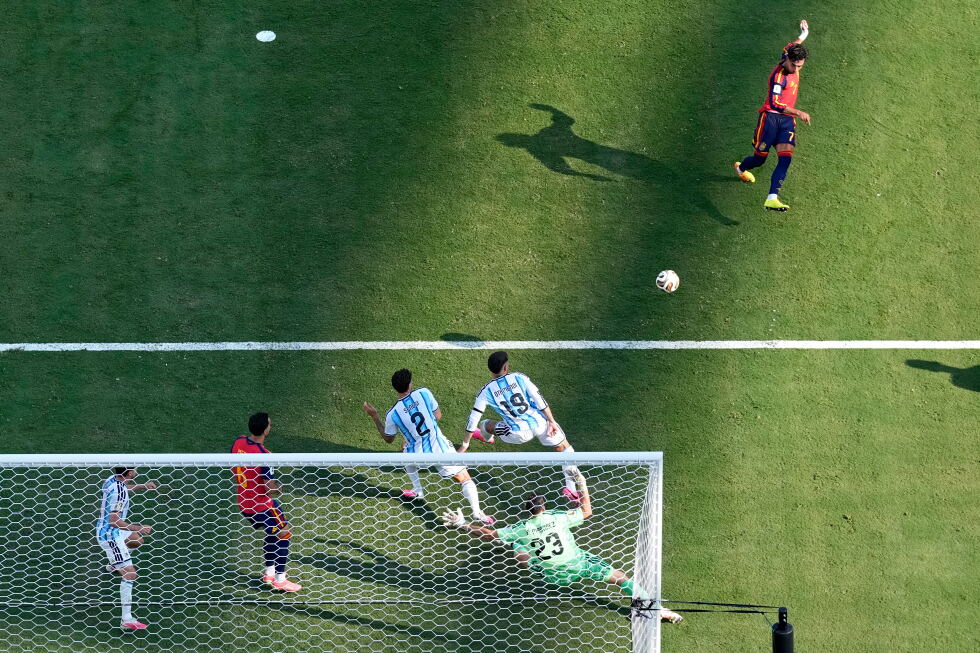
    Spain’s dominance continued in extra time. Williams saw a glancing header turned away by a brilliant one-handed save from Martinez, and minutes later he slid a low finish into the back of the net only for the goal to be ruled out for a marginal foul on Otamendi. The Spanish side did not let the controversial call derail them, however. A lofted cross from Pedro Porro to the back post found Williams, who nodded the ball into the path of Torres. The Barcelona striker crashed home a thumping finish to break the deadlock, sealing Spain’s second World Cup title following their maiden triumph in 2010.

    Argentina launched one desperate late attack to force penalties, but Spain held firm to secure the win. Speaking after the match, Torres deflected praise for the winning goal, emphasizing the achievement belonged to the entire nation. “Ultimately, the goal belongs to 47 million people — not just me or the 26 players,” the match-winner said. “At the end of the day, all finals are tough; when you’re up against Messi, there’s a certain nervousness, but we always believed in our football and in ourselves.”

    For Argentina, the defeat brings an end to their title defense and likely marks the close of Messi’s iconic World Cup career, leaving the soccer legend without the fairytale farewell he and millions of fans around the world had hoped for.

  • How Ferran Torres scored the World Cup-winning goal for Spain to beat Argentina

    How Ferran Torres scored the World Cup-winning goal for Spain to beat Argentina

    In a dramatic, tension-filled World Cup final decided in extra time at East Rutherford, New Jersey, Ferran Torres delivered the championship-winning goal for Spain, capping off a team-built attacking sequence that combined contributions from both starting stars and impact substitutes to down the defending champions Argentina 1-0.

    The game-defining play unfolded mere moments after the second half of extra time kicked off, with Argentina already facing an uphill battle after midfielder Enzo Fernandez received a red card in the 113th minute of regulation that left the side down to 10 men for the closing stages of the match.

    Teenage standout Lamine Yamal, who had already created two of Spain’s clearest scoring opportunities earlier in the contest, collected a well-placed pass from Martín Zubimendi on the right wing. Zubimendi had received the ball after a calm build-up from the Spanish backline, where Marc Cucurella shifted possession to Eric García before moving it upfield to the midfield creator. Yamal quickly slid a pass to fullback Pedro Porro, who had recorded more touches than nearly any other player on the pitch throughout the final.

    Porro’s driven right-footed cross into the 18-yard box looked set to drift out of bounds over the far goal line, but second-half substitute Nico Williams — who entered the match in the 75th minute — rose to meet the ball and nod it neatly back into the path of Torres. Torres, another substitute brought on just after the 60th minute, struck a perfect first-time left-footed finish that beat two covering Argentine defenders and goalkeeper Emiliano Martínez to put Spain ahead 1-0 in the 106th minute. At the time of the goal, Spain had outshot Argentina 20 to zero, a staggering dominance of possession and attacking threat throughout the match.

    Reflecting on the historic moment after the final whistle, Torres, who plays his club football for Barcelona, emphasized the unity of the entire nation behind the squad. “I think at the end of the day, it was a goal scored by 47 million people,” Torres said, referencing the approximate population of Spain. “I feel very happy. I was heavily criticized during the World Cup, but I think it was written in destiny. I always trusted I would get that chance to contribute, and God gives opportunities to those who believe and deserve them.”

    The Barcelona forward celebrated wildly, tearing down the corner flag near the stands as his jubilant teammates swarmed him to celebrate the go-ahead goal. Torres came close to doubling Spain’s lead just minutes later, but his second effort was ruled out for offside. Over the remaining minutes of extra time, Argentina threw everything into attacking from set pieces, earning multiple corner opportunities that the Spanish defense successfully weathered to hold onto their narrow lead.

    When the final whistle blew, Spain confirmed its second World Cup title, ending the defending champion Argentina’s tournament run and etching a new chapter in Spanish football history.

  • In pictures: Joyous fans gather across the US and Canada to watch World Cup final

    In pictures: Joyous fans gather across the US and Canada to watch World Cup final

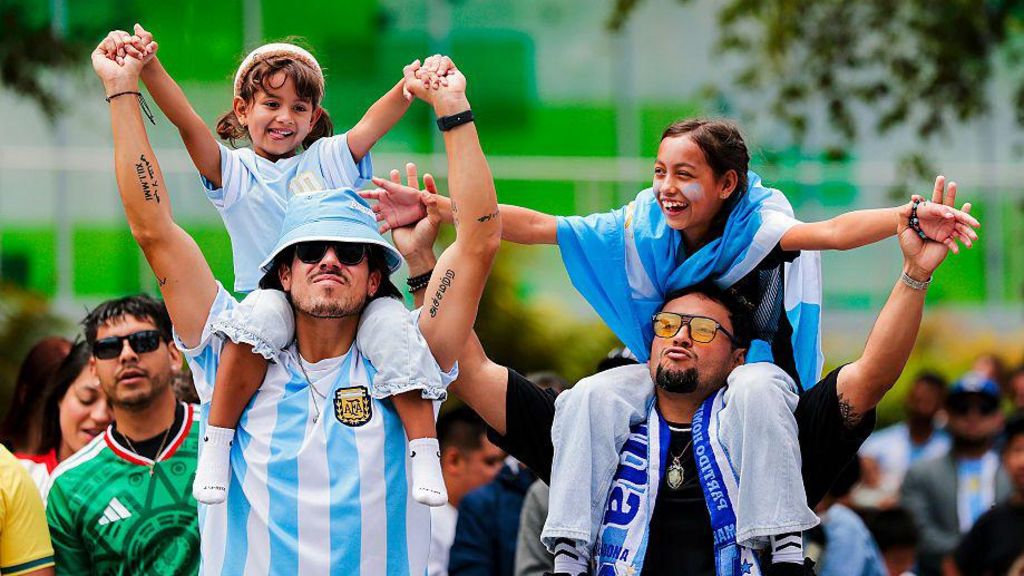
    The 2026 FIFA World Cup, co-hosted by the United States, Canada and Mexico, reached its thrilling climax on Saturday with a highly anticipated final showdown between Spain and Argentina. Though none of the three host nations advanced to the tournament’s final match, football passion did not dim across the region – thousands of fans from both competing camps gathered in public viewing spaces, fan zones and private events from coast to coast to cheer on their teams.

  • Spain beat Argentina to win World Cup

    Spain beat Argentina to win World Cup

    One of the most tightly contested World Cup finals in recent memory delivered a historic result Sunday, as Ferran Torres’ second extra-time goal gave Spain a hard-fought 1-0 victory over 10-player Argentina, securing La Roja’s second ever World Cup title at MetLife Stadium.

    As European champions heading into the showpiece match, Spain controlled large swathes of play for nearly 120 minutes, dictating tempo through their signature short-passing possession style. But they ran into a brick wall of veteran, streetwise defending from the reigning champions Argentina, who packed their defensive block and repeatedly frustrated Spain’s attacking advances for most of regulation.

    Standing out as Argentina’s unsung hero through 90 minutes was goalkeeper Emiliano Martinez, who pulled off a string of spectacular reflex saves to keep Spain off the scoreboard and preserve a scoreless deadlock heading into stoppage time. That balance of the match shifted dramatically, however, when Argentina midfielder Enzo Fernandez was shown a red card in second-half stoppage time, sent off after picking up a second yellow card for a reckless sliding tackle on Spanish defender Pau Cubarsi.

    Down a player for the extra 30 minutes, Argentina dropped even deeper into a defensive formation, clinging to the goalless draw to force a penalty shootout. Spain continued to probe the backline, probing for gaps in the tired Argentine defense, and finally found the breakthrough they had chased for nearly two hours. Early in the second half of extra time, Nico Williams delivered a perfectly weighted knock-back into the path of substitute Ferran Torres, who slotted a crisp, clinical finish beyond Martinez’s reach to open the scoring.

    The result capped off a dominant defensive campaign for Spain led by manager Luis de la Fuente: across seven matches en route to the title, La Roja conceded only a single goal, using their fluid, high-possession system to smother opposing attacks and grind out results. For Argentina, the loss ended a dramatic knockout-stage run that had captured global attention: Lionel Messi’s side clawed their way back from a near-elimination against Egypt to reach the semi-finals, then fought back from an early one-goal deficit to defeat England and book their spot in the final.

  • They sing, they stomp, they dance. World Cup fans from Argentina, Spain spent cash at the final

    They sing, they stomp, they dance. World Cup fans from Argentina, Spain spent cash at the final

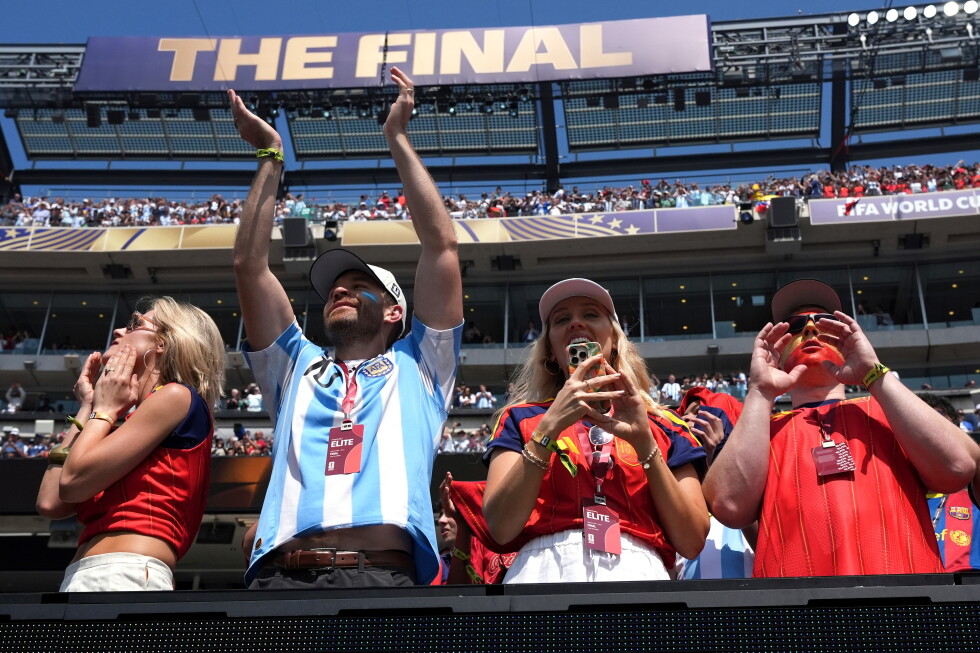
    East Rutherford, New Jersey — On the eve of one of the most anticipated World Cup finals in modern history, the buzz inside MetLife Stadium had less to do with celebrity opening remarks and far more to do with the thousands of passionate fans who crossed continents and emptied their savings to be there. When Hollywood star Tom Cruise stepped out to deliver a pre-match speech framing soccer as a unifying global force, his words were completely drowned out by the roar of tens of thousands of Argentine and Spanish supporters. Their joyful singing, rhythmic clapping, and thunderous drum beats drowned out every syllable, a fitting reminder that the soul of the World Cup belongs not to celebrity guests, but to the fans who show up for their teams.

    For most of these supporters, the draw was clear: this was almost certainly Lionel Messi’s final appearance on the World Cup stage, and no price tag was too high to share in what could be the final chapter of the greatest career in modern soccer. “Money comes back,” explained Manuel Lopez Maccotta, an Argentine fan who traveled all the way from Buenos Aires to New Jersey for the match. “This is once in a lifetime. You’re seeing the best player in the world in his last World Cup. Money is worthless compared to this.”

    Maccotta, a 28-year-old software company founder, paid nearly $10,000 alone for his final match ticket, a sum that made the stadium’s widely noted $18 beer look like a trivial expense in comparison. His travel partner, Santiago Burcaco, a real estate professional, got a relative bargain at $5,000 for his seat — a price he locked in when he purchased his ticket before Argentina even secured its spot in the final. In total, Maccotta estimates he spent roughly $35,000 to follow the Argentina national team through the entirety of the World Cup tournament, a journey that already included a standout highlight in Argentina’s quarterfinal win over England. His trip to New Jersey almost fell apart entirely: a 14-hour delay from Miami caused by severe thunderstorms left him landing at JFK Airport just after 4:50 a.m. on match day, but he still made it to the stadium in time for kickoff. “It’s the last Messi World Cup,” he said. “My country. Hopefully we go back-to-back. We have to share the feeling. It’s once in a lifetime.”

    This final carries historic stakes for both sides. Argentina enters the match vying to become the first men’s national team to win back-to-back World Cup titles since Pele led Brazil to victories in 1958 and 1962. For Messi, a win would cap what he has publicly signaled is his final World Cup run with a fairy-tale ending, cementing his legacy as the greatest player of all generation. His iconic No. 10 jersey could be spotted on thousands of fans throughout the stadium, a visible tribute to the loyalty and passion he has inspired in supporters across the globe.

    For Spain, the match offers a chance to claim the country’s second World Cup title following its 2010 victory, and solidify its reputation as the dominant global men’s soccer power of the current era. Spanish supporters filled their sections of the stadium with bright red-and-yellow afro wigs printed with the national flag, many only removing the headpieces to pour cool water over their heads to beat the unseasonably warm sunny day.

    Curro Sanchez, a 42-year-old fan from Madrid, paid $8,000 for his ticket, even after convincing only one friend to join him on the trip after 10 other loved ones turned him down over the high cost and scheduling conflicts. He even had a high-stakes argument with his wife over the trip before she ultimately agreed to let him go. “Had a big, big, big fight with my wife,” Sanchez said. “At the end of the day, she understood.” Sanchez landed in New York just one day before the match and plans to stay in Manhattan through Thursday to soak in the once-in-a-lifetime experience.

    Ticket prices for the final skyrocketed in the weeks leading up to the match, climbing as high as five figures before dipping slightly in the hours before kickoff, still well out of reach for all but the most well-resourced fans. On FIFA’s official resale platform, prices dropped as low as $18? No, as low as $2,334.50 in the hours before the match. That still left base-priced tickets available through FIFA on the morning of the match for $10,990. While some fans scrimped and saved for months to afford their spots, the majority of fans inside MetLife Stadium had the financial means to make the transcontinental trip: Maccotta and Burcaco are a case in point, running successful businesses in their home country.

    In the lead-up to kickoff, even celebrity sightings added to the buzz: Modern Family star Sofía Vergara drew a crowd of fans waiting for photos in one stadium concourse just 45 minutes before the opening kickoff. Organizers handed out “Join The Celebration” signs to fans instructing them to “clap along using your clapper!” when the music started, a guide that fans joked was just as useless as asking Messi to give basic soccer lessons. Fans from both nations had been hyped up from the moment they joined long security lines to enter the stadium, singing and chanting nonstop in their native languages, setting a high bar for scheduled halftime performers including Madonna and Shakira. Notably, the presence of former U.S. President Donald Trump in attendance did not appear to slow security processing for ordinary fans.

    The festive energy that filled MetLife Stadium on match day had already spilled out into New York City over the weekend, as thousands of Argentine and Spanish fans packed Times Square, breaking out into spontaneous chants, songs, and street celebrations — the same joyful revelry that has defined host city atmospheres across the North American World Cup. Many fans credit Messi’s legacy for the all-consuming passion and unwavering loyalty of Argentina’s global fanbase, while Spain’s supporters have proven every bit as dedicated to their side’s push for a second world title.

  • World Cup final kicks-off with star-studded opening

    World Cup final kicks-off with star-studded opening

    The most anticipated moment of the 2026 FIFA World Cup has arrived, as the tournament’s closing ceremony kicked off in spectacular fashion on Sunday at New York New Jersey Stadium, drawing a sellout crowd of more than 80,000 fans, celebrities and global dignitaries ahead of the final match between Spain and Argentina.

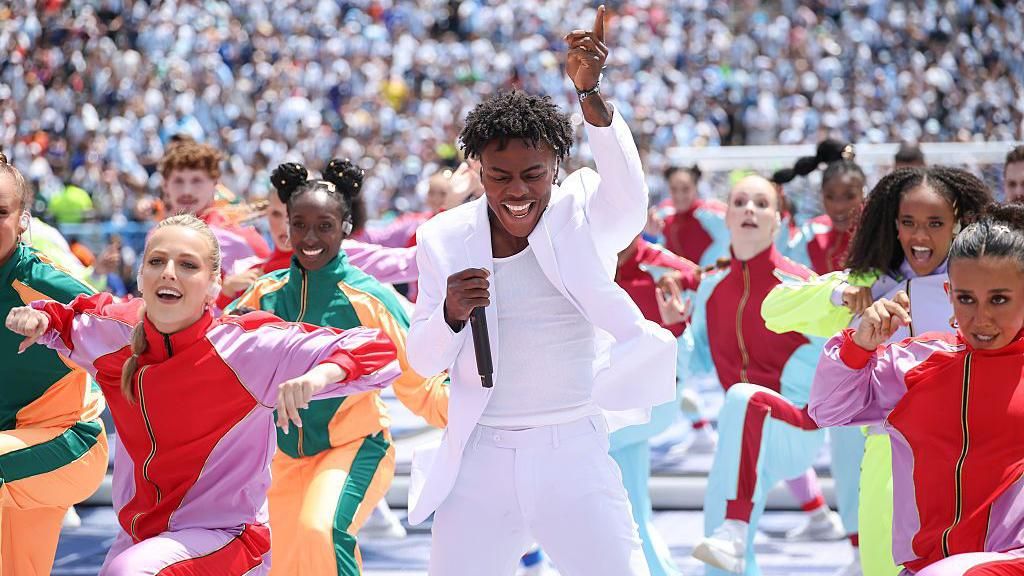
    The ceremony opened with an energetic performance from popular streaming personality IShowSpeed, who took the center pitch alongside a cohort of drummers and dancers clad in bright, eye-catching tracksuits that set a lively tone for the afternoon. Multi-platinum rapper and singer Post Malone followed up the opening set with a crowd-pleasing performance of his chart-topping hit *Wow.*

    Before the final match kicked off, Academy and Grammy Award-winning singer and actor Jennifer Hudson delivered a powerful rendition of the United States national anthem, backed by a full live band that earned a roar of applause from the packed stands. The A-list pre-match entertainment lineup continued with collaborative performances from British pop icon Robbie Williams, Italian superstar Laura Pausini, and former Pussycat Dolls lead Nicole Scherzinger. Following the opening set of performances, Hollywood A-lister Tom Cruise took the stage to officially introduce the final match to the global audience.

    “From every corner of the globe, we have witnessed greatness, and we have shared in moments of joy,” Cruise told the gathered crowd. “Football is a language spoken without words, a force that unites people.”

    In comments ahead of the event, Pausini shared her excitement with the BBC, saying she felt overwhelming pride to share the stage with Williams and Scherzinger. “When Robbie [Williams] invited me to sing with him, I felt goosebumps everywhere because Robbie’s one of my favorite singer, songwriter, and performer,” she explained.

    The star power does not end when the first half of the final concludes: an extended half-time show curated by Coldplay frontman Chris Martin will feature a stacked lineup of global music superstars, including Madonna, Justin Bieber, Shakira, Burna Boy and K-pop phenomenon BTS, with a portion of event proceeds going to the FIFA Global Citizen Education Fund, an initiative aiming to raise $100 million to support access to education for children across the world. FIFA confirmed the star-studded half-time performance will run 11 minutes as part of an extended 20 to 25 minute half-time break, modeled after the high-production spectacle of the NFL’s Super Bowl half-time show.

    Madonna, the best-selling female recording artist of all time, is fresh off the release of her latest studio album *Confessions II*, which debuted at the top of the Billboard 200 album chart earlier this month. For Justin Bieber, the performance marks another high-profile stop on his return to public performance: the pop star canceled his 2022 Justice World Tour due to ongoing health issues, and made his big comeback earlier this year with a standout set at the Coachella Valley Music and Arts Festival, his largest live show in four years.

    Colombian global icon Shakira and Nigerian superstar Burna Boy will take the stage together for their performance, reuniting after opening the 2026 World Cup alongside one another in Mexico City last month. Their collaborative single *Dai Dai* has become a global chart hit throughout the tournament, and been played repeatedly in host stadiums across the competition. For BTS, the World Cup half-time slot comes as the group completes a highly anticipated comeback following a three-year hiatus spent completing mandatory military service in South Korea. The group is currently in the middle of an 85-date global stadium tour, making the World Cup final one of the biggest stops on their itinerary. Other performers featured in the closing ceremony included Swae Lee, who delivered a solo set early in the event.

    Among the high-profile guests in attendance at the closing ceremony and final were former U.S. President Donald Trump and First Lady Melania Trump, who arrived at the stadium via Marine One, which flew over the venue ahead of kick-off to the match.

  • New Zealander Fox birdies last hole to win British Open

    New Zealander Fox birdies last hole to win British Open

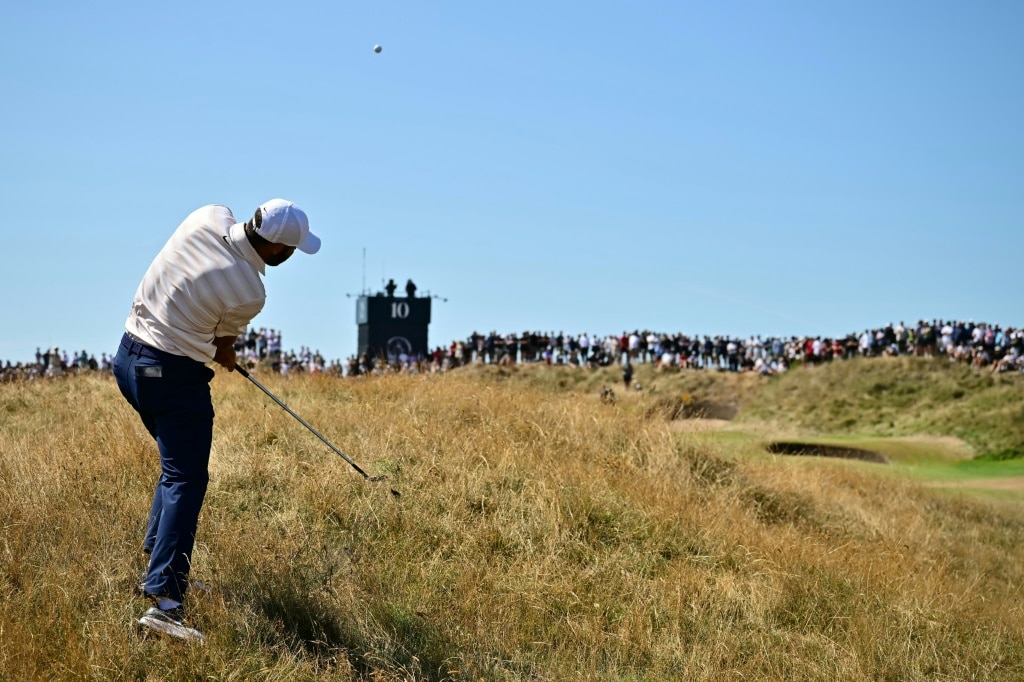
    In a moment of high drama at Royal Birkdale on Sunday, 39-year-old New Zealand golfer Ryan Fox etched his name into golfing history, clinching the 154th British Open with a clutch birdie on the 18th hole to claim his first career major championship at 10 under par.

    Ranked 56th in the world entering the tournament, Fox’s road to the Claret Jug was far from straightforward. After opening the first two rounds at level par, he sat in 52nd place and far outside most experts’ predictions of a winner. But a stunning Saturday round saw the Kiwi tie the all-time record for the lowest single-round score in men’s major championships, carding a 62 that catapulted him into contention heading into the final round.

    As overnight leader Sam Burns of the U.S. and other top contenders collapsed under the intense pressure of championship Sunday, Fox stayed steady. He notched birdies on holes 13, 14, 16, and the decisive 18th, holding off a late charge from American Cameron Young to secure a one-stroke victory — the biggest win of his professional career by a wide margin.

    “I don’t really know what to think at the moment,” Fox told reporters immediately after his win. “I spoke to my kids last night and they said ‘bring back a trophy’. I think this is a pretty cool one to bring back for them.”

    Fox makes history as just the third New Zealander ever to win a men’s major championship, following Bob Charles’ 1964 British Open victory and Michael Campbell’s 2005 U.S. Open win. The son of former All Blacks rugby international Grant Fox, Fox’s underdog run capped a day defined by collapsing frontrunners and last-minute twists.

    Overnight leader Sam Burns held a two-shot advantage heading into Sunday, but three consecutive bogeys on holes four through six erased his lead early, and he ultimately finished third at eight under par, falling short of his first major title. South Korea’s Kim Si-woo climbed within striking distance of his own first major with nine holes remaining, but imploded on the back nine with a four-over-par finish that knocked him out of contention.

    Cameron Young, who began the day seven shots off the lead after a four-over back nine on Saturday, mounted a stunning late charge that nearly stole the title. The world number four shot a 29 on the front nine to climb into contention, carded additional birdies on the par-fives 14 and 17 to reach 10 under par alongside Fox heading into the final hole. But a wayward tee shot landed Young in a sand trap, and his second shot crashed into the bunker face, resulting in a costly bogey that left him one shot short of the playoff spot.

    Defending champion Scottie Scheffler, the world’s top-ranked golfer, also mounted a early comeback charge but ultimately fell short, finishing tied for fourth at seven under par. Scheffler cut his six-shot opening deficit in half with three birdies in his first five holes, but bogeys on 13, 15, and 18 kept him from adding a fifth major title to his career in 2026.

    Local favorite Tommy Fleetwood joined Scheffler in a tie for fourth, briefly giving British fans hopes of ending the country’s 34-year wait for a homegrown British Open champion. The world number nine climbed to within one shot of the lead after shooting three under par through eight holes, but three consecutive bogeys pushed him back before a late birdie-birdie finish lifted him into the top four.

    Former major winner Rory McIlroy never mounted a serious contention for his seventh major title, finishing the tournament at one under par after a final-round 71. “Any time I got a little bit of momentum out there, I seemed to make a bogey,” said the world number two. “Just one of those weeks I couldn’t get it going.” American Bryson DeChambeau, who received a two-shot penalty after his second round on Friday, finished at four under par, with the penalty ultimately not affecting the final championship outcome.

  • Argentines out in force as New Yorkers bid farewell to World Cup carnival

    Argentines out in force as New Yorkers bid farewell to World Cup carnival

    In the days leading up to one of the most anticipated FIFA World Cup finals in recent hosting history, thousands of boisterous Argentine supporters have turned the heart of New York City back into a vibrant World Cup carnival, breathing new life into flagging local excitement ahead of Sunday’s blockbuster showdown with Spain at MetLife Stadium.

    Local enthusiasm for the co-hosted tournament had slumped sharply after the United States men’s national team was eliminated from competition by Belgium on July 6. Compounding that dip in interest were a series of disruptive external challenges: a deadly Legionnaires’ disease outbreak, extreme volatile weather including fierce storms, widespread flooding, and poor air quality driven by smoke drifting from Canadian wildfires. Even the structure of the tournament contributed to waning buzz: as nations with large diaspora communities in New York, such as Mexico and Egypt, were knocked out round after round, casual local engagement faded steadily. Many native New Yorkers also left the city for summer weekend getaways ahead of the final, and the historic sky-high ticket prices for the match have put attendance out of reach for most fans. Secondary ticketing platform TickPick reports the average final ticket resells for $11,325, making it the most expensive single sporting event in U.S. history.

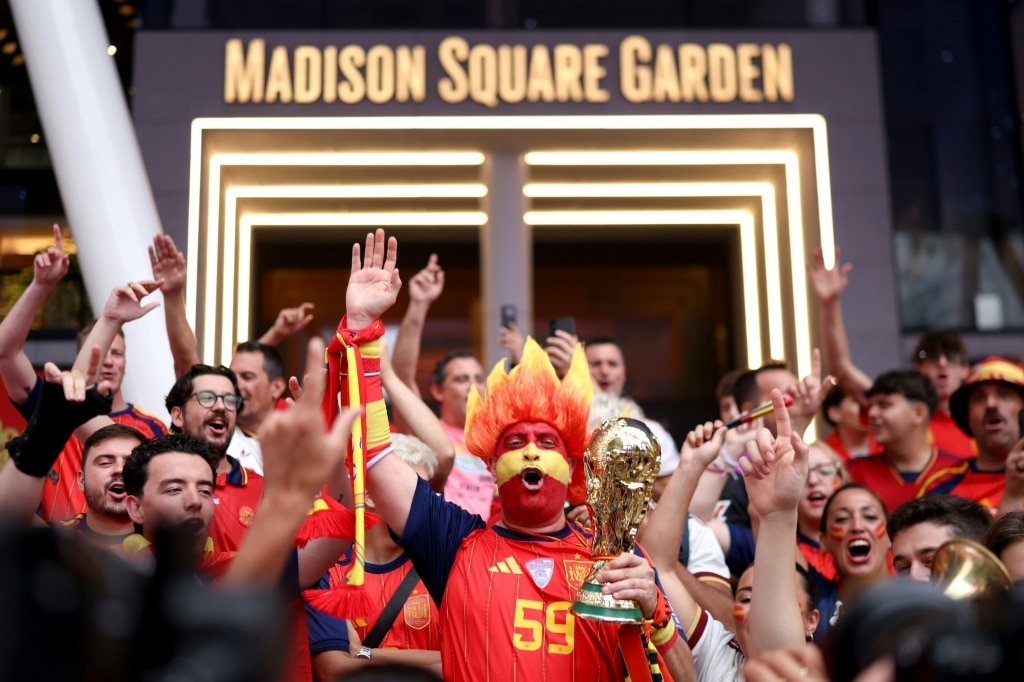
    Despite these headwinds, the sea of blue and white striped Argentine jerseys that have flooded Manhattan’s tourist hubs, Penn Station, and the city’s unofficial World Cup gathering spot at Times Square have rekindled the global soccer spectacle’s energy in the Big Apple. Even two four-legged fans got in on the action, decked out in Argentina’s iconic national kit. Across midtown, Spanish supporters gathered in their own pockets around Madison Square Garden, one fan clutching a replica World Cup trophy in anticipation of kickoff.

    Florencia Luzinin, a 30-year-old Argentine dentist who traveled to be part of the final buildup, summed up the emotion surrounding the match for many fans, noting this is widely expected to be Lionel Messi’s final World Cup appearance. “I’m very nervous because I love Argentina. It’s the final. It’s probably the last of Messi. So maybe it’s our day. I don’t know. We came across a few Spaniards but I don’t look at them,” she said.

    Alessandra Pichler, a 27-year-old Spanish supporter, predicted a 3-1 win for her side and praised the U.S. hosting effort. “I think the US has done a great job hosting all the games I’ve been to. I’ve been very impressed,” she added.

    Chip Parham, a New York-based film festival organizer who was gearing up to watch the match, said the drop-off in local interest after the U.S. exit followed a familiar pattern for international sporting events held on American soil. “I think that a reaction for people to lose interest in the World Cup when their country is eliminated is the same as any sporting event. In any city there is a decline in interest for any sporting event that doesn’t feature a local team. With the exception of the Super Bowl,” he explained.

    Howie Ray, a 42-year-old New Yorker who shifted his support to England after the U.S. elimination, echoed that observation, noting that even with both finalists in place, local engagement remained muted outside of concentrated fan pockets in Midtown. “It’s been slightly overshadowed. I think there was fatigue after all the games of the group stage and then the US getting eliminated. Spain and Argentina also have relatively small immigrant populations in the city,” Ray said. “A lot of my friends have felt disconnected the entire tournament due to the tickets being unaffordable.”

    For the thousands of fans who cannot secure or afford tickets to the 82,500-capacity MetLife Stadium in East Rutherford, New Jersey, a wide range of alternative watch party options have popped up across the city. Global Citizen is hosting an all-star live concert in Central Park that will run simultaneously with the final, while the American Museum of Natural History is offering fans the unique chance to watch Messi’s bid for a fourth Argentine World Cup title alongside the institution’s iconic dinosaur exhibits.

    Even with tepid widespread engagement outside of Midtown, the 2026 co-hosted World Cup has left a measurable mark on New York’s sporting landscape. New York City Comptroller Mark Levine confirmed that Gotham FC, the city’s professional women’s soccer team, recently drew the largest crowd ever recorded for a women’s sporting event in New York history, a bump organizers attribute to broader World Cup-fueled interest in soccer. New York Mayor Zohran Mamdani also made headlines ahead of the final for watching England’s quarterfinal exit to Argentina with incarcerated people at the city’s Rikers Island jail facility.

    Ahead of kickoff, city officials reaffirmed their commitment to making the World Cup accessible to all New Yorkers. “We said from the beginning that the World Cup belongs to New Yorkers. This summer, we proved it,” Mamdani said. As of Saturday, air quality at MetLife Stadium had returned to normal, clearing the final hurdle for Sunday’s historic showdown.