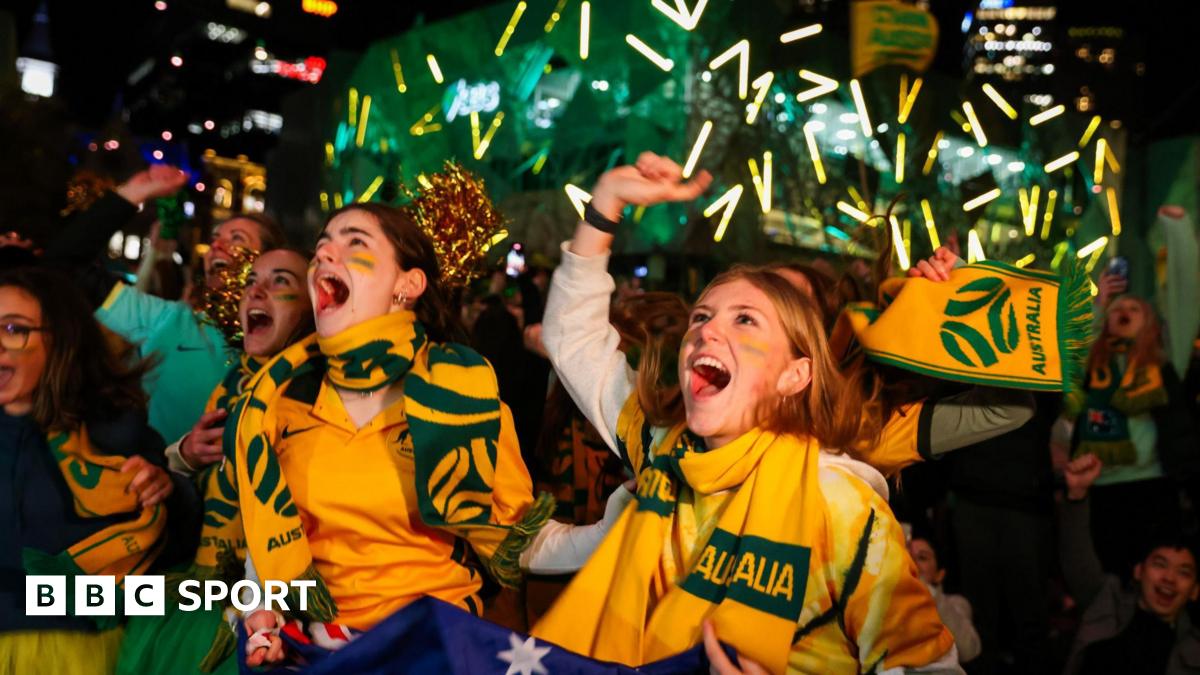
For nearly two decades, Melbourne’s iconic Federation Square has stood as the beating heart of Australian World Cup fandom, drawing thousands of passionate supporters together to cheer on the national team under open skies. But earlier this year, the venue’s manager, Melbourne Arts Precinct, ended that long-running tradition, announcing a full ban on public screenings for the 2026 FIFA World Cup – a decision that has now been reversed by the top level of the Victorian state government.
The original ban stemmed from repeated incidents of unruly, damaging behavior by a small subset of fans at past major tournament screenings. During Australia’s historic round-of-16 run at the 2022 Qatar World Cup, viral videos of jubilant crowd celebrations hid underlying trouble: multiple people were injured by illegally deployed flares and thrown projectiles. Tensions boiled over again at the 2023 Women’s World Cup, when fans charged barricades during Australia’s semi-final clash with England. The chaos forced organizers to cancel the planned public screening of the Matildas’ third-place playoff match at the venue, leaving thousands of supporters disappointed.
Citing these past disruptions, Melbourne Arts Precinct CEO and director Katrina Sedgwick announced the full ban in early March, arguing that the behavior of a small minority had been “unacceptable and damaging to Fed Square” and could not be tolerated for the upcoming 2026 tournament. The decision marked the first time in more than 20 years that the venue would not open its big screen to the public for World Cup matches, a tradition stretching back to the Socceroos’ legendary 2006 World Cup campaign.
But the announcement sparked immediate backlash from Australia’s peak football governing body Football Australia, fan groups, and the general public, who pushed for state leaders to intervene. Football Australia CEO Martin Kugeler argued the ban ran counter to Melbourne’s identity as Australia’s sporting and multicultural capital, pointing to the decades of shared iconic memories created at Federation Square screenings. Patrick Clancy, chair of the Football Supporters Association Australia, added that the viral global reach of 2022 Fed Square celebrations had turned the venue into a global symbol of Australian football passion, and fans were eager to recreate that collective energy for the 2026 tournament. The governing body also noted that a ban would harm local businesses that rely on the influx of tens of thousands of fans for tournament screenings.
Heeding that call, Victorian Premier Jacinta Allan overturned the ban in an official statement, making clear that she believed the community deserved the chance to gather for free, shared entertainment. “I disagree with that decision – and I am overturning it,” Allan said. “There’s always a risk of bad behaviour from a few at every public gathering, but police and security will be on site, and there’ll be zero tolerance for it. Now more than ever, people deserve more free stuff to do together in the city.”
The 2026 FIFA World Cup, co-hosted by the United States, Canada, and Mexico, kicks off on June 11, with the final scheduled for July 19. Australia’s national team has been drawn into a group with Turkey, Paraguay, and co-host the United States, and will now have their matches broadcast for free on Federation Square’s big screen for fans across the state to attend.