分类: sports

  • A black jaguar oracle in Rio de Janeiro sniffs Brazil to beat Scotland in Group C challenge

    A black jaguar oracle in Rio de Janeiro sniffs Brazil to beat Scotland in Group C challenge

    As the 2023 FIFA Women’s World Cup builds up to a critical Group C showdown between Brazil and Scotland, a unique new animal oracle has thrown its weight behind Brazil – and most soccer fans are eager to see if its prediction will hold true. On Monday, Poty, a majestic black jaguar based at Rio de Janeiro’s BioParque, stepped into the global spotlight for a lighthearted pre-match forecasting event that drew crowds of local residents and curious soccer supporters.

    The event organizers set up two specially designed enrichment boxes for the big cat, each decorated to represent one of the two competing nations. As onlookers held their breath, Poty slowly approached the offerings, sniffing each box carefully to weigh her decision. After a few moments of consideration, she made her decisive move, selecting the box marked with Brazil’s national colors. But in a twist that has sparked discussion among the jaguar’s handlers, Poty doubled back after her initial pick to give the Scotland box a second, thorough inspection.

    That small, final gesture is not something to brush off, according to Caio de Souza Silva, a biologist who works closely with Poty at BioParque. Speaking to reporters after the event, Silva noted that the jaguar’s second look could signal a far more challenging match for Brazil than many fans expect. “Maybe it indicates a tough game for us,” Silva explained. “Maybe it’s a win, but it could also be a more complicated match. Hopefully we don’t concede a goal, but it may suggest a more physical game for Brazil.”

    Heading into Wednesday’s clash, which is set to take place in Miami, Group C standings remain tightly contested. Brazil currently sits as co-leader of the group alongside Morocco, with both nations holding four points. Brazil edges out Morocco on goal difference, putting them in a strong position to advance. Scotland, meanwhile, is not far behind with three points, and the side remains in contention to move on to the knockout stage regardless of the result of their match against Brazil. In the other Group C fixture matchday, Morocco will face Haiti, a side that has yet to earn a single point in the tournament so far.

    Animal oracle predictions have become a beloved quirky tradition for major international soccer tournaments, stretching back to the iconic Paul the Octopus who rose to fame for his perfect prediction streak at the 2010 World Cup. For many fans, these lighthearted forecasts add an extra layer of fun and anticipation ahead of high-stakes matches.

  • World Cup sees first weather delay as fans cleared from seats at France-Iraq match in Philadelphia

    World Cup sees first weather delay as fans cleared from seats at France-Iraq match in Philadelphia

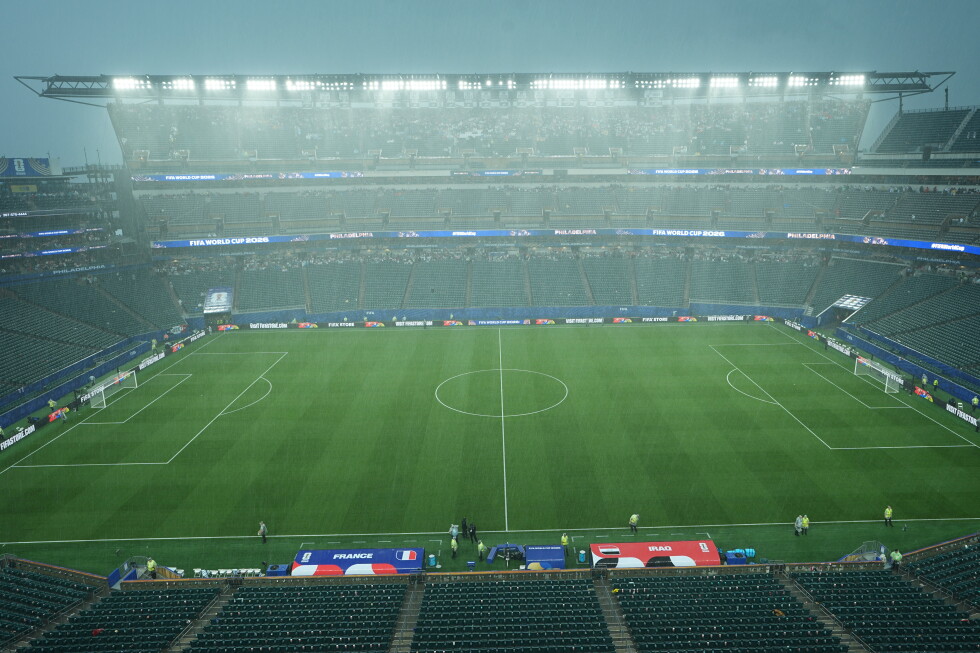
    A sudden outbreak of heavy rain and an approaching severe thunderstorm disrupted the 202X FIFA World Cup group stage match between France and Iraq in Philadelphia on Monday, forcing thousands of spectators to evacuate their seats for shelter during the halftime break. This marked the first weather-related delay of the entire tournament, and forecast models also predicted heavy precipitation for the later scheduled match between Norway and Senegal in East Rutherford, New Jersey that same night.

    When the halftime interval began, France had already secured a 1-0 lead over Iraq. As storm clouds gathered rapidly, stadium officials triggered emergency safety protocols, posting alerts on the main venue scoreboard that instructed all attendees to move immediately to the stadium’s covered concourses and enclosed structures, with a clear warning that a severe thunderstorm system was imminent. Torrential sheets of rain poured down throughout the extended halftime, with crowds of fans huddling together in walkways and under concrete overhangs to wait out the downpour.

    Initially, game organizers anticipated the delay would add just 15 extra minutes to the standard 15-minute halftime break. But as unfavorable weather conditions persisted, the extension stretched on, and officials later updated the crowd that play would only resume once conditions were officially cleared as safe for players and spectators. FIFA’s official safety guidelines mandate that all matches must be halted and seating areas fully evacuated for a minimum of 30 minutes if lightning is detected within an 8-mile radius of the venue, with the 30-minute timer resetting after each new lightning strike.

    Long before the halftime evacuation order, the match had already been affected by wet conditions, as heavy rain began falling in the 37th minute of the first half. Many spectators pulled out waterproof ponchos to stay dry and chose to remain in their seats through the early downpour, only moving when the formal shelter order was issued at halftime. A small handful of attendees opted to ignore the initial warning and stay in their open seats, prompting stadium staff to issue a second public announcement requesting that they relocate to covered safety areas.

  • World Cup what to know: Cristiano Ronaldo aiming to get on track after disappointing start

    World Cup what to know: Cristiano Ronaldo aiming to get on track after disappointing start

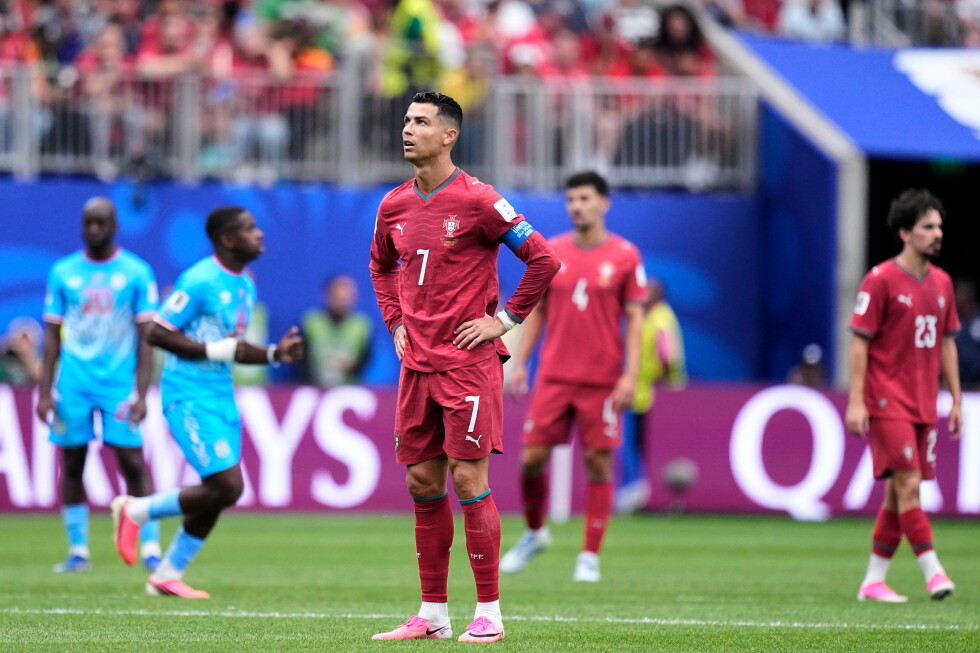
    The 2026 FIFA World Cup has already delivered no shortage of star power and memorable storylines through its opening matches, with global superstars Lionel Messi, Kylian Mbappé and Erling Haaland living up to their billing as tournament favourites. But one iconic name has found himself at the centre of unexpected scrutiny: 41-year-old Portugal legend Cristiano Ronaldo.

    Ronaldo arrived in North America for this World Cup chasing a unique piece of history, aiming to become the first player to score in five different men’s World Cup tournaments, extending his record to six straight editions. Instead, his opening outing against debutants Congo was far from memorable: the forward squandered two clear second-half scoring chances as Portugal were held to a surprising 1-1 draw, leaving the Portuguese camp hungry for a bounce-back performance. Ronaldo and his side will get that opportunity on Tuesday, when they face Uzbekistan in Houston as they look to get their Group K campaign back on track.

    Portugal entered the tournament as one of the pre-tournament favourites to lift the trophy, and a three points against Uzbekistan are critical to stay in contention for knockout stage qualification. Group K opened with Colombia claiming a full three points in their opener against Uzbekistan, while Congo earned a historic point in their first World Cup appearance in 52 years. The Group K doubleheader concludes on Tuesday night when Colombia face Congo in Guadalajara, Mexico, looking to lock in their place in the knockout round just two matches into the group stage.

    Colombia, who missed out on qualification for the 2022 Qatar World Cup, got off to a flying start in their opener: Liverpool winger Luis Diaz notched one goal and one assist in a 3-1 victory over Uzbekistan, putting them on the cusp of early progression. However, they will face a tough test against a well-organized Congo side that already proved they can frustrate elite opposition by holding Portugal. Congo will look to forward Yoane Wissa, who made history for his nation by scoring their first World Cup goal in 52 years, a first-half stoppage-time header against Portugal, to repeat his heroics against Colombia.

    Alongside the Group K action, three critical Group L matches will unfold across North America on Tuesday, headlined by England’s showdown with Ghana in Foxborough, Massachusetts. English captain Harry Kane has already made history in this tournament, notching a brace in the Three Lions’ opening 4-2 win over Croatia to bring his career World Cup goal tally to 10, matching Gary Lineker’s all-time record for an English player. The result also pushed Kane into a seven-way tie for seventh on the men’s World Cup all-time scoring charts. Against Ghana, Kane has a chance to climb further: one more goal will draw him level with Germany legend Jürgen Klinsmann and Hungary great Sándor Kocsis for sixth on the all-time list. A win over Ghana would also book England’s spot in the knockout stage for the third consecutive World Cup.

    Ghana head into the match surprisingly tied with England atop Group L, having earned a dramatic 1-0 opening win over Panama thanks to Brandon Thomas-Asante’s goal in the fifth minute of second-half stoppage time. The Black Stars are targeting their first trip to the World Cup knockout round since a historic quarter-final run in 2010, and enter the match with historical context: England has never lost to an African nation at the World Cup, holding an unbeaten record of five wins and three draws across 88 years of tournament play.

    The day’s opening Group L fixture, which kicks off in Toronto before England face Ghana, is a do-or-die clash between Panama and 2018 runners-up Croatia. Both sides suffered opening-match defeats, leaving them rooted to the bottom of the Group L table, two points back from England and Ghana. For both nations, a loss will all but end their hopes of progressing to the knockout round, while a win keeps their tournament dreams alive. Panama looked set to earn a credible point against Ghana before Thomas-Asante’s late strike broke the deadlock, while Croatia, who finished third in Qatar 2022 and second in Russia 2018, are already on the brink after a 4-2 defeat to England in their opener.

    The busy day of World Cup action is bookended by a series of the tournament’s latest off-field and on-field milestones. Defending champion Argentina already booked their knockout spot after a 2-0 win over Austria, where Messi scored his 17th and 18th World Cup goals, breaking Miroslav Klose’s all-time record of 16 World Cup goals. Messi also notched an unwanted personal record: his first-half missed penalty marked his third non-shootout penalty miss in World Cup play, one more than Ghana’s Asamoah Gyan for the most all-time, while he also set the record for most penalty kicks taken in tournament history.

    Additional late tournament updates include United States star Christian Pulisic returning to team training after missing his side’s last group match with a soft tissue injury, Germany defender Nico Schlotterbeck being ruled out of the rest of the tournament with an ankle injury, and the tournament already seeing a record-breaking goal surge, with 121 goals scored across the first 40 matches, with many analysts crediting the official tournament match ball for the open play scoring surge.

    For fans looking to tune into the full slate of June 22 matches, all fixtures will be broadcast across Fox Sports networks and Peacock in the United States, with Telemundo providing Spanish-language coverage. The full kickoff schedule (in EDT) is as follows: Portugal vs Uzbekistan at 1 p.m. in Houston, England vs Ghana at 4 p.m. in Foxborough, Panama vs Croatia at 7 p.m. in Toronto, and Colombia vs Congo at 10 p.m. in Guadalajara.

  • Kylian Mbappé of France scores his 15th World Cup goal, tying for 3rd most in history

    Kylian Mbappé of France scores his 15th World Cup goal, tying for 3rd most in history

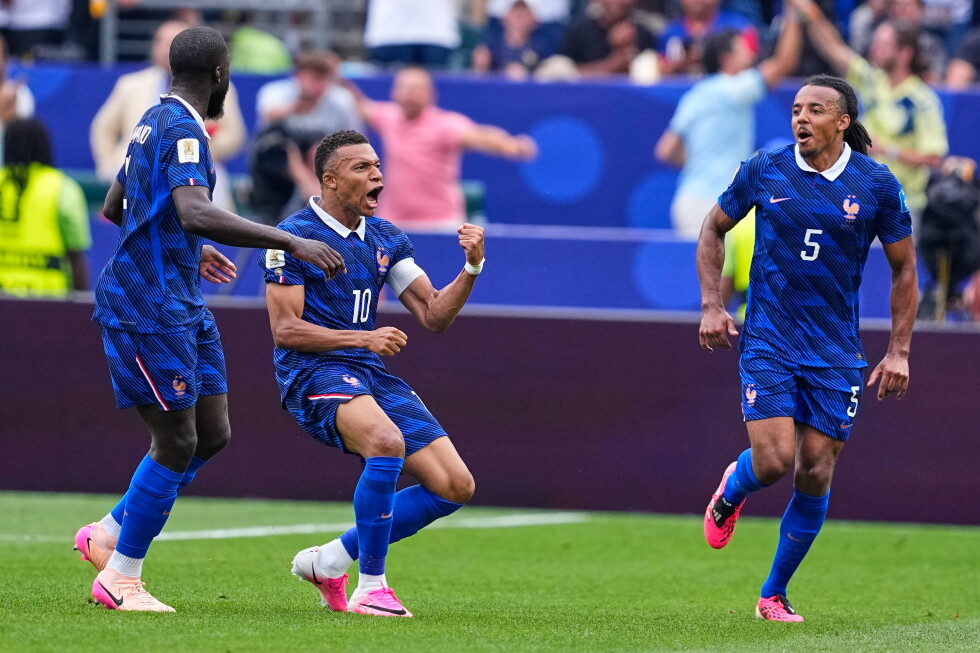
    PHILADELPHIA – On a milestone Monday at the FIFA World Cup, French superstar Kylian Mbappé continued his chase of all-time World Cup scoring greats — including new record holder Lionel Messi — by notching his 15th career goal in the tournament, tying him for third on the sport’s most prestigious global scoring list.

    The strike came in the 14th minute of France’s group stage clash against Iraq, marking Mbappé’s 100th appearance for the French senior national team and putting Les Bleus ahead 1-0 early. Playing in his third consecutive World Cup at 27, the iconic forward matched Brazilian legend Ronaldo’s career tournament goal total, while moving past West Germany’s Gerd Müller in the all-time rankings. Only Germany’s Miroslav Klose, who sits second with 16 World Cup goals, and new record-holder Messi stand ahead of Mbappé at the top of the chart.

    Messi himself rewrote the record books earlier the same day, scoring twice for Argentina to push his career World Cup total to 18, the new all-time high. The Argentine captain had already drawn level with Klose the previous week, notching his first career World Cup hat trick in Argentina’s 3-0 victory over Algeria in Kansas City, Missouri.

    Mbappé’s 15th goal was a clinical 20-yard left-footed finish that beat Iraq goalkeeper Ahmed Basil, who earned his first start of the tournament after Iraq captain Jalal Hassan conceded four goals in the team’s opening 4-1 defeat to Norway.

    A proven winner at the international level, Mbappé was a key part of France’s 2018 World Cup title run and helped the side reach the 2022 final in Qatar, where he claimed the Silver Ball as the tournament’s second-best player. Entering this year’s World Cup, France entered as joint title favorites alongside Spain, with Mbappé leading a dynamic attacking line that also includes breakout young talent Désiré Doué and reigning Ballon d’Or winner Ousmane Dembélé.

    Mbappé is already one of just two players in history to score a hat trick in a World Cup final, having notched three against Argentina in the 2022 title match. He entered the clash against Iraq having already scored two goals in France’s opening 3-1 win over Senegal, bringing his 2024 tournament total to three ahead of the group stage’s second match.

    The goal against Iraq also pushed Mbappé to the top of France’s all-time international scoring chart. He now has 59 goals for Les Bleus, two clear of former teammate Olivier Giroud, who previously held the French record.

    Breaking down his 15 World Cup goals by tournament, Mbappé scored four times during France’s 2018 title run, notched eight to win the 2022 Golden Boot as top scorer, and has added three goals so far in this year’s edition — putting him well on track to challenge even Messi’s new record before the tournament concludes.

  • Messi becomes World Cup all-time leading scorer – how has he stayed at the top?

    Messi becomes World Cup all-time leading scorer – how has he stayed at the top?

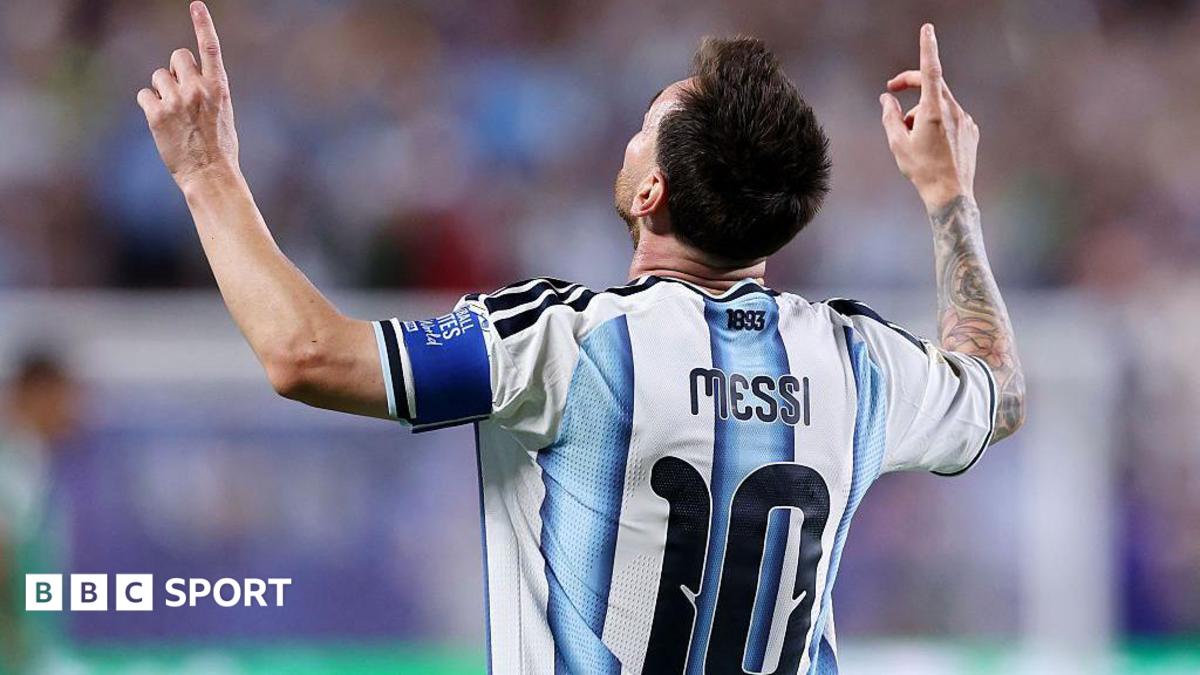
    At the 2026 FIFA World Cup, 38-year-old Lionel Messi delivered another legendary performance that cemented his status as one of the greatest players to ever step onto a football pitch. During Argentina’s second group stage match against Austria, the Argentine captain bagged a brace that secured a 2-0 win for the defending champions, booked their spot in the tournament’s last 32, and broke a record that has stood for more than a decade.

    Messi’s opening goal of the match – a signature left-footed curler into the top corner – was his 17th World Cup goal, moving him one ahead of former German striker Miroslav Klose’s previous all-time record of 16. He would add an 18th from a tight angle, slipping past two defenders to finish clinically. This incredible run of form sees the Inter Miami forward enter uncharted territory: he has now scored in six consecutive World Cup matches, a feat matched only by Just Fontaine (1958, France) and Jairzinho (1970, Brazil) – no player in history has ever scored in seven straight World Cup fixtures.

    The 38-year-old’s scintillating start to the tournament also puts him in pole position for the Golden Boot, the only major individual World Cup prize he has never claimed. He already notched a hat-trick in Argentina’s opening match, and with one final group game against Jordan still to play, he has ample opportunity to extend his lead. Beyond scoring, Messi also continues to rewrite World Cup playmaking records: according to Opta statistics, he is just one assist away from breaking the all-time assist record that dates back to 1966, currently shared with his compatriot and idol Diego Maradona.

    The question on every football fan’s mind is: how does a player of Messi’s age, who has already won every possible trophy in the sport, and has played in Major League Soccer for three years heading into this tournament, continue to deliver dominant performances on the game’s biggest stage?

    Messi’s late-career dominance is not without precedent. Back in 2018, a 31-year-old Messi and Argentina were knocked out of the World Cup by eventual champions France in a iconic seven-goal thriller, leading many to assume his World Cup story was drawing to a close. Four years later, he silenced the doubters by captaining Argentina to a third World Cup title in Qatar, scoring seven times along the way. Now, another four years on, he continues to break new ground.

    French veteran Olivier Giroud, who won the 2018 World Cup alongside the team that knocked out Argentina and is still playing top-flight Ligue 1 football at 39, said Messi’s longevity comes from his internal drive rather than a need to outperform younger stars. “It’s clear just how passionate Messi still is for football and you can tell it’s in his DNA to always be a competitor, to try and outdo himself more than anyone else,” Giroud explained. “Playing at a high level at our age, you have to pay close attention to your life hygiene – how you sleep, your diet, and taking care of your body, because that’s the thing you rely on for work. The key thing is still having the desire, the motivation, the passion, to keep going.”

    Messi is far from the only elite sports star to maintain elite form into his late 30s – men’s tennis great Novak Djokovic is one of the most prominent recent examples. But sports psychologist Michael Caulfield, who has worked in professional football for more than 20 years, says this level of longevity relies on a rare combination of cutting-edge physical preparation and unmatched mental discipline.

    “Players know themselves inside out by that age, so there’s not a lot left to teach them about how to manage as they get older,” Caulfield explained. “From a physical point of view, they take advantage of every breakthrough in sports science. But mentally, it’s about whether they have the capacity in their minds to deal with the daily grind. They have to be willing to spend the whole year working hard on the same things, and if you’ve been doing that for 25 years, that takes huge self-discipline. They have to maintain the sheer will to go through the rehab process after injuries when they know they’ve already won everything. All the top athletes I’ve ever known, they’re all willing to try and go back one more time, because they love doing what they do. It’s the same reason you still see Bruce Springsteen or Madonna touring – it is completely intrinsic to who these stars are.”

    Former England and Manchester United striker Wayne Rooney, who faced Messi in two Champions League finals that the Argentine won, says Messi’s unrivaled technical ability has allowed him to offset any natural age-related decline in athleticism. “Coming into this World Cup, I pretty much wrote Argentina’s chances off because I didn’t think he could carry on [at that level] for another one,” Rooney admitted. “The one thing age can never take away from players is their ability with the ball. You put him around the penalty box and he has the ability to do things others can’t. It’ll be interesting to see whether it can last the rest of the tournament. [If it does] then it wouldn’t surprise me if we see him in the next World Cup for Argentina as well.”

    While Messi is generally known as a reserved and humble figure off the pitch, his former Barcelona teammate Cesc Fabregas says that competitiveness comes to the fore the second he steps onto the pitch. “When he crosses the white line, he is a very different person,” Fabregas said in the BBC iPlayer documentary *Rivals: Messi vs Ronaldo*. “He wants to win at any cost.”

    That relentless competitiveness, paired with a childlike love for the game, is what keeps him going even after he has achieved every possible honor in football. “Athletes always think there’s something left to achieve,” Caulfield says. “They’re wondering if there is something they haven’t quite mastered yet. But more than anything they want to keep feeling that childlike joy of doing what they love. You see Messi still doing keepy-ups or a rondo, and he still loves football like a little boy.”

    Messi’s record-breaking performance also draws an interesting contrast with his long-time rival Cristiano Ronaldo, who is making his sixth World Cup appearance with Portugal at 41. The veteran made little impact in Portugal’s opening draw with DR Congo, and Rooney says Messi’s historic display will not have escaped Ronaldo’s attention. “Ronaldo will have been fuming,” Rooney said. “Even at 41 he will still be expecting to be top goalscorer. But that attitude is part of his own greatness. The two of them have spurred each other on. They have this self-belief and arrogance, in a good way, where they know what they have done, have nothing to prove, and it’s up to the likes of Mbappe and Haaland to prove they can take over.”

    As the tournament progresses, all eyes will remain on Messi as he chases more history, both with Argentina and in the individual record books.

  • Lionel Messi becomes top scorer in World Cup history with two more goals for Argentina

    Lionel Messi becomes top scorer in World Cup history with two more goals for Argentina

    ARLINGTON, Texas — For decades, Lionel Messi has built his legacy on turning milestones into routine, and on Monday at the 2026 FIFA World Cup at AT&T Stadium, the Argentina captain added another unprecedented entry to his already historic career. Widely regarded as the greatest men’s soccer player to ever step onto the pitch, Messi notched two goals against Austria to lift defending champion Argentina to a 2-0 group stage victory, pushing his all-time World Cup goal total to a new record of 18. The performance also locked Argentina’s spot in the tournament’s knockout round, following two opening group wins that have put the South American side in a strong position heading into the knockout stage.

    The historic evening came with its share of early drama: Messi had a golden chance to break the record in the ninth minute, but sent his penalty kick wide of the right post after a foul on Argentina striker Lautaro Martinez inside the box. Visibly frustrated by the miss in the moment, Messi said after the match he channeled that disappointment into pushing forward to find the back of the net. “There were moments when I was really angry about missing the penalty, but I was able to make up for it,” the 8-time Ballon d’Or winner told reporters, reflecting on the match.

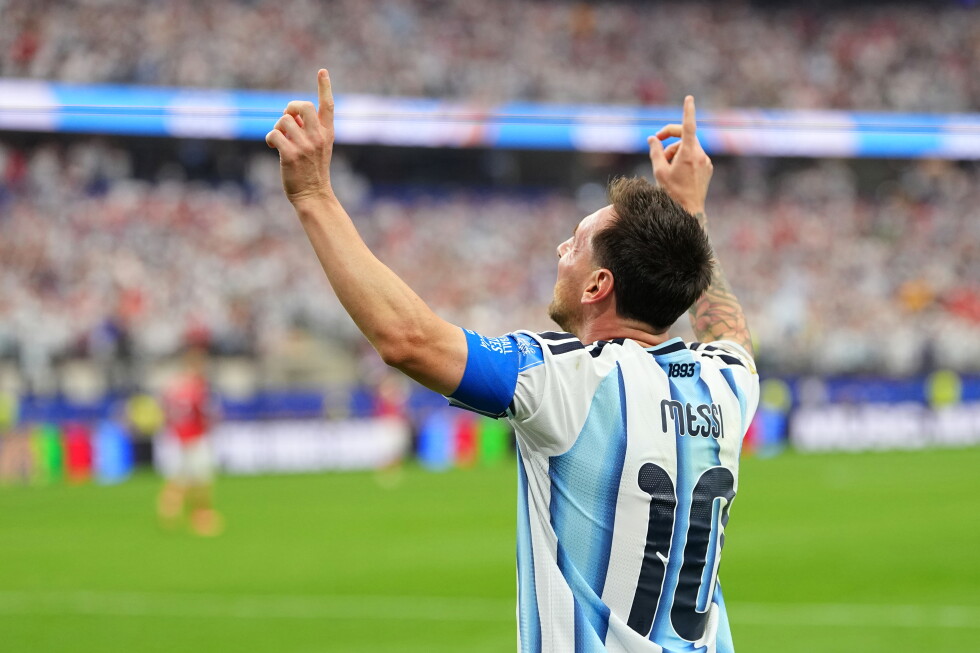
    Messi’s first record-breaking goal arrived in the 38th minute, just two days ahead of his 39th birthday and amid personal concern over his father Jorge’s ongoing undisclosed medical treatment back home in Argentina. Facundo Medina threaded a pass through the Austrian defense that Thiago Almada let run through to Messi, who hit a 20-yard left-footed shot that caught Austrian goalkeeper Alexander Schlager leaning the wrong direction. As the ball rippled into the net, the 35-year-old ran to the corner flag, thrust his right arm into the air, and celebrated in front of a sold-out crowd of 70,649 fans, most of whom were cheering loudly for Argentina.

    He added his second of the match and 18th overall World Cup goal in stoppage time, pouncing on a rebound after Schlager saved his first attempt and firing through a crowd of Austrian defenders to seal the 2-0 win. The brace marked the sixth consecutive World Cup match in which Messi has found the back of the net, an achievement only matched by two other greats in tournament history: France’s Just Fontaine and Brazil’s Jairzinho.

    Messi’s path to the record began last Tuesday in Kansas City, when he scored his first career World Cup hat trick in Argentina’s 3-0 opening group win over Algeria. That performance pulled him level with former Germany striker Miroslav Klose, who held the previous record of 16 goals scored across 24 World Cup matches between 2002 and 2014, when Klose’s Germany beat Messi’s Argentina in the World Cup final. In an interview published in June, Klose said he fully expected Messi to break his record, and even welcomed the achievement. “I expect my record to fall in this tournament,” Klose told German outlet *Sueddeutsche Zeitung*. “With the larger field of competing teams there are more games and so more chances to score goals. And I assume Argentina and France will go far. That’s perfectly OK, the record will be broken eventually anyhow and Messi is welcome to be the one who does it. I’m a big fan of Messi, always have been. Messi is a genius.”

    Monday’s match marked Messi’s 28th World Cup appearance, extending his own record for the most matches played in men’s World Cup history. It also came 20 years to the day after his World Cup debut in Germany, where he scored his first ever World Cup goal, and marked his 200th senior appearance for the Argentina men’s national team. Beyond the record books, Messi emphasized after the match that the team’s result was the most important outcome of the night, particularly as it secures Argentina’s place in the knockout round and removes pressure from their final group match. “Beyond anything I’m so happy for the win,” Messi said. “It was huge, tough and difficult. It would allow us to be relaxed to what’s ahead. All matches in this World Cup are very even, very intense. I’m enjoying this moment and craving to enjoy with my teammates.”

    The personal context around the historic night has added extra weight to Messi’s achievement: last week, Messi’s family confirmed that 68-year-old Jorge Messi, who has served as his son’s agent and been a foundational figure in Lionel’s career from childhood through his professional success, is undergoing medical treatment for an undisclosed health issue. After scoring his hat trick against Algeria, Messi was openly emotional after the match, revealing that his tears came after a run of difficult non-football-related days. Argentina has now scored five goals through its first two group matches, all of which have come from Messi, as the defending champion heads into the knockout stage of the tournament on a high note.

  • Giovanni Malagò elected president of the crisis-laden Italian soccer federation

    Giovanni Malagò elected president of the crisis-laden Italian soccer federation

    In a decisive electoral outcome for Italian soccer’s struggling governing body, Giovanni Malagò — the seasoned sports administrator who oversaw organization of the 2026 Milan Cortina Winter Olympics — has secured the top role at the crisis-hit Italian Football Federation (FIGC).

    Monday’s leadership vote delivered a clear mandate to Malagò, who claimed 68.58% of the ballots cast. His only challenger, former FIGC president Giancarlo Abete, captured just 29.17% of the vote, leaving Malagò with an overwhelming victory to steer Italian soccer through its current turbulent period.

    The incoming president faces an immediate high-stakes priority: filling the vacant head coaching position for Italy’s senior men’s national team. The role opened up after Gennaro Gattuso stepped down following the Azzurri’s failure to qualify for a third consecutive FIFA World Cup, a streak that has deepened frustration across the Italian soccer community. The exit follows the resignation of former FIGC president Gabriele Gravina, who left his post in the wake of Italy’s playoff defeat to Bosnia and Herzegovina in World Cup qualifying.

    Two familiar faces from previous Italian national team tenures have emerged as the leading contenders for the coaching job: Roberto Mancini and Antonio Conte. Mancini, who led Italy to a historic UEFA European Championship title in 2021, departed the Azzurri post shortly after the team failed to qualify for the 2022 World Cup to take the helm of Saudi Arabia’s national side. He left that role in 2024 and most recently parted ways with Qatari club Al-Sadd, leaving him available for the vacancy. Conte, who managed Italy at the 2016 European Championship, stepped down from his position at top Italian club Napoli earlier this year, making him another readily available candidate for the role.

    Beyond his recent work leading the Milan Cortina Olympics organizing committee, Malagò brings a long background in elite sports governance to the FIGC presidency. He previously served as president of the Italian National Olympic Committee and still holds a seat as a member of the International Olympic Committee, giving him deep connections and experience in global sports leadership as he takes on one of the most challenging roles in Italian soccer.

  • Germany defender Nico Schlotterbeck out for the rest of the World Cup with ankle injury

    Germany defender Nico Schlotterbeck out for the rest of the World Cup with ankle injury

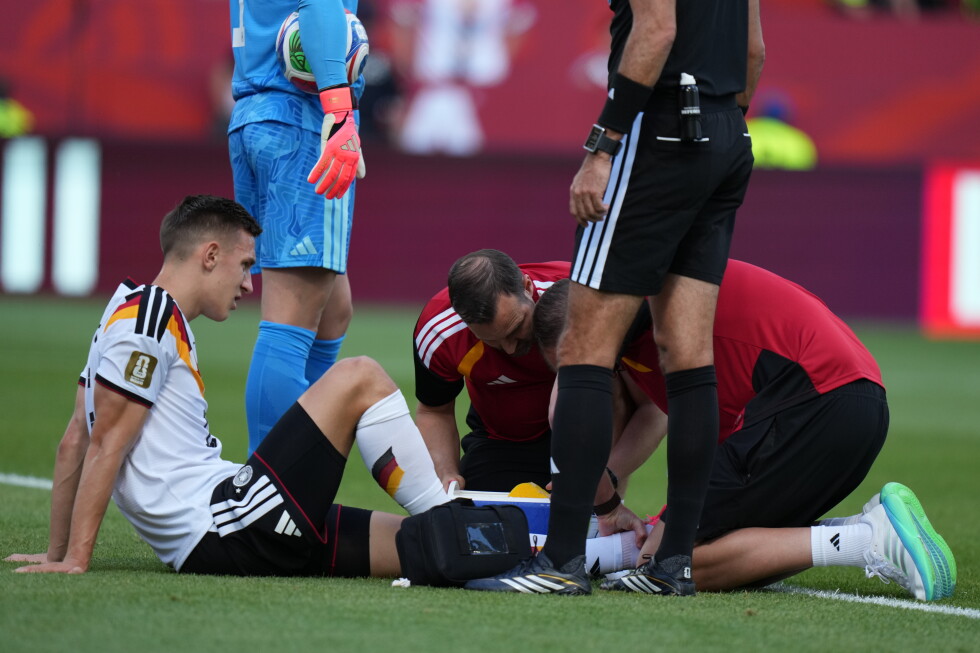
    WINSTON-SALEM, North Carolina — Germany’s FIFA World Cup campaign has suffered a major blow, as national team defender Nico Schlotterbeck will miss the rest of the tournament and an extended period of club action after picking up a serious left ankle injury during Saturday’s 2-1 victory against Ivory Coast.

    The German Football Federation confirmed Monday that follow-up medical assessments conducted Sunday at the national team’s training base in Winston-Salem uncovered a tear to the ankle’s medial ligament. The injury, which will sideline the Borussia Dortmund center-back for multiple months, brings an early end to his first World Cup run. Schlotterbeck had started in both of Germany’s opening two group-stage matches.

    Julian Nagelsmann, head coach of the German national side, expressed clear disappointment over the untimely injury, noting that Schlotterbeck — nicknamed “Schlotti” among teammates — has been an irreplaceable asset both in defense and in building attacking play from the backline. “This was shaping up to be his breakthrough tournament, his World Cup,” Nagelsmann said. “The whole squad has been supporting him since the injury happened, and we’re glad he has such a positive mindset that he’s already focused on his recovery.”

    In an unexpected turn, Schlotterbeck will remain with the German squad for the duration of the World Cup despite being unable to play. Nagelsmann emphasized that the 24-year-old still brings significant value to the team off the pitch, saying his continued presence in the camp is a major boost for the group.

    The coach also moved quickly to reassure fans that Germany remains well-staffed at the center-back position for their knockout stage run, naming four available defenders ready to step into the gap: Jonathan Tah, Antonio Rüdiger, Waldemar Anton, and Malick Thiaw.

    Saturday’s win over Ivory Coast has already locked Germany’s place in the tournament knockout rounds, with one group-stage match still to play. The four-time World Cup champion has officially secured first place in Group E ahead of their final group fixture against Ecuador, scheduled for Thursday in East Rutherford, New Jersey.

  • Salah celebrates historic win with fans in Vancouver

    Salah celebrates historic win with fans in Vancouver

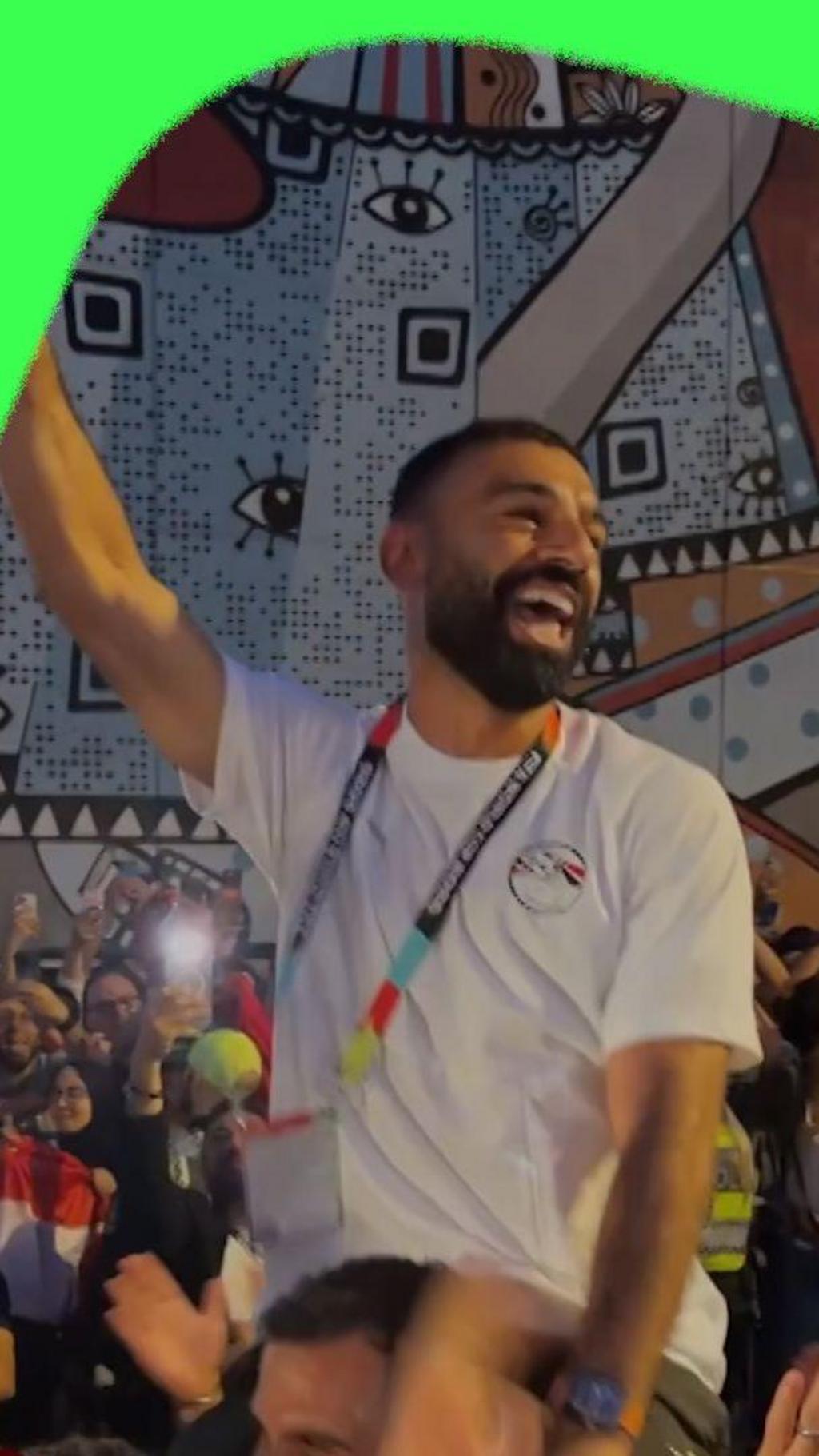
    A landmark moment in Egyptian football history has sparked joyful celebrations, with star forward Mohamed Salah leading street festivities alongside teammates and supporters in Vancouver following the North African nation’s first-ever win at the FIFA World Cup. The groundbreaking result ends a long drought of World Cup victories for Egypt, delivering a moment of national pride that transcended borders even for squad members and fans gathered abroad in Canada. Videos and on-the-ground reports capture the jubilant scene, where Salah and his fellow players joined fans in dance, reveling in the achievement that has cemented this match as a defining entry in Egyptian football lore. For years, Egypt’s national team had competed on the world’s biggest football stage without claiming a win, making this breakthrough result far more than a simple match victory—it is a historic milestone for the country’s football program. Supporters gathered in Vancouver joined fans across the globe in marking the occasion, turning city streets into an impromptu celebration of the long-awaited win that was capped by a decisive goal from Salah, who turned past World Cup disappointment to deliver the historic performance.

  • ‘I witnessed Maradona’s Hand of God’ – a goal still talked about 40 years on

    ‘I witnessed Maradona’s Hand of God’ – a goal still talked about 40 years on

    It was a completely unplanned afternoon that would go on to stick with me for the rest of my life. At 17 years old, I had never stepped foot inside a professional football stadium, and I had zero interest in the sport. But a last-minute phone call would land me a front-row spot to one of the most iconic matches in World Cup history: the 1986 quarter-final between Argentina and England.

    That morning, my family had no plans for the day. Then a call came in: a friend of my father had two extra tickets he couldn’t use, and he offered them to my mother and I. My father hesitated. It had been less than five years since the Falklands War ended, and he feared lingering political tensions would spill over into the stands between Argentinian and English supporters. My mother, though, did not overthink it. This was the World Cup, she argued – a once-in-a-lifetime experience that no teenager should miss. We were going.

    I treated my first ever football match like I was heading to a night out, not a sporting event. I pulled on my nicest clothes, caked on far more makeup than I needed, and spent more time daydreaming about meeting attractive foreign fans than focusing on the legendary players we were going to watch. My mother gave me a raised eyebrow but let me have my fun. The buzz started long before we reached the stadium, as we drove across Mexico City. Flags flapped out of every car window, and strangers yelled shared chants across stalled traffic. I joined right in, screaming “Viva México!” alongside everyone else, even though Mexico had already been knocked out of the tournament. Football didn’t matter to me then, but being part of that electric collective moment did.

    Walking into the Azteca Stadium for the first time took my breath away. The sheer size of it, the deafening noise, the explosion of color from fans’ kits and face paint – it felt like the entire world had converged on that single spot. Fans from every corner of the globe packed the stands, singing, laughing, and decked out in costumes. I barely paid attention to the kickoff; I was far too caught up joining the Mexican wave, swept along in the crowd’s rhythm. The match itself felt distant, almost like a background detail.

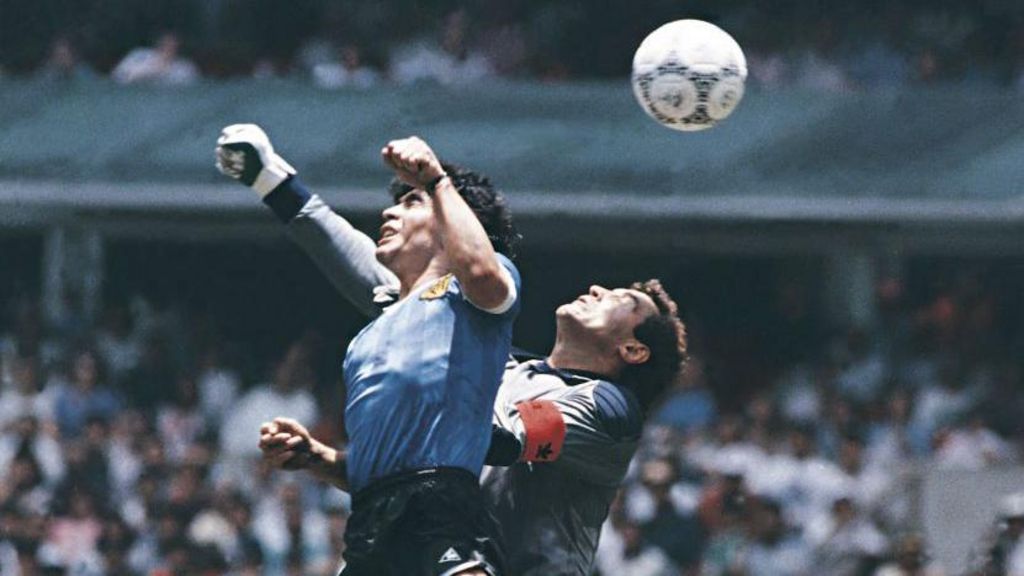
    Then everything changed in an instant. Suddenly, the entire stadium was on its feet. There was a burst of celebration, then confusion, then shouting as arguments broke out across the stands. It was a moment that would be debated for decades. The ball floated high above England’s penalty area, and Argentina’s Diego Maradona launched himself into the air to contest it with England goalkeeper Peter Shilton, who jumped to punch the ball clear. Instead, the ball bounced off Maradona and trickled over the goal line.

    At first glance, it looked like a clear header. For me, that was the moment the football stopped being background noise and became the only thing that mattered. Fans around me immediately started questioning the call: had he really scored with his head, or had he used his hand to push it in? Loud boos and protests rang out from the section of English supporters. Confused, I turned to the man sitting next to me and asked what all the commotion was. He explained Maradona had punched the ball into the net with his hand, but the referee had missed the foul and allowed the goal to stand. I was puzzled, and I had no idea in that moment that I had just watched one of the most infamous incidents in sports history. It would later become known globally as the “Hand of God”, named for Maradona’s own famous quip after the match: the goal had been scored “a little bit with my head, and a little bit with the hand of God.”

    The stands were still buzzing with heated debate over the controversial goal, so much so that almost everyone nearly missed what came four minutes later: Maradona’s second, far more extraordinary goal of the match. When I look back on that day, the Hand of God is not what I remember first. What sticks with me is that second run of play. Unlike the chaotic celebration that followed the first goal, the entire stadium went dead silent as Maradona dribbled the ball up the pitch from his own half.

    He spun past two English defenders right at the start of the run, then wove side to side down the field, dodging tackle after tackle, until he broke into the penalty area and slotted the ball into the back of the net. In an instant, the silence exploded into roars. I remember sitting there thinking: this is why people love football. Now I get it. What amazed me most was that even some of the English fans sitting near us joined in the applause, awed by the sheer brilliance of the play.

    When the final whistle blew, Argentina had sealed a famous 2-1 victory. As my mother and I walked back to our car, what stuck with me wasn’t just the match – it was the feeling of being inside the Azteca, a vast, iconic venue woven into the fabric of Mexico’s national history. It was more than just a stadium; it was part of our collective memory. Just one year earlier, Mexico City had been shattered by a devastating earthquake that left whole neighborhoods in rubble. I could still vividly remember the weeks after the disaster, when the air smelled of dust and grief, and the whole city held its breath. The Azteca had been one of the largest refuges for families who had lost their homes, a place where they found shelter and hope. Just standing there felt profound, almost sacred, yet outside those walls, the city had transformed into a joyful, alive hub of global celebration.

    As we walked, we ate tacos and fresh fruit covered in chile and lime from street vendors, talking and laughing, and I felt an overwhelming sense of pride in being Mexican. We laughed about how we leaned into every warm, loud stereotype of our country – the bright colors, the sombreros, worn with humor and defiance – and how as hosts, we opened our doors to the world with generosity and joy. Even the tournament’s official mascot, a chile pepper wearing a sombrero, captured that spirit perfectly: bold, playful, and unmistakeably Mexican.

    It took me many years to fully understand what I had witnessed that day. Football never became a huge passion of mine even after that match, but that moment has never faded. The first goal will always be controversial, it angered millions then and still sparks debate decades later, and when I later lived and worked in Argentina, my friends never missed a chance to tease my English colleagues about the Hand of God. But that controversy often overshadows what I saw next: a goal so spectacular, so breathtaking, that I would never have believed it possible if I hadn’t seen it with my own eyes. For me, that second goal is the one worth celebrating – the moment a 17-year-old girl who didn’t care about football finally understood why the sport captivates the world.