分类: sports

  • Ugarte has ‘most serious injury footballer can face’

    Ugarte has ‘most serious injury footballer can face’

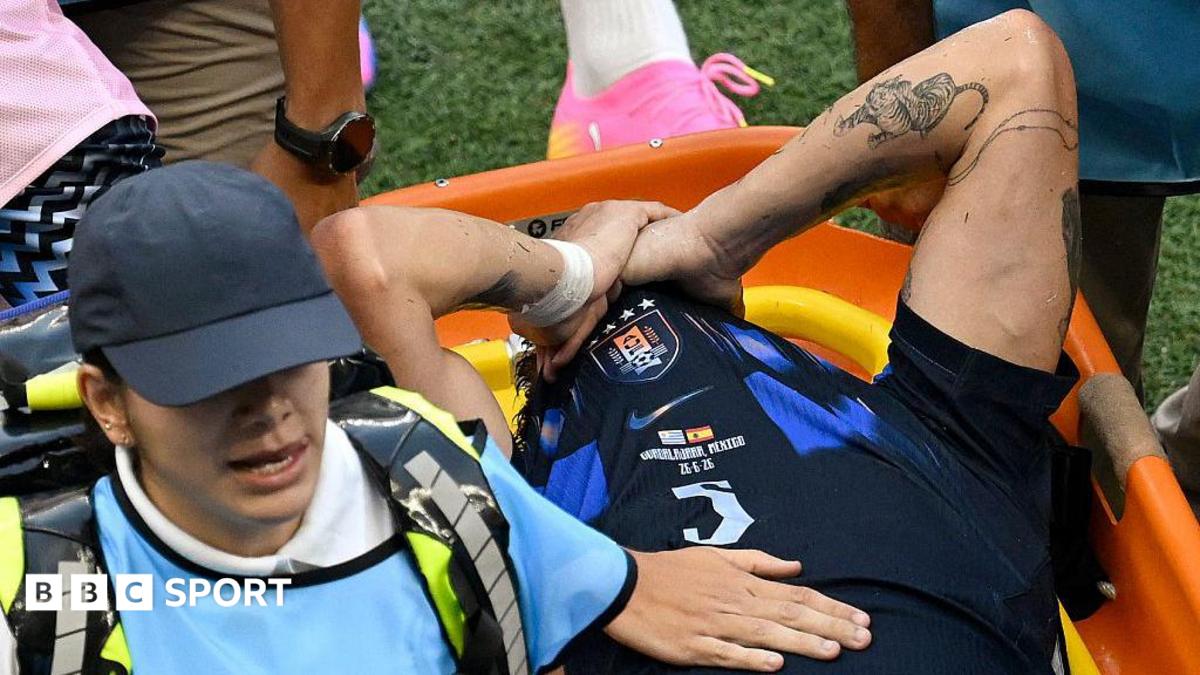
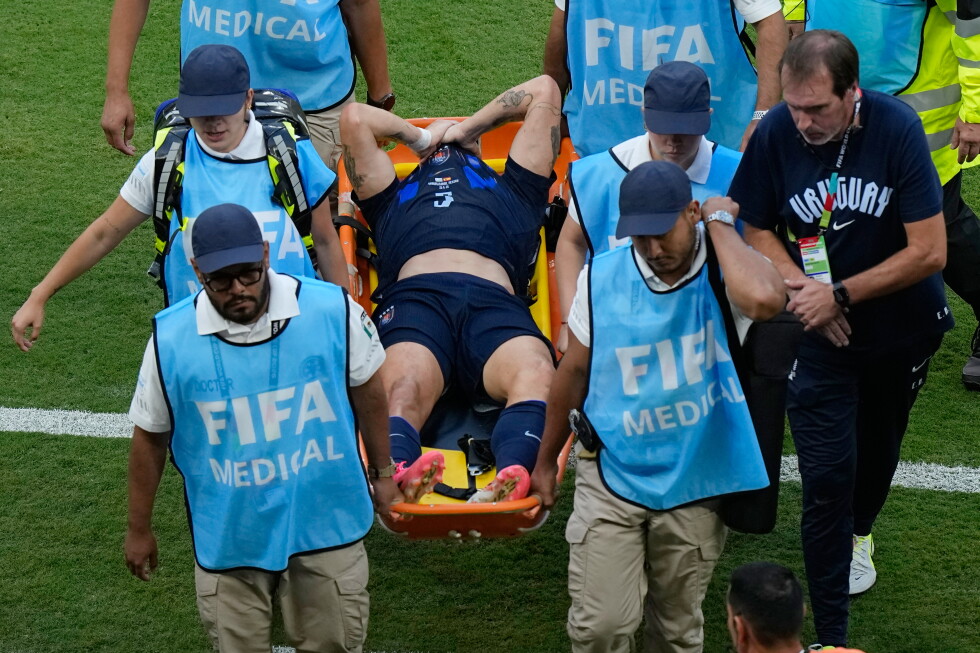
    The 2026 FIFA World Cup has delivered a devastating blow to Manchester United midfielder Manuel Ugarte, who suffered a career-altering knee injury while on international duty with Uruguay, leaving both the player and his club facing months of uncertainty. The 25-yearold sustained the ligament damage during Uruguay’s group-stage defeat to Spain in Guadalajara on Friday, when he twisted his knee awkwardly while attempting a tackle in the build-up to Spain’s match-winning goal. Ugarte was immediately carried off the pitch on a stretcher, sidelining him before he could see out the critical contest.

    After initial evaluations by Uruguay’s medical team on Saturday, Ugarte is now set to return to Manchester to undergo comprehensive scans and specialist assessments that will determine the full extent of the injury and the next steps for his treatment. Multiple Uruguayan media outlets have reported the injury is a torn cruciate ligament – a damage that typically keeps footballers out of action for six to nine months – and Ugarte’s own social media statement has reinforced these grim projections.

    In an Instagram post published Sunday, Ugarte opened up about the devastating turn of events, calling the injury “the most serious injury a footballer can face”. “Suffering this in one of the most important matches in my country’s history, and seeing it end this way without being able to stay on the pitch and support my team-mates until the final whistle, is something that will stay with me for the rest of my life,” he wrote. Despite the disappointment, the midfielder struck a defiant tone, vowing to comeback stronger than before. “Hitting rock bottom will make me stronger in every sense, and I truly believe that’s the case here,” he added. “Without a doubt, when life wants you to stop, it finds a way to let you know. It’s up to me to take the positives from this. Success in life is about starting again every time you fall.”

    While Manchester United has not confirmed the full diagnosis, waiting for their own clinical team’s assessment, club officials are privately preparing for the worst-case scenario. In an official statement, the club said: “Manchester United can confirm that Manuel Ugarte has suffered a knee ligament injury whilst representing Uruguay in Friday’s World Cup group-stage match against Spain. Assessment of the injury is ongoing to determine the best course of treatment and the rehabilitation timescale. Everyone wishes Manuel a successful recovery and we will be supporting him every step of the way.”

    The injury comes at a pivotal moment for Ugarte, who joined Manchester United from Paris Saint-Germain for a £50.8 million transfer in 2024. The midfielder has failed to live up to the expectations placed on him at Old Trafford, with his last appearance coming in a home Premier League defeat to Leeds United on April 13. Ahead of the World Cup, it was widely expected that Ugarte would be moved on this summer – either via a permanent transfer or a loan deal – as United prioritized a complete overhaul of their midfield. Those plans are now in serious doubt, with the club’s immediate focus shifting to the player’s recovery.

    The injury to Ugarte adds another layer of complication to Manchester United’s already turbulent summer transfer plans, which have already faced multiple delays. The club had already agreed a £35 million deal to sign Atalanta midfielder Ederson, but plans for his pre-medical ahead of the July 9 start of pre-season training were scrapped after the 26-year-old earned a late call-up to Brazil’s 2026 World Cup squad. Ederson will now complete his medical once Brazil’s World Cup campaign concludes, before joining the club’s training complex at Carrington after a mandatory three-week rest period.

    United’s other midfield targets have hit their own snags: the club walked away from a potential move for Nottingham Forest’s Elliot Anderson after sticker shock over the combined cost of transfer fee and wages, while negotiations with West Ham United for Portugal international Mateus Fernandes have stalled over disagreements on transfer valuation, with Tottenham Hotspur also in the race for the player. United retains an interest in Bournemouth’s Alex Scott, and saw a bid rejected by Brighton & Hove Albion for Cameroonian midfielder Carlos Baleba last summer.

    The biggest unanswered question now is how a long-term injury for Ugarte will impact the club’s available transfer budget for the summer window. With Ugarte’s expected departure off the table for the foreseeable future, United’s hierarchy will need to reevaluate their financial plans as they aim to bring in at least two or three new midfield faces this window.
  • Uruguay and Man United midfielder Manuel Ugarte sustains knee ligament damage at the World Cup

    Uruguay and Man United midfielder Manuel Ugarte sustains knee ligament damage at the World Cup

    ATLANTA – Fresh off Uruguay’s early elimination from the 2022 FIFA World Cup, English Premier League side Manchester United has confirmed disappointing injury news for one of their key midfield signings: Uruguayan international Manuel Ugarte has been diagnosed with knee ligament damage sustained during his nation’s final group stage match.

    The injury occurred in the opening 45 minutes of Uruguay’s 1-0 defeat to Spain on Friday, a result that sealed the two-time World Cup champions’ exit from the tournament before the knockout round. Ugarte, a consistent starter for Uruguay throughout the group stage, featured in all three of the side’s group matches, but the campaign ended in disappointment for both the player and his national team.

    In an official statement released Sunday, Manchester United confirmed that medical teams are still conducting further assessments to finalize a treatment plan and map out an expected timeline for Ugarte’s rehabilitation. “Everyone at the club wishes Manuel a successful recovery and we will be supporting him every step of the way,” the statement added.

    Ugarte’s injury caps off a thoroughly underwhelming tournament for Uruguay, which failed to secure a single win across its three group fixtures. The underperforming side was forced to share points with lower-ranked underdogs Cape Verde and Saudi Arabia, a result that left the squad outside the top two of their group. The disappointing campaign even prompted outgoing head coach Marcelo Bielsa to publicly admit he felt he had left no meaningful positive impact on Uruguayan soccer during his tenure in charge of the national team.

    Beyond the disappointment for Uruguay’s World Cup run, Ugarte’s injury also creates unexpected disruption for Manchester United’s pre-season preparations. The club is set to return to UEFA Champions League competition for the upcoming season after a two-year absence from the tournament, and the defensive midfielder was expected to be a critical piece of manager Erik ten Hag’s squad for the domestic and European campaign.

  • England cricket captain Ben Stokes makes dramatic retirement announcement during test match

    England cricket captain Ben Stokes makes dramatic retirement announcement during test match

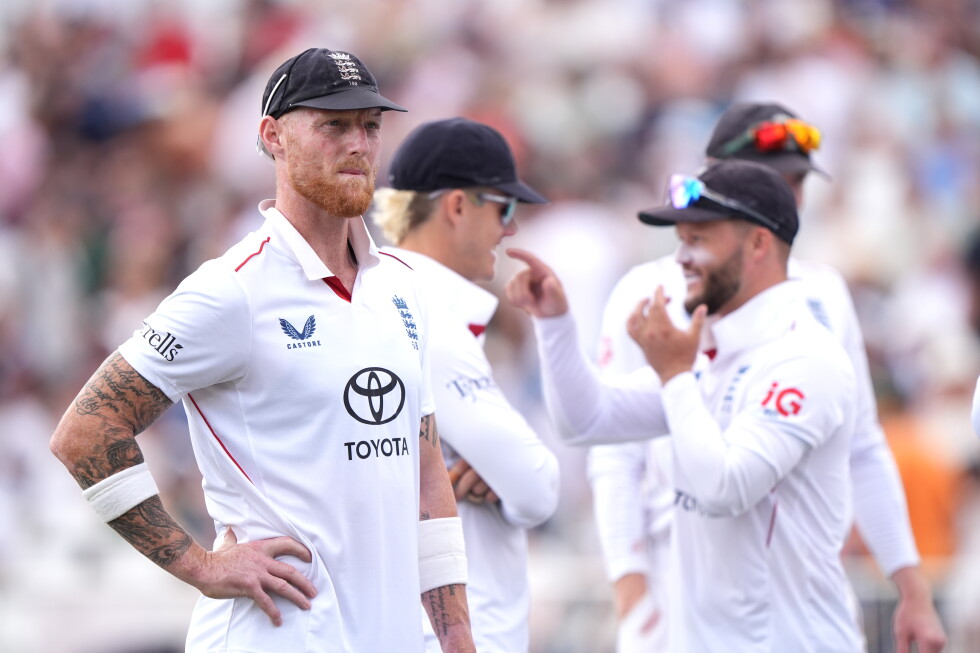
    In a stunning announcement that has sent shockwaves through the global cricket community, England men’s cricket captain Ben Stokes revealed Sunday that he will retire from all forms of international cricket within days, making the surprise declaration in the middle of the series-deciding third Test against New Zealand at Trent Bridge.

    In a video of the dressing room address shared publicly by England Cricket, Stokes told his assembled teammates ahead of Day 4 play: “This is my last two days as your captain and my last two days representing England.” The declaration came with the three-match series deadlocked at 1-1, with the match set to extend into a fifth and final day on Monday to determine the series winner.

    Stokes’ bombshell announcement landed just 15 minutes before the afternoon tea break on Day 4. In a moment that encapsulated his legendary career, the all-rounder picked up a New Zealand wicket just moments after his revelation, and received a thunderous standing ovation from the packed Trent Bridge crowd as he led the England team off the pitch at the end of the session. When addressing his teammates, Stokes kept the specific motivations behind his early exit private for the time being, saying: “The reasons can wait (about) why. But I’ve had many trips to the well before for this team and I’ve got one more trip to do.”

    Over a 15-year international career, Stokes has cemented his status as one of the most iconic and successful cricketers of his generation. His most legendary performances came in two global title wins: he was the standout star of England’s dramatic, last-ball victory over New Zealand in the 2019 50-over World Cup final at Lord’s, widely regarded as one of the most thrilling matches in cricket history. He then repeated that championship success three years later, playing a pivotal role in England’s 2022 T20 World Cup triumph — the same year he took on the role of Test captain for the national side.

    The retirement announcement caps a turbulent series for Stokes off the pitch. After the opening Test at Lord’s, Stokes and teammate Gus Atkinson made headlines when they were dropped from the squad for the second Test. The pair had spent an evening at a London nightclub, where an England team security official was reportedly assaulted by a player from professional rugby side Saracens. The England and Wales Cricket Board (ECB) initially stated the pair had “breached specific contractual obligations”, issued them written warnings, and launched a formal investigation. The independent Cricket Regulator oversight panel later concluded there was “insufficient evidence to establish that any regulatory breach occurred”, and Stokes was reinstated to the side for the deciding third Test.

    ECB chairman Richard Thompson paid tribute to Stokes’ transformative career, calling him “one of England’s greatest ever cricketers and one of the defining figures of his generation.” Thompson added: “His performances under pressure, his relentless competitiveness and his ability to produce the extraordinary when it matters most have given me and millions of other fans memories that will endure forever. Beyond his remarkable achievements on the field, his performances have inspired many youngsters to embrace cricket with positivity and belief. We are losing a batsman, a bowler, a captain and a talisman.”

  • South Africa scrapes past Bangladesh and leaves India needing to upset Australia at Lord’s

    South Africa scrapes past Bangladesh and leaves India needing to upset Australia at Lord’s

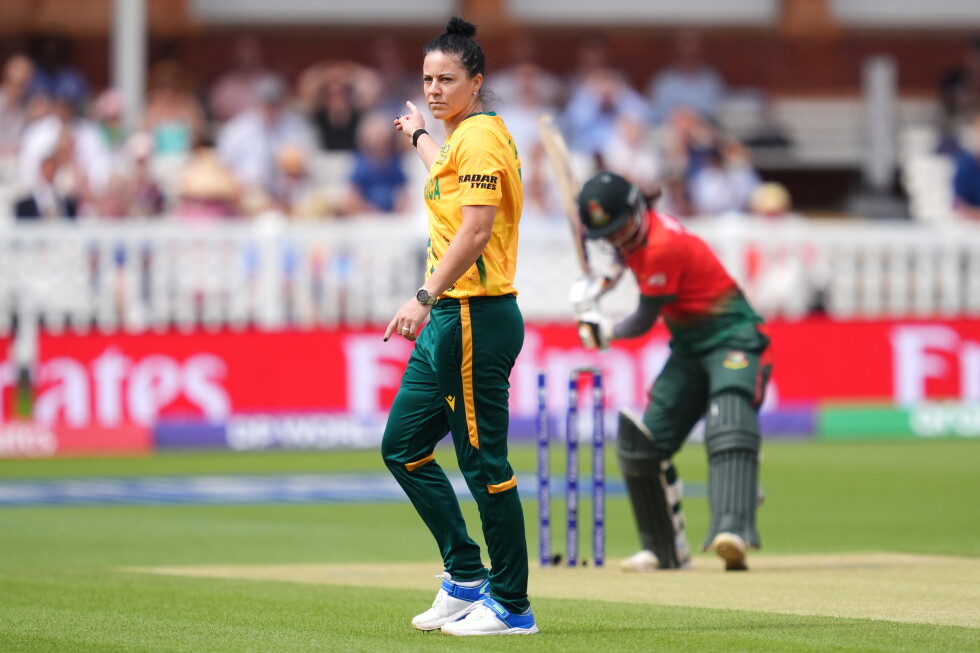
    LONDON — The final group stage matchday of the Women’s Twenty20 World Cup delivered a tense opening contest at Lord’s on Saturday, with South Africa securing a hard-fought four-wicket victory over Bangladesh that forced India into a do-or-die battle against unbeaten Australia for the last semifinal spot on Sunday.

    Going into the final round of group matches, two elite sides — India, the reigning 50-over ODI world champions, and South Africa, runners-up at the previous two T20 World Cup tournaments — were locked in a tight fight for the fourth and final remaining place in the knockout round. Australia, having won every match it has played so far in the competition, had already secured its own place in the semifinals barring an unprecedented catastrophic collapse, leaving the final knockout spot down to the contest between South Africa, India and Bangladesh.

    The historic London ground hosted a day-night doubleheader, and the opening fixture brought no shortage of drama even before the first over of play concluded. In an extremely rare statistical quirk, both teams lost their star top batters to the very first delivery of their respective innings. Opening batter Juairiya Ferdous of Bangladesh swung and missed at a fast ball from South African pace bowler Marizanne Kapp, becoming the South African speedster’s 100th career wicket in T20 international matches. Just hours later, in South Africa’s batting innings, Proteas captain Laura Wolvaardt fell to Bangladesh seamer Marufa Akter, bowled through the gap between her bat and leg pad for a golden duck. This rare pair of opening golden ducks had only occurred once before in the history of the Women’s T20 World Cup, during a 2018 contest between Sri Lanka and Bangladesh.

    Opting to bat first after winning the toss, Bangladesh struggled against South Africa’s well-rounded bowling attack. Led by Kapp’s tight 1-for-9, Shabnim Ismail’s 1-for-15, and spinner Nonkululeko Mlaba’s 2-for-22, Bangladesh could only post a total of 117 for 5 after their full 20 overs. Batter Sobhana Mostary top-scored for the side with 42 runs, while captain Nigar Sultana finished unbeaten on 32 runs from just 20 deliveries, pushing her to the top of Bangladesh’s run-scoring chart for the 2024 tournament.

    South Africa got a solid opening start from Annerie Dercksen and Tazmin Brits in their chase, but regular wickets kept the result uncertain right up to the final overs. Dercksen was caught behind the wicket in the 15th over, Kapp was run out in the 18th, and Nadine de Klerk fell in the 19th, putting the result in doubt before all-rounder Chloe Tryon scrambled two unconvincing miscued shots to cross the finish line and secure the four-wicket win.

    Following the hard-earned win, Kapp acknowledged the scrappy nature of the victory, telling reporters: “We seem to always do this but we take the win. A win is a win. Even if it was very scrappy.”

    South Africa’s win puts pressure firmly on India, who currently hold a narrow advantage over South Africa on net run rate. To lock in their place in the semifinals, India must defeat Australia in the second match of the Lord’s doubleheader to claim the final knockout spot, in one of the most anticipated final group stage matches in recent Women’s T20 World Cup history.

  • Sooryavanshi, 15, made to wait for India debut after being left out of T20 against Ireland

    Sooryavanshi, 15, made to wait for India debut after being left out of T20 against Ireland

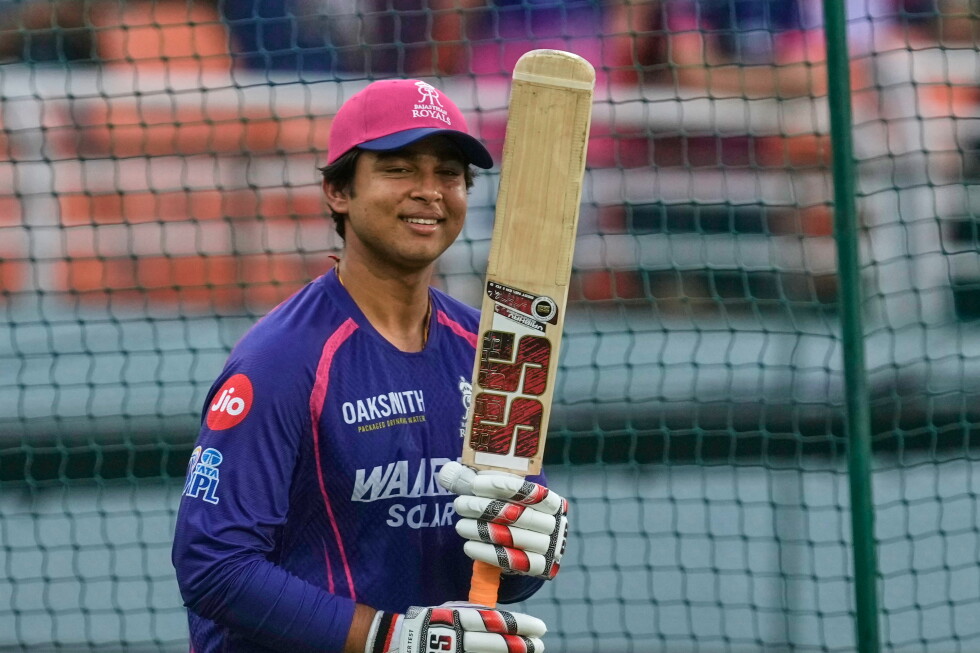
    BELFAST, Northern Ireland — One of cricket’s most anticipated teenage prospects will have to wait a little longer for his senior international breakthrough. Vaibhav Sooryavanshi, the 15-year-old Indian batting sensation who finished as the highest run-getter in the 2025 Indian Premier League, was once again left out of India’s playing XI for the second and decisive T20I against Ireland in Belfast.

    This omission marks the second consecutive match the young prodigy has missed out on, after he did not feature in the series opener on Friday. That first match ended in a historic 34-run victory for Ireland, the first time the nation has beaten India in any format of international cricket.

    If given his cap in the upcoming five-match T20 series against England, which kicks off next Wednesday, Sooryavanshi — who will be 15 years and 93 days old on the date of the first match — will break the long-standing record for the youngest male player to debut in top-tier men’s T20 internationals. The current record belongs to Ireland’s own Joshua Little, who was 16 years and 309 days old when he made his first T20I appearance.

    A debut for Sooryavanshi would also etch his name into Indian cricket history as the youngest player to ever represent the men’s senior national team. The legendary Sachin Tendulkar, widely regarded as one of the greatest batters of all time, holds the current record for India, having made his Test debut at 16 years and 205 days back in 1989, with his ODI debut following 33 days later.

    Across all formats of men’s international cricket, the record for the youngest debutant still belongs to Pakistan’s Hasan Raza, who stepped out for his Test debut in 1996 at just 14 years and 227 days old, a mark that has stood unchallenged for nearly 30 years.

    In the second T20I at Belfast’s Stormont ground on Sunday, India captain Shreyas Iyer won the pre-match coin toss and elected to bowl first against the hosts. India handed out senior debuts to two other young prospects: all-rounder Suryansh Shedge and 24-year-old fast bowler Prince Yadav.

    National selectors opted to retain the established top-order batting trio of Sanju Samson, Abhishek Sharma and Ishan Kishan, choosing experience over the chance to introduce the teenage prodigy to the international stage on this tour.

    Full Playing XI:
    Ireland: Tim Tector, Ross Adair, Harry Tector, Lorcan Tucker (captain), Ben Calitz, Gareth Delany, George Dockrell, Matthew Humphreys, Matt Hollard, Liam McCarthy, Jai Moondra
    India: Sanju Samson, Abhishek Sharma, Ishan Kishan, Shreyas Iyer (captain), Tilak Varma, Suryansh Shedge, Shivam Dube, Axar Patel, Arshdeep Singh, Harshit Rana, Prince Yadav

  • New Zealand digs in and becomes a strong favorite to beat England in series-deciding 3rd test

    New Zealand digs in and becomes a strong favorite to beat England in series-deciding 3rd test

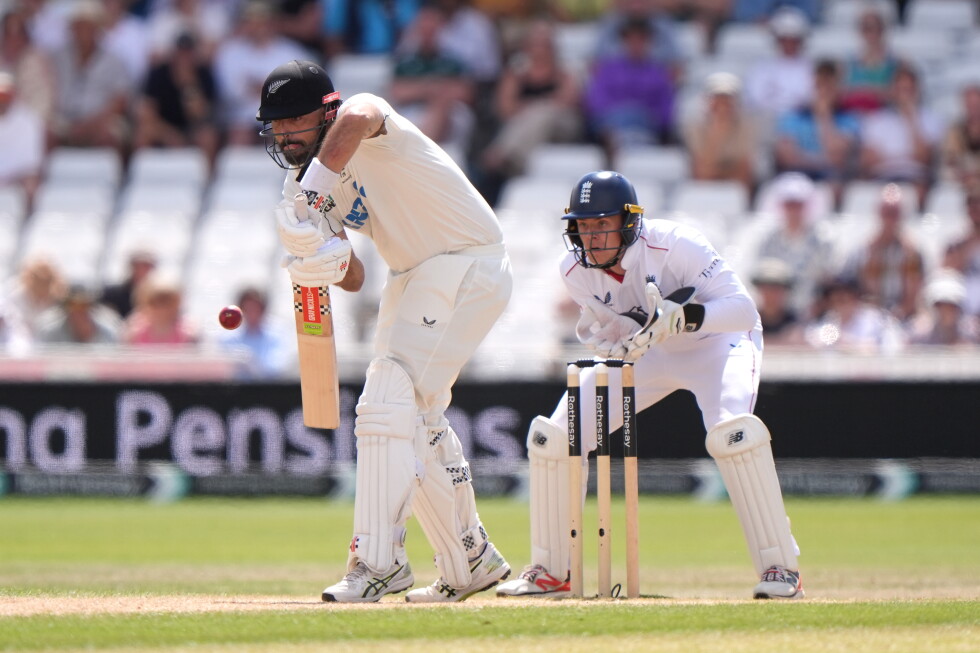
    On Sunday at Trent Bridge in Nottingham, New Zealand seized firm control of the third and series-deciding Test match against England, closing the first session of Day 4 at 180 for four wickets. That score gave the side an unassailable 264-run lead heading into the middle period of the day, with young all-rounder Rachin Ravindra falling agonizingly short of a sixth international century just before the lunch break.

    Resuming the morning at 120-3, Ravindra and veteran batsman Daryl Mitchell faced a challenging pitch that was producing increasingly inconsistent bounce, yet the pair managed to build a solid, match-changing partnership. Their 129-run stand for the fourth wicket came together when New Zealand was in a precarious position at 51-3 on Day 3, pulling the side out of early trouble to turn the tide of the match.

    Ravindra, who had looked in imperious form throughout his innings, was finally trapped leg before wicket by England off-spinner Shoaib Bashir when he was just six runs away from a well-deserved century, ending his knock at 94. At the end of the opening session, Mitchell remained unbeaten on 47, while wicket-keeper Tom Blundell had not yet scored, sitting on 0 not out. Through 25 overs of tightly contested play, New Zealand added 60 runs to their overnight total.

    Beyond the day’s play, the series itself carries historic stakes for both sides. New Zealand has not won a multi-Test series of three matches or more on English soil since 1999, a drought the side is keen to end on this tour. For England, the pressure is mounting: the side has not dropped a home multi-Test series since 2012, but a defeat here would heap significant additional scrutiny on the team’s leadership.

    That pressure already builds after a humiliating 4-1 Ashes defeat to Australia last year, and ongoing questions about the squad’s culture and professionalism have lingered following the controversial disciplinary dropping of star all-rounder Ben Stokes and fast bowler Gus Atkinson ahead of the second Test of this series. With New Zealand firmly in the driver’s seat, England faces an uphill battle to avoid a historic home series loss.

  • The lowdown on England’s next opponents

    The lowdown on England’s next opponents

    Ahead of England’s crucial World Cup Round of 32 fixture against DR Congo this Wednesday, BBC Sport has announced it will deliver comprehensive pre-match coverage, including all key details fans need to prepare for the contest. The preview coverage, rolled out under the outlet’s England Men’s national team section, was published just one hour before this report, making the latest updates available to football supporters around the globe. As fans gear up for the knockout stage clash, the platform is also highlighting additional World Cup video content to give audiences deeper insight into both teams, their form heading into the match, and what is at stake for either side when they step onto the pitch. Viewers can access the full coverage, share the preview with other football fans via link sharing or social media, and access supplementary on-demand video content to enhance their pre-match experience.

  • South Africa look to lay ghosts of 2010 to rest

    South Africa look to lay ghosts of 2010 to rest

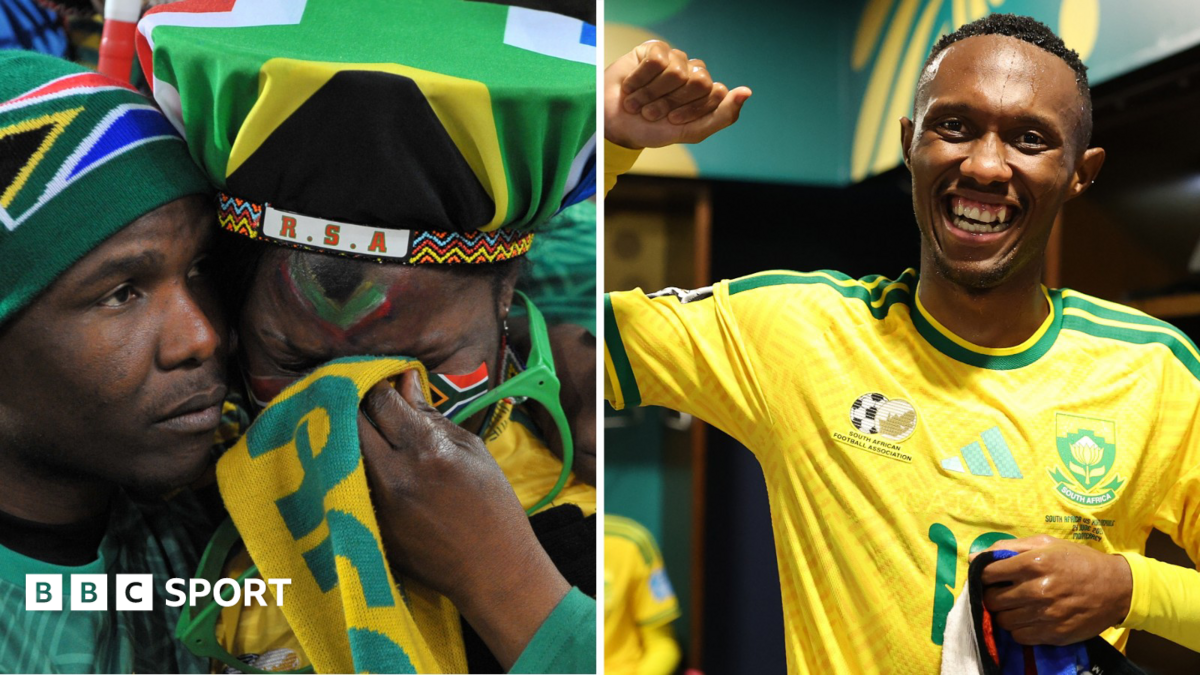
    Sixteen years after a crushing early exit as the first African host nation of the FIFA World Cup, South Africa’s men’s national football team, Bafana Bafana, has rewritten its story by reaching the knockout stage of the 2026 World Cup for the first time in the country’s history.

    The 2010 tournament remains a bitter memory for South African football supporters. Then, Siphiwe Tshabalala’s iconic opening-game opener against Mexico was hailed by a television commentator as “a goal for all of Africa”, but the moment quickly faded into disappointment. A 1-1 draw with Mexico and a final-group win over France were not enough to save Bafana Bafana from elimination on goal difference, making South Africa the first host nation in modern World Cup history to crash out in the group stage. That missed opportunity cast a long shadow over South African football for more than a decade.

    Cape Town-based veteran sports journalist Mark Gleeson told BBC World Service that domestic football entered a period of stagnation after the 2010 tournament, exacerbated by a national economic downturn that drained sponsorship and funding from the local game. “There was much excitement in the build-up to 2010, but then it all went a little bit dead, combined with an economic downturn,” he explained. “There are not many sponsors in the domestic game. There’s not a lot of money floating around.” In the years that followed, South Africa missed out on three Africa Cup of Nations (Afcon) tournaments in 2012, 2017 and 2021, marking a prolonged lean spell for the national side.

    In recent years, however, signs of a revival began to emerge. Top domestic club Mamelodi Sundowns claimed its first African Champions League title in 2016, then secured a second continental crown in May 2026, one year after finishing as runner-up. The national team’s qualification for the 2026 World Cup, paired with Sundowns’ continental success, has delivered a transformational boost to football across the country, Gleeson noted. “Hopefully this is the start of a new era for South Africa, maybe 16 years too late. This is how things should have been in 2010,” he said.

    The turnaround for Bafana Bafana traces back to a key coaching change after the team failed to qualify for Afcon 2021. The South African Football Association sacked head coach Molefi Ntseki and turned to 74-year-old Belgian manager Hugo Broos, who had previously guided Cameroon to the 2017 Afcon title. A former defender who played for Belgium at the 1986 World Cup in Mexico, Broos set about overhauling the squad, prioritizing young domestic-based talent over aging veterans. His rebuild quickly bore fruit: Bafana Bafana finished third at the 2023 Afcon, then topped its 2026 World Cup qualifying group ahead of fan-favorite Nigeria to secure a spot in the tournament.

    A rocky opening match against Mexico — a rematch of the 2010 opener — sparked fresh criticism of Broos’ conservative tactics. Bafana Bafana finished the game with nine players and dropped a 2-0 defeat, leading many fans and analysts to call for a change in leadership. The team quickly bounced back, however: they fought back from a deficit to earn a draw with the Czech Republic, then secured a crucial 1-0 win over South Korea to claim second place in Group A and a spot in the round of 32. After sealing qualification, Broos hit back at his critics, saying his side had silenced the “big mouths” that had questioned his approach.

    Team captain and goalkeeper Ronwen Williams says Broos deserves the highest honor for transforming the team’s fortunes. “He deserves a statue. He deserves the highest recognition for the belief he has shown in this team. When our backs are against the wall and people don’t believe in us, he is always there,” Williams said.

    Even Dean Furman, a former South Africa national team captain who was cut from the squad by Broos shortly after the Belgian took over, has praised the coach’s squad remodeling. “The first thing he did was get rid of the older players of the group and develop a younger team,” the former Oldham Athletic and Rangers midfielder told BBC Sport Africa. “I never got the chance to work with him, disappointingly. But in hindsight, it was the best decision. What he’s done with the team, to go third place in the Afcon, qualify for the World Cup and get to the knockouts, I think he’s done a phenomenal job.”

    This breakthrough marks the first time Bafana Bafana has advanced past the group stage in four World Cup appearances, after early exits in 1998 and 2002 in addition to the 2010 heartbreak. Yet the achievement comes as South Africa faces significant socio-political unrest, with recent anti-migrant violence prompting several African nations to repatriate their citizens. While South African officials have condemned the violence and rejected accusations of xenophobia, some football fans across the continent celebrated Mexico’s opening-game win over South Africa at organized “hate-watch” gatherings.

    Williams has called for pan-African unity, urging fans across the continent to put political tensions aside to support the team. Furman echoed that call, noting that South Africans have long celebrated the success of other African sides at the World Cup. “Despite the political unrest in the country I’m hoping that Bafana, on the football pitch, have given the continent a team to be proud of,” Furman said.

    Furman also praised Williams, who he called an “incredible leader” for steadying the squad after the opening loss to Mexico. “I know how deflated the boys were, and then the added scrutiny and pressure that comes with playing in a World Cup,” he said. “Massive credit to him as captain to galvanize the team — to get the mood back in the camp and ultimately deliver the performances that have led the team to the knockouts.”

    A striking feature of Bafana Bafana’s 26-man 2026 squad is its deep roots in domestic football: 16 of the 26 players come from just two top South African clubs, eight from Mamelodi Sundowns and eight from reigning league champions Orlando Pirates, with only seven players based at foreign clubs. Furman says this signals a bright future for South Africa’s domestic league, noting that the national team’s success will draw more international attention to local talent and open up more opportunities in top European leagues.

    Now, South Africa prepares to face another knockout stage debutant, Canada, in their round of 32 clash at Los Angeles Stadium on Sunday at 19:00 GMT. The two sides have never faced each other in international competition, with both looking to add another historic chapter to their 2026 World Cup runs. Canada lost its final group match to Switzerland and lost its planned home advantage as co-hosts, creating a clear opening for South Africa to advance further, Gleeson said. “All of a sudden, from being outsiders and not really being given much of a chance of making it through to the knockout phase, they are perhaps staring at a possible place in the last 16,” he added.

    With Broos expected to retire from management after the 2026 tournament, the squad has extra motivation to deliver a strong performance for the coach who engineered their remarkable comeback. Broos says his side is ready to fight for another historic result. “I know the players will be ready again and try to achieve the third round,” he said. “You will see a team that will believe and fight for the 90 minutes, and more if we have to. It should be even more historic.”

  • Salah an injury doubt for Egypt’s last-32 tie

    Salah an injury doubt for Egypt’s last-32 tie

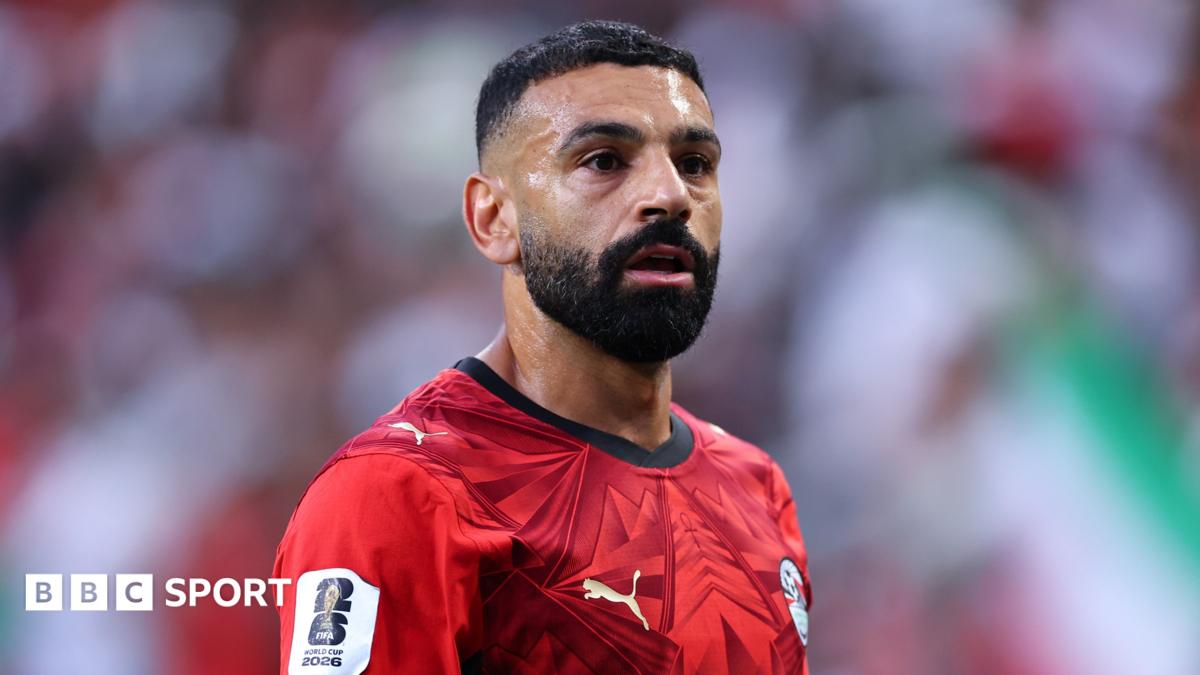
    As the 2026 FIFA World Cup enters its knockout stage, Egyptian football icon and national team captain Mohamed Salah faces an uncertain race to be fit for his side’s last-32 fixture against Australia this Friday, after sustaining a hamstring strain during the team’s final group stage match.

    The 34-year-old Liverpool star was pulled from the pitch early in Egypt’s 1-1 draw with Iran, the result that secured the Pharaohs’ spot in the knockout round as Group G’s second-place qualifier. Following the substitution, team doctor Mohamed Abou confirmed that Salah had reported discomfort to medical staff before scans officially diagnosed a hamstring strain, according to an official statement released by the Egyptian Football Association (EFA).

    The EFA added that Salah has already started an individualized treatment and rehabilitation program to manage the injury, but the governing body has not released any official update on whether the star forward will be available for the Dallas, Texas kickoff scheduled for 19:00 BST on 3 July.

    In comments made immediately after the Iran match, Egypt head coach Hossam Hassan downplayed the severity of the injury, saying: “I spoke with Salah and, God willing, the injury doesn’t seem serious. He assured me it would be fine, that it’s not a serious injury.”

    This is not the first hamstring setback Salah has dealt with this calendar year: a prior hamstring issue kept the winger sidelined for three weeks starting in late April, though he recovered in time to feature in Liverpool’s final two matches of the 2025-2026 English club season.

    So far in the 2026 World Cup, Salah has been a key playmaker for Egypt, notching one goal and two assists to help the North African nation advance out of the group stage. He has also built an extraordinary legacy with his national side, scoring 68 goals in 119 appearances for Egypt dating back to his senior team debut.

    All eyes in global football will now turn to Salah’s rehabilitation progress over the coming days as Egypt waits to confirm whether their biggest star will take the pitch against Australia.

  • Congo rallies to a 3-1 win against Uzbekistan to seal place in the World Cup knockouts

    Congo rallies to a 3-1 win against Uzbekistan to seal place in the World Cup knockouts

    For more than half a century, the Democratic Republic of Congo carried only one painful memory from its brief appearance on soccer’s global grandest stage: a demoralizing 9-0 thrashing at the hands of Yugoslavia during its only prior World Cup run, when the nation competed under the name Zaire in 1974. That outdated, humiliating legacy has been permanently rewritten by a bold new generation of Congolese talent, who etched their names into the country’s history books by sealing a first-ever trip to the World Cup knockout round, setting up an eagerly awaited round of 32 matchup against England.

    Saturday’s night’s decisive group stage clash against tournament debutants Uzbekistan looked to be heading the wrong way for Congo early on. Just 10 minutes into the fixture, striker Eldor Shomurodov put Fabio Cannavaro’s side ahead with a clever lobbed finish, putting Sébastien Desabre’s squad on the brink of elimination — a draw would not be enough to send them through, meaning a win was the only acceptable outcome.

    The turning point came in the 68th minute, when striker Yoane Wissa, who would end the night as his side’s hero, was fouled in the box by defender Abdukodir Khusanov to earn a penalty. Wissa stepped up to the spot himself, sending goalkeeper Abduvohid Nematov the wrong direction with a calm roll into the bottom corner to level the score, unlocking a late flurry of game-changing goals.

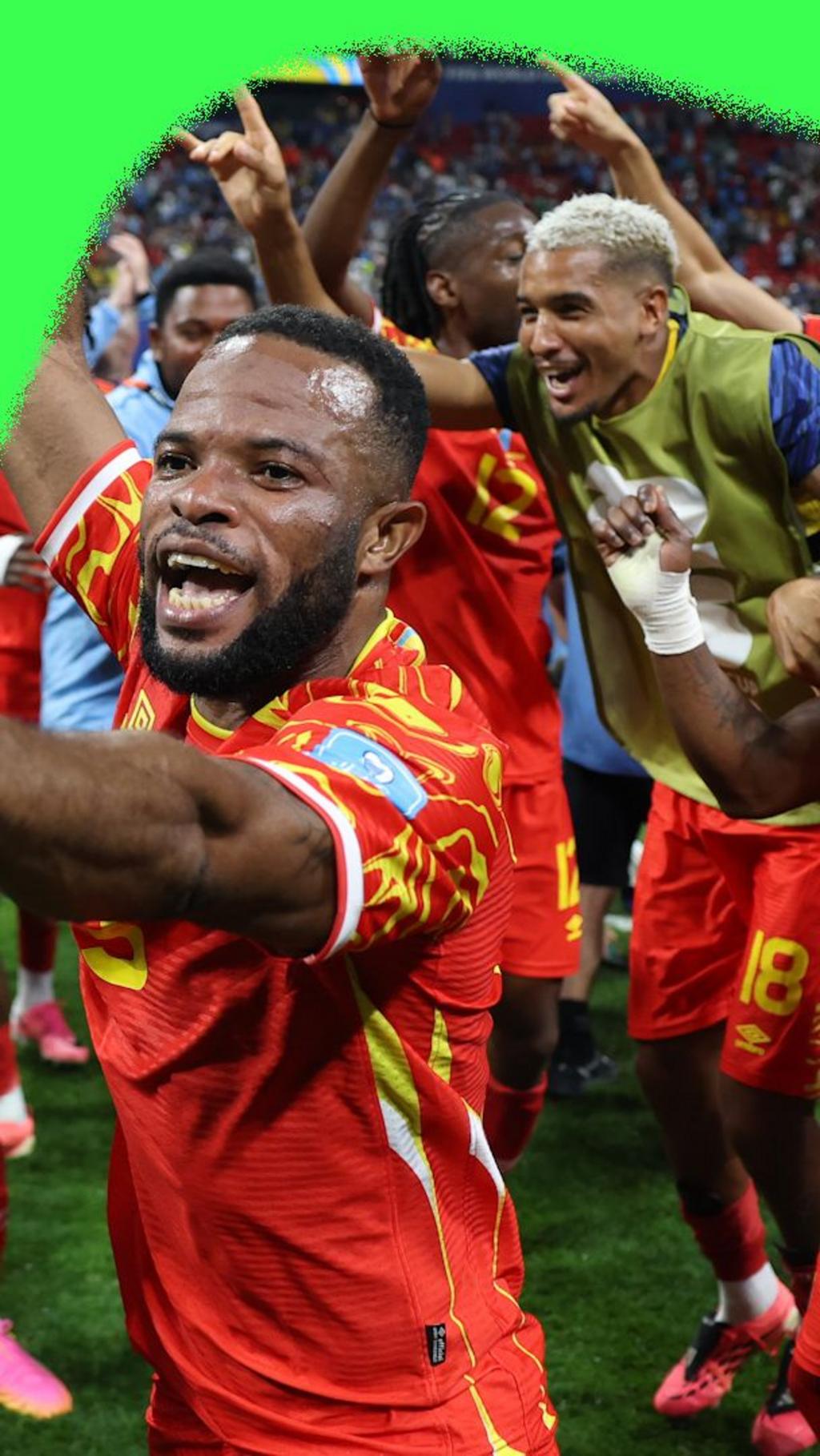
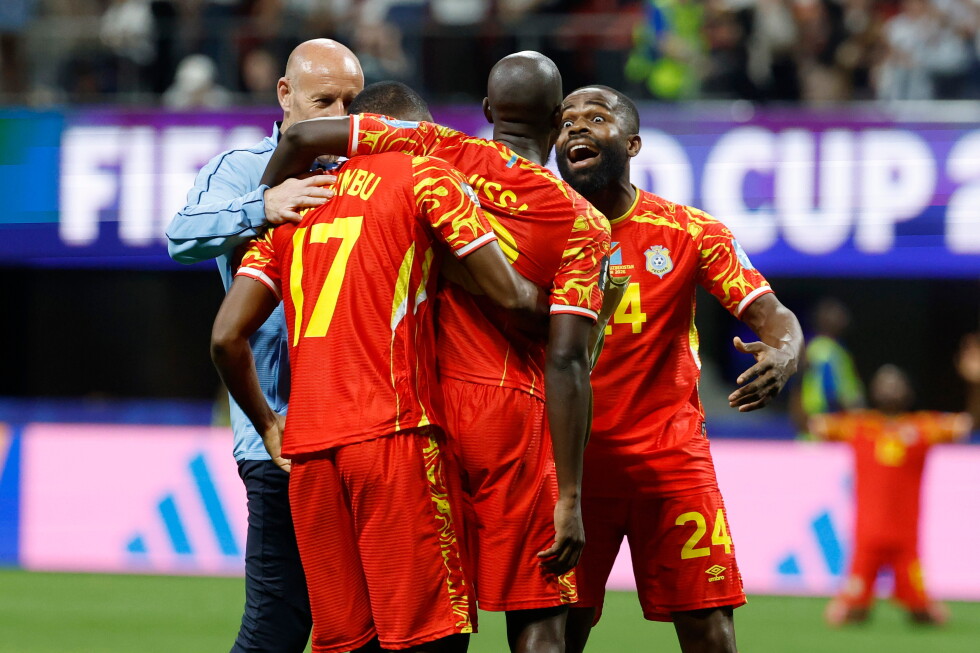
    Ten minutes after the equalizer, substitute Fiston Mayele put Congo in front, flicking a finish past Nematov at the near post. The goal sparked chaotic, jubilant celebrations, with substitute players sprinting off the bench and across the pitch to mob their match-winning teammate. Wissa put the result beyond all doubt in stoppage time, curling a precise strike into the bottom corner to seal a 3-1 comeback win, sending Congo into the knockout round alongside Cape Verde as one of the tournament’s biggest surprise packages.

    This historic result follows an earlier shocking upset for the Congolese side, which held Cristiano Ronaldo’s star-studded Portugal to a 1-1 draw earlier in the group stage — the nation’s first ever World Cup point. Saturday’s win marked Congo’s first ever victory at the tournament, enough to advance as one of the best third-placed teams, and made it the eighth African nation to progress to the knockout round at this year’s tournament.

    Speaking after the final whistle, Wissa reflected on the magnitude of the moment, noting the heavy expectations the squad carried heading into the fixture. “The weight on our shoulders was hard to bear,” he said. “We told ourselves we can’t give up, we have to get that win because getting a tie would kick us out. So we got that win.” Head coach Desabre highlighted his side’s characteristic resilience, adding: “We’re a team that knows how to respond when we concede a goal; we keep fighting with determination.”

    Wissa emphasized the national significance of the achievement, saying: “We’re going to savor this moment because it’s been tough. All the guys — the substitutes, those who’ve worn the jersey before, and those who’ll wear it tomorrow — we should be proud. Thank you to all the Congolese people; it’s for moments like these that we do what we do. We did it!”

    For Uzbekistan, the first World Cup appearance in the nation’s history ended in disappointment with three consecutive losses. Cannavaro, the former World Cup-winning captain with Italy, framed the campaign as a foundational experience for his young side. “I hope this tournament will give us big experience. I hope this experience will give us more motivation for the future,” he said.