分类: sports

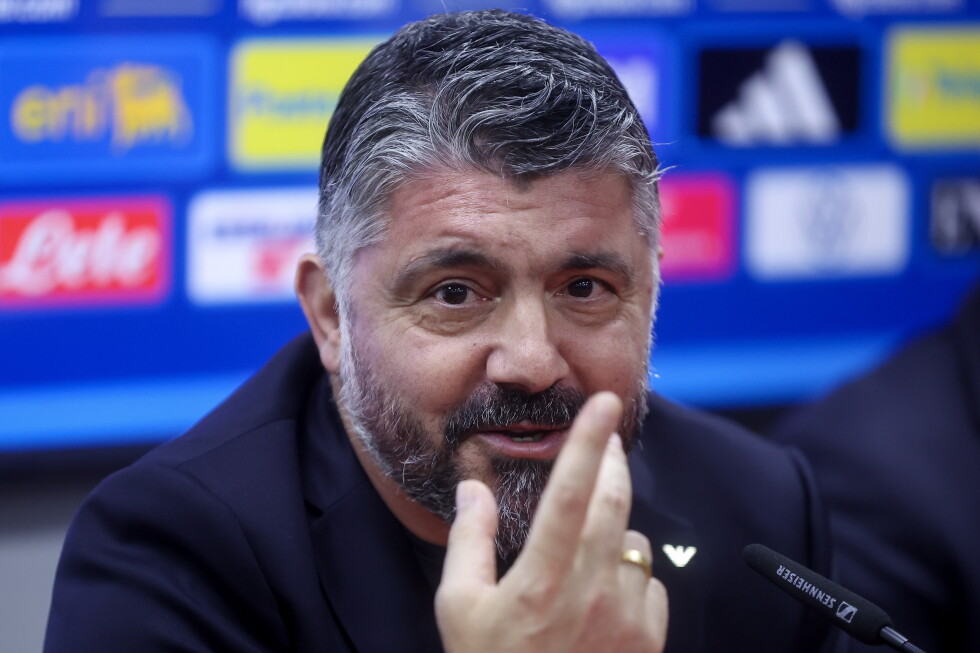
  • Gennaro Gattuso named as Lazio coach after Italy debacle

    Gennaro Gattuso named as Lazio coach after Italy debacle

    In an official announcement made public on Tuesday, Serie A side Lazio confirmed the appointment of former Italy men’s national team head coach Gennaro Gattuso as the new manager of their senior first team. The Rome-based club released only a brief introductory statement confirming the hiring, choosing to withhold any specific details regarding the length and financial terms of Gattuso’s contract. However, multiple Italian sports media outlets have reported that the 48-year-old tactician has put pen to paper on a two-year deal to take charge at the Stadio Olimpico.

    In the club’s official statement, Lazio’s management expressed confidence in Gattuso’s ability to deliver results, noting that “his experience, professionalism, and determination will contribute to achieving the club’s sporting objectives” for the upcoming campaign.

    Gattuso’s return to club management comes just two months after he stepped down from his role as Italy’s head coach. His departure from the Azzurri came only days after the national side suffered a shocking elimination from qualifying, extending their streak of missed World Cup appearances to three consecutive tournaments.

    This new role marks Gattuso’s third spell managing in Italy’s top flight, where he has previously held head coaching positions at two of the league’s most iconic clubs: AC Milan and Napoli. During his time in charge of Napoli, Gattuso led the Neapolitan side to a major domestic trophy, claiming the Coppa Italia title in 2020.

    Gattuso fills the vacancy left by Maurizio Sarri, who departed Lazio last month to accept the head coaching job at fellow Serie A club Atalanta.

  • From non-league to the World Cup – the Semenyo story

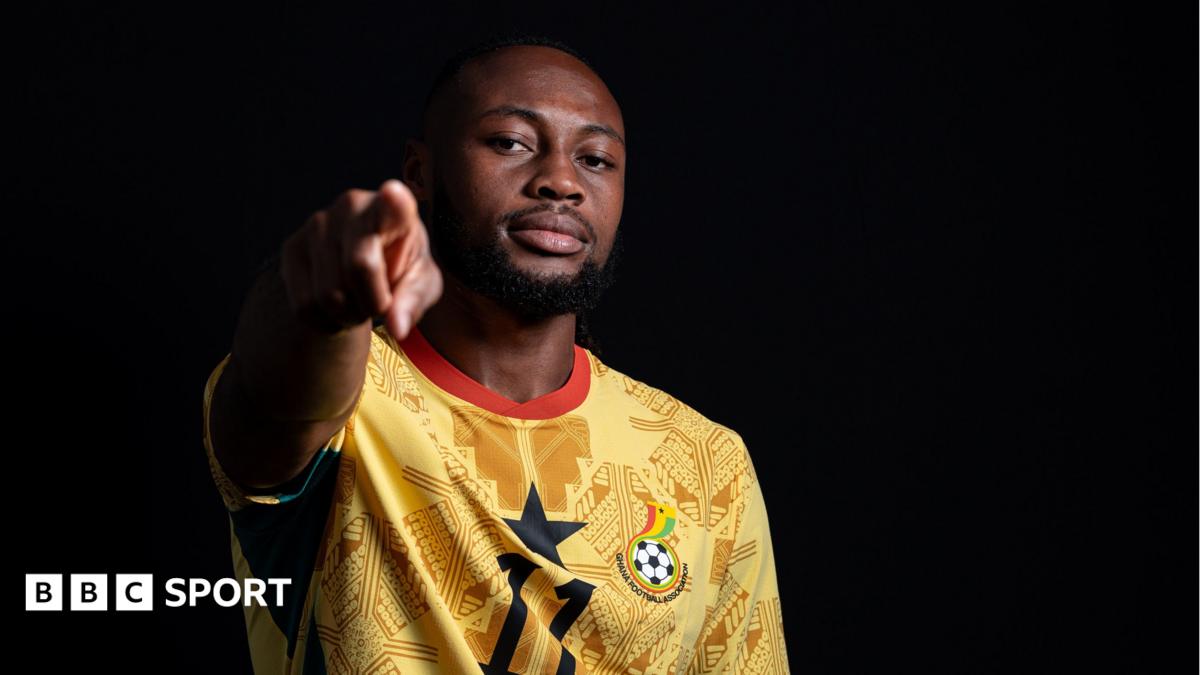
    From non-league to the World Cup – the Semenyo story

    Twenty-six-year-old Antoine Semenyo will step onto the 2026 FIFA World Cup pitch on June 23 to face England for Ghana, capping one of the most remarkable underdog stories in modern football. But long before he scored the FA Cup final winning goal for Manchester City and secured a £65 million transfer to the Premier League giants, Semenyo was a disheartened 16-year-old ready to walk away from the sport he loved — a turn of fate that would never have happened without a chance encounter with former manager David Hockaday.

    Born in London to Ghanaian parents who both had roots in top-flight Ghanaian football, Semenyo grew up kicking any object he could find from toddlerhood, trained to use both feet equally by his father. By age six, his dream of professional football was set. Over the following decade, he earned trial after trial at some of England’s biggest clubs — Arsenal, Tottenham Hotspur, Millwall, and an eight-week stint at Crystal Palace at 15 — but every door slammed shut. By 16, the repeated rejection left him deflated, disillusioned, and prepared to abandon his lifelong dream.

    That same year, Semenyo reluctantly attended a trial session at Bisham Abbey, saying later he only went to measure his fitness against other hopeful prospects. It was there that he crossed paths with Hockaday, the former Forest Green Rovers manager who happened to be on-site helping run the trials. While other coaches overlooked the raw, unconfident teenager, Hockaday spotted something special: natural two-footed control, good movement, and the raw physical frame that could turn into something extraordinary with the right nurturing. Hockaday could not shake the feeling he had missed an opportunity to help the kid, describing Semenyo as “an itch that I just couldn’t get rid of.” He tracked down Semenyo’s family, earned their trust, and brought the teenager into his program at South Gloucestershire and Stroud (SGS) College, competing in the South West Counties League.

    In the early days of their partnership, Hockaday would drive 5am every Saturday from Swindon to pick Semenyo up for matches, banging on the door to wake the young player when needed. Car rides became informal coaching sessions, where Hockaday instilled two core principles that would become Semenyo’s lifelong mantra: hunger and belief. It did not take long for that mantra to take root. Semenyo’s confidence grew rapidly, and he quickly outmatched non-league opponents, progressing so fast that he forced Hockaday to adapt his coaching to keep up. By the time SGS College played a pre-season slate of matches against professional academy sides, Semenyo dominated every game, and professional clubs began circling.

    Semenyo signed his first professional contract with Bristol City in January 2018 at 18, but his road to the top was far from smooth. He was immediately loaned out to non-league Bath City, where manager Jerry Gill transformed his game, moving him from central striker to the wing and teaching him how to compete against hardened, physically mature adult opponents. Gill remembers Semenyo as a “sponge” for feedback, with a warm attitude that made him an instant fan and teammate favorite. A subsequent loan at League Two’s Newport County brought impressive FA Cup displays that linked him to Chelsea, prompting Bristol City to recall him — but early opportunities at the Championship club were underwhelming, including a premature substitution in his first start and a red card in his second appearance. A loan at Sunderland followed with underwhelming results, and a revolving door of managers at Bristol City kept Semenyo from locking down a regular spot in the squad.

    The turning point came when Nigel Pearson took over at Bristol City, forced to lean into youth to cut the club’s wage bill. Semenyo emerged as a key starter, with experienced striker Nahki Wells stepping into a mentor role. Wells, who now calls Semenyo a close friend, recalls a raw but extraordinarily talented young player who was just putting the pieces of his game together. By the 2021-22 season, everything clicked: Semenyo notched eight goals and 12 assists, earning interest from top-flight clubs, including Crystal Palace — the side that had rejected him just six years earlier.

    In January 2023, Semenyo secured his first Premier League move, signing with Bournemouth for £10 million on a four-and-a-half-year deal. He quickly became the club’s standout star, notching 32 goals and 13 assists across 110 appearances in all competitions, fitting perfectly into Andoni Iraola’s high-octane counter-pressing system. By the first half of the 2025-26 season, his 10 goals caught the eye of Pep Guardiola, and Manchester City secured his transfer for £65 million in January 2026. Before heading to the World Cup, Semenyo cemented his place in City folklore, scoring the winning goal against Chelsea in the 2026 FA Cup final at Wembley.

    Now, ahead of his first World Cup appearance against England, Semenyo has not forgotten the man who launched his career. When he signed for Bournemouth, he sent Hockaday a bottle of Champagne, with those two foundational words printed on the label: hunger and belief. For Hockaday, who still meets Semenyo at the end of every season to chat through football and life, the moment is almost overwhelming. “When I see this young lad and I see what he’s created, where he’s got to and where he’s going to now it’s a bit mind-blowing for me,” Hockaday told BBC Sport. “I just feel pride being able to say that I’ve been part of his journey.”

    The highly anticipated Group Stage match between England and Ghana kicks off at 21:00 BST on June 23, with full coverage across BBC platforms. Fans can watch live on BBC One, BBC iPlayer, and the BBC Sport website and app starting at 20:00 BST, listen to live commentary on BBC Radio 5 Live and BBC Sounds, and access live text commentary, in-depth analysis, and video highlights on the BBC Sport digital platforms.

  • How do you solve a problem like Ronaldo?

    How do you solve a problem like Ronaldo?

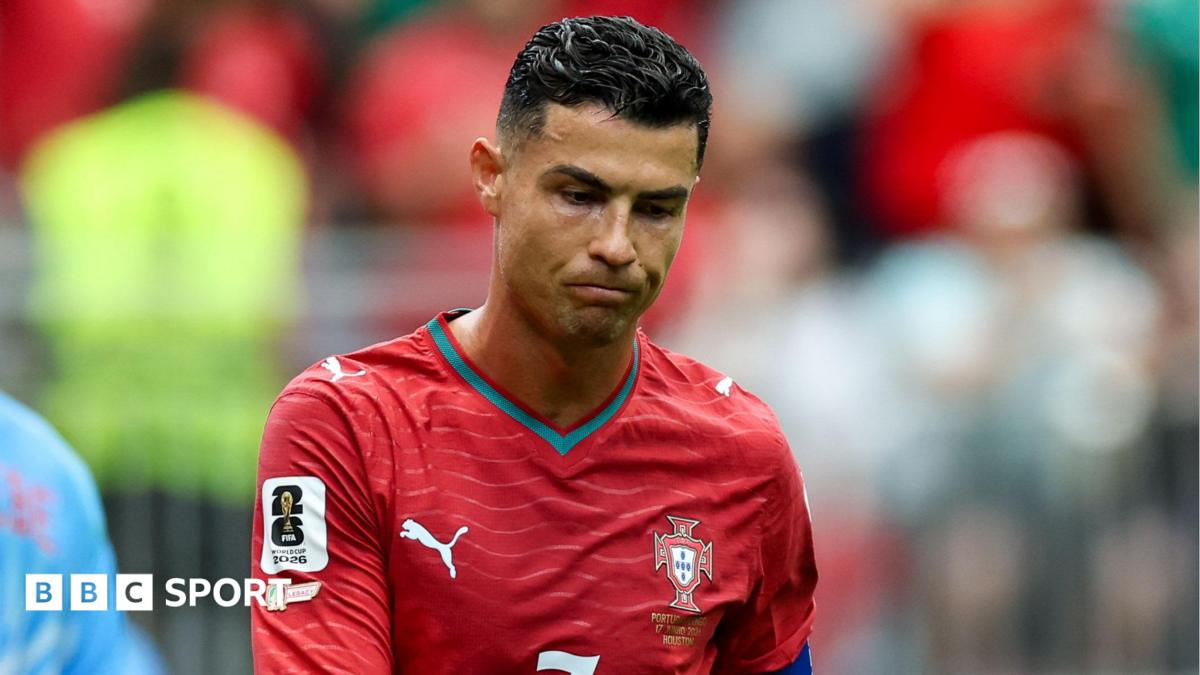
    What was supposed to be a celebratory, record-breaking final World Cup for Cristiano Ronaldo has instead devolved into a messy public feud that has split Portuguese football just days into the 2026 tournament.

    The 41-year-old, who is making his sixth and final World Cup appearance to match an all-time record, has been at the center of growing controversy since Portugal’s opening group-stage 1-1 draw with DR Congo. What stoked tensions most wasn’t the underwhelming result itself, but a seemingly harmless comment from 21-year-old Paris Saint-Germain midfielder Joao Neves, who scored Portugal’s only goal in that match. When asked about Ronaldo’s role in the current squad, Neves offered a measured response: he acknowledged Ronaldo’s legendary contributions to Portuguese football, but noted that the captain is just another squad member working to contribute, no different from any other player.

    That mild comment quickly spiraled out of control online. Thousands of diehard Ronaldo supporters flooded the social media accounts of Neves, playmaker Bruno Fernandes and other squad members, accusing them of disrespecting the captain. What makes this backlash extraordinary even for a global superstar of Ronaldo’s stature is that members of the forward’s own inner circle amplified the tension. Partner Georgina Rodriguez shared a reaction to a fabricated quote attributed to Neves’ girlfriend before deleting the comment, while Ronaldo’s sisters Katia and Elma Aveiro posted public content claiming a faction of the squad was trying to freeze the captain out of the team. Even Portugal’s highest-viewed television network, CMTV, in which Ronaldo holds a stake, saw a long-time legal and business representative for the striker cite a fake Zinedine Zidane quote in a public defense of the captain.

    The chaos quickly spilled over into Portugal’s closed training camp in Palm Beach, where reporters have repeatedly pressed squad leaders on whether the national team is now split between pro-Ronaldo and anti-Ronaldo factions. “This shouldn’t even be a topic of discussion,” defender Ruben Dias said in a tense press conference. The next day, full-back Diogo Dalot added: “We know there are a lot of people who don’t want Portugal to win,” declining to name those he was referring to, adding “If I had to do that, we’d never leave here. It’s not my role.”

    At the heart of the tension is a brutal on-pitch drought for Ronaldo that stretches back four years. The captain has now gone 10 consecutive matches across the World Cup and European Championship without scoring, dating back to a penalty against Ghana at the 2022 Qatar World Cup. In the opening draw with DR Congo, he took three shots—more than any other Portugal player—but failed to put any on target. That drought has reignited long-simmering questions about whether Ronaldo still deserves a starting spot in the squad, despite his historical legacy.

    Statistics from manager Roberto Martinez’s tenure underscore the unspoken reality of Ronaldo’s role: across 30 matches where Ronaldo started under Martinez, he has been substituted 13 times, but only once before the 60th minute. While Martinez publicly refuses to call Ronaldo untouchable, the numbers tell a different story of a starting spot secured by legacy, not current form.

    Luis Mateus, executive director of leading Portuguese football outlet A Bola, summed up the critique of Ronaldo’s current role: “His goals used to make up for his lack of defensive contribution. Now he is no longer scoring and he is affecting the entire attack. Mentally, because his team-mates still want to serve him even when there are better options, but also because he has become something of a square peg in the whole attacking process. He is on the pitch because of gratitude, not because of how he is playing.”

    A recent public poll conducted by Portuguese football website Zerozero found that 63% of participating Portuguese fans do not want Ronaldo to start in the team’s upcoming second group match against Uzbekistan. For the Portugal squad, only a convincing win against Uzbekistan—ideally with a Ronaldo goal to end his drought—can calm the ongoing public feud.

    This is not the first time Ronaldo has entered a World Cup facing heavy criticism for a goal drought. Back in 2010, he arrived at the South Africa tournament having not scored in a competitive match for Portugal in two full years. At the time, he brushed off pressure with a light-hearted quip: “Goals are like ketchup. When they come, they come all at once.” He ended that drought in a 7-0 group-stage win over North Korea, notching his only goal of the tournament before Portugal was knocked out in the round of 16 by Spain.

    Current Porto president and former top club manager Andre Villas-Boas framed the current moment as a necessary reckoning for a squad that still carries world-class talent. “It is now time to rethink a few things, to spend less time at the beach [a reference to recent off-field controversy around Ronaldo’s public appearances] and more time in the meeting room,” he said. “Our ambitions remain enormous, because this is a golden generation and we want the man who has given so much to our country to leave the game holding the World Cup trophy, the same way Messi did in Qatar. But the coach will manage his playing time as he sees fit. I still believe we have enough talent to leave a much better impression.”

    For now, that balanced, team-first approach remains the only path to quieting the noise that has overshadowed Portugal’s 2026 World Cup run before it has truly begun.

  • Unpaid bonuses and food issues – what’s going on inside Senegal camp?

    Unpaid bonuses and food issues – what’s going on inside Senegal camp?

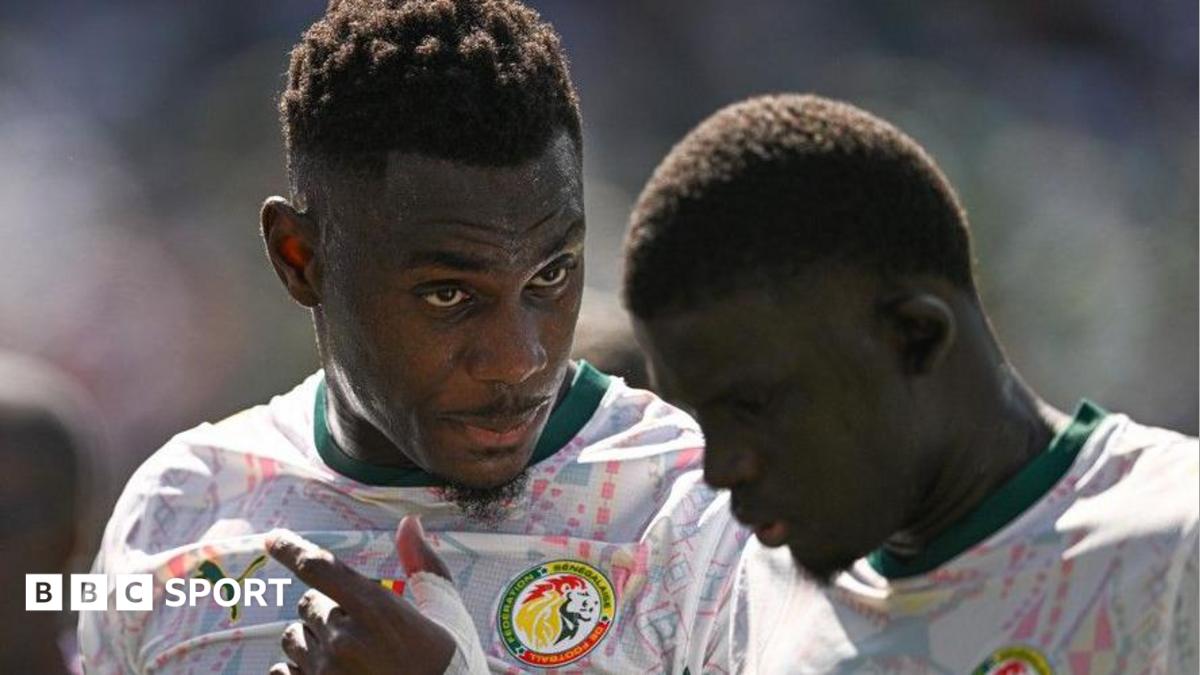
    Four appearances at the FIFA World Cup now under their belt, Senegal entered the 2026 edition with high hopes: the West African nation aimed to surpass its iconic 2002 quarter-final run, the highlight of its World Cup debut, and carry forward the momentum of its run to the 2025 Africa Cup of Nations final. Instead, two back-to-back defeats have left the Teranga Lions pointless after two group-stage matches, on the brink of an early first-round exit. Only a win against Iraq on Friday can keep their knockout stage hopes alive.

    Rumors of disarray within the national team camp have overshadowed Senegal’s on-pitch struggles, with multiple off-field controversies leaking into public view in the lead-up to the tournament’s opening matches. Reports of bonus disputes, sudden staff changes, catering conflicts and a drawn-out contract row with head coach Pape Thiaw have fueled speculation that internal friction is to blame for the team’s underwhelming start. To separate fact from speculation, a closer look at the issues roiling the Senegal camp reveals a more nuanced picture.

    One of the most widely reported issues surrounded the quality of team catering at the squad’s New Jersey base, where the team is staying at a four-star Hyatt Regency close to their training ground at Rutgers University – a step down from the five-star venue they used at the 2025 Afcon in Morocco, but not a source of complaint from the playing core. The team originally traveled with their long-time personal chef, who had planned menus for the camp months in advance, but he departed for private family reasons after the team’s final pre-tournament warm-up friendlies against the United States and Saudi Arabia. When a replacement was brought in, core players have not raised issues with the new catering arrangements. Instead, dissatisfaction with the lack of traditional Senegalese cuisine has come from non-playing delegation members staying at the team hotel, some of whom have ordered external meals in response to their disappointment.

    Other minor disruptions have stemmed from accompanying travel parties: some Senegalese Football Federation (FSF) officials brought family members to the United States at their own cost, who have stayed near the team hotel and at times drawn criticism for overly close proximity to the squad. Players’ families are housed separately at a nearby hotel, with all accommodation and breakfast costs covered by the federation.

    Claims of unpaid performance bonuses, another widely circulated controversy, have already been resolved: the unpaid funds were disbursed by the Senegalese government just days before Senegal’s third group match. Long-running tension over Thiaw’s contract, however, created the most significant deadlock for the side ahead of the tournament. The 2002 World Cup veteran, who took the reins of the national team in 2024 on an annual salary of roughly £210,000, saw his original contract expire immediately after the 2025 Afcon, where he guided Senegal to a controversial final that later stripped the side of their title, with an appeal pending to regain the crown.

    Buoyed by his strong tournament run, Thiaw entered contract extension talks from a strengthened position, but negotiations stalled for months. Under Senegalese sports governance, while the head coach negotiates directly with the federation, all contract signings and salary payments require final approval from the state through the ministries of sport and finance. Prolonged political upheaval in Senegal, triggered by the dismissal of the previous government and removal of the prime minister, created cascading delays across public sectors, leaving Thiaw without a signed new contract as the team departed for the United States.

    As pressure mounted through local media, with hints that Thiaw might refuse to travel for the tournament, Senegalese President Bassirou Diomaye Faye intervened personally, contacting the coach to guarantee a swift resolution. After newly appointed Sports Minister Djireye Clotilde Coly traveled to the U.S. to meet with the squad ahead of the opening match against France and reaffirm the administration’s commitments, negotiations moved forward, and a deal was finally reached: Thiaw’s new contract carries an annual salary of £480,000 plus an additional £80,000 annual performance bonus.

    “It’s true it took too long, but it was never a money issue. It was more a principles and respect issue, but it’s been resolved,” Thiaw told reporters on Sunday. “As Senegalese people, patriotism is more important than anything else and the questions around the contract are in the past now. It’s been signed. It is true there have been a couple of creases that need to be ironed out.”

    Ranked 17th in the world, Senegal entered this World Cup as one of Africa’s top contenders, but dropped their opening two matches: a 3-1 loss to defending champions France followed by a dramatic 3-2 defeat to Norway that sealed their early point drought. Despite the off-field noise, both Thiaw and senior players have emphasized that the squad remains fully focused on Friday’s must-win match.

    “All these are problems that are resolved internally. I don’t think you need to be across what we say internally. We have a group of players who are professional,” goalkeeper Mory Diaw explained at Sunday’s press conference. “We’re here to represent our country. There’ll be nothing that will make us lose our heads when it comes to our common objective.” Before the tournament, Thiaw had made his commitment clear: “If I lose even a second of my belief that I can win the World Cup with Senegal, I will step down.”

    Long-time Senegalese football journalist Babacar Diarra, who has covered the national team for more than a decade, told BBC Sport that internal friction behind the scenes is not entirely unprecedented for the side. “Senegal hasn’t been in this type of situation for a while. You might have had some bonus issues in the past, but it wasn’t out in the press. I don’t think this will impact the players or the team. They will stay focused on the tournament. I’m not totally surprised by this. Even if they got to the final at Afcon and everything looked fine, it was a bit messy there too.”

    Off the pitch, tensions have also emerged over fan access to the tournament. Traditionally, the Senegalese state covers all travel, accommodation and ticket costs for official main supporter groups to attend major international tournaments, but travel restrictions for this World Cup have blocked those groups from making the trip. That left the North American Senegalese diaspora hoping to pick up the slack, but only 400 tickets were allocated to the local community, a number many see as far too small. Many diaspora members have also complained about a lack of transparency in ticket distribution, with a group of Senegalese national association representatives gathering outside the team hotel on Sunday to formally voice their grievances. The BBC has reached out to the FSF for additional comment on the camp issues.

    For now, all focus rests on Friday’s match: Senegal’s only path to extending their 2026 World Cup run runs through a decisive win against Iraq, with the side desperate to turn their turbulent campaign around before it is cut short.
  • From Boston to Miami: Tartan Army adjusts to World Cup culture shock

    From Boston to Miami: Tartan Army adjusts to World Cup culture shock

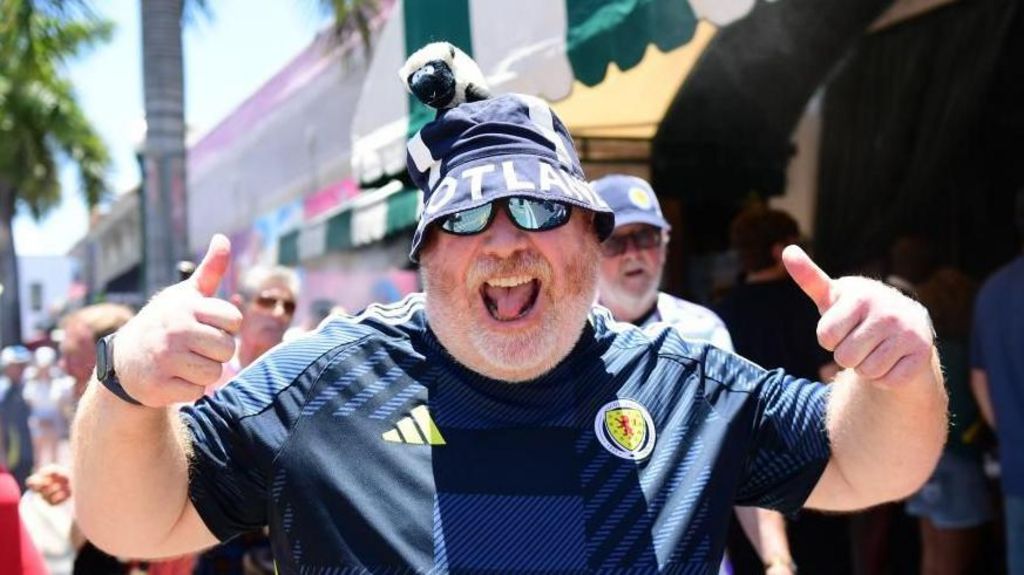
    As the 2026 FIFA World Cup enters its final group stage matchdays, thousands of passionate Scotland football fans — widely known as the Tartan Army — have poured into Florida’s Sunshine State, trading the cooler, compact energy of Boston for Miami’s sweltering heat and sprawling, multicultural atmosphere ahead of their decisive Wednesday showdown with Brazil.

    On Monday, official temperatures climbed to just under 35 degrees Celsius, with the heat index pushing the perceived temperature to a blistering 43 degrees, testing the endurance of even the most committed traveling supporters. After days of celebrating Scotland’s campaign across Boston’s bars and public landmarks, where they turned large swathes of the city into a raucous “mini-Scotland,” the move to Miami brings a starkly different experience.

    Unlike Boston, where the Tartan Army gathered in concentrated numbers to dominate the city’s fan zones, Miami’s larger footprint has spread the crowd across the metro area. Iconic Ocean Drive bars have steadily filled with fans in tartan, while other supporters have taken advantage of the coastal setting to book boat trips or stay in quieter surrounding suburbs. The city’s large existing Hispanic community also means Scotland’s fans share Miami with a massive contingent of Brazil and Argentina supporters, turning the host city into a de facto South American football hub ahead of kickoff.

    Several fans who traveled from Boston to Miami shared their contrasting impressions of the two host cities. Brothers Peter and Tom McKenna, visiting from the Isle of Man, noted that the compact size of Boston made the Tartan Army’s presence felt far more intensely. “Boston was one big Scotland party,” Peter explained. “Boston was caught off guard by how many of us showed up, but here Miami is used to big crowds of tourists.” The pair have already been on the road for nearly two weeks: Peter plans to return home to his children regardless of Wednesday’s result, while Tom is weighing extending his trip to follow Scotland deeper into the tournament if they advance.

    For first-time attendees Pete and Jamie Brown, a father-son duo who flew directly into Miami, the stop has felt more like a holiday with a world-class football match attached. “We watched the first game back home and were so proud of how the Tartan Army showed out in Boston,” Pete said. “I’ve been here for the Super Bowl before, I love this city, so when I got the chance to bring my son to see Scotland play Brazil here, I couldn’t say no. This is the dream draw.” Jamie added that the vibe feels far different from Boston’s concentrated football trip energy: “This is more relaxed, it’s a holiday with a game thrown in the middle.”

    Dave Robertson, who made the trip down from Massachusetts to Florida, predicted a different atmosphere for the match, noting that the Tartan Army will likely be outnumbered by Brazil’s passionate fanbase. “Brazilians take matchday celebration to another level, but even so, we’ll still create a fantastic atmosphere when we all get together,” he said. Initial predictions of a muted Scottish presence were proven wrong when thousands of Tartan Army members gathered in Miami’s Little Havana neighborhood for a celebratory march to the Miami Marlins baseball stadium, where the match will be held. Concerns that local Miami residents would not welcome the Scottish crowd as warmly as Boston did quickly evaporated: local residents walked alongside marchers, many cheered from their front yards, and even one American local joined in the fun, saying he was disappointed his ordered kilt did not arrive in time for the march.

    Other differences between the two host cities have been more notable, particularly around local policing. In Boston, police took a laid-back approach, allowing fans to drink in public spaces and even place the Tartan Army’s iconic traffic cones on public statues. But just days into the Miami leg of the trip, a viral video showed Miami police ordering a fan to remove a cone from a statue, with the officer noting “you aren’t in Boston anymore.” Steven Baird, a fan from Peterhead attending his third and final World Cup, echoed that difference. “Boston was far more laid-back, the police were happy to have us, you could get away with almost anything,” Baird said. “Here they’re a lot stricter — I even got yelled at for jaywalking. This is my last World Cup because of my age, but you couldn’t pick a better place to finish. It’s just way too hot for me — I’d have rather had this match somewhere cold like Norway.”

    Beyond the fan experience, Wednesday’s match carries massive stakes for Scotland’s World Cup dream. Steve Clarke’s side currently sit on three points after a 1-0 opening win over Haiti. Under the new expanded 48-team tournament format, the top two teams from each group advance directly to the Round of 32, alongside the eight best third-place finishers across all groups. Currently, Scotland ranks as the second-best third-place team, trailing only Sweden. A win against Brazil will guarantee Scotland a spot in the knockout stage. A draw would leave Scotland on four points, putting them in a strong position to advance as one of the best third-placed teams, and even a loss would not automatically eliminate them — their fate would depend on results across other groups finishing on June 27. If Scotland advances, fans will immediately face a new logistical scramble, with potential knockout stage locations including Boston, New Jersey and Mexico City, forcing quick travel rearrangements for supporters looking to keep the World Cup adventure going.

  • Why Scotland can’t play for draw or narrow defeat against Brazil

    Why Scotland can’t play for draw or narrow defeat against Brazil

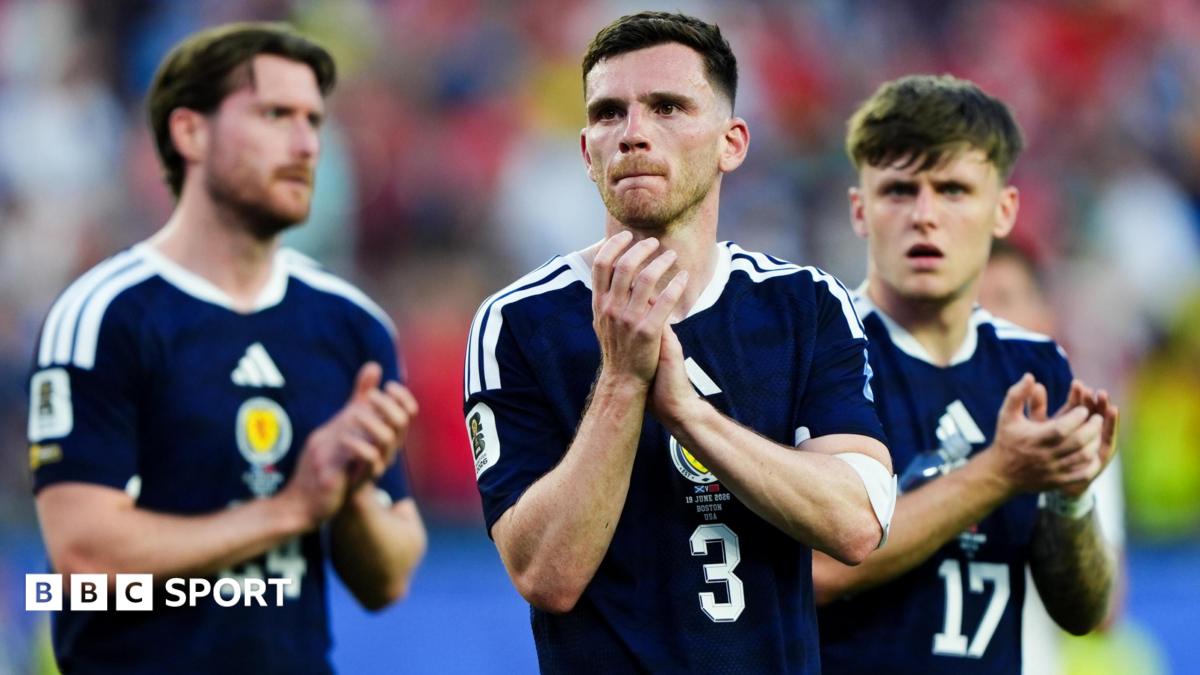
    As Scotland prepares to lock horns with five-time World Cup champions Brazil at Miami Stadium on June 24, 2026, the entire Scottish football community is gripped by a mix of anticipation, anxiety and historic hope. Captain Andy Robertson will lead his side out for the crunch group stage tie, where even a single point from a draw will secure Scotland’s place in the World Cup knockout round for the first time in their modern history. A narrow defeat could also still see Steve Clarke’s side advance as one of the eight best third-place finishers across the tournament’s groups, a scenario that has become the central obsession for Scottish fans poring over tournament standings this week.

    The prospect of only needing a draw to make history has sparked intense debate around what approach the Scottish side will take when they step onto the pitch. The match will kick off at 23:00 BST, with full live coverage available across BBC platforms including BBC One, iPlayer, BBC Radio Scotland, BBC Radio 5 Live, and live text updates on the BBC Sport app and website.

    Conventional football wisdom almost universally rejects the idea of setting out to play for a draw. No top-level coach or player will openly admit they are not going into a match chasing all three points, and the Scotland camp will be no different in pre-match media commitments. But the constant external discussion around the ‘only a point needed’ narrative raises a critical question: could it create an undercurrent of caution that subtly shifts the team’s mindset heading into kickoff?

    Former Scotland player and manager Craig Levein, who has first-hand experience of navigating high-stakes matches where a draw was a desired outcome, warned of the inherent risks of prioritizing a result over an aggressive approach. Speaking to BBC Sport, Levein referenced his 2010 clash with Czech Republic where he deployed a controversial 4-6-0 setup designed to secure a draw. “I don’t believe Steve will be playing for a draw because there’s a dangerous element to that,” Levein said. “Because you’re in a mode where if you do lose a goal then getting shifted out of that mind space is difficult. I’ve been in that situation on a number of occasions.”

    He added: “You can plan all you want to play for a certain outcome, but football is so random that you’re not guaranteed to get that.” Levein argued that Clarke’s approach to training, team selection and gameplan will be far more impactful on the squad’s mentality than outside noise. Pointing to the potential inclusion of young attacking winger Ben Gannon-Doak in the starting lineup, Levein noted that adding an extra attacking threat can send a clear message to the whole squad to play without defensive shackles. “If we just put another attacking player on, it gives everybody the idea that it’s time to take the shackles off and have a go,” he explained.

    While the conversation around needing a draw has dominated headlines, critics argue the bigger issue facing Scotland is not subconscious caution from the stakes, but an overly passive defensive approach that has held the side back in their first two group matches against Haiti and Morocco. Against Haiti, Clarke’s side held just 46% of possession, and that share dropped to 40% in their narrow 1-0 defeat to Morocco. Through two matches, Scotland have managed only two shots on target, and have failed to apply consistent high pressure when out of possession. Opta data from the Morocco match shows Scotland took an average of 25 seconds to recover possession after losing it, while Morocco won the ball back an average of eight seconds faster.

    Former Hibernian and Celtic midfielder Scott Allan argued that sitting deep does not require a passive mindset. “When you’re constantly sat off the game and you’re passive, players go into a certain mindset where they start to worry, instead of having that real belief about going and creating and scoring goals,” Allan told the Scottish Football Podcast. “You can sit in a low block and still be aggressive. There’s a point where once they [the opposition] reach here, when they make a square pass, can we go with real purpose and go and try and get the ball back?”

    Former Rangers and Motherwell midfielder Andy Halliday echoed that assessment, stressing that Scotland must inject far more urgency into their off-the-ball work against Brazil’s world-class attacking talent. “When you’re going to be this team that wants to sit in and frustrate then try and be as quick as you can on transitions. I think we need to be a lot more aggressive than we’ve been off the ball,” Halliday said. “I think every chance we created actually came from us putting pressure on Moroccan players and turning the ball over at the top end of the pitch.”

    Halliday acknowledged that Scotland are unlikely to dominate possession against Brazil, but warned that giving elite global stars too much time and space on the ball will play directly into the opposition’s hands. “I’m not expecting a huge difference in possession [against Brazil], but I think, out of possession, we can’t just allow these top players time and space on the ball and make it easy for them to just feel their way into the game,” he added.

  • A Golden Boot race for the ages – but who will come out on top?

    A Golden Boot race for the ages – but who will come out on top?

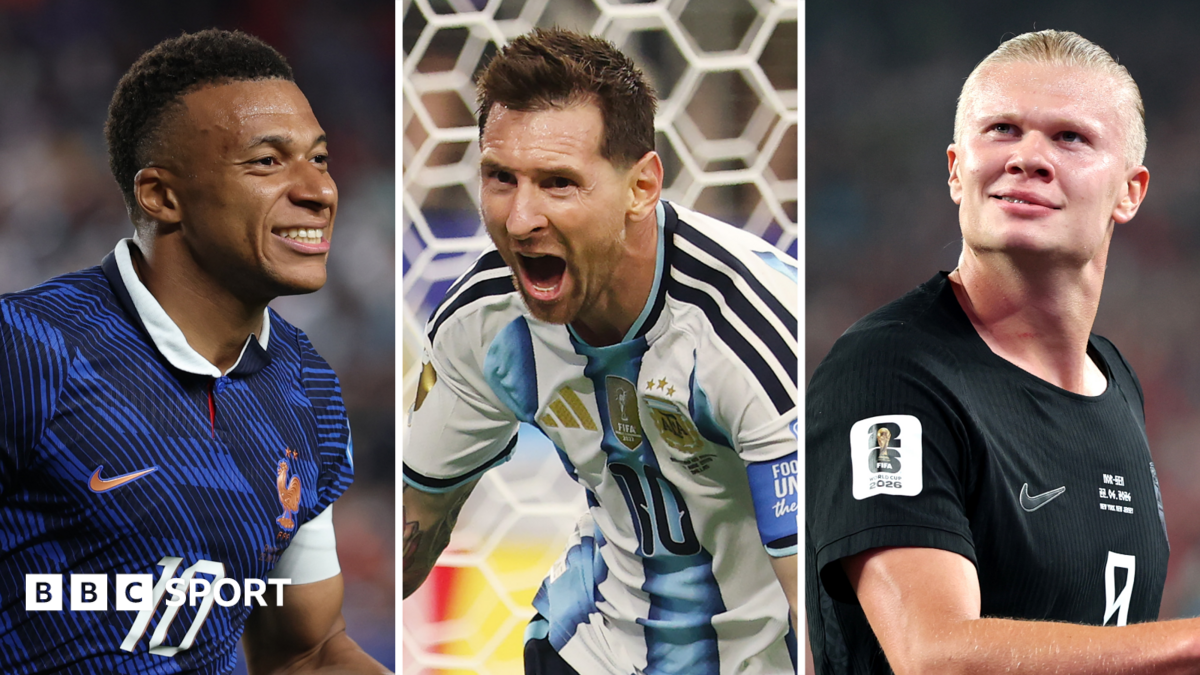
    The 2026 FIFA World Cup has already produced one of the most historic individual competitions in the tournament’s history, as three of the world’s greatest forwards have mounted an unprecedented Golden Boot challenge that has sent records tumbling within the first two matchdays.

    After just two games each, Lionel Messi of Argentina sits atop the goal-scoring standings with five strikes, while Kylian Mbappe of France and Erling Haaland of Norway trail closely behind with four goals apiece. This historic start marks only the second time in World Cup history that three players have notched at least four goals within the first two matches, a feat not seen since 1954, and fans and pundits alike are hailing the opening stretch of the tournament as something truly extraordinary.

    The historic run of goalscoring unfolded across a single matchday, with each superstar matching their rivals’ output step for step. First, Messi broke the men’s World Cup all-time goal-scoring record with a brace in Argentina’s victory over Austria, pushing his cumulative tournament total to 18 goals across 28 World Cup appearances. Before that, former Germany striker Miroslav Klose held the all-time record with 16 goals, meaning Messi has already surpassed the mark that stood before the tournament kicked off.

    Not to be outdone, Mbappe hit his own double on his 100th international cap, powering France to a weather-delayed win over Iraq. The French star has now drawn level with Klose on 16 all-time World Cup goals, and has already claimed the title of France’s all-time leading World Cup goalscorer after just two matches this tournament. He is also in position to become the first men’s player to win multiple Golden Boot awards, should his current form hold.

    Hours later, Haaland matched his two fellow superstars by scoring twice in Norway’s win over Senegal, securing the nation’s place in the round of 32 in the 24-year-old’s first World Cup appearance. Haaland, who has already become Norway’s top World Cup goalscorer after just two matches, is only the sixth player in history to score multiple goals in each of his first two World Cup appearances, extending his club-form red hot streak to international football with an incredible 59 goals in 52 caps for Norway.

    England captain Harry Kane, who already scored a brace on opening day against Ghana, will get his chance to add to his tally and join the leading group on Tuesday, adding even more stakes to what is already shaping up to be a historic race. Beyond the all-time cumulative record, all the leading contenders are also targeting Just Fontaine’s 65-year-old record of 13 goals scored in a single World Cup, set in 1958. Only three players in history have ever hit double-digit goals in a single World Cup, but pundits widely predict that number will grow by the end of this 2026 tournament.

    The expanded 48-team format of the 2026 World Cup has been cited as one factor contributing to the surge in goals from elite attackers. The new structure adds an extra knockout round for tournament winners, giving star players more opportunities to find the back of the net, while the inclusion of more lower-ranked opponents has allowed the world’s best forwards to capitalize on chances against less experienced defenses.

    Industry experts and former players have weighed in on the once-in-a-generation competition for the Golden Boot. French football journalist Julien Laurens noted that the elite stars are not only competing for the current tournament’s top scorer prize, but are also chasing historic all-time records that have stood for decades. Former Scotland striker Ally McCoist argued that while it is impossible to directly compare the three superstars, Haaland stands alone as the most clinically lethal finisher in the world right now. “When it comes to putting the ball in the back of the net, Haaland is probably the best out there. When it comes to finishing, he takes some beating,” McCoist said.

    Former England international Karen Carney summed up the opening matchday: “It was a superstar day. Messi stole the show, but what performances from Mbappe and Haaland as well. Let’s hope Harry Kane can get in on the act on Tuesday.”

    While the race for goals has captured global attention, Mbappe sought to downplay his individual pursuit, noting that he is focused first on helping France succeed rather than tracking Messi’s progress. “If I start watching him, I’ll feel like I have to do even more, so no, I don’t watch what he’s doing. I’m only thinking about helping my team – by helping the team, I score goals and get closer to that kind of level,” Mbappe said.

    Norway manager Stale Solbakken was quick to advocate for his star striker, arguing that Haaland’s four-goal start is even more impressive coming off a smaller nation than global powerhouses France and Argentina. “It’s easier to win the Golden Boot when you play for France and Argentina, but we’ll try to give Erling more games, and more help also in the next games. So he’s on fire and I’m very happy for him that he can score on the biggest stage,” Solbakken said.

    Even other top young strikers in the tournament have expressed awe at the three superstars’ historic form. American striker Folarin Balogun, who notched two goals in his own first two matches, joked: “I think it’s annoying. Seeing players like Messi, Mbappe, Haaland – they’re so inevitable. I think they’re scoring a goal a game, sometimes more. For me, it’s just about trying to get to that level – to be inevitable as well.”

    As the tournament progresses, all eyes will remain fixed on the Golden Boot race, as what is already the most competitive individual goal-scoring chase in decades continues to unfold on football’s biggest global stage.

  • Colombia’s last training session before World Cup match against Congo suspended because of storm

    Colombia’s last training session before World Cup match against Congo suspended because of storm

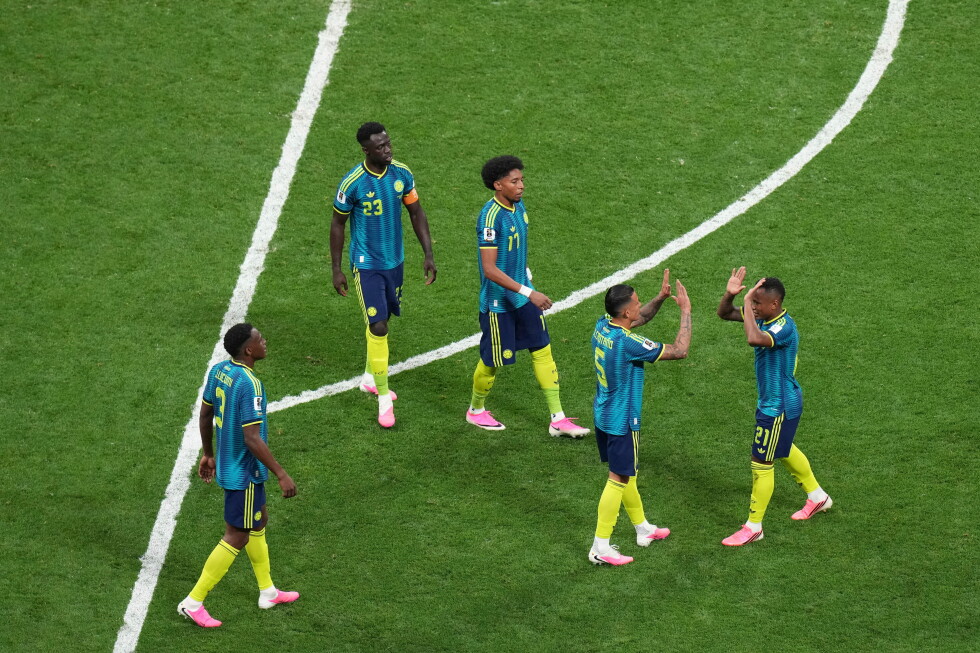
    GUADALAJARA, Mexico — Severe weather has thrown a last-minute curveball into Colombia’s preparation plans for its critical second Group K FIFA World Cup matchup against Congo, forcing the South American squad to halt an outdoor training session just minutes after it kicked off on Monday.

    The incident unfolded at Guadalajara’s dedicated training facility, where Colombia’s squad had begun going through tactical drills and warm-up routines. Within 30 minutes of starting the session, a sudden rolling storm swept through the region, prompting coaching staff to immediately order players to evacuate the outdoor pitch and move to indoor shelter for safety.

    Rather than scrapping the day’s workout entirely, the Colombian Football Federation confirmed that the team adjusted its schedule and completed the remaining portion of the training session inside a nearby gym, allowing players to maintain their fitness routines ahead of the upcoming high-stakes game.

    For their part, Congo avoided the Guadalajara storm on the same day: the African side held its full morning training session on U.S. soil before boarding a charter flight to the Mexican host city later on Monday.

    This upcoming fixture marks the second group-stage match for both teams, with each entering the game riding different early results from their opening outings. Colombia got its World Cup campaign off to a strong start, securing a solid 3-1 victory over Uzbekistan in its first match. Congo, meanwhile, earned a credible 1-1 draw against a Portugal side led by global superstar Cristiano Ronaldo to open its tournament run.

    More updates and full coverage of the 202X FIFA World Cup can be found via the Associated Press at their official website.

  • Argentina forward Julián Álvarez says he wants out of Atletico Madrid

    Argentina forward Julián Álvarez says he wants out of Atletico Madrid

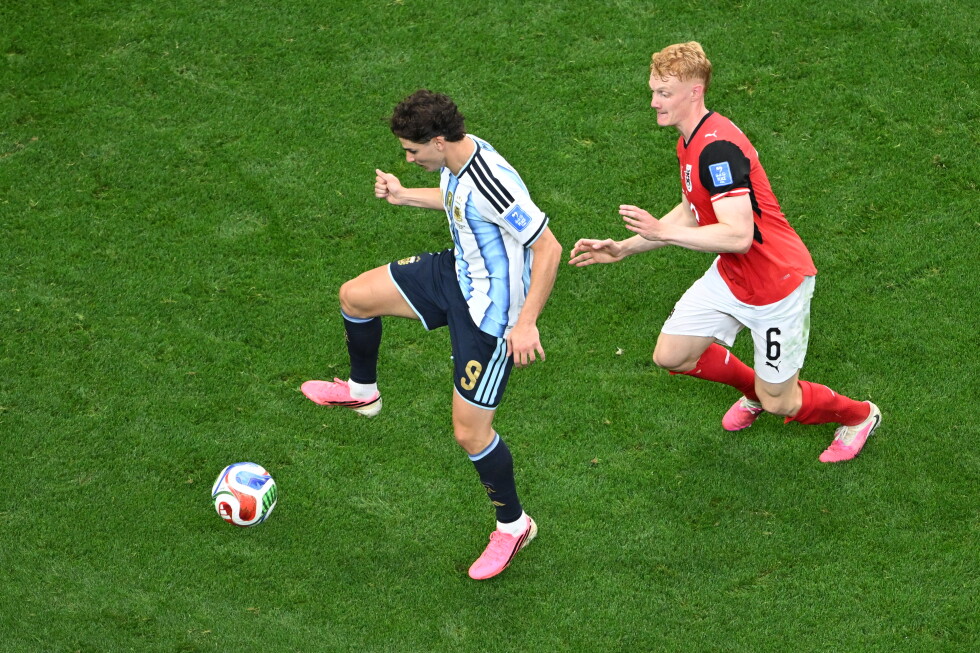
    ARLINGTON, Texas — Just hours after helping Argentina secure a 2-0 victory over Austria in a World Cup match held in this northern Texas city, star forward Julián Álvarez sent shockwaves through European soccer by publicly confirming his intention to leave La Liga side Atletico Madrid. The 26-year-old Argentine international did not shy away from addressing his future in an interview with ESPN, breaking his silence on months of unreported transfer speculation.

    “The best outcome for all parties involved is for me to move on this transfer window,” Álvarez told reporters. “While I recognize this may not be the ideal moment to discuss this matter publicly, I also cannot hide the truth from anyone. I have been honest about my position, and I have already communicated my wishes directly to the club’s leadership, as I felt I owed them that transparency.”

    News of Álvarez’s comments spread rapidly across global soccer media, and within hours of the comments being circulated in Spanish outlets, visual evidence of angry Atletico Madrid supporters burning the player’s jersey began circulating widely on major social media platforms. The images highlighted the deep frustration among the fanbase over one of their key attackers openly pushing for an exit from the club.

    The public confirmation of Álvarez’s desire to leave comes just weeks after Real Madrid, Atletico’s city rivals, confirmed that they had tabled a 150 million euro (equivalent to $171 million) offer for the forward earlier this month, an offer that Atletico Madrid’s board rejected out of hand. Spanish soccer reporting has also connected this offer to the ongoing re-election campaign of Real Madrid president Florentino Pérez, who included a high-profile pursuit of the Argentine star as a key promise to voters ahead of the club’s leadership vote.

    Real Madrid are not the only top Spanish side linked with a move for Álvarez: multiple reports out of Catalonia have also confirmed that FC Barcelona, another of European soccer’s biggest clubs, has also expressed concrete interest in signing the talented forward. Despite the overt interest from rival clubs and Álvarez’s public push for a transfer, Atletico Madrid has repeatedly maintained its position that it has no intention of entering negotiations to sell the player this summer. Per Spanish football media, Álvarez’s current contract with the club includes a massive release clause set at 500 million euros ($571 million), a figure designed to deter clubs from pursuing a mandatory exit for the player.

  • Kylian Mbappé scores 2 goals to lead France to 3-0 win over Iraq and into World Cup knockout stage

    Kylian Mbappé scores 2 goals to lead France to 3-0 win over Iraq and into World Cup knockout stage

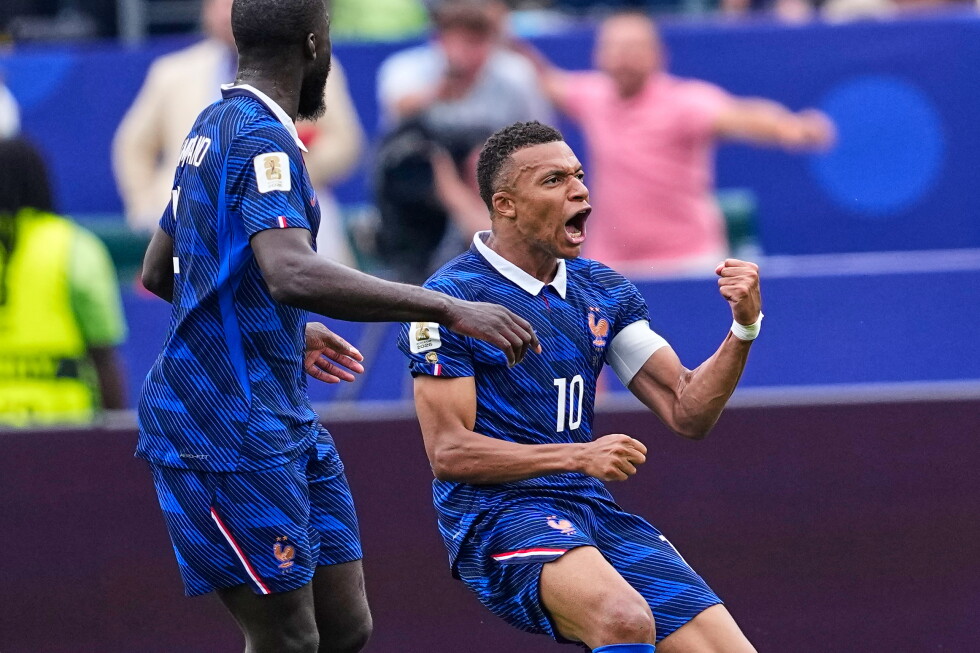
    PHILADELPHIA — Monday’s FIFA World Cup group stage match between France and Iraq made tournament history before delivering the kind of individual brilliance that has become synonymous with Kylian Mbappé, as Les Bleus weathered the first-ever rain delay in World Cup history to secure a 3-0 victory and a spot in the knockout round, with Mbappé netting twice to climb into elite company on the all-time tournament goalscoring list.

    The 27-year-old French superstar, playing his 100th senior international match under soggy conditions at Lincoln Financial Field, opened the scoring in the 14th minute, slotting a left-footed strike from the edge of the 18-yard box past Iraq starting goalkeeper Ahmed Basil. The goal gave France a 1-0 lead heading into halftime, just as a severe thunderstorm rolled into Philadelphia, triggering a 2-hour and 2-minute delay that upended the match schedule.

    Match officials ordered thousands of spectators to seek shelter in the stadium’s covered concourses and balconies as sheets of rain drenched the Kentucky bluegrass pitch, leaving grounds crews to squeegee standing water off the playing surface ahead of the second half. The venue, home of the NFL’s Philadelphia Eagles, has a history of weather-related disruptions: last season’s Eagles home opener was delayed 65 minutes by lightning, and Monday’s storm brought a familiar set of inconveniences for fans, from overpriced concession stands to unplanned breaks that extended the match long past its original end time. By the time play resumed, many fans had already headed for the exits, while the remaining French supporters waved tricolor flags and splashed through standing water in the concourses to pass the time. Iraq head coach Graham Arnold even had a viral moment wrestling with a rain poncho before retreating to the covered dugout.

    When play finally restarted, it did not take long for Mbappé to add to his tally. In the 54th minute, Iraqi defender Zaid Tahseen played a sloppy back pass directly to Ousmane Dembélé, who controlled the loose ball and found Mbappé open in front of goal. The French captain tapped home his second of the night with his right foot, pushing France’s lead to 2-0. The reigning Ballon d’Or winner Dembélé capped the scoring late for France, sealing the 3-0 win for Didier Deschamps’ side.

    The two goals moved Mbappé to 16 career World Cup goals, pulling him level with Germany’s Miroslav Klose for second on the all-time list, one clear Brazil’s Ronaldo and just two behind new record holder Lionel Messi. Messi, Mbappé’s long-time rival, had stretched his record to 18 goals earlier the same day, scoring twice in Argentina’s win over Algeria in Kansas City. Mbappé came close to claiming a hat trick on a late breakaway, but his final effort missed the target before he was substituted out in the 90th minute.

    Beyond the milestone, the win secures France’s place in the knockout round as one of the tournament’s co-favorites alongside Spain. Les Bleus could return to Philadelphia for a quarterfinal match against Germany on July 4 if results hold in the remaining group stage games.

    For Iraq, making just their second World Cup appearance in history after debuting in 1986, the match brought more than just a defeat. Star striker Aymen Hussein, who scored his 34th international goal in Iraq’s opening 4-1 loss to Norway, was forced off with an apparent injury just 26 minutes into the first half, replaced by Ali Al-Hamadi. Basil, who got his first start of the tournament in place of captain Jalal Hassan who conceded four goals against Norway, could not stop Mbappé and Dembélé’s attacking pressure on the night.

    For the fans that stayed through the entire two-hour rain delay and the final whistle, the night ended with a celebration of one of the game’s greatest players, who continues to chase history as the tournament progresses.