The 2026 FIFA World Cup has arrived with a transformative new format, expanding the tournament field from 32 to 48 teams and restructuring the group stage into 12 four-team groups. While the change has delivered unforgettable underdog narratives that captured global football fans’ hearts, it has also sparked fierce debate about whether the overhaul has delivered on its promise of a more competitive, entertaining tournament. Now, as the first 48-team group stage wraps up and the expanded 32-team knockout round gets underway, analysts and fans alike are weighing the successes and shortcomings of FIFA’s bold experiment.
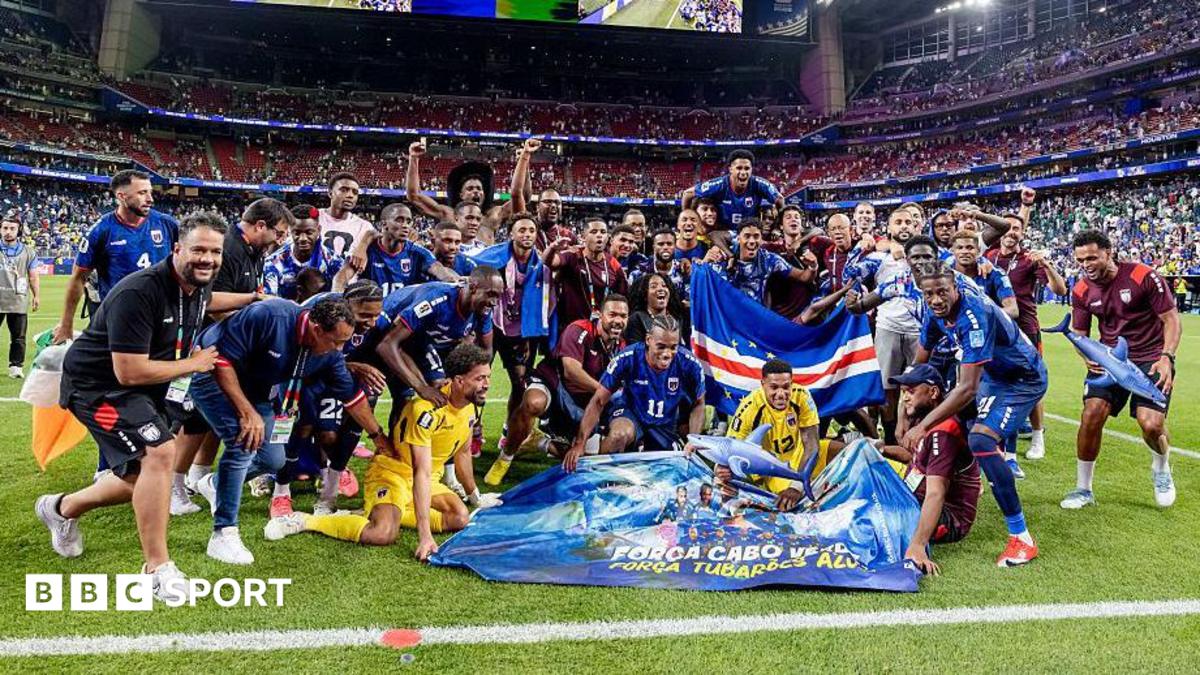
The most compelling vindication of FIFA president Gianni Infantino’s expansion plan comes from the tiny Atlantic archipelago nation of Cape Verde. Written off by pundits before the tournament even began, Cape Verde pulled off one of the most remarkable underdog runs in World Cup history to claim a spot in the knockout rounds, ousting two-time champion Uruguay from their group alongside European champion Spain. A shutout draw against Spain, a 2-2 tie with Uruguay, and a final group draw against Saudi Arabia secured Cape Verde second place in the group with just three points, setting up a blockbuster round of 32 matchup against defending world champion Argentina in Miami this Friday.
The story of Cape Verde’s run is intertwined with the viral rise of their 40-year-old goalkeeper Vozinha, a journeyman who spent his entire club career in lower-tier European leagues across Moldova, Cyprus, Slovakia, and Portugal. His heroic penalty-saving performance against Spain turned him into an overnight global sensation: his Instagram follower count skyrocketed from 50,000 before the match to over 16.7 million today, and enough fan support raised funds to fly his mother to the tournament from Cape Verde after she was initially unable to afford a U.S. visa. That kind of once-in-a-lifetime, emotional narrative is exactly what expansion proponents promised the new format would deliver, giving smaller nations the platform to create moments that resonate across the sport.
Cape Verde is far from the only small nation that delivered memorable moments under the new format. Curacao, the smallest country to ever qualify for a World Cup, earned a credible draw against Ecuador despite failing to advance. DR Congo held defending champion Portugal to a 1-1 draw to sneak into the knockout rounds as one of the best third-placed teams, and Haiti’s Wilson Isidor scored what is already being called a contender for goal of the tournament against Morocco. For African football in particular, the tournament has been a historic breakthrough: nine of the 10 African qualifying nations advanced to the knockout round, a staggering show of strength that has validated arguments for expanding the tournament to give more African sides a shot at competing on the global stage. Six nations including Bosnia-Herzegovina, Canada, DR Congo, and South Africa have reached the knockout round for the first time in their history, a new milestone for global football representation.
For all the heartwarming Cinderella stories, though, the new format has faced sharp criticism for its structural flaws that stripped much of the tension and competitive jeopardy from the group stage. The biggest issue is the rule that allows the top two teams from each group plus the eight best third-placed teams to advance to the knockout round, paired with FIFA’s decision to make head-to-head results the first tiebreaker for teams level on points, rather than overall goal difference. The result was that by the final matchday, four group winners had already secured their top spot with a game to spare, and five teams had already been eliminated before their final group fixture, leaving nine matches with nothing tangible to play for. Had FIFA retained goal difference as the primary tiebreaker, every side would have still had something to compete for going into the final round of group matches.
This lack of stakes also created a lopsided dynamic that favored top elite nations, with almost no upsets of major sides in meaningful matches — a stark contrast to the 2022 World Cup, where Saudi Arabia stunned eventual champion Argentina in the group stage. Of the 12 tournament top seeds, only co-host Canada and Portugal failed to win their groups. Critics argue that the 12-group structure inherently reduces the risk of upsets, turning the 72-game group stage into a prolonged exercise to weed out the lowest-ranked teams before the real tournament begins. Even Ghana coach Carlos Queiroz, whose side advanced as a third-placed team, has spoken out against the format, calling it “vulgar and ordinary.”
Another glaring flaw is the uneven advantage given to teams in later groups for third-place qualification. Scotland and South Korea both finished with three points and were eliminated, but were forced to wait three full days for the final group matches to conclude to learn their fate. In contrast, Senegal knew exactly how many goals they needed to score against Iraq to claim the last third-place spot ahead of their match, and secured their place with a 5-0 win. In the final group match, Austria and Algeria both knew that a draw would see both advance and eliminate Iran, leading to a match that fizzled out in the final 20 minutes with neither side willing to risk attacking play.
On paper, the new format has delivered on one key promise: goals. This year’s group stage has averaged 2.99 goals per game, the highest average for any World Cup group stage since the 32-team format was introduced in 1998, and the highest overall across any World Cup since the 1958 tournament in Sweden. But much of this goal explosion has come in lopsided matches between elite and underdog sides: 18 group games were decided by three or more goals, compared to just five at the 2022 Qatar World Cup. Many of these lopsided wins came when the top side had already secured qualification and rotated their squad, or the weaker side had already been eliminated, leading to questions about how much this goal glut actually reflects a more competitive tournament.
The performance of different confederations also reveals a mixed picture of expansion’s success. While African nations exceeded all expectations, other regions have underperformed sharply. Asia received eight automatic qualification spots, doubled from four in the 2022 format, plus one additional spot via playoffs, but only Australia and Japan advanced. Across 27 matches, Asian sides picked up just three wins, averaging only 0.67 points per game. For the North American, Central American and Caribbean confederation CONCACAF, all but one of the confederation’s 20 total points came from the three co-hosts: the three additional qualifier sides Curacao, Haiti, and Panama scored just three goals and conceded 21 combined.
Now, after weeks of group stage play, the expanded 32-team knockout round is finally underway. For supporters of the new format, the Cape Verde Cinderella run and African breakout have already proven that expansion has opened up the World Cup to new stories and new talent. For critics, the structural flaws that reduce tension and create uneven advantages have turned the group stage into a prolonged, low-stakes warm-up for the knockout round that many describe as the “real World Cup” anyway. As the world watches the remaining teams compete for the 2026 trophy, the debate over whether the 48-team format is here to stay will only intensify.