分类: sports

  • Daniel Muñoz scores and Colombia edges Congo 1-0 to reach the knockout stage at the World Cup

    Daniel Muñoz scores and Colombia edges Congo 1-0 to reach the knockout stage at the World Cup

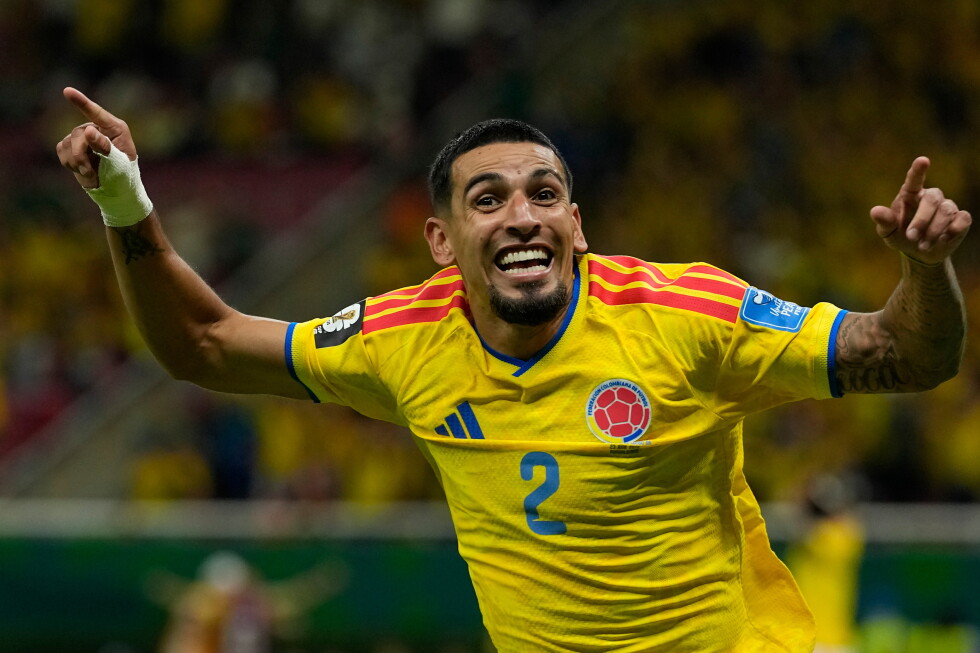
    GUADALAJARA, Mexico – A 76th-minute strike from right-back Daniel Muñoz has secured Colombia a hard-fought 1-0 victory over Democratic Republic of Congo on Tuesday, punching Los Cafeteros’ ticket to the 2026 FIFA World Cup knockout stage and leaving the underdog Congolese side on the brink of elimination.

    For more than three-quarters of the Group K clash, DR Congo’s organized defense and a sensational early performance from goalkeeper Lionel Mpasi frustrated Colombia’s high-powered attack. Mpasi, whose team entered the match ranked 47th globally, turned away five difficult scoring chances for Colombia in the opening 20 minutes alone, keeping the heavily favored South American side off the score sheet through much of the contest.

    Muñoz broke the deadlock when a deflected pass fell to him inside the 18-yard box, and the full-back buried a crisp left-footed strike past Mpasi, who had no chance to stop the effort. The goal marked Muñoz’s second of the tournament, and it proved to be the difference despite a tense late flurry from DR Congo. In stoppage time, DR Congo came agonizingly close to grabbing an equalizer twice: first, Colombia goalkeeper Camilo Vargas produced a spectacular save to deny Nathanael Mbuku’s long-range effort, then he pushed away Chancel Mbemba’s header from the subsequent corner kick to preserve the clean sheet and the win.

    Colombian star forward Luis Díaz saw two late goals ruled out in consecutive minutes in the second half: the first disallowed for a foul in the 79th minute, and the second called back for an offside decision one minute later.

    The result cements Colombia’s position atop Group K with six points from two opening matches, holding a two-point lead over second-place Portugal and a five-point advantage over DR Congo. Earlier the same day in Houston, Portugal delivered a dominant 5-0 rout of Uzbekistan, with captain Cristiano Ronaldo netting a brace in the victory.

    DR Congo, which is making just its second World Cup appearance and first in 52 years, caught global attention in its opening match with a shock 1-1 draw against Ronaldo’s Portugal. The underdog side has faced significant disruptions to its World Cup run, however: an Ebola outbreak in its home country disrupted preparations, and travel restrictions have prevented hundreds of Congolese fans from traveling to the tournament in North America. One high-profile fan who overcame quarantine barriers to attend the Guadalajara match was Michel Nkuka Mboladinga, who earned viral fame during the Africa Cup of Nations for holding a silent statue pose in honor of assassinated Congolese independence leader Patrice Lumumba. Mboladinga maintained his iconic pose for the full 90 minutes of Tuesday’s clash after missing DR Congo’s opening draw due to quarantine rules.

    Colombia, which missed out on qualification for the 2022 World Cup in Qatar, enters its final group stage match against Portugal on Saturday sitting in a strong position. Ranked 11th in the world – third among South American nations behind only Brazil and Argentina – Colombia opened its campaign with a 3-1 win over Uzbekistan. A draw against Portugal will be enough for Colombia to claim the top spot in Group K, and the same result would also see Portugal advance to the knockout round.

    The match also marked a milestone for Colombian playmaker James Rodríguez, who earned his 10th World Cup appearance, joining Colombian legends Freddy Rincón and Carlos Valderrama as the only players to reach that mark for the nation. Colombia heads into the final group stage match with a historic unbeaten streak in open play, having never finished a World Cup fixture scoreless across 23 previous tournament appearances.
  • Ancelotti’s quest to end Brazil’s 24-year wait for World Cup glory

    Ancelotti’s quest to end Brazil’s 24-year wait for World Cup glory

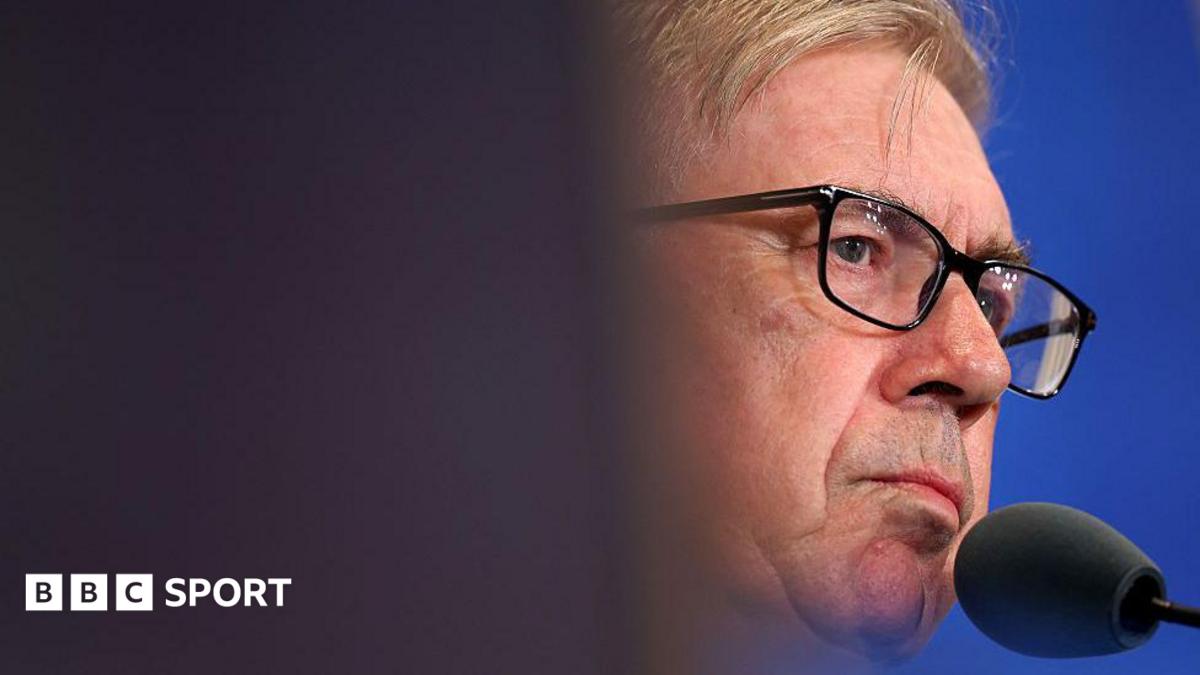
    Miami, June 24 – After a delayed arrival that stretched hours past the originally scheduled start time, Brazil men’s national football team head coach Carlo Ancelotti finally stepped into a packed converted locker room at Miami Stadium late Monday to face hundreds of assembled journalists ahead of Brazil’s third Group C 2026 FIFA World Cup match against Scotland on Wednesday. What was meant to include ample discussion of the upcoming fixture instead centered almost entirely on questions about Brazil’s star-studded squad, their quest to end a 24-year World Cup title drought, and the long-awaited return of record goalscorer Neymar.

    Neymar, Brazil’s all-time leading marksman with 79 international goals, is set to make his first appearance for the Selecao in nearly three years against Scotland. The 34-year-old attacker, who last played for Brazil in October 2023 and missed Brazil’s 1-1 Group C opener against Morocco through injury, has been the subject of fierce public debate in his home nation after being selected for the squad over Chelsea’s Joao Pedro. Despite his historic goalscoring record, Neymar does not enjoy universal adoration across Brazil, with many questioning his place in the squad ahead of younger, in-form alternatives.

    But Ancelotti offered a full, positive update on the former Barcelona and Paris Saint-Germain forward’s fitness ahead of the match, confirming he is fully available to feature. “He is available. He trained very well this week. He is fit and ready to play,” Ancelotti told reporters. “We are very happy. He is a high-quality player. He can play half-time or the whole 90 minutes. He’s very well, he worked very hard. So he is ready. His attitude is very good and he is in good spirits. He’s a good player, a great team-mate, he’s very serious and we want to put him back to play as soon as possible. He brings experience, knowledge and is doing very well.”

    While Neymar’s return dominates headlines, most analysts and fans pin Brazil’s World Cup hopes on Real Madrid superstar Vinicius Jnr, who Ancelotti previously managed at club level before taking the Brazil job in 2025. Vinicius has already proven his impact at this tournament, notching two goals in two matches including a stunning equalizer that rescued a point against Morocco after Brazil fell 1-0 early and struggled to break down the North African side’s elite defensive organization. Ancelotti made it clear that the in-form winger will remain a core piece of his game plan moving forward, even with a squad packed full of elite attacking talent.

    “He’s playing very well,” Ancelotti said. “We need to use him even though we have other fantastic players. We have experience, quality and legs. I’m completely satisfied with all of them. I have to put all the players to adapt to the style of the team.”

    That ability to integrate A-list talent into a cohesive, winning unit is what has made Ancelotti one of the most successful managers in the history of the sport. The Italian tactician is already the most decorated manager in UEFA Champions League history with five titles, and the only manager to claim league championships across all five of Europe’s top domestic leagues. A World Cup triumph with Brazil would cap his legendary career and cement his legacy as the greatest manager of all time, a milestone that would carry extra historical weight: Brazil ended its previous 24-year World Cup title drought on American soil, when the iconic 1994 side led by Romario and Bebeto claimed the trophy at USA ’94.

    While Brazil’s preparations center on their own star power, Ancelotti made clear he has not underestimated Scotland, who enter the fixture still looking for their first win of the 2026 tournament. The Scots have managed just two shots on target across their first two group matches, but put in a strong late push against Morocco in Boston that tested the 2022 semi-finalists, and Ancelotti highlighted their organized, physical style. “Difficult game, as usual,” he said. “Scotland has quality, they are fighters, they play really well organised. They have really good players, good individuals in Scott McTominay, John McGinn, that are experienced players who are used to playing this type of game. It will be a very difficult game as usual. We are ready to play a difficult game.”

    “They are a strong team. They have a very clear strategy. Usually play 4-4-2, long balls. They will try and do a lot of crossing. We need to control the match in that sense.”

    Scotland has already prepped contingency plans for potential weather delays that could impact the fixture, as organisers navigate tournament conditions across multiple American host cities. For Brazil, the focus remains on pulling their talented group together to chase a long-awaited sixth World Cup title, with Wednesday’s match offering the first chance for Brazilian fans to see their record goalscorer back in the famous yellow shirt.

  • Watch: Football fans celebrate in Ghana after draw with England

    Watch: Football fans celebrate in Ghana after draw with England

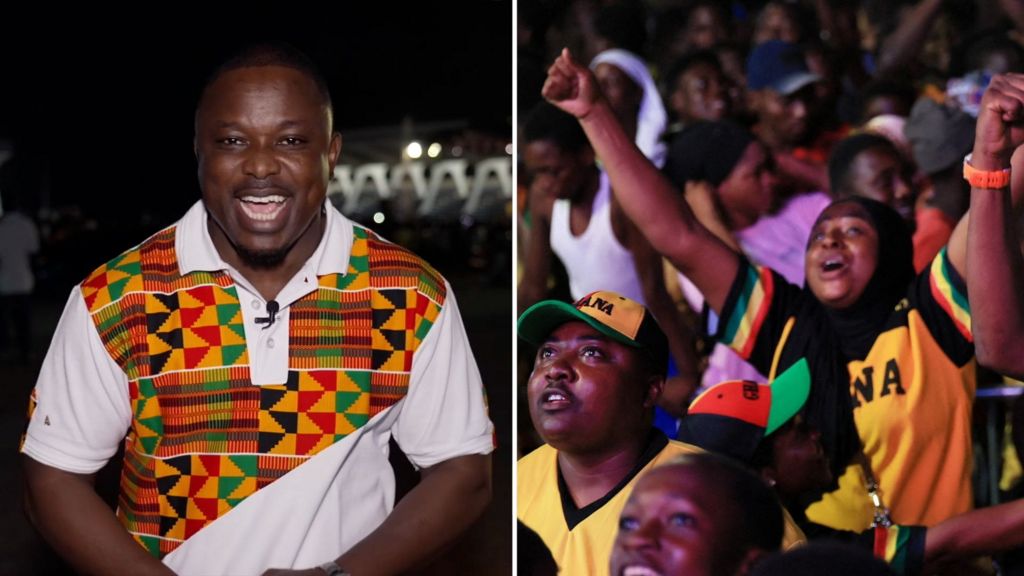
    In a display of unbridled passion and national pride, thousands of Ghanaian football supporters gathered at Accra’s iconic Black Star Square on Wednesday to celebrate their national team’s impressive 0-0 draw against England in the 2022 FIFA World Cup group stage.

    Ghana-based correspondent Thomas Naodi was on the ground at the central public space to capture the electric atmosphere, reporting on sea of black, red, yellow and green Ghanaian flags that waved across the plaza as fans sang traditional battle chants, danced to upbeat afrobeats, and embraced one another in shared excitement.

    Many supporters had crowded around public screenings across the country to watch the Qatar-based match, and after the final referee’s whistle blew, thousands made their way to Black Star Square— the historic heart of Ghana’s national identity, where the country’s independence was declared in 1957— to mark the moment. The Black Stars, making their fourth World Cup appearance, held off repeated attacks from the higher-ranked three-time tournament champions, securing a hard-fought point that gave the side a fighting chance to advance to the knockout stage of the competition.

    Even with the result falling short of a win, fans said the team’s performance against one of the world’s top football sides exceeded expectations and filled them with national pride. “We came into this match written off by everyone, but we held our own against England,” one long-time Black Stars supporter told Naadi on site. “That’s a win for us in our hearts.”

    The gathering stretched late into the night, with street vendors selling national memorabilia and local snacks to the crowd, and the sound of vuvuzelas and celebratory horns echoing across central Accra.

  • ‘VAR went for a coffee’ – should Ghana have had penalty against England?

    ‘VAR went for a coffee’ – should Ghana have had penalty against England?

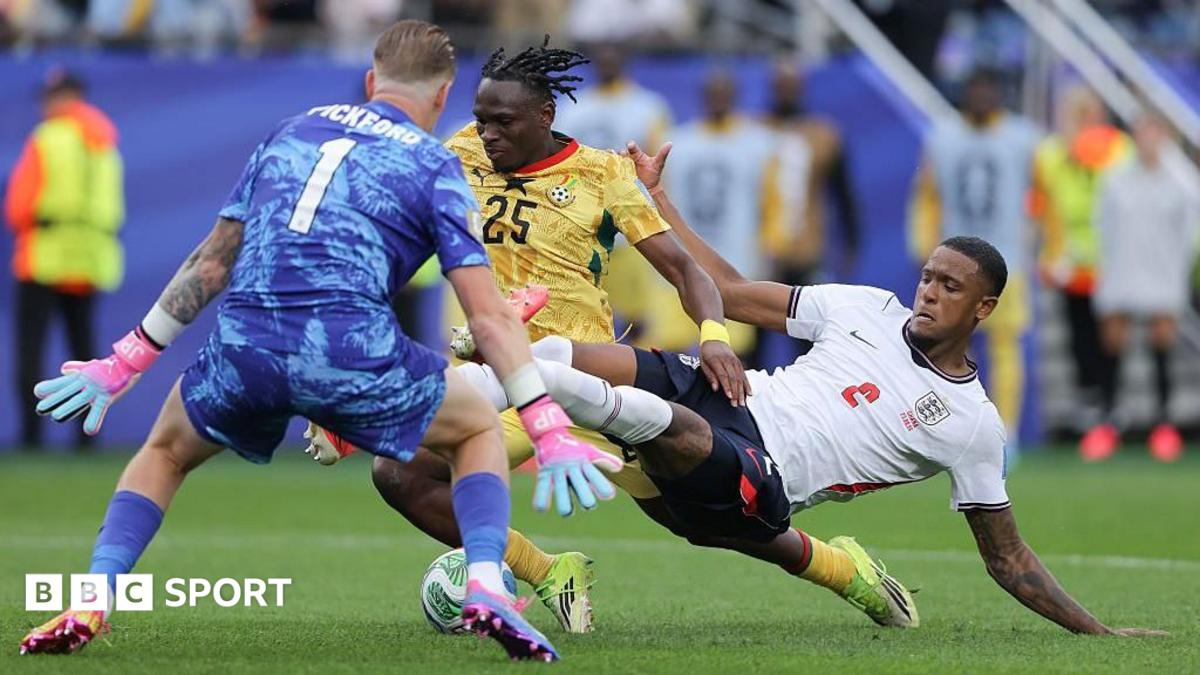
    A tense goalless friendly draw between England and Ghana ahead of the 2026 FIFA World Cup has ignited widespread debate over Video Assistant Referee (VAR) protocols, after a clear foul inside the England penalty area went unpunished by on-field officials and was not reviewed by VAR.

    Ghana boss Carlos Queiroz did not hold back after the match, venting his frustration over the late-game incident that saw his midfielder Prince Kwabena Adu brought down by England defender Ezri Konsa as Adu charged toward goal. Replays confirmed Konsa made contact with Adu’s knee and failed to touch the ball, a challenge that Queiroz insisted should have resulted in both a penalty and a red card for England.

    In a sarcastic rebuke of VAR’s performance, Queiroz questioned whether the system was even operational during the fixture. “Once again VAR went for a coffee,” he told reporters. “I’m not sure VAR is still working in the World Cup. We still have VAR? It’s working? It was a clear penalty, red card. You have any doubts about that?” He added a lighthearted caveat to his criticism, noting: “I’m sorry for my sarcasm, but if I say these kind of things seriously they punish me, so I hope you understand that I’m joking.”

    Queiroz’s complaints were echoed by multiple prominent football pundits and former elite players covering the match for the BBC, including several former England internationals. Former England and Manchester United striker Wayne Rooney said straight away that he believed the challenge deserved a penalty award. “Konsa takes a huge risk. His feet are off the floor when he comes flying in and he gets the man, not the ball. That could easily have been given in my view,” Rooney explained.

    Fellow ex-England defender Micah Richards echoed that assessment, noting that while England was pushing for a late winning goal, the rules of the game still required clear fouls inside the box to be punished. “On another day, that could have been a penalty,” Richards said.

    Even former 2010 World Cup assistant referee Darren Cann, who identifies as an England supporter, admitted the decision was incorrect. “As an England fan I am delighted that it wasn’t given, but I have to be honest, for me this should have been referred [to VAR], Cann told BBC One. “Konsa makes absolutely no contact at all with the ball, he brings down his opponent. He is airborne, he is out of control, he makes contact with the attacker. For me this was a penalty kick.”

    The incident has raised questions about why VAR did not intervene to review the call, a step that would be standard in most top-tier club competitions including the English Premier League. The difference, however, comes down to new protocol guidelines put in place for the 2026 World Cup by FIFA’s head of referees Pierluigi Collina. Collina has mandated a higher threshold for VAR overturns, with a policy of limiting interventions to preserve the flow of the game and defer more decisions to on-field officials. That policy is widely seen as the reason no review was initiated for the Konsa challenge.

    While Ghana walked away with a hard-fought respectable draw against England, the controversy has put renewed focus on FIFA’s adjusted VAR rules ahead of the tournament, sparking debate over whether the new threshold will lead to more contentious incorrect decisions as teams prepare for the 2026 World Cup.

    This report was first published in June by BBC Sport, ahead of the 2026 FIFA World Cup.

  • Messi and Mbappe romping through World Cup in dazzling display of history-making goals

    Messi and Mbappe romping through World Cup in dazzling display of history-making goals

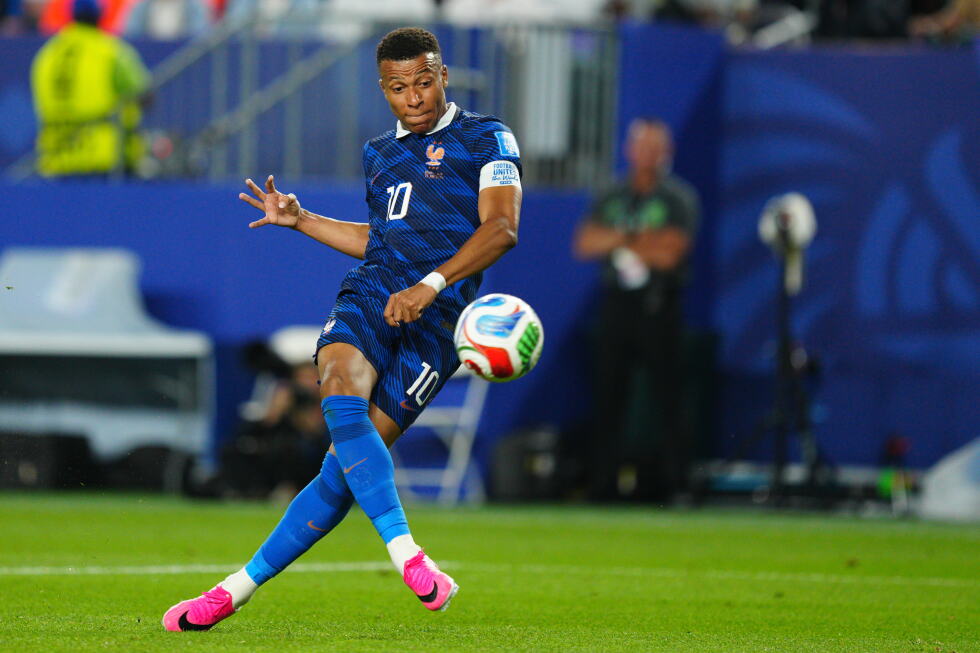
    The early stages of the current World Cup have erupted into a historic showcase of attacking brilliance, headlined by two of the game’s biggest global superstars whose record-breaking goal sprees have captured the attention of even casual soccer fans across the United States. Argentina’s Lionel Messi has bagged five goals through his team’s opening two group stage matches, pushing his all-time World Cup career goal total to 18 – a new outright record for the tournament. Not far behind is France’s Kylian Mbappe, who has notched four goals in this edition alone, bringing his own career tally to 16, which ties him for second place on the all-time scoring list.

    The dynamic between the two forward icons stretches back to the iconic 2022 Qatar World Cup final, where the pair combined for five unforgettable goals – two from Messi, three from Mbappe – before Argentina claimed the trophy in a tense penalty shootout, a title match still hailed as one of the greatest in the tournament’s history. Today, both men are pushing that legacy forward, and their friendly rivalry has turned the 2026 iteration of the World Cup into a personal masterclass of finishing. What makes Messi’s historic run all the more remarkable is that it is coming at an age when most elite strikers have long retired from top international competition. The Inter Miami forward, formerly of Barcelona, will turn 39 just three days before Argentina plays its final group stage match against Jordan, and 12 of his 18 World Cup goals have come after he turned 35. Contrary to expectations for a player of his age, Messi still displays the signature pinpoint touch, clinical passing in congested defense, and unexpected full-match stamina that defined his decades-long career. His match-sealing second goal against Austria exemplified this enduring quality: after Julián Álvarez’s initial shot was blocked, Messi tracked down the loose rebound and slid a finish past two defenders to lock in a 2-0 win, leaving opposing manager Ralf Rangnick full of praise. “We knew that he is on a level of his own, and Lionel Messi showed us today that he’s one of the best, and he is the best,” Rangnick said.

    At 27, Mbappe is in the peak of his physical powers, with the blistering speed and ruthless finishing from both feet that has made him the most feared young striker in the game, perfectly positioned to chase down Messi’s record both in this tournament and in future competitions. Mbappe’s World Cup legacy was already secure by 19, when he led France to the 2018 title in Russia, becoming just the second teenager alongside Pele to score in a World Cup final. He took home the Golden Boot as top scorer with eight goals in 2022, and his scoring rate far outpaces that of Messi: 16 goals in just 16 World Cup matches since 2018, compared to Messi’s 18 goals across 28 matches spread over six tournaments dating back to 2006. Despite his own historic form, Mbappe has remained humble in the face of Messi’s achievement, saying after his latest goals, “Leo always scores. He’ll always score. If I want to look at what Leo’s doing, I’ll have to do even more.” Later, when asked to name the best player in the world, he reiterated that title belongs to Messi.

    Messi and Mbappe are not the only forwards tearing up the scoreboard in this tournament. Norway, making its first World Cup appearance since 1998, has seen its star striker Erling Haaland bag four goals in two opening matches, two in each of Norway’s wins to clinch a spot in the elimination round. The 25-year-old Manchester City standout has been the most dominant striker in European club soccer for years, and he enters Friday’s group stage finale against Mbappe’s France with a chance to win the group – a matchup that has already become one of the most anticipated matches of the entire group stage. While Haaland downplayed his expectations for the fixture, saying “We’re through (to the next round), which is incredible, so I couldn’t care too much about that game now. They (France) are probably going to win against us, they’re probably going to win the whole tournament,” his manager Stale Solbakken made clear the impact Haaland has already had on Norway’s historic return to the World Cup. “He is the best striker,” Solbakken said. “He’s not playing for France or Argentina. He scores for Norway.” If Norway can advance deep into the tournament, Haaland stands a real chance of overtaking both Messi and Mbappe to claim the Golden Boot as this tournament’s top scorer. Portugal’s Cristiano Ronaldo also added to his career total this week, notching two goals against Uzbekistan to push his all-time World Cup tally to 10.

    With Argentina and France both having already secured their spots in the knockout round, both Messi and Mbappe will have plenty of matches left to add to their record goal totals, and both sides remain among the top favorites to lift the World Cup trophy at the end of the tournament.

  • Goalllll! Messi mania overtakes Argentina as legend breaks scoring record

    Goalllll! Messi mania overtakes Argentina as legend breaks scoring record

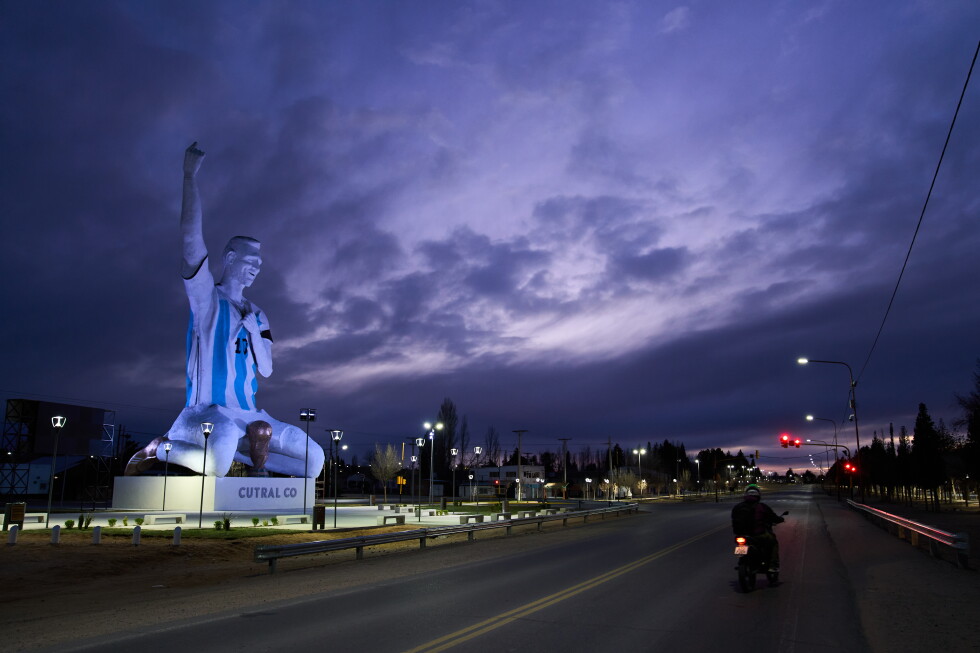
    As Argentina charges through the 2026 FIFA World Cup, the national passion for captain Lionel Messi has been immortalized in two massive, fan-driven projects that have captured the country’s collective heart: a record-breaking 26-meter statue in a remote Patagonian town and a community-built mural signed by more than 1,300 devotees.

    The towering steel monument stands on the outskirts of Cutral Co, a small oil-producing Patagonian town that has long lived in the shadow of the region’s more scenic, tourist-focused lake and mountain communities. Weighing 70 tons and built to withstand the region’s ferocious gale-force winds, the statue was inaugurated on June 16, matching the date of Argentina’s 2026 World Cup opening match against Algeria—where Messi delivered a standout performance, scoring a hat-trick to seal a win for his side and extend his historic international career.

    The work replicates one of the most iconic moments in Argentine soccer history: Messi’s emotional kneeling celebration on the pitch at Lusail Stadium after Gonzalo Montiel converted the decisive penalty to secure Argentina’s 2022 World Cup title over France in a dramatic penalty shootout. The statue captures all the details of that moment: the 2022 World Cup trophy rests between his knees, while one hand grips the Albiceleste jersey, and the index finger of the other points to the sky—Messi’s famous goal celebration, a tribute to his late grandmother who supported his early soccer career. The raised arm also doubles as a warm greeting to motorists passing along the adjacent Route 22.

    Its creator, 61-year-old local sculptor Aldo Beroisa, is no stranger to large-scale public art, having previously built giant dinosaur sculptures and monuments to Argentine independence heroes in Cutral Co. Beroisa called the Messi project a deeply personal honor, noting “He is Argentina’s natural ambassador. For me, it was very important, not only as an artist but as an Argentine.” Local officials confirm the monument is the largest statue ever built in honor of the Argentine captain, who will turn 39 just days after the statue’s unveiling.

    For the once-overlooked town, the statue has already delivered an unexpected boost: foot traffic has surged, with soccer fans and Messi admirers traveling from across the country to visit the monument, even as Messi continues to make history on the 2026 World Cup pitch. Just days before this report, the captain notched two goals in a 2-0 win over Austria, breaking the all-time record for most goals scored in World Cup tournament history, pushing his total to 18 since his World Cup debut in 2006. The statue project took 18 months to complete from initial concept to final unveiling.

    Hundreds of kilometers north in the Buenos Aires suburb of Berazategui, a second community-driven tribute has also drawn national attention. The 6-meter-wide, 5.5-meter-tall hyperrealistic mural bears a smiling portrait of Messi, with the names of more than 1,300 fans woven into the artwork surrounding the face of the captain. Unlike the statue, the mural was a collective project from its start: 32-year-old creator Leonel García led the painting, but fans traveled from across the region to add their own names to the work, completing the piece in just 18 days. García collaborated with Federico Merodo, who owns the local parking lot that provided the blank canvas wall for the project.

    The portrait draws inspiration from a relaxed, joyful photo of Messi taken during a friendly match after the 2022 World Cup victory, capturing the athlete at his most approachable. Creating a hyperrealistic likeness of one of the most recognizable people on the planet presented a major creative challenge for the team, but the final result earned high praise even from Messi himself, who shared a video message for the creators saying, “Crazy … thank you very much to all of you, to the people who supported it, who came by, and who keep coming by.”

    García emphasized that the mural is as much a tribute to the unifying power Messi holds for Argentina as it is to the athlete himself. “Messi brings joy to the country. The times we’re living through in Argentina may not be very good for some people, but Messi unites everyone … and the mural does that too, because people from everywhere come together here, from every social class and every political sector,” García explained.

    As Argentina advances in the 2026 World Cup, both tributes stand as lasting testaments to the decades of joy and national unity Messi has brought to his home country.

  • Paraguay’s Miguel Almiron gets one-game suspension after red card for covering his mouth

    Paraguay’s Miguel Almiron gets one-game suspension after red card for covering his mouth

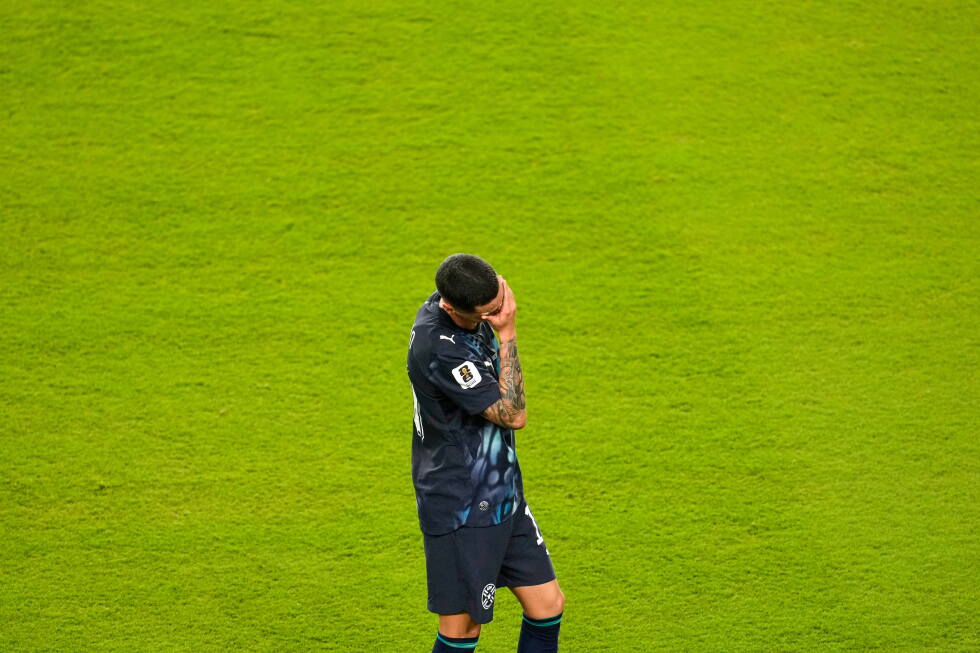
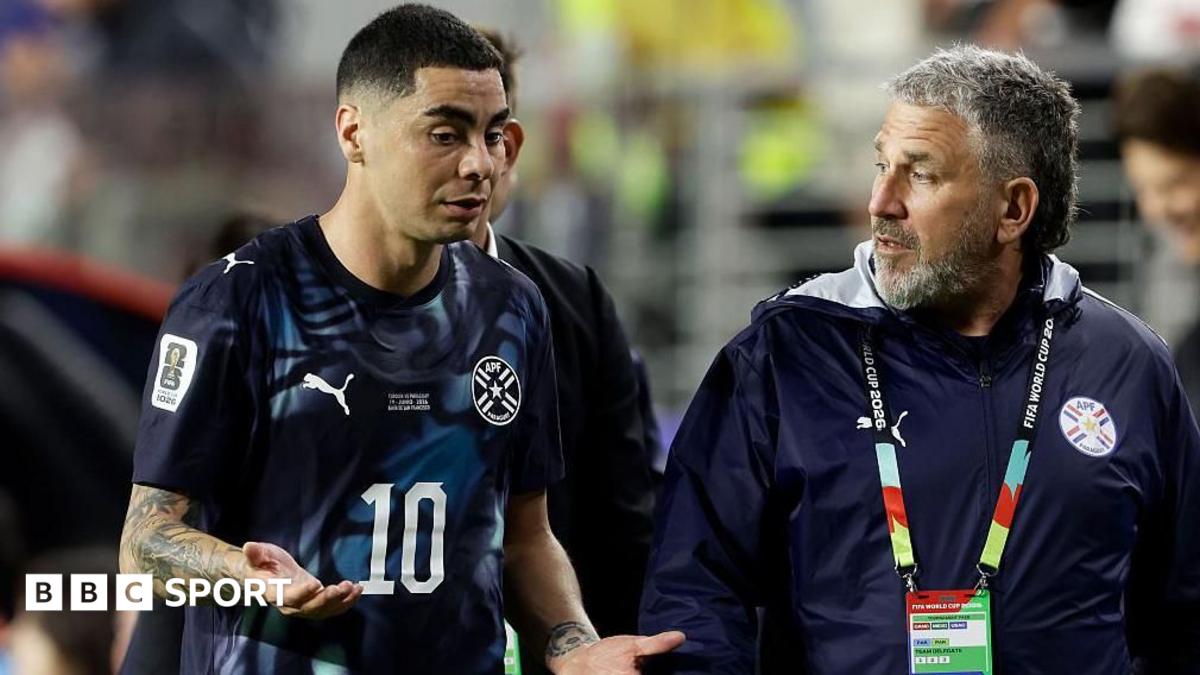
    ATLANTA – In a historic first for international soccer’s showpiece tournament, Paraguay international midfielder Miguel Almiron has received a one-match ban and will miss his side’s final Group Stage fixture against Australia this Thursday, becoming the first player ever expelled from a World Cup match for violating the new rule banning mouth covering during player confrontations.

    FIFA formally confirmed the disciplinary action on Tuesday, adding that the ruling is not eligible for appeal. The red card that sparked this suspension was issued late in the first half of Paraguay’s 1-0 victory over Turkey last Friday, when Almiron covered his mouth during an on-pitch verbal clash with Turkey’s Mert Mulder, an infraction that triggered an immediate sending-off under competition rules.

    The new regulation at the center of this incident was approved back in April by the International Football Association Board (IFAB), soccer’s global governing body for the Laws of the Game. The rule states that any player who covers their mouth to hide their words during a confrontation with another player can be punished with a straight red card. Notably, the rule is not a mandatory core part of the official Laws of the Game, instead allowing individual tournament organizers – including FIFA for the World Cup – to opt into adopting it for their competitions.

    The push for the new regulation came from FIFA president Gianni Infantino, who advocated for the change after a high-profile controversial incident during last season’s UEFA Champions League. In that match between Real Madrid and Benfica, Benfica winger Gianluca Prestianni was caught on camera covering his mouth while directing homophobic abuse at Real Madrid’s Vinícius Júnior. UEFA ultimately handed Prestianni a six-game ban, with three of those matches suspended, for what the governing body labeled “discriminatory (i.e. homophobic) conduct.”

    On Tuesday, Infantino doubled down on his support for the new rule during an interview with SNTV, framing the policy as a core issue of respect and accountability on the pitch. “This thing about covering the mouth is for us a very, very important rule,” he said. “It’s about respect, it’s about the example that we should give. If you have nothing to hide, you don’t cover your mouth when you speak to somebody. The rules have been made very clear to everyone, everyone knows them, so this is an important element.”

    For Paraguay, the suspension leaves the side without their key playmaker for a do-or-die group match against Australia, raising new questions about how the new regulation will shape future matches and disciplinary outcomes in top-tier soccer competitions.

  • Commentator stripped of Fifa credentials over Almiron rant

    Commentator stripped of Fifa credentials over Almiron rant

    A controversial moment at the 2026 FIFA World Cup has left one Paraguayan broadcaster without credentials, following an on-air outburst over a historic red card that made tournament history. During Paraguay’s 1-0 group stage win against Turkey, Paraguayan midfielder Miguel Almirón made history as the first player in World Cup — and men’s senior international football — to receive a red card for covering his mouth while talking to an opponent.

    The incident unfolded deep into first-half stoppage time, when Almirón, 32, held his hand up to obscure his mouth while exchanging words with Turkey defender Mert Muldur. Muldur immediately flagged the interaction to nearby match referee Ivan Barton, prompting a review from the Video Assistant Referee (VAR) team. After a short review, Barton issued a red card to Almirón, sending the Paraguayan playmaker off before the halftime break.

    The call triggered an immediate, unfiltered response from Jorge Vera, a veteran commentator working for Paraguayan media outlets ABC Cardinal Radio and ABC TV. Live on air, Vera launched into an expletive-laden tirade against FIFA, tournament president Gianni Infantino, and referee Barton, calling the officials and governing body “thieves” and accusing them of “killing football” with the controversial decision.

    Four days after the incident, FIFA confirmed it had stripped Vera of his World Cup media credentials, a sanction that bars him from any form of World Cup-related coverage for his employers, both inside stadiums and in remote broadcast settings. Vera has since publicly apologized for his outburst, taking full responsibility for his loss of composure in a post on X (formerly Twitter) on Monday.

    “In the midst of my frustration over the expulsion of a player from my country, and feeling that my national team was being harmed, I used offensive and unacceptable expressions against the referee, FIFA, and its authorities,” Vera wrote in his statement. The commentator added that he had submitted a formal letter of apology to FIFA’s governing body, acknowledging that his reaction crossed professional lines.

    “Questioning a rule or disagreeing with a refereeing decision never justifies losing control the way I did,” he added. “I failed you in something fundamental: maintaining the composure and respect that this profession requires.”

    FIFA has not issued an official public statement on the sanction, but anonymous sources close to the governing body told reporters that Vera’s actions were deemed incompatible with the core standards of professionalism and respect required of all accredited media personnel and partners covering the tournament. The historic red card for Almirón has already sparked widespread debate among fans, players, and pundits over the enforcement of FIFA’s unsportsmanlike conduct rules, with many arguing the punishment was overly harsh for a relatively minor infraction.

  • Trump to attend World Cup final and present trophy

    Trump to attend World Cup final and present trophy

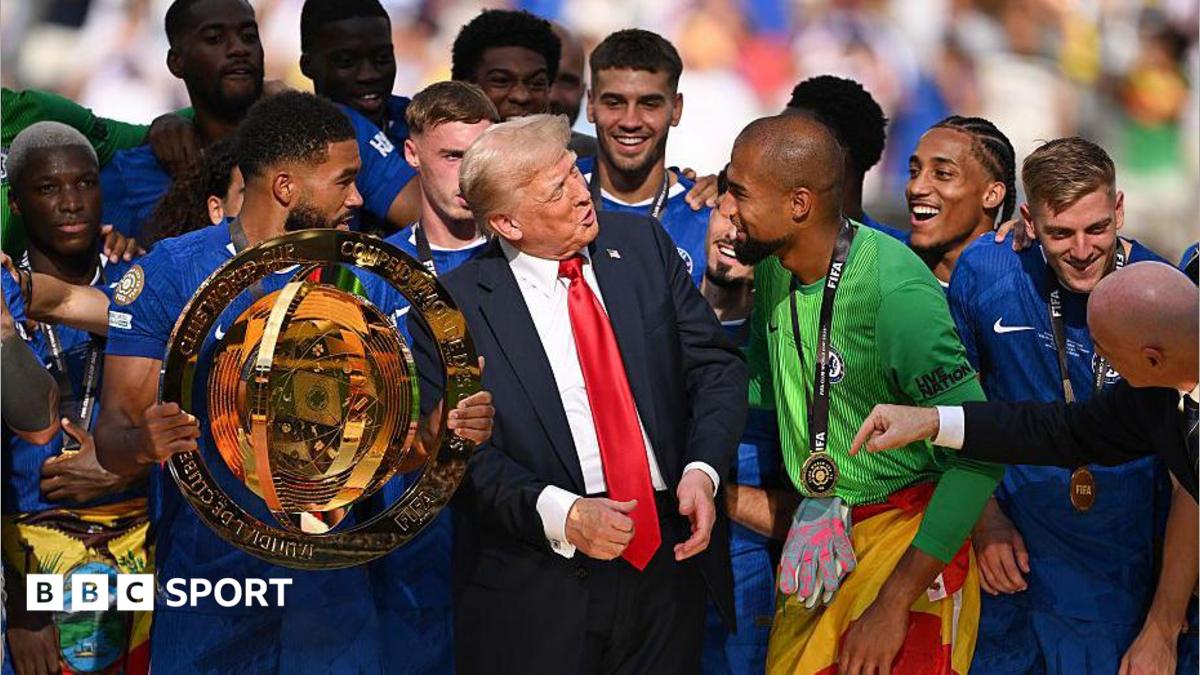
    The 2026 FIFA World Cup, the first 48-team edition of the global men’s football showpiece co-hosted by Canada, Mexico and the United States, is heading toward its July 19 decider at New Jersey’s MetLife Stadium, and a high-profile political figure is set to take center stage for the trophy presentation. FIFA president Gianni Infantino has confirmed that former U.S. president Donald Trump, 80, will join him for the final’s trophy handoff to the tournament’s champion.

    Speaking to Fox News, Infantino, who has described himself as a close personal friend of Trump, said, “We will be together with the president enjoying the final and handing the trophy to the winner, of course.” When pressed to confirm the pair would present the trophy jointly, Infantino added, “Of course, we are together all the time.”

    Notably, Trump has not appeared at any World Cup match over the tournament’s first five weeks, which kicked off June 11. Andrew Giuliani, executive director of the White House’s World Cup task force, told The Daily Telegraph that Trump’s packed public schedule is the reason for his absence so far, adding that the former president prefers to “leave people watching” rather than draw attention away from matches ahead of the final.

    This won’t be Trump’s first high-profile appearance at a major global sporting event hosted in the U.S. this year. Just last week, he attended a UFC event held at the White House, and earlier this month he became the first sitting U.S. president to attend an NBA Finals game, where he was loudly booed by the New York crowd during the national anthem at Madison Square Garden. That game saw the eventual champion New York Knicks fall 115-111 to the San Antonio Spurs in Game 3.

    Trump also has prior experience presenting major FIFA honours at MetLife Stadium. During last summer’s Club World Cup final, he remained on the winner’s podium after handing the trophy to Chelsea captain Reece James, catching players and organizers off guard. James later explained, “They told me that he was going to present the trophy and then exit the stage and I thought that he was going to exit, but he wanted to stay.”

    The 2026 World Cup, which has already drawn record crowds across the three host nations, has 78 of its total 104 matches hosted on U.S. soil, with the final capping the tournament at the 82,500-seat MetLife Stadium outside New York City. Ahead of the final, the tournament has already made headlines for security operations that have seen more than 300 drones seized at U.S. match venues, alongside ongoing debate over rule changes to the expanded group stage that some argue have created unfair conditions for competing teams.

  • Ronaldo becomes first player to score in six World Cups with goal against Uzbekistan

    Ronaldo becomes first player to score in six World Cups with goal against Uzbekistan

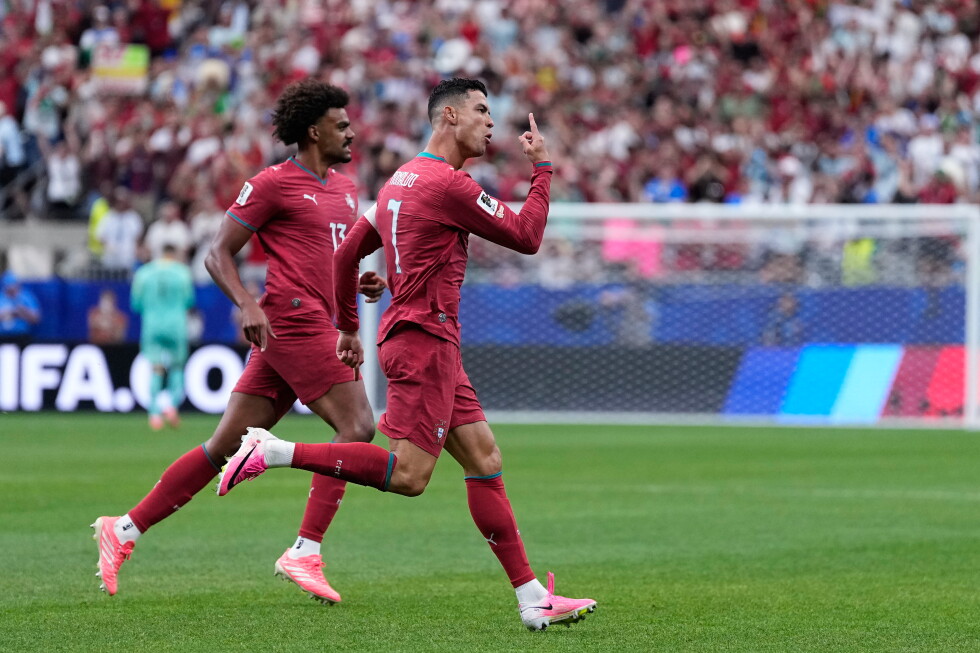
    HOUSTON – In a moment that redefined men’s World Cup records, 41-year-old Portuguese icon Cristiano Ronaldo etched his name deeper into global soccer folklore on Tuesday, becoming the first male player in history to score at six consecutive FIFA World Cup tournaments. The landmark goal came just six minutes into Portugal’s match against Uzbekistan, when a pinpoint cross from teammate João Cancelo found Ronaldo in the box, who converted a clinical right-footed strike to put his side up 1-0. Immediately after the ball hit the back of the net, the forward sprinted toward the Portuguese bench to share the celebratory moment with his coaching staff and teammates, capping off a milestone that had been months in the making after a shaky opening match.

    Ronaldo’s history-making strike comes on the heels of widespread public criticism that followed his goalless performance in Portugal’s 1-1 opening draw against Congo. For many observers, the early tournament drought sparked questions about whether the aging star would get another chance to add to his World Cup scoring tally in what is widely expected to be his final run at the international competition.

    This year’s tournament already marked a shared piece of history for Ronaldo and Argentina’s captain Lionel Messi: the pair are the only two male players ever to compete at six different World Cup tournaments. But Ronaldo’s goal on Tuesday cemented a unique record that separates him from his long-time rival. Messi, who appeared at every World Cup since 2006 alongside Ronaldo, failed to find the back of the net at the 2010 tournament in South Africa, leaving Ronaldo as the sole holder of the six-tournament scoring streak.

    Ronaldo’s scoring run stretches back to his World Cup debut in 2006, with goals added in every iteration of the tournament since: 2010 in South Africa, 2014 in Brazil, 2018 in Russia, 2022 in Qatar, and now the 2026 edition. Tuesday’s strike pushed his all-time World Cup goal total to nine. For comparison, Messi extended his own record-breaking tally to 18 total World Cup goals this tournament, notching a hat trick in Argentina’s opening match against Algeria and adding two more in a recent fixture against Austria to claim the title of the tournament’s all-time leading goalscorer.

    Beyond the scoring milestone, Tuesday’s match marked the 230th senior international appearance of Ronaldo’s career – a total that stands as the most in the history of men’s international soccer. Widely considered to be playing in his final World Cup, Ronaldo already holds an unparalleled collection of top-tier trophies: he led Portugal to a UEFA European Championship title in 2016, and claimed five UEFA Champions League titles during his storied club career with Manchester United and Real Madrid.